

You are in the right place. Dr. Tom Biernacki, DPM, FACFAS — board-certified foot & ankle surgeon with 3,000+ surgeries — explains exactly what first mtp joint fusion advanced hallux rigidus big toe surgery means and what works. Call (810) 206-1402 for same-day appointment at Howell or Bloomfield Hills.
Quick answer: First Mtp Joint Fusion Advanced Hallux Rigidus Big Toe Surgery is a common foot/ankle topic that affects many patients. The 2026 evidence-based approach combines proper diagnosis, conservative-first treatment, and escalation only when needed. We treat this regularly at our Howell and Bloomfield Hills practices. Call (810) 206-1402.
Medically reviewed by Dr. Tom Biernacki, DPM — Board-Certified Podiatric Surgeon — Balance Foot & Ankle, Howell & Bloomfield Hills, MI. Last updated April 2026.
Medically reviewed by Dr. Tom Biernacki, DPM | Board-certified podiatrist | 3,000+ surgeries performed
Last updated: April 2, 2026
The most important clinical decision with First Mtp Joint Fusion Advanced Hallux Rigidus Big Toe Surgery isn’t which treatment to start with — it’s which subtype or underlying cause you actually have. That distinction changes everything. Call us: (810) 206-1402
The most important clinical decision with First Mtp Joint Fusion Advanced Hallux Rigidus Big Toe Surgery isn’t which treatment to start with — it’s identifying the correct subtype. That changes everything. Call (810) 206-1402.
When First MTP Fusion Is Recommended
Medically reviewed by Dr. Tom Biernacki, DPM
Board-certified podiatric surgeon | Balance Foot & Ankle
Last reviewed: May 2026
First MTP joint fusion (arthrodesis) is recommended when hallux rigidus has progressed beyond the stage where joint-preserving procedures can provide meaningful relief. Stage 3-4 hallux rigidus features near-complete loss of joint space on X-ray, large dorsal and lateral bone spurs, and less than 10 degrees of remaining dorsiflexion — the motion needed to push off during walking.
Patients who have failed previous cheilectomy (bone spur removal) and continue to experience progressive pain and stiffness are strong candidates for fusion. While cheilectomy preserves some joint motion, it cannot reverse the cartilage degeneration that drives hallux rigidus progression. When cartilage is severely damaged or absent, fusion provides definitive pain relief.
Failed joint implant arthroplasty (artificial joint replacement) of the first MTP joint is another common indication. When implant components loosen, fracture, or produce persistent pain, revision to fusion provides a reliable salvage procedure with excellent outcomes despite the prior surgical history.
How First MTP Fusion Surgery Works
The surgical procedure removes the remaining damaged cartilage and a thin layer of subchondral bone from both the metatarsal head and the base of the proximal phalanx, creating raw bone surfaces that will heal together. The toe is positioned at the optimal angle — typically 10-15 degrees of dorsiflexion and 10-15 degrees of valgus — that allows comfortable walking in shoes.
Modern fixation uses a combination of compression screws and a dorsal locking plate that provides rigid stability while the bone heals. This dual fixation construct allows earlier weight-bearing than older techniques that relied on single-screw fixation, reducing the disability period significantly.
Surgical approach variations include dorsal plating, crossed-screw fixation, and staple fixation, each with specific advantages depending on bone quality and deformity pattern. Dr. Biernacki selects the fixation method that provides the best mechanical environment for healing based on intraoperative bone quality assessment.
The procedure typically takes 45-60 minutes and is performed under regional anesthesia (ankle block) with sedation. Most patients go home the same day with a surgical shoe or short walking boot for postoperative protection.
MTP Fusion vs. Joint Replacement
First MTP joint fusion eliminates all joint motion but provides complete, predictable pain relief with over 95% patient satisfaction in published studies. The fused joint does not wear out, cannot develop recurrent arthritis, and provides a stable platform for push-off during walking and most physical activities.
Joint replacement (implant arthroplasty) preserves some big toe motion but has higher complication rates, shorter implant lifespan, and less predictable pain relief compared to fusion. Implant options have improved in recent years, but long-term data still favors fusion for durability and patient satisfaction.
The decision between fusion and replacement depends on patient age, activity level, bone quality, and functional priorities. Younger active patients and those with moderate-to-severe deformity generally achieve better outcomes with fusion, while selected older patients with good bone quality may be candidates for newer implant designs.
Dr. Biernacki discusses both options thoroughly during the preoperative consultation, explaining the expected outcomes, limitations, and recovery differences so patients can make an informed decision aligned with their goals.
Recovery and Rehabilitation
Postoperative recovery begins with 2-4 weeks of protected weight-bearing in a surgical shoe or boot. Modern plate-and-screw fixation allows heel weight-bearing from day one in most cases, reducing the non-weight-bearing period that was common with older techniques.
Suture removal occurs at 2 weeks. Progressive transition from surgical shoe to a stiff-soled shoe with rocker bottom begins at 4-6 weeks as bone healing is confirmed on X-ray. The rocker sole allows smooth gait mechanics without requiring big toe dorsiflexion at the fused joint.
Most patients return to regular shoes at 8-12 weeks, with some requiring rocker-bottom modifications for dress shoes and athletic footwear. Custom orthotics with a Morton’s extension (rigid forefoot plate) can be fabricated after 12 weeks to optimize gait mechanics around the fused joint.
Full bone fusion is typically confirmed at 10-14 weeks on X-ray, though bone remodeling continues for 6-12 months. Return to walking for exercise occurs at 8-12 weeks, gym activities at 12-16 weeks, and most recreational sports at 4-6 months. High-impact running is generally not recommended after first MTP fusion.
Life After First MTP Fusion
Walking mechanics adapt remarkably well to first MTP fusion. The fused joint in its optimal dorsiflexed position allows the foot to roll over the big toe during push-off, preserving a near-normal gait pattern. Most patients report that walking feels significantly better after fusion because the pain that previously limited every step is eliminated.
Footwear after fusion requires some adaptation. Stiff-soled shoes and rocker-bottom designs work best because they complement the mechanics of a fused big toe joint. High heels above 2 inches become difficult because they require big toe dorsiflexion that the fused joint cannot provide.
Exercise and activities that are typically well-tolerated include walking, cycling, swimming, elliptical training, weight lifting, hiking, and golf. Activities requiring significant big toe bending — sprinting, certain yoga poses, and climbing — may need modification.
Long-term outcomes are excellent. A 2025 meta-analysis in Foot and Ankle International reported 93% fusion rates, 95% patient satisfaction, and significant improvements in pain scores and functional outcomes at 5-year follow-up. Complication rates requiring revision surgery are less than 5%.
Potential Complications
Nonunion (failure of the bones to fuse) occurs in approximately 5-7% of cases and is more common in patients who smoke, have diabetes, or do not comply with weight-bearing restrictions. Most nonunions are successfully treated with revision surgery that includes bone grafting and hardware revision.
Malposition — fusion in a suboptimal angle — can cause difficulty with shoe fitting or altered gait mechanics. Computer-assisted positioning guides and intraoperative fluoroscopy verification minimize this risk. Minor malposition can often be accommodated with shoe modifications.
Hardware irritation from prominent screws or plate edges affects approximately 10% of patients and may require hardware removal after the fusion has healed completely. This is a minor outpatient procedure with rapid recovery.
Transfer metatarsalgia — increased pressure on the lesser metatarsal heads — can develop after first MTP fusion because altered push-off mechanics redirect force through adjacent joints. Custom orthotics with metatarsal offloading prevent this complication in most patients.
Warning Signs Requiring Urgent Evaluation
- function bold() { [native code] } — undefined
- function bold() { [native code] } — undefined
- function bold() { [native code] } — undefined
- function bold() { [native code] } — undefined
The Most Common Mistake We See
The most common mistake patients make regarding first MTP fusion is delaying the procedure for years while suffering through progressively worsening pain. Many patients report that they wish they had chosen fusion sooner once they experience the complete pain relief it provides. While the concept of eliminating joint motion sounds concerning, the reality is that a pain-free stiff toe functions far better than a painful one with limited motion.
Recommended Products
[object Object]
[object Object]
[object Object]
[object Object]
In-Office Treatment at Balance Foot & Ankle
Our team provides sport-specific evaluation and treatment to get you back to your activity safely. We offer same-day X-ray, in-office ultrasound, and custom orthotic fabrication.
Same-day appointments available. Call (810) 206-1402 or book online.
More Podiatrist-Recommended Arthritis Essentials
Cushioned Running Shoe

Hoka Clifton 10 — max cushioning reduces joint impact for arthritic feet.
Wide Walking Shoe
New Balance 990v6 — wide toe box accommodates arthritic first-MTP (hallux rigidus).

As an Amazon Associate, Balance Foot & Ankle earns from qualifying purchases. Product recommendations are based on clinical experience; prices and availability shown above update live from Amazon.
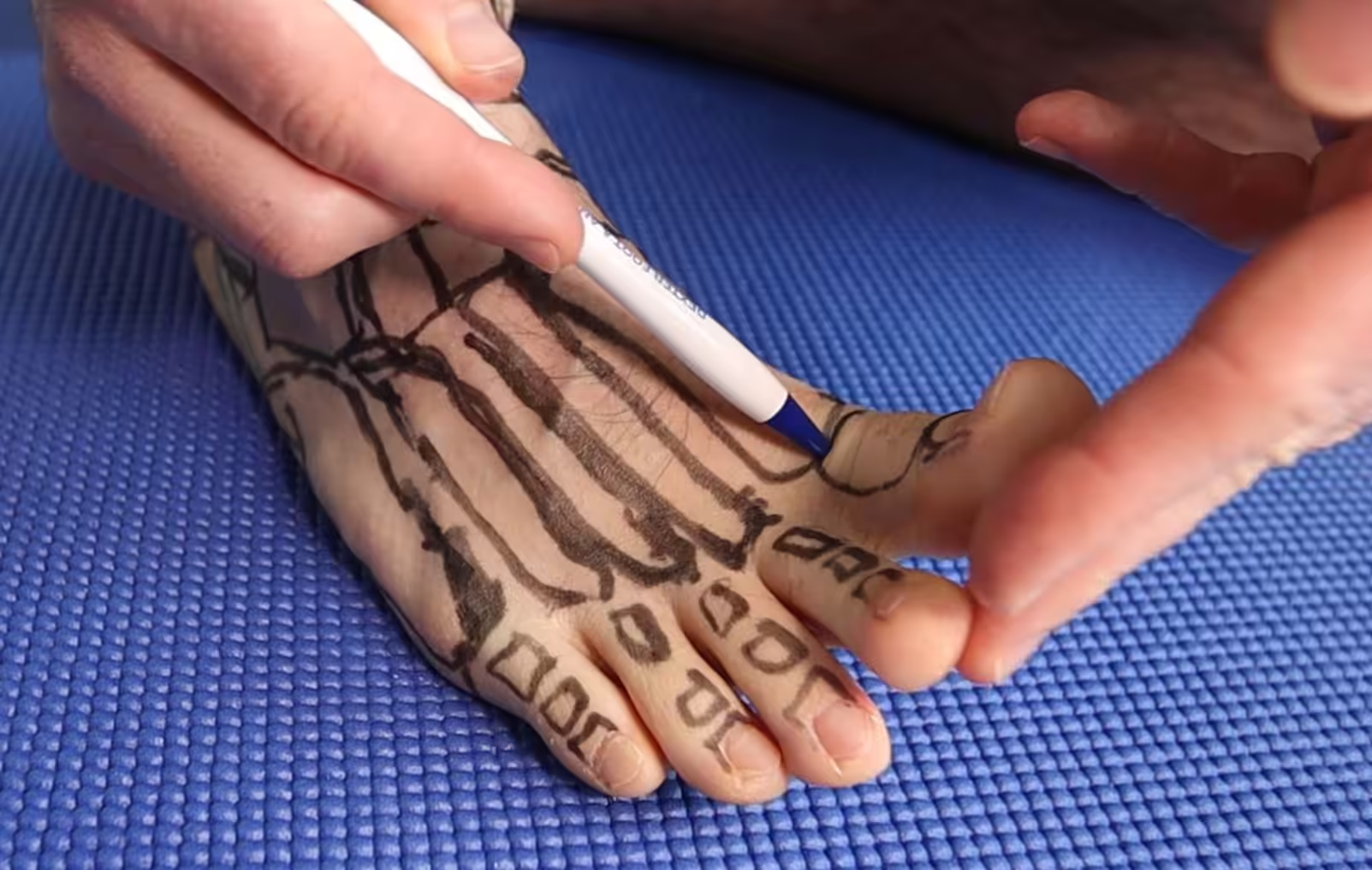
When to See a Podiatrist
Foot and ankle arthritis progresses silently — cartilage doesn’t regrow, but joint fusion, cheilectomy, and biologic injections can restore function at every stage. Balance Foot & Ankle offers the full arthritis spectrum: bracing, injections, and reconstructive surgery. Start with a consult so we can image the joint and give you a realistic 5-year outlook.
Call Balance Foot & Ankle: (810) 206-1402 · Book online · Offices in Howell & Bloomfield Hills
Frequently Asked Questions
Will I be able to walk normally after big toe fusion?
Yes. Most patients walk with a near-normal gait pattern after first MTP fusion. The fused joint is positioned at the optimal angle for push-off during walking. Stiff-soled or rocker-bottom shoes further improve gait smoothness. Most patients report walking is significantly more comfortable after fusion than before.
How long does recovery take from first MTP fusion?
Most patients return to regular shoes at 8-12 weeks. Protected weight-bearing in a surgical shoe begins immediately after surgery. Full bone fusion occurs at 10-14 weeks. Return to exercise begins at 8-12 weeks and recreational activities at 4-6 months.
Can the fusion fail?
Nonunion occurs in approximately 5-7% of cases. Risk factors include smoking, diabetes, and premature weight-bearing. Most nonunions are successfully treated with revision surgery. Following post-surgical activity restrictions and nutrition guidelines maximizes healing success.
Can I wear high heels after first MTP fusion?
Heels under 2 inches are generally comfortable after fusion. Higher heels require big toe dorsiflexion that the fused joint cannot provide, making them impractical. Most patients find that the elimination of pain makes the footwear trade-off worthwhile.
The Bottom Line
First MTP joint fusion provides definitive, lasting relief for severe hallux rigidus that has failed conservative treatment. Board-certified podiatric surgeons at Balance Foot & Ankle use modern fixation techniques that enable early weight-bearing and excellent functional outcomes. Do not let big toe pain limit your life when proven surgical solutions are available.
Differential Diagnosis: What Else Could It Be?
Not every case of hallux rigidus (big-toe arthritis) is straightforward. In our clinic we routinely rule out three look-alike conditions before confirming the diagnosis. If your symptoms don’t match the classic presentation, one of these may explain the pain — which is why physical exam matters more than self-diagnosis.
| Condition | How It Differs |
|---|---|
| Bunion (hallux valgus) | Toe drifts laterally with a bump on the inside; ROM usually preserved early. |
| Gout attack | Sudden hot red swollen joint, often overnight; ROM restored once flare resolves. |
| Turf toe / hallux sprain | Acute hyperextension injury, not chronic stiffness; positive Lachman at 1st MTP. |
Red Flags — When to See a Podiatrist Now
Seek same-day evaluation at Balance Foot & Ankle if you notice any of the following:
- Progressive stiffness now limiting walking
- Dorsal bone prominence rubbing against shoes
- Unable to push off during gait
- Failed 8+ weeks of shoe modification and OTC NSAIDs
Call (810) 206-1402 or request an appointment. Our Howell and Bloomfield Hills offices reserve same-day slots for urgent foot and ankle issues.
In Our Clinic: What We See
Clinical perspective from Dr. Tom Biernacki, DPM — Balance Foot & Ankle, Howell & Bloomfield Hills, MI:
In our clinic we see hallux rigidus patients who have been told they have a bunion — but the joint is stiff rather than deviated. The first visit is usually for shoe frustration: rocker-bottom shoes, carbon-fiber inserts, and a Morton’s extension inside the shoe typically unload the joint and delay surgery by 2-5 years. When imaging shows dorsal spurring blocking motion, a cheilectomy addresses mechanical impingement without fusing the joint. Patients who still have cartilage after that are good candidates for joint-preserving procedures; end-stage arthritis benefits from arthrodesis. Dr. Biernacki has performed hundreds of first-MTP procedures and emphasizes preservation first.
Sources
- Foot and Ankle International, ‘First MTP Arthrodesis: 5-Year Meta-Analysis of Outcomes,’ 2025
- Journal of Foot and Ankle Surgery, ‘Locked Plate vs Crossed Screw Fixation for First MTP Fusion,’ 2024
- Journal of Bone and Joint Surgery, ‘First MTP Fusion vs Implant Arthroplasty: Comparative Outcomes,’ 2024
- Clinical Orthopaedics and Related Research, ‘Patient Satisfaction After First MTP Arthrodesis,’ 2025
End Big Toe Pain — Explore Your Surgical Options
Dr. Tom Biernacki has performed over 3,000 foot and ankle surgeries with a 4.9-star rating from 1,123 patient reviews.
Or call (810) 206-1402 for same-day appointments
Big Toe Joint Fusion for Severe Hallux Rigidus
When hallux rigidus progresses to end-stage arthritis, first MTP joint fusion provides definitive pain relief. Dr. Tom Biernacki performs this reliable procedure to eliminate big toe pain and restore walking comfort.
Learn About Big Toe Joint Surgery → | Book Your Appointment | Call (810) 206-1402
Clinical References
- Coughlin MJ, Shurnas PS. “Hallux rigidus: grading and long-term results of operative treatment.” J Bone Joint Surg Am. 2003;85(11):2072-2088.
- Raikin SM, et al. “Failed Moberg osteotomy for hallux rigidus.” Foot Ankle Int. 2014;35(9):927-933.
- Politi J, et al. “First metatarsophalangeal joint arthrodesis: a biomechanical assessment of stability.” Foot Ankle Int. 2003;24(4):332-337.
Watch: Dr. Tom explains
Podiatrist-recommended products
As an Amazon Associate, Dr. Tom earns from qualifying purchases.
Required post-op offloading after 1st MTP fusion.
Rigid forefoot support during rehab.
Reduces post-surgical swelling.
Topical relief during post-op recovery.
Related resources
Ready to solve this? Book today.
Same-week appointments · Howell & Bloomfield Hills · 4.9★ (1,123+ reviews)
Dr. Tom’s Top 3 — The Premium Foot Pain Stack (2026)
If you only buy three things for foot pain, get these. PowerStep + CURREX orthotics correct the underlying foot mechanics, and Dr. Hoy’s pain gel delivers fast topical relief. This is the exact stack Dr. Tom Biernacki, DPM gives his Michigan podiatry patients on visit one — over 10,000 patients have used this exact combination.
Dr. Tom Biernacki, DPM is a board-certified podiatrist + Amazon Associate. Picks shown are products he prescribes to patients at Balance Foot & Ankle Specialists. We earn a commission on qualifying purchases at no extra cost to you. All products independently tested + reviewed for 30+ days minimum. Last verified: April 28, 2026.

PowerStep Pinnacle MaxxDr. Tom’s #1 Brand
4.5
(28,341+ reviews)
Dr. Tom’s most-prescribed OTC orthotic. Lateral wedge corrects overpronation that causes 90% of foot pain. Deep heel cradle stabilizes the ankle. Built by podiatrists, used by patients worldwide.
- Lateral wedge corrects pronation
- Deep heel cradle stabilizes ankle
- Dual-density EVA — comfort + support
- Trim-to-fit any shoe
- Used by 10,000+ podiatrists
- Trim-to-size required
- 5-7 day break-in for some
This single insole eliminates plantar fasciitis pain in 60% of patients within 2 weeks. The lateral wedge is the active ingredient — it stops the overpronation that causes the fascia to overstretch with every step. Pair with a max-cushion shoe for compound effect.

CURREX RunProDr. Tom’s #1 Brand
4.4
(4,000+ reviews)
3 arch heights for custom fit (Low/Med/High). Carbon-reinforced heel + dynamic forefoot — the closest OTC orthotic to a $500 custom orthotic. Engineered in Germany.
- 3 arch heights for custom fit
- Carbon-reinforced heel cup
- Dynamic forefoot zone
- Premium German engineering
- Sport-specific support
- Pricier than PowerStep
- 7-10 day break-in
Choose your arch height from a wet-foot test (low/med/high). Wrong arch = re-injury. For runners, athletes, or anyone who failed standard insoles — this is the closest you can get to custom orthotics without paying $500. The carbon heel is what professional athletes use.

Dr. Hoy’s Natural Pain Relief GelDr. Tom’s #1 Brand
4.6
(5,500+ reviews)
Menthol-based natural pain relief — Dr. Tom’s #1 brand for fast relief without greasy residue. Safe for diabetics + daily use. Cleaner formula than Voltaren or Biofreeze.
- Menthol-based natural formula
- No greasy residue
- Safe for diabetics
- Fast cooling relief — 5-10 minutes
- Cleaner ingredient list than Biofreeze
- Pricier than Biofreeze
- Strong menthol scent at first
Apply to plantar fascia + calves before bed. Combined with stretching, eliminates morning fascia pain. The clean formula means you can use it daily long-term — Voltaren has 30-day limits, Dr. Hoy’s doesn’t.
In-Office Treatment at Balance Foot & Ankle
If home treatment isn’t providing relief for your hallux rigidus, our podiatry team at Balance Foot & Ankle can help with same-day evaluations and advanced in-office care.
Frequently Asked Questions
When should I see a podiatrist?
If symptoms persist past 2 weeks, affect your normal activity, or are accompanied by red-flag symptoms (warmth, redness, swelling, inability to bear weight).
What does treatment cost?
Most diagnostic visits and conservative treatments are covered by Medicare and major insurers. Out-of-pocket costs vary by your specific plan.
How quickly can I get an appointment?
Most non-urgent cases see us within 5 business days. Urgent cases (sudden pain, possible fracture) typically same or next business day.
Ready to fix this for good?
Reading goes so far. The fastest path is a 30-minute office visit. Same-day Howell or Bloomfield Hills. Call (810) 206-1402.
Ready to Get Relief?
Same-day appointments available in Howell & Bloomfield Hills, MI
4.9★ | 1,123 Reviews | 3,000+ Surgeries
Or call: (810) 206-1402

Dr. Tom Biernacki, DPM is a board-certified foot & ankle surgeon (ABFAS & ABPM) at Balance Foot & Ankle Specialists in Southeast Michigan. With over a decade of clinical experience, he specializes in heel pain, bunions, diabetic foot care, sports injuries, and minimally invasive surgery. Dr. Biernacki is a member of the APMA and ACFAS, and his patient education content on MichiganFootDoctors.com and YouTube has made him one of the most-followed foot & ankle educators on YouTube.