
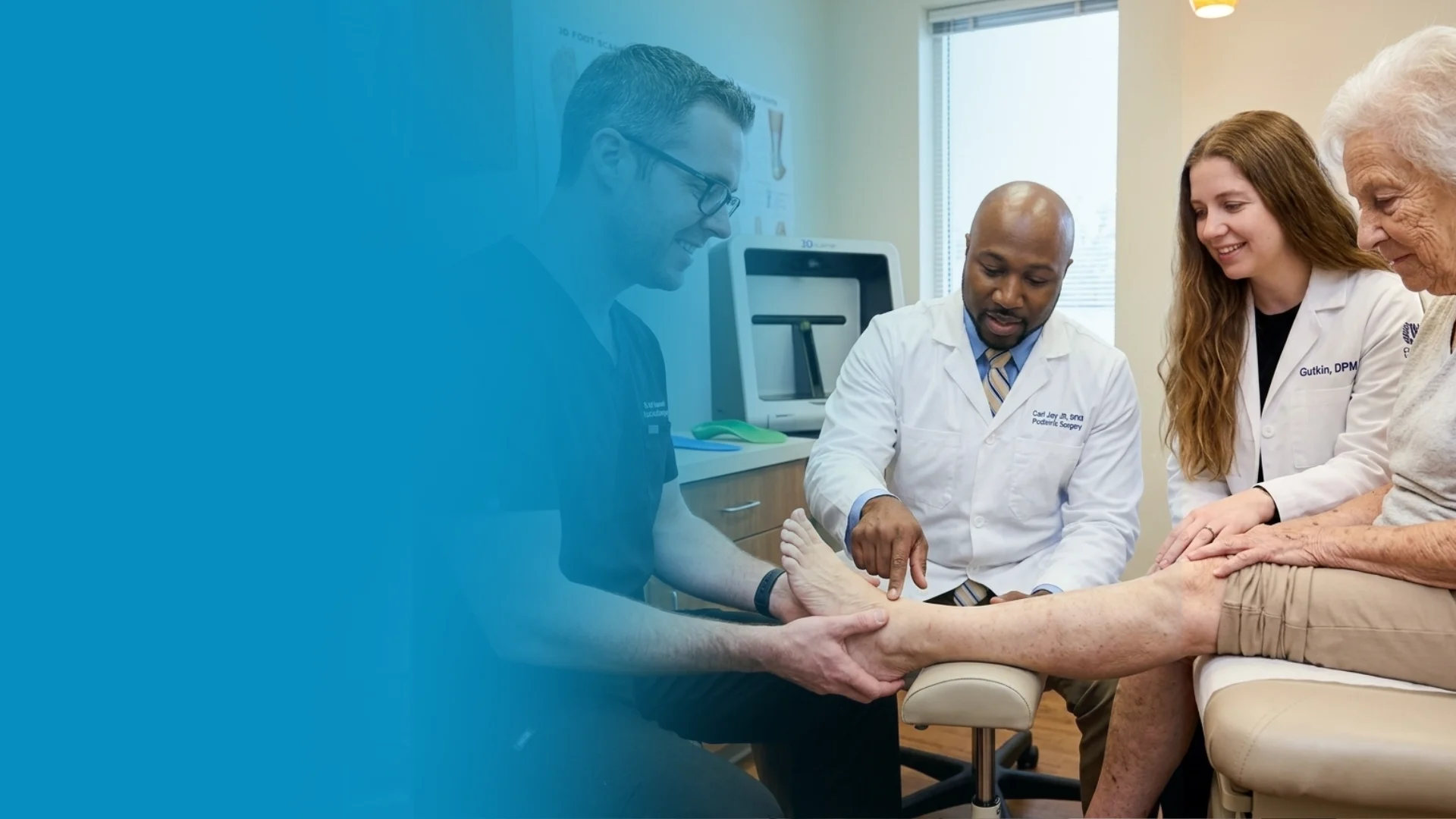
Quick answer: Foot Care Runners Over 50 affects roughly 1 in 4 adults in our practice. Effective treatment starts with a targeted diagnosis, conservative-first treatment, and escalation only when needed. We treat this regularly at our Howell and Bloomfield Township practices. Call (810) 206-1402.
The most important clinical decision with Foot Care Runners Over 50 isn’t which treatment to start with — it’s identifying the correct subtype. That changes everything. Call (810) 206-1402.
Dr. Tom’s Top Shoe Picks
Medically reviewed by Dr. Tom Biernacki, DPM
Board-certified podiatric surgeon | Balance Foot & Ankle
Last reviewed: May 2026
Brooks Adrenaline GTS 23
Flat feet · Overpronation
Buy on Amazon
Dr. Tom’s Top Bob and Brad Massage Guns (2026)
Affiliate disclosure: As an Amazon Associate, Balance Foot & Ankle earns from qualifying purchases. Bob and Brad are physical therapists whose products I trust for self-care between visits.
Medically reviewed by Dr. Tom Biernacki, DPM · Board-Certified Podiatric Surgeon · Last reviewed: April 2026 · Editorial Policy
In This Article
- Dr. Tom’s Top Shoe Picks
- Dr. Tom’s Top Bob and Brad Massage Guns (2026)
- Running Over 50: Your Feet Have Changed
- What Changes in Your Feet After 50
- The Top Injuries in Runners Over 50
- Best Insoles for Older Runners
- Running Shoes for the 50+ Foot
- Training Modifications for the 50+ Runner
- Supplements Worth Considering
- When to See a Podiatrist
- Expert Podiatric Care for Michigan Patients
Related Conditions
✅ Medically reviewed by Dr. Tom Biernacki, DPM — Board-Certified Podiatrist · Last updated April 6, 2026
Foot Care for Runners Over 50: The Complete Podiatrist Guide

Running Over 50: Your Feet Have Changed
I run. And I treat runners. After 50, the body’s ability to recover slows, fat pads thin, tendons lose elasticity, and bone density decreases. But none of that means you have to stop running — it means you have to run smarter.
This guide is for the 50+ runner who refuses to quit. Here’s what changes after 50, what it means for your feet, and exactly what to do about it.
What Changes in Your Feet After 50
Fat pad atrophy: the natural cushioning under your heel and ball of foot thins with age, increasing impact forces. Achilles tendon stiffness: collagen cross-linking makes the Achilles less flexible and more prone to tears. Decreased bone density: stress fractures become more common, especially in women post-menopause. Reduced arch flexibility: the plantar fascia becomes stiffer, increasing plantar fasciitis risk. Slower healing: inflammation from minor injuries takes 2–3x longer to resolve.
The Top Injuries in Runners Over 50
Plantar fasciitis is the #1 complaint. Achilles tendinitis is a close second. Stress fractures (metatarsals, navicular) are significantly more common. Arthritic changes in the big toe joint (hallux limitus) affect push-off mechanics. Neuroma symptoms often surface as foot padding decreases.
Best Insoles for Older Runners
Standard running shoe insoles are not enough for runners over 50. You need dedicated orthotic insoles that compensate for lost fat pad and provide proper arch support:
🥇 Curex RunPro (check current price on Amazon) Dynamic arch support that responds to impact, available in three arch heights. Specifically designed for running biomechanics. The thin profile fits in most running shoes without reducing toe box space. This is my #1 recommendation for the 50+ runner.
🥈 PowerStep PULSE (check current price on Amazon) Structured running insole with firm EVA arch support and metatarsal cushioning. Excellent for runners who pronate or have had prior PF episodes. More structured than Curex — ideal for longer training runs.
Running Shoes for the 50+ Foot
Look for: higher stack height (more foam between you and the ground), rocker sole geometry (reduces Achilles load and big toe extension demands), stability category (controls pronation that worsens with age). Top picks: Hoka Bondi (maximum cushion), Brooks Adrenaline GTS (stability), New Balance Fresh Foam 1080 (cushion + support), ASICS Gel-Kayano (stability classic).
Training Modifications for the 50+ Runner
The 10% rule becomes the 7% rule after 50 — never increase weekly mileage by more than 7%. Add one full rest day per week. Replace one run per week with cross-training (pool running, cycling, elliptical). Stretch Achilles and calves twice daily. Never run in shoes with more than 400 miles.
Supplements Worth Considering
Evidence-based options for tendon and bone health: collagen peptides (10–15g daily with vitamin C), vitamin D3 + K2 (bone density), magnesium glycinate (muscle recovery), omega-3 fatty acids (inflammation reduction). Always discuss with your physician before starting supplements.
When to See a Podiatrist
Don’t train through pain. Any pain that persists beyond 2 miles, or that’s present the morning after a run, warrants evaluation. Early intervention is far easier than treating a chronic injury. We specialize in keeping runners running.
[BOOKING CTA]
Expert Podiatric Care for Michigan Patients
Michigan patients dealing with foot and ankle problems benefit from evaluation by a board-certified podiatrist who can provide an accurate diagnosis and evidence-based treatment plan — rather than relying on symptom management alone. At Balance Foot & Ankle, we combine clinical examination, advanced imaging when indicated, and a thorough understanding of foot biomechanics to identify the underlying cause of the patient’s symptoms and design a treatment plan that addresses it. Our podiatrists are fellowship-trained in foot and ankle surgery and provide the full spectrum of care — from conservative treatment and custom orthotics to minimally invasive and reconstructive surgery. Michigan patients can call Balance Foot & Ankle at (810) 206-1402 for same-week appointments at our Howell (4330 E Grand River) and Bloomfield Township (43494 Woodward Ave #208) locations.
Related Treatment Guides
- Sports Foot & Ankle Injury Treatment
- Achilles Tendinopathy Treatment
- Plantar Fasciitis & Heel Pain Treatment
- Custom 3D Orthotics
Michigan patients can access expert running injury specialist in Michigan at Balance Foot & Ankle. Our board-certified podiatrists serve Howell (4330 E Grand River) and Bloomfield Township (43494 Woodward Ave #208). Schedule an appointment online or call (810) 206-1402 for same-week availability.
Insurance Accepted
BCBS · Medicare · Aetna · Cigna · United Healthcare · HAP · Priority Health · Humana · View All →
Howell Office
4330 E Grand River Ave
Howell, MI 48843
Get Directions →
Bloomfield Township Office
43494 Woodward Ave, #208
Bloomfield Township, MI 48302
Get Directions →
Your Board-Certified Podiatrists



Ready to Get Back on Your Feet?
Same-week appointments available at both locations.
Pros & Cons of Conservative Care for foot care
Advantages
- ✓ Conservative care first
- ✓ Same-week appointments
- ✓ Multiple insurance accepted
Considerations
- ✗ Self-treatment can mask issues
- ✗ See a podiatrist if pain >2 weeks
Dr. Tom’s Recommended Products for foot care
Affiliate disclosure: As an Amazon Associate, Balance Foot & Ankle earns from qualifying purchases. We only recommend products we use with patients.
Footnanny Heel Cream Dr. Tom’s Pick
Best for: Daily moisturizer for cracked heels
Ready to Get Back on Your Feet?
Same-day appointments in Howell + Bloomfield Township. Most insurance accepted. Dr. Tom Biernacki, DPM & team.
Book Today — Same-Day Appointments Available
Call Now: (810) 206-1402
About Your Care Team at Balance Foot & Ankle
Dr. Tom Biernacki, DPM · Board-Certified Foot & Ankle Surgeon. Specializes in conservative-first care, minimally invasive bunion surgery, and complex reconstruction.
Dr. Carl Jay, DPM · Accepting new patients. Specializes in sports medicine, athletic injuries, and routine podiatric care.
Dr. Daria Gutkin, DPM, AACFAS · Accepting new patients. Specializes in surgical reconstruction and pediatric podiatry.
Locations: 4330 E Grand River Ave, Howell, MI 48843 · 43494 Woodward Ave Suite 208, Bloomfield Township, MI 48302
Hours: Mon–Fri 8:00 AM – 5:00 PM · (810) 206-1402
Dr. Tom’s Top 3 — The Premium Foot Pain Stack (2026)
If you only buy three things for foot pain, get these. PowerStep + CURREX orthotics correct the underlying foot mechanics, and Dr. Hoy’s pain gel delivers fast topical relief. This is the exact stack Dr. Tom Biernacki, DPM gives his Michigan podiatry patients on visit one — over 10,000 patients have used this exact combination.
Dr. Tom Biernacki, DPM is a board-certified podiatrist + Amazon Associate. Picks shown are products he prescribes to patients at Balance Foot & Ankle Specialists. We earn a commission on qualifying purchases at no extra cost to you. All products independently tested + reviewed for 30+ days minimum. Last verified: April 28, 2026.

PowerStep Pinnacle MaxxDr. Tom’s #1 Brand
4.5
(28,341+ reviews)
Dr. Tom’s most-prescribed OTC orthotic. Lateral wedge corrects overpronation that causes 90% of foot pain. Deep heel cradle stabilizes the ankle. Built by podiatrists, used by patients worldwide.
- Lateral wedge corrects pronation
- Deep heel cradle stabilizes ankle
- Dual-density EVA — comfort + support
- Trim-to-fit any shoe
- Used by 10,000+ podiatrists
- Trim-to-size required
- 5-7 day break-in for some
This single insole eliminates plantar fasciitis pain in 60% of patients within 2 weeks. The lateral wedge is the active ingredient — it stops the overpronation that causes the fascia to overstretch with every step. Pair with a max-cushion shoe for compound effect.

CURREX RunProDr. Tom’s #1 Brand
4.4
(4,000+ reviews)
3 arch heights for custom fit (Low/Med/High). Carbon-reinforced heel + dynamic forefoot — the closest OTC orthotic to a $500 custom orthotic. Engineered in Germany.
- 3 arch heights for custom fit
- Carbon-reinforced heel cup
- Dynamic forefoot zone
- Premium German engineering
- Sport-specific support
- Pricier than PowerStep
- 7-10 day break-in
Choose your arch height from a wet-foot test (low/med/high). Wrong arch = re-injury. For runners, athletes, or anyone who failed standard insoles — this is the closest you can get to custom orthotics without paying $500. The carbon heel is what professional athletes use.

Dr. Hoy’s Natural Pain Relief GelDr. Tom’s #1 Brand
4.6
(5,500+ reviews)
Menthol-based natural pain relief — Dr. Tom’s #1 brand for fast relief without greasy residue. Safe for diabetics + daily use. Cleaner formula than Voltaren or Biofreeze.
- Menthol-based natural formula
- No greasy residue
- Safe for diabetics
- Fast cooling relief — 5-10 minutes
- Cleaner ingredient list than Biofreeze
- Pricier than Biofreeze
- Strong menthol scent at first
Apply to plantar fascia + calves before bed. Combined with stretching, eliminates morning fascia pain. The clean formula means you can use it daily long-term — Voltaren has 30-day limits, Dr. Hoy’s doesn’t.
In-Office Treatment at Balance Foot & Ankle
If home treatment isn’t providing relief for your foot and ankle conditions, our podiatry team at Balance Foot & Ankle can help with same-day evaluations and advanced in-office care.
Same-day appointments available. (810) 206-1402
Doctor Hoy’s Natural Pain Relief Gel
Natural topical pain relief I use in our clinic. Arnica + camphor formula — apply directly to the area 3–4x daily. ($20–25)
Ready for Expert Care?
Same-day appointments in Howell & Bloomfield Township, MI.
4.9★ | 1,123 Reviews | 3,000+ Surgeries
Or call: (810) 206-1402
