
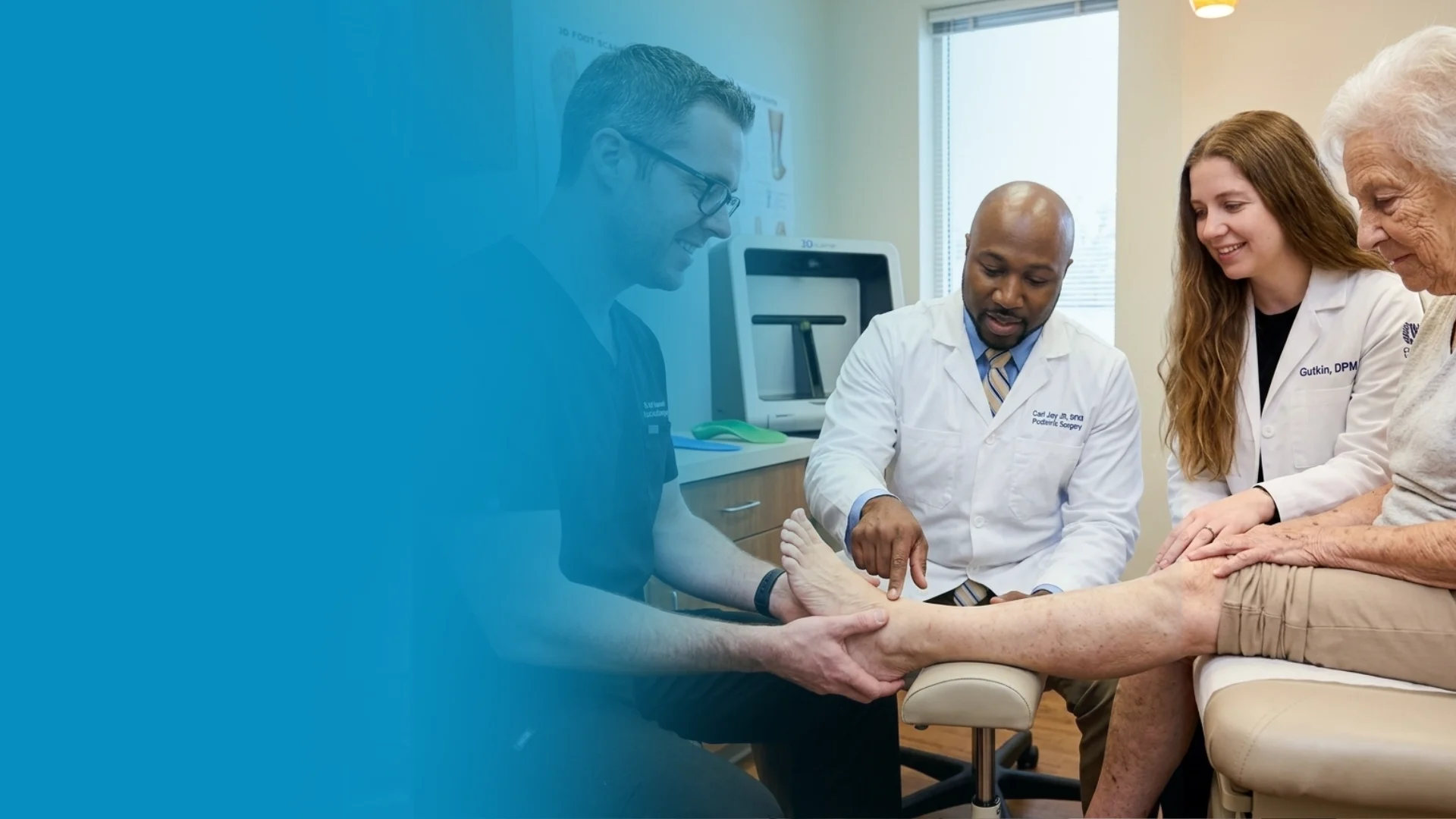
Medically reviewed by Dr. Tom Biernacki, DPM
Board-certified podiatric surgeon | Balance Foot & Ankle
Last reviewed: May 2026
Quick answer: Foot Pain After 60 Aging Changes has multiple potential causes including mechanical, neurological, vascular, and inflammatory. The patterns we see most often are overuse, poorly-fitted shoes, and biomechanical imbalance. Red flags requiring urgent evaluation: warmth/redness (infection), inability to bear weight (fracture), and unilateral swelling without injury (DVT). Call (810) 206-1402.
Medically reviewed by Dr. Tom Biernacki, DPM · Board-Certified Podiatric Surgeon · Last reviewed: April 2026 · Editorial Policy
In This Article
- Your 20s: Peak Foot Health — But Choices Matter
- Your 30s: The Plantar Fasciitis Decade
- Your 40s: Bunions Progress, Arthritis Starts
- Your 50s: Neuropathy Risk, Circulation Changes, Diabetic Foot Care Becomes Critical
- Your 60s: Fall Risk Increases, Medicare Benefits Available, Nail Care Becomes Medical
- Your 70s: Skin Thins, Healing Slows, Home Visits May Be Needed
- Your 80s+: Comprehensive Foot Care Prevents Falls and Maintains Mobility
- Your Board-Certified Podiatrists
- More Podiatrist-Recommended Foot Health Essentials
- Pros & Cons of Conservative Care for foot care
- Dr. Tom’s Recommended Products for foot care
Related Conditions
✅ Medically reviewed by Dr. Tom Biernacki, DPM — Board-Certified Podiatrist · Last updated April 6, 2026
What Happens to Your Feet as You Age — A Decade-by-Decade Guide
Your feet change significantly at every stage of life — and the choices you make in your 20s and 30s directly affect whether you’re active and pain-free in your 70s and 80s. Here’s what to expect at every decade, and what to do about it.
Your 20s: Peak Foot Health — But Choices Matter
Your feet are at their structural best in your 20s — full fat pad thickness, maximum tendon elasticity, optimal bone density. This decade is dominated by sports injuries and footwear choices that set long-term trajectories.
What happens: Stress fractures from high-impact sports, ankle sprains that are often under-treated, and the beginning of bunion formation in people with hereditary predisposition. High heels and unsupportive footwear in your 20s begin laying the groundwork for bunion progression and Achilles shortening that becomes symptomatic later.
What to do now: Treat ankle sprains properly — an incompletely healed ligament leads to chronic instability. Get a gait analysis if you run. Wear shoes that fit your actual foot width. Start with quality OTC insoles if you’re on your feet all day.
Recommended products: Quality running shoes appropriate for your gait type, OTC orthotics for long-shift workers, ankle braces for sports with lateral movement.
Your 30s: The Plantar Fasciitis Decade
Plantar fasciitis peaks in people in their 30s and 40s, and it’s no coincidence — this is when weight gain, sedentary jobs, and the accumulated effects of poor footwear combine with mild biomechanical decline to trigger heel pain in millions of people.
What happens: The plantar fascia loses some elasticity and becomes more prone to microtrauma. Arch changes begin — particularly in people with ligament laxity (hypermobility) who start to develop adult flat foot. Bunions that started in the 20s become more noticeable. First signs of Achilles tendinopathy appear in runners.
What to do now: Daily calf and plantar fascia stretching — even if you have no symptoms, this is the single best preventive habit for heel health. Consider custom orthotics if you have flat feet or spend 8+ hours on your feet. Address heel pain early; waiting costs you more in the long run.
Recommended products: Night splints for early morning heel pain, PowerStep Pinnacle insoles, supportive footwear with elevated heel-to-toe drop.
Your 40s: Bunions Progress, Arthritis Starts
The 40s bring structural changes that are harder to reverse. Bunions that were mild in the 20s and 30s become moderate. First MTP joint arthritis (hallux rigidus) often begins. Many people in their 40s experience their first significant tendon problem.
What happens: The plantar fascia thickens from years of microtrauma. The fat pad on the ball of the foot begins measurable thinning — metatarsalgia (ball-of-foot pain) increases. Toenails start to thicken and discolor, sometimes from fungal infection. Posterior tibial tendon dysfunction (PTTD) can emerge, especially in overweight patients or those with flat feet.
What to do now: If you’ve been ignoring foot issues, your 40s are the last easy decade to intervene. A bunion treated conservatively at 45 is a surgical case at 55 if ignored. See a podiatrist for a biomechanical baseline evaluation. Update your footwear to wider toe boxes. Address toenail fungus before it becomes established.
Recommended products: Wide-toe-box shoes, metatarsal pads, foot massagers for recovery, quality compression socks for end-of-day swelling.
Your 50s: Neuropathy Risk, Circulation Changes, Diabetic Foot Care Becomes Critical
The 50s often bring new systemic conditions — diabetes, hypertension, peripheral vascular disease — that fundamentally change the risk profile of foot problems. This decade requires a shift from reactive to proactive foot care.
What happens: Pre-diabetes and Type 2 diabetes emerge in a significant percentage of people in their 50s — and the foot is often the earliest site of complications. Peripheral neuropathy (nerve damage causing numbness, burning, or tingling) affects 30%+ of diabetics within 10 years of diagnosis. Circulation begins declining more measurably. Menopausal hormonal changes in women affect ligament laxity and fat pad composition. Ankle arthritis becomes more common.
What to do now: If you have diabetes, schedule an annual diabetic foot examination — your insurance covers it. Check your feet daily. Never go barefoot if you have neuropathy. Ask about the Medicare Therapeutic Shoe Program if you qualify. Compression socks become more important for circulation.
Recommended products: Diabetic seamless socks, urea-based foot cream for cracking heels, glucose monitor, appropriate diabetic footwear.
Your 60s: Fall Risk Increases, Medicare Benefits Available, Nail Care Becomes Medical
Falls are the leading cause of injury-related death in people over 65, and foot and ankle problems are a major contributor. Your 60s are when Medicare benefits become available and should be used actively.
What happens: Balance deteriorates — proprioception (the sense of where your foot is in space) declines significantly after 60, increasing fall risk. Arthritis may affect multiple foot joints. Heel and ball-of-foot fat pads thin noticeably. Toenail care becomes increasingly difficult mechanically. For patients with diabetes or vascular disease, nail care becomes a Medicare-covered medical service.
What to do now: Schedule your baseline Medicare foot examination. If you have qualifying conditions (diabetes, neuropathy, PAD), get professional nail care every 61 days — it’s covered. Evaluate your home for fall hazards. Consider balance exercises as part of your exercise routine. Shoes with good ankle support and non-slip soles are essential.
Recommended products: Balance board for proprioception training, wide-fit stability shoes (New Balance 990, Hoka Bondi), long-handled toenail clippers, foot massager for circulation.
Your 70s: Skin Thins, Healing Slows, Home Visits May Be Needed
In your 70s, the body’s repair capacity slows measurably. Minor foot problems that younger patients heal quickly can become serious complications. The skin on the feet becomes fragile, tears easily, and heals slowly — especially in diabetics.
What happens: Skin loses collagen and becomes paper-thin and easily torn. Heel fissures can become deep cracks prone to infection. Toenails may become so thick that home trimming is impossible without causing injury. Foot deformities accumulated over decades may become more functionally limiting. For some patients, getting to a podiatry office becomes challenging.
What to do now: Professional nail care every 61 days is not optional at this stage — it’s limb preservation. Daily moisturizing with urea-based cream prevents heel cracking. Inspect feet daily for wounds (particularly important for diabetics, who may not feel injuries). If getting to the office is difficult, home podiatry visits are available — covered by Medicare for qualifying homebound patients.
Recommended products: Urea 25–40% heel cream, padded diabetic socks, protective diabetic shoes, silicone toe sleeves for pressure relief.
Your 80s+: Comprehensive Foot Care Prevents Falls and Maintains Mobility
The goal in your 80s is preserving function — staying on your feet, maintaining independence, and preventing the injury cascade (fall → fracture → immobility → decline) that ends independence for millions of seniors.
What happens: Foot deformities may be significant and long-standing. Nail changes are common — thick, curved, or fungal nails require professional management. Circulation and wound healing are at their slowest. Balance is most compromised. Joint stiffness limits daily activity. For many patients, the podiatrist becomes a critical member of the care team alongside the internist and cardiologist.
What to do now: Regular podiatric care — ideally every 2 months — as preventive maintenance. Footwear should prioritize stability, width, and non-slip soles over style. For patients who cannot safely come to the office, our team makes home visits across Livingston and Oakland Counties. Coordinated care with your internist, vascular specialist, and endocrinologist ensures your feet get the team they need.
Balance Foot & Ankle coordinates with Vassallo Medical Group (Howell) and Grunberger Diabetes Institute (Bloomfield Township) for comprehensive diabetic and vascular foot care. Whatever decade you’re in, we have specialists ready to help.
📞 (810) 206-1402
We accept Medicare, Medicare Advantage, BCBS, Aetna, United Healthcare, Cigna, Humana, HAP, Meridian, Priority Health, McLaren, Workers’ Comp, VA, and most Michigan insurance plans.
📞 (810) 206-1402 | Howell: 4330 E Grand River Ave | Bloomfield Township: 43494 Woodward Ave #208
📞 Whatever decade you’re in, we can help. Call (810) 206-1402 to schedule at Howell or Bloomfield Township — or ask about home visit options.
Related Treatment Guides
- Bunion Treatment
- Sports Foot & Ankle Injury Treatment
- Ankle Sprain Treatment
- Stress Fracture Treatment
Insurance Accepted
BCBS · Medicare · Aetna · Cigna · United Healthcare · HAP · Priority Health · Humana · View All →
Howell Office
4330 E Grand River Ave
Howell, MI 48843
Get Directions →
Bloomfield Township Office
43494 Woodward Ave, #208
Bloomfield Township, MI 48302
Get Directions →
Your Board-Certified Podiatrists



Ready to Get Back on Your Feet?
Same-week appointments available at both locations.
Book Your AppointmentMore Podiatrist-Recommended Foot Health Essentials
Hoka Clifton 10


Max-cushion everyday shoe — podiatrist favorite for walking and running.

OOFOS Recovery Slide

Impact-absorbing recovery sandal — wear after long days on your feet.
As an Amazon Associate, Balance Foot & Ankle earns from qualifying purchases. Product recommendations are based on clinical experience; prices and availability shown above update live from Amazon.
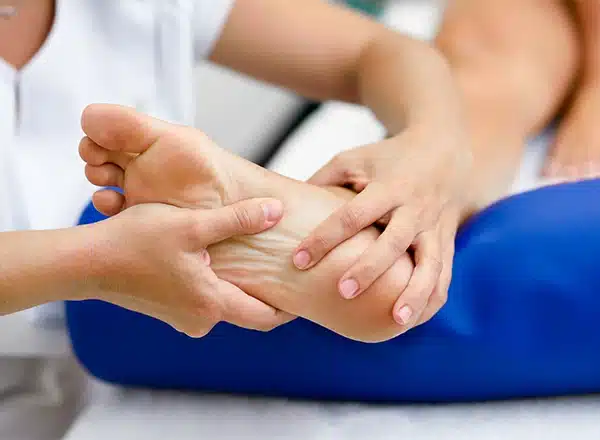
When to See a Podiatrist
If foot or ankle pain has been bothering you for more than a few weeks, home care alone may not be enough. Balance Foot & Ankle offers same-week appointments at our Howell and Bloomfield Township clinics — no referral needed in most cases. Bring your current shoes and a short list of symptoms and we’ll build you a treatment plan in one visit.
Call Balance Foot & Ankle: (810) 206-1402 · Book online · Offices in Howell & Bloomfield Township
Pros & Cons of Conservative Care for foot care
Advantages
- ✓ Conservative care first
- ✓ Same-week appointments
- ✓ Multiple insurance accepted
Considerations
- ✗ Self-treatment can mask issues
- ✗ See a podiatrist if pain >2 weeks
Dr. Tom’s Recommended Products for foot care
Affiliate disclosure: As an Amazon Associate, Balance Foot & Ankle earns from qualifying purchases. We only recommend products we use with patients.
Footnanny Heel Cream Dr. Tom’s Pick
Best for: Daily moisturizer for cracked heels
Ready to Get Back on Your Feet?
Same-week appointments in Howell + Bloomfield Township. Most insurance accepted. Dr. Tom Biernacki, DPM & team.
Book Today — Same-Week Appointments Available
Call Now: (810) 206-1402
About Your Care Team at Balance Foot & Ankle
Dr. Tom Biernacki, DPM · Board-Certified Foot & Ankle Surgeon. Specializes in conservative-first care, minimally invasive bunion surgery, and complex reconstruction.
Dr. Carl Jay, DPM · Accepting new patients. Specializes in sports medicine, athletic injuries, and routine podiatric care.
Dr. Daria Gutkin, DPM, AACFAS · Accepting new patients. Specializes in surgical reconstruction and pediatric podiatry.
Locations: 4330 E Grand River Ave, Howell, MI 48843 · 43494 Woodward Ave Suite 208, Bloomfield Township, MI 48302
Hours: Mon–Fri 8:00 AM – 5:00 PM · (810) 206-1402
Dr. Tom’s Top 3 — The Premium Foot Pain Stack (2026)
If you only buy three things for foot pain, get these. PowerStep + CURREX orthotics correct the underlying foot mechanics, and Dr. Hoy’s pain gel delivers fast topical relief. This is the exact stack Dr. Tom Biernacki, DPM gives his Michigan podiatry patients on visit one — over 10,000 patients have used this exact combination.
Dr. Tom Biernacki, DPM is a board-certified podiatrist + Amazon Associate. Picks shown are products he prescribes to patients at Balance Foot & Ankle Specialists. We earn a commission on qualifying purchases at no extra cost to you. All products independently tested + reviewed for 30+ days minimum. Last verified: April 28, 2026.

PowerStep Pinnacle MaxxDr. Tom’s #1 Brand
Dr. Tom’s most-prescribed OTC orthotic. Lateral wedge corrects overpronation that causes 90% of foot pain. Deep heel cradle stabilizes the ankle. Built by podiatrists, used by patients worldwide.
- Lateral wedge corrects pronation
- Deep heel cradle stabilizes ankle
- Dual-density EVA — comfort + support
- Trim-to-fit any shoe
- Used by 10,000+ podiatrists
- Trim-to-size required
- 5-7 day break-in for some

CURREX RunProDr. Tom’s #1 Brand
3 arch heights for custom fit (Low/Med/High). Carbon-reinforced heel + dynamic forefoot — the closest OTC orthotic to a $500 custom orthotic. Engineered in Germany.
- 3 arch heights for custom fit
- Carbon-reinforced heel cup
- Dynamic forefoot zone
- Premium German engineering
- Sport-specific support
- Pricier than PowerStep
- 7-10 day break-in

Dr. Hoy’s Natural Pain Relief GelDr. Tom’s #1 Brand
Menthol-based natural pain relief — Dr. Tom’s #1 brand for fast relief without greasy residue. Safe for diabetics + daily use. Cleaner formula than Voltaren or Biofreeze.
- Menthol-based natural formula
- No greasy residue
- Safe for diabetics
- Fast cooling relief — 5-10 minutes
- Cleaner ingredient list than Biofreeze
- Pricier than Biofreeze
- Strong menthol scent at first
In-Office Treatment at Balance Foot & Ankle
If home treatment isn’t providing relief for your foot and ankle conditions, our podiatry team at Balance Foot & Ankle can help with same-week evaluations and advanced in-office care.
Same-week appointments available. (810) 206-1402
Doctor Hoy’s Natural Pain Relief Gel
Natural topical pain relief I use in our clinic. Arnica + camphor formula — apply directly to the area 3–4x daily. ($20–25)
Shop Doctor Hoy’s →Ready for Expert Care?
Same-week appointments in Howell & Bloomfield Township, MI.
4.9★ | 1,123 Reviews | 3,000+ Surgeries
Or call: (810) 206-1402
