
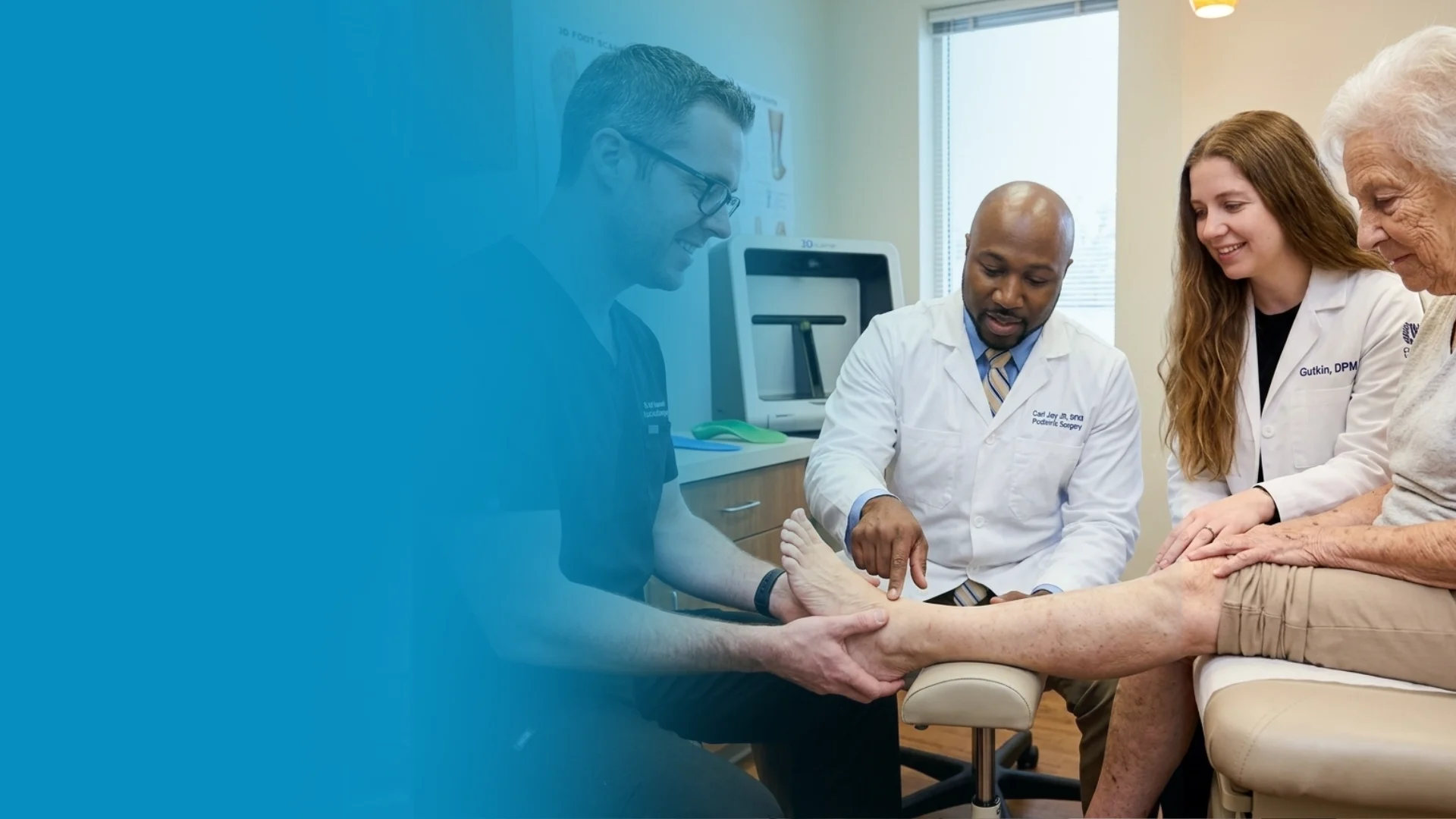
Medically reviewed by Dr. Tom Biernacki, DPM
Board-certified podiatric surgeon | Balance Foot & Ankle
Last reviewed: May 2026
Quick answer: Foot Pain 30s 40s Guide has multiple potential causes including mechanical, neurological, vascular, and inflammatory. The patterns we see most often are overuse, poorly-fitted shoes, and biomechanical imbalance. Red flags requiring urgent evaluation: warmth/redness (infection), inability to bear weight (fracture), and unilateral swelling without injury (DVT). Call (810) 206-1402.
Medically reviewed by Dr. Tom Biernacki, DPM · Board-Certified Podiatric Surgeon · Last reviewed: April 2026 · Editorial Policy
In This Article
- Why Your Feet Start Hurting in Your 30s and 40s
- Why This Age Group Is Prone to Foot Problems
- Most Common Conditions in 30s-40s Patients
- The Foot Check-Up Concept
- Comprehensive Foot and Ankle Care in Michigan: Balance Foot & Ankle
- Your Board-Certified Podiatrists
- More Podiatrist-Recommended Foot Health Essentials
- Pros & Cons of Conservative Care for foot care
- Dr. Tom’s Recommended Products for foot care
Related Conditions
✅ Medically reviewed by Dr. Tom Biernacki, DPM — Board-Certified Podiatrist · Last updated April 6, 2026
Foot Problems in Your 30s and 40s: What’s Happening and What to Do
Why Your Feet Start Hurting in Your 30s and 40s
The most common thing I hear from patients in this age group: “I’ve never had foot problems before — why is this happening now?” The answer combines cumulative biomechanical stress, lifestyle changes, and the beginning of natural aging processes.
Why This Age Group Is Prone to Foot Problems
By your mid-30s, you’ve walked an estimated 75,000-100,000+ miles. Biomechanical inefficiencies that your 20-year-old body compensated for now manifest as overuse injuries. Average Americans gain 5-10 lbs per decade — each extra pound adds ~3 lbs of plantar fascia force per step. The 30s and 40s also bring career demands, family stress, and the “weekend warrior” activity pattern that combines deconditioning with sudden high-intensity loads.
For women, pregnancy causes lasting foot changes — ligament laxity from relaxin hormone increases foot size by half to one full size, often permanently, causing new arch and heel problems.
Most Common Conditions in 30s-40s Patients
Plantar fasciitis is the most common condition I see in this age group — the perfect storm of increased body weight, tight calves from desk work, and unsupportive footwear. Early bunion development — mild enough to ignore but the ideal time for preventive intervention. Adult-acquired flat foot — PTTD begins showing stress in the 30s-40s; caught early, it’s very manageable. Morton’s neuroma — burning or tingling between the 3rd and 4th toes warrants evaluation.
The Foot Check-Up Concept
Treat your feet like your teeth — annual maintenance, not just crisis response. A comprehensive foot evaluation in your 30s or 40s establishes your baseline, identifies developing conditions, and provides personalized prevention recommendations. You’ll live another 50+ years on these feet. Schedule a hands-on exam plus imaging when needed at Balance Foot & Ankle Specialists.
Comprehensive Foot and Ankle Care in Michigan: Balance Foot & Ankle
Michigan patients seeking expert podiatric care for any foot or ankle condition — from the most common (plantar fasciitis, bunions, ingrown toenails, heel spurs) to the most complex (diabetic foot ulcers, Charcot neuroarthropathy, ankle reconstruction, limb salvage) — will find the clinical expertise and personalized care they need at Balance Foot & Ankle. Our fellowship-trained podiatrists have the training and experience to diagnose and treat the full spectrum of foot and ankle pathology with both conservative and surgical interventions.
Our Michigan locations serve patients throughout Southeast Michigan: the Howell office at 4330 E Grand River serves Livingston County and surrounding communities; the Bloomfield Township office at 43494 Woodward Ave #208 serves Oakland County and surrounding communities. Both offices offer convenient scheduling, in-office diagnostic imaging, same-week appointments for most conditions, and acceptance of all major Michigan insurance plans. Call Balance Foot & Ankle at (810) 206-1402 to schedule your appointment today — our team is ready to provide the evidence-based podiatric care that keeps you active and comfortable throughout your daily life.
At Balance Foot & Ankle, every Michigan patient receives expert podiatric care delivered with genuine attention to their individual needs and goals. Our podiatrists take time to explain diagnoses clearly, discuss all treatment options honestly, and follow up to ensure treatments are working effectively. We serve patients from Livingston and Oakland counties and the broader Southeast Michigan region from our Howell office at 4330 E Grand River and our Bloomfield Township office at 43494 Woodward Ave #208. New patients are always welcome — call (810) 206-1402 to schedule today.
Michigan patients can count on Balance Foot & Ankle for the full range of podiatric services delivered with clinical excellence and genuine patient care. Whether your concern is a common foot condition that has been bothering you for years or an acute injury that needs prompt attention, our team in Howell and Bloomfield Township is ready to help. We offer in-office diagnostics, evidence-based conservative treatment, and surgical correction when needed — all within a practice that values your time, respects your preferences, and communicates clearly throughout the care process. Call us at (810) 206-1402 to take the first step toward better foot health.
Related Treatment Guides
- Plantar Fasciitis & Heel Pain Treatment
- Custom 3D Orthotics
- Sports Foot & Ankle Injury Treatment
- Bunion Treatment
Our podiatric team brings decades of combined clinical experience to every patient encounter. We stay current with the latest evidence in podiatric medicine and surgery, applying emerging treatments — including EPAT shockwave therapy, MLS laser, PRP injection, and minimally invasive surgical techniques — where the evidence supports their use for specific conditions. Michigan patients can trust that the treatment recommendations they receive at Balance Foot & Ankle reflect the current standard of care, not outdated approaches. Call (810) 206-1402 to schedule at our Howell or Bloomfield Township office.
Insurance Accepted
BCBS · Medicare · Aetna · Cigna · United Healthcare · HAP · Priority Health · Humana · View All →
Howell Office
4330 E Grand River Ave
Howell, MI 48843
Get Directions →
Bloomfield Township Office
43494 Woodward Ave, #208
Bloomfield Township, MI 48302
Get Directions →
Your Board-Certified Podiatrists



Ready to Get Back on Your Feet?
Same-week appointments available at both locations.
Book Your AppointmentMore Podiatrist-Recommended Foot Health Essentials
Hoka Clifton 10


Max-cushion everyday shoe — podiatrist favorite for walking and running.

OOFOS Recovery Slide

Impact-absorbing recovery sandal — wear after long days on your feet.
As an Amazon Associate, Balance Foot & Ankle earns from qualifying purchases. Product recommendations are based on clinical experience; prices and availability shown above update live from Amazon.
When to See a Podiatrist
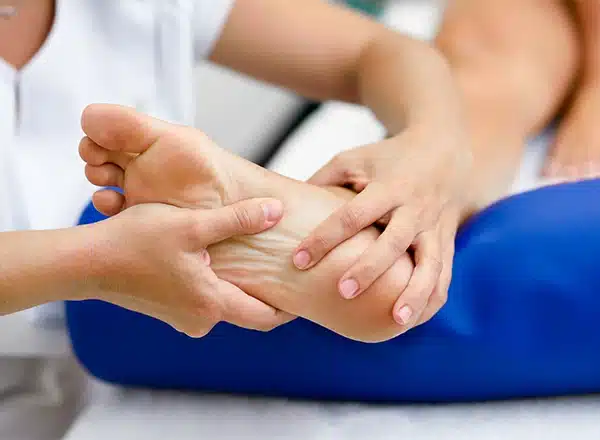
If foot or ankle pain has been bothering you for more than a few weeks, home care alone may not be enough. Balance Foot & Ankle offers same-week appointments at our Howell and Bloomfield Township clinics — no referral needed in most cases. Bring your current shoes and a short list of symptoms and we’ll build you a treatment plan in one visit.
Call Balance Foot & Ankle: (810) 206-1402 · Book online · Offices in Howell & Bloomfield Township
Pros & Cons of Conservative Care for foot care
Advantages
- ✓ Conservative care first
- ✓ Same-week appointments
- ✓ Multiple insurance accepted
Considerations
- ✗ Self-treatment can mask issues
- ✗ See a podiatrist if pain >2 weeks
Dr. Tom’s Recommended Products for foot care
Affiliate disclosure: As an Amazon Associate, Balance Foot & Ankle earns from qualifying purchases. We only recommend products we use with patients.
Footnanny Heel Cream Dr. Tom’s Pick
Best for: Daily moisturizer for cracked heels
Ready to Get Back on Your Feet?
Same-week appointments in Howell + Bloomfield Township. Most insurance accepted. Dr. Tom Biernacki, DPM & team.
Book Today — Same-Week Appointments Available
Call Now: (810) 206-1402
About Your Care Team at Balance Foot & Ankle
Dr. Tom Biernacki, DPM · Board-Certified Foot & Ankle Surgeon. Specializes in conservative-first care, minimally invasive bunion surgery, and complex reconstruction.
Dr. Carl Jay, DPM · Accepting new patients. Specializes in sports medicine, athletic injuries, and routine podiatric care.
Dr. Daria Gutkin, DPM, AACFAS · Accepting new patients. Specializes in surgical reconstruction and pediatric podiatry.
Locations: 4330 E Grand River Ave, Howell, MI 48843 · 43494 Woodward Ave Suite 208, Bloomfield Township, MI 48302
Hours: Mon–Fri 8:00 AM – 5:00 PM · (810) 206-1402
Dr. Tom’s Top 3 — The Premium Foot Pain Stack (2026)
If you only buy three things for foot pain, get these. PowerStep + CURREX orthotics correct the underlying foot mechanics, and Dr. Hoy’s pain gel delivers fast topical relief. This is the exact stack Dr. Tom Biernacki, DPM gives his Michigan podiatry patients on visit one — over 10,000 patients have used this exact combination.
Dr. Tom Biernacki, DPM is a board-certified podiatrist + Amazon Associate. Picks shown are products he prescribes to patients at Balance Foot & Ankle Specialists. We earn a commission on qualifying purchases at no extra cost to you. All products independently tested + reviewed for 30+ days minimum. Last verified: April 28, 2026.

PowerStep Pinnacle MaxxDr. Tom’s #1 Brand
Dr. Tom’s most-prescribed OTC orthotic. Lateral wedge corrects overpronation that causes 90% of foot pain. Deep heel cradle stabilizes the ankle. Built by podiatrists, used by patients worldwide.
- Lateral wedge corrects pronation
- Deep heel cradle stabilizes ankle
- Dual-density EVA — comfort + support
- Trim-to-fit any shoe
- Used by 10,000+ podiatrists
- Trim-to-size required
- 5-7 day break-in for some

CURREX RunProDr. Tom’s #1 Brand
3 arch heights for custom fit (Low/Med/High). Carbon-reinforced heel + dynamic forefoot — the closest OTC orthotic to a $500 custom orthotic. Engineered in Germany.
- 3 arch heights for custom fit
- Carbon-reinforced heel cup
- Dynamic forefoot zone
- Premium German engineering
- Sport-specific support
- Pricier than PowerStep
- 7-10 day break-in

Dr. Hoy’s Natural Pain Relief GelDr. Tom’s #1 Brand
Menthol-based natural pain relief — Dr. Tom’s #1 brand for fast relief without greasy residue. Safe for diabetics + daily use. Cleaner formula than Voltaren or Biofreeze.
- Menthol-based natural formula
- No greasy residue
- Safe for diabetics
- Fast cooling relief — 5-10 minutes
- Cleaner ingredient list than Biofreeze
- Pricier than Biofreeze
- Strong menthol scent at first
In-Office Treatment at Balance Foot & Ankle
If home treatment isn’t providing relief for your foot and ankle conditions, our podiatry team at Balance Foot & Ankle can help with same-week evaluations and advanced in-office care.
Same-week appointments available. (810) 206-1402
Doctor Hoy’s Natural Pain Relief Gel
Natural topical pain relief I use in our clinic. Arnica + camphor formula — apply directly to the area 3–4x daily. ($20–25)
Shop Doctor Hoy’s →Ready for Expert Care?
Same-week appointments in Howell & Bloomfield Township, MI.
4.9★ | 1,123 Reviews | 3,000+ Surgeries
Or call: (810) 206-1402
