
Medically reviewed by Dr. Tom Biernacki, DPM
Board-certified podiatric surgeon | Balance Foot & Ankle, Howell & Bloomfield Township, MI
Last reviewed: May 2026

| Pre-TKA Knee Deformity | Foot Compensation Before Surgery | Post-TKA Foot Change | Podiatric Response |
|---|---|---|---|
| Varus (bow-legged) | Supination (high arch, lateral weight) | Increased medial arch load after correction | Medial arch support orthotic |
| Valgus (knock-kneed) | Pronation (flat arch, medial weight) | Reduced medial load — lateral shift | Lateral wedge orthotic if needed |
| Flexion contracture | Equinus (toe-down walking) | Ankle dorsiflexion demand increases | Heel lift initially; calf stretching |
| Post-TKA Foot Care Milestone | Week Post-Op | Action | Goal |
|---|---|---|---|
| Footwear assessment | Week 1–2 | Ensure supportive, stable shoes for PT | Safe ambulation, protect new joint |
| Edema management | Week 1–6 | Compression socks, elevation, cold therapy | Reduce swelling extending to foot |
| Podiatric evaluation | Week 4–8 | Gait analysis, orthotic assessment | Address mechanical foot changes |
| Orthotic fitting | Week 6–12 | Custom orthotics for post-correction mechanics | Long-term gait stability |
| Footwear transition | Month 3–6 | Transition from post-op to normal supportive shoes | Normal activity resumption |
Quick answer: Foot Pain After Knee Replacement has multiple potential causes including mechanical, neurological, vascular, and inflammatory. The most common causes we identify are overuse, ill-fitting shoes, and biomechanical imbalance. Red flags requiring urgent evaluation: warmth/redness (infection), inability to bear weight (fracture), and unilateral swelling without injury (DVT). Call (810) 206-1402.
Medically Reviewed | Dr. Tom Biernacki, DPM | Board-Certified Podiatrist | Balance Foot & Ankle, Michigan
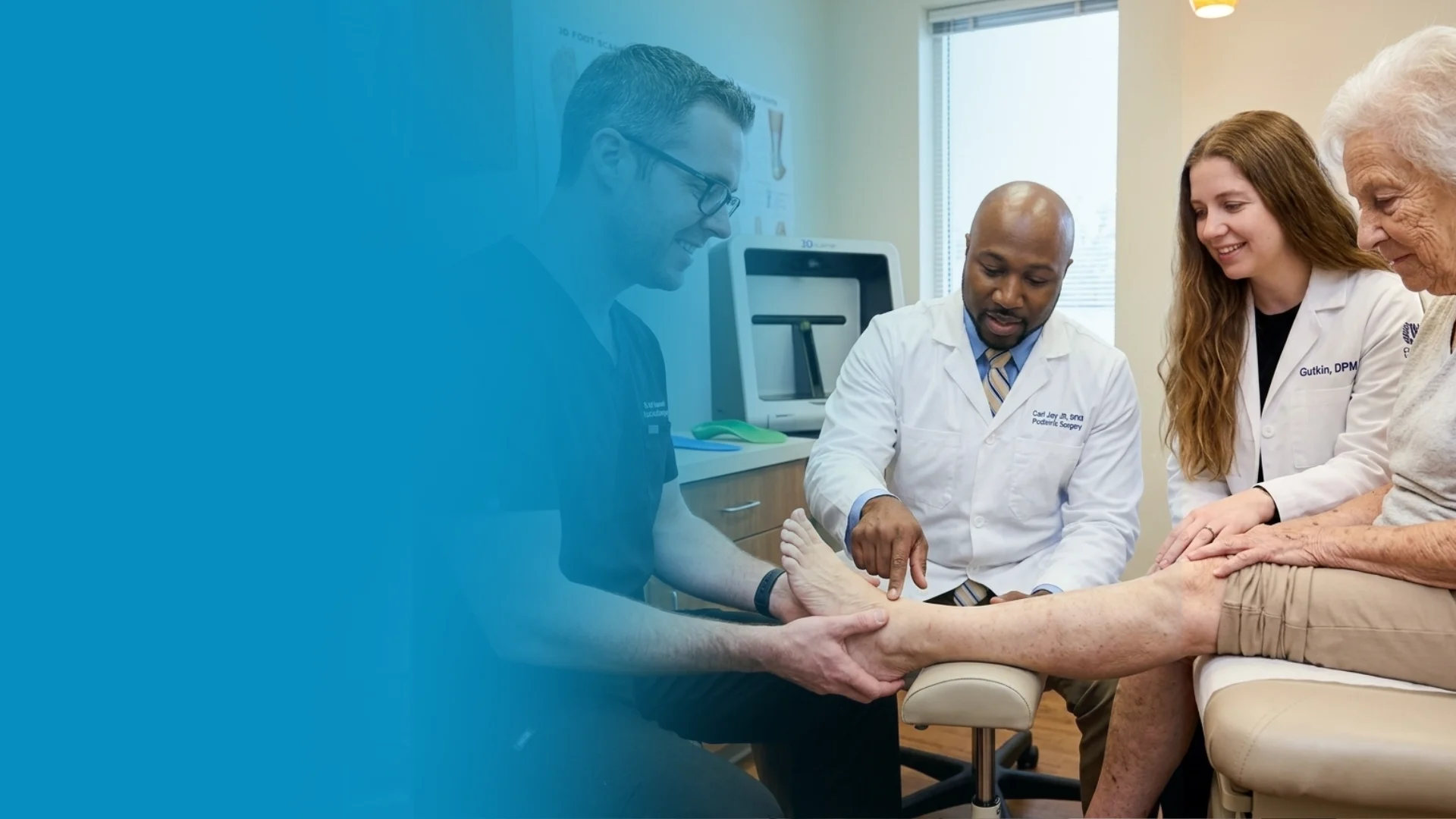
![How to Cure Plantar Fasciitis in One Week? [FAST Heel Pain Relief!]](https://www.michiganfootdoctors.com/wp-content/cache/flying-press/b5600c3bfb9845a6095da8266d8b5363.jpg)
Watch: How to Cure Plantar Fasciitis in One Week? [FAST Heel Pain Relief!] — MichiganFootDoctors YouTube
The most important clinical decision with Foot Pain After Knee Replacement isn’t which treatment to start with — it’s identifying the correct subtype. That changes everything. Call (810) 206-1402.
Foot Pain After Knee Replacement: Quick Answer
Foot pain after knee replacement is common but often overlooked – the changes in alignment, weight bearing, and activity affect feet significantly. We help dozens of post-knee-replacement patients yearly at Balance Foot and Ankle. Here is the comprehensive post-TKR foot care guide.
Why Knee Replacement Causes Foot Pain
Post-TKR foot effects: Altered gait during healing; changed leg length sometimes; new mechanics through repaired joint; sometimes stiffness affecting walk; sometimes weakness; weight bearing changes; rehabilitation activity changes; sometimes increased activity once knee improves; foot conditions previously masked by knee pain become apparent. Common scenario: Knee feels great, foot suddenly hurts.
Most Common Post-TKR Foot Issues
1. Plantar fasciitis: Often new or flares; from gait changes. 2. Foot fatigue: Common from new mechanics. 3. Achilles issues: From altered gait. 4. Old foot conditions revealed: Previously masked by knee pain. 5. Stress fractures: From increased activity. 6. Bunion progression: Sometimes accelerates. 7. Hammertoe pain: Sometimes worse with new gait. 8. Knee/ankle pain: Indirect from foot mechanics. 9. Foot/leg swelling: Post-surgical normal but persistent sometimes. 10. Increased activity injuries: New running/walking after long limitation.
Gait Changes Post-TKR
Post-TKR gait: Often different. Causes: Surgical repair; joint mechanics changes; sometimes leg length difference; muscle imbalances during healing; sometimes pain avoidance patterns. Foot effects: Different weight bearing; new pressure points; sometimes increased pronation or supination; foot conditions develop or flare. PT important: Address gait issues during rehabilitation.
Increased Activity After Knee Replacement
Post-TKR activity surge: Common. Pattern: Patient could barely walk pre-surgery; now wants to be very active; foot conditioning hasnt caught up. Foot consequences: Plantar fasciitis from sudden walking volume; stress fractures possible; foot fatigue. Prevention: Gradual activity progression; quality footwear; address foot conditions; sometimes orthotics needed.
Pre-Existing Foot Conditions Revealed
Common scenario: Knee pain limited activity; foot conditions present but not bothersome; post-TKR activity reveals foot conditions. Examples: Plantar fasciitis; bunions; Mortons neuroma; chronic ankle issues; heel fat pad atrophy. Approach: Address foot conditions; sometimes need orthotic evaluation; quality footwear.
Best Footwear Post-TKR
Recommendations: Quality cushioned supportive shoes; address gait changes; address pre-existing foot conditions. Top picks: Hoka Bondi 8 (max cushion); Brooks Glycerin 21; New Balance 1080v13; Vionic Tide. Replace regularly: Increased activity wears shoes; check support quality. Recovery shoes: Easy on/off helpful early after surgery.
Custom Orthotics Post-TKR
Post-TKR orthotic considerations: Address gait changes; address pre-existing foot conditions revealed; sometimes leg length compensation; address foot pain limiting rehabilitation. Many post-TKR patients benefit: Especially with developing foot pain; pre-existing foot conditions; complicated gait. Coordinate with PT: For comprehensive rehabilitation.
Persistent Post-Surgical Swelling
Post-TKR swelling: Often extends to feet. Pattern: Significant initial swelling; gradually improves over months; sometimes persistent for 6-12 months; rarely chronic. Management: Compression; elevation; activity (sometimes paradoxically); sometimes diuretics for short-term; rare cases need specialized evaluation. If asymmetric or sudden: Rule out DVT.
DVT Risk Post-TKR
DVT risk: Major concern after knee replacement. RED FLAGS: Calf pain (often unilateral); calf swelling; warmth; redness; sometimes shortness of breath (PE – emergency). Prevention: Early mobilization; compression stockings; prophylactic anticoagulation (per surgeon); ankle pump exercises. Monitor: Especially first 6 weeks post-surgery; sometimes longer.
When to See a Podiatrist
See us if: post-knee-replacement foot pain affecting rehabilitation; suspected plantar fasciitis from new activity; need orthotic evaluation; pre-existing foot conditions revealed by post-surgery activity; suspected stress fracture; persistent post-surgical foot swelling; need shoe recommendations for new activity level. Same-week appointments at Balance Foot and Ankle. Coordinate with orthopedic surgeon: For comprehensive recovery. Schedule online.
Podiatrist-Recommended Products


Frequently Asked Questions About Foot Pain After Knee Replacement
Why do my feet hurt after knee replacement?
Altered gait during healing; changed leg length sometimes; new mechanics through repaired joint; sometimes stiffness affecting walk; sometimes weakness; weight bearing changes; rehabilitation activity changes; sometimes increased activity once knee improves.
Why did my foot suddenly start hurting after knee replacement?
Common scenario: knee pain limited activity; foot conditions present but not bothersome; post-TKR activity reveals foot conditions. Examples: plantar fasciitis; bunions; Mortons neuroma; chronic ankle issues. Address with podiatrist.
Should I worry about blood clots after knee replacement?
YES – major concern. RED FLAGS: calf pain (often unilateral); calf swelling; warmth; redness; sometimes shortness of breath (PE – emergency). Prevention: early mobilization; compression stockings; prophylactic anticoagulation. Monitor especially first 6 weeks.
Is foot swelling normal after knee replacement?
YES – significant initial swelling; gradually improves over months; sometimes persistent for 6-12 months. Management: compression; elevation; activity. If asymmetric or sudden: rule out DVT.
What shoes should I wear after knee replacement?
Quality cushioned supportive shoes: Hoka Bondi 8 (max cushion); Brooks Glycerin 21; New Balance 1080v13; Vionic Tide. Easy on/off helpful early. Replace regularly – increased activity wears shoes.
Should I get orthotics after knee replacement?
OFTEN YES if developing foot pain. Address gait changes; pre-existing foot conditions revealed; sometimes leg length compensation; address foot pain limiting rehabilitation. Coordinate with physical therapist.
When should I see a podiatrist after knee replacement?
Post-knee-replacement foot pain affecting rehabilitation; suspected plantar fasciitis from new activity; need orthotic evaluation; pre-existing foot conditions revealed; suspected stress fracture; persistent post-surgical foot swelling; need shoe recommendations.
Related Resources from Balance Foot & Ankle
Still Dealing With Foot Pain After Knee Replacement?
Same-week appointments at Balance Foot & Ankle in Howell & Bloomfield Township, MI.
Book Your Appointment⚕ Doctor Recommended
Doctor Hoy’s Natural Pain ReliefTopical relief for foot & ankle pain
View Product →Frequently Asked Questions
Podiatrist-Recommended Products
These are the products Dr. Tom recommends most often in his clinic at Balance Foot & Ankle for lasting foot pain relief:
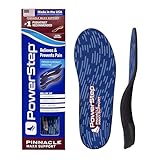
- PowerStep Pinnacle Arch Support Insoles — #1 clinic recommendation for arch support and heel pain relief
- Doctor Hoy’s Natural Pain Relief Gel — Fast-acting topical relief used and trusted by podiatrists
- CURREX RunPro Insoles — Dynamic arch profile for active patients and runners
As an Amazon Associate, Balance Foot & Ankle earns from qualifying purchases. These recommendations reflect genuine clinical use.
In-Office Treatment at Balance Foot & Ankle
If home treatment isn’t providing relief for your foot pain after knee replacement, our podiatry team at Balance Foot & Ankle can help with same-day evaluations and advanced in-office care.
Total Knee Replacement – Recovery (AAOS OrthoInfo)
Ready to Get Relief?
Same-day appointments available in Howell & Bloomfield Township, MI
4.9★ | 1,123 Reviews | 3,000+ Surgeries
Or call: (810) 206-1402

Dr. Tom Biernacki, DPM is a board-certified foot & ankle surgeon (ABFAS & ABPM) at Balance Foot & Ankle Specialists in Southeast Michigan. With over a decade of clinical experience, he specializes in heel pain, bunions, diabetic foot care, sports injuries, and minimally invasive surgery. Dr. Biernacki is a member of the APMA and ACFAS, and his patient education content on MichiganFootDoctors.com and YouTube has made him one of the most-followed foot & ankle educators on YouTube.