

Quick answer: Gait Analysis Abnormal Patterns Podiatric Evaluation is a common foot/ankle topic that affects many patients. Effective treatment starts with a targeted diagnosis, conservative-first treatment, and escalation only when needed. We treat this regularly at our Howell and Bloomfield Township practices. Call (810) 206-1402.
Medically reviewed by Dr. Tom Biernacki, DPM · Board-Certified Podiatric Surgeon · Last reviewed: April 2026 · Editorial Policy
The most important clinical decision with Gait Analysis Abnormal Patterns Podiatric Evaluation isn’t which treatment to start with — it’s identifying the correct subtype. That changes everything. Call (810) 206-1402.
Quick Answer
Gait Analysis: Identifying Abnormal Patterns and Their Podia relates to foot pain — typically caused by overuse, footwear, or biomechanics. Most patients improve in 6-12 weeks with conservative care. Same-week appointments in Howell + Bloomfield Township: (810) 206-1402.

Medically reviewed by Dr. Tom Biernacki, DPM — Board-Certified Podiatric Surgeon — Balance Foot & Ankle, Howell & Bloomfield Township, MI. Last updated April 2026.
▶ Watch

Medically Reviewed by Dr. Tom Biernacki, DPM — Board-Certified Podiatrist, Balance Foot & Ankle Specialists, Michigan. Last updated April 2026.
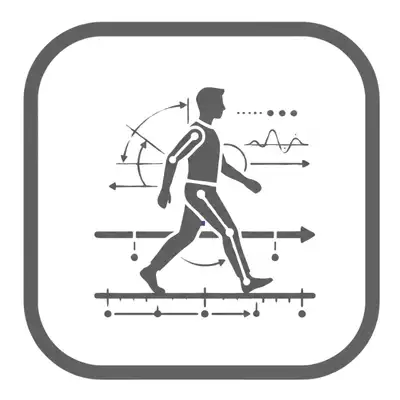
Gait analysis — systematic observation and measurement of walking mechanics — is an underused clinical tool that identifies the biomechanical causes of foot and ankle pain, abnormal wear patterns, and overuse injury risk. A thorough gait assessment explains why treatments that address symptoms but not mechanics often provide temporary rather than lasting relief.
The Normal Gait Cycle
Normal gait divides into stance phase (60% of the cycle, foot on the ground) and swing phase (40%, foot in the air). Stance phase consists of initial contact (heel strike), loading response (weight acceptance), midstance (single-limb support), terminal stance (heel rise), and pre-swing (toe-off). Swing phase consists of initial swing, mid-swing, and terminal swing.
Normal ankle mechanics: 10° of dorsiflexion is required for smooth midstance; 20° of dorsiflexion is required for running. The foot transitions from a supinated (rigid) position at heel strike to a pronated (flexible) position in midstance for shock absorption, then re-supinates for a rigid lever push-off at terminal stance. Any disruption of this supination-pronation-supination cycle creates compensatory changes throughout the kinetic chain.
Observational Gait Assessment
Clinical gait observation assesses multiple planes simultaneously. From the front: foot progression angle (normal: 10–15° external rotation), knee alignment, pelvic tilt, and arm swing symmetry. From the side: heel strike timing, midstance knee flexion angle, trunk lean, and push-off vigor. From behind: heel alignment at midstance (should be neutral to slight valgus), Achilles tendon angle, and pelvic drop (Trendelenburg).
Key abnormalities to identify: excessive pronation (calcaneal eversion >10°, medial arch collapse, ankle valgus), excessive supination (high arches, lateral foot overloading), antalgic gait (shortened stance phase on the painful limb), Trendelenburg gait (pelvic drop indicating hip abductor weakness), steppage gait (exaggerated hip and knee flexion in swing to clear a dropped foot), and limb length discrepancy (vaulting on the shorter limb).
Computerized Gait Analysis
Instrumented gait analysis adds quantitative data to clinical observation. Pedobarography (plantar pressure measurement) maps pressure distribution across the plantar surface during walking, identifying high-pressure zones that cause callus, ulceration, and metatarsal stress fractures. Force plate analysis measures ground reaction forces. Motion capture systems track three-dimensional joint kinematics and kinetics. These tools are particularly valuable for complex deformity planning and surgical outcome assessment.
In-shoe pressure insoles provide dynamic data during normal footwear use, revealing how orthotic modifications change loading patterns. This feedback guides iterative orthotic adjustments for optimal pressure redistribution.
Common Gait Abnormalities and Their Causes
Excessive pronation is the most common gait abnormality evaluated in podiatric practice. Structural causes include flexible flatfoot, forefoot varus, rearfoot valgus, and leg length discrepancy causing compensatory foot abduction. Functional causes include tight Achilles tendon (forcing early heel rise and compensation through subtalar pronation), weak hip abductors, and tibial internal rotation. Custom orthotics with rearfoot posting and medial arch support control excessive pronation at its source.
Antalgic gait modifications — walking on the outside of the foot to avoid metatarsal head pressure, toe walking to avoid heel contact in plantar fasciitis or Achilles pathology — create secondary overuse injuries in previously unaffected structures. Identifying the original pain source and treating it resolves the compensatory gait pattern.
Equinus gait (toe walking or reduced heel strike) from tight gastrocnemius-soleus complex has downstream effects throughout the foot: increased forefoot loading contributing to metatarsalgia and plantar fasciitis, compensation through excessive midfoot pronation, and secondary hallux valgus progression. Achilles-calf complex stretching and, when conservative measures fail, gastrocnemius recession address equinus as a system-wide biomechanical disorder.
At Balance Foot & Ankle, Dr. Biernacki performs comprehensive gait and biomechanical evaluation as part of all new patient assessments at both Bloomfield Township and Howell offices, identifying and addressing the mechanical contributors to pain rather than symptoms alone. Call (810) 206-1402 to schedule an evaluation.
Schedule Your Appointment at Balance Foot & Ankle
Board-certified podiatric physician and surgeon serving Southeast Michigan from Bloomfield Township and Howell.
📞 (810) 206-1402 |
📧 Get Dr. Tom’s Free Lab Test Guide
Discover the 5 lab tests every person over 35 should ask their doctor about — explained in plain English by a board-certified physician.
📍 Located in Michigan?
Our board-certified podiatrists treat this condition at two convenient locations. Same-day appointments often available.

Insurance Accepted
BCBS · Medicare · Aetna · Cigna · United Healthcare · HAP · Priority Health · Humana · View All →
Howell Office
4330 E Grand River Ave
Howell, MI 48843
Get Directions →
Bloomfield Township Office
43494 Woodward Ave, #208
Bloomfield Township, MI 48302
Get Directions →
Your Board-Certified Podiatrists



Ready to Get Back on Your Feet?
Same-week appointments available at both locations.
Book Your AppointmentWatch: Dr. Tom explains
Podiatrist-recommended products
As an Amazon Associate, Dr. Tom earns from qualifying purchases.
Off-the-shelf test for gait-corrective response.
View on Amazon →Forefoot support for gait-related metatarsalgia.
View on Amazon →Relief for gait-related overuse inflammation.
View on Amazon →Topical comfort for gait-related muscle fatigue.
View on Amazon →Related resources
Ready to solve this? Book today.
Same-week appointments · Howell & Bloomfield Township · 4.9★ (1,123+ reviews)
☎ (810) 206-1402Book Online →More Podiatrist-Recommended Foot Health Essentials
Hoka Clifton 10


Max-cushion everyday shoe — podiatrist favorite for walking and running.

OOFOS Recovery Slide

Impact-absorbing recovery sandal — wear after long days on your feet.
As an Amazon Associate, Balance Foot & Ankle earns from qualifying purchases. Product recommendations are based on clinical experience; prices and availability shown above update live from Amazon.
When to See a Podiatrist
If foot or ankle pain has been bothering you for more than a few weeks, home care alone may not be enough. Balance Foot & Ankle offers same-week appointments at our Howell and Bloomfield Township clinics — no referral needed in most cases. Bring your current shoes and a short list of symptoms and we’ll build you a treatment plan in one visit.
Call Balance Foot & Ankle: (810) 206-1402 · Book online · Offices in Howell & Bloomfield Township
In-Office Treatment at Balance Foot & Ankle
When conservative care isn’t enough, Dr. Tom Biernacki and the team at Balance Foot & Ankle offer advanced, same-day options — including Gait Analysis Michigan at our Howell and Bloomfield Township clinics.
Same-day appointments available. Call (810) 206-1402 or book online.
Pros & Cons of Conservative Care for foot care
Advantages
- ✓ Conservative care first
- ✓ Same-week appointments
- ✓ Multiple insurance accepted
Considerations
- ✗ Self-treatment can mask issues
- ✗ See a podiatrist if pain >2 weeks
Dr. Tom’s Recommended Products for foot care
Affiliate disclosure: As an Amazon Associate, Balance Foot & Ankle earns from qualifying purchases. We only recommend products we use with patients.
Footnanny Heel Cream Dr. Tom’s Pick
Best for: Daily moisturizer for cracked heels
Ready to Get Back on Your Feet?
Same-day appointments in Howell + Bloomfield Township. Most insurance accepted. Dr. Tom Biernacki, DPM & team.
Book Today — Same-Day Appointments Available
Call Now: (810) 206-1402
About Your Care Team at Balance Foot & Ankle
Dr. Tom Biernacki, DPM · Board-Certified Foot & Ankle Surgeon. Specializes in conservative-first care, minimally invasive bunion surgery, and complex reconstruction.
Dr. Carl Jay, DPM · Accepting new patients. Specializes in sports medicine, athletic injuries, and routine podiatric care.
Dr. Daria Gutkin, DPM, AACFAS · Accepting new patients. Specializes in surgical reconstruction and pediatric podiatry.
Locations: 4330 E Grand River Ave, Howell, MI 48843 · 43494 Woodward Ave Suite 208, Bloomfield Township, MI 48302
Hours: Mon–Fri 8:00 AM – 5:00 PM · (810) 206-1402
In-Office Treatment at Balance Foot & Ankle
If home treatment isn’t providing relief for your foot and ankle conditions, our podiatry team at Balance Foot & Ankle can help with same-day evaluations and advanced in-office care.
Same-day appointments available. (810) 206-1402
Get Expert Care at Balance Foot & Ankle
Same-week appointments at our Howell and Bloomfield Township offices. Board-certified podiatric surgeons. Most insurance accepted.
Ready for Expert Care?
Same-day appointments in Howell & Bloomfield Township, MI.
4.9★ | 1,123 Reviews | 3,000+ Surgeries
Or call: (810) 206-1402

Dr. Tom Biernacki, DPM is a board-certified foot & ankle surgeon (ABFAS & ABPM) at Balance Foot & Ankle Specialists in Southeast Michigan. With over a decade of clinical experience, he specializes in heel pain, bunions, diabetic foot care, sports injuries, and minimally invasive surgery. Dr. Biernacki is a member of the APMA and ACFAS, and his patient education content on MichiganFootDoctors.com and YouTube has made him one of the most-followed foot & ankle educators on YouTube.