

Quick answer: Heart Disease Foot Health Cardiologist Michigan is a clinical condition that responds to evidence-based treatment when caught early. Symptoms include pain, swelling, and altered function. Diagnosis requires clinical exam, often imaging. Treatment ladder: conservative care first (4-6 weeks), then targeted interventions if needed. Call (810) 206-1402.
Medically reviewed by Dr. Tom Biernacki, DPM · Board-Certified Podiatric Surgeon · Last reviewed: April 2026 · Editorial Policy
In This Article
- Heart Disease Has Foot Consequences — Here’s What to Watch For
- Congestive Heart Failure and Foot Swelling
- Atrial Fibrillation, Blood Thinners, and Foot Care
- PAD: The Cardiac-Podiatric Intersection
- Heart Disease and Foot Health in Michigan: How Cardiovascular Disease Affects Your Feet
- Your Board-Certified Podiatrists
- Pros & Cons of Conservative Care for foot care
- Dr. Tom’s Recommended Products for foot care
The most important clinical decision with Heart Disease Foot Health Cardiologist Michigan isn’t which treatment to start with — it’s identifying the correct subtype. That changes everything. Call (810) 206-1402.
Related Conditions
Medically reviewed by Dr. Tom Biernacki, DPM
Board-certified podiatric surgeon | Balance Foot & Ankle
Last reviewed: May 2026

Heart Disease & Foot Health — What Your Cardiologist Wants You to Know
Heart Disease Has Foot Consequences — Here’s What to Watch For
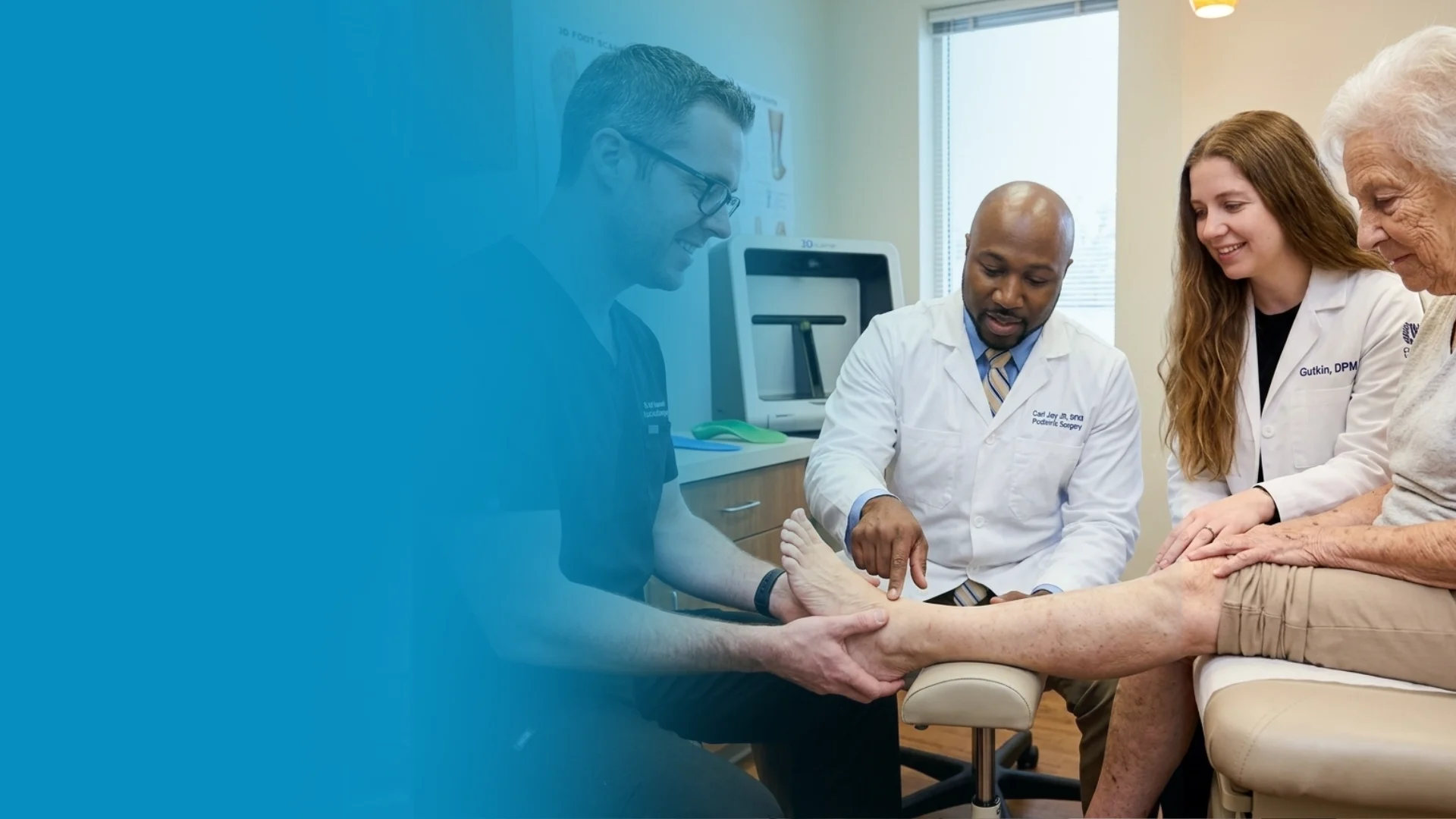
Cardiologists manage the heart. But heart disease sends ripple effects throughout the body — including all the way to the feet. At Balance Foot & Ankle, we see the foot consequences of cardiac conditions regularly, and we work with patients whose cardiologists have identified foot health as part of their overall cardiovascular management.
Congestive Heart Failure and Foot Swelling
CHF causes fluid retention that pools in the lowest points of the body — the feet and ankles. This chronic edema stretches skin, increases infection risk, impairs wound healing, and over time can cause skin breakdown. Managing foot health in CHF patients requires edema monitoring, compression guidance, skin protection, and watchfulness for early breakdown.
Atrial Fibrillation, Blood Thinners, and Foot Care
Most AFib patients take anticoagulants (Eliquis, Xarelto, Warfarin) that significantly change the risk profile of foot care. Even small nail care nicks can bleed excessively. Medical-grade nail care with trained podiatrists using careful technique is essential for these patients.
PAD: The Cardiac-Podiatric Intersection
Peripheral arterial disease is caused by the same atherosclerotic process as coronary artery disease — it’s a systemic vascular disease. Cardiologists managing coronary disease should expect their patients to have concomitant PAD affecting the feet, and podiatric assessment and foot protection are integral to vascular disease management.
Our Howell office coordinates with Vassallo Medical Group (same road — Grand River Ave) for patients with diabetes, vascular disease, and systemic conditions. Coordinated care for Livingston County patients.
📞 (810) 206-1402 | Howell, MI
✅ MLS Dual-Wavelength Laser — FDA-cleared
✅ EPAT Shockwave Therapy — 80%+ success rate
✅ Magnetotransduction (EMTT) — Deep electromagnetic healing
✅ 3D-Scanned Custom Orthotics
✅ Toenail Fungus Laser
✅ In-Office X-Ray & Ultrasound
✅ Diabetic Shoe Program — Medicare-covered
📞 (810) 206-1402 | Howell & Bloomfield Hills
Call (810) 206-1402. Comprehensive foot care for cardiac patients at our Howell and Bloomfield Hills offices.
Heart Disease and Foot Health in Michigan: How Cardiovascular Disease Affects Your Feet
Cardiovascular disease and foot health are more closely connected than most Michigan patients realize. Peripheral arterial disease (PAD) — atherosclerotic narrowing of the arteries supplying the lower extremities — is a manifestation of the same systemic vascular disease that causes coronary artery disease and stroke, and patients with known coronary artery disease have a significantly elevated prevalence of PAD. PAD reduces blood flow to the feet, impairing the wound healing capacity that prevents small foot injuries from becoming dangerous ulcers. Heart failure causes bilateral lower extremity edema that increases the risk of skin breakdown, venous stasis changes, and secondary infections. Atrial fibrillation and other cardiac arrhythmias managed with warfarin or DOAC anticoagulants require specific nail care protocols to prevent bleeding complications from routine debridement.
Michigan patients with heart disease — coronary artery disease, heart failure, atrial fibrillation, or peripheral arterial disease — should ensure that their foot care is performed by a podiatrist who understands the cardiovascular context rather than attempting self-care or relying on a standard nail salon. At Balance Foot & Ankle, we perform ankle-brachial index (ABI) screening at the initial diabetic and high-risk foot evaluation to quantify arterial flow to the feet, and we refer for urgent vascular surgery evaluation when ABI findings suggest limb-threatening ischemia. Michigan cardiologists and cardiac surgeons whose patients have foot concerns are welcome to contact our Howell or Bloomfield Hills offices directly at (810) 206-1402 to support coordinated podiatric care for their cardiac patients.
Related Treatment Guides
- Plantar Fasciitis & Heel Pain Treatment
- Custom 3D Orthotics
- Sports Foot & Ankle Injury Treatment
- Bunion Treatment
Michigan patients with systemic conditions affecting their feet deserve coordinated care that addresses both the underlying disease and its foot manifestations. Balance Foot & Ankle works collaboratively with endocrinologists, cardiologists, rheumatologists, neurologists, and primary care physicians throughout Livingston and Oakland counties to provide podiatric care that integrates with the patient’s overall treatment plan. When a systemic disease is driving foot complications, managing the foot without optimizing the underlying disease — and managing the underlying disease without addressing the foot complications it produces — produces inferior outcomes. Call us at (810) 206-1402 to schedule a hands-on exam plus imaging when needed at our Howell or Bloomfield Hills office, and bring your list of current physicians so we can coordinate your care appropriately.
Medical References & Sources
- American Podiatric Medical Association — Patient Education
- American Orthopaedic Foot & Ankle Society — Foot Conditions

Join 950,000+ Learning About Foot Health
Dr. Tom shares honest medical advice, supplement reviews, and treatment guides you won’t find anywhere else.
📍 Located in Michigan?
Our board-certified podiatrists treat this condition at two convenient locations. Same-day appointments often available.
Insurance Accepted
BCBS · Medicare · Aetna · Cigna · United Healthcare · HAP · Priority Health · Humana · View All →
Howell Office
4330 E Grand River Ave
Howell, MI 48843
Get Directions →
Bloomfield Hills Office
43494 Woodward Ave, #208
Bloomfield Hills, MI 48302
Get Directions →
Your Board-Certified Podiatrists



Ready to Get Back on Your Feet?
Same-week appointments available at both locations.
Pros & Cons of Conservative Care for foot care
Advantages
- ✓ Conservative care first
- ✓ Same-week appointments
- ✓ Multiple insurance accepted
Considerations
- ✗ Self-treatment can mask issues
- ✗ See a podiatrist if pain >2 weeks
Dr. Tom’s Recommended Products for foot care
Affiliate disclosure: As an Amazon Associate, Balance Foot & Ankle earns from qualifying purchases. We only recommend products we use with patients.
Footnanny Heel Cream Dr. Tom’s Pick
Best for: Daily moisturizer for cracked heels
Ready to Get Back on Your Feet?
Same-day appointments in Howell + Bloomfield Hills. Most insurance accepted. Dr. Tom Biernacki, DPM & team.
Book Today — Same-Day Appointments Available
Call Now: (810) 206-1402
About Your Care Team at Balance Foot & Ankle
Dr. Tom Biernacki, DPM · Board-Certified Foot & Ankle Surgeon. Specializes in conservative-first care, minimally invasive bunion surgery, and complex reconstruction.
Dr. Carl Jay, DPM · Accepting new patients. Specializes in sports medicine, athletic injuries, and routine podiatric care.
Dr. Daria Gutkin, DPM, AACFAS · Accepting new patients. Specializes in surgical reconstruction and pediatric podiatry.
Locations: 4330 E Grand River Ave, Howell, MI 48843 · 43494 Woodward Ave Suite 208, Bloomfield Hills, MI 48302
Hours: Mon–Fri 8:00 AM – 5:00 PM · (810) 206-1402
Visit Balance Foot & Ankle — Same-Day Appointments Available
Our podiatry team serves patients throughout Michigan including Howell, Brighton, and Bloomfield Hills. If you’re dealing with heel pain, ingrown toenails, or a foot injury, we have same-day appointment availability.
Same-day appointments available. (810) 206-1402
Doctor Hoy’s Natural Pain Relief Gel
Natural topical pain relief I use in our clinic. Arnica + camphor formula — apply directly to the area 3–4x daily. ($20–25)
Frequently Asked Questions
When should I see a podiatrist?
See a podiatrist if: foot or ankle pain has lasted more than 2–4 weeks without improvement, you’re changing your gait to avoid pain, you have an open wound or sore that isn’t healing, you notice nail discoloration or thickening, you have diabetes and any foot concern, or pain is severe enough to wake you at night. Most foot conditions are easier and cheaper to treat early — what starts as a minor issue can become a surgical problem with months of delay.
What is the difference between a podiatrist and an orthopedic surgeon?
Podiatrists (DPM — Doctor of Podiatric Medicine) specialize exclusively in the foot, ankle, and lower leg. Orthopedic surgeons (MD/DO) have broader musculoskeletal training but variable foot/ankle subspecialization. For foot and ankle-specific problems, a podiatrist often has more focused training and experience. For injuries involving the leg above the ankle, complex pediatric cases, or multi-level reconstruction, orthopedic consultation may be appropriate. We frequently co-manage patients with orthopedic colleagues.
How do I know if my foot pain is serious?
Signs that warrant same-day or next-day evaluation: severe pain that appeared suddenly without clear cause, swelling, redness, and warmth that appeared suddenly (possible gout, infection, or Charcot fracture), an open wound that looks infected (redness spreading, pus, warmth), inability to bear weight, or any foot problem in a diabetic patient. Pain that’s been present for weeks and is stable is important but not an emergency — schedule within 1–2 weeks.
Can foot problems cause back and knee pain?
Yes — this is a kinetic chain effect. Abnormal foot mechanics (overpronation, supination, leg length discrepancy) cause compensatory changes in knee, hip, and lumbar alignment. Roughly 30% of patients presenting to our clinic with knee pain have a treatable foot-level biomechanical cause. Correcting foot mechanics with orthotics or appropriate footwear often provides significant knee and back relief. If you have chronic knee or back pain and haven’t had your foot mechanics evaluated, it’s worth a consult.
Are orthotics worth it?
For the right conditions, yes — custom orthotics are among the most cost-effective interventions in podiatry. They’re most effective for: plantar fasciitis, flat feet with secondary knee/back pain, leg length discrepancy, metatarsalgia, posterior tibial tendon dysfunction, and diabetic foot pressure management. Quality OTC orthotics ($35–60) resolve symptoms for 60% of patients with mild-to-moderate conditions. Custom orthotics are appropriate when OTC options have failed or when the biomechanical problem is complex. We cast custom orthotics in-office.
How do I choose the right running shoes?
Start with your foot type (flat, neutral, high arch) and running pattern (overpronator, neutral, supinator). Flat feet and overpronators do best in stability or motion-control shoes. Neutral feet do well in neutral-cushioned shoes. High arches need maximum cushioning with flexible soles. Always buy running shoes at the end of the day (foot swelling peaks then), get properly fitted by a specialist, and replace every 300–500 miles. If you’ve been injured repeatedly, a gait analysis can identify the mechanical flaw driving your injury pattern.
What is the difference between a sprain and a fracture?
A sprain is a ligament injury (the tissue connecting bones); a fracture is a break in the bone itself. Both can occur with the same trauma (ankle roll, fall). The old test — ‘if you can walk, it’s not broken’ — is wrong; many fractures are initially weight-bearable. Key differences: a fracture typically produces localized bone tenderness along the bone itself, while a sprain is tender over the ligament. X-ray is the standard to differentiate. High-grade sprains without proper treatment can be as disabling as fractures.
How do I prevent foot and ankle injuries?
The four most impactful prevention strategies: (1) Supportive, appropriately fitted footwear for your foot type and activity. (2) Gradual activity progression — the 10% rule (never increase weekly mileage or intensity by more than 10%). (3) Regular calf and ankle mobility work. (4) Strengthening the posterior tibial tendon, peroneals, and intrinsic foot muscles. Most overuse injuries are preventable; most acute injuries are not — but ankle sprain recurrence (60–70% without rehab) is prevented by balance and proprioception training.
Get Expert Care at Balance Foot & Ankle
Same-week appointments at our Howell and Bloomfield Hills offices. Board-certified podiatric surgeons. Most insurance accepted.
Ready for Expert Care?
Same-day appointments in Howell & Bloomfield Hills, MI.
4.9★ | 1,123 Reviews | 3,000+ Surgeries
Or call: (810) 206-1402

Dr. Tom Biernacki, DPM is a board-certified foot & ankle surgeon (ABFAS & ABPM) at Balance Foot & Ankle Specialists in Southeast Michigan. With over a decade of clinical experience, he specializes in heel pain, bunions, diabetic foot care, sports injuries, and minimally invasive surgery. Dr. Biernacki is a member of the APMA and ACFAS, and his patient education content on MichiganFootDoctors.com and YouTube has made him one of the most-followed foot & ankle educators on YouTube.