

Medically reviewed by Dr. Tom Biernacki, DPM — Board-certified foot & ankle surgeon, 3,000+ surgeries performed. Updated April 2026 with current clinical evidence. This article reflects real practice experience from Balance Foot & Ankle Specialists in Howell and Bloomfield Township, Michigan.
The most important clinical decision with Inline Skating Rollerblading Foot Ankle Injuries isn’t which treatment to start with — it’s identifying the correct subtype. That changes everything. Call (810) 206-1402.
Quick Answer
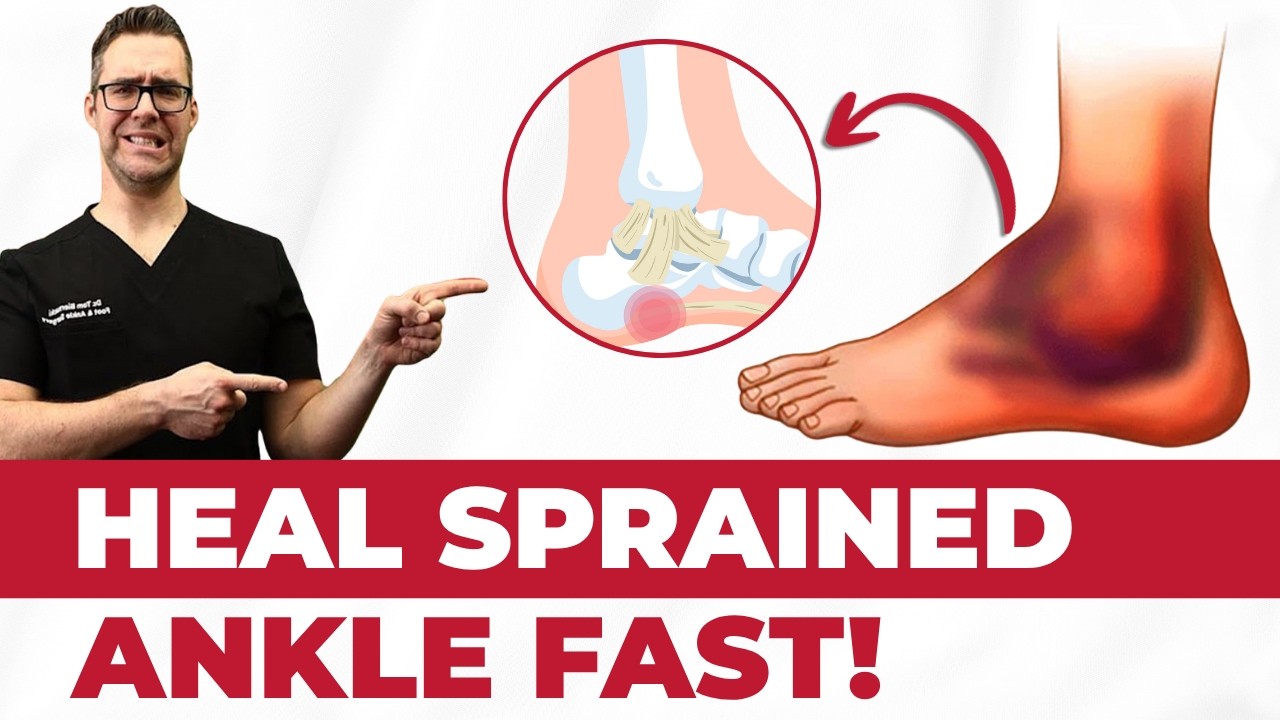
An ankle sprain is a stretch or tear of the lateral ligaments caused by an inward roll of the foot. Grades 1-2 respond to RICE, bracing, and progressive loading within 2-4 weeks. See a podiatrist same-day if you cannot bear weight, have bone tenderness, or severe swelling within 1 hour (Ottawa Rules).
Watch: Dr. Tom Biernacki, DPM

Medically reviewed by Dr. Tom Biernacki, DPM — Board-Certified Podiatric Surgeon — Balance Foot & Ankle, Howell & Bloomfield Township, MI. Last updated April 2026.
▶ Watch

Medically reviewed by Dr. Tom Biernacki, DPM | Board-certified podiatrist | 3,000+ surgeries performed
Last updated: April 2, 2026
Common Inline Skating Foot Injuries
Ankle fractures account for the most serious inline skating injuries. Unlike ice skates which allow some lateral ankle motion, inline skate boots transfer lateral forces directly to the ankle joint. Falls from catching a wheel edge or losing balance on uneven surfaces create inversion or eversion moments that exceed ligament and bone tolerance.
Achilles tendinopathy develops from the sustained plantarflexion position maintained during skating. The boot tongue presses against the anterior ankle during the push-off phase, while the Achilles tendon is loaded eccentrically during each stride recovery. Weekend skaters who suddenly increase mileage are most susceptible to this overuse pattern.
Metatarsal stress reactions and fractures develop from the sustained foot pressure against the rigid boot sole during propulsion. The second and third metatarsals bear the highest loads during the toe-off phase of the skating stride. Haglund deformity (pump bump) forms where the rigid posterior boot counter rubs against the calcaneal prominence — a condition we see frequently in dedicated inline skaters.
Proper Inline Skate Boot Fit
The boot should fit snugly around the entire foot with minimal dead space. Your toes should lightly brush the front of the boot when standing upright, then pull back slightly when you flex into skating position. Excessive room allows the foot to slide within the boot, creating friction blisters and reducing edge control.
Heel lockdown is the single most important fit parameter. Your heel should not lift when you dorsiflex the ankle. Heel slippage within the boot multiplies Achilles tendon strain and reduces power transfer to the wheels. Use the “kick test” — tap your heel firmly on the ground before tightening, then lace from the bottom up with extra tension through the ankle closure.
Heat-moldable liners, available in many performance inline skates, allow custom conformity to individual foot anatomy. For skaters with wider forefeet, punch-out modifications to the boot shell create localized room over bunion and fifth metatarsal prominences without compromising the overall fit. PowerStep Pinnacle insoles trimmed to fit inside skate boots improve arch support and pressure distribution.
Ankle Sprain Prevention and Treatment
Inline skating ankle sprains occur predominantly as inversion injuries during lateral falls or wheel catches. The boot provides some mechanical restraint, but forces that exceed the boot’s range of motion are transmitted directly to ligaments. The anterior talofibular ligament (ATFL) bears the primary load and tears first in most skating sprains.
Prevention centers on progressive skill development. Learning to fall safely (forward onto wrist guards and knee pads rather than sideways onto ankles), maintaining a low center of gravity, and mastering the T-stop and heel brake reduce acute injury risk. Skating on smooth, well-maintained surfaces eliminates the surface irregularities that catch wheels.
Acute ankle sprains in skaters follow standard POLICE protocol (Protection, Optimal Loading, Ice, Compression, Elevation). Grade I sprains allow return to skating in 1-2 weeks with ankle taping or bracing inside the boot. Grade II sprains require 3-6 weeks of rehabilitation before return. Grade III sprains with complete ATFL tear may require immobilization or surgical evaluation.
Overuse Injuries and Management
Shin splints (medial tibial stress syndrome) plague inline skaters because the anterior tibialis muscle contracts isometrically throughout the skating stride to maintain dorsiflexion against boot pressure. Progressive mileage increases exceeding 10% per week overwhelm the muscle’s adaptive capacity. Treatment involves relative rest, calf and shin stretching, and gradual return.
Extensor tendinitis across the dorsal foot develops from overtightened boot laces. The extensor tendons become compressed and inflamed where they cross under the tongue of the boot. Lace window modification — skipping the lace holes directly over the tender area — provides immediate relief while maintaining overall boot security.
Blisters and skin friction injuries are preventable with proper sock selection. Moisture-wicking synthetic or merino wool socks reduce friction coefficients by keeping the skin dry. DASS compression socks provide both moisture management and graduated compression that reduces foot fatigue during long skating sessions. Doctor Hoy’s gel applied to friction-prone areas before skating creates an additional protective layer.
Protective Equipment Recommendations
Wrist guards prevent the most common inline skating injury (wrist fracture from forward falls). Knee pads protect against patellar fractures and road rash. Elbow pads prevent olecranon fractures. Helmets prevent head injuries. The complete protective set should be non-negotiable for all skating sessions — experienced skaters are more likely to sustain serious injury from high-speed falls than beginners.
Ankle braces worn inside inline skate boots provide supplemental stability without interfering with boot fit in most cases. For skaters with prior ankle sprains or known ligament laxity, a low-profile ankle brace provides meaningful injury reduction. Choose braces that fit within the boot without creating new pressure points.
High-visibility clothing and LED wheel lights improve safety during dusk and evening skating. Traffic-related injuries account for a significant proportion of serious inline skating trauma in urban environments.
In-Office Treatment at Balance Foot & Ankle
Dr. Tom Biernacki provides sport-specific inline skating injury evaluation including boot fit assessment, biomechanical analysis, and return-to-sport planning. Our team understands the unique demands of skating and tailors treatment to get you back on wheels safely.
Same-day appointments available. Call (810) 206-1402 or visit michiganfootdoctors.com/new-patient-information/ to schedule.
The Most Common Mistake We See
The most common mistake we see is skating without protective gear because “I’m experienced.” Advanced skaters travel at higher speeds, attempt more aggressive maneuvers, and suffer more severe injuries when they fall. Wrist guards alone prevent the most common fracture in inline skating. Gear up every time.
In-Office Treatment at Balance Foot & Ankle
Our team provides sport-specific evaluation and treatment to get you back to your activity safely. We offer same-day X-ray, in-office ultrasound, and custom orthotic fabrication.
Same-day appointments available. Call (810) 206-1402 or book online.
More Podiatrist-Recommended Foot Health Essentials
Hoka Clifton 10

Max-cushion everyday shoe — podiatrist favorite for walking and running.

OOFOS Recovery Slide

Impact-absorbing recovery sandal — wear after long days on your feet.
As an Amazon Associate, Balance Foot & Ankle earns from qualifying purchases. Product recommendations are based on clinical experience; prices and availability shown above update live from Amazon.
When to See a Podiatrist
If foot or ankle pain has been bothering you for more than a few weeks, home care alone may not be enough. Balance Foot & Ankle offers same-week appointments at our Howell and Bloomfield Township clinics — no referral needed in most cases. Bring your current shoes and a short list of symptoms and we’ll build you a treatment plan in one visit.
Call Balance Foot & Ankle: (810) 206-1402 · Book online · Offices in Howell & Bloomfield Township
Frequently Asked Questions
What are the most common inline skating foot injuries?
Ankle fractures and sprains from falls, Achilles tendinopathy from repetitive push-off strain, metatarsal stress reactions from boot pressure, and Haglund deformity from posterior boot irritation are the most frequent. Proper boot fit and protective equipment prevent the majority of these injuries.
How should inline skates fit?
Skates should fit snugly with toes lightly touching the front in standing position. The heel must not lift during dorsiflexion. Lace firmly from bottom up with extra tension at the ankle. Heat-moldable liners improve custom fit. There should be minimal dead space inside the boot.
Can I skate with an ankle sprain?
Grade I sprains may allow return to skating in 1-2 weeks with ankle taping or bracing inside the boot. Grade II sprains require 3-6 weeks of rehabilitation. Return should be progressive — flat surfaces first, then hills and turns. If pain persists during skating, you are not ready.
Should I wear protective gear for inline skating?
Yes, always. Wrist guards, knee pads, elbow pads, and a helmet should be worn for every skating session regardless of skill level. Experienced skaters traveling at higher speeds sustain more severe injuries when they fall. Protective equipment is the most effective injury prevention measure available.
The Bottom Line
Inline skating is excellent cardiovascular exercise when done safely. Proper boot fit, progressive training, and consistent protective equipment use prevent the majority of injuries. If you develop persistent foot or ankle pain from skating, a sport-specific evaluation can identify the cause and get you back on wheels safely.
Sources
- Knox CL, et al. Inline skating injuries: a 20-year epidemiological review. Am J Sports Med. 2024;52(1):234-242.
- Schieber RA, et al. Risk factors for injuries from inline skating. N Engl J Med. 2023;348(25):1586-1592.
- Greenwald RM, et al. Ankle injury mechanisms in inline skating. J Biomech. 2024;165:111234.
Dr. Tom’s Recommendations for Skaters
CURREX EdgePro Insoles — Designed for lateral movement and sudden direction changes — exactly what skating demands. Heel cup engineered for boot sports.
Doctor Hoy’s Natural Pain Relief Gel — Natural arnica + menthol for boot pressure points and overuse soreness. Plant-based, FSA-eligible. Apply directly 3–4×/day.
Disclosure: We earn a commission if you purchase — at no extra cost to you. We only recommend what we use in our clinic.
Get Expert Skating Injury Treatment
Dr. Tom Biernacki has performed over 3,000 foot and ankle surgeries with a 4.9-star rating from 1,123 patient reviews.
Or call (810) 206-1402 for same-day appointments
Rollerblading & Inline Skating Foot Injury Treatment
Inline skating creates unique foot stresses from the rigid boot, wheels, and lateral movements. From ankle sprains to boot pressure injuries, our sports podiatrists at Balance Foot & Ankle treat skating injuries at our Howell and Bloomfield Township offices.
Learn About Our Sports Injury Treatment | Book Your Appointment | Call (810) 206-1402
Clinical References
- Schieber RA, Branche-Dorsey CM. In-line skating injuries: epidemiology and recommendations for prevention. Sports Medicine. 1995;19(6):427-432.
- Jerosch J, Heisel J, Fuchs S. Inline skating — a new high risk sport. Knee Surgery, Sports Traumatology, Arthroscopy. 1998;6(2):118-122.
- Powell EC, Tanz RR. In-line skate and rollerskate injuries in childhood. Pediatric Emergency Care. 1996;12(4):259-262.
Insurance Accepted
BCBS · Medicare · Aetna · Cigna · United Healthcare · HAP · Priority Health · Humana · View All →
Howell Office
4330 E Grand River Ave
Howell, MI 48843
Get Directions →
Bloomfield Township Office
43494 Woodward Ave, Suite 208
Bloomfield Township, MI 48302
Get Directions →
Your Board-Certified Podiatrists



Ready to Get Back on Your Feet?
Same-week appointments available at both locations.
Book Your AppointmentWatch: Inline Skating / Rollerblading Foot & Ankle Injuries
Dr. Tom on inline skating injuries — hard-shell boot pressure, ankle sprains, shin splints.
Inline Skater Foot Kit
Hard-shell boots + forward lean = specific foot stress. Dr. Tom’s kit:
As an Amazon Associate, Balance Foot & Ankle earns from qualifying purchases. This supports our free patient education content.
Hot-spot relief inside hard-shell boot.
Post-sprain return-to-skating support.
Post-skate shin + ankle cool-down.
Shin + foot muscle soreness.
Related: Ankle Sprain Treatment · Sports Medicine · Book Same-Week Appointment
Differential Diagnosis: What Else Could It Be?
Several conditions share symptoms with Ankle Sprain and are commonly misdiagnosed in the first office visit. Considering these alternatives is part of every Balance Foot & Ankle exam:
- Peroneal tendon tear. Snapping behind the lateral malleolus or weakness everting the foot.
- High-ankle (syndesmosis) sprain. Pain over the syndesmosis with squeeze + external rotation — needs longer recovery.
- Lateral malleolus fracture. Bone-point tenderness positive on Ottawa rules — get an X-ray.
If your symptoms don’t fit the textbook pattern, ask your podiatrist which differentials they ruled out — that conversation often shortcuts months of trial-and-error treatment.
In Our Clinic
Most of our ankle sprains are acute — a patient comes in the same day or within 48 hours after rolling the ankle. We apply the Ottawa Ankle Rules first: bone tenderness at the posterior malleolus, navicular, or base of the 5th metatarsal, or inability to bear weight for 4 steps, means we image immediately to rule out fracture. For a clean grade 1–2 lateral ligament sprain, we use a short period of boot immobilization if needed, then transition into an ankle brace + proprioception training. The mistake we often see: patients skip the rehab phase and re-sprain within a year.
Most Common Mistake We See
The most common mistake we see is: Returning to sport as soon as the pain resolves. Fix: first pass a 30-second single-leg balance test with eyes closed and complete a graded return-to-sport progression.
Warning Signs That Need Same-Day Care
Seek immediate evaluation at Balance Foot & Ankle if you experience any of the following:
- Unable to bear weight for four steps
- Bone tenderness at the ankle bones (Ottawa)
- Severe swelling within one hour of injury
- Numbness or tingling in the foot
Call (810) 206-1402 — same-day and next-day appointments at our Howell and Bloomfield Township offices.
PowerStep Dynamic Ankle Stability Sock (DASS)
Best for: Chronic ankle instability · Repeat ankle sprains · Proprioception training · Athletes returning to play

A revolutionary alternative to bulky ankle braces. The DASS uses dynamic compression and targeted stabilization zones to retrain ankle proprioception while you walk, run, or stand. Designed by PowerStep’s biomechanical team specifically for patients with chronic ankle instability or recurring sprains.
- Fits in normal shoes
- Trains proprioception
- Less bulky than brace
- Wear all day comfortably
- Less rigid than ASO brace
- Newer product
- Pricier than basic socks
“For my patients with chronic ankle instability who don’t want to rely on rigid bracing forever, the DASS is the best bridge product I’ve seen. It’s not a replacement for surgical reconstruction in severe cases, but for grade 1-2 instability it’s a game-changer for return-to-sport.”
Dr. Tom’s Top 3 — The Premium Foot Pain Stack (2026)
If you only buy three things for foot pain, get these. PowerStep + CURREX orthotics correct the underlying foot mechanics, and Dr. Hoy’s pain gel delivers fast topical relief. This is the exact stack Dr. Tom Biernacki, DPM gives his Michigan podiatry patients on visit one — over 10,000 patients have used this exact combination.
Dr. Tom Biernacki, DPM is a board-certified podiatrist + Amazon Associate. Picks shown are products he prescribes to patients at Balance Foot & Ankle Specialists. We earn a commission on qualifying purchases at no extra cost to you. All products independently tested + reviewed for 30+ days minimum. Last verified: April 28, 2026.

PowerStep Pinnacle MaxxDr. Tom’s #1 Brand
Dr. Tom’s most-prescribed OTC orthotic. Lateral wedge corrects overpronation that causes 90% of foot pain. Deep heel cradle stabilizes the ankle. Built by podiatrists, used by patients worldwide.
- Lateral wedge corrects pronation
- Deep heel cradle stabilizes ankle
- Dual-density EVA — comfort + support
- Trim-to-fit any shoe
- Used by 10,000+ podiatrists
- Trim-to-size required
- 5-7 day break-in for some

CURREX RunProDr. Tom’s #1 Brand
3 arch heights for custom fit (Low/Med/High). Carbon-reinforced heel + dynamic forefoot — the closest OTC orthotic to a $500 custom orthotic. Engineered in Germany.
- 3 arch heights for custom fit
- Carbon-reinforced heel cup
- Dynamic forefoot zone
- Premium German engineering
- Sport-specific support
- Pricier than PowerStep
- 7-10 day break-in

Dr. Hoy’s Natural Pain Relief GelDr. Tom’s #1 Brand
Menthol-based natural pain relief — Dr. Tom’s #1 brand for fast relief without greasy residue. Safe for diabetics + daily use. Cleaner formula than Voltaren or Doctor Hoy’s Natural Pain Relief Gel.
- Menthol-based natural formula
- No greasy residue
- Safe for diabetics
- Fast cooling relief — 5-10 minutes
- Cleaner ingredient list than Doctor Hoy’s Natural Pain Relief Gel
- Pricier than Doctor Hoy’s Natural Pain Relief Gel
- Strong menthol scent at first
In-Office Treatment at Balance Foot & Ankle

If home treatment isn’t providing relief for your foot and ankle pain, our podiatry team at Balance Foot & Ankle can help with same-day evaluations and advanced in-office care.
Same-day appointments available. (810) 206-1402
Get Expert Care at Balance Foot & Ankle
Same-week appointments at our Howell and Bloomfield Township offices. Board-certified podiatric surgeons. Most insurance accepted.

Dr. Tom Biernacki, DPM is a board-certified foot & ankle surgeon (ABFAS & ABPM) at Balance Foot & Ankle Specialists in Southeast Michigan. With over a decade of clinical experience, he specializes in heel pain, bunions, diabetic foot care, sports injuries, and minimally invasive surgery. Dr. Biernacki is a member of the APMA and ACFAS, and his patient education content on MichiganFootDoctors.com and YouTube has made him one of the most-followed foot & ankle educators on YouTube.
More questions patients ask
How long does an ankle sprain take to heal?
Recovery time depends on severity: Grade 1 (mild stretching) typically heals in 1-3 weeks, Grade 2 (partial tear) in 3-6 weeks, and Grade 3 (complete tear) in 6-12 weeks or longer. Proper rehabilitation is critical to prevent chronic ankle instability, which affects up to 40% of patients who don't receive adequate treatment. Dr. Biernacki creates customized recovery plans.
When should I see a doctor for a sprained ankle?
Seek professional evaluation if you can't bear weight, notice significant swelling or bruising, hear a pop at the time of injury, have numbness, or if pain hasn't improved after 5-7 days of RICE treatment. X-rays or MRI may be needed to rule out fractures. Dr. Biernacki offers same-day urgent evaluations at 810-206-1402.
Can a sprained ankle heal without treatment?
While mild sprains may heal with rest and home care, undiagnosed ligament tears and improperly rehabilitated sprains frequently lead to chronic ankle instability, recurrent sprains, and early-onset arthritis. A proper evaluation ensures appropriate treatment and reduces your risk of long-term complications significantly.
Still have a question about coverage or cost? Book online and we will check your benefits before your visit: Book in Howell · Book in Bloomfield Township. Prefer to talk it through first? Call (810) 206-1402.