
Medically reviewed by Dr. Tom Biernacki, DPM
Board-certified podiatric surgeon | Balance Foot & Ankle, Howell & Bloomfield Township, MI
Last reviewed: May 2026

| Classification | Pattern | Joints Involved | Stability | Treatment |
|---|---|---|---|---|
| Homolateral | All 5 metatarsals displaced in same direction | TMT 1–5 | Unstable | ORIF or primary arthrodesis |
| Isolated | 1st or 2nd ray only displaced | TMT 1 or 2 | Partially unstable | ORIF if >2mm displacement |
| Divergent | 1st ray medial, rays 2–5 lateral | All TMT joints | Highly unstable | Urgent ORIF; risk of compartment syndrome |
| Ligamentous (Sprain) | No fracture; ligament disruption only | Variable | Variable — stress X-ray required | NWB 6 weeks if stable; ORIF if >2mm on stress view |
| Nutcracker Fracture | Cuboid compression + lateral TMT disruption | Lateral column | Variable | ORIF; address cuboid shortening |
| Missed Diagnosis Scenario | Why Missed | Consequence | Detection Method |
|---|---|---|---|
| Ligamentous Lisfranc (no fracture) | Normal plain X-ray; subtle diastasis overlooked | Chronic midfoot instability; post-traumatic arthritis | Weight-bearing AP X-ray; MRI |
| >2mm gap missed on non-WB X-ray | Non-weight-bearing views underestimate displacement | Treated as sprain → progressive deformity | Bilateral standing AP X-rays; stress fluoroscopy |
| Fleck sign not recognized | Small avulsion at 2nd MT base / medial cuneiform ignored | Ligamentous injury underestimated | Scrutinize base of 2nd MT on all foot X-rays |
| Isolated 1st TMT instability | 1st ray hypermobility missed; 2nd ray intact | Hallux valgus progression; first ray instability | Dorsoplantar stress test; MRI |
| Compartment syndrome delay | Foot compartments not assessed in high-energy injury | Irreversible muscle necrosis; claw toe deformity | Compartment pressure measurement; urgent fasciotomy |
Quick answer: Lisfranc Injury Missed Diagnosis Complications is a common foot/ankle topic that affects many patients. The 2026 evidence-based approach combines proper diagnosis, conservative-first treatment, and escalation only when needed. We treat this regularly at our Howell and Bloomfield Township practices. Call (810) 206-1402.
Medically Reviewed | Dr. Tom Biernacki, DPM | Board-Certified Podiatric Surgeon | Balance Foot & Ankle, Michigan

Lisfranc injury is one of the most consequential missed diagnoses in foot and ankle medicine. What begins as apparent “midfoot sprain” — initially dismissed at urgent care or the emergency department — can progress to permanent midfoot arthritis and disability if the diagnosis is delayed or the injury is undertreated. Understanding why this injury is missed is the first step in catching it.
The most important clinical decision with Lisfranc Injury Missed Diagnosis Complications isn’t which treatment to start with — it’s identifying the correct subtype. That changes everything. Call (810) 206-1402.
The most important clinical decision with Lisfranc Injury Missed Diagnosis Complications isn’t which treatment to start with — it’s identifying the correct subtype. That changes everything. Call (810) 206-1402.
What Is the Lisfranc Complex?
The tarsometatarsal (TMT) joint complex — or Lisfranc joint — is the articulation between the five metatarsal bases and the cuneiform/cuboid bones. It forms the apex of the transverse arch of the foot. The Lisfranc ligament (the oblique ligament connecting the 2nd metatarsal base to the medial cuneiform) is the keystone of this complex. There is no direct ligament between the 1st and 2nd metatarsal bases — making this zone particularly vulnerable when the Lisfranc ligament tears.
How Lisfranc Injuries Happen
High-energy mechanisms (motor vehicle accidents, industrial foot crush injuries) produce obvious fracture-dislocations. Low-energy mechanisms — which are more commonly missed — include indirect axial loading (stepping into a hole, awkward landing), foot plantarflexion with twisting, and athletic pivoting. The classic athletic Lisfranc injury: a football lineman gets their foot stepped on while it is plantarflexed.
Why It’s Missed
Non-weight-bearing X-rays (the standard in ERs and urgent care) frequently appear normal even in significant Lisfranc injuries. The diastasis between the 1st and 2nd metatarsal bases — the diagnostic finding — only appears on weight-bearing X-rays. Emergency providers may not order weight-bearing views in a patient with painful midfoot swelling. The injury is labeled “midfoot sprain” and the patient is given a boot and sent home.
Signs That Should Raise Suspicion
Tenderness directly over the 2nd TMT joint, plantar arch ecchymosis (bruising under the arch — highly specific for Lisfranc injury), inability to bear weight, and positive piano key test (pain with individual plantar-to-dorsal motion of each metatarsal head).
What Happens When It’s Missed
Unstabilized Lisfranc injuries — particularly purely ligamentous tears — do not heal with conservative care. The TMT complex becomes unstable, midfoot arch collapse occurs, and post-traumatic arthritis develops over months to years. Patients then present with progressive midfoot pain and deformity requiring TMT arthrodesis (fusion) — a procedure that could have been avoided with early surgical stabilization.
Proper Treatment of Acute Lisfranc Injuries
Stable injuries (no displacement, intact ligaments on stress views): Non-weight bearing in a cast for 6-8 weeks, then gradual weight bearing. Very close follow-up.
Unstable ligamentous injuries (≥2mm diastasis): ORIF with screws or bridge plating, or primary TMT arthrodesis (fusion) — which has better outcomes than ORIF in purely ligamentous injuries per multiple studies.
Osseous injuries: ORIF with anatomic reduction to restore TMT alignment and prevent post-traumatic arthritis.
Dr. Tom's Product Recommendations
Midfoot Support for Lisfranc Recovery

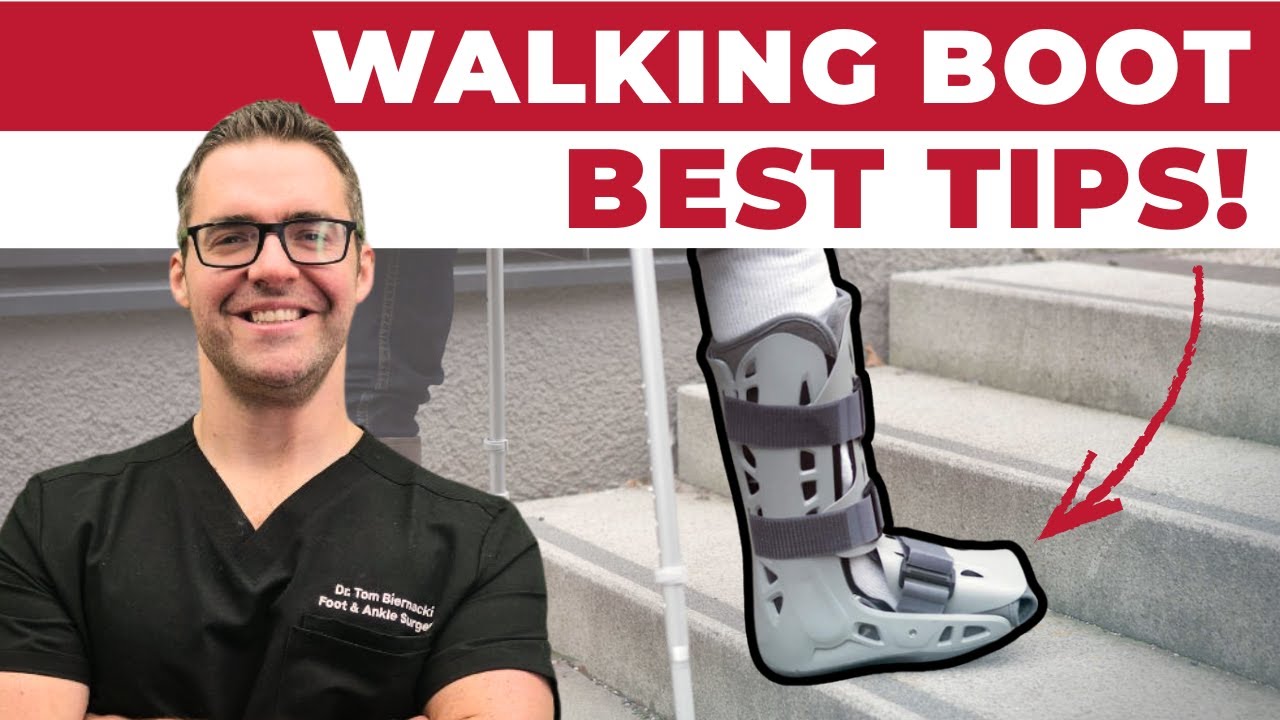
United Ortho Short Air Cam Walker Boot
⭐ Highly Rated
CAM walker boot for protected weight bearing during Lisfranc injury management — used during stable injury rehabilitation.
Dr. Tom says: “After surgical stabilization of a Lisfranc injury, a CAM walker boot is used during the progressive weight bearing phase (typically 6-12 weeks post-surgery). For suspected stable Lisfranc injuries, a non-weight bearing cast is used initially — the boot comes later. This is NOT appropriate for acute unstable Lisfranc injuries before surgical evaluation.”
Post-surgical Lisfranc recovery (progressive weight bearing phase), stable Lisfranc sprains under physician supervision
Acute unstable Lisfranc injuries — requires urgent orthopedic/podiatric surgical evaluation
Disclosure: We earn a commission at no extra cost to you.
✅ Pros / Benefits
- E
- a
- r
- l
- y
- d
- i
- a
- g
- n
- o
- s
- i
- s
- w
- i
- t
- h
- s
- u
- r
- g
- i
- c
- a
- l
- s
- t
- a
- b
- i
- l
- i
- z
- a
- t
- i
- o
- n
- p
- r
- e
- v
- e
- n
- t
- s
- p
- o
- s
- t
- –
- t
- r
- a
- u
- m
- a
- t
- i
- c
- a
- r
- t
- h
- r
- i
- t
- i
- s
- ;
- p
- r
- i
- m
- a
- r
- y
- T
- M
- T
- f
- u
- s
- i
- o
- n
- h
- a
- s
- e
- x
- c
- e
- l
- l
- e
- n
- t
- o
- u
- t
- c
- o
- m
- e
- s
- f
- o
- r
- l
- i
- g
- a
- m
- e
- n
- t
- o
- u
- s
- i
- n
- j
- u
- r
- i
- e
- s
- ;
- p
- r
- o
- p
- e
- r
- t
- r
- e
- a
- t
- m
- e
- n
- t
- a
- v
- o
- i
- d
- s
- d
- e
- c
- a
- d
- e
- s
- o
- f
- m
- i
- d
- f
- o
- o
- t
- a
- r
- t
- h
- r
- i
- t
- i
- s
- p
- a
- i
- n
❌ Cons / Risks
- M
- i
- s
- s
- e
- d
- d
- i
- a
- g
- n
- o
- s
- i
- s
- l
- e
- a
- d
- s
- t
- o
- p
- e
- r
- m
- a
- n
- e
- n
- t
- p
- o
- s
- t
- –
- t
- r
- a
- u
- m
- a
- t
- i
- c
- a
- r
- t
- h
- r
- i
- t
- i
- s
- r
- e
- q
- u
- i
- r
- i
- n
- g
- f
- u
- s
- i
- o
- n
- ;
- e
- v
- e
- n
- w
- i
- t
- h
- p
- e
- r
- f
- e
- c
- t
- t
- r
- e
- a
- t
- m
- e
- n
- t
- ,
- s
- o
- m
- e
- d
- e
- g
- r
- e
- e
- o
- f
- m
- i
- d
- f
- o
- o
- t
- s
- t
- i
- f
- f
- n
- e
- s
- s
- i
- s
- e
- x
- p
- e
- c
- t
- e
- d
- ;
- r
- e
- c
- o
- v
- e
- r
- y
- f
- r
- o
- m
- O
- R
- I
- F
- o
- r
- f
- u
- s
- i
- o
- n
- i
- s
- 3
- –
- 6
- m
- o
- n
- t
- h
- s
- n
- o
- n
- –
- w
- e
- i
- g
- h
- t
- b
- e
- a
- r
- i
- n
- g
Dr. Tom Biernacki’s Recommendation
Lisfranc injuries are one of my most strongly held teaching points. If a patient walks in with midfoot pain after a twisting injury and there is plantar arch bruising, I treat it as a Lisfranc injury until proven otherwise — because the cost of missing it is permanent arthritis. Weight-bearing X-rays and early specialist evaluation are non-negotiable.
— Dr. Tom Biernacki, DPM | Board-Certified Podiatric Surgeon | Balance Foot & Ankle
Frequently Asked Questions
q
a
q
a
q
a
q
a
q
a
Michigan Foot Pain? See Dr. Biernacki In Person
4.9★ rated | 1,123 Reviews | 3,000+ Surgeries
Same-week appointments · Howell & Bloomfield Township
Dr. Tom’s Clinic-Recommended Products
The OTC orthotic I recommend most. Medical-grade arch support at a fraction of custom orthotic cost. Holds shape 12+ months.
Natural topical pain relief — arnica + menthol + magnesium. Used in our clinic. No greasy residue. FSA-eligible.
As an Amazon Associate and Foundation Wellness affiliate I earn from qualifying purchases at no extra cost to you.
In-Office Treatment at Balance Foot & Ankle
If home treatment isn’t providing relief for your Lisfranc or midfoot injury, our podiatry team at Balance Foot & Ankle can help with same-day evaluations and advanced in-office care.
OrthoInfo – AAOS: Lisfranc Midfoot Injury
Ready to Get Relief?
Same-day appointments available in Howell & Bloomfield Township, MI
4.9★ | 1,123 Reviews | 3,000+ Surgeries
Or call: (810) 206-1402

Dr. Tom Biernacki, DPM is a board-certified foot & ankle surgeon (ABFAS & ABPM) at Balance Foot & Ankle Specialists in Southeast Michigan. With over a decade of clinical experience, he specializes in heel pain, bunions, diabetic foot care, sports injuries, and minimally invasive surgery. Dr. Biernacki is a member of the APMA and ACFAS, and his patient education content on MichiganFootDoctors.com and YouTube has made him one of the most-followed foot & ankle educators on YouTube.