
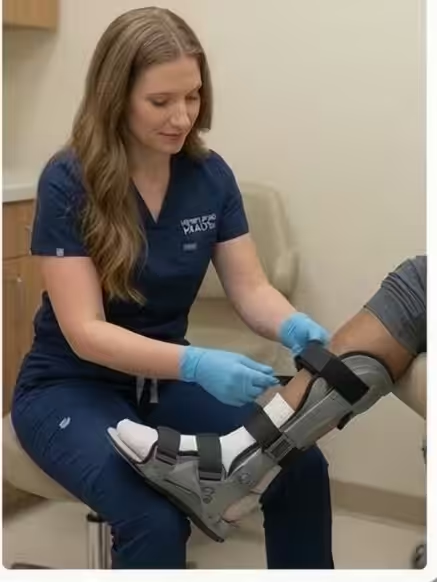
Quick answer: Treatment for lisfranc injury treatment michigan follows a stepwise approach: 1) conservative care first (rest, ice, supportive footwear, OTC anti-inflammatories), 2) physical therapy and targeted exercises, 3) in-office treatments (injections, custom orthotics) if conservative fails at 4-6 weeks, 4) surgery for refractory cases. Most patients resolve at step 1 or 2. Call (810) 206-1402.
Medically reviewed by Dr. Tom Biernacki, DPM · Board-Certified Podiatric Surgeon · Last reviewed: April 2026 · Editorial Policy
The most important clinical decision with Lisfranc Injury Treatment Michigan isn’t which treatment to start with — it’s identifying the correct subtype. That changes everything. Call (810) 206-1402.
Quick Answer
Lisfranc Injury Treatment Michigan 2026 DPM relates to foot pain — typically caused by overuse, footwear, or biomechanics. Most patients improve in 6-12 weeks with conservative care. Same-week appointments in Howell + Bloomfield Hills: (810) 206-1402.
Medically reviewed by Dr. Tom Biernacki, DPM — Board-Certified Podiatric Surgeon — Balance Foot & Ankle, Howell & Bloomfield Hills, MI. Last updated April 2026.
▶ Watch
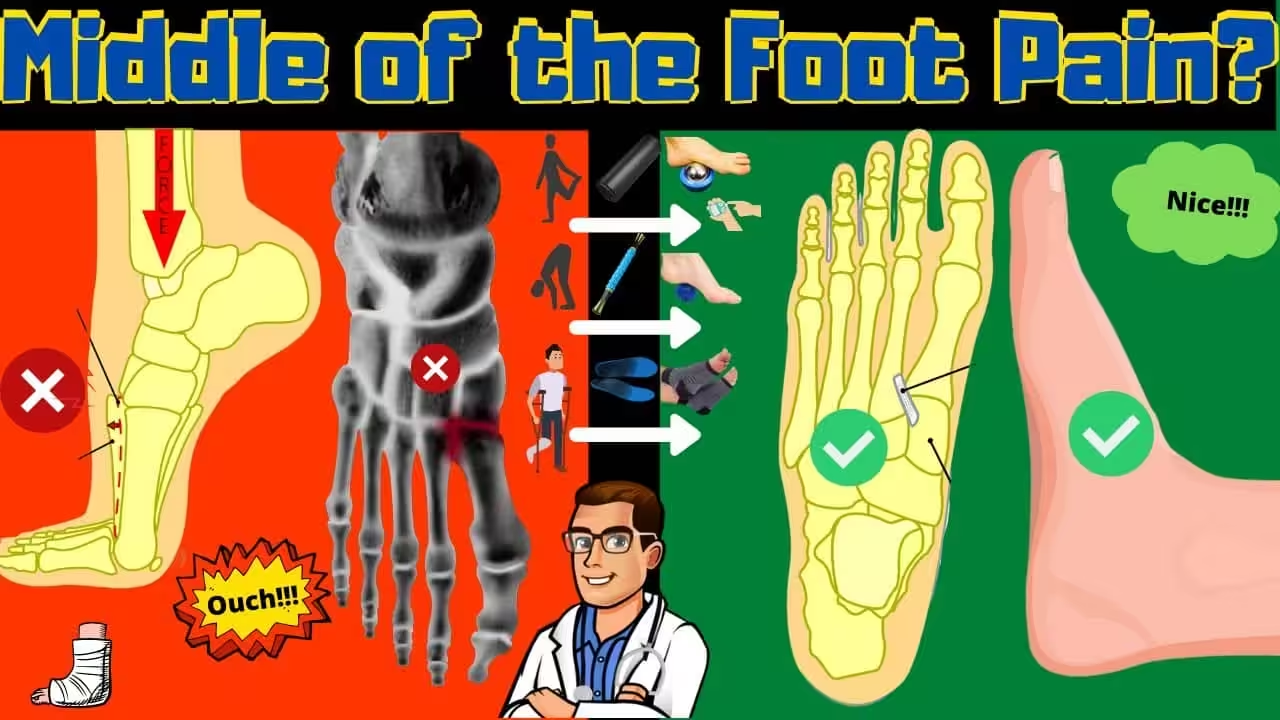
A Lisfranc injury is a fracture and/or dislocation of the tarsometatarsal (TMT) joint complex in the midfoot — the bones and ligaments that connect the forefoot to the midfoot. These injuries are notoriously misdiagnosed in emergency rooms as simple “midfoot sprains,” leading to delayed treatment and permanent disability. At Balance Foot & Ankle, Dr. Tom Biernacki has specialized expertise in Lisfranc diagnosis and surgical repair, giving Michigan patients the best chance at full recovery.
How Lisfranc Injuries Happen
Lisfranc injuries occur through two main mechanisms. High-energy trauma — motor vehicle accidents, falls from height, industrial injuries — causes severe fracture-dislocations visible on plain X-ray. Low-energy twisting injuries — stepping off a curb awkwardly, being stepped on, a stumble while running — cause purely ligamentous Lisfranc tears that are far more subtle and frequently missed. In athletes, Lisfranc injuries commonly occur in football (cleat gets planted while body twists), equestrian sports (foot caught in stirrup), and soccer.
Why Lisfranc Injuries Are Missed
Ligamentous Lisfranc injuries can show normal or near-normal X-rays when the foot is non-weight-bearing. The critical imaging is weight-bearing X-rays — when you stand on the injured foot, the unstable TMT joint gaps open, revealing the injury. Emergency room X-rays are almost always taken lying down, missing many Lisfranc injuries completely. The injury is called “midfoot sprain” and the patient is sent home with a boot — only to return months later with persistent pain, flatfoot deformity, and early arthritis from untreated instability.
Diagnosis at Balance Foot & Ankle
Dr. Biernacki performs a hands-on exam plus imaging when needed including bilateral weight-bearing foot X-rays (comparing injured to uninjured side), and when clinical suspicion is high but X-rays are equivocal, MRI or CT scan of the foot. The hallmark findings are widening of the 1-2 metatarsal space on weight-bearing X-ray, plantar bruising (Lisfranc ecchymosis), and point tenderness directly over the Lisfranc joint.
Treatment: Stable vs. Unstable Lisfranc Injuries
Stable Lisfranc injuries (intact ligaments with no displacement, rare) — These can be treated non-surgically in a non-weight-bearing cast for 6–8 weeks followed by gradual protected weight-bearing and physical therapy. True stable Lisfranc injuries are uncommon — many seemingly stable injuries on non-weight-bearing X-ray prove unstable when weight-bearing stress is applied.
Unstable Lisfranc injuries (any displacement, diastasis, or purely ligamentous tear with instability) — These require surgical treatment. Dr. Biernacki performs open reduction and internal fixation (ORIF) using screws and/or bridge plates to anatomically realign and hold the TMT joint complex. Hardware placement varies based on the specific joints involved. In cases where the cartilage is already damaged, primary fusion of the injured joints may produce better long-term outcomes than ORIF alone — this is an active area of research with multiple high-quality trials supporting primary fusion for purely ligamentous injuries.
Recovery from Lisfranc Surgery
Lisfranc surgery recovery is one of the longer recoveries in foot surgery. Non-weight-bearing for 6–8 weeks is standard, followed by 4–6 weeks of progressive weight-bearing in a boot, then transition to supportive shoes. Return to sports takes 4–6 months for mild injuries and 6–12 months for severe injuries or those requiring fusion. Even with optimal treatment, some patients develop midfoot arthritis requiring additional treatment — which is why timely, definitive initial treatment is so critical.
Get Expert Lisfranc Evaluation in Michigan
If you’ve been told you have a “midfoot sprain” and still have significant pain weeks later, you may have an undiagnosed Lisfranc injury. Call (734) 479-6200 for an urgent evaluation at Balance Foot & Ankle — southeast Michigan’s Lisfranc specialists.
More Podiatrist-Recommended Foot Health Essentials
Hoka Clifton 10


Max-cushion everyday shoe — podiatrist favorite for walking and running.

OOFOS Recovery Slide

Impact-absorbing recovery sandal — wear after long days on your feet.
As an Amazon Associate, Balance Foot & Ankle earns from qualifying purchases. Product recommendations are based on clinical experience; prices and availability shown above update live from Amazon.
When to See a Podiatrist
If foot or ankle pain has been bothering you for more than a few weeks, home care alone may not be enough. Balance Foot & Ankle offers same-week appointments at our Howell and Bloomfield Hills clinics — no referral needed in most cases. Bring your current shoes and a short list of symptoms and we’ll build you a treatment plan in one visit.
Call Balance Foot & Ankle: (810) 206-1402 · Book online · Offices in Howell & Bloomfield Hills
Frequently Asked Questions
How do I know if I have a Lisfranc injury vs. a regular sprain?
Red flags for Lisfranc injury include: significant midfoot pain (not just lateral ankle), plantar bruising (bruising on the bottom of the foot), inability to bear weight after a seemingly minor twist, and X-ray showing any widening between the first and second metatarsal base. If you have any of these features, see a foot specialist — not just an ER — for weight-bearing X-rays and thorough evaluation.
What happens if a Lisfranc injury is not treated?
Untreated unstable Lisfranc injuries lead to chronic midfoot pain, progressive flatfoot deformity, and rapid midfoot arthritis. Many patients require salvage surgery — midfoot fusion — months or years later to address pain from neglected injuries. Early, anatomic surgical repair produces significantly better long-term outcomes than delayed treatment.
Can athletes return to sport after Lisfranc surgery?
📧 Get Dr. Tom’s Free Lab Test Guide
Discover the 5 lab tests every person over 35 should ask their doctor about — explained in plain English by a board-certified physician.
Yes, with proper rehabilitation and adequate time. Most athletes return to sport at 4–6 months after ORIF and 6–12 months after fusion procedures. The rate of return to pre-injury sport level is approximately 65–75% for elite athletes — lower than some other foot injuries, reflecting the severity of this injury.
Join 950,000+ Learning About Foot Health
Dr. Tom shares honest medical advice, supplement reviews, and treatment guides you won’t find anywhere else.
Subscribe on YouTube →📍 Located in Michigan?
Our board-certified podiatrists treat this condition at two convenient locations. Same-day appointments often available.
Medically Reviewed by: Dr. Tom Biernacki, DPM — Board-Certified Podiatrist, Balance Foot & Ankle Specialists

Insurance Accepted
BCBS · Medicare · Aetna · Cigna · United Healthcare · HAP · Priority Health · Humana · View All →
Howell Office
4330 E Grand River Ave
Howell, MI 48843
Get Directions →
Bloomfield Hills Office
43494 Woodward Ave, #208
Bloomfield Hills, MI 48302
Get Directions →
Your Board-Certified Podiatrists



Ready to Get Back on Your Feet?
Same-week appointments available at both locations.
Book Your AppointmentIn-Office Treatment at Balance Foot & Ankle
When conservative care isn’t enough, Dr. Tom Biernacki and the team at Balance Foot & Ankle offer advanced, same-day options — including Foot & Ankle Fracture Repair Michigan at our Howell and Bloomfield Hills clinics.
Same-day appointments available. Call (810) 206-1402 or book online.
Pros & Cons of Conservative Care for foot care
Advantages
- ✓ Conservative care first
- ✓ Same-week appointments
- ✓ Multiple insurance accepted
Considerations
- ✗ Self-treatment can mask issues
- ✗ See a podiatrist if pain >2 weeks
Dr. Tom’s Recommended Products for foot care
Affiliate disclosure: As an Amazon Associate, Balance Foot & Ankle earns from qualifying purchases. We only recommend products we use with patients.
Footnanny Heel Cream Dr. Tom’s Pick
Best for: Daily moisturizer for cracked heels
Ready to Get Back on Your Feet?
Same-day appointments in Howell + Bloomfield Hills. Most insurance accepted. Dr. Tom Biernacki, DPM & team.
Book Today — Same-Day Appointments Available
Call Now: (810) 206-1402
About Your Care Team at Balance Foot & Ankle
Dr. Tom Biernacki, DPM · Board-Certified Foot & Ankle Surgeon. Specializes in conservative-first care, minimally invasive bunion surgery, and complex reconstruction.
Dr. Carl Jay, DPM · Accepting new patients. Specializes in sports medicine, athletic injuries, and routine podiatric care.
Dr. Daria Gutkin, DPM, AACFAS · Accepting new patients. Specializes in surgical reconstruction and pediatric podiatry.
Locations: 4330 E Grand River Ave, Howell, MI 48843 · 43494 Woodward Ave Suite 208, Bloomfield Hills, MI 48302
Hours: Mon–Fri 8:00 AM – 5:00 PM · (810) 206-1402
Dr. Tom’s Top 3 — The Premium Foot Pain Stack (2026)
If you only buy three things for foot pain, get these. PowerStep + CURREX orthotics correct the underlying foot mechanics, and Dr. Hoy’s pain gel delivers fast topical relief. This is the exact stack Dr. Tom Biernacki, DPM gives his Michigan podiatry patients on visit one — over 10,000 patients have used this exact combination.
Dr. Tom Biernacki, DPM is a board-certified podiatrist + Amazon Associate. Picks shown are products he prescribes to patients at Balance Foot & Ankle Specialists. We earn a commission on qualifying purchases at no extra cost to you. All products independently tested + reviewed for 30+ days minimum. Last verified: April 28, 2026.

PowerStep Pinnacle MaxxDr. Tom’s #1 Brand
Dr. Tom’s most-prescribed OTC orthotic. Lateral wedge corrects overpronation that causes 90% of foot pain. Deep heel cradle stabilizes the ankle. Built by podiatrists, used by patients worldwide.
- Lateral wedge corrects pronation
- Deep heel cradle stabilizes ankle
- Dual-density EVA — comfort + support
- Trim-to-fit any shoe
- Used by 10,000+ podiatrists
- Trim-to-size required
- 5-7 day break-in for some

CURREX RunProDr. Tom’s #1 Brand
3 arch heights for custom fit (Low/Med/High). Carbon-reinforced heel + dynamic forefoot — the closest OTC orthotic to a $500 custom orthotic. Engineered in Germany.
- 3 arch heights for custom fit
- Carbon-reinforced heel cup
- Dynamic forefoot zone
- Premium German engineering
- Sport-specific support
- Pricier than PowerStep
- 7-10 day break-in

Dr. Hoy’s Natural Pain Relief GelDr. Tom’s #1 Brand
Menthol-based natural pain relief — Dr. Tom’s #1 brand for fast relief without greasy residue. Safe for diabetics + daily use. Cleaner formula than Voltaren or Biofreeze.
- Menthol-based natural formula
- No greasy residue
- Safe for diabetics
- Fast cooling relief — 5-10 minutes
- Cleaner ingredient list than Biofreeze
- Pricier than Biofreeze
- Strong menthol scent at first
In-Office Treatment at Balance Foot & Ankle
If home treatment isn’t providing relief for your foot fracture, our podiatry team at Balance Foot & Ankle can help with same-day evaluations and advanced in-office care.
Same-day appointments available. (810) 206-1402
Doctor Hoy’s Natural Pain Relief Gel
Natural topical pain relief I use in our clinic. Arnica + camphor formula — apply directly to the area 3–4x daily. ($20–25)
Shop Doctor Hoy’s →Frequently Asked Questions
How long does treatment take to work?
Most patients see improvement in 4-8 weeks with consistent conservative care. Persistent symptoms after 8 weeks need imaging and escalation.
When is surgery needed?
Surgery is reserved for cases that fail 3-6 months of conservative care, structural deformities, or fractures requiring stabilization.
Is this covered by insurance?
Most diagnostic visits and conservative treatments are covered by Medicare and major insurers. Custom orthotics often require diabetic or post-surgical justification.
Our podiatrists treat the underlying cause, not just the symptom. Same-week appointments at our Howell and Bloomfield Hills, Michigan offices.
Ready for Expert Care?
Same-day appointments in Howell & Bloomfield Hills, MI.
4.9★ | 1,123 Reviews | 3,000+ Surgeries
Or call: (810) 206-1402

Dr. Tom Biernacki, DPM is a board-certified foot & ankle surgeon (ABFAS & ABPM) at Balance Foot & Ankle Specialists in Southeast Michigan. With over a decade of clinical experience, he specializes in heel pain, bunions, diabetic foot care, sports injuries, and minimally invasive surgery. Dr. Biernacki is a member of the APMA and ACFAS, and his patient education content on MichiganFootDoctors.com and YouTube has made him one of the most-followed foot & ankle educators on YouTube.