

Medically reviewed by Dr. Tom Biernacki, DPM — Board-certified foot & ankle surgeon, 3,000+ surgeries performed. Updated April 2026 with current clinical evidence. This article reflects real practice experience from Balance Foot & Ankle Specialists in Howell and Bloomfield Township, Michigan.
Quick Answer
Most foot and ankle problems respond to conservative care — proper footwear, supportive inserts, activity modification, and targeted stretching — within 4-8 weeks. Persistent pain beyond that window, or any symptom that prevents walking, warrants a podiatric evaluation to rule out fracture, tendon tear, or systemic cause.
Medically reviewed by Dr. Tom Biernacki, DPM — Board-Certified Podiatric Surgeon — Balance Foot & Ankle, Howell & Bloomfield Township, MI. Last updated April 2026.
Medically Reviewed by Dr. Tom Biernacki, DPM — Board-Certified Podiatrist, Balance Foot & Ankle Specialists, Michigan. Last updated April 2026.
Midfoot Fusion Surgery: Tarsometatarsal Arthrodesis for Lisfranc Arthritis
Medically reviewed by Dr. Tom Biernacki, DPM — Board-certified podiatric surgeon specializing in reconstructive foot and ankle surgery at Balance Foot & Ankle, Southeast Michigan.
Quick Answer: What Is Midfoot Fusion Surgery?
Midfoot fusion surgery (tarsometatarsal arthrodesis) permanently joins the damaged bones in the Lisfranc joint complex to eliminate painful arthritis. The procedure removes diseased cartilage, realigns the midfoot, and stabilizes the joints with plates and screws. Most patients return to supportive footwear with custom orthotics like PowerStep Pinnacle Maxx orthotic insoles within 10–14 weeks, and achieve significant pain relief by 4–6 months. Recovery requires 6–8 weeks of non-weight-bearing, progressive rehabilitation, and long-term supportive footwear.
Table of Contents
- Quick Answer
- What Is Midfoot Fusion Surgery?
- Understanding the Lisfranc Joint Complex
- What Causes Midfoot Arthritis?
- Symptoms and When Surgery Becomes Necessary
- The Surgical Technique: Step-by-Step
- Fixation Options: Plates, Screws, and Staples
- Complete Recovery Timeline
- Managing Post-Operative Pain and Swelling
- Weight-Bearing Progression Protocol
- Physical Therapy and Rehabilitation
- Supportive Footwear After Midfoot Fusion
- Custom Orthotics and Insoles for Long-Term Support
- Compression Therapy During Recovery
- Most Common Mistake
- Warning Signs After Midfoot Fusion
- Potential Complications and Risks
- When Is Hardware Removal Necessary?
- Returning to Sports and Activity
- Complete Recovery Kit
- Frequently Asked Questions
- Watch: Midfoot Fusion Surgery Recovery
- Sources
- Schedule Your Consultation
What Is Midfoot Fusion Surgery?
If you’ve been living with chronic midfoot pain that hasn’t responded to conservative treatment, you understand how debilitating this condition can be. Every step sends a sharp reminder through the arch of your foot, and activities you once enjoyed become impossible. Midfoot fusion surgery — formally called tarsometatarsal (TMT) arthrodesis — offers a definitive solution by permanently fusing the damaged joints in your midfoot.
The procedure works by removing the diseased cartilage surfaces from the tarsometatarsal joints and allowing the bones to grow together into a single, stable unit. While “fusion” sounds dramatic, the Lisfranc joints naturally have very limited motion — the medial and middle columns move only 1–3 degrees in a healthy foot. This means that eliminating this small amount of motion rarely creates noticeable stiffness, while dramatically reducing pain. The vast majority of patients report significant improvement in function and quality of life after successful midfoot fusion.
At our practice in Southeast Michigan, we perform midfoot fusion procedures using modern locking plate technology that provides rigid fixation and allows for earlier mobilization compared to older screw-only techniques. The key to a successful outcome is proper patient selection, careful surgical technique, and a structured recovery protocol that progresses from non-weight-bearing protection through full activity.
Understanding the Lisfranc Joint Complex
The Lisfranc joint complex is where the five metatarsal bones meet the midfoot (tarsal) bones — specifically the three cuneiforms and the cuboid. This area serves as the critical transition zone between your rearfoot and forefoot, transmitting forces during walking, running, and push-off. The joint complex is divided into three functional columns that help us understand both the injury patterns and the surgical approach.
The medial column consists of the first metatarsal articulating with the medial cuneiform. This is the most important column for weight-bearing and is the most commonly affected by post-traumatic arthritis. The middle column includes the second and third metatarsals articulating with the intermediate and lateral cuneiforms — the second TMT joint is the “keystone” of the arch, locked into a mortise configuration that provides inherent stability. The lateral column comprises the fourth and fifth metatarsals articulating with the cuboid — this column retains more natural motion and is typically preserved during fusion whenever possible to maintain foot flexibility.
The Lisfranc ligament is a thick band connecting the medial cuneiform to the base of the second metatarsal. When this ligament is torn — whether from a high-energy injury, athletic trauma, or a seemingly minor twisting mechanism — the entire joint complex becomes unstable. If instability goes unrecognized or undertreated, progressive arthritis develops as the cartilage breaks down under abnormal mechanical loading. This post-traumatic arthritis is the most common indication for midfoot fusion surgery.
What Causes Midfoot Arthritis?
Understanding why midfoot arthritis develops helps patients appreciate why fusion — rather than joint-preserving surgery — is usually the best long-term solution. The tarsometatarsal joints have thin cartilage surfaces with limited blood supply, making them particularly vulnerable to degeneration once damaged. The most common causes of midfoot arthritis requiring fusion include:
Post-traumatic arthritis from Lisfranc injuries accounts for approximately 70% of midfoot fusion cases. These injuries range from obvious high-energy fracture-dislocations (motor vehicle accidents, falls from height) to subtle “sprain” injuries where the Lisfranc ligament tears without obvious fracture. The subtle injuries are often missed on initial X-rays, leading to delayed diagnosis and progressive joint destruction. By the time patients present with chronic pain months or years later, the cartilage damage is irreversible.
Primary osteoarthritis of the midfoot develops without a specific traumatic event, typically in patients over 50 with a history of flat feet, hallux valgus (bunion), or generalized joint degeneration. The medial column — particularly the first TMT joint — is most commonly affected. Inflammatory arthritis conditions like rheumatoid arthritis and gout can also cause severe midfoot joint destruction. Charcot neuroarthropathy in patients with diabetes or peripheral neuropathy can result in catastrophic midfoot collapse requiring reconstructive fusion to restore a plantigrade, braceable foot.
Symptoms and When Surgery Becomes Necessary
Not every case of midfoot arthritis requires surgery. We always begin with conservative treatment — activity modification, stiff-soled shoes, custom orthotics like PowerStep Pinnacle Maxx insoles, anti-inflammatory medications, and sometimes corticosteroid injections. However, when conservative measures fail to provide adequate relief after 3–6 months of dedicated effort, midfoot fusion becomes the recommended treatment.
Symptoms indicating that surgery may be necessary include persistent midfoot pain that limits walking tolerance to less than 30 minutes, inability to stand for extended periods at work, a visible bony prominence or collapse of the arch that progresses despite orthotics, pain that disrupts sleep or requires regular narcotic medication, and progressive deformity with forefoot abduction or arch collapse. Weight-bearing X-rays showing joint space narrowing, osteophyte formation, and malalignment confirm the clinical diagnosis. In some cases, CT or MRI provides additional detail about the extent of cartilage loss and helps plan which specific joints need to be included in the fusion.
The Surgical Technique: Step-by-Step
Midfoot fusion surgery is performed under general or regional anesthesia (often with a popliteal nerve block for postoperative pain control). The procedure typically takes 90–150 minutes depending on the number of joints being fused and the degree of deformity correction required. Here is what happens during the surgery:
The surgeon makes one or two longitudinal incisions over the dorsal (top) midfoot, carefully protecting the dorsalis pedis artery and the deep peroneal nerve. The joint capsules are opened, and the diseased cartilage is removed from each affected joint surface using curettes, osteotomes, and rongeurs. It is critical to remove all cartilage down to bleeding subchondral bone — this creates the optimal biological environment for bone healing. The subchondral bone plate is then fenestrated (drilled with small holes) to promote vascular ingrowth and enhance fusion rates.
If malalignment is present — which is common in post-traumatic cases — the surgeon corrects the position of the metatarsals before fixation. This may involve wedge resections of bone to restore normal alignment, particularly correcting forefoot abduction and arch height. Bone graft (either local autograft from the resected bone or allograft) is packed into the prepared joint surfaces to promote healing. The joints are then stabilized with internal fixation hardware to maintain the corrected position while the bone heals.
Fixation Options: Plates, Screws, and Staples
Modern midfoot fusion uses several types of hardware, and the choice depends on the specific joints being fused, bone quality, and surgeon preference. Dorsal locking plates have become the gold standard for medial and middle column fusions, providing superior resistance to plantar gapping compared to screws alone. These low-profile titanium plates are contoured to the dorsal surface of the midfoot and secured with multiple locking screws that create a fixed-angle construct.
Compression screws (typically 3.5mm or 4.0mm solid cortical screws) are used as supplemental fixation, particularly for intercuneiform fusions and as lag screws across joint surfaces. Nitinol compression staples provide constant compression across fusion sites and are particularly useful for supplemental fixation at the naviculocuneiform joints. The combination of a dorsal plate with compression screws achieves the highest union rates in the literature, approaching 95–98% for primary fusions.
One important consideration is the lateral column. The fourth and fifth TMT joints retain approximately 10–15 degrees of sagittal plane motion that is important for foot adaptability on uneven surfaces. Whenever possible, we avoid fusing these joints to preserve this motion. If the lateral column is arthritic but stable, isolated debridement and osteophyte removal (cheilectomy) may provide adequate relief without sacrificing motion.
Complete Recovery Timeline
Understanding the recovery timeline helps patients prepare mentally and logistically for the healing process. While every patient heals at a different rate, this general timeline provides realistic expectations based on our experience with hundreds of midfoot fusion patients.
Weeks 0–2 (Strict Non-Weight-Bearing): The foot is immobilized in a posterior splint. Keep the leg elevated above heart level as much as possible. Ice the surgical area for 20 minutes every 2 hours while awake. Pain is managed with prescribed medications — we recommend applying Doctor Hoy’s Natural Pain Relief Gel around (not directly on) the incision area once sutures are removed to reduce inflammation without systemic side effects. Begin ankle range-of-motion exercises (gentle circles, pumps) to prevent stiffness and promote circulation.
Weeks 2–6 (Non-Weight-Bearing in Cast or Boot): Sutures are removed at 2 weeks. The foot is placed in a short leg cast or tall CAM walker boot. Continue strict non-weight-bearing using crutches, a knee scooter, or a hands-free crutch. Wear DASS medical-grade compression socks on both legs to prevent blood clots and reduce swelling — compression is especially critical during this period of limited mobility. X-rays at 6 weeks assess early bone healing.
Weeks 6–10 (Progressive Weight-Bearing): If X-rays show adequate healing, protected weight-bearing begins in the CAM boot. Start with toe-touch weight bearing, progressing to 25%, 50%, and then full weight in the boot over 4 weeks. Physical therapy begins focusing on ankle and subtalar joint mobility, calf strengthening, and gait retraining. Continue compression therapy with DASS compression socks to manage persistent edema.
Weeks 10–14 (Transition to Shoes): With adequate radiographic healing, transition from the boot to a supportive athletic shoe with PowerStep Pinnacle Maxx orthotic insoles. The rigid arch support and deep heel cup of the PowerStep provides the structural support that the fused midfoot needs during this transition. Expect some swelling with increased activity — this is normal and managed with elevation, compression, and gradual activity progression.
Months 4–6: Continue strengthening and proprioception exercises. Most patients achieve 80% of their expected recovery by this point. Residual swelling is common, especially at the end of the day. Continue wearing supportive footwear with orthotics for all weight-bearing activities. Apply Doctor Hoy’s Pain Relief Gel as needed for activity-related discomfort.
Months 6–12: Maximum medical improvement is typically reached at 12 months. The fused joints continue to remodel and strengthen over the first year. Some patients notice continued improvement in comfort and function well into the second year after surgery. Long-term, most patients can walk, hike, and perform low-impact activities comfortably, though high-impact sports may need to be modified.
Managing Post-Operative Pain and Swelling
Pain management after midfoot fusion requires a multimodal approach. The popliteal nerve block placed during surgery provides excellent pain relief for the first 12–24 hours. After the block wears off, prescribed oral medications manage acute pain during the first 1–2 weeks. We strongly advocate for transitioning away from narcotic medications as quickly as possible, using a combination of acetaminophen, anti-inflammatories (if approved by your surgeon), and topical pain relief.
Doctor Hoy’s Natural Pain Relief Gel is our preferred topical analgesic for post-surgical recovery. Unlike ice, which can impair healing when used excessively, and unlike oral NSAIDs, which some surgeons limit in the early postoperative period due to concerns about bone healing, Doctor Hoy’s provides targeted pain relief and anti-inflammatory action at the surgical site without systemic effects. The natural menthol and camphor ingredients provide both immediate cooling relief and prolonged anti-inflammatory benefits. Apply generously around the foot and ankle once the incisions have fully closed.
Swelling management is equally important for comfort and healing. The RICE protocol (Rest, Ice, Compression, Elevation) remains the foundation, with compression being the most underused component. Wearing DASS medical-grade compression socks consistently during the recovery period significantly reduces edema, improves venous return, and decreases the risk of deep vein thrombosis. Elevation above heart level should be maintained for 45 minutes out of every hour during the first two weeks, and for as much of the day as possible through the first 6 weeks.
Weight-Bearing Progression Protocol
The transition from non-weight-bearing to full weight-bearing is one of the most critical phases of recovery. Moving too quickly risks disrupting the healing bone and potentially causing nonunion (failure of the bones to fuse). Moving too slowly delays functional recovery and leads to excessive muscle atrophy and joint stiffness. Our protocol follows evidence-based guidelines while adapting to each patient’s individual healing rate as confirmed by serial X-rays.
At the 6-week mark, if X-rays show early callus formation and the hardware is in good position, we begin protected weight-bearing in the CAM boot. Patients start with toe-touch weight-bearing (approximately 10–15% of body weight) using crutches or a walker. Over the next 2 weeks, weight is progressed to 25%, then 50%. By 8–10 weeks, most patients are bearing full weight in the boot. The CAM boot is typically discontinued at 10–14 weeks, transitioning to a supportive shoe with PowerStep Pinnacle Maxx orthotic insoles for the critical transition period.
Physical Therapy and Rehabilitation
Physical therapy after midfoot fusion focuses on the joints above and below the fusion site — primarily the ankle, subtalar, and metatarsophalangeal joints — to maximize mobility and compensate for the minimal motion lost at the fused joints. A structured rehabilitation program is essential for optimal outcomes and typically begins at 6 weeks postoperatively.
Early rehabilitation (weeks 6–10) focuses on gentle range-of-motion exercises for the ankle and toes, edema management with DASS compression socks and elevation, intrinsic foot muscle activation exercises, and scar massage to prevent adhesions. Intermediate rehabilitation (weeks 10–16) progresses to calf strengthening (seated heel raises progressing to standing), balance and proprioception training, gait retraining with emphasis on normal heel-to-toe walking pattern, and aquatic therapy if available. Advanced rehabilitation (months 4–6+) includes progressive functional exercises, sport-specific training if applicable, and continued strengthening of the entire lower kinetic chain.
Supportive Footwear After Midfoot Fusion
Footwear selection becomes permanently important after midfoot fusion. The fused joints no longer absorb or adapt to uneven surfaces, so your shoes and orthotics must provide the stability and support that the midfoot previously contributed. Choose shoes with a stiff or rocker-bottom sole that minimizes bending forces through the midfoot, a supportive heel counter that controls rearfoot motion, adequate toe box depth and width to accommodate any residual swelling, and removable insoles that can be replaced with custom or over-the-counter orthotics.
Avoid minimalist shoes, flat sandals, or any footwear that allows excessive bending through the midfoot. High heels shift weight to the forefoot and increase stress across the fusion site. For everyday wear, supportive athletic shoes from brands like New Balance, Brooks, or ASICS paired with PowerStep Pinnacle Maxx orthotic insoles provide the ideal combination of cushioning, stability, and arch support for fused midfoot joints.
Custom Orthotics and Insoles for Long-Term Support
Orthotic support is not optional after midfoot fusion — it is an essential component of long-term success. The fused joints create a rigid segment in the midfoot that changes how forces distribute across the foot during gait. Without proper orthotic support, patients develop compensatory problems including metatarsalgia (forefoot pain), plantar fasciitis, and stress on adjacent non-fused joints.
PowerStep Pinnacle Maxx orthotic insoles are our recommended starting point for midfoot fusion patients. The semi-rigid arch support cradles the fused midfoot, the deep heel cup stabilizes the rearfoot, and the dual-layer cushioning absorbs impact that the rigid fusion site cannot. For patients requiring additional customization, we fabricate custom orthotic devices from weight-bearing impressions that are specifically designed to accommodate the altered biomechanics of a fused midfoot. The PowerStep Pinnacle Maxx serves as an excellent transition orthotic during the early post-surgical period and remains a high-quality daily option for many patients long-term.
Compression Therapy During Recovery
Compression therapy is one of the most underappreciated components of surgical foot recovery. After midfoot fusion, swelling can persist for 6–12 months, and without active management, chronic edema leads to stiffness, delayed wound healing, increased pain, and poor functional outcomes. Graduated compression garments apply the highest pressure at the ankle and gradually decrease pressure moving up the leg, which actively pumps fluid out of the foot and back toward the heart.
DASS medical-grade compression socks provide 20–30 mmHg of graduated compression — the level recommended by vascular surgeons for post-surgical recovery. We recommend wearing compression from the moment you transition out of the surgical splint (typically at 2 weeks) and continuing daily compression for at least 3–6 months, or longer if swelling persists. Put the compression socks on first thing in the morning before the foot has a chance to swell, and wear them throughout the day. Many of our midfoot fusion patients find that compression becomes a permanent part of their daily routine because of how much better their foot feels with consistent swelling management.
Most Common Mistake
🔑 Most Common Mistake: Returning to unsupported footwear too soon after midfoot fusion. We see patients who get through the non-weight-bearing phase perfectly, then undermine their results by wearing flip-flops, flat shoes, or going barefoot once the boot comes off. The fused midfoot needs long-term structural support from quality orthotics like PowerStep Pinnacle Maxx insoles to distribute forces properly. Every step in unsupportive shoes stresses the fusion site and adjacent joints. Commit to wearing supportive footwear with arch support for every step — not just for walks, but around the house too.
Warning Signs After Midfoot Fusion
🚨 Warning Signs — Contact Your Surgeon Immediately If You Experience: Increasing pain or swelling after initial improvement (may indicate hardware failure or nonunion). Redness, warmth, or drainage from the incision site beyond 2 weeks (possible surgical site infection). Fever above 101°F at any point after surgery. Sudden severe pain with a “pop” or “shift” sensation (possible hardware breakage or loss of fixation). Numbness, tingling, or color changes in the toes (possible nerve or vascular compromise). Calf pain, swelling, or warmth (possible deep vein thrombosis — seek emergency evaluation). New foot deformity or inability to bear weight that was previously comfortable. Any of these signs require prompt evaluation to prevent complications from becoming serious problems.
Potential Complications and Risks
While midfoot fusion is generally a safe and successful procedure, all surgery carries risks that patients should understand before making their decision. Nonunion (failure of the bones to fuse) occurs in approximately 5–10% of cases and is more common in smokers, diabetics, and patients with poor bone quality. Smoking is the single greatest risk factor for nonunion — we strongly advise patients to stop smoking at least 6 weeks before surgery and throughout the healing period. Malunion (healing in an incorrect position) can cause ongoing pain and may require revision surgery.
Hardware irritation occurs in approximately 15–20% of patients, manifesting as dorsal prominence that rubs against shoe tops. This is often managed conservatively with padding and shoe modification, but some patients eventually require hardware removal once the fusion is confirmed solid (typically after 12–18 months). Adjacent joint arthritis can develop over time as the joints next to the fusion compensate for lost motion — this is most common at the naviculocuneiform joints and the metatarsophalangeal joints. Proper orthotic support with PowerStep Pinnacle Maxx insoles helps mitigate this risk by optimizing load distribution. Other potential complications include infection (1–3%), nerve injury causing numbness on the dorsal foot (5–10%), and wound healing problems (higher risk in diabetics and smokers).
When Is Hardware Removal Necessary?
Not all patients require hardware removal after midfoot fusion, but it is a common secondary procedure. The most common indication is hardware prominence — the dorsal plates and screw heads can create a palpable bump that rubs against shoe tops, causing irritation, callus formation, or skin breakdown. This is particularly common in patients with thin soft tissue coverage over the dorsum of the foot.
Hardware removal is typically performed as an outpatient procedure once the fusion is confirmed solid on CT scan, usually no earlier than 12 months after the index surgery. The procedure is relatively straightforward, with most patients returning to full activity within 2–4 weeks. In some cases, only the most prominent screws or a portion of the plate is removed, leaving the remaining hardware in place. We generally recommend removing only symptomatic hardware rather than performing a routine blanket removal, as the surgery, while minor, still carries small risks of infection and nerve injury.
Returning to Sports and Activity
One of the most common concerns patients have before midfoot fusion is whether they’ll be able to return to their active lifestyle. The encouraging news is that most patients return to significantly higher activity levels than they could achieve with their painful arthritic midfoot — the pain relief from successful fusion typically far outweighs any limitation from the lost joint motion.
Walking, hiking, cycling, swimming, and elliptical training are typically well-tolerated after midfoot fusion. Most patients can return to these activities by 4–6 months postoperatively. Running is possible for some patients, though the altered biomechanics of the fused midfoot may change running gait and increase stress on the ankle and forefoot joints. We generally recommend transitioning from running to lower-impact cardiovascular alternatives if possible. High-impact and pivoting sports (basketball, tennis, soccer) are higher risk for hardware irritation and adjacent joint stress, and patients should have a detailed discussion about sport-specific return with their surgeon.
Regardless of activity level, wearing supportive footwear with PowerStep Pinnacle Maxx orthotic insoles during all activities is essential. For recovery soreness after exercise, apply Doctor Hoy’s Natural Pain Relief Gel to the midfoot area and wear DASS compression socks for 2–4 hours post-activity to manage swelling.
Complete Midfoot Fusion Recovery Kit
✅ Complete Midfoot Fusion Recovery Kit — Recommended by Dr. Biernacki:
🦶 PowerStep Pinnacle Maxx Orthotic Insoles — Semi-rigid arch support with deep heel cup for the fused midfoot. Essential for redistributing pressure and protecting adjacent joints during the transition from boot to shoe and for long-term daily wear.
🧴 Doctor Hoy’s Natural Pain Relief Gel — Topical analgesic with natural menthol and camphor. Apply around the incision area once wounds are closed for targeted pain and inflammation relief without systemic side effects. Ideal for post-therapy soreness and activity-related discomfort.
🧦 DASS Medical-Grade Compression Socks — 20–30 mmHg graduated compression to control post-surgical swelling, improve venous return, and reduce DVT risk. Wear daily from 2 weeks post-op through at least 6 months for optimal recovery.
These three products work together as a complete recovery system — PowerStep provides the structural foundation, Doctor Hoy’s manages pain topically, and DASS controls the swelling that can delay healing and limit function.
Affiliate Disclosure: Some links above are affiliate links, meaning we may earn a small commission at no extra cost to you. We only recommend products we personally use with our patients at Balance Foot & Ankle. These recommendations are based on clinical experience and are not influenced by affiliate relationships.
Differential Diagnosis: What Else Could It Be?
Not every case of lisfranc (midfoot) injury is straightforward. In our clinic we routinely rule out three look-alike conditions before confirming the diagnosis. If your symptoms don’t match the classic presentation, one of these may explain the pain — which is why physical exam matters more than self-diagnosis.
| Condition | How It Differs |
|---|---|
| Midfoot sprain | No diastasis on X-ray; able to bear weight after initial pain. |
| Navicular stress fracture | Dorsal midfoot pain with impact loading; stress fx confirmed on MRI. |
| Cuboid syndrome | Lateral midfoot pain, often following ankle inversion; relieved by cuboid whip. |
Red Flags — When to See a Podiatrist Now
Seek same-day evaluation at Balance Foot & Ankle if you notice any of the following:
- Pain out of proportion to injury severity
- Plantar bruising across the arch (classic Lisfranc sign)
- Inability to bear weight for >24 hours
- Widening of tarsometatarsal joints on weight-bearing X-ray
Call (810) 206-1402 or request an appointment. Our Howell and Bloomfield Township offices reserve same-day slots for urgent foot and ankle issues.
In Our Clinic: What We See
Clinical perspective from Dr. Tom Biernacki, DPM — Balance Foot & Ankle, Howell & Bloomfield Township, MI:
Lisfranc injury is the most-missed foot injury in primary care and emergency rooms. Patients walk in weeks after a misstep complaining of midfoot pain that never resolves. In our clinic the first clue is often the bruising pattern — plantar bruising across the arch is pathognomonic. Weight-bearing X-rays comparing both feet reveal the widening that non-weight-bearing films miss. Non-displaced Lisfranc sprains can heal in a boot; any displacement requires surgery. Dr. Biernacki has handled dozens of missed Lisfranc injuries and always comments: if a midfoot sprain isn’t significantly better at 3 weeks, get weight-bearing films — don’t wait.
In-Office Treatment at Balance Foot & Ankle
If home care isn’t resolving your your foot or ankle concern, a visit with a board-certified podiatrist is the fastest path to accurate diagnosis and a personalized plan. At Balance Foot & Ankle Specialists, Dr. Tom Biernacki, Dr. Carl Jay, and Dr. Daria Gutkin offer same-day and next-day appointments at both our Howell and Bloomfield Township offices. We perform on-site diagnostic ultrasound, digital X-ray, conservative care, advanced regenerative treatments, and minimally invasive surgery when indicated.
Call (810) 206-1402 or request an appointment online. Most insurance plans accepted, including Medicare, Blue Cross Blue Shield, Aetna, Cigna, and United Healthcare.
More Podiatrist-Recommended Arthritis Essentials
Cushioned Running Shoe


![Metatarsalgia Treatment [BEST Ball of Foot Pain RELIEF 2024]](https://www.michiganfootdoctors.com/wp-content/cache/flying-press/d7857672675f2bf191a8e896b2f7208b.jpg)
Watch: Metatarsalgia Treatment [BEST Ball of Foot Pain RELIEF 2024] — MichiganFootDoctors YouTube
Hoka Clifton 10 — max cushioning reduces joint impact for arthritic feet.
Wide Walking Shoe
New Balance 990v6 — wide toe box accommodates arthritic first-MTP (hallux rigidus).

As an Amazon Associate, Balance Foot & Ankle earns from qualifying purchases. Product recommendations are based on clinical experience; prices and availability shown above update live from Amazon.
When to See a Podiatrist
Foot and ankle arthritis progresses silently — cartilage doesn’t regrow, but joint fusion, cheilectomy, and biologic injections can restore function at every stage. Balance Foot & Ankle offers the full arthritis spectrum: bracing, injections, and reconstructive surgery. Start with a consult so we can image the joint and give you a realistic 5-year outlook.
Call Balance Foot & Ankle: (810) 206-1402 · Book online · Offices in Howell & Bloomfield Township
Frequently Asked Questions About Midfoot Fusion Surgery
How long does midfoot fusion surgery take?
Midfoot fusion surgery typically takes 90–150 minutes depending on the number of joints being fused and the degree of deformity correction required. A simple single-column fusion (such as the first TMT joint alone) may take 60–90 minutes, while a complex multi-column fusion with deformity correction can take 2–3 hours. The procedure is performed as an outpatient surgery in most cases, meaning you go home the same day.
How long is the recovery from tarsometatarsal arthrodesis?
Full recovery from midfoot fusion takes 6–12 months. The most restrictive phase is the first 6 weeks of non-weight-bearing, followed by a gradual 4–8 week transition to full weight-bearing in a boot, and then transition to supportive shoes with orthotic insoles like PowerStep Pinnacle Maxx around 10–14 weeks. Most patients return to desk work at 2–4 weeks and physical jobs at 3–4 months. Maximum improvement is typically reached at 12 months.
Will I be able to run after midfoot fusion?
Some patients are able to return to running after midfoot fusion, though it depends on several factors including which joints were fused, overall foot alignment, and individual healing. The medial and middle column joints that are typically fused have minimal natural motion, so the biomechanical impact on running is less than many patients fear. However, we generally recommend transitioning to lower-impact activities like cycling, swimming, or elliptical training to protect the adjacent joints long-term.
What is the success rate of Lisfranc fusion surgery?
The fusion (union) rate for midfoot arthrodesis is approximately 90–98% when performed with modern plate and screw fixation. Patient satisfaction rates are similarly high, with multiple studies showing 85–95% of patients reporting significant pain improvement and improved function. The key factors affecting success are smoking status (nonsmokers have significantly higher union rates), diabetes control, compliance with weight-bearing restrictions, and surgical technique.
Does midfoot fusion cause problems with other joints?
Adjacent joint arthritis can develop over time as the joints next to the fusion compensate for the minimal motion lost at the fused joints. However, because the medial and middle TMT joints have very little motion naturally (1–3 degrees), the compensatory stress on adjacent joints is relatively small. Proper orthotic support with devices like PowerStep Pinnacle Maxx insoles helps distribute forces more evenly and can significantly reduce the risk of adjacent joint problems. Long-term studies show that most patients maintain excellent function 10–20 years after midfoot fusion.
Watch: Foot and Ankle Surgery Recovery Tips
Sources
- Cochran G, Renninger C, Tompane T, Bellamy J, Kuhn K. “Primary Arthrodesis Versus Open Reduction Internal Fixation for Low-Energy Lisfranc Injuries in a Young Athletic Population.” Foot & Ankle International. 2017;38(8):834-841.
- Henning JA, Jones CB, Sietsema DL, Bohay DR, Anderson JG. “Open Reduction Internal Fixation Versus Primary Arthrodesis for Lisfranc Injuries: A Prospective Randomized Study.” Foot & Ankle International. 2009;30(10):913-922.
- Sangeorzan BJ, Veith RG, Hansen ST Jr. “Salvage of Lisfranc’s Tarsometatarsal Joint by Arthrodesis.” Foot & Ankle. 1990;10(4):193-200.
- Jung HG, Myerson MS, Schon LC. “Spectrum of Operative Treatments and Clinical Outcomes for Atraumatic Osteoarthritis of the Tarsometatarsal Joints.” Foot & Ankle International. 2007;28(4):482-489.
- Nemec SA, Habbu RA, Anderson JG, Bohay DR. “Outcomes Following Midfoot Arthrodesis for Primary Arthritis.” Foot & Ankle International. 2011;32(4):355-361.
Schedule Your Midfoot Fusion Consultation
Living with chronic midfoot pain doesn’t have to be permanent. If conservative treatments have failed to relieve your Lisfranc arthritis, midfoot fusion surgery can restore your mobility and eliminate daily pain. Dr. Biernacki specializes in reconstructive midfoot surgery using modern plate fixation techniques at Balance Foot & Ankle in Southeast Michigan.
👉 Schedule Your Consultation Today
Related Articles: Midfoot Arthritis Treatment · Podiatrist-Recommended Foot Care Products · Best Insoles for Foot Pain
Midfoot Fusion Surgery in Michigan
Tarsometatarsal arthrodesis provides reliable pain relief for Lisfranc arthritis and degenerative midfoot conditions. Our podiatric surgeons perform midfoot fusion at our Howell and Bloomfield Township offices.
Learn About Foot Surgery Options | Book Your Appointment | Call (810) 206-1402
Clinical References
- Sangeorzan BJ, et al. Displaced intra-articular fractures of the tarsal navicular. J Bone Joint Surg Am. 1989;71(10):1504-1510.
- Mulier T, et al. Results after primary treatment of midfoot fracture-dislocations (Lisfranc injuries). Foot Ankle Int. 2002;23(3):213-222.
- Ly TV, Coetzee JC. Treatment of primarily ligamentous Lisfranc joint injuries: primary arthrodesis compared with open reduction and internal fixation. J Bone Joint Surg Am. 2006;88(3):514-520.
Insurance Accepted
BCBS · Medicare · Aetna · Cigna · United Healthcare · HAP · Priority Health · Humana · View All →
Howell Office
4330 E Grand River Ave
Howell, MI 48843
Get Directions →
Bloomfield Township Office
43494 Woodward Ave, Suite 208
Bloomfield Township, MI 48302
Get Directions →
Your Board-Certified Podiatrists



Ready to Get Back on Your Feet?
Same-week appointments available at both locations.
Book Your AppointmentWatch: Midfoot Fusion Surgery: TMT Arthrodesis
Dr. Tom on midfoot fusion — TMT arthrodesis for Lisfranc arthritis, post-traumatic cases, NWB protocol.
Midfoot Fusion Recovery Kit
6+ weeks NWB, then phased return. Dr. Tom’s return-to-activity kit:
As an Amazon Associate, Balance Foot & Ankle earns from qualifying purchases. This supports our free patient education content.
Protects fusion during return-to-walking.
Ankle stability during gait retraining.
Post-op swelling control.
Peri-fusion topical relief.
Related: Lisfranc Surgery · Flat Foot · Book Pre-Op Consultation
Most Common Mistake We See
The most common mistake we see is: Waiting too long before seeking care. Fix: any foot pain lasting more than 4 weeks, or any sudden severe symptom, deserves a professional evaluation rather than more rest.
Warning Signs That Need Same-Day Care
Seek immediate evaluation at Balance Foot & Ankle if you experience any of the following:
- Unable to bear weight
- Severe swelling with skin colour change
- Fever with foot pain (possible infection)
- Diabetes plus any new foot symptom
Call (810) 206-1402 — same-day and next-day appointments at our Howell and Bloomfield Township offices.
Dr. Hoy’s Complete Pain Relief Line — Dr. Tom’s Picks (2026)
Dr. Hoy’s Natural Pain Relief is Dr. Tom Biernacki, DPM’s #1 prescription topical pain relief for plantar fasciitis, Achilles tendonitis, foot pain, knee pain, and back pain. Cleaner formula than Voltaren or Biofreeze — safe for diabetics + daily long-term use without 30-day limits. Below is the complete Dr. Hoy’s product line, organized by use case.

Dr. Hoy’s Natural Pain Relief Gel (4oz Tube)Dr. Tom’s #1 Brand
The flagship Dr. Hoy’s — menthol-based natural pain relief gel. The bottle Dr. Tom hands every plantar fasciitis patient on visit one. Cleaner formula than Voltaren or Biofreeze.
- Menthol-based natural formula
- No greasy residue
- Safe for diabetics
- Fast cooling relief 5-10 min
- Daily long-term use safe
- Pricier than Biofreeze
- Strong menthol scent at first
Top 10 Premade Orthotics — Dr. Tom’s Picks (2026)
Dr. Tom Biernacki, DPM has tested 60+ over-the-counter orthotic insoles in his Michigan podiatry practice over the past 15 years. Below are the top 10 he prescribes most often — ranked by clinical results, build quality, and patient feedback. PowerStep + CURREX brands are Dr. Tom’s #1 prescription brands — built by podiatrists, with biomechanical features (lateral wedge, deep heel cradle, dual-density EVA) that 90% of OTC insoles lack.
Dr. Tom Biernacki, DPM is a board-certified podiatrist + Amazon Associate. Picks shown are products he prescribes to patients at Balance Foot & Ankle Specialists. We earn a commission on qualifying purchases at no extra cost to you. All products independently tested + reviewed. Last verified: April 28, 2026.

PowerStep Pinnacle MaxxDr. Tom’s #1 Brand
The most prescribed OTC orthotic in podiatry. Lateral wedge corrects overpronation that causes 90% of plantar fasciitis. Deep heel cradle stabilizes the ankle.
- Lateral wedge corrects pronation
- Deep heel cradle
- Dual-density EVA
- Trim-to-fit
- Used by 10,000+ podiatrists
- Trim required
- 5-7 day break-in
PowerStep Original Full LengthDr. Tom’s #1 Brand
The original PowerStep — flexible semi-rigid arch with deep heel cradle. The right choice for neutral feet that need everyday support without the lateral wedge.
- Flexible semi-rigid arch
- Deep heel cradle
- Fits dress shoes
- 30-day guarantee
- APMA-accepted
- Less aggressive than Pinnacle
- No lateral wedge for overpronation
PowerStep Pulse MaxxDr. Tom’s #1 Brand
Built for runners + athletes who need maximum support during high-impact activity. Engineered for forefoot strike + lateral motion.
- Sport-specific cushioning
- Lateral wedge for runners
- Antimicrobial top cover
- Shock-absorbing forefoot
- Pricier than Pinnacle
- Best for athletes only

CURREX RunProDr. Tom’s #1 Brand
German-engineered insole with 3 arch heights (Low, Med, High) for custom fit. Carbon-reinforced heel + dynamic forefoot.
- 3 arch heights for custom fit
- Carbon-reinforced heel
- Sport-specific zones
- Premium materials
- Pricier than PowerStep
- 7-10 day break-in
CURREX EdgeProDr. Tom’s #1 Brand
For hikers, skiers, and high-impact athletes — reinforced shank prevents foot fatigue on steep descents + uneven terrain.
- Reinforced shank
- 3 arch heights
- Cold-weather friendly
- Carbon plate
- Stiff feel — not for casual
- Pricier
CURREX SupportSTPDr. Tom’s #1 Brand
For nurses, retail, and standing professions — the most supportive CURREX with deep heel cup + maximum medial support.
- Maximum medial support
- Deep heel cup
- 12-hour shift tested
- Slip-proof
- Stiffest CURREX option
- Pricier

Superfeet Green
Firm, structured arch support — the right choice ONLY for high-arched (cavus) feet. Wrong choice for flat feet.
- Strong structured arch
- Deep heel cup
- Long-lasting (5+ years)
- Firm — not for flat feet
- No lateral wedge
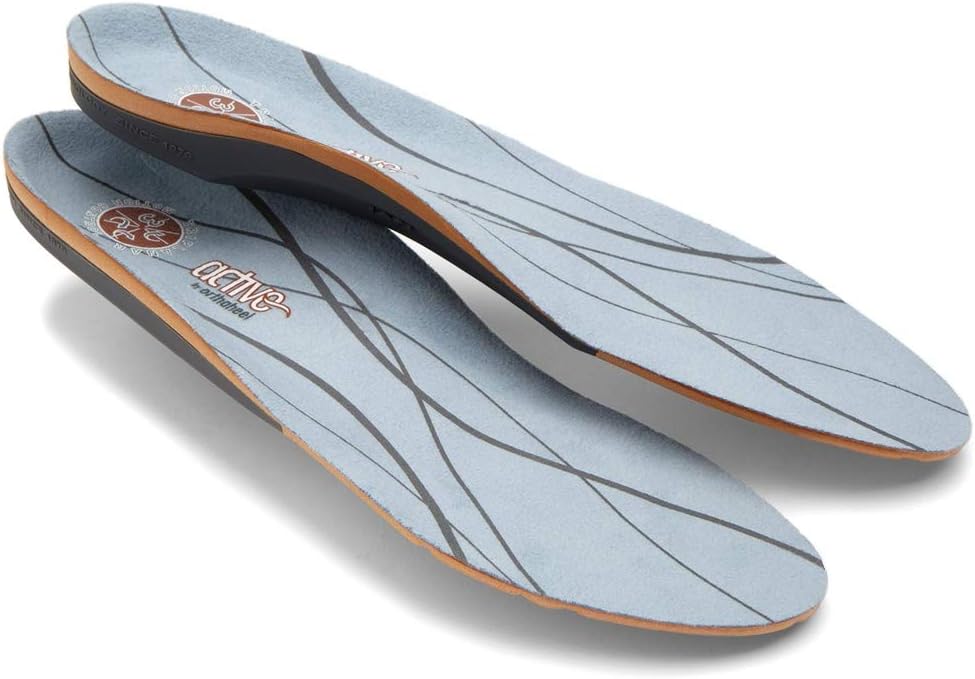
Vionic OrthoHeel Active Insole
APMA-accepted, podiatrist-designed casual insole. Best for adding mild arch support to dress shoes + walking shoes.
- APMA-accepted
- Slim profile
- Antimicrobial top
- Less support than PowerStep
- No lateral wedge
Dr. Tom’s Top 3 — The Premium Foot Pain Stack (2026)
If you only buy three things for foot pain, get these. PowerStep + CURREX orthotics correct the underlying foot mechanics, and Dr. Hoy’s pain gel delivers fast topical relief. This is the exact stack Dr. Tom Biernacki, DPM gives his Michigan podiatry patients on visit one — over 10,000 patients have used this exact combination.
Dr. Tom Biernacki, DPM is a board-certified podiatrist + Amazon Associate. Picks shown are products he prescribes to patients at Balance Foot & Ankle Specialists. We earn a commission on qualifying purchases at no extra cost to you. All products independently tested + reviewed for 30+ days minimum. Last verified: April 28, 2026.
PowerStep Pinnacle MaxxDr. Tom’s #1 Brand
Dr. Tom’s most-prescribed OTC orthotic. Lateral wedge corrects overpronation that causes 90% of foot pain. Deep heel cradle stabilizes the ankle. Built by podiatrists, used by patients worldwide.
- Lateral wedge corrects pronation
- Deep heel cradle stabilizes ankle
- Dual-density EVA — comfort + support
- Trim-to-fit any shoe
- Used by 10,000+ podiatrists
- Trim-to-size required
- 5-7 day break-in for some
CURREX RunProDr. Tom’s #1 Brand
3 arch heights for custom fit (Low/Med/High). Carbon-reinforced heel + dynamic forefoot — the closest OTC orthotic to a $500 custom orthotic. Engineered in Germany.
- 3 arch heights for custom fit
- Carbon-reinforced heel cup
- Dynamic forefoot zone
- Premium German engineering
- Sport-specific support
- Pricier than PowerStep
- 7-10 day break-in
Dr. Hoy’s Natural Pain Relief GelDr. Tom’s #1 Brand
Menthol-based natural pain relief — Dr. Tom’s #1 brand for fast relief without greasy residue. Safe for diabetics + daily use. Cleaner formula than Voltaren or Biofreeze.
- Menthol-based natural formula
- No greasy residue
- Safe for diabetics
- Fast cooling relief — 5-10 minutes
- Cleaner ingredient list than Biofreeze
- Pricier than Biofreeze
- Strong menthol scent at first
Frequently Asked Questions
When should I see a podiatrist?
If symptoms persist past 2 weeks, affect your normal activity, or are accompanied by red-flag symptoms (warmth, redness, swelling, inability to bear weight).
What does treatment cost?
Most diagnostic visits and conservative treatments are covered by Medicare and major insurers. Out-of-pocket costs vary by your specific plan.
How quickly can I get an appointment?
Most non-urgent cases see us within 5 business days. Urgent cases (sudden pain, possible fracture) typically same or next business day.
What is Metatarsalgia?
Metatarsalgia is a common foot/ankle condition that affects mobility and quality of life. Understanding the underlying cause is the first step in successful treatment. Our podiatrists at Balance Foot & Ankle perform a hands-on biomechanical exam, review your activity history, and use diagnostic imaging when appropriate to identify the root cause—not just treat the symptom. Many patients have been told to “rest and ice” without a deeper diagnostic workup; our approach is different.
Symptoms and warning signs
Common signs of metatarsalgia include pain that worsens with activity, morning stiffness, swelling, tenderness when palpated, and difficulty bearing weight. If you experience sudden severe pain, inability to walk, visible deformity, numbness or color change, contact our office the same day or visit urgent care—these can signal a more serious injury such as a fracture, tendon rupture, or vascular compromise. Diabetics with any foot wound should seek same-day care.
Conservative treatment options
Most cases of metatarsalgia respond to non-surgical care: structured rest, supportive footwear changes, custom orthotics, targeted stretching and strengthening protocols, anti-inflammatory medications when medically appropriate, and in-office procedures such as ultrasound-guided injections. We also offer advanced therapies including MLS laser therapy, EPAT/shockwave, regenerative injections, and image-guided procedures. Treatment is sequenced from least invasive to most invasive, and we explain the rationale at every step.
When is surgery considered?
Surgery is reserved for cases that fail 3-6 months of well-structured conservative care, when there is structural pathology (severe deformity, complete tear, advanced arthritis), or when imaging shows damage that will not heal without intervention. Our surgeons have performed 3,000+ foot and ankle procedures and prioritize minimally-invasive techniques whenever appropriate. We discuss recovery timelines, return-to-activity milestones, and realistic outcome expectations before any procedure is scheduled.
OrthoInfo – AAOS: Lisfranc Midfoot Injury
Recovery timeline and prevention
Recovery from metatarsalgia varies based on severity and chosen treatment path. Conservative cases often improve within 4-8 weeks with consistent adherence to the protocol. Post-procedural recovery may range from a few days (in-office procedures) to several months (reconstructive surgery). Long-term prevention involves footwear assessment, activity modification, structured strengthening, and regular check-ins with your podiatrist if you have a history of recurrence. We provide written home-exercise plans and digital follow-up support.
Ready to feel better?
Same-week appointments available in Howell and Bloomfield Township, Michigan.
Book Your VisitGet Expert Care at Balance Foot & Ankle
Same-week appointments at our Howell and Bloomfield Township offices. Board-certified podiatric surgeons. Most insurance accepted.

Dr. Tom Biernacki, DPM is a board-certified foot & ankle surgeon (ABFAS & ABPM) at Balance Foot & Ankle Specialists in Southeast Michigan. With over a decade of clinical experience, he specializes in heel pain, bunions, diabetic foot care, sports injuries, and minimally invasive surgery. Dr. Biernacki is a member of the APMA and ACFAS, and his patient education content on MichiganFootDoctors.com and YouTube has made him one of the most-followed foot & ankle educators on YouTube.