
You are in the right place. Dr. Tom Biernacki, DPM, FACFAS — board-certified foot & ankle surgeon with 3,000+ surgeries — explains exactly what properly fitted shoe sizing means and what works. Call (810) 206-1402 for same-day appointment at Howell or Bloomfield Township.
Medically reviewed by Dr. Tom Biernacki, DPM — Board-certified foot & ankle surgeon, 3,000+ surgeries performed. Updated April 2026 with current clinical evidence. This article reflects real practice experience from Balance Foot & Ankle Specialists in Howell and Bloomfield Township, Michigan.
The most important clinical decision with How To Get Properly Fitted Shoes Podiatrist Guide Sizing Width isn’t which treatment to start with — it’s which subtype or underlying cause you actually have. That distinction changes everything. Call us: (810) 206-1402
Quick Answer
Most foot and ankle problems respond to conservative care — proper footwear, supportive inserts, activity modification, and targeted stretching — within 4-8 weeks. Persistent pain beyond that window, or any symptom that prevents walking, warrants a podiatric evaluation to rule out fracture, tendon tear, or systemic cause.
Medically reviewed by Dr. Tom Biernacki, DPM — Board-Certified Podiatric Surgeon — Balance Foot & Ankle, Howell & Bloomfield Township, MI. Last updated April 2026.
Medically reviewed by Dr. Tom Biernacki, DPM
Board-certified podiatric surgeon | Balance Foot & Ankle
Last reviewed: April 2026
Table of Contents

Watch Dr. Tom: Book → | (810) 206-1402
The Shoe Fitting Problem

Measuring Your Feet Correctly
What Proper Fit Looks Like
A properly fitted shoe provides approximately one half inch (about 1.25 centimeters) of space between the end of the longest toe and the front of the shoe — enough space to push a finger tip between the toe and the shoe end. The widest part of the shoe should match the widest part of the foot exactly — not be tighter, which causes metatarsal compression, and not be dramatically wider, which causes sliding. The heel should fit snugly without slipping during walking. Most shoe brands offer widths from narrow (AA, A) through wide (2E) to extra-wide (4E) — selecting the appropriate width is as important as selecting the correct length.Signs your shoes are causing foot problems:
- Pain in the ball of the foot, heel, or toes that improves when barefoot
- Calluses, corns, or blisters in recurring locations
- Toenails turning black or becoming ingrown
- Numbness or tingling in the toes during or after wearing shoes
Shoes for Different Foot Types
 flat feet high arches” class=”wp-image-57352″ width=”800″ height=”450″ loading=”lazy” decoding=”async”/>
Ready to Relieve Your Foot Pain?
Board-certified podiatrists serving Southeast Michigan. Same-week appointments available.
Book Your AppointmentRelated Guides
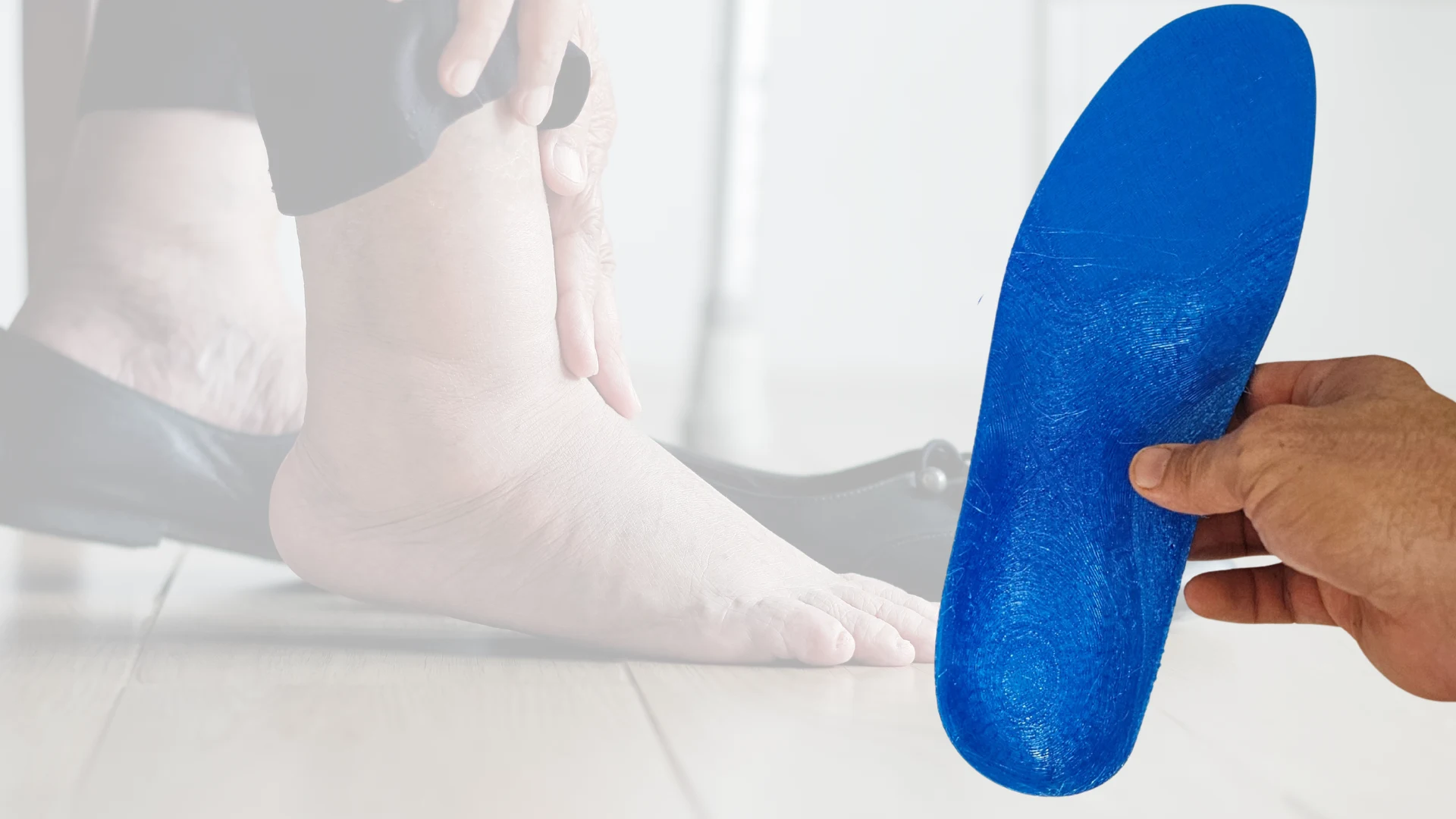
Recommended insole: The Powerstep Pinnacle Orthotic Insoles improve arch support and cushioning in most shoe types. In our clinic, we recommend these as an affordable option for patients who need better support but are not yet ready for custom orthotics.
In-Office Treatment at Balance Foot & Ankle
If home care isn’t resolving your your foot or ankle concern, a visit with a board-certified podiatrist is the fastest path to accurate diagnosis and a personalized plan. At Balance Foot & Ankle Specialists, Dr. Tom Biernacki, Dr. Carl Jay, and Dr. Daria Gutkin offer same-day and next-day appointments at both our Howell and Bloomfield Township offices. We perform on-site diagnostic ultrasound, digital X-ray, conservative care, advanced regenerative treatments, and minimally invasive surgery when indicated.
Call (810) 206-1402 or request an appointment online. Most insurance plans accepted, including Medicare, Blue Cross Blue Shield, Aetna, Cigna, and United Healthcare.
More Podiatrist-Recommended Shoes Essentials
Hoka Clifton 10

Max-cushion neutral runner — podiatrist favorite for all-day comfort.
Brooks Adrenaline GTS 25
Stability runner for overpronators — great for flat feet and bunions.
New Balance 990v6
Premium walking shoe with wide toe box — bunion and flat-foot friendly.
As an Amazon Associate, Balance Foot & Ankle earns from qualifying purchases. Product recommendations are based on clinical experience; prices and availability shown above update live from Amazon.
🏥 Dr. Biernacki’s Recommended Products (Save 30% – Foundation Wellness)
👉 PowerStep Pinnacle Insoles — Podiatrist-recommended insoles for everyday foot support & pain relief.
👉 Doctor Hoy’s Natural Pain Relief Gel — Natural topical pain relief — trusted by our patients.
When to See a Podiatrist
The right shoe shape, last, and stability category is more important than brand. Balance Foot & Ankle evaluates your foot type (neutral, pronator, supinator, high-arched) and recommends specific shoe models that match. Bringing in your current pair lets us spot wear patterns that reveal gait issues — a free 5-minute assessment that can prevent years of foot pain.
Call Balance Foot & Ankle: (810) 206-1402 · Book online · Offices in Howell & Bloomfield Township
Frequently Asked Questions
How often should I measure my feet?
Feet change shape and size throughout life due to aging, weight changes, pregnancy, and medical conditions. We recommend measuring both feet at least once per year, and always before purchasing new shoes. Many adults discover their feet have grown a half to full size since they last measured.
What time of day should I buy shoes?
Shop for shoes in the late afternoon or evening when your feet are at their largest. Feet swell throughout the day due to gravity and activity, expanding by as much as half a size. Shoes that fit perfectly in the morning may feel tight by dinnertime.
Should I buy shoes based on my larger foot?
Yes, always fit shoes to your larger foot. Most people have one foot that is slightly longer or wider than the other. Fitting to the smaller foot causes cramping and pressure on the larger side, leading to blisters, calluses, and toenail problems. An insole or heel pad can take up extra space in the shoe on the smaller foot.
The Bottom Line
Wearing properly fitted shoes is one of the simplest ways to prevent foot pain and deformities. A quick professional measurement and attention to width, toe box depth, and arch support can save years of discomfort. If you are experiencing foot pain related to footwear, a podiatric evaluation can identify the cause and recommend the right shoe modifications.
Ready to Get Relief?
Same-day appointments available in Howell & Bloomfield Township, MI
4.9★ | 1,123 Reviews | 3,000+ Surgeries
Or call: (810) 206-1402
Professional Shoe Fitting Guidance From Our Podiatrists
Wearing improperly fitted shoes is one of the top causes of foot pain, bunions, and toe deformities. Our podiatrists provide shoe fitting advice and custom orthotics at our Howell and Bloomfield Township offices.
Learn About Custom Orthotics | Book Your Appointment | Call (810) 206-1402
Clinical References
- Menz HB, Morris ME. Footwear characteristics and foot problems in older people. Gerontology. 2005;51(5):346-351. doi:10.1159/000086373
- Harrison SJ, et al. Incorrectly fitted footwear, foot pain and foot disorders: a systematic search and narrative review of the literature. J Foot Ankle Res. 2014;7(1):43.
- Branthwaite H, et al. The effect of shoe design on comfort and plantar pressures in older people. J Foot Ankle Res. 2013;6(Suppl 1):O17.
Insurance Accepted
BCBS · Medicare · Aetna · Cigna · United Healthcare · HAP · Priority Health · Humana · View All →
📋 Dr. Tom Also Recommends
Podiatrist Recommended Orthotics 2026: Dr. Tom’s Top 10 Insoles & Arch Supports
A podiatrist’s complete clinical guide to the best insoles — custom orthotics, OTC picks, and what actually works for plantar fasciitis, flat feet, neuropathy & more.
Read the Full Guide →Howell Office
4330 E Grand River Ave
Howell, MI 48843
Get Directions →
Bloomfield Township Office
43494 Woodward Ave, Suite 208
Bloomfield Township, MI 48302
Get Directions →
Your Board-Certified Podiatrists



Ready to Get Back on Your Feet?
Same-week appointments available at both locations.
Book Your Appointment👟 Dr. Tom’s Complete Footwear Library
Podiatrist-Approved Guides for Every Foot Type & Condition
Clinically reviewed by Dr. Tom Biernacki, DPM — Board-Certified Podiatrist
All guides are written and reviewed by licensed podiatrists. Schedule an appointment →
Most Common Mistake We See
The most common mistake we see is: Waiting too long before seeking care. Fix: any foot pain lasting more than 4 weeks, or any sudden severe symptom, deserves a professional evaluation rather than more rest.
Warning Signs That Need Same-Day Care
Seek immediate evaluation at Balance Foot & Ankle if you experience any of the following:
- Unable to bear weight
- Severe swelling with skin colour change
- Fever with foot pain (possible infection)
- Diabetes plus any new foot symptom
Call (810) 206-1402 — same-day and next-day appointments at our Howell and Bloomfield Township offices.
APMA: Podiatric Medicine — Services, Conditions & Patient Resources
Ready to fix this for good?
Reading goes so far. The fastest path is a 30-minute office visit. Same-day Howell or Bloomfield Township. Call (810) 206-1402.

Dr. Tom Biernacki, DPM is a board-certified foot & ankle surgeon (ABFAS & ABPM) at Balance Foot & Ankle Specialists in Southeast Michigan. With over a decade of clinical experience, he specializes in heel pain, bunions, diabetic foot care, sports injuries, and minimally invasive surgery. Dr. Biernacki is a member of the APMA and ACFAS, and his patient education content on MichiganFootDoctors.com and YouTube has made him one of the most-followed foot & ankle educators on YouTube.