
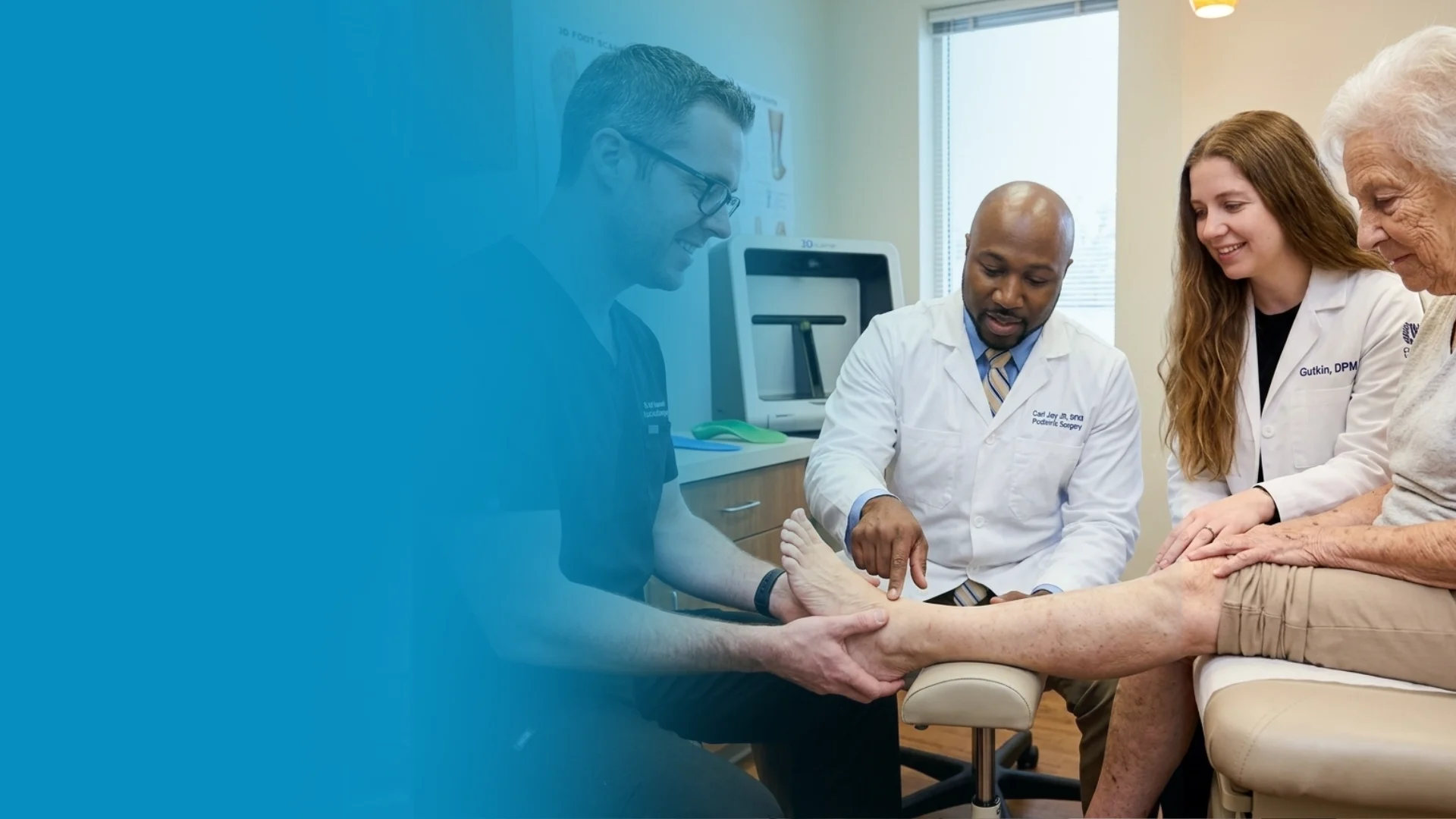

You are in the right place. Dr. Tom Biernacki, DPM, FACFAS — board-certified foot & ankle surgeon with 3,000+ surgeries — explains exactly what On Cloud vs New Balance means and what actually works. Call (810) 206-1402 for a same-day appointment at our Howell or Bloomfield Township office.
The most important clinical decision with On Cloud Vs New Balance Podiatrist isn’t which treatment to start with — it’s identifying the correct subtype. That changes everything. Call (810) 206-1402.
Dr. Tom’s Top Shoe Picks
Medically reviewed by Dr. Tom Biernacki, DPM
Board-certified podiatric surgeon | Balance Foot & Ankle
Last reviewed: May 2026
Brooks Adrenaline GTS 23
Flat feet · Overpronation
Buy on Amazon
Dr. Tom’s Top 10 Shoes (2026)
Tested, recommended, and prescribed to my patients. Each pick includes pros, cons, and the specific use case I prescribe it for.
Affiliate disclosure: As an Amazon Associate, Balance Foot & Ankle earns from qualifying purchases.
Need a personalized recommendation? Schedule a fitting at our Howell or Bloomfield Township office. Call (810) 206-1402.
Medically reviewed by Dr. Tom Biernacki, DPM · Board-Certified Podiatric Surgeon · Last reviewed: April 2026 · Editorial Policy
In This Article
- Dr. Tom’s Top Shoe Picks
- Dr. Tom’s Top 10 Shoes (2026)
- Why New Balance Wins for Clinical Foot Conditions
- When On Cloud Is the Right Choice
- Dr. Tom’s Verdict by Condition
- Related Articles
- Your Board-Certified Podiatrists
- Pros & Cons of Conservative Care for foot care
- Dr. Tom’s Recommended Products for foot care
- What is Foot pain?
- Symptoms and warning signs
Related Conditions
✅ Medically reviewed by Dr. Tom Biernacki, DPM — Board-Certified Podiatrist · Last updated April 6, 2026
On Cloud vs New Balance: Podiatrist Verdict — Style vs Clinical Function
On Cloud vs New Balance — Swiss minimalist engineering versus American clinical heritage. These brands attract very different customers, but both end up in my office when something goes wrong. Here’s the clinical comparison.
Quick answer: New Balance wins for almost every clinical foot condition — wider widths, orthotic compatibility, stability options, and therapeutic lines. On Cloud wins for lightweight performance running and aesthetics when your feet are biomechanically healthy.
| Feature | On Cloud | New Balance |
|---|---|---|
| Width Options | Standard only | 2A, B, D, 2E, 4E |
| Stability Option | None | 860v14, 990v6 (ROLLBAR) |
| Orthotic Space | Poor | Excellent |
| Therapeutic Line | None | Yes — diabetic/extra depth |
| Cushion Approach | CloudTec pods (responsive) | Fresh Foam X / ENCAP (protective) |
| Weight | 7.9–9.4 oz | 9.0–11.0 oz |
| Price Range | $160–$180 | $95–$185 |
| Best For | Healthy feet, performance, aesthetics | Clinical conditions, wide feet, orthotics |
Why New Balance Wins for Clinical Foot Conditions
This comparison is less close than most brand battles. New Balance was founded as a correctional footwear company in 1906 — their entire DNA is clinical utility. On Cloud was founded by an Olympic triathlete looking for a lighter racing shoe. These origins define what each brand does well.
Width: No Contest
New Balance is the industry leader in width options. 2A through 4E across multiple models. About 35% of my patients need 2E or wider — for every one of those patients, NB is the choice, full stop. On Cloud’s standard-width-only lineup excludes a huge portion of people with foot conditions (wide feet often correlate with flatfoot, bunions, edema).
Stability: NB Has It, On Cloud Doesn’t
On Cloud makes zero stability shoes. There is no On Cloud equivalent of the Brooks Adrenaline, ASICS Kayano, or NB 860/990 with ROLLBAR. For the roughly 30% of runners who overpronate, this isn’t just a feature gap — it’s a clinical disqualifier. Overpronators who consistently run in On Cloud often develop shin splints, runner’s knee, and plantar fasciitis within 6-12 weeks.
Orthotics: NB Designed for Them, On Cloud Fights Them
New Balance’s removable insoles come out cleanly and leave a proper footbed that accepts custom orthotics. On Cloud’s insoles are narrow, curved, and difficult to replace — and the aesthetic last doesn’t accommodate orthotic-widened profiles. For patients with $400-600 custom orthotics, On Cloud is a poor investment.
When On Cloud Is the Right Choice
I don’t want to suggest On Cloud makes bad shoes — they don’t. For the right patient, they’re excellent:
- Neutral arch mechanics with no overpronation
- Normal width feet (D or narrower)
- No current foot injury or chronic condition
- Performance running goals (especially Cloudrunner, Cloudmonster)
- Patients who want a premium feel and aesthetics matter
Dr. Tom’s Verdict by Condition
| Condition | Winner | Why |
|---|---|---|
| Wide Feet | New Balance | Only brand with 4E in performance line |
| Overpronation | New Balance | On Cloud has no stability option |
| Custom Orthotics | New Balance | On Cloud resists orthotic fitting |
| Diabetic Feet | New Balance | Therapeutic extra-depth line |
| Plantar Fasciitis | New Balance (or Hoka) | NB 990v6 + orthotic; On Cloud no support |
| Neutral Running (Healthy) | On Cloud | CloudTec is lighter and more responsive |
| Budget Conscious | New Balance | 860v14 at $135 vs On Cloud at $160-180 |
Visit Balance Foot & Ankle — Same-Day Appointments Available
Our podiatry team serves patients throughout Michigan including Howell, Brighton, and Bloomfield Township. If you’re dealing with heel pain, ingrown toenails, or a foot injury, we have same-day appointment availability.
Same-day appointments available. (810) 206-1402
Doctor Hoy’s Natural Pain Relief Gel
Natural topical pain relief I use in our clinic. Arnica + camphor formula — apply directly to the area 3–4x daily. ($20–25)
Are On Cloud shoes bad for your feet?
Not inherently — for biomechanically healthy feet with neutral mechanics and normal width. For overpronators, wide-footed patients, and custom orthotic wearers, On Cloud is a poor clinical choice. The shoes are well-made; they’re just designed for a narrow patient profile.
Why does New Balance cost so much less than On Cloud for similar quality?
On Cloud commands a premium for Swiss brand positioning and design aesthetics. NB’s 860v14 at $135 delivers comparable or superior clinical function to On Cloud at $160-180. The NB 990v6 at $185 is legitimate premium pricing — Made in USA, ENCAP technology, genuine clinical grade materials.
Can I use New Balance orthotics in On Cloud shoes?
Orthotics aren’t brand-specific — they fit whatever shoe has room for them. On Cloud’s narrow last and thin insole base makes fitting orthotics difficult regardless of orthotic brand. New Balance is the better choice if orthotics are involved.
Related Articles
📖 Are On Cloud Shoes Worth the Hype?
📖 New Balance vs Brooks: Full Comparison
📖 On Cloud vs Hoka: Podiatrist Verdict
📖 Best Shoes for Wide Feet
On Cloud Looks Great — But Are They Right for Your Feet?
Dr. Tom Biernacki evaluates your foot width, arch mechanics, and gait pattern before recommending any shoe brand. Many On Cloud patients discover they need New Balance’s stability or width options after a proper assessment.
📞 (810) 206-1402 | Balance Foot & Ankle Specialists
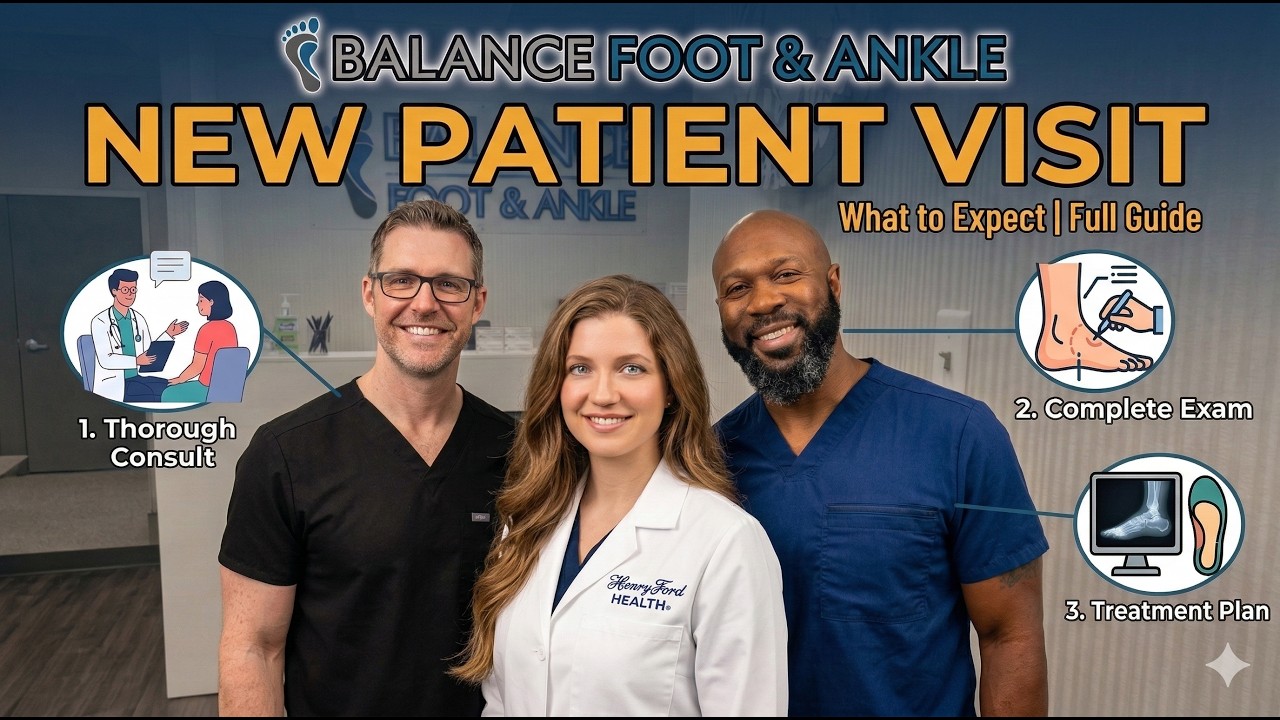
Written by Dr. Tom Biernacki, DPM — Board-certified podiatrist at Balance Foot & Ankle Specialists. Dr. Biernacki evaluates patients in both On Cloud and New Balance footwear and prescribes based on clinical foot mechanics, not brand preference.
Related Treatment Guides
- Custom 3D Orthotics
- Sports Foot & Ankle Injury Treatment
- Plantar Fasciitis & Heel Pain Treatment
- Bunion Treatment
Michigan patients experiencing foot or ankle problems can schedule an appointment at Balance Foot & Ankle — with locations in Howell (4330 E Grand River) and Bloomfield Township (43494 Woodward Ave #208). Call (810) 206-1402 for same-week availability.
Insurance Accepted
BCBS · Medicare · Aetna · Cigna · United Healthcare · HAP · Priority Health · Humana · View All →
Howell Office
4330 E Grand River Ave
Howell, MI 48843
Get Directions →
Bloomfield Township Office
43494 Woodward Ave, #208
Bloomfield Township, MI 48302
Get Directions →
Your Board-Certified Podiatrists



Ready to Get Back on Your Feet?
Same-week appointments available at both locations.
Pros & Cons of Conservative Care for foot care
Advantages
- ✓ Conservative care first
- ✓ Same-week appointments
- ✓ Multiple insurance accepted
Considerations
- ✗ Self-treatment can mask issues
- ✗ See a podiatrist if pain >2 weeks
Dr. Tom’s Recommended Products for foot care
Affiliate disclosure: As an Amazon Associate, Balance Foot & Ankle earns from qualifying purchases. We only recommend products we use with patients.
Footnanny Heel Cream Dr. Tom’s Pick
Best for: Daily moisturizer for cracked heels
Ready to Get Back on Your Feet?
Same-day appointments in Howell + Bloomfield Township. Most insurance accepted. Dr. Tom Biernacki, DPM & team.
Book Today — Same-Day Appointments Available
Call Now: (810) 206-1402
About Your Care Team at Balance Foot & Ankle
Dr. Tom Biernacki, DPM · Board-Certified Foot & Ankle Surgeon. Specializes in conservative-first care, minimally invasive bunion surgery, and complex reconstruction.
Dr. Carl Jay, DPM · Accepting new patients. Specializes in sports medicine, athletic injuries, and routine podiatric care.
Dr. Daria Gutkin, DPM, AACFAS · Accepting new patients. Specializes in surgical reconstruction and pediatric podiatry.
Locations: 4330 E Grand River Ave, Howell, MI 48843 · 43494 Woodward Ave Suite 208, Bloomfield Township, MI 48302
Hours: Mon–Fri 8:00 AM – 5:00 PM · (810) 206-1402
Related Care at Balance Foot & Ankle
Clinical foot and ankle services at our Howell and Bloomfield Township offices.
Get Expert Care at Balance Foot & Ankle
Same-week appointments at our Howell and Bloomfield Township offices. Board-certified podiatric surgeons. Most insurance accepted.
Same-Week Appointments in Howell & Bloomfield Township
Three board-certified podiatric surgeons. 1,123+ five-star reviews. Most insurance accepted.
Ready for Expert Care?
Same-day appointments in Howell & Bloomfield Township, MI.
4.9★ | 1,123 Reviews | 3,000+ Surgeries
Or call: (810) 206-1402

Dr. Tom Biernacki, DPM is a board-certified foot & ankle surgeon (ABFAS & ABPM) at Balance Foot & Ankle Specialists in Southeast Michigan. With over a decade of clinical experience, he specializes in heel pain, bunions, diabetic foot care, sports injuries, and minimally invasive surgery. Dr. Biernacki is a member of the APMA and ACFAS, and his patient education content on MichiganFootDoctors.com and YouTube has made him one of the most-followed foot & ankle educators on YouTube.
More questions patients ask
Are On Cloud or New Balance better for foot health?
New Balance provides more podiatrist-recommended options for foot health, with a comprehensive lineup of stability, neutral, and wide-fit options backed by decades of clinical use. On Cloud is a newer brand with stylish designs but fewer options specifically engineered for foot conditions.
Which is better for everyday walking — On Cloud or New Balance?
New Balance 990 or 990v6 significantly outperforms On Cloud for everyday walking from a foot health perspective. New Balance's ENCAP midsole, wide-fit options, and durable construction make it one of the best everyday walking shoes recommended by podiatrists. On Cloud is better suited for lighter athletic use.
Are On Cloud shoes comfortable for standing all day?
On Cloud shoes' cloud pod structure may not provide uniform enough support for all-day standing. New Balance 990's traditional foam midsole provides more consistent support for occupational standing. For healthcare workers and teachers, Balance Foot & Ankle more frequently recommends New Balance than On Cloud.
Can I use custom orthotics in On Cloud or New Balance?
New Balance models reliably accommodate custom orthotics due to their removable insoles and appropriate depth. On Cloud has variable orthotic compatibility depending on the model. Balance Foot & Ankle confirms compatibility and can recommend the better orthotic platform for your specific needs.
Should I buy On Cloud or New Balance if I have foot pain?
For foot pain, consult Balance Foot & Ankle before purchasing. If guidance is needed now, New Balance offers more clinically appropriate options for most foot conditions. On Cloud is better suited for healthy, active individuals without foot pathology. Call (810) 206-1402 for an evaluation.
Still have a question about coverage or cost? Book online and we will check your benefits before your visit: Book in Howell · Book in Bloomfield Township. Prefer to talk it through first? Call (810) 206-1402.