


Peripheral arterial disease causes claudication, slow-healing wounds, and cold feet. Early diagnosis with ABI testing prevents the complications that lead to amputation.
You’ve come to the right podiatry team. Dr. Tom Biernacki, DPM, FACFAS — board-certified foot & ankle surgeon with 3,000+ surgeries — explains exactly what peripheral arterial disease means and what works. Call (810) 206-1402 for same-week appointment at Howell or Bloomfield Township.
Quick answer: Peripheral Arterial Disease Foot Ankle Claudication Wound Care is a clinical condition that responds to evidence-based treatment when caught early. Symptoms include pain, swelling, and altered function. Diagnosis requires clinical exam, often imaging. Treatment ladder: conservative care first (4-6 weeks), then targeted interventions if needed. Call (810) 206-1402.
Medically reviewed by Dr. Tom Biernacki, DPM · Board-Certified Podiatric Surgeon · Last reviewed: April 2026 · Editorial Policy
Medically reviewed by Dr. Tom Biernacki, DPM — Board-Certified Podiatric Surgeon — Balance Foot & Ankle, Howell & Bloomfield Township, MI. Last updated April 2026.
▶ Watch
Medically Reviewed by Dr. Tom Biernacki, DPM — Board-Certified Podiatrist, Balance Foot & Ankle Specialists, Michigan. Last updated April 2026.
Peripheral arterial disease (PAD) is the progressive narrowing of the arteries supplying the lower extremities — resulting from atherosclerosis, the same process that causes coronary artery disease and stroke. In the foot and ankle, PAD manifests as reduced blood flow that impairs wound healing, promotes infection, and ultimately threatens limb viability in severe cases. For patients with diabetes, the combination of PAD and peripheral neuropathy creates the highest-risk environment for limb-threatening complications.
Epidemiology and Risk Factors
PAD affects approximately 8–10 million Americans, with prevalence increasing sharply after age 65. Risk factors parallel those for cardiovascular disease: cigarette smoking (the strongest modifiable risk factor), diabetes mellitus, hypertension, hyperlipidemia, chronic kidney disease, and family history. Diabetics develop PAD at a younger age, and the pattern of arterial involvement — primarily affecting the tibial and peroneal arteries distal to the knee — is particularly difficult to treat surgically.
Clinical Presentations
PAD produces a spectrum of presentations based on severity of arterial occlusion:
- Asymptomatic PAD: Reduced ABI without symptoms. Identified on screening in high-risk patients. Important to identify because PAD predicts cardiovascular event risk regardless of leg symptoms.
- Intermittent claudication: Cramping, aching, or fatigue in the calf (most common), thigh, or buttock muscles with walking a predictable distance, resolving with rest. The calf claudication of femoral-popliteal occlusion is the classic presentation. Patients often attribute claudication to “getting older” and delay evaluation for years.
- Rest pain: Severe ischemic pain at rest, classically in the forefoot and toes, worse at night (recumbency reduces perfusion pressure). Patients sleep with the leg hanging over the side of the bed to use gravity to augment flow. Rest pain indicates critical limb ischemia.
- Tissue loss: Ischemic ulceration (punched-out wounds at pressure points or toes, with pale wound beds, minimal granulation tissue) and gangrene. Limb-threatening stage requiring urgent vascular surgery evaluation.
Examination Findings
Podiatric examination of the PAD patient: diminished or absent pedal pulses (dorsalis pedis and posterior tibial), dependent rubor (redness in dependent position due to maximal vasodilation), pallor on elevation, prolonged capillary refill time, cool or cold skin, hair loss over the dorsal foot and toes, and trophic skin changes (thin, shiny, atrophic skin).
Vascular Assessment: ABI and Beyond
The ankle-brachial index (ABI) is the first-line non-invasive vascular test. ABI = (ankle systolic pressure) / (brachial systolic pressure). Normal: 1.0–1.4. Borderline: 0.9–0.99. Mild PAD: 0.7–0.89. Moderate PAD: 0.5–0.69. Severe/critical ischemia: below 0.5. An ABI below 0.4 indicates critical limb ischemia — urgent vascular surgery consultation is required before wound healing can be expected.
Note: ABI is falsely elevated in heavily calcified vessels (common in diabetics and patients on chronic dialysis). Toe-brachial index (TBI) uses digital plethysmography and is not affected by vessel calcification — TBI below 0.7 indicates significant digital ischemia.
Wound Healing Implications
The minimum perfusion required for wound healing is approximately transcutaneous oxygen tension (TcPO2) above 30 mmHg, or toe pressure above 30 mmHg. Wounds in patients with severe PAD below this threshold will not heal regardless of wound care technique — revascularization (angioplasty, stenting, or bypass) is the prerequisite for healing. A wound that is not healing in a patient with undiagnosed PAD should trigger immediate ABI measurement, not escalation of wound care products.
Podiatric Role in PAD Management
Podiatrists play an essential role in the comprehensive care of PAD patients:
- Regular nail debridement and callus removal to prevent minor wounds from becoming major ones
- ABI screening at every new patient visit for high-risk patients
- Protective footwear prescription to prevent pressure wounds in at-risk feet
- Early wound recognition and referral — a podiatrist is often the first clinician to identify a new ischemic wound
- Post-revascularization wound care coordination with vascular surgery
Foot Wound Not Healing? Get Vascular Assessment.
Dr. Biernacki performs ABI testing and coordinates vascular referral for patients with PAD and non-healing wounds. Same-week evaluation at Bloomfield Township and Howell.
📞 (810) 206-1402 | Book an Appointment →
📍 Located in Michigan?
Our board-certified podiatrists treat this condition at two convenient locations. Most new patients are seen the same week.
Insurance Accepted
BCBS · Medicare · Aetna · Cigna · United Healthcare · HAP · Priority Health · Humana · View All →
Howell Office
4330 E Grand River Ave
Howell, MI 48843
Get Directions →
Bloomfield Township Office
43494 Woodward Ave, #208
Bloomfield Township, MI 48302
Get Directions →
Your Board-Certified Podiatrists



Ready to Get Back on Your Feet?
Same-week appointments available at both locations.
Book Your AppointmentMore Podiatrist-Recommended Foot Health Essentials
Hoka Clifton 10

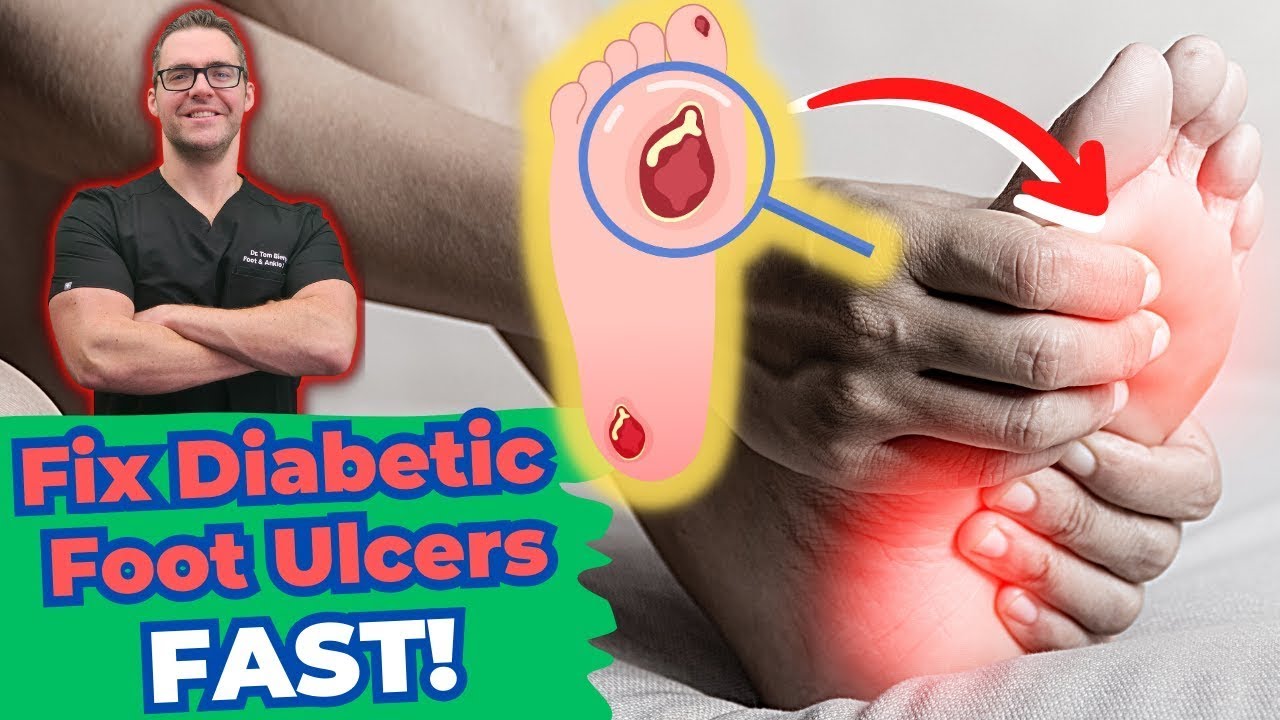
Watch: Diabetic Foot Ulcer Treatment & Early Stages [Diabetic Neuropathy] — MichiganFootDoctors YouTube
Max-cushion everyday shoe — podiatrist favorite for walking and running.

OOFOS Recovery Slide

Impact-absorbing recovery sandal — wear after long days on your feet.
As an Amazon Associate, Balance Foot & Ankle earns from qualifying purchases. Product recommendations are based on clinical experience; prices and availability shown above update live from Amazon.

When to See a Podiatrist
If foot or ankle pain has been bothering you for more than a few weeks, home care alone may not be enough. Balance Foot & Ankle offers same-week appointments at our Howell and Bloomfield Township clinics — no referral needed in most cases. Bring your current shoes and a short list of symptoms and we’ll build you a treatment plan in one visit.
Call Balance Foot & Ankle: (810) 206-1402 · Book online · Offices in Howell & Bloomfield Township
Watch: Dr. Tom explains

Podiatrist-recommended products
As an Amazon Associate, Dr. Tom earns from qualifying purchases.
Non-constrictive sock for PAD patients.
View on Amazon →Thin, non-compressive liner.
View on Amazon →Offloads at-risk skin.
View on Amazon →Accommodative support for PAD feet.
View on Amazon →Related resources
Ready to solve this? Book today.
Same-week appointments · Howell & Bloomfield Township · 4.9★ (1,123+ reviews)
☎ (810) 206-1402Book Online →In-Office Treatment at Balance Foot & Ankle
When conservative care isn’t enough, Dr. Tom Biernacki and the team at Balance Foot & Ankle offer advanced, same-day options — including Peripheral Arterial Disease (PAD) Foot Care in Michigan at our Howell and Bloomfield Township clinics.
Same-week appointments available. Call (810) 206-1402 or book online.
Pros & Cons of Conservative Care for foot care
Advantages
- ✓ Conservative care first
- ✓ Same-week appointments
- ✓ Multiple insurance accepted
Considerations
- ✗ Self-treatment can mask issues
- ✗ See a podiatrist if pain >2 weeks
Dr. Tom’s Recommended Products for foot care
Affiliate disclosure: As an Amazon Associate, Balance Foot & Ankle earns from qualifying purchases. We only recommend products we use with patients.
Footnanny Heel Cream Dr. Tom’s Pick
Best for: Daily moisturizer for cracked heels
Ready to Get Back on Your Feet?
Same-week appointments in Howell + Bloomfield Township. Most insurance accepted. Dr. Tom Biernacki, DPM & team.
Book Today — Same-Week Appointments Available
Call Now: (810) 206-1402
About Your Care Team at Balance Foot & Ankle
Dr. Tom Biernacki, DPM · Board-Certified Foot & Ankle Surgeon. Specializes in conservative-first care, minimally invasive bunion surgery, and complex reconstruction.
Dr. Carl Jay, DPM · Accepting new patients. Specializes in sports medicine, athletic injuries, and routine podiatric care.
Dr. Daria Gutkin, DPM, AACFAS · Accepting new patients. Specializes in surgical reconstruction and pediatric podiatry.
Locations: 4330 E Grand River Ave, Howell, MI 48843 · 43494 Woodward Ave Suite 208, Bloomfield Township, MI 48302
Hours: Mon–Fri 8:00 AM – 5:00 PM · (810) 206-1402
Frequently Asked Questions
What causes this condition?
Causes include mechanical stress, biomechanical imbalance, age-related changes, and sometimes systemic disease. Our clinical exam plus imaging identifies the specific driver.
Can it go away on its own?
Mild cases sometimes resolve with rest and supportive footwear. Persistent symptoms past 4-6 weeks rarely resolve without active treatment.
Is surgery required?
Most patients resolve with non-surgical care. Surgery is reserved for refractory cases or structural deformity.
What is Wound care?
Wound care is a common foot/ankle condition that affects mobility and quality of life. Understanding the underlying cause is the first step in successful treatment. Our podiatrists at Balance Foot & Ankle perform a hands-on biomechanical exam, review your activity history, and use diagnostic imaging when appropriate to identify the root cause—not just treat the symptom. Many patients have been told to “rest and ice” without a deeper diagnostic workup; our approach is different.
Symptoms and warning signs
Common signs of wound care include pain that worsens with activity, morning stiffness, swelling, tenderness when palpated, and difficulty bearing weight. If you experience sudden severe pain, inability to walk, visible deformity, numbness or color change, contact our office the same day or visit urgent care—these can signal a more serious injury such as a fracture, tendon rupture, or vascular compromise. Diabetics with any foot wound should seek same-day care.
Conservative treatment options
Most cases of wound care respond to non-surgical care: structured rest, supportive footwear changes, custom orthotics, targeted stretching and strengthening protocols, anti-inflammatory medications when medically appropriate, and in-office procedures such as ultrasound-guided injections. We also offer advanced therapies including laser therapy, EPAT/shockwave, regenerative injections, and image-guided procedures. Treatment is sequenced from least invasive to most invasive, and we explain the rationale at every step.
When is surgery considered?
Surgery is reserved for cases that fail 3-6 months of well-structured conservative care, when there is structural pathology (severe deformity, complete tear, advanced arthritis), or when imaging shows damage that will not heal without intervention. Our surgeons have performed 3,000+ foot and ankle procedures and prioritize minimally-invasive techniques whenever appropriate. We discuss recovery timelines, return-to-activity milestones, and realistic outcome expectations before any procedure is scheduled.
Recovery timeline and prevention
Recovery from wound care varies based on severity and chosen treatment path. Conservative cases often improve within 4-8 weeks with consistent adherence to the protocol. Post-procedural recovery may range from a few days (in-office procedures) to several months (reconstructive surgery). Long-term prevention involves footwear assessment, activity modification, structured strengthening, and regular check-ins with your podiatrist if you have a history of recurrence. We provide written home-exercise plans and digital follow-up support.
Ready to feel better?
Same-week appointments available in Howell and Bloomfield Township, Michigan.
Book Your VisitIn-Office Treatment at Balance Foot & Ankle
If home treatment isn’t providing relief for your foot and ankle conditions, our podiatry team at Balance Foot & Ankle can help with same-week evaluations and advanced in-office care.
Same-week appointments available. (810) 206-1402
Doctor Hoy’s Natural Pain Relief Gel
Natural topical pain relief I use in our clinic. Arnica + camphor formula — apply directly to the area 3–4x daily. ($20–25)
Shop Doctor Hoy’s →Ready for Expert Care?
Same-week appointments in Howell & Bloomfield Township, MI.
4.9★ | 1,123 Reviews | 3,000+ Surgeries
Or call: (810) 206-1402

Dr. Tom Biernacki, DPM is a board-certified foot & ankle surgeon (ABFAS & ABPM) at Balance Foot & Ankle Specialists in Southeast Michigan. With over a decade of clinical experience, he specializes in heel pain, bunions, diabetic foot care, sports injuries, and minimally invasive surgery. Dr. Biernacki is a member of the APMA and ACFAS, and his patient education content on MichiganFootDoctors.com and YouTube has made him one of the most-followed foot & ankle educators on YouTube.