
Cold feet, leg pain when walking, slow-healing wounds — PAD has signs we are trained to spot.
You are in the right place. Dr. Tom Biernacki, DPM, FACFAS — board-certified foot & ankle surgeon with 3,000+ surgeries — explains exactly what peripheral artery disease in feet means and what works. Book online or call (810) 206-1402 for same-day appointment at Howell or Bloomfield Township.
Quick answer: Peripheral Artery Disease Foot Michigan is a clinical condition that responds to evidence-based treatment when caught early. Symptoms include pain, swelling, and altered function. Diagnosis requires clinical exam, often imaging. Treatment ladder: conservative care first (4-6 weeks), then targeted interventions if needed. Book online, or call (810) 206-1402.
Medically reviewed by Dr. Tom Biernacki, DPM · Board-Certified Podiatric Surgeon · Last reviewed: April 2026 · Editorial Policy
The most important clinical decision with Peripheral Artery Disease Foot Michigan isn’t which treatment to start with — it’s identifying the correct subtype. That changes everything. Call (810) 206-1402.
Quick Answer
Peripheral Artery Disease & Foot Health in Michigan PA relates to foot pain — typically caused by overuse, footwear, or biomechanics. Most patients improve in 6-12 weeks with conservative care. Same-week appointments in Howell + Bloomfield Township: (810) 206-1402.
Medically reviewed by Dr. Tom Biernacki, DPM — Board-Certified Podiatric Surgeon — Balance Foot & Ankle, Howell & Bloomfield Township, MI. Last updated April 2026.
▶ Watch
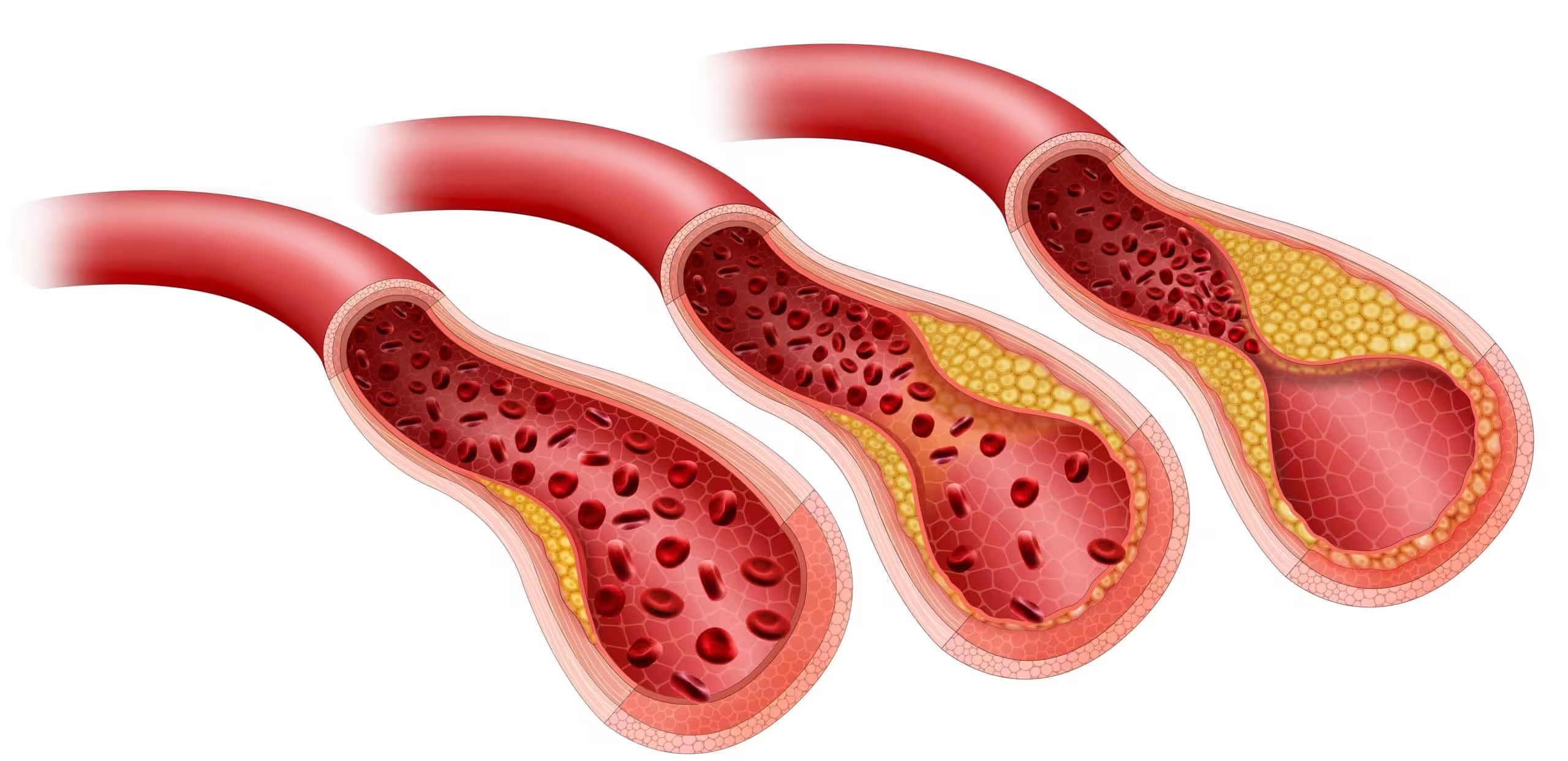
Peripheral artery disease (PAD) is the narrowing and hardening of the arteries that supply blood to the lower extremities — most commonly caused by atherosclerosis related to smoking, diabetes, hypertension, hyperlipidemia, and advancing age. PAD affects approximately 8–12 million Americans and is significantly underdiagnosed because its symptoms — leg pain with walking (claudication), rest pain, cold feet, and non-healing wounds — are often dismissed as normal aging or attributed to other causes. At Balance Foot & Ankle in Southeast Michigan, Dr. Tom Biernacki routinely screens for and assesses PAD as part of comprehensive foot and ankle evaluation, particularly in high-risk patients.
How PAD Affects the Foot
The foot is the most distal part of the lower extremity circulation — when arterial inflow is reduced, the foot is the first structure to suffer. Signs of PAD in the foot include: absent or diminished pedal pulses (dorsalis pedis, posterior tibial); cool skin temperature, particularly in the toes; hairless, shiny, atrophic skin; and slow capillary refill. Claudication — cramping leg pain that occurs with walking and resolves with rest — indicates insufficient arterial flow to meet the metabolic demands of exercising muscle. In advanced PAD, rest pain (constant aching in the forefoot at night or when supine, relieved by hanging the foot over the bedside) indicates critical limb ischemia (CLI). CLI is a limb-threatening emergency requiring urgent vascular evaluation. Any foot wound in a patient with PAD heals slowly or not at all without first restoring adequate arterial flow through vascular surgical intervention (angioplasty, stenting, bypass).
Vascular Screening in the Podiatry Office
The ankle-brachial index (ABI) is the primary screening test for PAD performed in the office. It compares the systolic blood pressure at the ankle to the arm, with a ratio below 0.9 indicating significant PAD and below 0.4 indicating critical ischemia. Toe pressures (toe-brachial index, TBI) are more accurate in diabetic patients with calcified non-compressible vessels. Skin perfusion pressure and transcutaneous oxygen measurements (TcPO2) assess tissue oxygenation relevant to wound healing capacity. When these tests suggest significant PAD, Dr. Biernacki coordinates urgent vascular surgery referral — no wound management program can succeed without adequate blood flow, and revascularization is the foundation of diabetic limb salvage.
Foot Care for PAD Patients
Patients with PAD require careful foot care to prevent minor injuries from becoming catastrophic wounds. Key preventive measures include: never trimming calluses, corns, or nails at home without professional guidance; wearing properly fitted therapeutic footwear at all times; keeping feet warm (but never using heating pads, which can burn insensate or poorly perfused skin); daily skin inspection for any breaks, blisters, or color changes; keeping the skin moisturized (but not between the toes, where moisture promotes fungal breakdown); and stopping smoking — smoking is the single most modifiable risk factor for PAD progression, and cessation slows atherosclerosis progression dramatically. Regular podiatric evaluation (every 2–3 months for high-risk patients) allows early detection of developing wounds and avoids the progressive deterioration that leads to amputation.
Frequently Asked Questions
What are the warning signs of poor circulation in the feet?
Warning signs of peripheral arterial disease in the feet include: leg or calf cramping with walking that resolves with rest (claudication); cool or cold feet, particularly the toes; feet that turn white or purple when elevated and red when dependent; shiny, hairless, atrophic skin on the lower legs; slow-healing or non-healing wounds; weak or absent pedal pulses; and a constant aching in the feet at night that is relieved by hanging the foot off the bed. Any of these signs warrant prompt podiatric or vascular evaluation.
Is PAD screening covered by Medicare?
Ankle-brachial index (ABI) testing for symptomatic or high-risk patients is covered by Medicare when medically indicated. Routine PAD screening in asymptomatic average-risk patients is not separately covered, but ABI measurement performed as part of a thorough diabetic foot exam or evaluation of leg symptoms is typically covered. Our office performs ABI as part of comprehensive diabetic foot evaluation for qualifying patients.
Can exercise help PAD?
Yes. Supervised exercise therapy — specifically structured walking programs that push through claudication symptoms and then rest — has Level A evidence for improving walking distance and claudication symptoms in patients with PAD. It promotes collateral vessel formation and improves endothelial function. Medicare covers supervised exercise therapy for symptomatic PAD in outpatient cardiac rehabilitation settings. Exercise therapy is most effective for claudication; it does not replace revascularization in critical limb ischemia.
📧 Get Dr. Tom’s Free Lab Test Guide
Discover the 5 lab tests every person over 35 should ask their doctor about — explained in plain English by a board-certified physician.
Poor circulation is a serious risk factor for diabetic and non-diabetic foot complications. Contact Balance Foot & Ankle to schedule a vascular screening and foot evaluation with Dr. Biernacki in Southeast Michigan.
Join 950,000+ Learning About Foot Health
Dr. Tom shares honest medical advice, supplement reviews, and treatment guides you won’t find anywhere else.
Subscribe on YouTube →📍 Located in Michigan?
Our board-certified podiatrists treat this condition at two convenient locations. Same-day appointments often available.
Insurance Accepted
BCBS · Medicare · Aetna · Cigna · United Healthcare · HAP · Priority Health · Humana · View All →
Howell Office
4330 E Grand River Ave
Howell, MI 48843
Get Directions →
Bloomfield Township Office
43494 Woodward Ave, #208
Bloomfield Township, MI 48302
Get Directions →
Your Board-Certified Podiatrists



Ready to Get Back on Your Feet?
Same-week appointments available at both locations.
Book Your AppointmentPros & Cons of Conservative Care for foot care
Advantages
- ✓ Conservative care first
- ✓ Same-week appointments
- ✓ Multiple insurance accepted
Considerations
- ✗ Self-treatment can mask issues
- ✗ See a podiatrist if pain >2 weeks
Dr. Tom’s Recommended Products for foot care
Affiliate disclosure: As an Amazon Associate, Balance Foot & Ankle earns from qualifying purchases. We only recommend products we use with patients.
Footnanny Heel Cream Dr. Tom’s Pick
Best for: Daily moisturizer for cracked heels
Ready to Get Back on Your Feet?
Same-day appointments in Howell + Bloomfield Township. Most insurance accepted. Dr. Tom Biernacki, DPM & team.
Book Today — Same-Day Appointments Available
Call Now: (810) 206-1402
About Your Care Team at Balance Foot & Ankle
Dr. Tom Biernacki, DPM · Board-Certified Foot & Ankle Surgeon. Specializes in conservative-first care, minimally invasive bunion surgery, and complex reconstruction.
Dr. Carl Jay, DPM · Accepting new patients. Specializes in sports medicine, athletic injuries, and routine podiatric care.
Dr. Daria Gutkin, DPM, AACFAS · Accepting new patients. Specializes in surgical reconstruction and pediatric podiatry.
Locations: 4330 E Grand River Ave, Howell, MI 48843 · 43494 Woodward Ave Suite 208, Bloomfield Township, MI 48302
Hours: Mon–Fri 8:00 AM – 5:00 PM · (810) 206-1402
Visit Balance Foot & Ankle — Same-Day Appointments Available
Our podiatry team serves patients throughout Michigan including Howell, Brighton, and Bloomfield Township. If you’re dealing with heel pain, ingrown toenails, or a foot injury, we have same-day appointment availability.
Same-day appointments available. (810) 206-1402
Frequently Asked Questions
What causes this condition?
Causes include mechanical stress, biomechanical imbalance, age-related changes, and sometimes systemic disease. Our clinical exam plus imaging identifies the specific driver.
Can it go away on its own?
Mild cases sometimes resolve with rest and supportive footwear. Persistent symptoms past 4-6 weeks rarely resolve without active treatment.
Is surgery required?
Most patients resolve with non-surgical care. Surgery is reserved for refractory cases or structural deformity.
Our podiatrists treat the underlying cause, not just the symptom. Same-week appointments at our Howell and Bloomfield Township, Michigan offices.
Ready for Expert Care?
Same-day appointments in Howell & Bloomfield Township, MI.
4.9★ | 1,123 Reviews | 3,000+ Surgeries
Or call: (810) 206-1402

Dr. Tom Biernacki, DPM is a board-certified foot & ankle surgeon (ABFAS & ABPM) at Balance Foot & Ankle Specialists in Southeast Michigan. With over a decade of clinical experience, he specializes in heel pain, bunions, diabetic foot care, sports injuries, and minimally invasive surgery. Dr. Biernacki is a member of the APMA and ACFAS, and his patient education content on MichiganFootDoctors.com and YouTube has made him one of the most-followed foot & ankle educators on YouTube.