

Medically reviewed by Dr. Tom Biernacki, DPM · Board-Certified Podiatric Surgeon · Last reviewed: April 2026 · Editorial Policy
The most important clinical decision with Running Injuries Foot Ankle Michigan isn’t which treatment to start with — it’s identifying the correct subtype. That changes everything. Book online or call (810) 206-1402.
Quick Answer
Running Injuries of the Foot & Ankle Prevention & relates to foot pain — typically caused by overuse, footwear, or biomechanics. Most patients improve in 6-12 weeks with conservative care. Same-week appointments in Howell + Bloomfield Township: (810) 206-1402.

Quick Answer
Most foot and ankle problems respond to conservative care — proper footwear, supportive inserts, activity modification, and targeted stretching — within 4-8 weeks. Persistent pain beyond that window, or any symptom that prevents walking, warrants a podiatric evaluation to rule out fracture, tendon tear, or systemic cause.
Watch: Dr. Tom Biernacki, DPM

Medically reviewed by Dr. Tom Biernacki, DPM — Board-Certified Podiatric Surgeon — Balance Foot & Ankle, Howell & Bloomfield Township, MI. Last updated April 2026.
▶ Watch
👟 Dr. Tom Also Recommends
Podiatrist Recommended Shoes 2026: Dr. Tom’s Top Picks for Every Condition
The right footwear can make or break your recovery. Dr. Tom’s complete guide to the best shoes for plantar fasciitis, flat feet, neuropathy, bunions & more — with clinical picks for every foot type.
See Dr. Tom’s Top Shoe Picks →Running is one of the most popular forms of exercise in Southeast Michigan, and foot and ankle injuries are its most common complication. If you’re a casual jogger, a weekend half-marathoner, or a competitive distance runner, the repetitive impact of running places substantial demands on the foot and ankle — demands that can exceed tissue tolerance when training load increases too quickly, biomechanics are suboptimal, or footwear is inappropriate. At Balance Foot & Ankle in Southeast Michigan, Dr. Tom Biernacki has specific expertise in evaluating and managing running-related foot and ankle injuries with the goal of keeping you on the road as much as safely possible.
Most Common Running Injuries of the Foot & Ankle
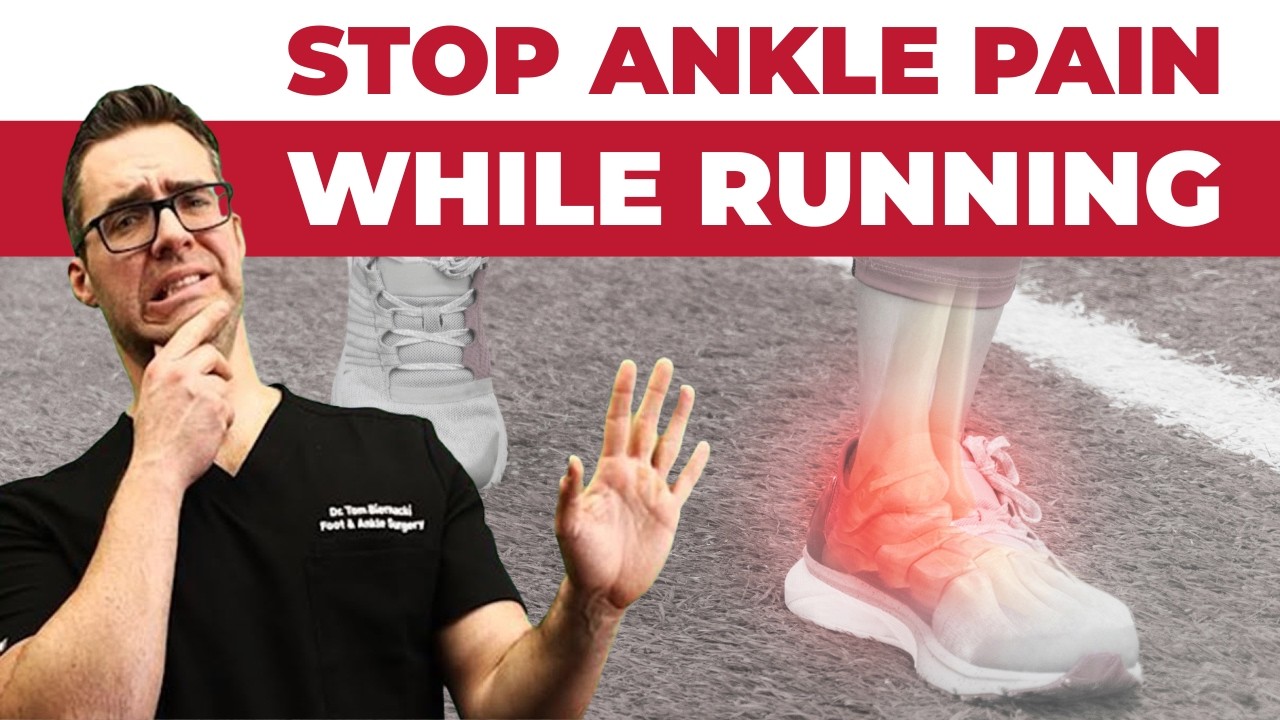
Plantar fasciitis is the most frequent running injury seen in podiatry practice, caused by repetitive tensile load on the plantar fascia during the push-off phase of running. It characteristically causes first-step morning pain that eases with walking, and pain after prolonged sitting. Achilles tendinopathy (either mid-substance or insertional) produces posterior ankle pain and stiffness that is worse in the first steps of the day and after running. Metatarsal stress fractures — most often the second or third metatarsal, or the navicular in more serious runners — cause point-tender bony pain that worsens with activity and improves with rest; they can progress to complete fracture if running continues. Peroneal tendinopathy causes lateral ankle pain behind the outer ankle bone, aggravated by running on cambered roads or by inversion stress. Posterior tibial tendinopathy causes medial ankle pain and progressive flatfoot deformity; it is less common in runners but important not to miss. Ankle impingement syndromes cause pain at the front (anterior) or back (posterior) of the ankle at end range of motion and are seen in sprinters and runners with equinus.
Treatment Philosophy for Runners
Treatment of running injuries requires understanding the runner’s goals and training schedule, not just the injury in isolation. The fundamental principle is load management: identifying and modifying the factors that caused the tissue to be overloaded. This typically involves temporary reduction in training volume and intensity, targeted rehabilitation addressing the injury and contributing biomechanical factors, footwear assessment, and where appropriate, custom orthotics to improve load distribution. The goal is always to maintain as much training as possible while allowing tissue healing — complete rest is rarely necessary for most running injuries. Return to full training is guided by symptom resolution and progressive loading testing, not by arbitrary time frames.
More Podiatrist-Recommended Sports Essentials
Hoka Clifton 10


Max-cushion everyday shoe — podiatrist favorite for walking and running.

OOFOS Recovery Slide

Impact-absorbing recovery sandal — wear after long days on your feet.
As an Amazon Associate, Balance Foot & Ankle earns from qualifying purchases. Product recommendations are based on clinical experience; prices and availability shown above update live from Amazon.

When to See a Podiatrist
Athletic injuries heal faster with sport-specific rehab protocols — not generic rest and ice. Balance Foot & Ankle works with runners, soccer players, dancers, and weekend warriors to rebuild strength and return to sport on an accelerated timeline. Don’t let a foot injury keep you sidelined longer than necessary.
Call Balance Foot & Ankle: (810) 206-1402 · Book online · Offices in Howell & Bloomfield Township
Frequently Asked Questions
Should I stop running if my foot hurts?
Not necessarily — it depends on the injury. Many running-related foot and ankle conditions can be managed with training modification (reduced volume and intensity) rather than complete rest. However, bony pain that is point-tender on the metatarsals or navicular suggests a possible stress fracture, which requires a pause in running and imaging. Sharp, sudden-onset pain is also a signal to stop immediately. When in doubt, getting a proper diagnosis first allows a smarter return-to-running plan than guessing.
Can custom orthotics help runners?
Yes. Custom orthotics are a valuable tool for many running injuries — particularly plantar fasciitis, metatarsal stress fractures, posterior tibial tendinopathy, and conditions related to pronation or supination. They work by redistributing the load across the foot during the running gait cycle. They are most effective when combined with footwear assessment and a graduated return-to-running program. Not every runner with an injury needs orthotics, but for those with biomechanical contributors to their injury, custom devices can be a significant part of the solution.
How do I prevent running injuries?
The most important factor in preventing running injuries is training load management — following the 10% rule (increasing weekly mileage by no more than 10% per week), alternating hard and easy days, and building in recovery weeks. Beyond load management: wear running shoes appropriate for your foot type and gait pattern, replaced every 300–500 miles; maintain calf and Achilles flexibility with regular stretching; strengthen the intrinsic foot muscles, glutes, and hips; and run on varied surfaces rather than always on concrete or cambered roads.
Foot pain shouldn’t end your running season. Contact Balance Foot & Ankle in Southeast Michigan for runner-focused evaluation and treatment with Dr. Biernacki.
👟 Dr. Tom’s Pick: CURREX RunPro Insoles for Runners
📍 Located in Michigan?
Our board-certified podiatrists treat this condition at two convenient locations. Same-day appointments often available.
CURREX RunPro are biomechanically tuned running insoles with 3 arch profiles (low, medium, high) to match your foot type. Unlike generic insoles, they’re engineered specifically for the high-impact demands of running — reducing pronation stress and metatarsal loading.
View CURREX RunPro on Amazon →📧 Get Dr. Tom’s Free Lab Test Guide
Discover the 5 lab tests every person over 35 should ask their doctor about — explained in plain English by a board-certified physician.
Affiliate disclosure: As an Amazon Associate, Balance Foot & Ankle earns from qualifying purchases.
Join 950,000+ Learning About Foot Health
Dr. Tom shares honest medical advice, supplement reviews, and treatment guides you won’t find anywhere else.
Subscribe on YouTube →Medically Reviewed by: Dr. Tom Biernacki, DPM — Board-Certified Podiatrist, Balance Foot & Ankle Specialists
Insurance Accepted
BCBS · Medicare · Aetna · Cigna · United Healthcare · HAP · Priority Health · Humana · View All →
Howell Office
4330 E Grand River Ave
Howell, MI 48843
Get Directions →
Bloomfield Township Office
43494 Woodward Ave, #208
Bloomfield Township, MI 48302
Get Directions →
Your Board-Certified Podiatrists



Ready to Get Back on Your Feet?
Same-week appointments available at both locations.
Book Your AppointmentMost Common Mistake We See
The most common mistake we see is: Waiting too long before seeking care. Fix: any foot pain lasting more than 4 weeks, or any sudden severe symptom, deserves a professional evaluation rather than more rest.
Warning Signs That Need Same-Day Care
Seek immediate evaluation at Balance Foot & Ankle if you experience any of the following:
- Unable to bear weight
- Severe swelling with skin colour change
- Fever with foot pain (possible infection)
- Diabetes plus any new foot symptom
Call (810) 206-1402 — same-day and next-day appointments at our Howell and Bloomfield Township offices.
Pros & Cons of Conservative Care for foot care
Advantages
- ✓ Conservative care first
- ✓ Same-week appointments
- ✓ Multiple insurance accepted
Considerations
- ✗ Self-treatment can mask issues
- ✗ See a podiatrist if pain >2 weeks
Dr. Tom’s Recommended Products for foot care
Affiliate disclosure: As an Amazon Associate, Balance Foot & Ankle earns from qualifying purchases. We only recommend products we use with patients.
Footnanny Heel Cream Dr. Tom’s Pick
Best for: Daily moisturizer for cracked heels
Ready to Get Back on Your Feet?
Same-day appointments in Howell + Bloomfield Township. Most insurance accepted. Dr. Tom Biernacki, DPM & team.
Book Today — Same-Day Appointments Available
Call Now: (810) 206-1402
About Your Care Team at Balance Foot & Ankle
Dr. Tom Biernacki, DPM · Board-Certified Foot & Ankle Surgeon. Specializes in conservative-first care, minimally invasive bunion surgery, and complex reconstruction.
Dr. Carl Jay, DPM · Accepting new patients. Specializes in sports medicine, athletic injuries, and routine podiatric care.
Dr. Daria Gutkin, DPM, AACFAS · Accepting new patients. Specializes in surgical reconstruction and pediatric podiatry.
Locations: 4330 E Grand River Ave, Howell, MI 48843 · 43494 Woodward Ave Suite 208, Bloomfield Township, MI 48302
Hours: Mon–Fri 8:00 AM – 5:00 PM · (810) 206-1402
Visit Balance Foot & Ankle — Same-Day Appointments Available
Our podiatry team serves patients throughout Michigan including Howell, Brighton, and Bloomfield Township. If you’re dealing with heel pain, ingrown toenails, or a foot injury, we have same-day appointment availability.
Same-day appointments available. (810) 206-1402
Doctor Hoy’s Natural Pain Relief Gel
Natural topical pain relief I use in our clinic. Arnica + camphor formula — apply directly to the area 3–4x daily. ($20–25)
Shop Doctor Hoy’s →Ready for Expert Care?
Same-day appointments in Howell & Bloomfield Township, MI.
4.9★ | 1,123 Reviews | 3,000+ Surgeries
Or call: (810) 206-1402

Dr. Tom Biernacki, DPM is a board-certified foot & ankle surgeon (ABFAS & ABPM) at Balance Foot & Ankle Specialists in Southeast Michigan. With over a decade of clinical experience, he specializes in heel pain, bunions, diabetic foot care, sports injuries, and minimally invasive surgery. Dr. Biernacki is a member of the APMA and ACFAS, and his patient education content on MichiganFootDoctors.com and YouTube has made him one of the most-followed foot & ankle educators on YouTube.
More questions patients ask
What are the most common running foot injuries?
See our full guide from Dr. Tom Biernacki DPM at Balance Foot & Ankle, Howell & Bloomfield Township, MI.
How do you prevent running-related foot injuries?
See our full guide from Dr. Tom Biernacki DPM at Balance Foot & Ankle, Howell & Bloomfield Township, MI.
How are running foot injuries treated?
See our full guide from Dr. Tom Biernacki DPM at Balance Foot & Ankle, Howell & Bloomfield Township, MI.
When should a runner see a podiatrist?
See Dr. Tom Biernacki at Balance Foot & Ankle — same-day appointments. Call (810) 206-1402. Howell & Bloomfield Township, MI.
Does insurance cover running injury treatment?
Most PPO and Medicare plans cover medically necessary foot care. We accept BCBS and most Michigan insurers. Call (810) 206-1402.
Still have a question about coverage or cost? Book online and we will check your benefits before your visit: Book in Howell · Book in Bloomfield Township. Prefer to talk it through first? Call (810) 206-1402.