
Quick answer: Shin Splints Medial Tibial Stress Syndrome Runners Guide is a clinical condition that responds to evidence-based treatment when caught early. Symptoms include pain, swelling, and altered function. Diagnosis requires clinical exam, often imaging. Treatment ladder: conservative care first (4-6 weeks), then targeted interventions if needed. Call (810) 206-1402.
Medically reviewed by Dr. Tom Biernacki, DPM · Board-Certified Podiatric Surgeon · Last reviewed: April 2026 · Editorial Policy
Quick Answer
Shin Splints (Medial Tibial Stress Syndrome): A Runner’ relates to foot pain — typically caused by overuse, footwear, or biomechanics. Most patients improve in 6-12 weeks with conservative care. Same-week appointments in Howell + Bloomfield Township: (810) 206-1402.
Medically reviewed by Dr. Tom Biernacki, DPM — Board-Certified Podiatric Surgeon — Balance Foot & Ankle, Howell & Bloomfield Township, MI. Last updated April 2026.
▶ Watch
Medically Reviewed by Dr. Tom Biernacki, DPM — Board-Certified Podiatrist, Balance Foot & Ankle Specialists, Michigan. Last updated April 2026.
Shin splints — medically termed medial tibial stress syndrome (MTSS) — account for approximately 10–15% of all running injuries and up to 60% of leg pain complaints in runners. Despite being ubiquitous, the condition is poorly understood by many patients (and even some clinicians), leading to either premature return to running or unnecessary prolonged rest. This guide provides a practical, evidence-based framework for understanding and managing MTSS.
What Actually Causes Shin Splints
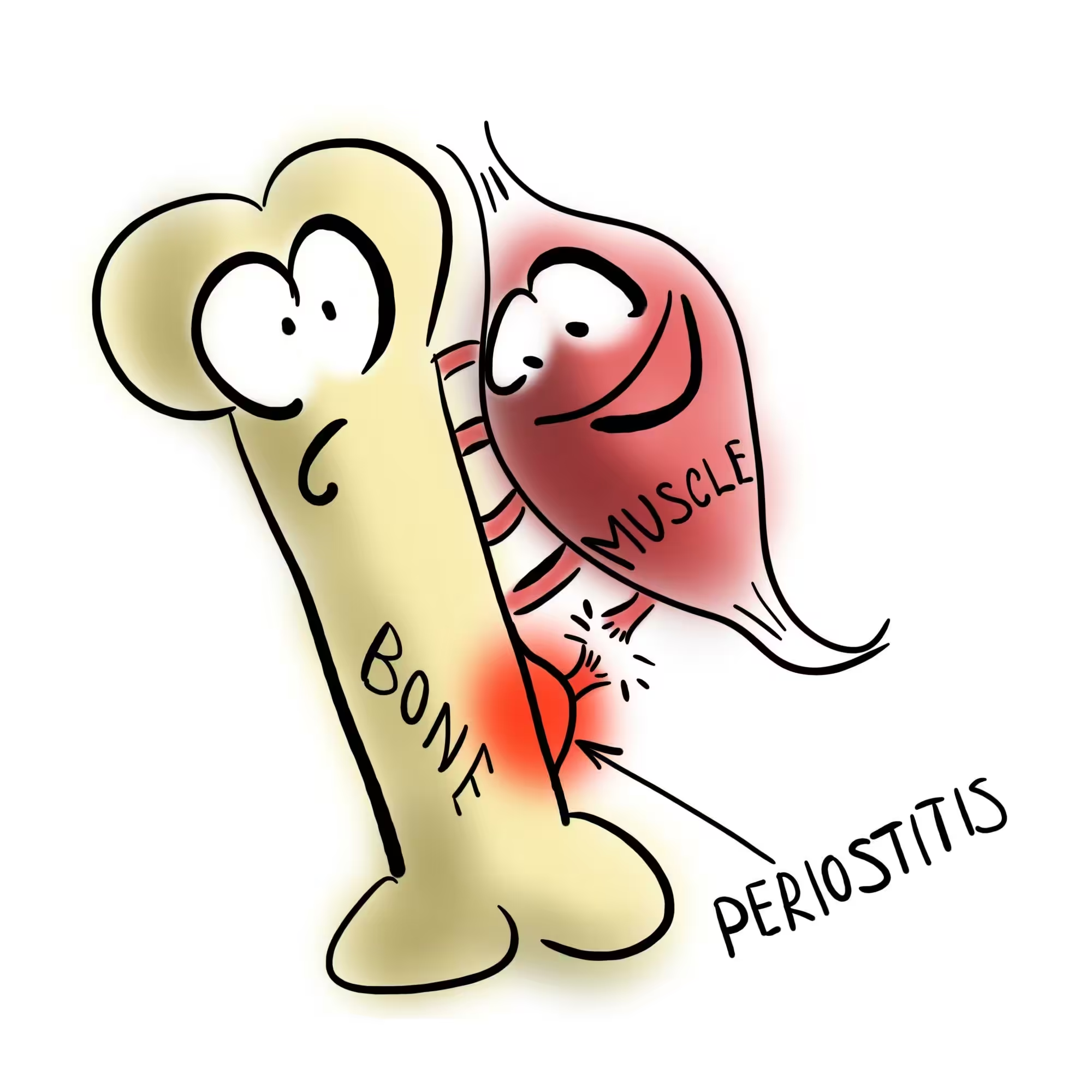
MTSS is a stress reaction at the posteromedial tibial cortex — the inner-rear edge of the shinbone. The traditional explanation (periosteal inflammation from muscular traction) has largely been replaced by understanding MTSS as a bone stress injury on the continuum between remodeling response and frank stress fracture. Repetitive loading causes cumulative bone fatigue; when loading exceeds the rate of bone remodeling, the cortex develops microscopic damage that produces pain.
Contributing factors:
- Sudden training load increases: The most consistent risk factor. Starting a running program, returning from injury, or significantly increasing weekly mileage produces a bone stress response before the tibia has adapted.
- Foot pronation: Excess pronation increases tibial torsional and bending forces during the stance phase of gait, concentrating stress on the posteromedial cortex. A 2006 prospective study found pronation to be the strongest biomechanical predictor of MTSS in military recruits.
- Hip weakness: Weak hip abductors and external rotators increase tibial internal rotation and medial loading.
- Hard running surfaces: Pavement and tracks return more energy to the skeleton than grass or trail surfaces.
- Inadequate footwear: Worn-out running shoes lose shock-absorbing capacity. Most running shoes should be replaced at 300–500 miles.
MTSS vs. Tibial Stress Fracture: The Critical Distinction
This distinction is clinically essential because stress fractures require non-weight bearing management, while MTSS can generally continue with modified training:
- MTSS: Diffuse tenderness along the posteromedial tibial border (typically the distal one-third); pain during early-to-mid activity that may warm up; pain with tibial percussion is diffuse; MRI shows periosteal edema without cortical fracture line; pain on both sides of the tibia (double leg pressure) is more typical.
- Tibial stress fracture: Focal point tenderness at a specific location on the tibia; pain that worsens progressively through a run; positive single-leg hop test (pain reproduced with hopping); MRI or bone scan shows focal cortical stress reaction or fracture line; usually more severe pain at rest.
When in doubt — especially with focal bone tenderness, severe pain, or failure to improve with MTSS management — MRI evaluation is warranted. A missed stress fracture that progresses to complete fracture is a serious injury.
Evidence-Based Treatment
MTSS management requires relative rest (not complete rest) combined with biomechanical correction:
- Load modification: Reduce running volume by 50% and eliminate high-intensity sessions until pain-free at baseline. Cross-train with pool running, cycling, or swimming to maintain fitness.
- Custom orthotics: Address the excess pronation driving tibial stress. Multiple studies demonstrate that custom foot orthotics reduce MTSS recurrence. A 2002 prospective RCT in military recruits found custom orthotics reduced stress injury incidence by 56%.
- Shock-absorbing insoles: Generic viscoelastic insoles reduce tibial bone stress, though less effectively than custom orthotics in biomechanically driven cases.
- Hip strengthening: Clamshell exercises, lateral band walks, and single-leg bridges address hip abductor weakness. Typically prescribed alongside running load management.
- Running gait retraining: Increasing cadence, reducing overstriding, and optimizing foot contact position reduce peak tibial bone loading. Gait retraining under video analysis can be highly effective for MTSS recalcitrant to other measures.
- Return to running protocol: Systematic graduated running progression (beginning with run-walk intervals, increasing duration and intensity over 6–8 weeks) once pain-free at rest and with brisk walking.
Shin Splints Derailing Your Running? Get Evaluated.
Dr. Biernacki evaluates shin pain in runners, differentiates MTSS from stress fracture, and provides custom orthotics targeting the biomechanical drivers. Bloomfield Township and Howell.
📞 (810) 206-1402 | Book an Appointment →
📍 Located in Michigan?
Our board-certified podiatrists treat this condition at two convenient locations. Most new patients are seen the same week.
Insurance Accepted
BCBS · Medicare · Aetna · Cigna · United Healthcare · HAP · Priority Health · Humana · View All →
Howell Office
4330 E Grand River Ave
Howell, MI 48843
Get Directions →
Bloomfield Township Office
43494 Woodward Ave, #208
Bloomfield Township, MI 48302
Get Directions →
Your Board-Certified Podiatrists



Ready to Get Back on Your Feet?
Same-week appointments available at both locations.
Book Your AppointmentMore Podiatrist-Recommended Foot Health Essentials
Hoka Clifton 10


Max-cushion everyday shoe — podiatrist favorite for walking and running.

OOFOS Recovery Slide

Impact-absorbing recovery sandal — wear after long days on your feet.
As an Amazon Associate, Balance Foot & Ankle earns from qualifying purchases. Product recommendations are based on clinical experience; prices and availability shown above update live from Amazon.
When to See a Podiatrist
If foot or ankle pain has been bothering you for more than a few weeks, home care alone may not be enough. Balance Foot & Ankle offers same-week appointments at our Howell and Bloomfield Township clinics — no referral needed in most cases. Bring your current shoes and a short list of symptoms and we’ll build you a treatment plan in one visit.
Call Balance Foot & Ankle: (810) 206-1402 · Book online · Offices in Howell & Bloomfield Township
Differential Diagnosis: What Else Could It Be?
Not every case of shin splints (medial tibial stress syndrome) is straightforward. In our clinic we routinely rule out three look-alike conditions before confirming the diagnosis. If your symptoms don’t match the classic presentation, one of these may explain the pain — which is why physical exam matters more than self-diagnosis.
| Condition | How It Differs |
|---|---|
| Tibial stress fracture | Point tenderness on a single spot of the tibia, worse with impact, often night pain — URGENT. |
| Chronic exertional compartment syndrome | Pain starts predictably after 15–20 min of running, subsides after stopping, may include numbness. |
| Popliteal entrapment syndrome | Pain in the back of the calf with running, often bilateral, may include loss of pulse with plantarflexion. |
Red Flags — When to See a Podiatrist Now
Seek same-day evaluation at Balance Foot & Ankle if you notice any of the following:
- Point tenderness on a single spot (possible stress fracture)
- Night pain at rest
- Pain that continues AFTER stopping activity
- Numbness or cold foot during running (compartment syndrome)
Call (810) 206-1402 or request an appointment. Our Howell and Bloomfield Township offices reserve same-day slots for urgent foot and ankle issues.
In Our Clinic: What We See
Clinical perspective from Dr. Tom Biernacki, DPM — Balance Foot & Ankle, Howell & Bloomfield Township, MI:
In our Balance Foot & Ankle clinic, the typical shin splints patient is a runner or military/first-responder recruit in their 20s or 30s who has recently ramped up mileage too quickly. The pain is classically along the medial two-thirds of the tibia, diffuse rather than pinpoint, and worse with each running session. On exam we’re specifically looking for ONE location of point tenderness — that’s the red flag that separates shin splints from a stress fracture. When proper activity modification and structured calf/tibial posterior loading begins early, most shin splints resolve within 4–6 weeks without imaging.
Watch: Dr. Tom explains
Podiatrist-recommended products
As an Amazon Associate, Dr. Tom earns from qualifying purchases.
Corrects overpronation that drives MTSS.
View on Amazon →Dynamic runner support.
View on Amazon →Reduces heel impact while running.
View on Amazon →Topical comfort for shin pain.
View on Amazon →Related resources
Ready to solve this? Book today.
Same-week appointments · Howell & Bloomfield Township · 4.9★ (1,123+ reviews)
☎ (810) 206-1402Book Online →Pros & Cons of Conservative Care for foot care
Advantages
- ✓ Conservative care first
- ✓ Same-week appointments
- ✓ Multiple insurance accepted
Considerations
- ✗ Self-treatment can mask issues
- ✗ See a podiatrist if pain >2 weeks
Dr. Tom’s Recommended Products for foot care
Affiliate disclosure: As an Amazon Associate, Balance Foot & Ankle earns from qualifying purchases. We only recommend products we use with patients.
Footnanny Heel Cream Dr. Tom’s Pick
Best for: Daily moisturizer for cracked heels
Ready to Get Back on Your Feet?
Same-week appointments in Howell + Bloomfield Township. Most insurance accepted. Dr. Tom Biernacki, DPM & team.
Book Today — Same-Week Appointments Available
Call Now: (810) 206-1402
About Your Care Team at Balance Foot & Ankle
Dr. Tom Biernacki, DPM · Board-Certified Foot & Ankle Surgeon. Specializes in conservative-first care, minimally invasive bunion surgery, and complex reconstruction.
Dr. Carl Jay, DPM · Accepting new patients. Specializes in sports medicine, athletic injuries, and routine podiatric care.
Dr. Daria Gutkin, DPM, AACFAS · Accepting new patients. Specializes in surgical reconstruction and pediatric podiatry.
Locations: 4330 E Grand River Ave, Howell, MI 48843 · 43494 Woodward Ave Suite 208, Bloomfield Township, MI 48302
Hours: Mon–Fri 8:00 AM – 5:00 PM · (810) 206-1402
In-Office Treatment at Balance Foot & Ankle
If home treatment isn’t providing relief for your foot and ankle conditions, our podiatry team at Balance Foot & Ankle can help with same-week evaluations and advanced in-office care.
Same-week appointments available. (810) 206-1402
Get Expert Care at Balance Foot & Ankle
Same-week appointments at our Howell and Bloomfield Township offices. Board-certified podiatric surgeons. Most insurance accepted.
Ready for Expert Care?
Same-week appointments in Howell & Bloomfield Township, MI.
4.9★ | 1,123 Reviews | 3,000+ Surgeries
Or call: (810) 206-1402

Dr. Tom Biernacki, DPM is a board-certified foot & ankle surgeon (ABFAS & ABPM) at Balance Foot & Ankle Specialists in Southeast Michigan. With over a decade of clinical experience, he specializes in heel pain, bunions, diabetic foot care, sports injuries, and minimally invasive surgery. Dr. Biernacki is a member of the APMA and ACFAS, and his patient education content on MichiganFootDoctors.com and YouTube has made him one of the most-followed foot & ankle educators on YouTube.