Serving Howell, Brighton, Hartland, Fowlerville, Pinckney, South Lyon & Milford, MI
A sprained top of the foot occurs when the ligaments between the foot bones are overstretched or torn, often from trauma, overuse, or twisting injuries. This type of injury can be incredibly painful and often confused with a fracture. Understanding the signs, symptoms, and treatment options is crucial for full recovery and avoiding long-term damage.
Schedule Your Consultation Today
Understanding Sprains on the Top of the Foot
The top of the foot has a complex structure of small bones, ligaments, and tendons that are vulnerable to injury. A sprained top of foot is typically caused by high-impact activities, falling objects, or twisting your foot during sports or daily movements. Unlike ankle sprains, this type of injury can go unnoticed initially, but it often leads to persistent pain on top of foot after ankle sprain. Proper diagnosis through clinical examination and imaging is essential to distinguish it from fractures or tendon issues. Treatment usually includes rest, ice, compression, elevation (RICE), and in severe cases, immobilization or physical therapy.
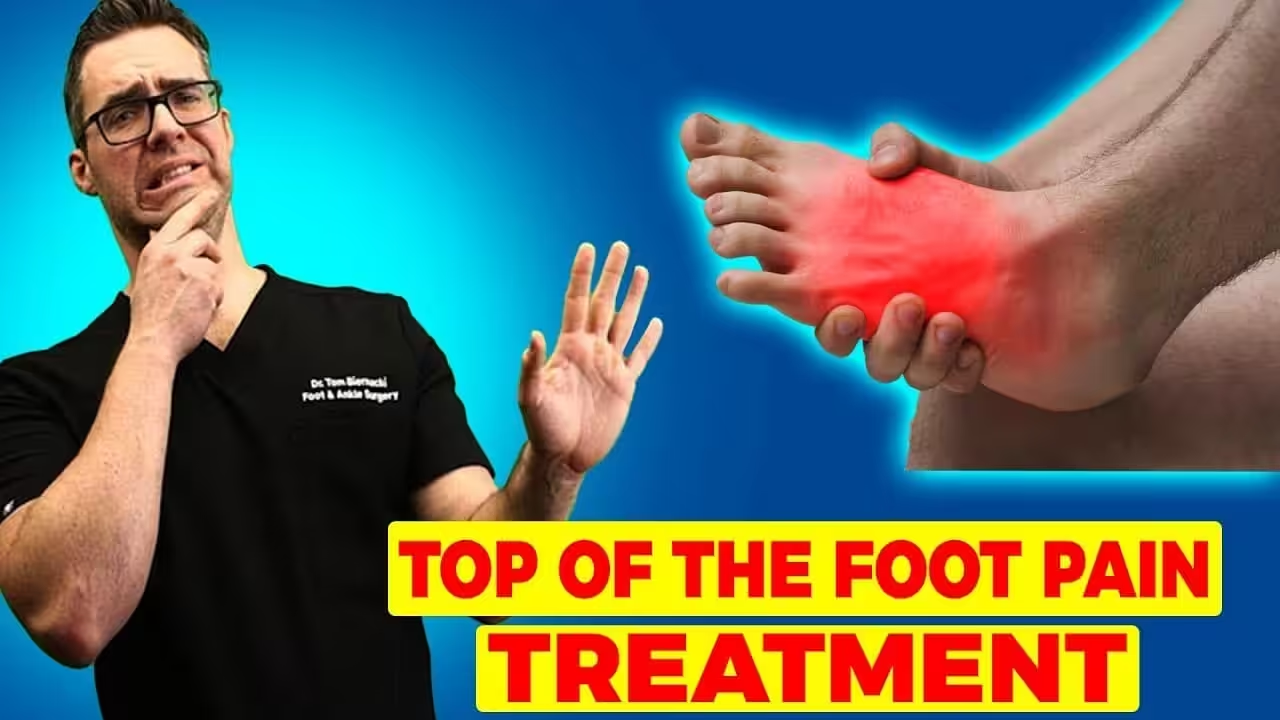
Sprained Top Of Foot Causes, Symptoms & Best Treatment
Sprained Top Of Foot: It is essential to start treating your top of the foot sprain immediately to cut down the healing time. Fix it 100%
Get Expert Help for Foot Sprains – Book an Appointment Today
If you’re experiencing sharp or lingering pain on top of foot after ankle sprain, don’t wait to get it checked. At Balance Foot & Ankle Specialists in Michigan, Dr. Tom Biernacki and his team provide expert diagnosis and customized treatment plans for all types of foot injuries, including top-of-foot sprains. Schedule a consultation today and take your first step toward pain-free mobility.
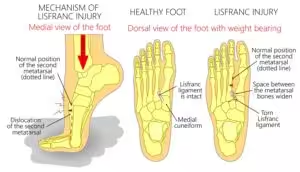
A sprain in the top of the foot or the arch is called a Lisfranc sprain. In most cases, it is usually only a sprain that lasts a couple of days to a couple of weeks.
Pain in the mid-foot.
Instability.
Swelling & Redness that starts 30 minutes later.
Possible numbness, burning, or tingling.
Bruising in the skin.
The big toe can experience tingling as well.
The middle and top of the foot have developed a large spur here. This can press against the top of the foot and irritate the nerves.
Causes Of A Top Of The Foot Sprain:
This is the region that is responsible for bending the midfoot.
This usually occurs as a result of a sports-related fall or twisting of the midfoot.
In these sports-related causes, it usually only lasts 1-2 weeks.
In very severe falls, injuries, or motor vehicle accidents, it is possible to rupture the ligament.
It is even possible to break the bone.
At this point, the injury definitely needs to be evaluated by a podiatrist.
Hallux rigidus can cause bone spur formation on top of the big toe joint and foot.
Sprained Top Of Foot Healing Time:
The healing time is usually about 2-3 weeks if the midfoot is only stretched.
If there is a severe injury like a large fall, it can take 2-3 months. You may even need surgery.
If you cannot put weight on your foot after a couple of days & there is severe swelling, consider a more severe sprain.
This needs to be taken to your podiatrist for imaging!
A bone spur on top of your foot can happen in many different areas. There are two ways to get rid of the pain. This relieves the compressive pressure along the top of the foot! Shave it or take the easier way of good supportive orthotics and shoes.
Sprained Top Of Foot Treatment:
A) Ice the Midfoot Sprain:
This is most beneficial directly after the injury.
Icing 2-3x per day for about 15-20 minutes will decrease the flow of inflammatory cells into the muscle.
Afterward, the arteries will vasodilate, further flushing out inflammatory cells from the region.
Ice has deeper penetrating power than heat.
Do not use heat immediately after the injury!
B)Elevation of the Midfoot Sprain:
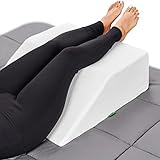
If possible, elevate your leg while watching TV.
This will prevent as many inflammatory cells from reaching your ankle.
It will also drastically decrease the swelling.
C)Compression of the Midfoot Sprain:
It will increase the backflow of venous blood and help flush out inflammatory cells.
Use an ACE bandage or any other type of compression wrap.
It should not be so tight that it cuts off blood flow!
Use ice over the top.
D)Topical anti-inflammatories or analgesics:
Your podiatrist can prescribe anti-inflammatory creams that can decrease inflammation and speed up your healing time.
Capsaicin & Voltaren gel works great.
Doctor Hoy’s Natural Pain Relief Gel or anything with menthol in it.
E)Oral NSAIDs:
These include Ibuprofen & Aspirin.
This can be over the counter or prescription.
Do not take these unless instructed to do so by your physician or podiatrist.
Take a 1-2 week course to decrease the inflammation and speed up your healing time.
Take 2-3x doses per day as instructed. This builds up anti-inflammatory enzyme levels in your system.
Taking just 1-2 pills and then stopping does nothing for inflammation!
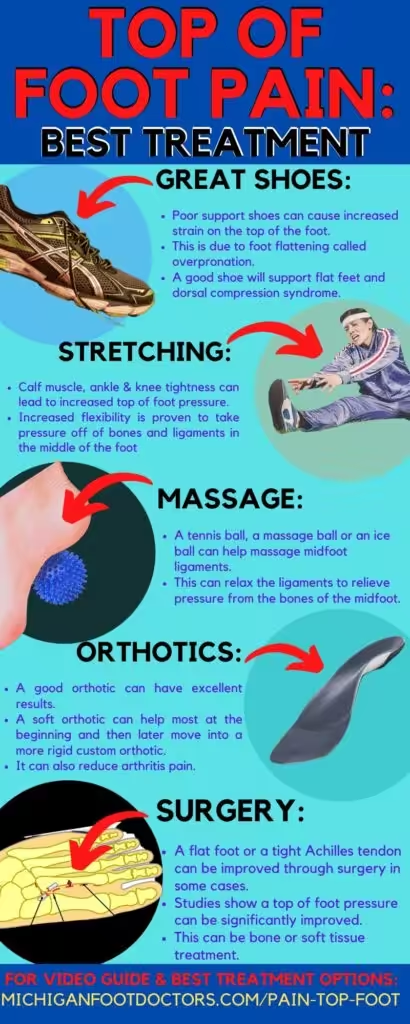
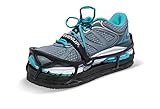
F)Get Good Orthotics!
Get Great Orthotics:
These are our recommended orthotics.
G)See Your Podiatrist!
If the pain is not better in a few days, always see your podiatrist.
Imaging is essential to properly diagnosing this injury!
This doesn’t matter whether it’s an intermittent sharp pain on top of the foot, pain on top of the foot near toes, tendonitis on top of the foot, or a top of the foot bone spur. Treatment is all roughly very similar.
The two phases of treatment include controlling the acute inflammation and correcting the biomechanics, which led to the problem in the first place.
Great top-of-the-foot shoes and great orthotics lead to the prevention of dorsal compression syndrome. This prevents compression on top of the foot. It prevents the stretching on the bottom of the foot.
This will also reduce your numbness, burning, and tingling pain.
Control Inflammation:
Massage & Ice Products:
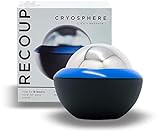
The metal ball is one of my personal favorites.
This can work well for a bruised top of the foot.
This is not a permanent solution. You still need to remove the stress off of the top of the foot.
📍 Located in Michigan?
Our board-certified podiatrists treat this condition at two convenient locations. Same-day appointments often available.
Affiliate Disclosure: This page contains affiliate links to products we recommend. If you purchase through these links, Balance Foot & Ankle may earn a small commission at no additional cost to you. We only recommend products we use with our patients.
Premium freezable metal ball that stays cold for up to 6 hours. Great for plantar fascia, neck, shoulders and calf muscles.
Amazing Price, Great Reviews - Non-Freezable Massage Rolling Stick
Great price and it is freezable. Budget friendly freezable massage roller.
Pros:
Great reviews - near 5 star. Stays cold for a long time with deep penetrating plantar fascia massage. Used by professional athletes. Stays cold for HOURS!
Great for what it does. You roll it back and forth along your plantar fascia massaging the swelling and irritation out. Decreases pain. Thousands of 5 star reviews on Amazon.
Excellent reviews. It massages and ices, so it is a step up over the massage rollers. Near 5 star reviews with >500 reviews.
Cons:
More expensive than some of the other options, but near perfect reviews.
Is not freezable like the other two options. Massaging a sore muscle without the cold sensation can be very painful and render it useless to you if really sore.
It does a great job doing what it is supposed to do. Main downside is that it does not stay cold as long as the premium metal ball.
Important Tips:
Use it with a sock to start (could be too cold). Massaging and icing definitely loosens you up and makes you feel better, but you still have to prevent the pain in the first place. You still need stretching, orthotics and good shoes to prevent the initial damage.
Two things: Without the freezing component, it may be really painful for a very sore arch (So make sure to use ICE also). Also this only reduces pain, it does not stop the cause! You still need good orthotics, shoes and stretching to stop the pain in the first place!
Start with socks at first, especially if you have peripheral neuropathy => don't freeze your foot! Remember that you still need good orthotics, good shoes and inserts as well as temporary activity reduction.
Affiliate Link (Buying through these links will connect you to Amazon):
Premium freezable metal ball that stays cold for up to 6 hours. Great for plantar fascia, neck, shoulders and calf muscles.
Pros:
Great reviews - near 5 star. Stays cold for a long time with deep penetrating plantar fascia massage. Used by professional athletes. Stays cold for HOURS!
Cons:
More expensive than some of the other options, but near perfect reviews.
Important Tips:
Use it with a sock to start (could be too cold). Massaging and icing definitely loosens you up and makes you feel better, but you still have to prevent the pain in the first place. You still need stretching, orthotics and good shoes to prevent the initial damage.
Affiliate Link (Buying through these links will connect you to Amazon):
Amazing Price, Great Reviews - Non-Freezable Massage Rolling Stick
Pros:
Great for what it does. You roll it back and forth along your plantar fascia massaging the swelling and irritation out. Decreases pain. Thousands of 5 star reviews on Amazon.
Cons:
Is not freezable like the other two options. Massaging a sore muscle without the cold sensation can be very painful and render it useless to you if really sore.
Important Tips:
Two things: Without the freezing component, it may be really painful for a very sore arch (So make sure to use ICE also). Also this only reduces pain, it does not stop the cause! You still need good orthotics, shoes and stretching to stop the pain in the first place!
Affiliate Link (Buying through these links will connect you to Amazon):
Great price and it is freezable. Budget friendly freezable massage roller.
Pros:
Excellent reviews. It massages and ices, so it is a step up over the massage rollers. Near 5 star reviews with >500 reviews.
Cons:
It does a great job doing what it is supposed to do. Main downside is that it does not stay cold as long as the premium metal ball.
Important Tips:
Start with socks at first, especially if you have peripheral neuropathy => don't freeze your foot! Remember that you still need good orthotics, good shoes and inserts as well as temporary activity reduction.
Affiliate Link (Buying through these links will connect you to Amazon):
Doctor Hoy’s Natural Pain Relief Gel is one of our favorites.
These gels have been studied to work 2x as long as ice.
This can also work as a great option for a bruised top of the foot or top of the foot extensor tendonitis.
This is not a permanent solution. You still need to remove the stress off of the top of the foot.
Table setup not completed.
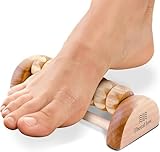
Massage Sticks:
These can work great for loosening your muscles.
This allows less tightness and pressure on the ball of your foot.
This works best for extensor tendonitis on the top of the foot.
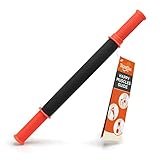
Leg & Calf Muscle Massage Roller Sticks:
Best Overall Muscle Massage Stick
Best Cost Effective Massage Roller.
Price:
$39.95
Price not available
Overview:
This is a great option because hair or skin never gets pinched between the wheels. Softer interface.
Great option for an amazing cost. Not as sturdy and comfortable as the tiger tail.
Pros:
Best reviews. Hair and skin cannot get pinched. Almost instantly makes you less tender and more flexible. This is a professional grade massage roller.
Amazing reviews for the price point. It essentially does the same job. Muscles feel great afterward. Same overall benefit.
Cons:
If truly injured (break or tear) this won't fix your pain. But no real downsides as far as what a massage roller does. Reviews are near perfect.
Wheels and handles can come loose. As a result it can gap and pinch skin and leg hairs. Not as durable as the other roller recommended here.
Important Tips:
Studies show how effective massage rollers are: Use for 30-60 seconds to loosen up tight muscles, and then you can stretch further short term(1-2 hrs). Great for calf, hamstring, thight and IT band muscle stretching.
Same as for the more expensive one. Studies show the real benefits appear in 30-60 seconds per muscle => less sore and more flexible. That is the time to take advantage and play sports/stay loose. Very proven results.
Affiliate Link (Buying through these links will connect you to Amazon):
This is a great option because hair or skin never gets pinched between the wheels. Softer interface.
Pros:
Best reviews. Hair and skin cannot get pinched. Almost instantly makes you less tender and more flexible. This is a professional grade massage roller.
Cons:
If truly injured (break or tear) this won't fix your pain. But no real downsides as far as what a massage roller does. Reviews are near perfect.
Important Tips:
Studies show how effective massage rollers are: Use for 30-60 seconds to loosen up tight muscles, and then you can stretch further short term(1-2 hrs). Great for calf, hamstring, thight and IT band muscle stretching.
Affiliate Link (Buying through these links will connect you to Amazon):
Great option for an amazing cost. Not as sturdy and comfortable as the tiger tail.
Pros:
Amazing reviews for the price point. It essentially does the same job. Muscles feel great afterward. Same overall benefit.
Cons:
Wheels and handles can come loose. As a result it can gap and pinch skin and leg hairs. Not as durable as the other roller recommended here.
Important Tips:
Same as for the more expensive one. Studies show the real benefits appear in 30-60 seconds per muscle => less sore and more flexible. That is the time to take advantage and play sports/stay loose. Very proven results.
Affiliate Link (Buying through these links will connect you to Amazon):
If you can get rid of the pain and swelling, this will let you start walking normally.
If you can walk normally, the vast majority of your pain should gradually start to go away.
This will limit dorsal compression syndrome and limit extensor tendonitis to the top of the foot.
Best Top of the Foot Pain Shoes:
Getting a great supportive pair of shoes will ensure that pressure is removed from the top of the foot.
There is much less compression appreciated.
This is especially important if you have a swollen top of your foot, intermittent sharp pain on top of your foot, and top of the foot compression.
Consider shoes combined with a good supportive orthotic for the best pain relief!
The following link will show you what our favorites are.
The Best Top of the Foot Pain Orthotics:
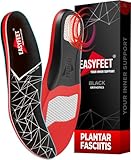
These are our recommended orthotics.
There are different types of different shoes.
Women’s shoes usually need a less bulky orthotic but allow for less correction.
A full-length orthotic requires a running shoe, boot, or comfortable walking/dress shoe.
Best Full-Length Orthotics:
Best Medium to Heavy Duty Heel Pain Orthotics:
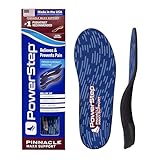
Best Overall Orthotic For Everything (Medium Thick Fit)
Best Heavy Duty Orthotic (Thickest Fit)
Best SOFTER Choice For Sensitive Feet (Medium Thick Fit)
Best Women's Orthotics
Price:
$44.13
$54.95
Price not available
Price not available
Overview:
These work best in shoes with laces and running shoes. Not good for dress shoes or women's cute shoes.
Biggest and most corrective option. Only use for running shoes or work boots. Not cute shoes.
These are full length inserts, but softer. Great if you can't tolerate the firmer ones. Best for very sore and sensitive feet.
Great Support & Better Fit
Pros:
Pretty much guaranteed to help you if it fits in your shoes and you give it 2 weeks to get used to. 5,000+ amazon reviews, great track record.
My personal favorite, but not for everyone. Amazing reviews over 3,500. But not for everyone. Only for bigger shoes that can fit them
They are softer and the initial break in time is AMAZING. But longer term benefits are less. >500 Almost 5 star amazon rating.
Sleek, supportive and have a better fit than the orthotics above.
Cons:
Do not wear these in cute or dress shoes!
Bigger and bulkier than all the other ones. You will be disappointed if you have a cute women's shoe or dress shoe. This is meant for running shoes and boots.
Great to start with, but don't correct long term as much as the other ones.
A little bit more expensive.
Crucial Tips:
Ease in to these, 1-2hrs a day. They are like braces for your teeth, they suck at the beginning! But they will make your feet pain free as 1-2 weeks go by. Don't give up on them after 1 or 2 days. Everyone feels off at the beginning!
This has the most correction, but hardest break in time! IF SENSITIVE, USE A SOFTER PAIR FIRST! But if you get these, you must break them in. Give it 1-2 hours a day, but then you will start to have excellent results. The bad reviews are all people who couldn't fit it into their shoes and gave up too quickly. You have been WARNED!
If you are very sore, TRY THESE FIRST! These are easiest to break in with initially. If you are very sore and rigid, don't use the heavy duty ones to start with.
These will have a harder time fitting in flats and pointed shoes.
Affiliate Link (Buying through these links will connect you to Amazon):
Best Overall Orthotic For Everything (Medium Thick Fit)
Price:
$44.13
Overview:
These work best in shoes with laces and running shoes. Not good for dress shoes or women's cute shoes.
Pros:
Pretty much guaranteed to help you if it fits in your shoes and you give it 2 weeks to get used to. 5,000+ amazon reviews, great track record.
Cons:
Do not wear these in cute or dress shoes!
Crucial Tips:
Ease in to these, 1-2hrs a day. They are like braces for your teeth, they suck at the beginning! But they will make your feet pain free as 1-2 weeks go by. Don't give up on them after 1 or 2 days. Everyone feels off at the beginning!
Affiliate Link (Buying through these links will connect you to Amazon):
Biggest and most corrective option. Only use for running shoes or work boots. Not cute shoes.
Pros:
My personal favorite, but not for everyone. Amazing reviews over 3,500. But not for everyone. Only for bigger shoes that can fit them
Cons:
Bigger and bulkier than all the other ones. You will be disappointed if you have a cute women's shoe or dress shoe. This is meant for running shoes and boots.
Crucial Tips:
This has the most correction, but hardest break in time! IF SENSITIVE, USE A SOFTER PAIR FIRST! But if you get these, you must break them in. Give it 1-2 hours a day, but then you will start to have excellent results. The bad reviews are all people who couldn't fit it into their shoes and gave up too quickly. You have been WARNED!
Affiliate Link (Buying through these links will connect you to Amazon):
Best SOFTER Choice For Sensitive Feet (Medium Thick Fit)
Price:
Price not available
Overview:
These are full length inserts, but softer. Great if you can't tolerate the firmer ones. Best for very sore and sensitive feet.
Pros:
They are softer and the initial break in time is AMAZING. But longer term benefits are less. >500 Almost 5 star amazon rating.
Cons:
Great to start with, but don't correct long term as much as the other ones.
Crucial Tips:
If you are very sore, TRY THESE FIRST! These are easiest to break in with initially. If you are very sore and rigid, don't use the heavy duty ones to start with.
Affiliate Link (Buying through these links will connect you to Amazon):
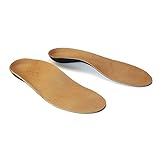
This is my top choice due to best fit. It is a little less supportive than full length, but fit is the key in dress shoes!
Best option if you can fit a full length orthotic. This does give you most control.
Great price and heavy duty insole for Oxford shoes.
Pros:
Excellent overall fit. This will fit in almost every dress shoe. Excellent reviews and reasonable cost overall. Can't go wrong in most cases.
Great color dress option. Not the most corrective, but very color and dress appropriate. Great Reviews. Better correction and relief than the 3/4" length.
These fit in most shoes and have really good predictable results
Cons:
Less correction than full length and heavy duty orthotics.
These can have a poor fit in in some shoes. If you have tight shoes, DO NOT BUY the full length orthotic! You have been warned.
They are not full length and thus do not provide as much support
Crucial Tips:
If you haven't used dress orthotics before, get this one and avoid poor fit. If you wear dress shoes every day with room, the full length might give you more support.
This is will work great in most men's shoes that are not pointy. If you have a rounded toe box, this will probably work well. If a tight shoe go with the 3/4" length.
Get these for Oxford and pointed shoes. This will provide best results.
Affiliate Link (Buying through these links will connect you to Amazon):
This is my top choice due to best fit. It is a little less supportive than full length, but fit is the key in dress shoes!
Pros:
Excellent overall fit. This will fit in almost every dress shoe. Excellent reviews and reasonable cost overall. Can't go wrong in most cases.
Cons:
Less correction than full length and heavy duty orthotics.
Crucial Tips:
If you haven't used dress orthotics before, get this one and avoid poor fit. If you wear dress shoes every day with room, the full length might give you more support.
Affiliate Link (Buying through these links will connect you to Amazon):
Best option if you can fit a full length orthotic. This does give you most control.
Pros:
Great color dress option. Not the most corrective, but very color and dress appropriate. Great Reviews. Better correction and relief than the 3/4" length.
Cons:
These can have a poor fit in in some shoes. If you have tight shoes, DO NOT BUY the full length orthotic! You have been warned.
Crucial Tips:
This is will work great in most men's shoes that are not pointy. If you have a rounded toe box, this will probably work well. If a tight shoe go with the 3/4" length.
Affiliate Link (Buying through these links will connect you to Amazon):
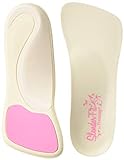
Best Choice For Tight Women's Shoes or High Heels..
Price:
Price not available
Overview:
These are the best fitting for the most narrow shoes. Some but not great correction.
Pros:
They will fit in even the tightest shoes! Guaranteed to make you feel better, but you know what you are getting in a tight shoes. Great reviews and price.
Cons:
At the end of the day high heels and slender orthotics help, but never cure all your pain. Make the best of a painful shoe!
Crucial Tips:
**WARNING***: If your shoe almost just barely fits onto your foot, this WILL NOT FIT! Be aware, it still needs a small amount of space to fit.
Affiliate Link (Buying through these links will connect you to Amazon):
Best Choice For Tight Women's Shoes or High Heels..
Price:
Price not available
Overview:
These are the best fitting for the most narrow shoes. Some but not great correction.
Pros:
They will fit in even the tightest shoes! Guaranteed to make you feel better, but you know what you are getting in a tight shoes. Great reviews and price.
Cons:
At the end of the day high heels and slender orthotics help, but never cure all your pain. Make the best of a painful shoe!
Crucial Tips:
**WARNING***: If your shoe almost just barely fits onto your foot, this WILL NOT FIT! Be aware, it still needs a small amount of space to fit.
Affiliate Link (Buying through these links will connect you to Amazon):
It is possible to stretch on your own, but these products can also really help!
This will take pressure off of the ball of your foot.
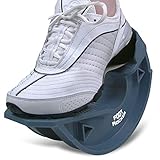
Best Standing Foot & Ankle Stretching Devices:
Best Premium Plantar Fascia Stretching Device.
Best Budget Plantar Fascia Stretching Stretch Device.
Best Stationary Calf Stretching Device.
Best Hamstring Stretching Device
Price:
$35.99
Price not available
Price not available
$37.95
Overview:
Great Stretching Device While Standing. (4.9 Amazon Rating)
Plastic and Lighter Plantar Fascia & Achilles Stretching Device.
Premium Best Rated Wood Ankle Stretch Device.
Uses gravity to stretch your hamstring for you. Great reviews and track record.
Pros:
Very sturdy and durable. Great bottom grip and weight so it won't slide on you. Perfect 5 star review on Amazon.
Amazing cost, still works and 1,300+ 5 star reviews. Works great overall and gives you the same stretch.
Near perfect 4.8 star review on Amazon. Great sturdy device that stretches your calf and hamstring. All you have to do is lean forward. Can be very effective.
Reviews on Amazon are >4.5 overall with hundreds of reviews. It uses gravity to stretch for you, allows you to also use your hips. Gets great results.
Cons:
More expensive and built like a tank = more weight. If you can't balance well or support yourself it could be dangerous.
The plastic and less bulk/grip makes it more dangerous to slip. Less premium feel to it.
Nothing wrong with the product, as the reviews suggest, but at the end of the day you can do this stuff yourself (just a little bit harder).
These are stretches that you realistically can do on your own. If budget is tight, this is not worth it. If you need help with hamstring stretching, it can make all the difference.
Important Tips:
Make sure you can balance yourself well against a counter/railing. Do only one foot at a time to prevent falling. Uses your body weight to stretch for you.
Even more important to balance yourself well with this device, make sure you don't injure yourself with this thing! Still gives you a great stretch to the area.
Make sure you balance yourself on a counter/railing. You need to keep up with this daily at least 15-30 second x 3 or so per morning. It doesn't stretch for you!
Need to do 3-5 stretches per day 15-30 seconds. You should notice a massive difference to knee and hamstring tightness. You can massage roll ahead to time for better results for 30-60 seconds.
Affiliate Link (Buying through these links will connect you to Amazon):
Great Stretching Device While Standing. (4.9 Amazon Rating)
Pros:
Very sturdy and durable. Great bottom grip and weight so it won't slide on you. Perfect 5 star review on Amazon.
Cons:
More expensive and built like a tank = more weight. If you can't balance well or support yourself it could be dangerous.
Important Tips:
Make sure you can balance yourself well against a counter/railing. Do only one foot at a time to prevent falling. Uses your body weight to stretch for you.
Affiliate Link (Buying through these links will connect you to Amazon):
Best Budget Plantar Fascia Stretching Stretch Device.
Price:
Price not available
Overview:
Plastic and Lighter Plantar Fascia & Achilles Stretching Device.
Pros:
Amazing cost, still works and 1,300+ 5 star reviews. Works great overall and gives you the same stretch.
Cons:
The plastic and less bulk/grip makes it more dangerous to slip. Less premium feel to it.
Important Tips:
Even more important to balance yourself well with this device, make sure you don't injure yourself with this thing! Still gives you a great stretch to the area.
Affiliate Link (Buying through these links will connect you to Amazon):
Near perfect 4.8 star review on Amazon. Great sturdy device that stretches your calf and hamstring. All you have to do is lean forward. Can be very effective.
Cons:
Nothing wrong with the product, as the reviews suggest, but at the end of the day you can do this stuff yourself (just a little bit harder).
Important Tips:
Make sure you balance yourself on a counter/railing. You need to keep up with this daily at least 15-30 second x 3 or so per morning. It doesn't stretch for you!
Affiliate Link (Buying through these links will connect you to Amazon):
Uses gravity to stretch your hamstring for you. Great reviews and track record.
Pros:
Reviews on Amazon are >4.5 overall with hundreds of reviews. It uses gravity to stretch for you, allows you to also use your hips. Gets great results.
Cons:
These are stretches that you realistically can do on your own. If budget is tight, this is not worth it. If you need help with hamstring stretching, it can make all the difference.
Important Tips:
Need to do 3-5 stretches per day 15-30 seconds. You should notice a massive difference to knee and hamstring tightness. You can massage roll ahead to time for better results for 30-60 seconds.
Affiliate Link (Buying through these links will connect you to Amazon):
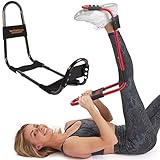
These devices are great for stretching while you are resting.
This will also help take pressure off of the ball of your foot.
Best Night & Stretch Splint Products:
Most Cost Effective Night Splint (Not Best for Sleeping).
Best Actual Night Splint (For Night Time Use)
Best Price & Light Support Night Splint
Price:
$49.99
$59.24
Price not available
Overview:
Hard Night Splint -** Use it before going to bed for 20-30 minutes**
Best & most comfortable splint for actual night time use.
Top of the foot softer & more gentle splint.
Pros:
This is an amazing device with the highest amazon rating. Has 2 great foot wedges that bend your big toe up and lock your foot in. Great at what it does.
This has excellent reviews(better than the hard splint), less foot numbness and soreness in the ball of your foot. Very soft and comfortable.
Most people can tolerate this one during the night, but only because it stretches you less! That might be a good thing if you can set it and forget it for 6-8 hours at night.
Cons:
Hard to use at while sleeping, so don't use it that way! Easy to use it incorrectly if you don't use the foot wedges correctly. Your big toe should be angled up to lock your foot in.
It actually stretches you less (that's why you are able to wear it all night). It is more expensive.
Basically it is more tolerable because it is weaker. This less results in more time.
Important Tips:
**Must use the foot wedge in the front to angle your toes up. This locks your foot from twisting out rather than stretching through the Achilles tendon - This is the KEY!**
If you prefer to actually wear it at night then this is the BEST option. It does work, but this is for those with very little time and can fall asleep in it!
This is meant only for sleeping because to get results you need to wear it a lot longer than the other braces. Use it only if you are very sensitive.
Affiliate Link (Buying through these links will connect you to Amazon):
Most Cost Effective Night Splint (Not Best for Sleeping).
Price:
$49.99
Overview:
Hard Night Splint -** Use it before going to bed for 20-30 minutes**
Pros:
This is an amazing device with the highest amazon rating. Has 2 great foot wedges that bend your big toe up and lock your foot in. Great at what it does.
Cons:
Hard to use at while sleeping, so don't use it that way! Easy to use it incorrectly if you don't use the foot wedges correctly. Your big toe should be angled up to lock your foot in.
Important Tips:
**Must use the foot wedge in the front to angle your toes up. This locks your foot from twisting out rather than stretching through the Achilles tendon - This is the KEY!**
Affiliate Link (Buying through these links will connect you to Amazon):
Best & most comfortable splint for actual night time use.
Pros:
This has excellent reviews(better than the hard splint), less foot numbness and soreness in the ball of your foot. Very soft and comfortable.
Cons:
It actually stretches you less (that's why you are able to wear it all night). It is more expensive.
Important Tips:
If you prefer to actually wear it at night then this is the BEST option. It does work, but this is for those with very little time and can fall asleep in it!
Affiliate Link (Buying through these links will connect you to Amazon):
Most people can tolerate this one during the night, but only because it stretches you less! That might be a good thing if you can set it and forget it for 6-8 hours at night.
Cons:
Basically it is more tolerable because it is weaker. This less results in more time.
Important Tips:
This is meant only for sleeping because to get results you need to wear it a lot longer than the other braces. Use it only if you are very sensitive.
Affiliate Link (Buying through these links will connect you to Amazon):
If you have a sprain Of the foot, Lisfranc fracture, or a fracture to the top of the foot, you need to protect it.
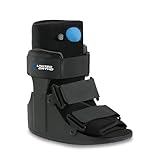
The recommended way of doing this is to offload with a good supportive boot or cast.
The best way to do this is, of course, to see your podiatrist and get evaluated with an x-ray, ultrasound, and potentially even an MRI or CT scan.
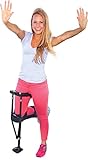
If you cannot do so, it may benefit you to be in a cast, fractured boot, or even keep the weight off of it with a rolling knee scooter or other protective devices.
We as podiatrists frequently take patients off work for a very long period of time when they suffer a traumatic injury. Unfortunately, there is no other way around us in labor jobs.
If you have a sit-down job, there are ways to get people back to work quicker, but this can be impossible otherwise.
Top of the Foot Fracture Boot Treatment:
There are pros and cons to using a boot to treat your foot pain. The pros are that your injured heel will hopefully have a chance to heal gradually! If you are immobilized too long, the cons are that you will gradually become stiff and overworked to your other leg. r
Our favorite fracture boots and their supplies:
Best Fracture Boots & Covers
Best Tall Boot
Best Short Boot
Best Fracture Boot Balance Device
Best Cast Shower Cover
Price:
$73.99
$36.45
Price not available
$15.99
Overview:
Excellent reviews at 4.6/5 with over 800+ Reviews:
Very good reviews. This is 4.3/5 ratings on over 3,000+ reviews.
Outstanding reviews: 4.3/5 for 1,000+ reviews! Prevents hip, knee and back pain.
Amazing Reviews at 4.6/5 at 500+ reviews. Best reviewed and cost effective bag.
Pros:
It has an air bladder for extra cushion. It is tall for extra support, as well as air bladder.
Excellent lower cost walking boot. With a orthotic and cushion, it really keeps pressure off of your ankle.
This works great to balance the opposite foot. This prevents the back, hip and knees from having any pain.
It is very effective but not perfect. The price is really good and it has excellent reviews.
Cons:
The inner sleeve can ride lower and the plastic around the rim can irritate the boot.
Less support with the less than full length boot. It is more comfortable but less supportive.
Does not work that great for slippers and less supportive shoes.
It can still leak, so be careful!
Crucial Tips:
Make sure your lift the cushioning material along the hard plastic rim. Make sure to keep it pumped up. Use an orthotic and a lift on the other side.
Use a lift for the other foot to prevent back and hip problems. Also use an orthotic for the flat foot bed.
This is very cost effective and well worth it. Just make sure both shoes have good supportive orthotics.
Just be careful with this is not perfect. It can still get wet underneath.
Affiliate Link (Buying through these links will connect you to Amazon):
When it comes to managing foot pain from conditions like plantar fasciitis, flat feet, or diabetic neuropathy, the best orthotics can offer crucial support and relief.
Yes, this pain may indicate additional ligament strain or compensatory stress in the foot’s dorsal area. It’s important to rule out fractures or tendon injuries.
Inadequately treated ankle sprains lead to chronic instability and arthritis. Dr. Tom offers grade-specific ankle sprain protocols, functional rehabilitation, bracing recommendations, and for chronic instability, Brostrom ligament repair — a highly effective outpatient procedure.
A: A sprain or fracture-dislocation of the Lisfranc joint complex (where the metatarsals meet the midfoot bones). Often missed on initial X-rays. Classic mechanism: stepping off a curb, horse riding fall, or football tackle. Requires weight-bearing X-rays.
Q: How do I know if my midfoot sprain is serious?
A: Red flags: significant swelling and bruising on the top AND sole of the foot, inability to bear weight, pain with squeezing the forefoot. These suggest Lisfranc injury requiring weight-bearing X-rays or CT scan.
Q: How long does a midfoot sprain take to heal?
A: Minor sprains: 4-6 weeks with a boot or stiff-soled shoe. Lisfranc sprains: 3-6 months non-weight-bearing. Lisfranc fracture-dislocations: surgical fixation, 4-6 months recovery.
Q: Can I walk on a midfoot sprain?
A: Minor sprains: yes, with a stiff shoe or boot. Suspected Lisfranc injury: no weight-bearing until imaging confirms stability. Walking on an unstable Lisfranc injury causes permanent midfoot collapse and arthritis.
🏥
Recommended Next Step
Ankle Sprain Treatment: From First Aid to Recovery
📧 Get Dr. Tom’s Free Lab Test Guide
Discover the 5 lab tests every person over 35 should ask their doctor about — explained in plain English by a board-certified physician.
A midfoot sprain (Lisfranc injury) can be serious. Our podiatrists use advanced imaging to assess severity and create a recovery plan to prevent long-term complications.
Dr. Tom Biernacki, DPM is a double board-certified podiatrist and foot & ankle surgeon at Balance Foot & Ankle Specialists in Southeast Michigan. With over a decade of clinical experience, he specializes in heel pain, bunions, diabetic foot care, sports injuries, and minimally invasive surgery. Dr. Biernacki is a member of the APMA and ACFAS, and his patient education content on MichiganFootDoctors.com and YouTube has reached over one million views.
Recommended Products for Heel Pain
Products personally used and recommended by Dr. Tom Biernacki, DPM. All available on Amazon.
Graduated compression supports plantar fascia recovery and reduces morning stiffness.
Best for: Overnight recovery, all-day wear
These products work best with professional treatment. Book an appointment with Dr. Tom for a personalized treatment plan.
Balance Foot & Ankle surgeons are affiliated with Trinity Health Michigan, Corewell Health, and Henry Ford Health — three of Michigan’s largest health systems.