


Quick answer: Sharp Pain On Top Of Foot has multiple potential causes including mechanical, neurological, vascular, and inflammatory. The patterns we see most often are overuse, poorly-fitted shoes, and biomechanical imbalance. Red flags requiring urgent evaluation: warmth/redness (infection), inability to bear weight (fracture), and unilateral swelling without injury (DVT). Call (810) 206-1402.
Foot or ankle pain that isn’t getting better? A podiatrist can diagnose it in one visit — pick a real appointment time online, 24/7: Howell or Bloomfield Township. Takes about a minute, 24/7.
✅ Medically reviewed by Dr. Tom Biernacki, DPM — Board-Certified Podiatrist · Last updated April 6, 2026
Sharp Pain on Top of Your Foot? Get Fast Relief from Michigan’s Trusted Foot Doctors
Sudden or worsening pain on the top of your foot can make every step uncomfortable. Our experienced podiatrists in Howell and Bloomfield Township provide same-day evaluations, accurate diagnosis, and effective treatment to get you back on your feet quickly.
Book an Urgent Appointment

- Board-Certified Podiatrists
- Diabetic Foot Doctor Near You
- Serving Howell & Bloomfield Township
Intermittent Sharp Pain on Top of Foot Treatment Video
https://youtu.be/MptFiAYrdqcStop Foot Pain Fast
Sharp Pain on Top of Foot
Causes, Symptoms, and Fast Relief Tips
Sharp pain on the top of your foot can stop you in your tracks. Whether it hits during exercise or while walking barefoot, this sudden discomfort is often a sign of underlying issues—from tendon irritation to stress fractures. Ignoring the pain could lead to more serious complications. In this article, we’ll explore what causes sharp pain on the top of the foot, common symptoms to watch for, and the most effective treatments to help you heal quickly and safely.
Understanding Sharp Pain on the Top of Your Foot
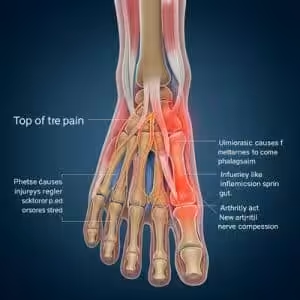
The top of the foot contains a complex structure of bones, tendons, and nerves. When any of these are strained, compressed, or inflamed, it can result in sudden, sharp pain. Common culprits include extensor tendonitis, midfoot injuries, nerve compression (like a pinched peroneal nerve), or even ill-fitting shoes. The pain might worsen with walking, running, or pressure, and proper diagnosis is crucial to avoid mismanagement. Early treatment can significantly shorten your recovery time and restore pain-free movement.
Don’t Let Foot Pain Disrupt Your Life
Sharp pain on top of the foot may seem small at first, but left untreated, it can turn into a chronic issue. At Balance Foot & Ankle Specialist, Michigan, we provide expert evaluations and custom treatments to help you walk pain-free again. Schedule your visit today and take the first step toward lasting relief.
Book an Urgent AppointmentIntermittent Sharp Pain on Top of Foot Causes & Treatment
Do you have a sharp pain on top of the foot? The #1 cause is bone problems that press on the nerves and tendons running across them. FIX IT TODAY!
https://youtu.be/MptFiAYrdqcIntermittent Sharp Pain on Top of Foot Causes
Sharp Pain on Top of Foot Overview
- Sharp pain on top of the foot is usually related to nerve pain.
- The number one way that nerve pain develops on top of the foot is if something is pressing from underneath, such as abnormal bone formation, and then the soft tissues are pressing at the top of your shoe.
- It is also possible to have inflammation due to bones and the jamming of dorsal compression syndrome.
- This puts further pressure on the nerves on top of your foot.
- If you experience numbness, burning, and tingling, this likely is related to the sharp shooting pain of its nerve injury.
- Below we detail our favorite treatments and whether surgery is needed!
Symptoms:
The most common symptoms of sharp pain on top of the foot include:
- Swelling/inflammation
- Bruising
- Tenderness
- Redness
- Irritation
- Sharp pain
- Burning
Causes:
There are many causes to have pain on the top of your foot.:
- The most common cause of pain on the top of your foot is a tendon or ligament inflammation or injury.
- There are many tendons in your foot. Overextension or trauma to these tendons may cause this pain.
- Fracture to your metatarsals can also occur. These are the bones that extend from your heel to your toes.
- As we age, our bones, tendons, and ligaments become more fragile.
- This makes it much easier to hurt or damage your foot.
- Deformity also may occur over time, such as arthritis and or bone spurs.
- If you experience sharp pain on top of your feet and do not improve soon, don’t hesitate to get in touch with your doctor.
Specific Causes:
1. Dorsal Compression Syndrome:
- Dorsal compression syndrome occurs when there is too much stress on the ball of your foot.
- This compresses the top of the foot.
- It stretches out the bottom of the foot.
- So if the top of your foot is numb or irritated & the bottom is in pain, this is it!
- This can also lead to a lack of shock absorption in walking or running.
- It will eventually lead to mid-foot arthritis.
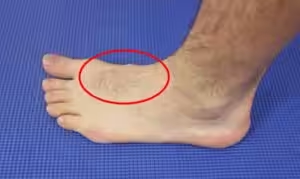
Pain across the top of the foot can usually occur due to nerve irritation or soreness through the lisfranc joint.
2. Top Of Foot Numbness Or Tingling:
- The top of foot’s tingling is usually due to nerve irritation.
- The medial dorsal cutaneous nerve is most frequently affected.
- This nerve covers the bump on top of your foot and runs along the top of your big toe.
- If a nerve is irritated and becomes numb, this is known as neuropraxia.
- Neuropraxia can take up to a month to get better, so treat it properly!

This is a microscope zoom-in of a nerve. It can just as easily get bruised as a muscle or a bone. This can lead to numbness, burning, and tingling.
3. Top Of The Foot Bone Spur:
A bone spur on top of the foot forms due to abnormal friction and stress on the bone.
- As the bones of the midfoot rub against each other, the bone re-enforces itself.
- This is similar to a callus forming in a high-pressure area.
- The same thing will happen to the bone on the top of your foot.
- A top of the foot bone spur is widespread.
- It can lead to the top of the foot numbness, burning, and tingling.
- This occurs due to nerve compression.

4. Sprained Top Of The Foot:
- A sprain in the top of the foot or the arch is called a Lisfranc sprain.
- In most cases, it is usually only a sprain that lasts a couple of days to a couple of weeks.
- But in some cases, it may be essential to seek imaging & further treatment.
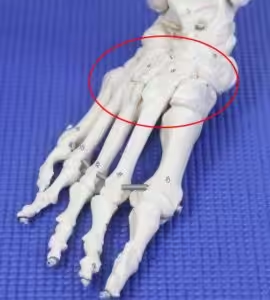
The midfoot joint that can get sprained is called a lisfranc joint. This joint can take a very long time to feel better. Our preferred treatment is a really good pair of orthotics. This will really improve your healing time!
5. Fluid Cyst:
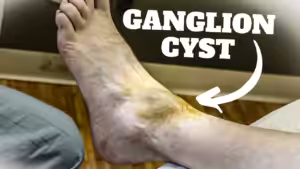
- Ganglionic cysts are soft masses across the top of the foot which are not immediately dangerous!
- These are simply pockets of fluid that pouch out from the joints of your foot bones like a balloon.
- Treatment consists of draining and removing the pocket of fluid.
- But they should still check out by a podiatrist because there is a chance that they may be something a little more dangerous.
6. Extensor Tendonitis:
- Just like a nerve can get irritated on top of the foot, so can tendons.
- Extensor tendons are the ones responsible for lifting your foot toward your shin.
- They can become irritated from being overworked.
- This is very common in long-distance runners and running hills.
- The front of your leg and the top of your foot will be sore.
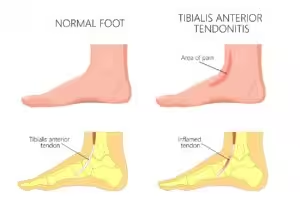
6. Extensor Tendonitis:
- Just like a nerve can get irritated on top of the foot, so can tendons.
- Extensor tendons are the ones responsible for lifting your foot toward your shin.
- They can become irritated from being overworked.
- This is very common in long-distance runners and running hills.
- The front of your leg and the top of your foot will be sore.
7. Plantar Fasciitis – Entire Arch Pain
- This is by far the most common pain in the arch of your foot.
- 15% of all people around the world have it.
- If it feels painful in the morning & painful after walks, this is the first thing you should consider.
- Plantar fasciitis is usually related to flat foot & is due to the stretching of the tissues in the middle of your foot!
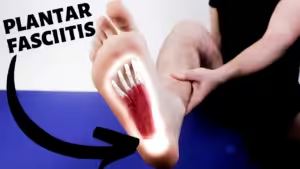
The most common cause of calcaneus foot pain is likely due to plantar fasciitis.
Fewer Causes:
- Bent Big Toe – If your big toe is bent and you are having pain in your big toe.
- Straight Big Toe – If your big toe is straight, if you have difficulty bending due to a big lump, you still have pain at this site.
- Pain in Small Toes (2-4th Toes) – If the central three toes in your foot are still hurting.
- Sprained Big Toe (Turf Toe). – Click this link if you think you jammed your big toe, causing you to walk on the side of your foot.
- The Ball of Your Foot – Click on this link if you think the entire front of your foot is aching.
- Ball of the Foot-Second Toe – If it is mostly underneath your second toe, that is hurting.
- Little Toe (5th Toe)- If the majority of your pain is coming from the fifth toe.
- The Outside of the Foot- If the pain is in the front, but mostly on the outside of your foot.
- Top of the Foot Pain – If it is in the middle of the foot but mostly on top.
- Foot Arthritis – If you think arthritis is what is causing this pain.
- Toe Cramps Or Spasms- If you get cramps or spasms during the day.
- Long Second Toe – If you have a very long second toe that is causing you pain.
Home Treatment:
- These are Top foot pain products. The real key is getting good supportive shoes with good supportive orthotics.
- Over the next few weeks in the next few months, your foot pain should diminish greatly.
- Over the next few weeks in the next few months, your foot pain should diminish greatly.
- Just make sure to see your podiatrist for a true evaluation of your foot pain.
Get Great Shoes:
- Getting a great supportive pair of shoes will ensure that there is pressure removed from the top of your foot.
- This can strain through the middle of your foot and compression.
- Consider shoes combined with good supportive orthotics for the best pain relief!
- The following link will show you what our favorites are.
The real key to fix outside of the foot pain in order:
1) Most important is a good orthotic for your shoe.
- Give these 1-2 weeks of effort, and you will really notice the pain relief.
- This does not instantly fix the pain but prevents future damage.
2) Ankle brace for a possible correction.
- Check the recommended braces below.
- For ankle pain, this is almost guaranteed to improve your problem.
3) Menthol-based cream for pain relief.
- Creams and gels like Doctor Hoy’s Natural Pain Relief Gel act like ice but save you 20 minutes!
- Check below for our recommended pain relief options.
Surgery for the top of the foot pain:
It is possible to use surgery to excise the bone spur that develops on top of the foot:
- This can be a longer recovery time, taking roughly 2 to 3 months to get back to even 75 to 80%.
- This does work very well, but the key is to keep still wearing good inserts and good shoes.
- You have to consider that as you’ve gotten older, the muscle mass and the flexibility in your body have decreased.
- If you’re developing arthritis in an area, this likely means that your body is compensating through this area.
- Unfortunately, even after surgery and cleaning of the spur, you are not a teenager again.
- This means the same underlying causes that created this pain are likely developing still, and it is only a matter of time before new spurs start to form.
- The best way to guarantee that this will not happen again is to get in as good shape as possible, lose weight, get great shoes, get great orthotics, and this is where we see the best possible results.
Walk This Way: Trusted Foot & Ankle Information
Learn what’s hurting and how to fix it.

Finding the best products for managing peripheral neuropathy and diabetic foot pain can make a world of difference in your daily comfort and mobility.

For managing foot pain from conditions like plantar fasciitis, flat feet, or diabetic neuropathy, the best orthotics can offer crucial support and relief.

Choosing the best shoes for foot conditions like neuropathy, plantar fasciitis, or flat feet is essential for pain relief and long-term foot health.
Athlete’s Foot
Ball of Foot
Achilles Tendon
Bunion
Big Toe
Callus
Foot Fungus
Gout
Ingrown
Orthotics
Outside of Foot Pain
Sports Podiatrist

Why Michigan Patients Trust Us
- Experienced, Board-Certified Care
- Local, Convenient Locations
- Personalized Treatment Plans
- Advanced Technology
- Conservative First Approach
- Friendly, Patient-Centered Team
Our board-certified podiatrists specialize in foot and ankle care.
Meet Our Podiatrist for Sharp Pain on Top of the Foot

Dr. Tom Biernacki, DPM
Provides comprehensive foot and ankle care for patients in Howell and Bloomfield Township, focusing on accurate diagnosis, effective treatment, and long-term mobility.
Book Now
Dr. Carl Jay,
DPM
Delivers trusted general podiatric care, helping patients manage foot and ankle pain, injuries, and chronic conditions with plan tailored to your foot types.
Book Now
Dr. Daria Gutkin, DPM
Offers attentive foot and ankle care for a many conditions, emphasizing preventive care and patient education to support healthy, active lifestyles.
Book NowMore Podiatrist-Recommended Foot Health Essentials
Hoka Clifton 10

Max-cushion everyday shoe — podiatrist favorite for walking and running.

OOFOS Recovery Slide

Impact-absorbing recovery sandal — wear after long days on your feet.
As an Amazon Associate, Balance Foot & Ankle earns from qualifying purchases. Product recommendations are based on clinical experience; prices and availability shown above update live from Amazon.

When to See a Podiatrist
If foot or ankle pain has been bothering you for more than a few weeks, home care alone may not be enough. Balance Foot & Ankle offers same-week appointments at our Howell and Bloomfield Township clinics — no referral needed in most cases. Bring your current shoes and a short list of symptoms and we’ll build you a treatment plan in one visit.
Call Balance Foot & Ankle: (810) 206-1402 · Book online · Offices in Howell & Bloomfield Township
FAQs Sharp Pain on the Top of Your Foot
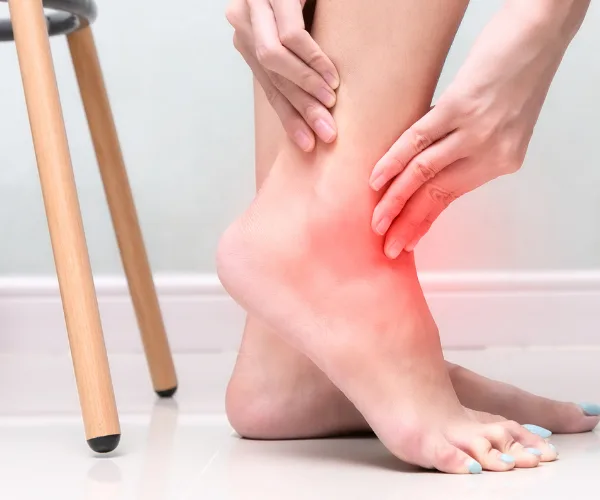
Common causes include extensor tendonitis, stress fractures, nerve compression, arthritis, or tight footwear.
Can shoes cause pain on the top of the foot?Yes. Tight laces or shoes that press on tendons or nerves can trigger or worsen pain.
Is this pain a sign of a stress fracture?It can be. Stress fractures in the metatarsal bones often present as sharp pain that worsens with activity.
When should I see a doctor for this pain?If the pain is persistent, worsening, or affects your ability to walk, see a podiatrist for proper diagnosis.
What does extensor tendonitis feel like?It feels like sharp or aching pain on top of the foot, especially during walking or when lifting the toes.
Can this pain go away on its own?Mild cases may improve with rest and ice, but persistent pain needs professional attention.
What kind of doctor should I see?A podiatrist specializes in diagnosing and treating foot conditions like this.
Is imaging required for diagnosis?Sometimes. X-rays, MRIs, or ultrasounds may be needed to rule out fractures or tendon damage.
How can I prevent this pain in the future?Wear properly fitted shoes, avoid overuse, and stretch your foot muscles regularly.
Don’t Let Dorsal Foot Pain Get Worse
Pain on the top of your foot can worsen over time and lead to more serious problems if left untreated. Early diagnosis helps prevent complications and speeds up your recovery.
At Balance Foot & Ankle Specialist, our experienced Michigan podiatrists provide accurate evaluations and plan tailored to your foot types designed to relieve pain and restore mobility.
Schedule your appointment today and take the first step toward comfortable, pain-free walking.
Book Online for Fast, Professional Care. Call Us TodayRelated Treatment Guides
- Plantar Fasciitis & Heel Pain Treatment
- Custom 3D Orthotics
- Sports Foot & Ankle Injury Treatment
- Bunion Treatment
In-Office Treatment at Balance Foot & Ankle
If home treatment isn’t providing relief for your foot and ankle conditions, our podiatry team at Balance Foot & Ankle can help with same-week evaluations and advanced in-office care.
Medical References & Sources
- American Podiatric Medical Association — Patient Education
- American Orthopaedic Foot & Ankle Society — Foot Conditions
Sharp Pain on Top of Your Foot?
Products for Sharp Top-of-Foot Pain
These products help reduce sharp pain on top of the foot from extensor tendonitis and nerve compression:
- PowerStep Pinnacle Orthotics — Corrects foot mechanics causing extensor overload: View on Amazon
- Doctor Hoy’s Natural Pain Relief Gel — Penetrating topical for tendonitis pain: View on Amazon
- Low-top, soft-upper shoes — Reduces tongue pressure on the dorsum: View on Amazon
Pain on the dorsum of the foot can be caused by extensor tendinitis, stress fractures, bone spurs, nerve entrapment, or midfoot arthritis. Our podiatrists use clinical exam and imaging to pinpoint the source and eliminate the pain.
References
- Hatch DJ, et al. Dorsal foot pain in runners: differential diagnosis and treatment. Clin Podiatr Med Surg. 2016;33(4):563-580.
- O’Malley MJ, et al. Stress fractures of the foot and ankle in athletes. Foot Ankle Clin. 2016;21(2):371-385.
- Kadakia AR, et al. Midfoot arthritis. J Am Acad Orthop Surg. 2011;19(4):227-236.
⚕ Doctor Recommended
Doctor Hoy’s Natural Pain ReliefTopical relief for foot & ankle pain
View Product →
Dr. Tom Biernacki, DPM is a board-certified foot & ankle surgeon (ABFAS & ABPM) at Balance Foot & Ankle Specialists in Southeast Michigan. With over a decade of clinical experience, he specializes in heel pain, bunions, diabetic foot care, sports injuries, and minimally invasive surgery. Dr. Biernacki is a member of the APMA and ACFAS, and his patient education content on MichiganFootDoctors.com and YouTube has made him one of the most-followed foot & ankle educators on YouTube.