

Sudden Foot Pain With No Apparent Cause: Diagnosis by Location and Onset Pattern
Sudden foot pain without a clear traumatic event is one of the most common podiatric presentations — and one of the most diagnostically challenging. The location of the pain and the precise onset pattern (sudden vs. gradual onset noticed suddenly; morning vs. activity-onset; rest pain vs. weight-bearing pain) narrow the differential to 2-3 diagnoses in most cases. This matrix maps the most common causes of sudden-onset foot pain by anatomical zone.
| Location | Most Likely Cause (sudden onset) | Key Feature | What Makes It Worse | Urgent? | First Investigation |
|---|---|---|---|---|---|
| Heel — first steps in morning | Plantar fasciitis (most common cause of sudden heel pain; gradual process noticed acutely when fascia tightens overnight) | Sharp, stabbing pain with very first steps; improves after 5-10 minutes walking; returns after rest; medial plantar fascia origin tender | First steps after rest; standing on hard floors barefoot; going up stairs on toes | No — unless sudden severe pain suggests calcaneal stress fracture (different pattern — constant, not warm-up improving) | Clinical exam; ultrasound if unclear; X-ray if calcaneal stress fracture suspected (Ottawa-equivalent heel criteria) |
| Heel — sudden severe constant pain | Calcaneal stress fracture (especially in runners, military, new walkers); plantar fascia rupture (after multiple cortisone injections or sudden extreme stretch) | Calcaneal stress fracture: medial-lateral heel squeeze test positive; constant pain worse with any weight-bearing; fascia rupture: sudden pop + immediate severe pain + bruising | Any weight-bearing; calcaneal squeeze test; walking | YES — calcaneal stress fracture and plantar fascia rupture require immediate non-weight-bearing + imaging; do not walk through this pain | X-ray (negative first 2-3 weeks for stress fracture); MRI (positive within 24-48h); urgent podiatry visit |
| Big toe joint — sudden severe pain at rest/night | Gout (podagra — uric acid crystal deposition in 1st MTP; most common joint affected); pseudogout (calcium pyrophosphate); septic arthritis (rare but urgent) | Gout: intense, exquisite pain, hot, red, swollen 1st MTP; onset often at night after dietary trigger; unable to bear any pressure; serum uric acid elevated (not always during attack) | ANY pressure; bed sheets; touch; warm temperature (cold packs help) | HIGH — cannot reliably distinguish gout from septic arthritis without aspiration; fever + unable to WB = urgent evaluation; septic arthritis is a surgical emergency | Serum uric acid; CBC; joint aspiration for crystals + culture to exclude septic arthritis; X-ray for erosions in recurrent gout |
| Ball of foot (metatarsalgia) — sudden onset | Metatarsal stress fracture (2nd or 3rd MT most common); Morton’s neuroma flare (sudden electric/burning pain between 3rd-4th toes); freiberg’s infraction (2nd MT head osteonecrosis); sesamoid fracture (under 1st MT head) | Stress fracture: localized MT shaft tenderness + swelling; neuroma: shooting electric pain between toes, relieved by removing shoe; Freiberg’s: 2nd MT head tenderness + limited 2nd MTP ROM | Stress fracture: impact activity; neuroma: tight shoes, prolonged standing; Freiberg’s: high-impact | Stress fracture and Freiberg’s — NWB recommended until imaging; neuroma — less urgent but painful | X-ray (stress fracture may be negative initially); MRI for definitive stress fracture; squeeze test between MT heads for neuroma |
| Arch (midfoot) — sudden pain after jumping/step | Lisfranc injury (midfoot ligament sprain or fracture-dislocation — often missed initially); plantar fibroma (noticed suddenly though developed over months); accessory navicular pain | Lisfranc: midfoot pain + swelling + bruising on plantar arch (pathognomonic); inability to single-leg heel raise; weight-bearing X-ray essential; midfoot bruising = Lisfranc until proven otherwise | Lisfranc: weight-bearing; push-off; twisting | HIGH for Lisfranc — missed Lisfranc leads to long-term midfoot arthritis; NWB immediately + urgent weight-bearing X-ray + podiatry referral | Weight-bearing AP foot X-ray (look for 1st-2nd MT base widening); MRI for ligamentous Lisfranc; stress X-ray under anesthesia if subtle |
| Top of foot (dorsum) — sudden aching/burning | Extensor tendinopathy (most common); tarsal coalition (bony bridge causing sudden pain with ankle twist); dorsal ganglion cyst (now symptomatic); bone spur impingement | Extensor: tenderness along extensor tendon, worse with shoe tongue pressure; ganglion: soft compressible mass; coalition: stiff subtalar joint with peroneal muscle guarding | Extensor: tight shoes, tongue pressure, running; ganglion: shoe pressure | No — unless suspected fracture or coalition | X-ray (dorsal spurs, coalition); ultrasound (ganglion, tendon); MRI for coalition confirmation |
| Ankle — sudden severe pain without trauma | Osteochondral lesion of talus (OLT — can become symptomatic without obvious injury); ankle OA flare; gout/pseudogout of ankle joint; occult stress fracture | OLT: deep ankle aching worse with activity; may have catching/clicking; ankle OA: stiffness + swelling; gout ankle: hot, red, swollen joint; occult fracture: constant pain weight-bearing | Activity; prolonged standing; end-range motion | Gout/septic arthritis: HIGH (must exclude septic); OLT: urgent is moderate — weight-bearing MRI ideal | X-ray; MRI for OLT; serum uric acid + joint aspiration if gout/septic suspected |
Sudden Foot Pain Red Flags: When to Seek Urgent Care
| Red Flag | Most Likely Diagnosis | Why Urgent | Action |
|---|---|---|---|
| Sudden severe pain + unable to walk + fever | Septic arthritis; acute gout (distinguishable only by joint aspiration); osteomyelitis | Septic arthritis is a joint-destroying emergency — bacteria multiply rapidly in synovial fluid; delay >24-48h causes permanent joint damage and cartilage loss; requires IV antibiotics + surgical washout | Emergency department immediately — do NOT wait for outpatient appointment; joint aspiration, CBC, blood cultures, IV antibiotics |
| Sudden pop + immediate severe pain + bruising (heel/arch/ankle) | Achilles tendon rupture (posterior heel); plantar fascia rupture (arch); ankle ligament rupture with hemarthrosis | Achilles rupture requires urgent surgical or conservative management decision within 48-72 hours for optimal outcomes; delay limits surgical options; plantar fascia rupture requires immobilization | Urgent podiatry or ED visit within 24-48 hours; Thompson test for Achilles; non-weight-bearing; MRI to confirm if clinical exam unclear |
| Sudden foot deformity + pain (new flat foot or collapsed arch) | Acute Charcot foot (neuropathic arthropathy in diabetics); acute PTT rupture with arch collapse; Lisfranc fracture-dislocation | Acute Charcot foot with continued weight-bearing leads to catastrophic bone destruction and rocker-bottom deformity in days; PTT complete rupture + continued loading = progressive flatfoot; Lisfranc dislocation = surgical emergency | Urgent podiatry or orthopedic evaluation; non-weight-bearing immediately; X-ray and MRI; Charcot = TCC within 24-48 hours of diagnosis |
| Sudden pale/blue/cold foot with pain | Acute arterial occlusion (critical limb ischemia); deep vein thrombosis (DVT) — unusual but possible post-surgery | Acute arterial occlusion: 6-hour window before irreversible muscle necrosis; requires vascular surgery emergency revascularization; DVT: pulmonary embolism risk | Emergency department immediately — vascular surgery emergency; “6 Ps”: pain, pallor, pulselessness, paresthesias, paralysis, poikilothermia (cold); this is limb-threatening |
| Sudden pain + rapidly spreading redness up the leg | Cellulitis; necrotizing fasciitis (rare but life-threatening) | Necrotizing fasciitis spreads along fascial planes at 1 inch/hour and is fatal without emergency surgery; cellulitis requires IV antibiotics if rapidly spreading; diabetics and immunocompromised = highest risk | Emergency department immediately if spreading rapidly; draw circumference of erythema with marker — if advancing in 1-2 hours = surgical emergency; necrotizing fasciitis requires debridement within hours |
| Sudden pain + swelling in calf/ankle after travel/surgery/immobilization | Deep vein thrombosis (DVT); post-thrombotic syndrome | DVT pulmonary embolism risk; foot/ankle surgery and prolonged immobilization are DVT risk factors; calf pain + swelling 1-14 days post-op = DVT until proven otherwise | Duplex ultrasound within 24 hours (most ED facilities can do same-day); anticoagulation if DVT confirmed; urgent evaluation required |
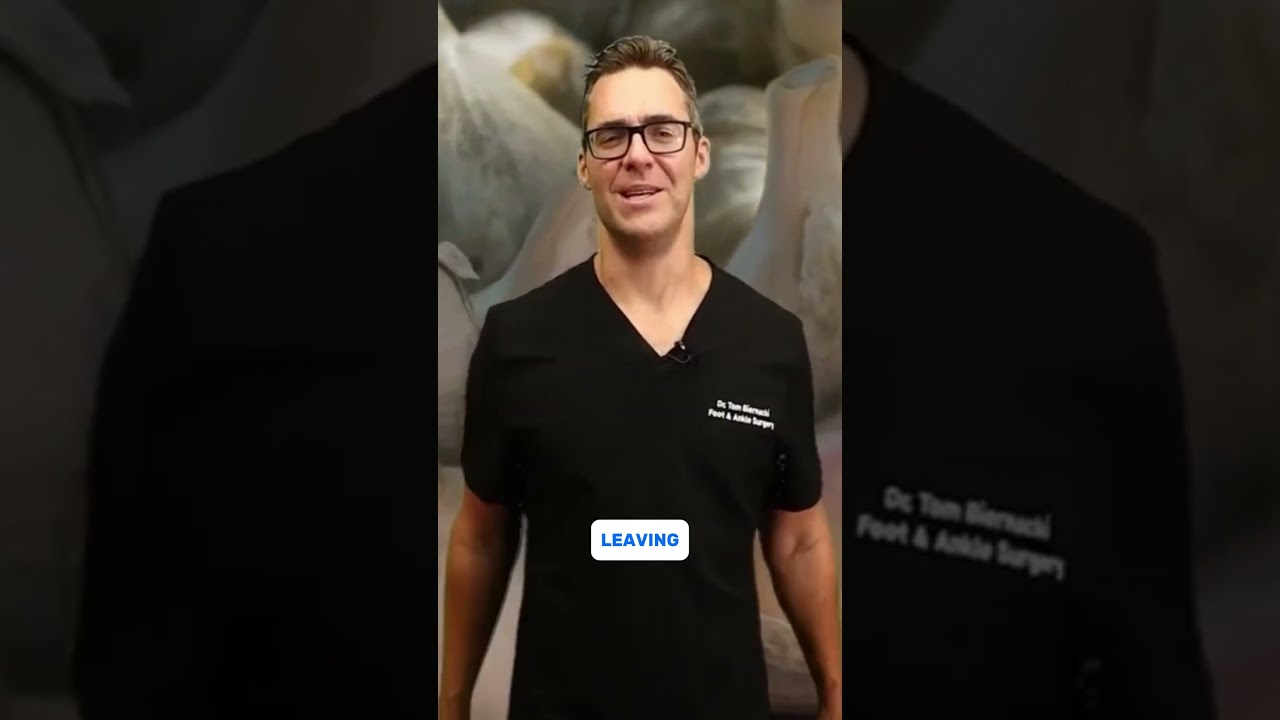
You are in the right place. Dr. Tom Biernacki, DPM, FACFAS — board-certified foot & ankle surgeon with 3,000+ surgeries — explains exactly what sudden foot pain no cause means and what works. Call (810) 206-1402 for same-day appointment at Howell or Bloomfield Township.

![How to Cure Plantar Fasciitis in One Week? [FAST Heel Pain Relief!]](https://www.michiganfootdoctors.com/wp-content/cache/flying-press/b5600c3bfb9845a6095da8266d8b5363.jpg)
Watch: How to Cure Plantar Fasciitis in One Week? [FAST Heel Pain Relief!] — MichiganFootDoctors YouTube
Quick answer: Sudden foot pain with no obvious cause is most often a stress fracture, gout, plantar plate tear, or a foreign body (glass/splinter). Sharp pain in the ball of foot = stress fracture or neuroma. Hot + red + sudden = gout. Ice 15 min 3x/day, NSAIDs, weight-bearing as tolerated. If pain doesn’t improve in 5-7 days = imaging. — Dr. Tom Biernacki, DPM, board-certified podiatrist (Michigan Foot Doctors).
United Ortho Walking Boot (Short)
For suspected stress fractures or unstable injuries — offloads the foot during initial 4-6 week healing.
- Adjustable air bladder
- Rocker bottom
- Water-resistant
- Heavy first day
- Need lift on opposite shoe
PowerStep Pinnacle Maxx
For mechanical foot pain — unloads the metatarsals + arch.
- Deep heel cup
- Lateral wedge
- Trim-to-fit
- Trim required
- Firm break-in
Sudden Foot Pain With No Cause: 6 Possibilities
Quick answer: Sudden Foot Pain can be confusing. Dr. Tom Biernacki, DPM helps you make the right decision.
Red Flags (ER)
Visible deformity, severe swelling, inability to bear weight, signs of infection, vascular compromise.
Same-Week Podiatry
Most foot complaints can be evaluated by a podiatrist within days, often saving the ER visit.
Schedule
Call (810) 206-1402.
Dr. Tom’s Product Picks for Sudden Foot Pain
These are the three products I most often send home with sudden foot pain patients at Balance Foot & Ankle. Each targets a different part of the problem — mechanics, activity support, and pain relief.
PowerStep Pinnacle Maxx insoles — Immediate off-the-shelf support while we work out why the pain started.
CURREX RunPro insoles — Athletic-shoe alternative if the pain flares mainly during exercise.
Doctor Hoy’s Natural Pain Relief Gel — Topical first-aid for the acute phase — if pain persists beyond a week, get an exam.
As an Amazon Associate and Foundation Wellness partner, Dr. Biernacki may earn a commission on qualifying purchases at no extra cost to you.
Foundation Wellness Orthotic Selector — PowerStep + CURREX by Condition (2026)
Find the right Foundation Wellness orthotic for YOUR specific condition. Dr. Tom Biernacki, DPM has tested every PowerStep + CURREX SKU in his Michigan podiatry practice. Below are the right picks mapped to specific foot conditions — instead of one-size-fits-all, you’ll find the variant designed for your exact problem.

PowerStep Pinnacle MaxxDr. Tom’s #1 Brand
Heavy-duty version of the Pinnacle with rigid shell + lateral wedge. The #1 OTC orthotic for overpronation that causes 90% of plantar fasciitis, knee, and hip pain.
- Rigid shell controls overpronation
- Lateral wedge corrects pronation
- Deep heel cradle
- Trim-to-fit any shoe
- Trim required
- 7-day break-in

PowerStep PinnacleDr. Tom’s #1 Brand
Flagship PowerStep — semi-rigid arch with deep heel cradle. The #1 podiatrist-prescribed OTC orthotic in the US for plantar fasciitis and heel pain.
- Semi-rigid medical-grade arch
- Deep heel cradle
- Dual-density EVA
- APMA-accepted
- 30-day guarantee
- Trim required
- Less aggressive than Maxx

PowerStep Pinnacle High ArchDr. Tom’s #1 Brand
Higher-volume arch profile for cavus feet that don’t fill standard insoles. Prevents the lateral roll that causes ankle sprains in supinators.
- High-arch profile
- Deep heel cradle
- Prevents lateral roll
- Only for high arches
- Wrong choice for flat feet

PowerStep Pinnacle Plus (with Built-In Met Pad)Dr. Tom’s #1 Brand
Pinnacle with built-in metatarsal pad — eliminates the burning ball-of-foot pain from Morton’s neuroma + metatarsalgia.
- Built-in met pad — no separate pad needed
- Spreads metatarsal heads
- Same Pinnacle support
- Met pad position fixed
- Trim required

PowerStep Morton’s Extension InsoleDr. Tom’s #1 Brand
Stiffener under the 1st MTP joint — limits big toe extension. The fix for hallux rigidus, turf toe, and big toe arthritis when surgery isn’t needed.
- Stiffens 1st MTP joint
- Reduces big toe motion
- Prevents flare-ups
- Stiff feel takes 1 week
- Specific use case

PowerStep ProTech Full LengthDr. Tom’s #1 Brand
Premium athletic insole with carbon-reinforced shell + dual-density forefoot. Best PowerStep for serious athletes.
- Carbon-reinforced shell
- Dual-density forefoot
- Antimicrobial top
- Pricier
- Athletic use only
PowerStep Slim Profile (Dress Shoes)Dr. Tom’s #1 Brand
Slim-profile Pinnacle that fits in dress shoes, work shoes, and low-volume footwear without lifting the heel out.
- Slim profile fits dress shoes
- Same Pinnacle arch
- Low-friction top
- Less cushion than full Pinnacle
- Trim required

PowerStep Wide (EE / EEE Fit)Dr. Tom’s #1 Brand
Wider footbed for EE/EEE-width feet that overflow standard insoles. Same Pinnacle support, wider sole.
- Fits 2E/4E feet
- Same Pinnacle arch
- No spillover
- Won’t fit narrow shoes
- Pricier

CURREX RunPro (3 Arch Heights)Dr. Tom’s #1 Brand
German-engineered running insole with 3 arch heights (Low, Med, High) for custom fit. Carbon-reinforced heel — closest OTC orthotic to a $500 custom orthotic.
- 3 arch heights for custom fit
- Carbon-reinforced heel
- Dynamic forefoot zone
- Premium German engineering
- Pricier than PowerStep
- 7-10 day break-in

CURREX WalkProDr. Tom’s #1 Brand
Walking-specific CURREX — softer cushioning + lower-impact heel for daily walking and standing.
- Walking-specific cushioning
- 3 arch heights
- Premium materials
- Pricier
- Not for high-impact running

CURREX AceProDr. Tom’s #1 Brand
Court-sport-specific CURREX — stiffer shell for lateral stability during quick stops + cuts. Pickleball + tennis + basketball.
- Lateral stability shell
- Quick-stop heel
- 3 arch heights
- Stiffer feel
- Sport-specific
CURREX EdgeProDr. Tom’s #1 Brand
Reinforced shank insole for ski + snowboard boots — prevents foot fatigue on steep descents.
- Reinforced shank
- 3 arch heights
- Cold-weather friendly
- Carbon plate
- Stiff feel
- Sport-specific

CURREX HikeProDr. Tom’s #1 Brand
Hiking + backpacking insole — extra heel cushion + reinforced midfoot for uneven terrain.
- Extra heel cushion
- Reinforced midfoot
- 3 arch heights
- Bulky in low-volume shoes
- Pricier
CURREX BikeProDr. Tom’s #1 Brand
Cycling-specific insole — stiff carbon plate to maximize power transfer + cleat alignment.
- Stiff carbon plate
- Cleat-compatible
- Lightweight
- Cycling-only
- Pricier
Frequently Asked Questions
When should I see a doctor?
See a podiatrist if pain persists past 2 weeks, prevents normal activity, or is accompanied by red-flag symptoms (warmth, swelling, numbness, inability to bear weight).
Can I treat this at home?
Mild cases respond to RICE protocol (rest, ice, compression, elevation), supportive shoes, and OTC anti-inflammatories. Persistent symptoms need professional evaluation.
How long does it take to heal?
Most soft tissue injuries resolve in 2-6 weeks with appropriate care. Bone injuries take 6-12 weeks. Chronic conditions need longer-term management.
Ready to fix this for good?
Reading goes so far. The fastest path is a 30-minute office visit. Same-day Howell or Bloomfield Township. Call (810) 206-1402.
APMA: Sudden Unexplained Foot Pain — When to See a Podiatrist
In-Office Treatment at Balance Foot & Ankle
If home treatment isn’t providing relief for your foot and ankle conditions, our podiatry team at Balance Foot & Ankle can help with same-day evaluations and advanced in-office care.
Same-day appointments available. (810) 206-1402
Doctor Hoy’s Natural Pain Relief Gel
Natural topical pain relief I use in our clinic. Arnica + camphor formula — apply directly to the area 3–4x daily. ($20–25)
Shop Doctor Hoy’s →
Dr. Tom Biernacki, DPM is a board-certified foot & ankle surgeon (ABFAS & ABPM) at Balance Foot & Ankle Specialists in Southeast Michigan. With over a decade of clinical experience, he specializes in heel pain, bunions, diabetic foot care, sports injuries, and minimally invasive surgery. Dr. Biernacki is a member of the APMA and ACFAS, and his patient education content on MichiganFootDoctors.com and YouTube has made him one of the most-followed foot & ankle educators on YouTube.