
![Numbness Or Tingling In The Feet Or Toes? [Morton’S Neuroma Treatment] | Balance Foot & Ankle](https://www.michiganfootdoctors.com/uploads/2022/08/numbness-or-tingling-in-the-feet-or-toes-morton-s-neuroma-treatment-1.avif)

Toe numbness has 5 main causes — Morton’s neuroma, peripheral neuropathy, tarsal tunnel syndrome, common peroneal nerve compression, or referred from the back. Each one needs a different approach.
You’ve come to the right podiatry team. Dr. Tom Biernacki, DPM, FACFAS — board-certified foot & ankle surgeon with 3,000+ surgeries — explains exactly what toe numbness means and what works. Call (810) 206-1402 for same-day appointment at Howell or Bloomfield Township.
Quick answer: Toe Numbness Causes When To See Podiatrist is a common foot/ankle topic that affects many patients. Effective treatment starts with a targeted diagnosis, conservative-first treatment, and escalation only when needed. We treat this regularly at our Howell and Bloomfield Township practices. Call (810) 206-1402.
Medically reviewed by Dr. Tom Biernacki, DPM · Board-Certified Podiatric Surgeon · Last reviewed: April 2026 · Editorial Policy
The most important clinical decision with Toe Numbness Causes When To See Podiatrist isn’t which treatment to start with — it’s identifying the correct subtype. That changes everything. Call (810) 206-1402.
Quick Answer
Toe Numbness: Causes, Symptoms, and When to See a Podiatrist relates to foot neuropathy — typically caused by nerve compression or systemic. Most patients improve in varies by cause with conservative care. Same-week appointments in Howell + Bloomfield Township: (810) 206-1402.

Medically reviewed by Dr. Tom Biernacki, DPM — Board-Certified Podiatric Surgeon — Balance Foot & Ankle, Howell & Bloomfield Township, MI. Last updated April 2026.
▶ Watch
Medically Reviewed by Dr. Tom Biernacki, DPM — Board-Certified Podiatrist, Balance Foot & Ankle Specialists, Michigan. Last updated April 2026.
Toe numbness — a reduction or absence of normal sensation in one or more toes — is a symptom that deserves attention rather than dismissal. While occasional, brief toe tingling from crossing your legs too long is harmless, persistent or progressive toe numbness can signal anything from a compressed nerve in the foot to systemic disease affecting the entire nervous system. Knowing the common causes, the distinguishing features, and when to seek evaluation helps you make the right decision about your care.
The Spectrum of Toe Sensation Changes
Patients describe abnormal toe sensations in several ways, and the specific character matters diagnostically:
- Numbness — reduced ability to feel light touch, temperature, or pain; the foot “feels like it’s wrapped in cotton”
- Tingling or paresthesia — “pins and needles” sensation, often accompanying numbness
- Burning — a hot or burning sensation in the toes, often worse at night
- Coldness — toes feel persistently cold even in warm environments; suggests vascular rather than neurologic cause
- Electric sensations — shock-like shooting sensations; characteristic of nerve compression or early neuropathy
Common Causes of Toe Numbness
Morton’s Neuroma
Compression of an interdigital nerve — most commonly between the 3rd and 4th metatarsal heads — causes burning pain and numbness in the corresponding toes (typically the 3rd and 4th). The numbness worsens with activity and tight footwear and improves with rest and shoe removal. Palpation between the metatarsal heads and a positive Mulder’s click (a click felt when the neuroma is compressed) confirm the diagnosis.
Tarsal Tunnel Syndrome
Compression of the posterior tibial nerve beneath the flexor retinaculum at the medial ankle causes numbness, burning, and tingling on the plantar (sole) surface of the foot and toes. Tinel’s sign — tapping over the tarsal tunnel reproducing the numbness — is positive in most cases. Nerve conduction studies confirm the diagnosis.
Diabetic Peripheral Neuropathy
The most common cause of bilateral symmetric toe numbness. Chronic hyperglycemia damages the long peripheral nerve fibers first, causing a “stocking-glove” distribution of numbness beginning at the toes and feet and progressing proximally. The loss of protective sensation in diabetic neuropathy is the primary risk factor for diabetic foot ulceration.
Peripheral Arterial Disease (PAD)
Reduced blood flow from atherosclerotic arterial narrowing causes toe coldness, numbness, and — in severe cases — rest pain. PAD-related numbness is typically accompanied by pallor, cyanosis, and diminished or absent pedal pulses. It is a vascular, not neurologic, phenomenon. Ankle-brachial index (ABI) measurement is the diagnostic test.
Lumbar Radiculopathy (Sciatica)
A herniated disc or spinal stenosis at the L4-S1 levels can cause referred numbness into the foot and toes along the sciatic nerve distribution. L5 radiculopathy typically causes numbness on the top of the foot and first two toes; S1 radiculopathy affects the lateral foot, heel, and fourth and fifth toes. Associated low back or buttock pain, or numbness that follows a dermatomal pattern, suggests a spinal origin.
Tight Footwear
Shoes that are too narrow or too tight cause direct compressive nerve injury — the same mechanism as Morton’s neuroma but from external rather than bony compression. This is one of the most common and most reversible causes of toe numbness; relief with shoe removal and complete return of sensation is the hallmark.
Raynaud’s Phenomenon
Episodic vasospasm causes toe coldness and numbness during cold exposure, with associated tri-phasic color change (white → blue → red). Episodic nature and complete resolution between attacks distinguishes Raynaud’s from fixed neurologic causes.
Vitamin B12 Deficiency
B12 is essential for myelin sheath maintenance — the insulating coating of peripheral nerve fibers. Deficiency causes symmetric sensory neuropathy indistinguishable from diabetic neuropathy in early stages. Particularly common in vegans, vegetarians, the elderly, and patients taking metformin or proton pump inhibitors long-term.
When Toe Numbness Requires Urgent Evaluation
Seek prompt or urgent evaluation when:
- New-onset toe numbness in a diabetic patient — loss of protective sensation is a wound care emergency
- Toe discoloration (pallor, mottling, cyanosis) accompanying the numbness — possible vascular emergency
- Numbness developing after ankle or foot trauma — possible nerve injury or compartment syndrome
- Rapidly progressive or bilateral numbness ascending up the legs — possible Guillain-Barré syndrome; requires emergency evaluation
- Numbness accompanied by severe back pain, leg weakness, or loss of bowel/bladder control — cauda equina syndrome; neurosurgical emergency
Persistent Toe Numbness? Get an Accurate Diagnosis.
Dr. Biernacki evaluates and diagnoses the cause of toe numbness — from Morton’s neuroma to neuropathy — for Michigan patients. Same-week appointments.
📞 (810) 206-1402 | Request Appointment →
Bloomfield Township: 6900 Orchard Lake Rd Suite 103, Bloomfield Township | Howell: 2350 E Grand River Ave, Howell
📧 Get Dr. Tom’s Free Lab Test Guide
Discover the 5 lab tests every person over 35 should ask their doctor about — explained in plain English by a board-certified physician.
📍 Located in Michigan?
Our board-certified podiatrists treat this condition at two convenient locations. Same-day appointments often available.
Insurance Accepted
BCBS · Medicare · Aetna · Cigna · United Healthcare · HAP · Priority Health · Humana · View All →
Howell Office
4330 E Grand River Ave
Howell, MI 48843
Get Directions →
Bloomfield Township Office
43494 Woodward Ave, #208
Bloomfield Township, MI 48302
Get Directions →
Your Board-Certified Podiatrists



Ready to Get Back on Your Feet?
Same-week appointments available at both locations.
Book Your AppointmentMore Podiatrist-Recommended Foot Health Essentials
Top-Rated Arch Support Insole
Universal podiatrist-recommended insert for pain relief and prevention.
Foot Massage Ball
Daily 3-minute roll reduces most forms of foot and heel pain.
Moisture-Wicking Sock
Prevents fungus, blisters, and odor — the basics matter.
As an Amazon Associate, Balance Foot & Ankle earns from qualifying purchases. Product recommendations are based on clinical experience; prices and availability shown above update live from Amazon.
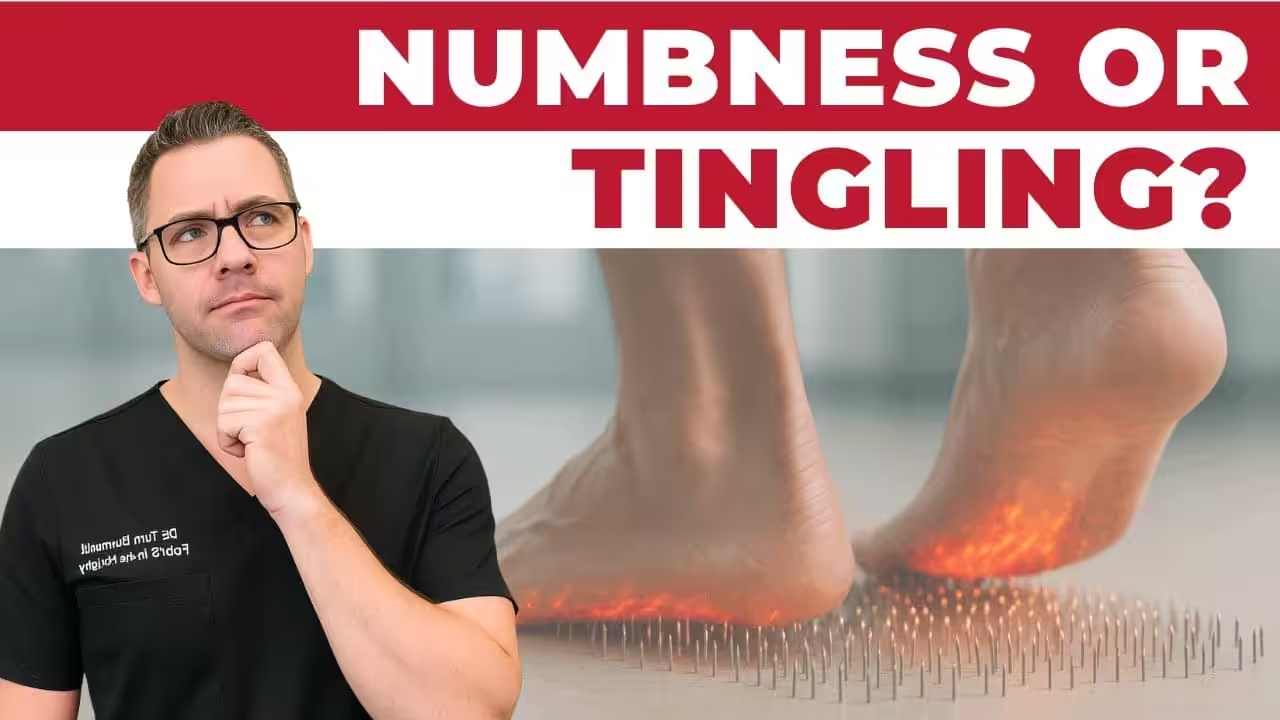
![Numbness or Tingling in the Feet or Toes? [Morton’s Neuroma Treatment]](https://www.michiganfootdoctors.com/wp-content/cache/flying-press/dcc27fa5747c30ef03ffe66b861c9f90.jpg)
Watch: Numbness or Tingling in the Feet or Toes? [Morton’s Neuroma Treatment] — MichiganFootDoctors YouTube
When to See a Podiatrist
If foot or ankle pain has been bothering you for more than a few weeks, home care alone may not be enough. Balance Foot & Ankle offers same-week appointments at our Howell and Bloomfield Township clinics — no referral needed in most cases. Bring your current shoes and a short list of symptoms and we’ll build you a treatment plan in one visit.
Call Balance Foot & Ankle: (810) 206-1402 · Book online · Offices in Howell & Bloomfield Township
Pros & Cons of Conservative Care for foot care
Advantages
- ✓ Conservative care first
- ✓ Same-week appointments
- ✓ Multiple insurance accepted
Considerations
- ✗ Self-treatment can mask issues
- ✗ See a podiatrist if pain >2 weeks
Dr. Tom’s Recommended Products for foot care
Affiliate disclosure: As an Amazon Associate, Balance Foot & Ankle earns from qualifying purchases. We only recommend products we use with patients.
Footnanny Heel Cream Dr. Tom’s Pick
Best for: Daily moisturizer for cracked heels
Ready to Get Back on Your Feet?
Same-day appointments in Howell + Bloomfield Township. Most insurance accepted. Dr. Tom Biernacki, DPM & team.
Book Today — Same-Day Appointments Available
Call Now: (810) 206-1402
About Your Care Team at Balance Foot & Ankle
Dr. Tom Biernacki, DPM · Board-Certified Foot & Ankle Surgeon. Specializes in conservative-first care, minimally invasive bunion surgery, and complex reconstruction.
Dr. Carl Jay, DPM · Accepting new patients. Specializes in sports medicine, athletic injuries, and routine podiatric care.
Dr. Daria Gutkin, DPM, AACFAS · Accepting new patients. Specializes in surgical reconstruction and pediatric podiatry.
Locations: 4330 E Grand River Ave, Howell, MI 48843 · 43494 Woodward Ave Suite 208, Bloomfield Township, MI 48302
Hours: Mon–Fri 8:00 AM – 5:00 PM · (810) 206-1402
Frequently Asked Questions
When should I see a podiatrist?
If symptoms persist past 2 weeks, affect your normal activity, or are accompanied by red-flag symptoms (warmth, redness, swelling, inability to bear weight).
What does treatment cost?
Most diagnostic visits and conservative treatments are covered by Medicare and major insurers. Out-of-pocket costs vary by your specific plan.
How quickly can I get an appointment?
Most non-urgent cases see us within 5 business days. Urgent cases (sudden pain, possible fracture) typically same or next business day.

Dr. Tom Biernacki, DPM is a board-certified foot & ankle surgeon (ABFAS & ABPM) at Balance Foot & Ankle Specialists in Southeast Michigan. With over a decade of clinical experience, he specializes in heel pain, bunions, diabetic foot care, sports injuries, and minimally invasive surgery. Dr. Biernacki is a member of the APMA and ACFAS, and his patient education content on MichiganFootDoctors.com and YouTube has made him one of the most-followed foot & ankle educators on YouTube.