
Medically reviewed by Dr. Tom Biernacki, DPM — Board-certified foot & ankle surgeon, 3,000+ surgeries performed. Updated April 2026 with current clinical evidence. This article reflects real practice experience from Balance Foot & Ankle Specialists in Howell and Bloomfield Township, Michigan.
The most important clinical decision with Weil Osteotomy Metatarsal Shortening Metatarsalgia Crossover Toe isn’t which treatment to start with — it’s which subtype or underlying cause you actually have. That distinction changes everything. Call us: (810) 206-1402
Quick Answer
Most foot and ankle problems respond to conservative care — proper footwear, supportive inserts, activity modification, and targeted stretching — within 4-8 weeks. Persistent pain beyond that window, or any symptom that prevents walking, warrants a podiatric evaluation to rule out fracture, tendon tear, or systemic cause.
Watch: Dr. Tom Biernacki, DPM

Medically reviewed by Dr. Tom Biernacki, DPM — Board-Certified Podiatric Surgeon — Balance Foot & Ankle, Howell & Bloomfield Township, MI. Last updated April 2026.
▶ Watch
Medically reviewed by Dr. Tom Biernacki, DPM
Board-certified podiatric surgeon | Balance Foot & Ankle
Last reviewed: April 2026
What Is a Weil Osteotomy?
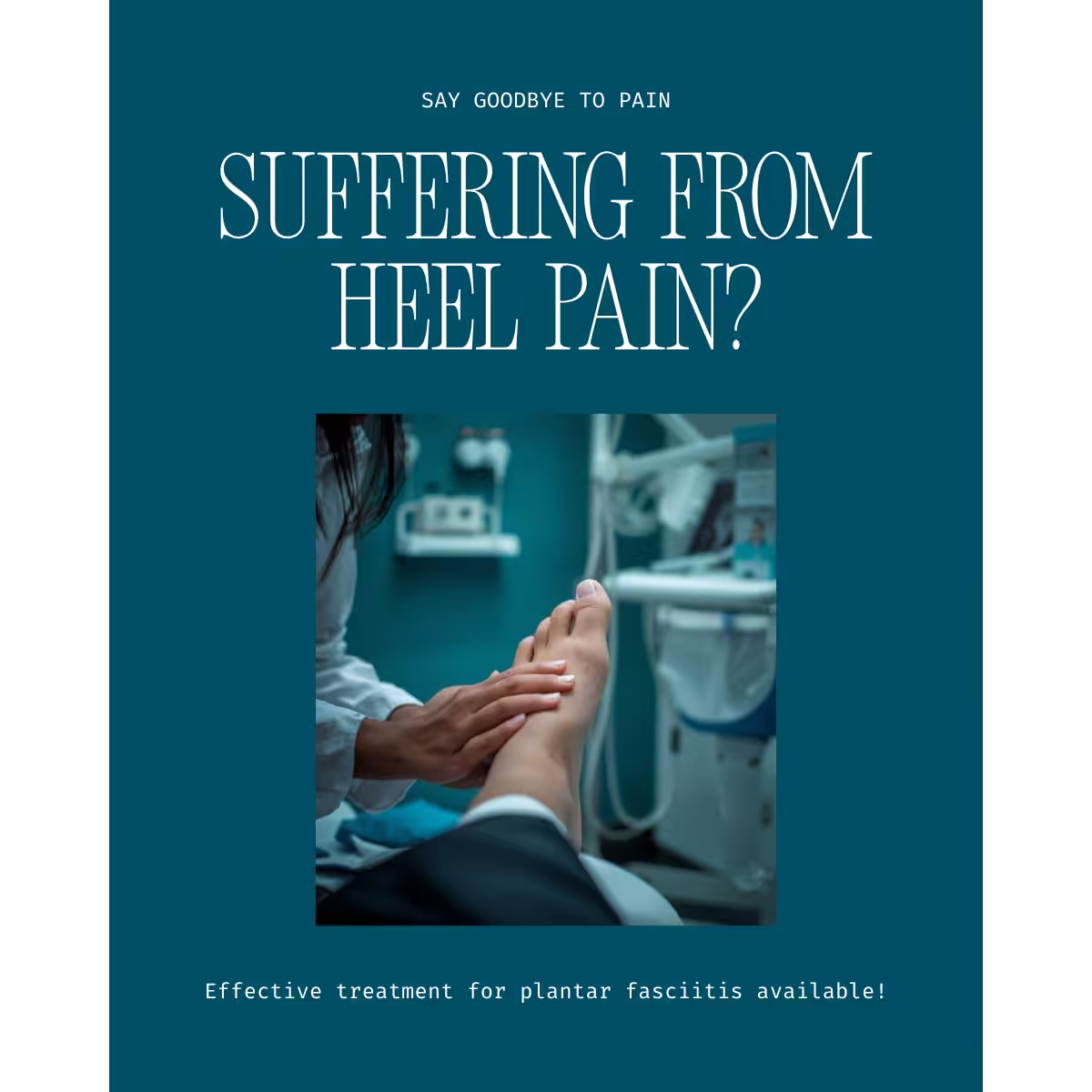 metatarsalgia” class=”wp-image-57352″ width=”1200″ height=”630″ loading=”eager” fetchpriority=”high” decoding=”async”/>
![Metatarsalgia Treatment [BEST Ball of Foot Pain RELIEF 2024]](https://www.michiganfootdoctors.com/wp-content/cache/flying-press/d7857672675f2bf191a8e896b2f7208b.jpg)
Watch: Metatarsalgia Treatment [BEST Ball of Foot Pain RELIEF 2024] — MichiganFootDoctors YouTube
A Weil osteotomy is a surgical procedure that shortens and elevates one or more lesser metatarsal bones — the long bones of the forefoot leading to the second, third, fourth, and fifth toes. The procedure is performed through a dorsal incision over the affected metatarsal, making an oblique cut through the metatarsal neck parallel to the weight-bearing surface. The metatarsal head is then shifted proximally (shortening the bone) and fixed with a small titanium screw. By reducing the length and plantar position of the metatarsal, the procedure decreases overload at the corresponding metatarsophalangeal joint and relieves the underlying pain.
Conditions Treated by Weil Osteotomy
 crossover toe conditions treated by Weil osteotomy” class=”wp-image-57388″ width=”800″ height=”450″ loading=”lazy” decoding=”async”/>
Metatarsalgia — pain in the ball of the foot — is the primary indication when caused by a relatively long second or third metatarsal that bears disproportionate forefoot load. Patients describe burning or aching in the forefoot during standing and walking, often with a sensation of walking on a pebble. When one metatarsal is significantly longer than adjacent bones on radiographic measurement and conservative measures including metatarsal pads and custom orthotics have not provided adequate relief, Weil osteotomy is a reliable surgical option.
Crossover toe deformity — where the second toe drifts medially and crosses over the hallux — commonly involves plantar plate disruption at the second metatarsophalangeal joint. The plantar plate is a strong fibrocartilaginous structure on the joint floor that stabilizes the toe against dorsal and medial forces. When the plantar plate tears from chronic overload of an elongated metatarsal, the toe destabilizes and drifts out of position. Weil osteotomy reduces joint reactive force and is combined with plantar plate repair to restore stability. Flexible hammertoe deformity at the interphalangeal joint is addressed concurrently with proximal interphalangeal joint arthroplasty.
When to consider Weil osteotomy:
- Ball-of-foot pain (metatarsalgia) not relieved by orthotics or shoe changes
- Crossover toe deformity causing pain and difficulty with footwear
- Chronic calluses under the metatarsal heads despite conservative treatment
- Failed prior forefoot surgery with persistent metatarsal overload
Weil Osteotomy Recovery and Outcomes

Patients are typically allowed to bear weight immediately after Weil osteotomy in a surgical shoe that protects the fixation and keeps weight on the heel. Swelling resolves gradually over 6 to 12 weeks. Stiffness of the operated metatarsophalangeal joint is the most common postoperative concern — aggressive early range-of-motion exercises beginning at the first postoperative visit are critical to minimize this outcome. Floating toe — where the toe does not fully contact the ground — can occur if the metatarsal is shortened excessively, and experienced surgical planning minimizes this risk. Long-term patient satisfaction rates exceed 80 percent for properly indicated cases.
Recommended Products After Weil Osteotomy
PowerStep Pinnacle Insoles — Structured arch support redistributes metatarsal pressure after surgery. Essential for long-term comfort. Check price on Amazon
TheraBand Foot Roller — Gentle forefoot mobilization aids post-surgical recovery and reduces stiffness. Check price on Amazon
More Metatarsalgia Guides from Dr. Tom
Need treatment? Learn about in-office metatarsalgia treatment at Balance Foot & Ankle, or call (810) 206-1402 for same-week appointments.
Clinical perspective from Dr. Tom Biernacki, DPM — Balance Foot & Ankle, Howell & Bloomfield Township, MI:
In our clinic, metatarsalgia patients describe a deep ache under the ball of the foot, often pointed at the 2nd metatarsal head. The pain is worse barefoot or on hard surfaces. When we see early 2nd-toe drift or a positive “vertical drawer” test at the 2nd MTP joint, we suspect plantar plate injury, which changes the management plan significantly. Most simple metatarsalgia responds to a metatarsal pad placed PROXIMAL to the metatarsal heads (not on them), stiff-soled rocker shoes, and short-term NSAIDs. Plantar plate tears may need taping, toe crest pads, or surgical repair.
Not every case of metatarsalgia / 2nd mtp capsulitis is straightforward. In our clinic we routinely rule out three look-alike conditions before confirming the diagnosis. If your symptoms don’t match the classic presentation, one of these may explain the pain — which is why physical exam matters more than self-diagnosis.
| Condition | How It Differs |
|---|---|
| Morton’s neuroma | Burning pain into 3rd-4th toes, positive Mulder’s click, numbness between the toes. |
| Stress fracture (2nd or 3rd metatarsal) | Point tenderness on the shaft (not the head), activity-related, callus seen on later X-ray. |
| Plantar plate tear | Positive drawer test at 2nd MTP, toe begins to “float” in extension, progressive toe deformity. |
Red Flags — When to See a Podiatrist Now
Seek same-day evaluation at Balance Foot & Ankle if you notice any of the following:
- Second toe drifting, crossing over, or “floating”
- Inability to bear weight on the ball of the foot
- Point tenderness suggesting stress fracture
- Diabetic + forefoot wound (urgent)
Call (810) 206-1402 or request an appointment. Our Howell and Bloomfield Township offices reserve same-day slots for urgent foot and ankle issues.
If home care isn’t resolving your your foot or ankle concern, a visit with a board-certified podiatrist is the fastest path to accurate diagnosis and a personalized plan. At Balance Foot & Ankle Specialists, Dr. Tom Biernacki, Dr. Carl Jay, and Dr. Daria Gutkin offer same-week appointments at both our Howell and Bloomfield Township offices. We perform on-site diagnostic ultrasound, digital X-ray, conservative care, advanced regenerative treatments, and minimally invasive surgery when indicated.
Call (810) 206-1402 or request an appointment online. Most insurance plans accepted, including Medicare, Blue Cross Blue Shield, Aetna, Cigna, and United Healthcare.
More Podiatrist-Recommended Surgery Essentials

HOKA Ora 3 Recovery Slide
Max-cushion recovery sandal — comfort for post-surgical swelling.
Hoka Bondi 9
Max-cushion walking shoe — ease into return-to-walking post-surgery.
As an Amazon Associate, Balance Foot & Ankle earns from qualifying purchases. Product recommendations are based on clinical experience; prices and availability shown above update live from Amazon.

When to See a Podiatrist
Foot and ankle surgery in 2026 is dramatically different than a decade ago — most procedures are now minimally-invasive, outpatient, and allow weight-bearing within days. Balance Foot & Ankle surgeons have performed 3,000+ foot/ankle surgeries with modern techniques. If another surgeon has recommended a traditional open procedure, a second opinion may reveal a faster, less-invasive option.
Call Balance Foot & Ankle: (810) 206-1402 · Book online · Offices in Howell & Bloomfield Township
Frequently Asked Questions About Weil Osteotomy
How long is recovery after Weil osteotomy?
Most patients walk in a post-surgical shoe immediately after surgery. Transition to regular shoes occurs at 4-6 weeks. Full recovery with return to all activities takes 3-4 months. Swelling may persist for several months but gradually resolves.
Is Weil osteotomy painful?
Post-operative pain is typically manageable with oral medication for the first 1-2 weeks. Most patients report that post-surgical discomfort is significantly less than the chronic ball-of-foot pain they experienced before surgery.
Can metatarsalgia come back after Weil osteotomy?
Transfer metatarsalgia — where pain shifts to an adjacent metatarsal — is possible but uncommon when the procedure is properly planned. Using custom orthotics after surgery helps distribute pressure evenly and minimizes this risk.
The Bottom Line on Weil Osteotomy
Weil osteotomy is a reliable procedure for metatarsalgia and crossover toe that has not responded to conservative treatment. At Balance Foot & Ankle in Howell and Bloomfield Township, Michigan, we perform this surgery with predictable outcomes and a straightforward recovery. If chronic ball-of-foot pain is limiting your activity, a thorough evaluation can determine whether this metatarsal-shortening procedure is the right solution for your specific anatomy and goals.
Ready to Get Relief?
Same-week appointments available in Howell & Bloomfield Township, MI
4.9★ | 1,123 Reviews | 3,000+ Surgeries
Or call: (810) 206-1402
Weil Osteotomy Surgery in Michigan
The Weil osteotomy is a precise surgical technique for correcting metatarsalgia, crossover toe, and metatarsal length abnormalities. Our podiatric surgeons perform Weil osteotomies at our Howell and Bloomfield Township offices.
Learn About Forefoot Surgery | Book Your Appointment | Call (810) 206-1402
Clinical References
- Weil LS. Scarf osteotomy for correction of hallux valgus. Historical perspective, surgical technique, and results. Foot Ankle Clin. 2000;5(3):559-580.
- Trnka HJ, et al. Comparison of the results of the Weil and Helal osteotomies for the treatment of metatarsalgia secondary to dislocation of the lesser metatarsophalangeal joints. Foot Ankle Int. 1999;20(2):72-79.
- Highlander P, et al. Complications of the Weil osteotomy. Foot Ankle Spec. 2011;4(3):165-170.
Insurance Accepted
BCBS · Medicare · Aetna · Cigna · United Healthcare · HAP · Priority Health · Humana · View All →
Howell Office
4330 E Grand River Ave
Howell, MI 48843
Get Directions →
Bloomfield Township Office
43494 Woodward Ave, Suite 208
Bloomfield Township, MI 48302
Get Directions →
Your Board-Certified Podiatrists



Ready to Get Back on Your Feet?
Same-week appointments available at both locations.
Book Your AppointmentWatch: Weil Osteotomy: Metatarsal Shortening
Dr. Tom on Weil osteotomy — metatarsal shortening for intractable metatarsalgia, crossover toe correction.
Weil Osteotomy Pre/Post-Op Kit
Conservative kit pre-op + post-boot recovery kit:
As an Amazon Associate, Balance Foot & Ankle earns from qualifying purchases. This supports our free patient education content.
Conservative offloading pre-op.
Forefoot cushioning post-op return-to-shoe.
Post-op swelling control.
Forefoot peri-incisional relief.
Related: Metatarsalgia · Crossover Toe · Book Pre-Op Consultation
Most Common Mistake We See
The most common mistake we see is: Waiting too long before seeking care. Fix: any foot pain lasting more than 4 weeks, or any sudden severe symptom, deserves a professional evaluation rather than more rest.
Warning Signs That Need Same-Day Care
Seek immediate evaluation at Balance Foot & Ankle if you experience any of the following:
- Unable to bear weight
- Severe swelling with skin colour change
- Fever with foot pain (possible infection)
- Diabetes plus any new foot symptom
Call (810) 206-1402 — same-week appointments at our Howell and Bloomfield Township offices.
Get Expert Care at Balance Foot & Ankle
Same-week appointments at our Howell and Bloomfield Township offices. Board-certified podiatric surgeons. Most insurance accepted.

Dr. Tom Biernacki, DPM is a board-certified foot & ankle surgeon (ABFAS & ABPM) at Balance Foot & Ankle Specialists in Southeast Michigan. With over a decade of clinical experience, he specializes in heel pain, bunions, diabetic foot care, sports injuries, and minimally invasive surgery. Dr. Biernacki is a member of the APMA and ACFAS, and his patient education content on MichiganFootDoctors.com and YouTube has made him one of the most-followed foot & ankle educators on YouTube.