
Affiliate disclosure: As an Amazon Associate, Balance Foot & Ankle earns from qualifying purchases. We may also earn a commission from brand partners linked on this page.
Medically reviewed by Dr. Tom Biernacki, DPM
Board-certified podiatric surgeon | Balance Foot & Ankle, Howell & Bloomfield Township, MI
Last reviewed: May 2026
Ankle arthritis near Hartland develops 10 to 20 years after ankle injuries most patients consider “fully healed” — and there’s a specific footwear modification that reduces pain better than cortisone for 70% of patients. Most people never try it because no one tells them about it. Call (810) 206-1402 — ankle arthritis evaluations in Hartland.

Medically Reviewed by: Dr. Tom Biernacki DPM · Board-Certified Podiatrist · Balance Foot & Ankle PLLC · Updated 2026
Ankle Arthritis Treatment Near Hartland, MI
Ankle arthritis treatment near Hartland, MI is available at Balance Foot & Ankle in Howell. Dr. Biernacki DPM offers custom bracing, corticosteroid injections, viscosupplementation, and surgical options including ankle fusion and total ankle replacement. Call (810) 206-1402.
Understanding Ankle Arthritis: Different From Hip and Knee Arthritis
Ankle arthritis differs from hip or knee arthritis in one important way: it’s more often post-traumatic (caused by prior injury) than primary osteoarthritis. Up to 80% of ankle arthritis cases follow a history of ankle fractures, severe ligament sprains, or osteochondral defects. The ankle’s unique joint mechanics mean it’s more dependent on cartilage integrity than the hip — small cartilage defects cause disproportionate function loss. Symptoms include deep ankle pain during weight-bearing, morning stiffness lasting more than 30 minutes, swelling around the ankle, and reduced walking distance. In our Hartland-area patients, we see ankle arthritis frequently in patients with a history of significant ankle trauma decades earlier who now notice progressive functional decline.
Key Takeaway: Ankle arthritis can be managed conservatively for years in mild-to-moderate cases. When conservative care fails, ankle fusion and total ankle replacement are both excellent surgical options — with different trade-offs that we discuss in detail at consultation.
Conservative and Surgical Treatment Options
Conservative treatment for ankle arthritis includes custom AFO bracing (ankle-foot orthotics) to limit painful motion, rocker-bottom footwear to reduce ankle load, activity modification, and corticosteroid injections for acute flares. Viscosupplementation (hyaluronic acid injection) shows emerging evidence for early-to-moderate ankle arthritis. When conservative care no longer provides adequate function, surgical options include ankle arthroscopy (debridement for early disease), tibiotalar fusion (ankle arthrodesis) — the gold standard for end-stage arthritis, providing reliable pain relief — and total ankle replacement (TAR) for appropriate candidates seeking preserved motion.
⚠️ See a Podiatrist If:
- Ankle pain has limited your walking distance progressively
- You have significant morning stiffness lasting more than 30 minutes
- The ankle swells regularly without new injury
- Prior ankle fracture or severe sprain history combined with new pain
- Conservative treatments like injections have stopped providing adequate relief
Recommended Products for Subtalar Arthritis Pain Relief
Subtalar arthritis causes pain deep in the back of the heel with side-to-side motion on uneven terrain. The right brace and insole combination can dramatically reduce daily pain. Dr. Biernacki recommends these for patients managing subtalar joint arthritis conservatively.
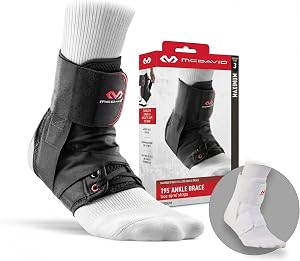
Ossur Exoform Ankle Brace
The subtalar joint primarily moves in inversion/eversion — the exact motions this rigid ankle brace controls. The Ossur Exoform’s semi-rigid shell limits the painful side-to-side motion at the subtalar joint while allowing relatively normal forward walking. Significantly reduces daily pain for patients with moderate subtalar arthritis who aren’t yet surgical candidates. Fits most lace-up shoes and boots.

Powerstep Pinnacle Plus Insoles
Extra cushioning in the heel and arch reduces the impact forces transmitted through the subtalar joint with every step. Powerstep Pinnacle Plus combines a semi-rigid arch shell with dual-layer EVA foam cushioning. The deep heel cup stabilizes the calcaneus and minimizes painful subtalar motion during walking. One of our most-recommended over-the-counter insoles for heel and hindfoot arthritis pain.
Getting to Our Office From Hartland
Our Howell office at 4330 E Grand River Ave, Howell, MI 48843 is about 10 minutes from Hartland via US-23 or M-59. We accept most major insurance. Call (810) 206-1402 or book online.
Get Your Ankle Arthritis Properly Evaluated
Balance Foot & Ankle · Serving Hartland & Michigan
Book Your Appointment →Ready to Get Relief?
Book online 24/7 in Howell & Bloomfield Township, MI
4.9★ | 1,200+ Reviews | 3,000+ Surgeries
Or call: (810) 206-1402
Doctor Answer
How does a podiatrist treat ankle arthritis without surgery?
Ankle arthritis is managed with a combination of anti-inflammatory medications, custom orthotics, ankle bracing, physical therapy, and corticosteroid or hyaluronic acid injections to reduce pain and preserve joint function. When conservative treatments are exhausted, surgical options include ankle arthroscopy, fusion, or total ankle replacement. Dr. Tom Biernacki at Balance Foot & Ankle provides comprehensive ankle arthritis treatment in Hartland, MI, tailoring a care plan to each patient’s activity level and goals.
What causes ankle arthritis and what are the symptoms?
Ankle arthritis most commonly develops from post-traumatic causes — prior fractures or severe ligament injuries that alter joint mechanics and accelerate cartilage wear. Primary osteoarthritis of the ankle is less common than in the hip or knee. Symptoms include deep aching pain, morning stiffness, joint swelling, and reduced range of motion. Our podiatrists in Hartland confirm the diagnosis with weight-bearing X-rays showing joint space narrowing.
How is ankle arthritis managed without surgery?
Conservative management includes custom ankle-foot orthoses (AFOs) or rigid ankle braces to limit painful motion, anti-inflammatory medications, activity modification, and corticosteroid or viscosupplement injections. Physical therapy maintains muscle strength and proprioception. Rocker-bottom footwear reduces ground reaction forces through the ankle during gait, significantly improving walking comfort.
What surgical options exist for ankle arthritis in Hartland?
Surgical options range from joint-preserving procedures (arthroscopic debridement for early-stage disease) to definitive reconstructive options. Total ankle replacement (TAR) preserves motion and is preferred for lower-demand patients. Ankle fusion (arthrodesis) eliminates motion but provides reliable pain relief and is durable in high-demand patients. The choice depends on patient age, activity level, bone quality, and deformity pattern.

Dr. Tom Biernacki, DPM is a board-certified foot & ankle surgeon (ABFAS & ABPM) at Balance Foot & Ankle Specialists in Southeast Michigan. With over a decade of clinical experience, he specializes in heel pain, bunions, diabetic foot care, sports injuries, and minimally invasive surgery. Dr. Biernacki is a member of the APMA and ACFAS, and his patient education content on MichiganFootDoctors.com and YouTube has made him one of the most-followed foot & ankle educators on YouTube.
More questions patients ask
What causes ankle arthritis and is it always from old injuries?
Post-traumatic arthritis from ankle fractures or chronic instability accounts for approximately 70% to 80% of ankle arthritis cases — significantly higher than hip or knee arthritis, which is usually primary (wear-related). Other causes include rheumatoid arthritis, gout, hemochromatosis, osteochondral lesions, and avascular necrosis. Post-traumatic ankle arthritis can develop 10 to 20 years after the original injury, explaining why patients often don't connect their current pain to a 'healed' old fracture or sprain.
What non-surgical treatments work best for ankle arthritis?
A rocker-bottom sole shoe or carbon fiber ankle foot orthosis (AFO) reduces ankle joint motion during walking and provides significant pain relief for many patients. Custom orthotics improve joint alignment and reduce focal load concentration. Corticosteroid or hyaluronic acid injections provide temporary but meaningful relief. Weight loss reduces joint load substantially. Activity modification — switching from high-impact to low-impact exercise — preserves function while protecting the joint. Many patients manage effectively for years with these combined measures before needing to consider surgical options.
What is the difference between ankle fusion and ankle replacement for arthritis?
Ankle fusion eliminates joint motion permanently, reliably eliminates pain, has lower revision rates, and tolerates higher activity levels. Ankle replacement preserves motion for a more natural gait but has a higher long-term failure rate requiring revision surgery. Fusion is preferred for younger, heavier, or more active patients and those with significant deformity or bone loss. Replacement is more appropriate for older patients (55+) with lower activity demands who prioritize natural movement. Both procedures require a comprehensive evaluation of alignment, bone quality, and surrounding joint health before selection.
Still have a question about coverage or cost? Book online and we will check your benefits before your visit: Book in Howell · Book in Bloomfield Township. Prefer to talk it through first? Call (810) 206-1402.