

Medically reviewed by Dr. Tom Biernacki, DPM
Board-certified podiatric surgeon | Balance Foot & Ankle, Howell & Bloomfield Township, MI
Last reviewed: May 2026
| Feature | Ankle Fusion (Arthrodesis) | Total Ankle Replacement (TAR) |
|---|---|---|
| Motion Preserved | No — joint is fused; ankle motion eliminated | Yes — average 20–25 degrees total arc preserved |
| Best Candidate | End-stage ankle arthritis; active laborers; BMI over 35; bone defect; young high-demand patients | End-stage ankle arthritis; lower demand; BMI under 35; adjacent joint arthritis present; older patients |
| Hardware | 3 large cannulated screws across tibiotalar joint (standard); blade plate for revision | Metal tibial and talar components; polyethylene insert |
| Success Rate | 85–95% pain relief; very predictable outcome | 85–90% at 10 years; implant survival 80–90% at 10 years in modern designs |
| Revision Rate | 5–15% for nonunion or malalignment; salvageable | 8–20% revision rate at 10 years; technically complex revision |
| Adjacent Joint Arthritis | Higher risk — increased subtalar and midfoot loading after fusion | Lower risk — preserved motion distributes load more normally |
| Recovery | NWB 6–8 weeks; full recovery 6–12 months | NWB 4–6 weeks; full recovery 4–6 months (faster) |
| Phase | Timeframe | Weight-Bearing | Goals |
|---|---|---|---|
| Immobilization | Weeks 0–2 | Non-weight-bearing; splint | Wound healing; swelling control; pain management |
| Protected NWB | Weeks 2–6 | Non-weight-bearing; short leg cast | Maintain fusion position; bone consolidation begins |
| Progressive Weight-Bearing | Weeks 6–12 | Partial to full in walking boot; CT at 6 weeks confirms union | Gait normalization; progressive loading |
| Shoe Transition + Rehab | Months 3–6 | Full in shoes with rocker sole; custom AFO if needed | Strengthen calf; balance; gait retraining |
| Full Activity | Months 6–12 | Full; activity return based on fusion confirmation | Return to work, recreational activity, and sport (low-impact) |
Medically Reviewed | Dr. Tom Biernacki, DPM | Board-Certified Podiatric Surgeon | Balance Foot & Ankle, Michigan

When Is Ankle Fusion Recommended?
Ankle fusion is considered when end-stage ankle arthritis causes severe, disabling pain that significantly limits function and has failed comprehensive conservative management for at least 6-12 months. Conservative care includes: NSAIDs, corticosteroid or viscosupplement injections, physical therapy, bracing, and activity modification. When these measures no longer provide meaningful relief, and the quality of life impact is significant, surgical consultation is appropriate. Common underlying causes: post-traumatic arthritis after ankle fracture, primary osteoarthritis, rheumatoid arthritis, and avascular necrosis of the talus.
Fusion vs Total Ankle Replacement
For end-stage ankle arthritis, two surgical options exist. Total ankle replacement (arthroplasty) preserves ankle motion and has improved dramatically in recent generations, but carries higher revision rates than knee or hip replacement (10-15% at 10 years in some series). Ankle fusion is more predictable and durable but eliminates plantarflexion/dorsiflexion. Patient age, activity level, bone quality, deformity pattern, and surgeon experience influence the choice. Younger, active patients may be better served by fusion (no implant to wear out). Older patients prioritizing motion preservation may prefer replacement. Both options should be discussed in detail with your surgeon.
The Surgical Procedure
Ankle fusion is performed under general or regional (spinal/epidural) anesthesia. The surgeon removes residual cartilage from the ankle joint surfaces, prepares the bone to maximize contact and fusion potential, positions the foot and ankle in optimal alignment (5-10 degrees of external rotation, neutral dorsiflexion), and fixes the fusion with screws, a nail, or plate/screw construct. Bone graft is often added to promote healing. Surgery typically takes 1-2 hours.
Recovery Timeline
Non-weight bearing in a cast or boot for 6 weeks, followed by progressive weight bearing as X-ray confirms healing. Most patients are walking without restriction at 3-4 months, with full functional recovery and final outcome at 6-12 months. Physical therapy in the weight-bearing phase accelerates functional recovery and strength gains. The fused ankle is permanent — once the bone grows together, the joint is stable indefinitely.
Dr. Tom's Product Recommendations
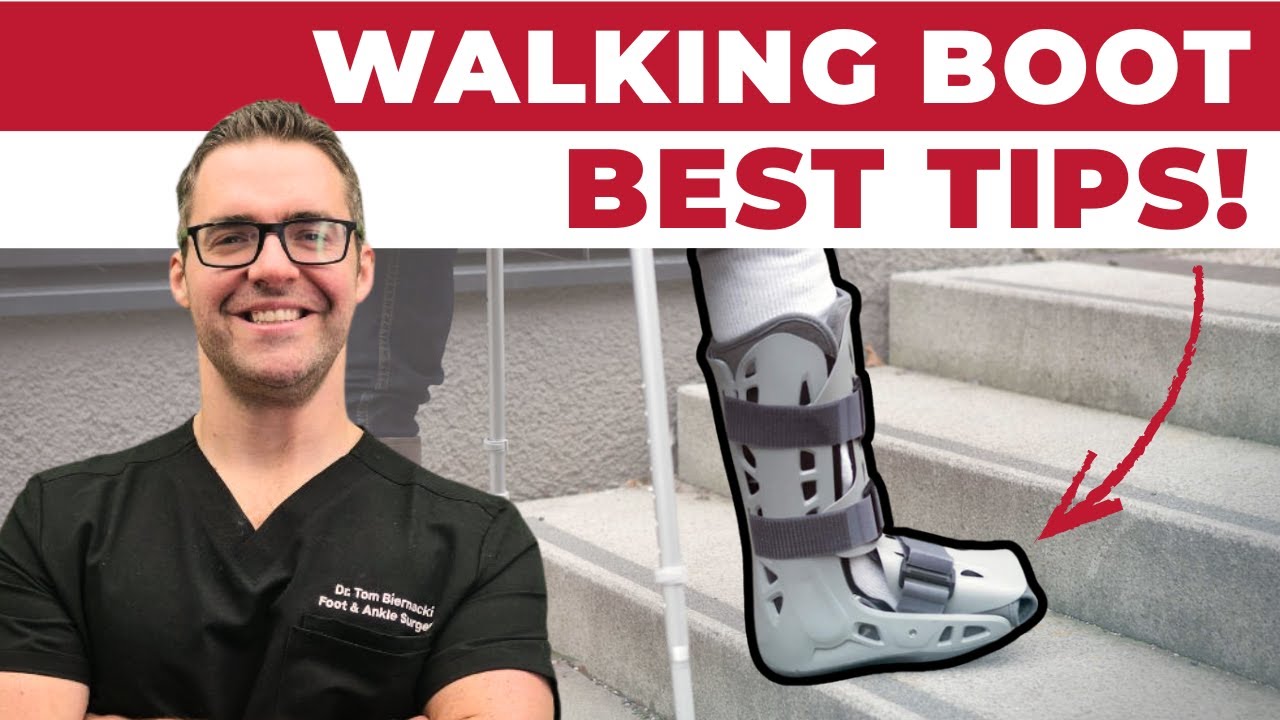
Aircast AirSelect Walker Boot
⭐ Highly Rated
Pneumatic walking boot with adjustable air compression — commonly used in pre- and post-operative ankle fusion rehabilitation and protected weight-bearing phases.
Post-surgical ankle rehabilitation, pre-operative pain management, protected weight bearing
Replacing surgeon-directed rehabilitation protocol — always follow your surgeon’s instructions
Disclosure: We earn a commission at no extra cost to you.
DASS Medical Compression Socks
⭐ Highly Rated
Graduated compression socks for DVT prevention and edema management in the post-surgical rehabilitation period. Important for ankle surgery recovery when cleared by surgeon.
Post-surgical edema management, DVT prevention in rehabilitation phase (surgeon-approved)
Acute post-operative wound management phase — follow surgeon’s wound care protocol first
Disclosure: We earn a commission at no extra cost to you.
✅ Pros / Benefits
- Ankle fusion provides highly reliable, durable pain relief for end-stage arthritis
- Most patients achieve pain-free walking and good function despite loss of ankle motion
- Adjacent joints compensate for lost ankle motion through normal adaptive mechanics
❌ Cons / Risks
- Loss of ankle plantarflexion/dorsiflexion motion is permanent
- Stair climbing, uneven terrain, and high-impact sports are more challenging after fusion
- Adjacent joint arthritis can develop over decades as subtalar and midfoot joints compensate
Dr. Tom Biernacki’s Recommendation
I have deep respect for the decision patients face when considering ankle fusion. Giving up ankle motion is significant, and I never minimize that. But when I see a patient who’s been miserable for years from severe ankle arthritis — barely walking, taking maximum-dose pain medications, unable to work — and then I see them at their 6-month follow-up walking comfortably without pain, I’m reminded why this surgery is worth discussing. The right patient, done well, with good rehabilitation: it can be genuinely life-changing.
— Dr. Tom Biernacki, DPM | Board-Certified Podiatric Surgeon | Balance Foot & Ankle
Frequently Asked Questions
Can you walk normally after ankle fusion?
Most patients walk with nearly normal gait after successful ankle fusion. A rocker-bottom shoe sole helps compensate for the lost ankle motion. Walking speed may be slightly reduced but pain-free ambulation is the expected outcome. Activities of daily living, including stairs and gentle hiking, are typically achievable.
Is ankle fusion permanent?
Yes — once the bones heal together, the fusion is permanent. Hardware (screws, plates) can be removed after fusion heals if it causes irritation, but the bone fusion itself is permanent. Unlike total ankle replacement, there is no implant that wears out or requires revision.
How does ankle fusion compare to total ankle replacement?
Fusion is more reliable and durable but sacrifices motion. Replacement preserves motion but has higher revision rates. The best choice depends on patient age, activity demands, bone quality, and deformity. Both should be discussed with an experienced foot and ankle surgeon before deciding.
Michigan Foot Pain? See Dr. Biernacki In Person
4.9★ rated | 1,200+ Reviews | 3,000+ Surgeries
Book online 24/7 · Howell & Bloomfield Township
In-Office Treatment at Balance Foot & Ankle
If home treatment isn’t providing relief for your ankle condition, our podiatry team at Balance Foot & Ankle can help with expert evaluations and advanced in-office care.
OrthoInfo – AAOS: Ankle Fusion
Ready to Get Relief?
Book online 24/7 in Howell & Bloomfield Township, MI
4.9★ | 1,200+ Reviews | 3,000+ Surgeries
Or call: (810) 206-1402

Dr. Tom Biernacki, DPM is a board-certified foot & ankle surgeon (ABFAS & ABPM) at Balance Foot & Ankle Specialists in Southeast Michigan. With over a decade of clinical experience, he specializes in heel pain, bunions, diabetic foot care, sports injuries, and minimally invasive surgery. Dr. Biernacki is a member of the APMA and ACFAS, and his patient education content on MichiganFootDoctors.com and YouTube has made him one of the most-followed foot & ankle educators on YouTube.