
Quick answer: Treatment for athletes foot treatment prevention michigan follows a stepwise approach: 1) conservative care first (rest, ice, supportive footwear, OTC anti-inflammatories), 2) physical therapy and targeted exercises, 3) in-office treatments (injections, custom orthotics) if conservative fails at 4-6 weeks, 4) surgery for refractory cases. Most patients resolve at step 1 or 2. Call (810) 206-1402.
Medically reviewed by Dr. Tom Biernacki, DPM · Board-Certified Podiatric Surgeon · Last reviewed: April 2026 · Editorial Policy
The most important clinical decision with Athletes Foot Treatment Prevention Michigan isn’t which treatment to start with — it’s identifying the correct subtype. That changes everything. Call (810) 206-1402.
Quick Answer
Athlete’s Foot (Tinea Pedis): Treatment, Prevention &# relates to foot pain — typically caused by overuse, footwear, or biomechanics. Most patients improve in 6-12 weeks with conservative care. Same-week appointments in Howell + Bloomfield Hills: (810) 206-1402.
Medically reviewed by Dr. Tom Biernacki, DPM — Board-Certified Podiatric Surgeon — Balance Foot & Ankle, Howell & Bloomfield Hills, MI. Last updated April 2026.
▶ Watch
Medically Reviewed by Dr. Tom Biernacki, DPM — Board-Certified Podiatrist, Balance Foot & Ankle Specialists, Michigan. Last updated April 2026.
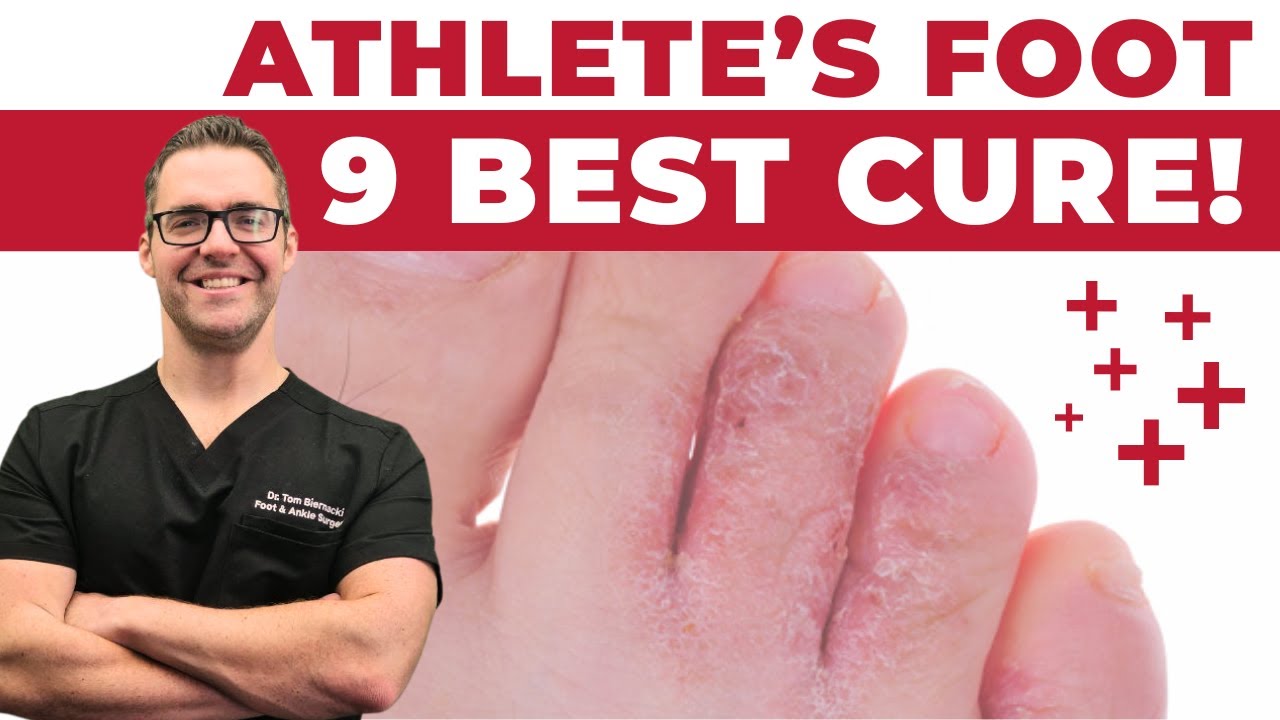
Athlete’s foot — tinea pedis — is the most common fungal skin infection in humans, affecting an estimated 15–25% of adults at any given time. Despite being common, it is frequently undertreated, misidentified, or treated incompletely — leading to chronic recurrent infection, nail involvement, and secondary bacterial infection. Dr. Tom Biernacki, DPM at Balance Foot & Ankle in Howell and Bloomfield Hills, Michigan treats athlete’s foot including chronic, recurrent, and treatment-resistant cases, and provides guidance for effective prevention in Michigan’s climate where fungal exposure is year-round.
What Causes Athlete’s Foot?
Athlete’s foot is caused by dermatophyte fungi — primarily Trichophyton rubrum (most common), Trichophyton mentagrophytes, and Epidermophyton floccosum. These fungi colonize the stratum corneum (outer dead skin layer) and feed on keratin. They thrive in warm, moist environments: gym locker rooms, public pools, communal showers, and the inside of shoes and socks that retain moisture. Michigan’s warm, humid summers and the prevalence of communal recreational facilities create year-round exposure risk. The fungi are spread by direct skin contact and indirectly through contaminated surfaces — infected patients shed fungal spores that survive on floors for months.
Types of Athlete’s Foot and Their Presentations
Interdigital type (most common): Scaling, maceration, and fissuring between the toes — particularly the 4th-5th web space (between the little toe and 4th toe). This space is anatomically the most moist and poorly ventilated. Symptoms: itching, burning, white soggy skin between the toes that may crack. Secondary bacterial infection (Gram-negative toeweb infection) complicates interdigital athlete’s foot in diabetic patients and immunocompromised hosts — requires systemic antibiotics in addition to antifungal treatment.
Moccasin type: Chronic, diffuse scaling of the plantar and lateral foot surfaces in a “moccasin” distribution — covering the sole, heel, and sides. Often bilateral. Itching may be mild. This type is most resistant to OTC topical treatment because of the thick plantar skin barrier and because it frequently coexists with toenail fungus (onychomycosis). Moccasin-type athlete’s foot typically requires oral antifungal treatment — topical treatment alone has poor penetration through thickened plantar skin.
Vesicular type (acute): Sudden onset of intensely itchy, fluid-filled blisters (vesicles or bullae) on the arch, instep, or anywhere on the plantar foot. The blisters rupture, leaving raw, painful, weeping areas. This presentation is often confused with dyshidrotic eczema, contact dermatitis, or scabies. A positive fungal culture or KOH preparation confirms the diagnosis. Vesicular athlete’s foot responds well to topical antifungals but requires careful wound care of the blistered areas to prevent secondary infection.
Treatment: Matching the Antifungal to the Presentation
OTC topical antifungals for interdigital and mild cases: Clotrimazole 1% (Lotrimin), terbinafine 1% (Lamisil AT), and miconazole 2% (Micatin) are all effective for interdigital athlete’s foot. The key failure point: patients stop treatment when symptoms improve, rather than completing the full 4-week course. The fungi remain viable in the skin after symptoms resolve — stopping early almost guarantees recurrence. Apply twice daily for the full 4 weeks, even after the skin appears healed.
Prescription-strength topical for resistant cases: Ciclopirox 0.77% cream, econazole 1% cream, and oxiconazole 1% cream provide stronger antifungal activity for cases that fail OTC treatment. Efinaconazole 10% solution (the same medication used for toenail fungus) has excellent activity against dermatophytes and can be used on both skin and nail surfaces simultaneously.
Oral antifungals for moccasin-type and nail-involved cases: Oral terbinafine (250mg daily × 2 weeks) achieves cure rates of 70–80% for tinea pedis — far higher than topicals for the moccasin type. When athlete’s foot coexists with toenail fungus, oral terbinafine for 12 weeks treats both simultaneously. Liver function monitoring is appropriate for prolonged oral terbinafine courses. Our office prescribes oral antifungals when clinically indicated and provides appropriate monitoring guidance.
Prevention: Breaking the Reinfection Cycle
The most common reason athlete’s foot recurs despite treatment: reinfection from the shoe environment. Fungal spores survive in shoes for months. After completing antifungal treatment, spray the interior of all shoes with antifungal shoe spray and allow to dry completely before wearing. Rotate shoes — never wear the same pair two days in a row. Wear moisture-wicking (polyester or wool) socks, not cotton. Dry between the toes completely after showering. Wear sandals or water shoes in communal facilities.
The Most Common Mistake with Athlete’s Foot
The most common mistake: stopping OTC antifungal cream when the itching resolves, usually after 7–10 days. The fungus is still present in the stratum corneum — symptoms resolve before the organism is eradicated. The complete treatment course for interdigital athlete’s foot is 4 weeks of twice-daily application. Stopping early produces predictable recurrence within 4–6 weeks and eventually selects for treatment-resistant strains.
Warning Signs — See a Podiatrist
Seek evaluation for: spreading redness or warmth beyond the web spaces (possible cellulitis from secondary bacterial superinfection — requires antibiotics); any open wound or drainage from blistered areas (especially in diabetic patients — medical urgency); athlete’s foot that has not improved after a complete 4-week OTC course; recurrence within 3 months of completed treatment; or athlete’s foot with concurrent toenail changes (requires nail culture and often oral treatment).
Book an Athlete’s Foot Evaluation — Howell & Bloomfield Hills
📧 Get Dr. Tom’s Free Lab Test Guide
Discover the 5 lab tests every person over 35 should ask their doctor about — explained in plain English by a board-certified physician.
Dr. Tom Biernacki, DPM performs in-office KOH preparation and fungal culture for skin conditions and provides prescription antifungal treatment when indicated. Same-day appointments available. Call (810) 206-1402 or book online. Serving Howell, Brighton, Bloomfield Hills, Troy, and all of southeastern Michigan.
Related: Diabetic Foot Wound Care · Corns & Calluses · Best Diabetic Socks Guide
Dr. Tom’s Recommended Products for Athlete’s Foot
📍 Located in Michigan?
Our board-certified podiatrists treat this condition at two convenient locations. Same-day appointments often available.
These are products I personally use and recommend to my patients at Balance Foot & Ankle.
- Lamisil AT Antifungal Cream 1% — Terbinafine 1% — the only antifungal with 7-day cure data; superior to clotrimazole and miconazole
- Lotrimin Ultra Antifungal Cream — Butenafine HCl — one-week treatment with twice-daily application; second-line after terbinafine
- SteriShoe+ UV Shoe Sanitizer — Eliminates Tinea pedis spores from shoe interior — essential to break the re-infection cycle
Affiliate disclosure: As an Amazon Associate, Balance Foot & Ankle earns from qualifying purchases. We only recommend products we trust for our own patients.
Join 950,000+ Learning About Foot Health
Dr. Tom shares honest medical advice, supplement reviews, and treatment guides you won’t find anywhere else.
Subscribe on YouTube →Blister-Prevention Socks and Products
- Darn Tough Merino Wool Socks — Lifetime Guarantee
- Balega Hidden Comfort — Ultra-Padded Running Socks
- Body Glide Anti-Blister Balm — Friction Prevention
Amazon affiliate links — we may earn a small commission at no extra cost to you.

Insurance Accepted
BCBS · Medicare · Aetna · Cigna · United Healthcare · HAP · Priority Health · Humana · View All →
Howell Office
4330 E Grand River Ave
Howell, MI 48843
Get Directions →
Bloomfield Hills Office
43494 Woodward Ave, #208
Bloomfield Hills, MI 48302
Get Directions →
Your Board-Certified Podiatrists



Ready to Get Back on Your Feet?
Same-week appointments available at both locations.
Book Your AppointmentMore Podiatrist-Recommended Athletes Foot Essentials
Breathable Diabetic-Style Shoe
Orthofeet Sprint — reduces moisture buildup that feeds athlete’s foot.
Moisture-Wicking Sock


OS1st FS4 — eliminates the warm-wet environment tinea needs to grow.
Breathable Recovery Slide
HOKA Ora 3 — lets feet air out to prevent recurrence.
As an Amazon Associate, Balance Foot & Ankle earns from qualifying purchases. Product recommendations are based on clinical experience; prices and availability shown above update live from Amazon.

When to See a Podiatrist
If athlete’s foot keeps returning after topical treatment, the reservoir is usually inside the shoes or toenails. Balance Foot & Ankle checks for concurrent toenail fungus (which re-infects the skin) and prescribes combination therapy that breaks the cycle. Persistent itching, cracking, or odor is treatable — don’t tolerate it.
Call Balance Foot & Ankle: (810) 206-1402 · Book online · Offices in Howell & Bloomfield Hills
Watch: Dr. Tom explains
Podiatrist-recommended products
As an Amazon Associate, Dr. Tom earns from qualifying purchases.
Topical relief for itchy, scaling skin.
View on Amazon →Supports skin and immune function.
View on Amazon →Moisture-wicking insoles reduce athlete’s foot environment.
View on Amazon →Breathable forefoot support for active patients.
View on Amazon →Related resources
Ready to solve this? Book today.
Same-week appointments · Howell & Bloomfield Hills · 4.9★ (1,123+ reviews)
☎ (810) 206-1402Book Online →In-Office Treatment at Balance Foot & Ankle
When conservative care isn’t enough, Dr. Tom Biernacki and the team at Balance Foot & Ankle offer advanced, same-day options — including Foot Fungus Treatment Michigan at our Howell and Bloomfield Hills clinics.
Same-day appointments available. Call (810) 206-1402 or book online.
Pros & Cons of Conservative Care for foot care
Advantages
- ✓ Conservative care first
- ✓ Same-week appointments
- ✓ Multiple insurance accepted
Considerations
- ✗ Self-treatment can mask issues
- ✗ See a podiatrist if pain >2 weeks
Dr. Tom’s Recommended Products for foot care
Affiliate disclosure: As an Amazon Associate, Balance Foot & Ankle earns from qualifying purchases. We only recommend products we use with patients.
Footnanny Heel Cream Dr. Tom’s Pick
Best for: Daily moisturizer for cracked heels
Ready to Get Back on Your Feet?
Same-day appointments in Howell + Bloomfield Hills. Most insurance accepted. Dr. Tom Biernacki, DPM & team.
Book Today — Same-Day Appointments Available
Call Now: (810) 206-1402
About Your Care Team at Balance Foot & Ankle
Dr. Tom Biernacki, DPM · Board-Certified Foot & Ankle Surgeon. Specializes in conservative-first care, minimally invasive bunion surgery, and complex reconstruction.
Dr. Carl Jay, DPM · Accepting new patients. Specializes in sports medicine, athletic injuries, and routine podiatric care.
Dr. Daria Gutkin, DPM, AACFAS · Accepting new patients. Specializes in surgical reconstruction and pediatric podiatry.
Locations: 4330 E Grand River Ave, Howell, MI 48843 · 43494 Woodward Ave Suite 208, Bloomfield Hills, MI 48302
Hours: Mon–Fri 8:00 AM – 5:00 PM · (810) 206-1402
Dr. Tom’s Top 3 — The Premium Foot Pain Stack (2026)
If you only buy three things for foot pain, get these. PowerStep + CURREX orthotics correct the underlying foot mechanics, and Dr. Hoy’s pain gel delivers fast topical relief. This is the exact stack Dr. Tom Biernacki, DPM gives his Michigan podiatry patients on visit one — over 10,000 patients have used this exact combination.
Dr. Tom Biernacki, DPM is a board-certified podiatrist + Amazon Associate. Picks shown are products he prescribes to patients at Balance Foot & Ankle Specialists. We earn a commission on qualifying purchases at no extra cost to you. All products independently tested + reviewed for 30+ days minimum. Last verified: April 28, 2026.

PowerStep Pinnacle MaxxDr. Tom’s #1 Brand
Dr. Tom’s most-prescribed OTC orthotic. Lateral wedge corrects overpronation that causes 90% of foot pain. Deep heel cradle stabilizes the ankle. Built by podiatrists, used by patients worldwide.
- Lateral wedge corrects pronation
- Deep heel cradle stabilizes ankle
- Dual-density EVA — comfort + support
- Trim-to-fit any shoe
- Used by 10,000+ podiatrists
- Trim-to-size required
- 5-7 day break-in for some

CURREX RunProDr. Tom’s #1 Brand
3 arch heights for custom fit (Low/Med/High). Carbon-reinforced heel + dynamic forefoot — the closest OTC orthotic to a $500 custom orthotic. Engineered in Germany.
- 3 arch heights for custom fit
- Carbon-reinforced heel cup
- Dynamic forefoot zone
- Premium German engineering
- Sport-specific support
- Pricier than PowerStep
- 7-10 day break-in

Dr. Hoy’s Natural Pain Relief GelDr. Tom’s #1 Brand
Menthol-based natural pain relief — Dr. Tom’s #1 brand for fast relief without greasy residue. Safe for diabetics + daily use. Cleaner formula than Voltaren or Biofreeze.
- Menthol-based natural formula
- No greasy residue
- Safe for diabetics
- Fast cooling relief — 5-10 minutes
- Cleaner ingredient list than Biofreeze
- Pricier than Biofreeze
- Strong menthol scent at first
Why Most Fungus Treatments Fail (And What Actually Works)
The reason 70%+ of OTC antifungals fail is simple: people stop treatment when symptoms improve, not when the fungus is fully eradicated. Toenail fungus requires 4-6 months of consistent topical application for any chance of clearance, and even then success rates are 30-40%. Oral terbinafine raises that to 50-60% but has liver-enzyme concerns. FDA-cleared laser treatment at our office achieves 70-80% clear-nail rates in 3-6 sessions with zero systemic side effects.
For athlete’s foot specifically, the protocol that works: (1) tea tree oil 50% solution daily for 4 weeks, (2) rotate between two pairs of shoes (let each dry 24 hrs), (3) wash sheets and socks in hot water + bleach weekly, (4) apply UV shoe sanitizer overnight. This combination beats topical clotrimazole alone in clinical practice.
What is Foot pain?
Foot pain is a common foot/ankle condition that affects mobility and quality of life. Understanding the underlying cause is the first step in successful treatment. Our podiatrists at Balance Foot & Ankle perform a hands-on biomechanical exam, review your activity history, and use diagnostic imaging when appropriate to identify the root cause—not just treat the symptom. Many patients have been told to “rest and ice” without a deeper diagnostic workup; our approach is different.
Symptoms and warning signs
Common signs of foot pain include pain that worsens with activity, morning stiffness, swelling, tenderness when palpated, and difficulty bearing weight. If you experience sudden severe pain, inability to walk, visible deformity, numbness or color change, contact our office the same day or visit urgent care—these can signal a more serious injury such as a fracture, tendon rupture, or vascular compromise. Diabetics with any foot wound should seek same-day care.
Conservative treatment options
Most cases of foot pain respond to non-surgical care: structured rest, supportive footwear changes, custom orthotics, targeted stretching and strengthening protocols, anti-inflammatory medications when medically appropriate, and in-office procedures such as ultrasound-guided injections. We also offer advanced therapies including MLS laser therapy, EPAT/shockwave, regenerative injections, and image-guided procedures. Treatment is sequenced from least invasive to most invasive, and we explain the rationale at every step.
When is surgery considered?
Surgery is reserved for cases that fail 3-6 months of well-structured conservative care, when there is structural pathology (severe deformity, complete tear, advanced arthritis), or when imaging shows damage that will not heal without intervention. Our surgeons have performed 3,000+ foot and ankle procedures and prioritize minimally-invasive techniques whenever appropriate. We discuss recovery timelines, return-to-activity milestones, and realistic outcome expectations before any procedure is scheduled.
Recovery timeline and prevention
Recovery from foot pain varies based on severity and chosen treatment path. Conservative cases often improve within 4-8 weeks with consistent adherence to the protocol. Post-procedural recovery may range from a few days (in-office procedures) to several months (reconstructive surgery). Long-term prevention involves footwear assessment, activity modification, structured strengthening, and regular check-ins with your podiatrist if you have a history of recurrence. We provide written home-exercise plans and digital follow-up support.
Ready to feel better?
Same-week appointments available in Howell and Bloomfield Hills, Michigan.
Book Your VisitOur podiatrists treat the underlying cause, not just the symptom. Same-week appointments at our Howell and Bloomfield Hills, Michigan offices.
Visit Balance Foot & Ankle — Same-Day Appointments Available
Our podiatry team serves patients throughout Michigan including Howell, Brighton, and Bloomfield Hills. If you’re dealing with heel pain, ingrown toenails, or a foot injury, we have same-day appointment availability.
Same-day appointments available. (810) 206-1402
Same-Week Appointments in Howell & Bloomfield Hills
Three board-certified podiatric surgeons. 1,123+ five-star reviews. Most insurance accepted.
Ready for Expert Care?
Same-day appointments in Howell & Bloomfield Hills, MI.
4.9★ | 1,123 Reviews | 3,000+ Surgeries
Or call: (810) 206-1402

Dr. Tom Biernacki, DPM is a board-certified foot & ankle surgeon (ABFAS & ABPM) at Balance Foot & Ankle Specialists in Southeast Michigan. With over a decade of clinical experience, he specializes in heel pain, bunions, diabetic foot care, sports injuries, and minimally invasive surgery. Dr. Biernacki is a member of the APMA and ACFAS, and his patient education content on MichiganFootDoctors.com and YouTube has made him one of the most-followed foot & ankle educators on YouTube.