

Quick answer: Diabetic Foot Wound Care Guide Michigan is a common foot/ankle topic that affects many patients. Effective treatment starts with a targeted diagnosis, conservative-first treatment, and escalation only when needed. We treat this regularly at our Howell and Bloomfield Township practices. Book online, or call (810) 206-1402.
Medically reviewed by Dr. Tom Biernacki, DPM · Board-Certified Podiatric Surgeon · Last reviewed: April 2026 · Editorial Policy
The most important clinical decision with Diabetic Foot Wound Care Guide Michigan isn’t which treatment to start with — it’s identifying the correct subtype. That changes everything. Call (810) 206-1402.
Quick Answer
Diabetic foot wound care combines pressure relief, appropriate dressings and infection control. Any wound on a diabetic foot warrants professional assessment rather than self-treatment. Same-week appointments in Howell + Bloomfield Township: (810) 206-1402.

Medically reviewed by Dr. Tom Biernacki, DPM — Board-Certified Podiatric Surgeon — Balance Foot & Ankle, Howell & Bloomfield Township, MI. Last updated April 2026.
▶ Watch
👟 Dr. Tom Also Recommends
Podiatrist Recommended Shoes 2026: Dr. Tom’s Top Picks for Every Condition
The right footwear can make or break your recovery. Dr. Tom’s complete guide to the best shoes for plantar fasciitis, flat feet, neuropathy, bunions & more — with clinical picks for every foot type.
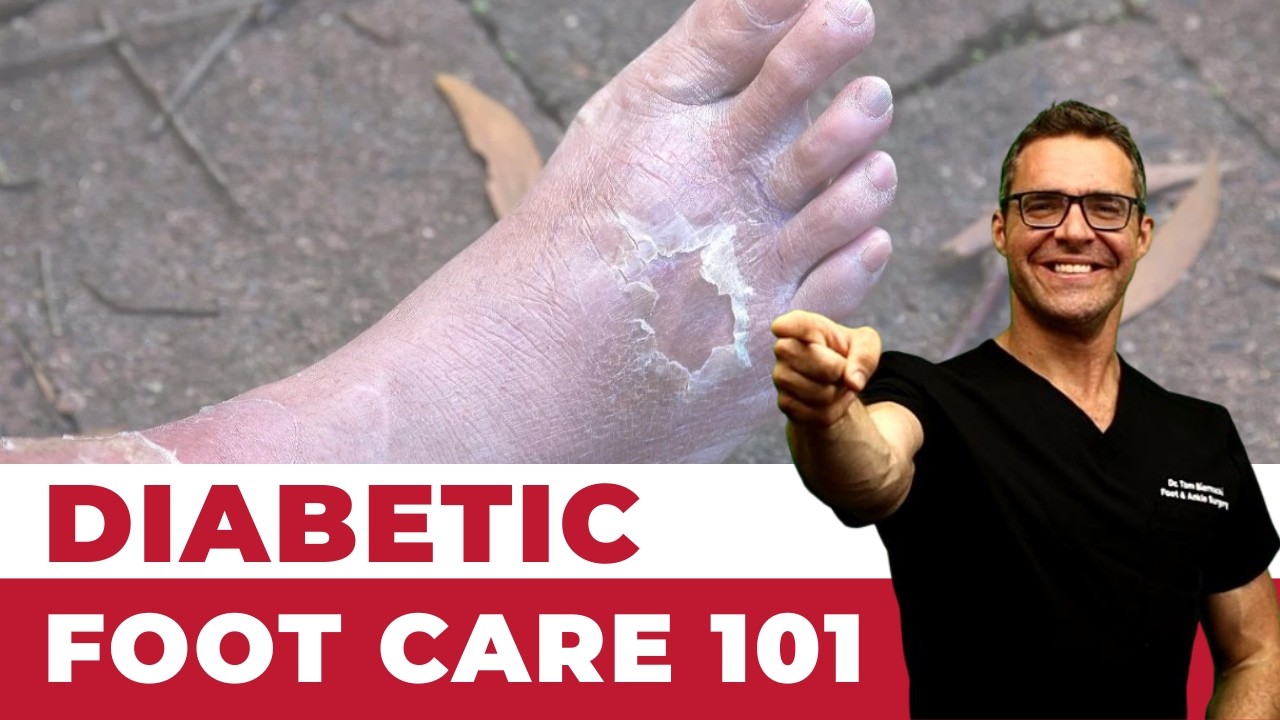
See Dr. Tom’s Top Shoe Picks →Diabetic foot wounds — ulcers, open sores, and blisters on the feet of diabetic patients — are the most common cause of non-traumatic lower limb amputation in the United States. Approximately 15% of diabetic patients will develop a foot ulcer during their lifetime, and 85% of diabetes-related amputations are preceded by a foot ulcer. The mechanism is the deadly combination of peripheral neuropathy (cannot feel pain), peripheral artery disease (poor wound healing), and susceptibility to infection. At Balance Foot & Ankle in Howell and Bloomfield Township, Michigan, Dr. Tom Biernacki, DPM provides urgent diabetic wound evaluation and comprehensive wound care.
Quick Answer: Diabetic Foot Wound Care
Any open wound on a diabetic foot requires same-day or next-day evaluation by a podiatrist — do not wait to see if it heals on its own. Clean the wound with saline or clean water, cover with a non-adherent dressing (not tight tape), keep weight off the foot if possible, and call immediately. A wound that is not at least 50% smaller within 2 weeks of appropriate treatment is at high risk for osteomyelitis (bone infection) and amputation. Red streaking up the leg, fever, or foul odor from the wound is a hospital emergency — call 911 or go to the ER immediately.
Why Diabetic Feet Are Uniquely Vulnerable
Three mechanisms combine to make diabetic foot wounds life-threatening:
- Peripheral neuropathy — Damage to sensory nerves from chronic hyperglycemia removes the pain warning signal. A diabetic patient may walk for days on a developing wound without feeling it. By the time the wound is noticed (often by a family member or at a routine appointment), it may already be infected or have eroded to bone.
- Peripheral artery disease (PAD) — Up to 50% of diabetic patients over 50 have significant PAD. Reduced blood flow to the extremities impairs the immune response, limits antibiotic delivery to infected tissue, and dramatically slows wound healing. Even minor wounds may not heal if perfusion is insufficient.
- Immune dysfunction — High blood glucose impairs neutrophil function (the primary cell that fights bacterial infection), making diabetic patients significantly more susceptible to deep tissue infections and osteomyelitis from what would be superficial wounds in non-diabetic patients.
Classifying the Wound: The Wagner Scale
- Grade 0 — Intact skin; risk factors present (pressure point, corn, callus, deformity); preventive treatment
- Grade 1 — Superficial ulcer; involves skin only; no infection; managed with off-loading and dressing changes
- Grade 2 — Deep ulcer; involves tendon or joint capsule; requires urgent evaluation; often requires debridement
- Grade 3 — Deep ulcer with osteomyelitis (bone infection) or abscess; requires hospital-level treatment; IV antibiotics; surgical debridement
- Grade 4 — Gangrene of part of the forefoot; surgical resection required
- Grade 5 — Gangrene of the entire foot; major amputation required
What to Do When You Find a Wound
Immediate steps:
- Clean with saline or clean water — do not use hydrogen peroxide or iodine, which damage the wound bed
- Apply a non-adherent dressing (Telfa, foam dressing) — do not use tight tape or waterproof coverings that trap moisture
- Stay off the foot as much as possible — a total contact cast or removable walker boot dramatically accelerates healing by reducing wound stress
- Call Balance Foot & Ankle immediately: (810) 206-1402 — same-day evaluation for diabetic wounds
- Go to the ER immediately if: red streaking up the leg (spreading cellulitis), fever, rigors (chills with shaking), foul odor with pus, or the wound has turned dark/black (tissue death)
Professional Wound Care: What Happens at Your Appointment
At Balance Foot & Ankle, diabetic wound evaluation includes: assessment of wound depth and extent (probing to bone if deep), vascular assessment (ankle-brachial index and/or toe pressure to determine if blood flow is adequate for healing), X-ray to screen for osteomyelitis and foreign body, and culture of wound bed to identify causative bacteria for targeted antibiotic selection. Wound care typically includes sharp debridement (removal of dead, necrotic tissue), specialized dressings, and total contact casting or removable walker boot for off-loading.
Off-Loading: The Most Important Treatment
Off-loading — removing weight from the wound area — is the single most important treatment for diabetic foot ulcers, regardless of wound care products used. A wound under continued weight-bearing stress cannot close because each step traumatizes the fragile healing tissue. Total contact casting (TCC) is the gold standard for plantar forefoot and heel ulcers, achieving healing rates of 70–90% within 6–8 weeks when compliance is maintained. Removable walker boots are an alternative but compliance must be monitored — patients who remove the boot at night defeat the purpose.
Osteomyelitis: When the Bone Gets Infected
Osteomyelitis (bone infection) complicates approximately 20% of diabetic foot ulcers and is the primary driver of amputation. It should be suspected in any wound that probes to bone on examination (the “probe-to-bone” test has 89% positive predictive value for osteomyelitis), any wound over a bony prominence, and any wound not healing after 2 weeks of appropriate treatment. MRI is the most sensitive imaging study for osteomyelitis. Treatment requires 6 weeks of IV or highly bioavailable oral antibiotics; infected bone must sometimes be surgically removed (resection) to achieve cure.
Prevention: Stopping the First Wound
- Daily foot inspection — Check all surfaces including between toes using a mirror; have a family member inspect areas you cannot see clearly
- Appropriate footwear — Extra-depth diabetic shoes with custom accommodative orthotics, Medicare-covered annually
- Never go barefoot — Diabetic patients should not walk barefoot at any time, including indoors
- Nail and skin care — Professional nail trimming; moisturize feet daily (not between toes) to prevent skin cracking
- Annual podiatry examination — Monofilament neuropathy testing, vascular assessment, and pressure point identification
- Blood sugar control — A1C <7% significantly reduces neuropathy progression; each 1% A1C reduction lowers microvascular complication risk by 25–35%
Diabetic Wound Care in Michigan — Same-Day Available
📧 Get Dr. Tom’s Free Lab Test Guide
Discover the 5 lab tests every person over 35 should ask their doctor about — explained in plain English by a board-certified physician.
Dr. Tom Biernacki, DPM at Balance Foot & Ankle provides urgent diabetic wound evaluation and comprehensive wound management at both our Howell (4330 E Grand River Ave) and Bloomfield Township (43494 Woodward Ave #208) locations. Do not wait — call (810) 206-1402 for same-day evaluation or book online.
Related Guides
- Diabetes, A1C & Foot Complications Guide
- Charcot Foot — Diabetic Emergency
- Claw Toe Deformity — Diabetic Risk Guide
- Compression Stockings Guide
- Custom Orthotics in Michigan
Dr. Tom’s Recommended Products for Diabetic Foot Care
📍 Located in Michigan?
Our board-certified podiatrists treat this condition at two convenient locations. Same-day appointments often available.
These are products I personally use and recommend to my patients at Balance Foot & Ankle.
- Dr. Comfort Men’s Paradise Diabetic Shoe — Medicare-covered diabetic shoe with seamless interior — eliminates pressure points that cause diabetic ulcers
- Foundation Wellness DASS Diabetic Socks (Levanta) — non-binding, seamless toe, moisture-wicking diabetic socks protecting neuropathic feet
- Derma Sciences Bordered Gauze Dressings — Non-adherent wound dressing ideal for diabetic foot wound management between podiatry visits
Affiliate disclosure: As an Amazon Associate, Balance Foot & Ankle earns from qualifying purchases. We only recommend products we trust for our own patients.
🧦 Dr. Tom’s Pick: DASS Medical Compression Socks
Medical-grade 15-20 mmHg graduated compression. DASS socks are the brand I recommend most to patients with swollen feet, poor circulation, and post-surgery recovery. Graduated compression means tightest at the ankle, gradually releasing up the leg — promoting upward venous blood flow.
View DASS Compression Socks on Amazon →Affiliate disclosure: As an Amazon Associate, Balance Foot & Ankle earns from qualifying purchases.
Join 950,000+ Learning About Foot Health
Dr. Tom shares honest medical advice, supplement reviews, and treatment guides you won’t find anywhere else.
Subscribe on YouTube →Blister-Prevention Socks and Products
- Darn Tough Merino Wool Socks — Lifetime Guarantee
- Balega Hidden Comfort — Ultra-Padded Running Socks
- Body Glide Anti-Blister Balm — Friction Prevention
Amazon affiliate links — we may earn a small commission at no extra cost to you.

Insurance Accepted
BCBS · Medicare · Aetna · Cigna · United Healthcare · HAP · Priority Health · Humana · View All →
Howell Office
4330 E Grand River Ave
Howell, MI 48843
Get Directions →
Bloomfield Township Office
43494 Woodward Ave, #208
Bloomfield Township, MI 48302
Get Directions →
Your Board-Certified Podiatrists



Ready to Get Back on Your Feet?
Same-week appointments available at both locations.
Book Your AppointmentIn Our Clinic
Diabetic neuropathy patients in our clinic often don’t realize they have it until we put a 10-gram Semmes-Weinstein monofilament to the plantar foot and they can’t feel it. Many arrive for an unrelated concern — an ingrown toenail, a callus — and we catch the neuropathy on screening. The conversation then shifts: we need to discuss daily foot inspections, appropriate footwear, the urgency of any blister or open area, and the timing of vascular referral if pulses are diminished. Comprehensive diabetic foot exams are covered by Medicare annually. If you have diabetes, we want to see you once a year even if nothing hurts.
In-Office Treatment at Balance Foot & Ankle
When conservative care isn’t enough, Dr. Tom Biernacki and the team at Balance Foot & Ankle offer advanced, same-day options — including Diabetic Foot Care Michigan at our Howell and Bloomfield Township clinics.
Same-day appointments available. Call (810) 206-1402 or book online.
Pros & Cons of Conservative Care for diabetic foot care
Advantages
- ✓ Daily inspection prevents amputation
- ✓ Most insurance covers DME
- ✓ Custom orthotics help
Considerations
- ✗ Daily commitment required
- ✗ Slow wound healing
- ✗ Charcot risk if neuropathy
Dr. Tom’s Recommended Products for diabetic foot care
Affiliate disclosure: As an Amazon Associate, Balance Foot & Ankle earns from qualifying purchases. We only recommend products we use with patients.
Drew Moonwalker Diabetic Shoe Dr. Tom’s Pick
Best for: Medicare-covered diabetic footwear
Diabetic Compression Socks Dr. Tom’s Pick
Best for: Daily protection + circulation
Ready to Get Back on Your Feet?
Same-day appointments in Howell + Bloomfield Township. Most insurance accepted. Dr. Tom Biernacki, DPM & team.
Book Today — Same-Day Appointments Available
Call Now: (810) 206-1402
About Your Care Team at Balance Foot & Ankle
Dr. Tom Biernacki, DPM · Board-Certified Foot & Ankle Surgeon. Specializes in conservative-first care, minimally invasive bunion surgery, and complex reconstruction.
Dr. Carl Jay, DPM · Accepting new patients. Specializes in sports medicine, athletic injuries, and routine podiatric care.
Dr. Daria Gutkin, DPM, AACFAS · Accepting new patients. Specializes in surgical reconstruction and pediatric podiatry.
Locations: 4330 E Grand River Ave, Howell, MI 48843 · 43494 Woodward Ave Suite 208, Bloomfield Township, MI 48302
Hours: Mon–Fri 8:00 AM – 5:00 PM · (810) 206-1402
In-Office Treatment at Balance Foot & Ankle
If home treatment isn’t providing relief for your diabetic foot, our podiatry team at Balance Foot & Ankle can help with same-day evaluations and advanced in-office care.
Same-day appointments available. (810) 206-1402
Frequently Asked Questions
When should I see a podiatrist?
If symptoms persist past 2 weeks, affect your normal activity, or are accompanied by red-flag symptoms (warmth, redness, swelling, inability to bear weight).
What does treatment cost?
Most diagnostic visits and conservative treatments are covered by Medicare and major insurers. Out-of-pocket costs vary by your specific plan.
How quickly can I get an appointment?
Most non-urgent cases see us within 5 business days. Urgent cases (sudden pain, possible fracture) typically same or next business day.
Our podiatrists treat the underlying cause, not just the symptom. Same-week appointments at our Howell and Bloomfield Township, Michigan offices.
Ready for Expert Care?
Same-day appointments in Howell & Bloomfield Township, MI.
4.9★ | 1,123 Reviews | 3,000+ Surgeries
Or call: (810) 206-1402

Dr. Tom Biernacki, DPM is a board-certified foot & ankle surgeon (ABFAS & ABPM) at Balance Foot & Ankle Specialists in Southeast Michigan. With over a decade of clinical experience, he specializes in heel pain, bunions, diabetic foot care, sports injuries, and minimally invasive surgery. Dr. Biernacki is a member of the APMA and ACFAS, and his patient education content on MichiganFootDoctors.com and YouTube has made him one of the most-followed foot & ankle educators on YouTube.
More questions patients ask
How often should diabetics check their feet?
Diabetic patients should perform daily self-examinations of both feet, checking for cuts, blisters, redness, swelling, calluses, and temperature changes. Professional diabetic foot exams should occur at least annually, or every 3-6 months for patients with neuropathy, peripheral artery disease, or history of foot ulcers. Dr. Biernacki provides comprehensive diabetic foot care programs.
Why do diabetics have foot problems?
Diabetes causes peripheral neuropathy (nerve damage reducing sensation), peripheral artery disease (reduced blood flow), and impaired immune function. This combination means injuries go unnoticed, heal slowly, and are prone to infection. Approximately 15% of diabetics will develop a foot ulcer, and diabetic foot complications are the leading cause of non-traumatic amputation. Prevention through regular podiatric care is essential.
What are the signs of diabetic neuropathy in feet?
Early signs include tingling, burning, or numbness starting in the toes and progressing upward. Other symptoms include sensitivity to touch, muscle weakness, balance problems, and loss of reflexes. If you experience any of these symptoms, schedule an evaluation with Dr. Biernacki at 810-206-1402 for nerve conduction testing and a comprehensive neuropathy management plan.
Still have a question about coverage or cost? Book online and we will check your benefits before your visit: Book in Howell · Book in Bloomfield Township. Prefer to talk it through first? Call (810) 206-1402.