
Quick answer: Augmented Brostrom Ankle Ligament Reconstruction Allograft is a common foot/ankle topic that affects many patients. The 2026 evidence-based approach combines proper diagnosis, conservative-first treatment, and escalation only when needed. We treat this regularly at our Howell and Bloomfield Township practices. Call (810) 206-1402.

The most important clinical decision with Augmented Brostrom Ankle Ligament Reconstruction Allograft isn’t which treatment to start with — it’s which subtype or underlying cause you actually have. That distinction changes everything. Call us: (810) 206-1402
What Is the Augmented Broström Procedure?
Medically reviewed by Dr. Tom Biernacki, DPM
Board-certified podiatric surgeon | Balance Foot & Ankle
Last reviewed: May 2026
If you have chronic lateral ankle instability — the ankle that keeps “giving out” — and standard physical therapy and bracing haven’t given you the stability you need, the Broström-Gould procedure is the gold standard surgical fix. But for some patients, the native ligament tissue is too attenuated, degenerated, or thin to provide adequate repair on its own. That’s where the augmented Broström comes in: the same precise native ligament repair, reinforced with an allograft (donor tissue) or synthetic ligament tape to provide additional structural strength.
Augmentation is most appropriate for patients with hypermobility (Ehlers-Danlos syndrome, generalized ligamentous laxity), revision ankle instability surgery (where native tissue was already used once), competitive athletes who need maximum mechanical stability, or patients in whom the ATFL and CFL appear severely degenerated on MRI. In our practice, we assess each patient’s tissue quality at the time of surgery and make the augmentation decision intraoperatively based on what we find.
Augmentation Options: Allograft vs. Synthetic Tape
Two main augmentation strategies are in widespread use. Allograft augmentation uses donor tendon tissue (most commonly gracilis tendon or peroneus longus) threaded through bone tunnels in the fibula and talus/calcaneus to create a new ligament construct alongside the repaired native tissue. This approach provides a reliable biological scaffold that incorporates over time and restores near-normal mechanical properties.
Internal brace augmentation (InternalBrace technique, Arthrex) uses a strong synthetic fiber tape (FiberTape) fixed with suture anchors to functionally replace the ATFL and CFL. The tape acts as an internal splint that protects the native repair during healing, allowing earlier weight-bearing and faster rehabilitation. Multiple studies show that internal brace augmentation produces excellent stability and allows return to sport 2–4 weeks earlier than traditional Broström.
Key takeaway: The InternalBrace augmentation technique has become our preferred approach for most augmented Broström cases — it provides immediate structural reinforcement, protects the repair during early rehabilitation, and allows faster return to sport without sacrificing long-term stability.
Who Is a Candidate for Augmented Broström?
We recommend augmented over standard Broström in patients with documented generalized ligamentous laxity (Beighton score ≥ 4), prior failed Broström, severe ATFL/CFL degeneration on MRI, high-level athletic demands (professional or competitive sports), or body weight over 250 lbs (native tissue repair under high load has lower success rates). The augmentation adds 15–30 minutes to operative time but significantly improves outcomes in these specific populations.
Recovery After Augmented Broström
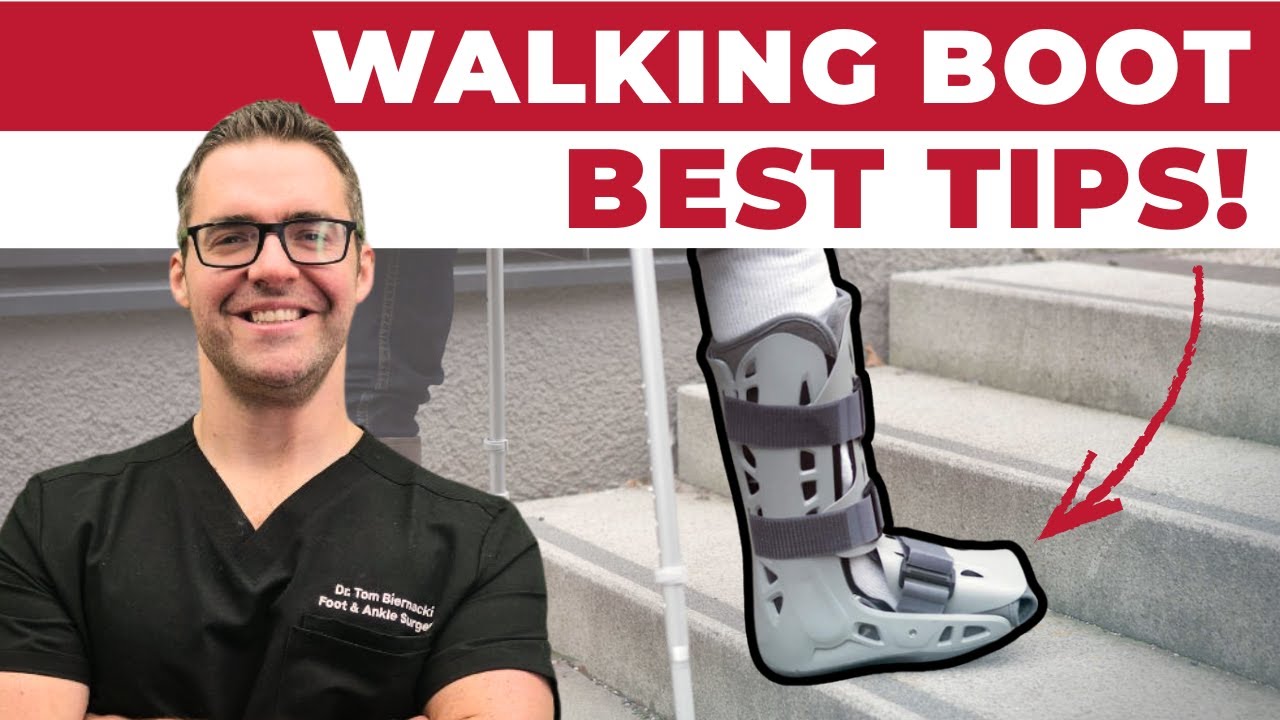
Recovery timelines for augmented Broström are similar to or slightly faster than standard Broström when InternalBrace is used. The protocol typically involves 2 weeks in a splint, 4 weeks in a controlled ankle motion boot with progressive weight-bearing, then transition to a lace-up brace. Physical therapy focuses on proprioception, neuromuscular control, and sport-specific training. Return to recreational sport: 4–5 months. Return to competitive sport: 5–6 months. Our outcomes data show >90% of patients achieve excellent stability and return to their pre-injury activity level.
⚠️ Consider augmented Broström evaluation if:
- Your ankle continues to give way despite 3+ months of bracing and physical therapy
- You’ve had a prior Broström that failed or the instability has returned
- You have diagnosed hypermobility (EDS, generalized laxity)
- MRI shows severely degenerated or absent ATFL/CFL tissue
- You’re a competitive athlete who cannot accept the recovery uncertainty of standard repair
In-Office Treatment at Balance Foot & Ankle
If home treatment isn’t providing relief for your ankle instability, our podiatry team at Balance Foot & Ankle can help with same-week evaluations and advanced in-office care.
Same-week appointments available. (810) 206-1402
Doctor Hoy’s Natural Pain Relief Gel
Natural topical pain relief I use in our clinic. Arnica + camphor formula — apply directly to the area 3–4x daily. ($20–25)
Frequently Asked Questions
Is augmented Broström better than standard Broström?
For patients with adequate native tissue quality and no hypermobility, standard Broström-Gould provides excellent results and augmentation is unnecessary. Augmentation provides superior outcomes specifically in patients with poor tissue quality, hypermobility, or revision surgery — where standard repair has higher failure rates. Selecting the right procedure for the right patient is more important than a blanket preference for one technique.
How long does augmented Broström last?
Long-term data on InternalBrace augmentation shows excellent stability at 5-year follow-up with very low re-instability rates. Allograft-augmented repairs similarly show durable outcomes at 5–10 years. The augmentation is designed to be permanent — the synthetic tape or allograft becomes incorporated into the body’s scar tissue and provides lasting mechanical reinforcement alongside the repaired native ligaments.
The Bottom Line
Augmented Broström surgery delivers everything that standard Broström does — reliable stability restoration, excellent functional outcomes, outpatient procedure — with the added security of structural reinforcement that protects the repair and improves outcomes in challenging patients. If you’ve been told your ankle instability is “too bad” for standard repair, or if you’ve had a failed prior surgery, augmented Broström may be exactly what you need.
Sources
- Viens NA, et al. Anterior talofibular ligament ruptures, part 1: biomechanical comparison of augmented Broström repair techniques. Am J Sports Med. 2014.
- Yoo JS, et al. A systematic review of augmentation techniques for the Brostrom procedure. Foot Ankle Int. 2021.
- Lohrer H, Nauck T. Results of operative treatment for recalcitrant retrocalcaneal bursitis and superior calcaneal bone spurs in non-athletic and athletic patients. Arch Orthop Trauma Surg. 2014.
Ready to Get Relief?
Same-week appointments available in Howell & Bloomfield Township, MI
4.9★ | 1,123 Reviews | 3,000+ Surgeries
Or call: (810) 206-1402

Dr. Tom Biernacki, DPM is a board-certified foot & ankle surgeon (ABFAS & ABPM) at Balance Foot & Ankle Specialists in Southeast Michigan. With over a decade of clinical experience, he specializes in heel pain, bunions, diabetic foot care, sports injuries, and minimally invasive surgery. Dr. Biernacki is a member of the APMA and ACFAS, and his patient education content on MichiganFootDoctors.com and YouTube has made him one of the most-followed foot & ankle educators on YouTube.
More questions patients ask
What is the difference between a Brostrom and an augmented Brostrom?
The classic Brostrom directly repairs torn lateral ankle ligaments by suturing them back to bone. The augmented Brostrom adds a high-strength suture tape internal brace over the repair that provides immediate mechanical stability and protects healing ligaments during early rehabilitation, allowing faster recovery and lower recurrence rates.
How long until I can walk normally after augmented Brostrom surgery?
Most patients transition from walking boot to supportive athletic shoes at 4-6 weeks. Normal walking gait is typically restored by 6-8 weeks with physical therapy. Full return to sport occurs at 4-6 months depending on athletic demands.
What is the success rate of the augmented Brostrom procedure?
Published studies report stability restoration rates exceeding 90 percent, patient satisfaction of 85-95 percent, and re-sprain rates of approximately 5-8 percent — lower than non-augmented repairs in high-risk populations.
Can I play sports after augmented Brostrom surgery?
Yes. Low-impact sports can resume at 8-12 weeks. Full return to cutting and pivoting sports occurs at 4-6 months after meeting objective criteria. Most athletes return to pre-injury sport level after completing rehabilitation.
Is the internal brace permanent?
Yes, the suture tape and bone anchors are permanent implants. The repaired ligaments heal around the tape, creating a reinforced biological construct. Removal is rarely needed but can be performed as a minor procedure if anchor prominence causes irritation.
Still have a question about coverage or cost? Book online and we will check your benefits before your visit: Book in Howell · Book in Bloomfield Township. Prefer to talk it through first? Call (810) 206-1402.