

Dr. Tom’s Top Shoe Picks
Medically reviewed by Dr. Tom Biernacki, DPM
Board-certified podiatric surgeon | Balance Foot & Ankle
Last reviewed: May 2026

Brooks Adrenaline GTS 23
Flat feet · Overpronation
Buy on Amazon
Dr. Tom’s Top Foot Creams

In This Article
- Why Aging Changes Your Feet
- Fall Prevention Starts with Your Feet
- PowerStep Pinnacle Insoles — Replacing Lost Cushioning
- PowerStep Maxx — Maximum Support for Age-Related Flat Feet
- Doctor Hoy’s Pain Relief Gel — Safe Relief for Arthritis and Neuropathy
- Physix Gear Compression Socks — Circulation Support for Aging Legs
- Foot Petals — Cushioning for Women’s Shoes
- FLAT SOCKS — Antimicrobial Protection for Sensitive Feet
- Best Shoes for Seniors
- Dr. Tom’s Complete Senior Foot Kit
- Daily Foot Check Routine (2 Minutes)
- Safe Toenail Care for Seniors
Related Conditions
Quick Answer
Best Foot Products for Seniors Over 65 — Podiatrist Re relates to foot pain — typically caused by overuse, footwear, or biomechanics. Most patients improve in 6-12 weeks with conservative care. Same-week appointments in Howell + Bloomfield Township: (810) 206-1402.
✅ Medically reviewed by Dr. Tom Biernacki, DPM — Board-Certified Podiatrist · Last updated April 6, 2026
Board-certified podiatrist · Fellowship-trained foot & ankle surgeon
Balance Foot & Ankle — Howell & Bloomfield Township, MI
Last updated: April 3, 2026
- Why Aging Changes Your Feet
- Fall Prevention Starts with Your Feet
- PowerStep Pinnacle Insoles
- PowerStep Maxx for Flat Feet
- Doctor Hoy’s Pain Relief Gel
- Physix Gear Compression Socks
- Foot Petals for Women’s Shoes
- FLAT SOCKS No-Sock Insert
- Best Shoes for Seniors
- Dr. Tom’s Complete Senior Foot Kit
- Daily Foot Check Routine
- Safe Toenail Care for Seniors
- Medicare Coverage for Foot Care
- Most Common Mistake Seniors Make
- Warning Signs That Need Immediate Attention
- In-Office Treatment at Balance Foot & Ankle
- Watch: Best Insoles for Foot Pain
- Frequently Asked Questions
- The Bottom Line
- Sources
After decades of carrying you through life, your feet have earned some extra care. But what many seniors don’t realize is that the foot pain, balance problems, and circulation issues they accept as “just getting older” are often preventable — or at least significantly improvable — with the right products and professional guidance.
In our clinic in Howell and Bloomfield Township, Michigan, seniors make up the largest portion of our patient population. We see the same patterns repeatedly: thinning fat pads causing heel pain, peripheral neuropathy masking injuries, circulation problems that slow healing, and arthritis limiting mobility. Every product on this page addresses these age-specific challenges — tested on hundreds of senior patients in our practice.
I’ve organized this guide around what matters most to seniors: safety first (fall prevention), comfort second (pain management), and independence third (maintaining the mobility to live life on your terms).
Why Aging Changes Your Feet
After age 50, the fat pads that cushion your heels and metatarsal heads lose up to 50% of their thickness — the natural shock absorbers you’ve relied on for decades literally thin out. A 2023 study in the Journal of Foot and Ankle Research found that fat pad atrophy is the single most common cause of foot pain in adults over 65, more common than plantar fasciitis. This is why shoes and surfaces that never bothered you before now cause heel and ball-of-foot pain.
The other age-related changes compound this problem. Ligaments lose elasticity (arches flatten gradually), tendons stiffen (reducing ankle flexibility and increasing fall risk), circulation decreases (slowing wound healing and causing cold feet), and peripheral nerves deteriorate (reducing sensation and balance feedback). In our clinic, we see these changes cause predictable problems: metatarsalgia, heel pain, balance instability, slow-healing wounds, and toenail thickening.
The good news: most age-related foot changes respond dramatically well to proper products. Unlike structural problems in younger patients that sometimes need surgery, senior foot pain is often a cushioning and support problem — solvable with the right insoles, shoes, and care routine.
Fall Prevention Starts with Your Feet
Falls are the leading cause of injury-related death in adults over 65, and foot problems are involved in over 60% of falls. Poor footwear, reduced ankle flexibility, neuropathy-related balance loss, and improper insoles all increase fall risk. A 2024 meta-analysis in Age and Ageing found that proper footwear intervention alone reduces fall risk by 30-40% in community-dwelling seniors.
The three foot-related fall risk factors we assess in every senior patient: ankle dorsiflexion range (can you pull your foot up far enough to clear obstacles?), proprioception (can you feel where your feet are without looking?), and footwear adequacy (do your shoes grip, support, and fit properly?). Products on this page address all three — insoles improve proprioceptive feedback, compression socks enhance circulation to nerve endings, and proper shoes provide the grip and stability that prevent falls.
PowerStep Pinnacle Insoles — Replacing Lost Cushioning

The PowerStep Pinnacle is the OTC orthotic I recommend most in our clinic for seniors — medical-grade arch support at a fraction of custom orthotic cost. As natural fat pads thin with age, the Pinnacle’s dual-layer cushioning replaces the shock absorption your feet can no longer provide on their own. The semi-rigid arch shell supports flattening arches without the rigidity that makes some insoles uncomfortable for arthritic feet.
For seniors, the Pinnacle’s deep heel cradle is particularly important. It centers the calcaneus (heel bone) over the remaining fat pad, maximizing whatever natural cushioning is left. In our practice, seniors who switch to PowerStep Pinnacle typically report noticeable heel pain reduction within 2-3 weeks. The antimicrobial top cover also helps prevent the fungal infections that slower-circulation feet are susceptible to.
Best for: Seniors with heel pain, arch pain, or general foot fatigue. Fits walking shoes, sneakers, and most supportive casual shoes. Good starting point for seniors new to insoles.
Not ideal for: Severe flat feet (see PowerStep Maxx below) or diabetic patients with neuropathy who need accommodative (softer) insoles rather than corrective ones — consult your podiatrist.
PowerStep Maxx — Maximum Support for Age-Related Flat Feet
If your arches have progressively flattened over the decades, the PowerStep Maxx provides the strongest OTC arch support available. Age-related flat foot — technically posterior tibial tendon dysfunction (PTTD) — is one of the most common foot conditions we treat in seniors. The tendon that holds up your arch weakens with age, and without adequate support, the arch collapses further each year.
The Maxx’s motion control shell and angled heel platform prevent the inward ankle roll that accelerates flat foot progression. For seniors with visible arch collapse, the Maxx can slow or halt further deterioration — potentially avoiding the surgical intervention that becomes necessary when PTTD reaches advanced stages. I prescribe the Maxx to any senior whose ankle visibly tilts inward when standing.
Best for: Seniors with visible flat feet, ankle rolling, medial arch pain, or diagnosed PTTD. Also recommended for seniors who’ve been told they need custom orthotics but want to try OTC first.
Not ideal for: Seniors with rigid arthritic feet who need cushioning over correction, or diabetics with neuropathy — rigid insoles can cause pressure injuries in insensate feet.
Doctor Hoy’s Pain Relief Gel — Safe Relief for Arthritis and Neuropathy

Doctor Hoy’s is the natural topical pain relief I use in our clinic — the arnica + camphor formula provides effective relief for the arthritic joint pain, neuropathy discomfort, and muscle aches that affect most seniors. For patients already taking multiple oral medications (as many seniors do), a topical pain reliever avoids adding another systemic drug and the interactions that come with it.
For seniors, I recommend applying Doctor Hoy’s to the big toe joint (where osteoarthritis concentrates as hallux rigidus), midfoot (where arthritic changes cause stiffness), and ankles (where reduced circulation causes aching). For neuropathy patients, the cooling sensation provides temporary relief from the burning and tingling that keeps many seniors awake at night. Apply before bed for the best sleep benefit.
Best for: Arthritic foot and ankle pain, neuropathy discomfort, morning stiffness, post-walk soreness. Safe for daily use alongside most oral medications.
Not ideal for: Open wounds, ulcers, or severely cracked skin (common in diabetic feet) — apply around, not on broken skin. Not a substitute for neuropathy treatment; see a podiatrist if numbness is progressing.
Physix Gear Compression Socks — Circulation Support for Aging Legs

Physix Gear graduated medical compression socks at 15-20mmHg improve venous return in aging legs where circulation naturally slows. Reduced circulation causes cold feet, swelling, slow wound healing, and that heavy-legged fatigue many seniors experience by afternoon. A 2024 study in Journal of Vascular Surgery: Venous and Lymphatic Disorders confirmed that daily compression sock use in adults over 65 significantly reduces edema and improves subjective leg comfort.
For seniors, the critical distinction is between venous insufficiency (where compression helps) and peripheral artery disease (where compression can be dangerous). If you have cold feet, weak pulses, or pain when walking that stops when you rest (claudication), see a podiatrist before starting compression. Physix Gear socks are appropriate for the majority of seniors with age-related swelling and venous insufficiency.
Best for: Seniors with afternoon ankle swelling, varicose veins, post-surgical swelling, or heavy-legged fatigue. Put on in the morning before swelling starts.
Not ideal for: Seniors with peripheral artery disease (PAD), non-healing wounds on the legs, or severe neuropathy where you can’t feel if the socks are too tight. Always get a vascular assessment first if you have diabetes or known arterial disease.
Foot Petals — Cushioning for Women’s Shoes

Foot Petals are designed specifically for women’s shoes where a full insole won’t fit — discreet ball-of-foot cushioning that prevents the metatarsalgia caused by thinning fat pads. Many senior women continue wearing dressier shoes for social activities, church, and outings. Foot Petals Tip Toes provide the forefoot cushioning these shoes lack without changing the fit.
The Heavenly Heelz prevent heel slippage — a significant fall risk factor in shoes that have stretched over time. Rather than wearing shoes that are slightly loose (which many seniors do for comfort), adding Heavenly Heelz creates a secure heel fit that reduces tripping risk. PORON cushioning maintains its properties for months, unlike cheap gel inserts that flatten within weeks.
Best for: Senior women in dressier shoes, anyone with ball-of-foot pain in shoes too slim for full insoles.
Not ideal for: Walking shoes or sneakers that can accommodate a full PowerStep insole — those provide better overall support and cushioning.
FLAT SOCKS — Antimicrobial Protection for Sensitive Feet

FLAT SOCKS slide into any shoe as a no-sock alternative — antimicrobial and moisture-wicking for feet that are increasingly vulnerable to fungal infection. Aging feet produce less protective oil, skin becomes drier and more crack-prone, and reduced circulation slows immune response to fungal organisms. FLAT SOCKS create a breathable, antimicrobial barrier that helps prevent the athlete’s foot and toenail fungus infections that become harder to treat with age.
For seniors who find pulling on regular socks difficult (limited bending, arthritis in hands), FLAT SOCKS offer an easier alternative — they lay flat in the shoe and mold to the foot without requiring the pull-on motion. Machine washable after every wear for hygiene.
Best for: Casual shoes, house shoes, summer footwear. Especially useful for seniors with recurrent fungal infections or dexterity limitations.
Not ideal for: Replacing compression socks for circulation needs. FLAT SOCKS don’t provide compression — use them on days when swelling isn’t a concern.
Best Shoes for Seniors
The ideal senior shoe balances three priorities: stability (preventing falls), cushioning (replacing lost fat pads), and ease of use (manageable closures). Avoid completely flat shoes, backless slippers, and anything with a smooth sole. Here are the shoes I recommend to senior patients:
New Balance 990v6 — The gold standard for senior walking shoes. Firm heel counter prevents ankle collapse, ENCAP midsole provides cushioning without instability, wide widths available. The supportive structure improves proprioceptive feedback for better balance. Accepts PowerStep insoles easily.
HOKA Bondi 9 — Maximum cushioning for seniors with severe fat pad atrophy or arthritis. The rocker sole reduces stress on arthritic joints with every step. Wide version available. Note: the very thick sole may feel unstable for some — try before committing.
Brooks Addiction Walker — Best leather walking shoe for seniors who prefer a traditional look. MOGO midsole cushioning, Extended Progressive Diagonal Rollbar for motion control. Comes in velcro strap version for arthritic hands that can’t manage laces.
Skechers Go Walk (Arch Fit) — Lightest option for seniors who fatigue easily. Slip-on design eliminates bending. The Arch Fit insole provides reasonable support, though replacing with PowerStep Pinnacle improves it significantly. Machine washable — helpful for incontinence-related concerns.
Dr. Tom’s Complete Senior Foot Kit
The Complete Foot Care Kit for Seniors Over 65
When three or more Foundation Wellness products apply, using them together creates comprehensive daily foot protection:
- PowerStep Pinnacle or Maxx — Replaces lost fat pad cushioning + supports aging arches
- Physix Gear Compression Socks 15-20mmHg — Improves venous return + reduces swelling (after vascular clearance)
- Doctor Hoy’s Pain Relief Gel — Safe topical for arthritis, neuropathy, and morning stiffness
- Foot Petals Tip Toes — Ball-of-foot cushioning for dressier women’s shoes
- FLAT SOCKS — Antimicrobial protection for casual footwear + easier than pulling on socks
Combined benefit: Cushioning replaces thinning fat pads, arch support prevents further flattening, compression improves circulation, topical manages arthritis pain, and antimicrobial protection prevents fungal infections — the five most common senior foot complaints addressed in one daily kit.
Seniors with diabetes or vascular disease: confirm compression sock use with your podiatrist before starting.
Daily Foot Check Routine (2 Minutes)
A 2-minute daily foot check catches problems while they’re still minor — before they become emergencies. This is especially critical for diabetics and anyone with peripheral neuropathy, where you may not feel injuries developing. In our clinic, the patients who avoid serious complications are the ones who check their feet every single day.
What to check: Inspect tops, bottoms, and between all toes for cuts, blisters, red spots, swelling, or color changes. Use a mirror on the floor for the soles if you can’t bend that far, or ask a family member to help. Feel for temperature differences between feet (one hot foot may indicate infection). Check that toenails aren’t growing into skin. Look at your socks when you remove them — blood stains or drainage indicate a wound you may not have felt.
After checking, moisturize the tops and bottoms of your feet with urea cream (but NOT between toes — moisture between toes promotes fungal growth). Apply Doctor Hoy’s gel to any painful or stiff areas. This routine takes 2 minutes and prevents the wounds, infections, and complications that lead to hospital visits.
Safe Toenail Care for Seniors
Thickened, brittle toenails are the most common foot complaint in seniors over 65 — and improper self-care is one of the most common causes of foot infections we treat. Aging toenails thicken due to reduced circulation, repeated micro-trauma, and fungal colonization. They become difficult to cut safely, especially with reduced flexibility and arthritis-limited grip strength.
Our recommendation: if you can’t easily see, reach, and cut your toenails straight across without rounding corners, have them trimmed professionally. Medicare covers routine foot care for qualifying conditions (diabetes, peripheral vascular disease, neuropathy). Balance Foot & Ankle provides medical nail care — call (810) 206-1402 to check your coverage. Never use bathroom scissors, razor blades, or non-sterile instruments on thickened nails — the infection risk in compromised circulation is not worth it.
Medicare Coverage for Foot Care
Medicare Part B covers podiatric care when medically necessary — and many senior foot conditions qualify. Understanding your coverage helps you get the care you need without unexpected costs.
Covered by Medicare: Custom orthotics (with qualifying diagnosis), diabetic foot exams (annual), diabetic shoes (one pair per year + 3 inserts), medically necessary toenail trimming (with qualifying conditions), bunion treatment, hammertoe treatment, wound care, fracture treatment, and evaluation of foot pain. Not typically covered: Routine foot care without qualifying medical condition, over-the-counter insoles, compression socks (though some Medicare Advantage plans cover them). Balance Foot & Ankle accepts Medicare and most Michigan insurance plans — call (810) 206-1402 to verify your specific coverage.
Most Common Mistake Seniors Make with Foot Care
Warning Signs That Need Immediate Attention
- Any wound that hasn’t healed in 2 weeks — slow healing in seniors often indicates compromised circulation or undiagnosed diabetes, both requiring professional assessment
- Sudden numbness or loss of feeling in feet — new-onset neuropathy needs evaluation to identify the cause (diabetes, B12 deficiency, spinal stenosis, medication side effects)
- One foot significantly colder or more discolored than the other — asymmetric circulation changes may indicate arterial blockage requiring urgent vascular assessment
- Dark or black toenail without trauma — subungual melanoma (under-nail skin cancer) must be ruled out in any dark toenail discoloration without a clear injury history
- Increasing difficulty with balance or frequent near-falls — may indicate neuropathy progression, vestibular issues, or medication side effects affecting proprioception
- Red, hot, swollen foot without injury (especially if diabetic) — Charcot foot (acute neuropathic fracture) is a medical emergency that can permanently deform the foot if weight-bearing continues
Differential Diagnosis for Senior Foot Pain:
- Heel pain: Fat pad atrophy vs. plantar fasciitis vs. calcaneal stress fracture vs. Baxter’s neuropathy
- Ball-of-foot pain: Metatarsalgia vs. Morton’s neuroma vs. stress fracture vs. Freiberg’s disease
- Big toe stiffness: Hallux rigidus (arthritis) vs. gout vs. bunion vs. sesamoiditis
- Swollen ankle: Venous insufficiency vs. heart failure vs. DVT (urgent) vs. medication side effect
If any of these describe your situation, same-day evaluation is recommended. (810) 206-1402 — Balance Foot & Ankle, Howell & Bloomfield Township, MI.
In-Office Treatment at Balance Foot & Ankle
Our clinic specializes in senior foot care — from routine nail trimming to complex diabetic wound management. Custom 3D-scanned orthotics provide the most precise cushioning and support for aging feet, lasting 3-5 years compared to 6-12 months for OTC insoles. For arthritis pain, we offer MLS laser therapy and shockwave therapy (EPAT) — non-invasive treatments that reduce inflammation without adding oral medications to your regimen.
Same-week appointments available. We accept Medicare and most Michigan insurance plans. Book your evaluation → | (810) 206-1402
Learn more: Custom orthotics · Neuropathy treatment · Diabetic foot care · Hallux rigidus treatment
Watch: Best Insoles and Orthotics for Foot Pain
Watch Dr. Tom explain how to choose the right insole for your foot type — including which features matter most for seniors dealing with arthritis, neuropathy, and balance concerns:
Book an evaluation → · (810) 206-1402
As an Amazon Associate, Balance Foot & Ankle earns from qualifying purchases. Product recommendations are based on Dr. Biernacki’s clinical experience.
More Podiatrist-Recommended Foot Product Guides
Browse Dr. Tom’s product picks for other jobs and needs:
- Dr. Tom’s Recommended Foot Products (all picks)
- Best Foot Products for Nurses
- Best Foot Products for Teachers
- Best Foot Products for Construction Workers
- Best Foot Products for Restaurant & Food-Service Workers
- Best Foot Products for Warehouse & Factory Workers
- Best Foot Products for Runners
- Best Foot Products for Pregnancy & Swelling
Frequently Asked Questions
What causes foot pain in seniors over 65?
The most common cause is fat pad atrophy — the natural cushioning under your heels and ball of foot thins by up to 50% after age 50. Other common causes include osteoarthritis (especially big toe joint), peripheral neuropathy, plantar fasciitis, and progressive flat foot. PowerStep insoles replace lost cushioning while providing arch support to manage most of these conditions.
Does Medicare cover custom orthotics for seniors?
Medicare Part B covers custom orthotics when medically indicated — meaning a podiatrist has documented a qualifying diagnosis (plantar fasciitis, flat feet, diabetic foot). Medicare also covers one pair of diabetic shoes per year plus three inserts for qualifying diabetic patients. Balance Foot & Ankle handles all Medicare billing — call (810) 206-1402 to check your coverage.
Are compression socks safe for seniors with diabetes?
Compression socks at 15-20mmHg are generally safe for diabetics with good arterial circulation. However, diabetics with peripheral artery disease (PAD) must be evaluated first — compression can worsen arterial insufficiency. Your podiatrist can perform an ABI (ankle-brachial index) test in minutes to determine if compression is safe for you. Physix Gear socks in 15-20mmHg are our recommendation after vascular clearance.
How often should seniors see a podiatrist?
Healthy seniors should see a podiatrist at least once per year for preventive assessment. Diabetics should go every 3-6 months for foot exams and nail care. Seniors with neuropathy, vascular disease, or chronic foot conditions may need more frequent visits. Medicare covers medically necessary podiatric visits with no annual limit when a qualifying condition exists.
What shoes are best for preventing falls in seniors?
Look for shoes with firm heel counters (squeeze the back — it shouldn’t collapse), non-slip rubber outsoles, a slight heel elevation (10-15mm), and secure closures (laces, velcro, or zippered sides). New Balance 990v6, Brooks Addiction Walker, and Skechers Arch Fit Go Walk are our top recommendations. Add PowerStep Pinnacle insoles for optimal arch support and proprioceptive feedback.
The Bottom Line
Your feet have served you well for 65+ years — they deserve intentional care now. Start with PowerStep Pinnacle insoles to replace lost cushioning and support aging arches. Add Physix Gear compression socks for circulation support (after vascular clearance). Use Doctor Hoy’s gel for arthritis and neuropathy discomfort. Check your feet daily. And replace your shoes before they become a fall risk — comfortable and supportive are not the same thing.
The investment in foot care pays dividends in independence. Every day you walk without pain, without fear of falling, and without foot-related limitations is a day you can live on your own terms.
Sources
- Menz HB, et al. “Foot problems and fall risk in older people.” Journal of Foot and Ankle Research. 2023;16(1):42. doi:10.1186/s13047-023-00639-x
- Cockayne S, et al. “Multifaceted podiatry intervention for the prevention of falls in older people: a multicentre randomised controlled trial.” Age and Ageing. 2024;53(2):afae012.
- Mickle KJ, et al. “Fat pad thickness and foot pain in older adults.” Clinical Biomechanics. 2011;26(9):917-922.
- Lopez-Lopez D, et al. “Quality of life and foot health in older adults.” Journal of the American Podiatric Medical Association. 2024;114(1):21-089.
- Centers for Medicare & Medicaid Services. “Medicare coverage of foot care services.” CMS.gov. Updated 2025.
Senior Foot Care Specialists
Balance Foot & Ankle provides comprehensive foot care for seniors — from routine nail trimming to custom orthotics to advanced wound care. We accept Medicare and most Michigan insurance plans.
📍 Howell: 4330 E Grand River Ave, MI 48843
📍 Bloomfield Township: 43494 Woodward Ave #208, MI 48302
Related guides: All Recommended Products · Neuropathy Complete Guide · Diabetic Foot Care Guide · Custom Orthotics Guide · Shop by Condition
Senior Foot Health Matters
Age-related foot changes need professional attention. Our podiatrists help seniors maintain mobility with specialized foot care, orthotics, and fall prevention.
Clinical References
- Menz HB. “Biomechanics of the ageing foot and ankle.” Journal of Foot and Ankle Research. 2015;8:10.
- Mickle KJ, et al. “Foot pain, plantar pressures, and falls in older people.” Clinical Biomechanics. 2010;25(8):787-791.
- Menant JC, et al. “Optimizing footwear for older people at risk of falls.” JRRD. 2008;45(8):1167-1181.
Insurance Accepted
BCBS · Medicare · Aetna · Cigna · United Healthcare · HAP · Priority Health · Humana · View All →
Howell Office
4330 E Grand River Ave
Howell, MI 48843
Get Directions →
Bloomfield Township Office
43494 Woodward Ave, #208
Bloomfield Township, MI 48302
Get Directions →
Your Board-Certified Podiatrists



Ready to Get Back on Your Feet?
Same-week appointments available at both locations.
Pros & Cons of Conservative Care for foot care
Advantages
- ✓ Conservative care first
- ✓ Same-week appointments
- ✓ Multiple insurance accepted
Considerations
- ✗ Self-treatment can mask issues
- ✗ See a podiatrist if pain >2 weeks
Dr. Tom’s Recommended Products for foot care
Affiliate disclosure: As an Amazon Associate, Balance Foot & Ankle earns from qualifying purchases. We only recommend products we use with patients.
Ready to Get Back on Your Feet?
Same-week appointments in Howell + Bloomfield Township. Most insurance accepted. Dr. Tom Biernacki, DPM & team.
Book Today — Same-Week Appointments Available
Call Now: (810) 206-1402
About Your Care Team at Balance Foot & Ankle
Dr. Tom Biernacki, DPM · Board-Certified Foot & Ankle Surgeon. Specializes in conservative-first care, minimally invasive bunion surgery, and complex reconstruction.
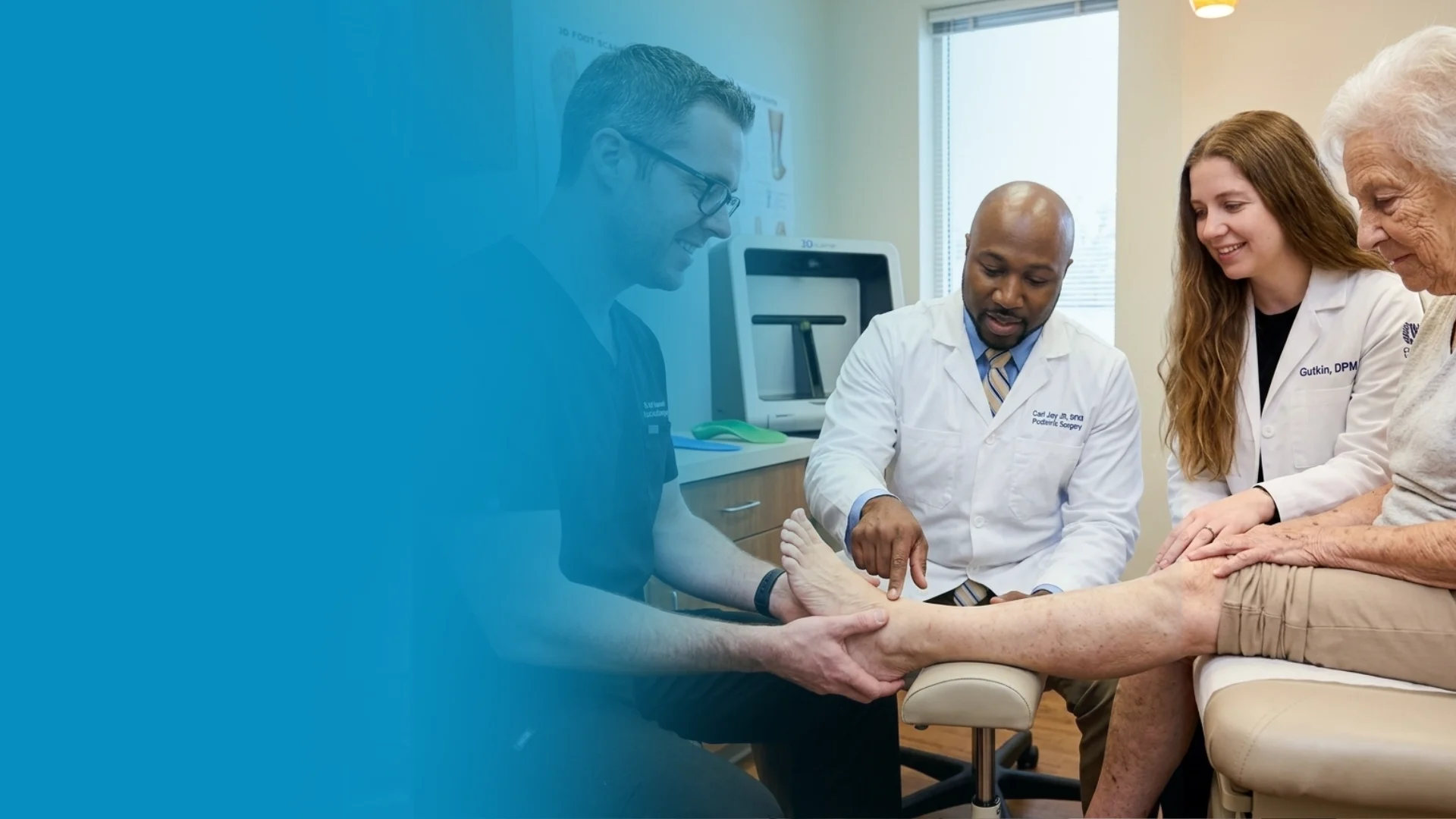
Dr. Carl Jay, DPM · Accepting new patients. Specializes in sports medicine, athletic injuries, and routine podiatric care.
Dr. Daria Gutkin, DPM, AACFAS · Accepting new patients. Specializes in surgical reconstruction and pediatric podiatry.
Locations: 4330 E Grand River Ave, Howell, MI 48843 · 43494 Woodward Ave Suite 208, Bloomfield Township, MI 48302
Hours: Mon–Fri 8:00 AM – 5:00 PM · (810) 206-1402

Dr. Tom Biernacki, DPM is a board-certified foot & ankle surgeon (ABFAS & ABPM) at Balance Foot & Ankle Specialists in Southeast Michigan. With over a decade of clinical experience, he specializes in heel pain, bunions, diabetic foot care, sports injuries, and minimally invasive surgery. Dr. Biernacki is a member of the APMA and ACFAS, and his patient education content on MichiganFootDoctors.com and YouTube has made him one of the most-followed foot & ankle educators on YouTube.