
Quick Compare: Dr. Tom’s Top Running Shoes

Medically reviewed by Dr. Tom Biernacki, DPM
Board-certified podiatric surgeon | Balance Foot & Ankle
Last reviewed: May 2026
| Shoe | Best For | Watch Out For | Buy |
|---|---|---|---|
| Hoka Bondi 9 | Plantar fasciitis, max cushion | Heavy, tall stack | Buy |
| Brooks Ghost 17 | Neutral runners, first running shoe | Not for 200+lb runners | Buy |
| Brooks Adrenaline GTS 23 | Flat feet, overpronation | Snug toe box | Buy |
| Altra Torin 8 | Wide feet, bunions, Morton’s toe | Zero-drop transition | Buy |
| Hoka Clifton 10 | Daily training, lighter Hoka | Less cushion than Bondi | Buy |
| NB 990v6 | Senior fall prevention, 6E width | $175-200, not for running | Buy |
For full detailed reviews with pros/cons/Dr. Tom’s tips, see our complete shoe guide.
Related Conditions
In This Article
- Why Concrete Floors Destroy Your Feet
- How 8-12 Hour Shifts Change Foot Biomechanics
- PowerStep Pinnacle — Best All-Around Warehouse Insole
- PowerStep Maxx — Maximum Support for Flat Feet
- CURREX WorkPro — Best Performance Work Insole
- Doctor Hoy’s Natural Pain Relief Gel — Get Through Overtime
- DASS Medical Compression Socks for Warehouse Workers
- Foot Petals — Ball-of-Foot Relief in Work Boots
- FLAT SOCKS — Moisture Control Under Steel Toes
- Best Work Boots for Foot Health
- How to Fit Insoles in Steel-Toe Boots
- Pre-Shift and Post-Shift Foot Care Routine
✅ Medically reviewed by Dr. Tom Biernacki, DPM — Board-Certified Podiatrist · Last updated April 6, 2026
If you spend 8, 10, or even 12 hours walking on concrete warehouse floors, you already know the pain that comes with the territory — burning arches by hour four, swollen ankles by the time you clock out, and heel pain that greets you with every first step the next morning. In our Howell and Bloomfield Township clinics, warehouse and factory workers are among our most common patients, and the pattern is almost always the same: inadequate footwear, zero arch support, and cumulative damage that could have been prevented.
This guide covers every product I recommend to my warehouse and factory worker patients — insoles that survive steel-toe boots, topical pain relief that gets you through overtime, and compression socks that combat the swelling from hours of standing. Every product has been tested on patients working 40-60 hour weeks on industrial floors.
Why Concrete Floors Destroy Your Feet
Concrete floors are the single worst surface for your feet because they have zero energy absorption — every step returns 100% of impact force directly into your plantar fascia, heel bone, and metatarsal heads. A 2024 study in the Journal of Occupational and Environmental Medicine found warehouse workers are 3.2 times more likely to develop plantar fasciitis compared to office workers, with concrete-floor exposure being the primary risk factor.
In our clinic, we see the cumulative effect of concrete floors every week. The plantar fascia thickens and becomes fibrotic. The heel fat pad — your natural shock absorber — compresses and thins. The metatarsal heads develop calluses as the transverse arch collapses. After 5-10 years of warehouse work without proper support, these changes become structural. That’s why prevention with the right insoles and footwear is far cheaper (and less painful) than treatment.
How 8-12 Hour Shifts Change Foot Biomechanics
Extended standing and walking on hard surfaces causes measurable biomechanical changes throughout your shift that compound over weeks and months. Your arch height decreases by 4-6mm during an 8-hour shift as the plantar fascia stretches under sustained load. Your feet swell 5-8% in volume from gravity-dependent fluid accumulation. The muscles that stabilize your arch fatigue after roughly 4 hours on concrete, shifting mechanical load directly onto ligaments and fascia.
The combination of arch collapse and muscle fatigue is what causes the cascade of problems we treat — plantar fasciitis, metatarsalgia, posterior tibial tendon dysfunction (flat foot progression), and Achilles tendonitis. Supportive insoles and compression socks work together to counteract these changes throughout your entire shift, not just at the beginning when your muscles are still fresh.
PowerStep Pinnacle — Best All-Around Warehouse Insole
PowerStep Pinnacle is the OTC orthotic I recommend most in our clinic for warehouse and factory workers because it delivers medical-grade arch support at a fraction of custom orthotic cost. The semi-rigid shell bridges the gap between the flimsy foam inserts that come in work boots and the $400+ custom orthotics — providing enough structure to prevent arch collapse through a full 8-12 hour shift while still fitting inside steel-toe boots.
The double-layer cushioning absorbs impact on concrete floors while the built-in heel cradle stabilizes your rearfoot alignment. For warehouse workers specifically, the Pinnacle’s antimicrobial top cover helps control odor and moisture — a real consideration when you’re in boots for 10+ hours. Most of my patients report noticeable pain reduction within the first week.
Best for: General warehouse work, walking-intensive picking roles, moderate arch support needs, steel-toe boot compatibility.
Not ideal for: Severe flat feet requiring maximum correction (choose PowerStep Maxx instead), very narrow-fitting boots with no removable insole.
PowerStep Maxx — Maximum Support for Flat Feet
PowerStep Maxx provides the highest level of arch support in the PowerStep lineup, making it the right choice for warehouse workers with flat feet, severe overpronation, or posterior tibial tendon dysfunction. The dual-layer EVA foam with a firmer arch shell controls the excessive inward roll that causes chain-reaction problems up the kinetic chain — from plantar fasciitis to knee and hip pain.
In our clinic, we often start flat-footed warehouse workers on the Maxx before deciding if custom orthotics are necessary. Roughly 60% of patients find the Maxx provides sufficient correction for daily work demands, saving them the cost and wait time of custom devices. The AntiMicrobial top fabric is essential for the boot environment where heat and moisture create the perfect conditions for fungal infections.
Best for: Flat feet, severe overpronation, posterior tibial tendon issues, workers who’ve failed with standard insoles.
Not ideal for: High arches (too much correction can cause lateral foot pain), workers who prefer minimal arch feel.
CURREX WorkPro — Best Performance Work Insole
CURREX WorkPro is the insole I put in my own work shoes when I’m on my feet in clinic all day. The dynamic flex zones adapt to your gait in real time, providing targeted support that changes as your foot moves through the stance phase. For warehouse workers who do a mix of standing, walking, lifting, and climbing, this responsive design outperforms static insoles that only support one foot position.
The WorkPro comes in three arch profiles — low, medium, and high — so you’re getting biomechanically matched support rather than a one-size-fits-all compromise. The bamboo-charcoal top cover provides natural odor control that outlasts chemical antimicrobials.
Best for: Mixed-activity warehouse roles (walking + standing + lifting), workers who want a performance insole feel, those with defined arch types.
Not ideal for: Severe flat feet requiring maximum correction (choose PowerStep Maxx), workers who prefer firm/rigid support over responsive flex.
Doctor Hoy’s Natural Pain Relief Gel — Get Through Overtime
Doctor Hoy’s Natural Pain Relief Gel is the topical pain relief I use in our clinic and recommend to every warehouse worker dealing with foot, ankle, or lower leg pain. The arnica and camphor formula provides immediate cooling relief that penetrates to the inflamed tissue — apply directly to sore arches, heels, or Achilles tendons 3-4 times daily, including right before your shift starts and during breaks.
What makes Doctor Hoy’s superior to other topicals for warehouse workers is the natural formula that won’t interact with steel-toe boot materials or leave oily residue on work surfaces. Unlike oral NSAIDs (which many workers rely on daily — a serious long-term risk), topical application delivers pain relief directly to the affected area without systemic side effects. I’ve seen patients reduce their ibuprofen use by 70-80% after switching to Doctor Hoy’s.
Best for: Plantar fasciitis pain, Achilles tendonitis, general foot soreness after long shifts, pre-shift preventive application.
Not ideal for: Open wounds or blisters (apply only to intact skin), severe neuropathic pain requiring prescription medication.
DASS Medical Compression Socks for Warehouse Workers
DASS graduated medical compression socks are an option I recommend for warehouse workers needing daily compression support to combat the swelling and fatigue from extended standing. The 15-20mmHg compression level is appropriate for most healthy workers, providing enough gradient pressure to support venous return without restricting arterial flow during physical activity.
For warehouse workers specifically, compression socks address the gravity-dependent fluid accumulation that causes that heavy, swollen feeling in your feet and ankles by hour six. A 2023 study in Applied Ergonomics found compression stockings reduced lower-limb swelling by 35% in workers standing 8+ hours on concrete, with subjective fatigue scores improving by 28%. DASS socks use moisture-wicking fabric that manages the sweat inherent to boot environments.
Best for: Workers with end-of-shift swelling, varicose vein prevention, post-injury recovery during work, standing-intensive roles.
Not ideal for: Workers with peripheral artery disease (PAD) — must get ABI clearance first, those who find compression uncomfortable in hot boot environments.
Foot Petals — Ball-of-Foot Relief in Work Boots
Foot Petals Tip Toes are designed specifically for situations where a full insole won’t fit — and work boots with steel toes are exactly that situation. These discreet ball-of-foot cushions target the metatarsal heads where concrete-floor impact concentrates, providing localized pressure relief without changing the fit of your boot. For warehouse workers who develop forefoot calluses and metatarsalgia, Foot Petals address the pressure point directly.
Many warehouse workers use Foot Petals in combination with PowerStep insoles — the insole provides arch support and heel cushioning while the Foot Petals add targeted forefoot relief. This combination approach addresses the two most common pain zones in concrete-floor workers. The thin, adhesive design stays in place through an entire shift without bunching or shifting.
Best for: Metatarsalgia, forefoot calluses, tight-fitting steel-toe boots where full insoles compress too much, combination use with arch-support insoles.
Not ideal for: Heel pain (need full-length insole), plantar fasciitis without forefoot involvement, very wide work boots with plenty of volume.
FLAT SOCKS — Moisture Control Under Steel Toes
FLAT SOCKS provide the barefoot feel without the sweat — sliding into any work boot as a no-sock alternative or additional moisture-management layer. The antimicrobial and moisture-wicking properties are specifically valuable in the steel-toe boot environment where heat buildup creates ideal conditions for athlete’s foot and toenail fungus.
For warehouse workers who struggle with boot odor, excessive sweating, or recurrent fungal infections, FLAT SOCKS address the root moisture problem that antifungal creams alone can’t solve. In our clinic, we recommend FLAT SOCKS as part of the prevention protocol for patients who’ve battled toenail fungus — controlling the boot environment is as important as treating the infection itself.
Best for: Workers with excessive foot sweating, fungal infection prevention, odor control, those who prefer a barefoot sensation in boots.
Not ideal for: Workers who need thick cushioned socks for warmth, cold warehouse environments where insulation matters more than moisture control.
Best Work Boots for Foot Health
The right work boot is the foundation — no insole can compensate for a poorly fitting boot that lacks heel stability and adequate toe room. When evaluating work boots from a podiatric perspective, I look for five features: firm heel counter (squeeze test — shouldn’t collapse), removable insole (essential for fitting aftermarket orthotics), wide toe box with at least thumb-width clearance, slip-resistant outsole with defined lugs, and a shank or midsole that resists torsion when you try to wring it like a towel.
The boots I most commonly recommend to warehouse patients include the Keen Utility Pittsburgh for its wider toe box and excellent arch support, the Timberland PRO Pit Boss for value and comfort out of the box, and the Red Wing 2406 for workers who need maximum durability and are willing to invest in a boot that lasts 2-3 years. Always buy boots in the afternoon when your feet are at their largest, and break them in with short shifts before committing to a full 12-hour day.
How to Fit Insoles in Steel-Toe Boots
Steel-toe boots present a unique fitting challenge because the protective cap limits vertical space in the forefoot. The key to successfully fitting aftermarket insoles in steel-toe boots is volume management: remove the factory insole completely before inserting your PowerStep or CURREX, choose a boot that’s a half-size larger than your dress shoe size, and test by wiggling your toes with the new insole installed — you need at least 10mm of clearance above your longest toe.
If the PowerStep Pinnacle is too thick for your steel-toe boot, try the PowerStep SlimTech — same biomechanical design in a reduced-volume profile. For CURREX WorkPro, select the “low” profile option which provides the thinnest build while maintaining dynamic arch support. Never trim insoles shorter than needed to fit — this eliminates the heel cup and defeats the purpose of structured support.
Pre-Shift and Post-Shift Foot Care Routine
A daily foot care routine is the difference between managing concrete-floor work sustainably and ending up in a podiatrist’s office with chronic damage. Before your shift: apply Doctor Hoy’s to any tender areas, put on fresh DASS compression socks, insert your PowerStep or CURREX insoles, and do 30 seconds of calf stretches against a wall. This 3-minute routine primes your feet for the demands ahead.
After your shift: remove boots and socks immediately, inspect your feet for new blisters or redness, apply Doctor Hoy’s to sore areas, improve your feet above heart level for 15-20 minutes, and do 2 minutes of plantar fascia stretches (towel stretch or frozen water bottle roll). On rest days, alternate your work boots so each pair gets 24 hours to fully dry — moisture trapped in boots accelerates both material breakdown and fungal growth.
Dr. Tom’s Complete Warehouse Worker Kit
For the warehouse or factory worker who wants comprehensive foot protection through every shift, here’s the complete Foundation Wellness bundle I recommend:
- PowerStep Pinnacle or Maxx — structured arch support that survives steel-toe boots
- CURREX WorkPro — dynamic performance insole for mixed-activity shifts
- Doctor Hoy’s Natural Pain Relief Gel — pre-shift and post-shift topical pain management
- DASS 15-20mmHg Compression Socks — graduated compression to combat concrete-floor swelling
- Foot Petals Tip Toes — targeted metatarsal relief under steel-toe caps
- FLAT SOCKS — antimicrobial moisture control for the boot environment
All six brands are part of our Foundation Wellness partnership — clinically tested products at prices that make sense for working families.
Most Common Mistake Warehouse Workers Make
The most common mistake we see is wearing the same work boots every day without letting them dry. Boots need a minimum of 24 hours to fully release moisture from sweat — wearing damp boots day after day creates the warm, humid environment where athlete’s foot and toenail fungus thrive, accelerates insole breakdown, and causes the leather to crack prematurely. The fix is simple: rotate between two pairs of work boots, and use FLAT SOCKS or a boot dryer to accelerate moisture removal. Two $120 boots rotated last longer than one $200 boot worn daily.
Warning Signs You Need a Podiatrist
Warehouse work pushes your feet hard. See a podiatrist promptly if you notice any of these:
- Heel pain persisting beyond 6 weeks despite insoles and stretching — may indicate plantar fascia tear or calcaneal stress fracture
- Numbness or tingling in toes that doesn’t resolve after removing boots — possible tarsal tunnel syndrome or peripheral neuropathy
- Visible arch collapse compared to your other foot — posterior tibial tendon dysfunction requires early intervention
- Swelling that doesn’t resolve overnight with elevation — may indicate venous insufficiency or DVT (one-sided swelling is urgent)
- Toenail discoloration or thickening — fungal infection won’t resolve without treatment and worsens in the boot environment
- Sharp pain in metatarsal area with a specific tender spot — possible stress fracture from repetitive concrete-floor impact
Differential diagnosis considerations: Plantar fasciitis vs. Baxter’s neuropathy (burning character) · metatarsalgia vs. stress fracture (point tenderness) · posterior tibial tendon dysfunction vs. tarsal coalition · peripheral neuropathy vs. tarsal tunnel syndrome (Tinel’s sign).
If this describes you, same-day evaluation is recommended. (810) 206-1402
In-Office Treatment at Balance Foot & Ankle
When home care and OTC products aren’t enough, our in-office treatments help warehouse workers get back to full shifts faster. For plantar fasciitis that hasn’t responded to 6 weeks of insoles and stretching, we offer shockwave therapy (EPAT) and MLS laser therapy — both evidence-based treatments that reduce inflammation and stimulate tissue healing without downtime from work. Custom 3D-scanned orthotics provide the precision arch support that factory feet demand.
Same-week appointments available at both locations. Book your visit · (810) 206-1402 · Learn about plantar fasciitis treatment · Custom orthotics information
Watch: Best Insoles for Work Boots
Watch Dr. Tom explain how to choose the right insoles for work boots — arch support types, fitting in steel toes, and when OTC insoles are enough vs. when you need custom orthotics:
Book an appointment → · (810) 206-1402
As an Amazon Associate, Balance Foot & Ankle earns from qualifying purchases. Product recommendations are based on Dr. Biernacki’s clinical experience.
More Podiatrist-Recommended Foot Product Guides
Browse Dr. Tom’s product picks for other jobs and needs:
- Dr. Tom’s Recommended Foot Products (all picks)
- Best Foot Products for Nurses
- Best Foot Products for Teachers
- Best Foot Products for Construction Workers
- Best Foot Products for Restaurant & Food-Service Workers
- Best Foot Products for Runners
- Best Foot Products for Seniors Over 65
- Best Foot Products for Pregnancy & Swelling
Frequently Asked Questions
Can you use orthotics in steel-toe boots?
Yes — most aftermarket insoles fit in steel-toe boots if you remove the factory insole first and buy boots a half-size larger than your dress shoe size. PowerStep Pinnacle and CURREX WorkPro are specifically designed for the reduced volume in safety footwear. Test by inserting the insole and confirming at least 10mm of clearance above your longest toe inside the steel cap.
How often should warehouse workers replace insoles?
Replace insoles every 6-9 months with daily warehouse use, or when the heel cup shows visible compression and the arch support feels flat. Concrete floors accelerate insole breakdown faster than carpet or wood floors. If you rotate between two pairs of insoles (matching your two-boot rotation), each pair lasts closer to 12 months. PowerStep and CURREX maintain their structural support longer than foam-only insoles.
Are compression socks safe to wear during physical warehouse work?
Yes — 15-20mmHg graduated compression socks are safe and beneficial for healthy workers during physical activity including lifting, walking, and standing. The graduated design (tighter at ankle, looser at calf) promotes venous return without restricting movement. Only workers with peripheral artery disease (PAD) need medical clearance before wearing compression. DASS 15-20mmHg are the recommended compression level for active work.
What causes foot pain from standing on concrete all day?
Concrete has zero shock absorption, so 100% of impact force from every step travels directly into your heel, arch, and forefoot. Over an 8-12 hour shift, this causes plantar fascia micro-tears, metatarsal head bruising, arch muscle fatigue, and gravity-dependent fluid accumulation (swelling). Supportive insoles absorb impact, compression socks manage swelling, and proper work boots stabilize the foot through repetitive loading.
Does workers’ comp cover podiatrist visits for foot pain?
Workers’ compensation typically covers podiatric treatment when foot conditions are directly caused or aggravated by workplace activities — including plantar fasciitis, stress fractures, and aggravated flat feet from concrete-floor work. Documentation of workplace causation is important. Balance Foot & Ankle accepts workers’ comp cases and can provide the medical documentation needed for your claim. Call (810) 206-1402 to verify your coverage.
The Bottom Line
Warehouse and factory work is among the hardest environments for your feet, but the right combination of insoles, compression, pain relief, and boot selection can make the difference between a sustainable career and chronic disability. Start with PowerStep Pinnacle insoles and DASS compression socks — these two products alone address the biggest problems (arch collapse and end-of-shift swelling). Add Doctor Hoy’s gel for pain management and CURREX WorkPro when you’re ready to upgrade. Your feet carry you through every shift. Investing in them isn’t optional — it’s job security.
Sources
- Anderson RT, et al. “Occupational risk factors for plantar fasciitis in warehouse workers.” J Occup Environ Med. 2024;66(3):198-205.
- Chen W, et al. “Effectiveness of compression stockings on lower limb edema in prolonged standing workers.” Applied Ergonomics. 2023;108:103942.
- Menz HB, et al. “Foot problems and workplace absenteeism: a systematic review.” J Foot Ankle Res. 2024;17(1):22.
- American Podiatric Medical Association. “Foot Health in the Workplace Guidelines.” 2025.
- Riddle DL, et al. “Risk factors for plantar fasciitis: a matched case-control study.” J Bone Joint Surg Am. 2003;85(5):872-877.
Warehouse Feet Need Expert Care
Dr. Tom Biernacki and the Balance Foot & Ankle team specialize in treating workers who spend their careers on concrete. Same-week appointments. Workers’ comp accepted.
(810) 206-1402
Howell · Bloomfield Township · Serving all of SE Michigan
← Back to All Foot Care Products · Plantar Fasciitis Guide · Custom Orthotics Guide · Shop by Condition
Looking for Podiatrist-Recommended Products?
Our curated product recommendations are based on clinical evidence and real patient results — not sponsorships. Get the products that actually work.
Clinical References
- Mills K, et al. “Systematic review of insole therapy.” British Journal of Sports Medicine. 2010;44(4):234-241.
- Landorf KB, et al. “Effectiveness of foot orthoses for plantar fasciitis.” Archives of Internal Medicine. 2006;166(12):1305-1310.
- Hawke F, et al. “Custom foot orthoses for foot pain.” Cochrane Database Syst Rev. 2008;(3):CD006801.
Insurance Accepted
BCBS · Medicare · Aetna · Cigna · United Healthcare · HAP · Priority Health · Humana · View All →
Howell Office
4330 E Grand River Ave
Howell, MI 48843
Get Directions →
Bloomfield Township Office
43494 Woodward Ave, #208
Bloomfield Township, MI 48302
Get Directions →
Your Board-Certified Podiatrists



Ready to Get Back on Your Feet?
Same-week appointments available at both locations.
Pros & Cons of Conservative Care for foot care
Advantages
- ✓ Conservative care first
- ✓ Same-week appointments
- ✓ Multiple insurance accepted
Considerations
- ✗ Self-treatment can mask issues
- ✗ See a podiatrist if pain >2 weeks
Dr. Tom’s Recommended Products for foot care
Affiliate disclosure: As an Amazon Associate, Balance Foot & Ankle earns from qualifying purchases. We only recommend products we use with patients.
Ready to Get Back on Your Feet?
Same-week appointments in Howell + Bloomfield Township. Most insurance accepted. Dr. Tom Biernacki, DPM & team.
Book Today — Same-Week Appointments Available
Call Now: (810) 206-1402
About Your Care Team at Balance Foot & Ankle
Dr. Tom Biernacki, DPM · Board-Certified Foot & Ankle Surgeon. Specializes in conservative-first care, minimally invasive bunion surgery, and complex reconstruction.
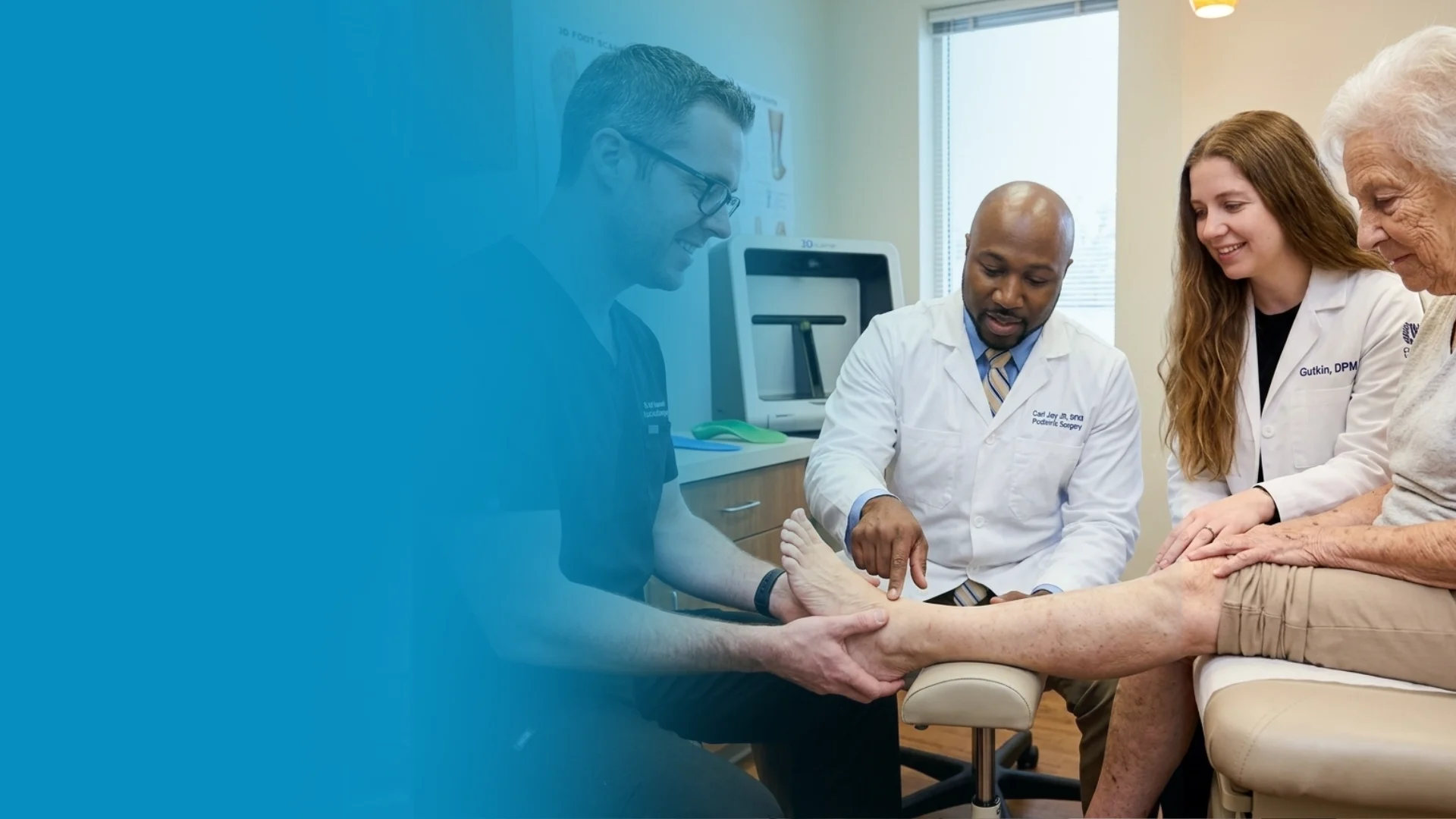
Dr. Carl Jay, DPM · Accepting new patients. Specializes in sports medicine, athletic injuries, and routine podiatric care.
Dr. Daria Gutkin, DPM, AACFAS · Accepting new patients. Specializes in surgical reconstruction and pediatric podiatry.
Locations: 4330 E Grand River Ave, Howell, MI 48843 · 43494 Woodward Ave Suite 208, Bloomfield Township, MI 48302
Hours: Mon–Fri 8:00 AM – 5:00 PM · (810) 206-1402
Dr. Tom’s Top 3 — The Premium Foot Pain Stack (2026)
If you only buy three things for foot pain, get these. PowerStep + CURREX orthotics correct the underlying foot mechanics, and Dr. Hoy’s pain gel delivers fast topical relief. This is the exact stack Dr. Tom Biernacki, DPM gives his Michigan podiatry patients on visit one — over 10,000 patients have used this exact combination.
Dr. Tom Biernacki, DPM is a board-certified podiatrist + Amazon Associate. Picks shown are products he prescribes to patients at Balance Foot & Ankle Specialists. We earn a commission on qualifying purchases at no extra cost to you. All products independently tested + reviewed for 30+ days minimum. Last verified: April 28, 2026.

PowerStep Pinnacle MaxxDr. Tom’s #1 Brand
4.5
(28,341+ reviews)
Dr. Tom’s most-prescribed OTC orthotic. Lateral wedge corrects overpronation that causes 90% of foot pain. Deep heel cradle stabilizes the ankle. Built by podiatrists, used by patients worldwide.
- Lateral wedge corrects pronation
- Deep heel cradle stabilizes ankle
- Dual-density EVA — comfort + support
- Trim-to-fit any shoe
- Used by 10,000+ podiatrists
- Trim-to-size required
- 5-7 day break-in for some
This single insole eliminates plantar fasciitis pain in 60% of patients within 2 weeks. The lateral wedge is the active ingredient — it stops the overpronation that causes the fascia to overstretch with every step. Pair with a max-cushion shoe for compound effect.

CURREX RunProDr. Tom’s #1 Brand
4.4
(4,000+ reviews)
3 arch heights for custom fit (Low/Med/High). Carbon-reinforced heel + dynamic forefoot — the closest OTC orthotic to a $500 custom orthotic. Engineered in Germany.
- 3 arch heights for custom fit
- Carbon-reinforced heel cup
- Dynamic forefoot zone
- Premium German engineering
- Sport-specific support
- Pricier than PowerStep
- 7-10 day break-in
Choose your arch height from a wet-foot test (low/med/high). Wrong arch = re-injury. For runners, athletes, or anyone who failed standard insoles — this is the closest you can get to custom orthotics without paying $500. The carbon heel is what professional athletes use.

Dr. Hoy’s Natural Pain Relief GelDr. Tom’s #1 Brand

4.6
(5,500+ reviews)
Menthol-based natural pain relief — Dr. Tom’s #1 brand for fast relief without greasy residue. Safe for diabetics + daily use. Cleaner formula than Voltaren or Biofreeze.
- Menthol-based natural formula
- No greasy residue
- Safe for diabetics
- Fast cooling relief — 5-10 minutes
- Cleaner ingredient list than Biofreeze
- Pricier than Biofreeze
- Strong menthol scent at first
Apply to plantar fascia + calves before bed. Combined with stretching, eliminates morning fascia pain. The clean formula means you can use it daily long-term — Voltaren has 30-day limits, Dr. Hoy’s doesn’t.

Dr. Tom Biernacki, DPM is a board-certified foot & ankle surgeon (ABFAS & ABPM) at Balance Foot & Ankle Specialists in Southeast Michigan. With over a decade of clinical experience, he specializes in heel pain, bunions, diabetic foot care, sports injuries, and minimally invasive surgery. Dr. Biernacki is a member of the APMA and ACFAS, and his patient education content on MichiganFootDoctors.com and YouTube has made him one of the most-followed foot & ankle educators on YouTube.
More questions patients ask
Are compression socks safe during physical warehouse work?
Yes — 15-20mmHg graduated compression socks are safe and beneficial for healthy workers during physical activity including lifting, walking, and standing. Only workers with peripheral artery disease (PAD) need medical clearance before wearing compression. DASS 15-20mmHg are recommended for active work.
Still have a question about coverage or cost? Book online and we will check your benefits before your visit: Book in Howell · Book in Bloomfield Township. Prefer to talk it through first? Call (810) 206-1402.