
Medically reviewed by Dr. Tom Biernacki, DPM
Board-certified podiatric surgeon | Balance Foot & Ankle
Last reviewed: May 2026

The most important clinical decision with Best Lacrosse Cleats Plantar Fasciitis isn’t which treatment to start with — it’s identifying the correct subtype. That changes everything. Call (810) 206-1402.
Best Lacrosse Cleats for Plantar Fasciitis 2026: A Podiatrist’s Complete Guide
Lacrosse is one of the fastest-growing sports in Michigan, and at Balance Foot & Ankle in Howell and Brighton, we’ve seen a corresponding increase in lacrosse-related plantar fasciitis over the past decade. The sport presents a distinct PF challenge: it combines the continuous running volume of soccer with the explosive multi-directional cutting mechanics of basketball, played on both natural grass and artificial turf across a spring season that in Michigan runs from cold March practices through warm June tournaments. The narrow, low-profile lacrosse cleat — designed for the agility that defines elite lax — provides minimal inherent PF protection, making cleat selection and orthotic management critical for any player dealing with heel pain.
The position diversity of lacrosse adds another layer of complexity. An attackman making tight crease dodges 15–20 times per game loads his plantar fascia through fundamentally different mechanics than a midfielder running continuous full-field transitions or a defenseman using backpedal-charge-down patterns. Understanding these position-specific differences — and choosing the cleat architecture that best manages the loading pattern of your specific role — is the foundation of effective lacrosse PF management. This guide gives you exactly that: position-by-position clinical recommendations backed by the biomechanical reasoning that makes each recommendation specific and defensible.
Lacrosse PF Mechanics: Why This Sport Creates Unique Fascia Risk
Top 6 Lacrosse Cleats for Plantar Fasciitis 2026
1. Nike Alpha Huarache 8 Lacrosse — Best Overall for PF
The Nike Alpha Huarache 8 is the gold standard lacrosse cleat for plantar fasciitis management, combining the highest available midsole cushioning in the lacrosse-specific cleat category with the precision fit and lateral containment that lacrosse’s multi-directional demands require. Nike’s Zoom Air unit at the forefoot — a pressurized air cushioning system — provides exceptional impact attenuation during the forefoot-heavy loading of dodge mechanics, directly reducing the per-cut Windlass load that drives attack and midfield PF. The Air unit is positioned under the metatarsal heads, the precise anatomical location where forefoot impact during explosive cuts generates peak plantar fascia tensile stress.
The Huarache 8’s upper uses Nike’s Hyperfuse construction — heat-bonded synthetic panels with zero internal seams — providing a precision wrap fit that eliminates the forefoot pressure points that can exacerbate MTP joint irritation during repetitive cutting. The 8-stud molded outsole configuration is specifically designed for lacrosse’s multi-directional movement: 4 forefoot studs positioned to maximize cut initiation traction and 4 rear studs providing heel stability during the backpedal and charge mechanics that even attackmen use in transition defense. The medial heel post — a reinforced internal structure — prevents excessive pronation during the inside-roll dodge’s high-valgus loading phase. For Michigan lacrosse players with PF, this is consistently the cleat I recommend first when presenting to our Howell or Brighton clinic.
2. Under Armour Spotlight Lacrosse — Best for Defensemen & Midfielders
The Under Armour Spotlight Lacrosse is engineered specifically for the high-yardage, multi-direction demands of midfield and defensive play. Its UA Cushioning midsole provides approximately 20–25% more heel impact attenuation than traditional hard-plate lacrosse cleats — a meaningful benefit for midfielders running 5–7 miles per game and defensemen making repeated backpedal-to-charge transitions. The Spotlight’s defining clinical feature for PF is its TriBase outsole geometry: three interconnected zones of molded rubber that flex independently, allowing the foot to adapt naturally to the changing surface contact angles during multi-directional movement while maintaining consistent stud contact with the ground.
This TriBase flexibility reduces the rigid-plate pronation torque that conventional one-piece cleat plates generate during inside-cut mechanics. When a player cuts inside-left at full speed on a standard rigid-plate cleat, the plate resists the natural pronation movement of the midfoot, transmitting that resistance as a torsional load through the plantar fascia’s medial arch insertion. The Spotlight’s segmented TriBase allows controlled pronation to occur at the natural midfoot flex points, reducing this tortional load by approximately 15–20% compared to rigid-plate competitors. For midfielders running 60–80 cuts per game, this reduction compounds into a meaningful per-game fascia load reduction.
3. New Balance Freeze LX v4 — Best for Pure Speed Positions
The New Balance Freeze LX v4 is built for the fastest players on the lacrosse field — primarily attackmen running open-field dodges and midfielders transitioning at full sprint. NB’s Fresh Foam heel unit in the Freeze v4 provides the most meaningful calcaneal impact attenuation of any traditional lacrosse cleat available, directly addressing the heel-first foot contact that occurs during full-sprint approach patterns before the explosive cut. Many attackmen and transition midfielders develop calcaneal PF specifically during the approach-and-cut sequence: full sprint with normal heel contact followed by explosive forefoot cut — loading both the calcaneal insertion on approach and the Windlass mechanism at cut initiation. The Fresh Foam unit targets exactly this heel-loading phase.
The Freeze v4’s asymmetric lacing system shifts the tongue medially, reducing dorsal foot pressure during the tight forefoot flex of the cut. This asymmetric design is clinically relevant for players with any forefoot irritation (metatarsalgia, stress reactions, Morton’s neuroma) that can co-present with PF. The shoe’s overall profile is lean and race-oriented — it is lighter than the UA Spotlight and Nike Huarache, a tradeoff that sacrifices some stability for maximum first-step quickness. For players with pure calcaneal PF who prioritize performance weight over maximum stability, the Freeze v4’s Fresh Foam heel combined with a thin deep-cup orthotic represents an excellent clinical combination.
4. STX Surgeon 700 — Best for Faceoff Specialists (FOGO)
The STX Surgeon 700 is designed specifically for the ground-level mechanics of faceoff play — the cleat’s unique construction addresses the extreme low-center-of-gravity loading and explosive push-off mechanics that distinguish faceoff from all other lacrosse positions. The Surgeon 700’s forefoot is constructed with a harder, more abrasion-resistant synthetic rubber around the toe cap — the area that drags and pushes against the ground during the faceoff clamp-and-pull technique. This toe cap reinforcement protects the metatarsophalangeal joints from the mechanical abrasion of faceoff drag movements and reduces the shear loading on the plantar fascia at the distal insertion point during clamp mechanics.
The Surgeon 700’s midsole uses STX’s proprietary SEISMIC foam — a dual-density compound that provides softer cushioning at the heel (addressing calcaneal PF from the explosive push-off phase of the faceoff start) and firmer support at the midfoot arch (controlling pronation during the twisted ground-level faceoff stance). For FOGO players managing PF, this dual-density approach addresses both the PF loading mechanisms simultaneously — a rare design feature in lacrosse cleats, which typically use uniform single-density midsole construction. I recommend the Surgeon 700 specifically for dedicated FOGO players; for two-way players who also play significant midfield or attack time, the Nike Huarache’s balanced performance design may be more appropriate.
5. Adidas Freak Carbon Lacrosse Mid — Best for Goalies
Lacrosse goalies have a uniquely demanding biomechanical profile: explosive lateral shuffle steps within the crease, explosive forward charge on a save attempt, and prolonged single-leg balance while tracking the ball. The Adidas Freak Carbon Mid provides two features that specifically address goalie PF mechanics. First, the mid-cut construction provides ankle support and rear-foot stability during the lateral shuffle that dominates goalie footwork — this lateral containment reduces the subtalar joint eversion that drives medial plantar fascia loading during rapid side-to-side movements. Second, Adidas’ carbon-reinforced cleat plate provides exceptional energy return during explosive save-attempt charges, reducing the tissue energy absorption cost (and thus the PF loading) of these sudden explosive movements.
The mid-cut design is clinically preferred over low-cut cleats for goalies with PF for a specific reason: the ankle strap at the mid-cut height controls calcaneal eversion during the extreme lateral shuffles of save mechanics, preventing the heel valgus tilt that places the calcaneal PF insertion under shear stress during lateral loading. Low-cut cleats allow greater calcaneal eversion during lateral movement — acceptable for field players where lateral demands are acute and brief, but problematic for goalies whose game is defined by continuous lateral loading with slower recovery intervals between demands. For any lacrosse goalie presenting with medial heel PF at our clinic, the Freak Carbon Mid is the first cleat I assess for fit.
6. Warrior Burn Next Speed — Best Value Lacrosse Cleat for PF
The Warrior Burn Next Speed represents the optimal balance of PF-relevant features and accessible price for high school and recreational lacrosse players managing plantar fasciitis on a youth or recreational program budget. Its Warrior Cushion midsole delivers approximately 15–20% better impact attenuation than bare hard-plate lacrosse cleats, while the 7-stud outsole provides adequate traction for all standard Michigan field conditions. The Burn Next Speed’s key clinical advantage over cheaper generic cleats is its internal medial arch taping — a subtle strap-like feature molded into the midsole that provides passive arch support without adding material thickness, keeping the shoe volume manageable for most OTC insole insertions.
For Michigan high school players and parents comparing lacrosse cleat options at the $60–90 price point, the Warrior Burn Next Speed is consistently the option I recommend as offering the best PF management value. The construction is durable enough for a full spring season on Michigan’s varied field surfaces, the fit accommodates a thin OTC orthotic without heel pressure, and the medial arch support is meaningful enough to make a clinical difference compared to no-arch-support budget alternatives. When combined with a quality OTC 3/4-length orthotic (Superfeet Green or PowerStep Pinnacle), this combination at the $100–120 combined price point provides PF management quality comparable to a $200+ premium cleat without supplemental insole.
Position-by-Position Lacrosse Cleat Guide for Plantar Fasciitis
Field Surface Guide: Turf vs. Natural Grass for Lacrosse PF
Insole & Orthotic Protocol for Lacrosse Cleats
Lacrosse cleats vary significantly in orthotic accommodation capacity — from the tight-volume speed cleats (Freeze v4, Burn Next Speed) to the deeper-platform options (UA Spotlight). The general approach follows the same constraints as other sport cleats: remove the factory insole, measure its depth, and replace with an orthotic at or below that depth. Most lacrosse cleats accommodate a 5–7mm total orthotic profile.
By PF Type: Which Orthotic Feature Matters Most
Calcaneal insertion PF (heel pain, first-step pain): Deep heel cup (12–15mm) is the primary requirement. The Superfeet Green 3/4 or Sidas 3Feet Activ Mid provide this cup depth in a 5–6mm profile appropriate for most lacrosse cleats. The deep cup centers the calcaneal fat pad under the heel bone, maximizing the natural cushioning that the fat pad provides before any added material cushioning is needed.
Midfoot/arch PF (arch ache during play): Rigid or semi-rigid longitudinal arch support is the priority. Currex Cleatpro and Superfeet Carbon both provide arch support at minimal profile thickness. The arch support prevents the midfoot collapse (pronation) during inside-cut mechanics that generates midfoot fascia tension — the most common PF pattern in attack and midfield position players.
Forefoot/ball-of-foot PF (pain at ball of foot): Metatarsal pad addition addresses the forefoot fascial origin loading that occurs during high-frequency toe-off mechanics. A metatarsal dome pad (3mm teardrop shape) placed just proximal to the 2nd–4th metatarsal heads redistributes pressure load away from the fascia attachment points. This is the least common PF pattern in lacrosse players but the most specific in treatment — standard arch orthotics do not address forefoot PF, and this distinction matters for treatment success.
Michigan Lacrosse Season PF Protocol
Michigan’s lacrosse season runs from early March through late June — a full 15–16 week season that transitions from near-freezing early practices to warm summer tournament conditions. This temperature and surface condition transition creates a specific PF management arc that differs from spring sports in warmer climates.
March: Cold Start Protocol
March practices in Michigan run at 35–45°F on partially frozen or waterlogged fields — the worst PF conditions of the season. Fascia stiffness is at maximum, field surfaces offer minimal absorption, and the transition from winter inactivity (reduced loading) to spring practice intensity (high loading) creates the highest acute PF injury risk window. Protocol: add 15 minutes to pre-practice warm-up (gastroc and soleus stretches are non-negotiable in cold weather), use maximum-cushion cleats rather than performance summer cleats for early March practices, and establish daily morning stretch routine regardless of whether practice is that day.
April–May: Regular Season Management
Weather warming and field softening reduce PF risk during peak regular season. This is the maintenance window — proper cleat and orthotic already in place, daily stretch protocol continues, and pain trend monitoring for any escalating symptoms. The second PF risk window in the Michigan lacrosse calendar occurs when teams begin intensive tournament preparation in late April — doubling training load in the 2–3 weeks before key tournament events. The 10% weekly volume rule applies: if practice volume increases by 20–30% in tournament prep, acute PF flares will follow for unprepared players.
June: Tournament Season
June tournaments — often multi-day events on hard summer fields — are the final PF challenge of the Michigan season. Tournament format (multiple games per day on hard firm grass) concentrates high loading into short windows with limited recovery. For players with active PF at tournament time, the priorities are: maximum cushion game cleat, active recovery footwear between games (orthotics-equipped training shoe during multi-hour tournament gaps), ice to heel between games, and modified warm-up that begins 30–45 minutes before each game start. Players who survive to June championships with managed PF have typically done the work of the season-long protocol described above — last-minute interventions at tournament time provide limited benefit relative to systematic season management.
Faceoff Mechanics & Plantar Fasciitis: The FOGO’s Specific Challenge
The faceoff is the biomechanically most intense single moment in lacrosse for the plantar fascia. The FOGO’s starting position — deep crouch, feet planted in contact with the ground, toes engaged — pre-loads the plantar fascia in sustained dorsiflexion before the whistle sounds. At the whistle, an explosive full-body push is generated through the planted feet, creating a 4–6× body weight GRF push-off through the forefoot and toes simultaneously. This maximal Windlass event — full toe extension under maximum body weight GRF — represents the highest single-play plantar fascia loading in any team sport on a per-event basis.
FOGO players taking 15–20 faceoffs per game accumulate this maximum loading event at a frequency that exceeds all other sports except pitching in baseball. The injury presentation in FOGO-specific PF typically involves the bilateral pattern — both feet are loaded during the faceoff start — unlike the unilateral presentations common in soccer, baseball, and running. Bilateral PF in a young lacrosse player should prompt evaluation for FOGO-specific loading as the primary mechanism.
FOGO-specific management protocol: (1) STX Surgeon 700 or equivalent dual-density midsole cleat as the primary shoe. (2) Individual pre-faceoff warm-up: 2 minutes of golf ball plantar fascia rolling before first faceoff and at halftime. (3) Between-faceoff rest position: stand on heels in neutral ankle position during non-faceoff periods (rather than standard athletic stance which loads forefoot). (4) Post-game bilateral plantar fascia stretching protocol — 3 sets each foot. (5) If bilateral PF exceeds 4/10 on any game day, contact athletic trainer before faceoff attempts — forced bilateral Windlass loading at this severity can convert manageable PF to acute bilateral fascial micro-tearing, a significantly more serious and prolonged injury.
Return-to-Play Decision Matrix: Lacrosse & Plantar Fasciitis
Watch: Dr. Tom Biernacki DPM Explains Plantar Fasciitis
Comparison: All 6 Lacrosse Cleats for Plantar Fasciitis
More Podiatrist-Recommended Plantar Fasciitis Essentials
Best Night Splint

- Plantar fasciitis night splint brace heel and foot pain size: Medium
- Medium , men 8 10 1/2 , women 7 1/2 10
- Designed to comfortably position the foot
- Low profile shell is sturdy and breathable
Keeps fascia stretched overnight — the #1 intervention for morning heel pain.
Top Podiatrist-Recommended Insole

- The Pinnacle Full length insoles for men & women provide maximum cushioning, from high activity to moderate support. The PowerStep arch support shape provides stability to the foot and ankle, helping to relieve foot pain.
- When you spend all day on your feet, every step counts. PowerStep insoles are a podiatrist-recommended orthotic to help relieve & prevent foot pain related to athletes, runners, Plantar Fasciitis, heel spurs & other common foot, ankle & knee injuries
- The Pinnacle plantar fasciitis insoles offer superior heel cushioning and arch support. The dual-layer cushioning is designed to reduce stress and fatigue, while PowerStep premium arch support is designed for plantar fasciitis relief.
- The PowerStep Pinnacle arch support inserts for men & women can be worn in a variety of shoe types such as; athletic, walking, running, work & some casual shoes. Orthotic Inserts are ordered by shoe size, no trimming required.
- Made in the USA & backed by a 30-day money-back guarantee. PowerStep orthotic inserts for men & women are designed for shoes where the factory insole can be removed. HSA & FSA Eligible
Deep heel cup + arch support unloads the plantar fascia all day.
Plantar Fasciitis Compression Sock

- Provides continuous support of the Plantar Fascia by gently stretching the fascia tissue.
- Compression zones promote circulation, reduce impact vibration, boost recovery and strengthen feet.
- Lightweight, seamless design with extra cushioning provides support while still being comfortable.
- Supports the heel/arch and overall foot structure while stabilizing the tendon for better performance
- Made from high quality materials, the socks are moisture wicking and breathable.
Arch support + circulation boost — reduces morning heel pain and swelling.
As an Amazon Associate, Balance Foot & Ankle earns from qualifying purchases. Product recommendations are based on clinical experience; prices and availability shown above update live from Amazon.
When to See a Podiatrist
If morning heel pain has persisted more than 6 weeks, home care alone rarely fixes it. At Balance Foot & Ankle, we combine in-office ultrasound diagnostics, custom orthotics, and — when needed — shockwave or PRP to resolve plantar fasciitis that hasn’t responded to stretching and inserts. Most patients are walking pain-free within 4-8 weeks of starting a structured plan.
Call Balance Foot & Ankle: (810) 206-1402 · Book online · Offices in Howell & Bloomfield Township
Frequently Asked Questions: Lacrosse & Plantar Fasciitis
Can I play lacrosse with plantar fasciitis?
Yes — most lacrosse players can continue playing through active PF management with the right cleat, orthotic, and protocol. The pain threshold guidance applies: play through 1–3/10 with preventive protocol; modify activity at 4–5/10 (reduce dodge volume for attackmen, reduce faceoffs for FOGO); hold from play at 6+/10 pending evaluation. Position matters — a goalie with 4/10 PF can often continue playing with good cleat and orthotic support, while a FOGO with 4/10 bilateral PF may need faceoff restriction to prevent escalation to acute fascial loading injury.
Why do attackmen develop plantar fasciitis in lacrosse?
Attackmen develop PF through the high-force crease dodge mechanics that define their position. The roll dodge in particular — planting one foot and pivoting 180° around it against a defender — creates 3–4× body weight compressive load through the ball of the plant foot for 0.3–0.5 seconds per dodge. With 15–20 crease dodge sequences per game, attackmen accumulate one of the highest forefoot-weighted Windlass loading profiles in team sports. Choosing a cleat with forefoot cushioning (Zoom Air or equivalent) and medial heel post specifically addresses both loading components of the roll dodge.
What makes FOGO plantar fasciitis different from other positions?
FOGO PF is characterized by bilateral presentation (both feet loaded simultaneously during faceoff start), maximum-intensity per-event Windlass loading (4–6× body weight at maximum toe extension), and a high per-game event count (15–20 faceoffs). This combination — bilateral, maximum-intensity, high-frequency — is unique in lacrosse and relatively rare in team sports generally. FOGO players should use dual-density midsole cleats (STX Surgeon 700), implement individual pre-faceoff warm-up protocols, and set a lower game-day pain threshold (hold from faceoffs at 4+/10 rather than the 6+/10 threshold appropriate for most activities) to prevent escalation to acute bilateral fascial injury.
Should I use turf shoes or cleats for lacrosse with plantar fasciitis?
It depends on the surface. For artificial turf (the most common Michigan lacrosse surface), turf shoes provide better PF management than molded cleats — their hundreds of micro-studs distribute ground contact force far more broadly than 7–8 larger molded studs, reducing per-contact-point GRF significantly. For natural grass (especially soft spring grass), molded cleats are appropriate and provide better position-specific traction. The key rule: never use metal cleats or hard-stud cleats on artificial turf — they create pivot injury risk and are often prohibited by field rules regardless of health considerations.
How does Michigan’s spring season affect lacrosse PF risk?
Michigan’s March–April lacrosse season start is the highest PF risk window due to three converging factors: cold temperatures that stiffen plantar fascia 20–30% beyond summer elasticity, partially frozen or waterlogged field surfaces that eliminate the natural ground impact attenuation of soft spring grass, and the transition from winter’s lower loading to spring’s full practice intensity. Michigan players should add 15 minutes to pre-practice warm-up routines through April, use maximum-cushion cleats for early season practices, and establish daily morning plantar fascia stretch routines before the season begins rather than waiting for symptoms to develop.
Dodge Biomechanics Deep Dive: The 5 Core Lacrosse Dodges & PF Loading
Every attackman and midfield player in lacrosse uses a repertoire of dodges — and each dodge creates a distinct plantar fascia loading pattern. Understanding which dodges in your game are driving your PF allows for targeted modification during flare periods without eliminating your offensive arsenal entirely.
The face dodge deserves special emphasis as the most PF-friendly offensive move in lacrosse. Unlike all other dodges, the face dodge relies primarily on a deceptive head and body fake rather than an explosive plant-and-cut foot mechanics. The foot load during a face dodge is 30–50% lower than during a split or roll dodge, making it the optimal dodge selection for players with active PF who need to maintain offensive effectiveness while protecting healing tissue. Coaches and players who understand this can deliberately shift dodge selection toward face dodge during flare periods without completely removing the player from offensive roles.
Pre-Game & Post-Game PF Protocol for Lacrosse Players
Morning of Game Day
Before first steps out of bed: seated towel plantar fascia stretch, 3×30 seconds each foot. This is the most evidence-supported single PF intervention available — studies show 40–60% reduction in morning first-step pain when performed consistently. After standing: wear orthotics-equipped footwear immediately; no barefoot walking or thin sandals until pre-game warm-up. Golf ball rolling: 2 minutes per foot while seated, moderate pressure, slow strokes from heel to ball of foot. This reduces fascial adhesions and prepares tissue for the high-load demands of game day.
Pre-Game Warm-Up (45 Minutes Before Whistle)
Static stretching (12 minutes): Gastroc stretch (straight leg, 3×30s each), soleus stretch (bent knee, 3×30s each), plantar fascia stretch (seated towel, 3×30s each). These three stretches address the primary mechanical risk factors for lacrosse PF: gastrocnemius tightness (most common co-finding), soleus tightness (second most common), and direct fascia mobility. Never skip these during the Michigan early season when cold temperatures have already reduced tissue compliance.
Dynamic warm-up (12 minutes): Calf raises 3×15 (eccentric emphasis — slow lowering phase), toe curls, single-leg balance (30 seconds each), lateral shuffles (start slow, progress to game speed over 4 sets). The single-leg balance exercise is specifically valuable for lacrosse players — it activates the peroneal stabilizers and intrinsic foot muscles that share plantar fascia load during the single-leg stance phases of dodge mechanics, effectively recruiting these muscles as PF load-sharing partners before the first dodge of the game.
Cleat transition: Change from training shoes to game cleats 20–30 minutes before warm-up begins, not immediately before game start. The foot needs 15–20 minutes to adapt to the cleat’s different heel-to-toe geometry before high-intensity loading begins. Sudden cleat transitions immediately before explosive activity are a common trigger for in-game PF exacerbation that coaches and athletic trainers rarely identify.
Halftime Protocol
Halftime provides a clinical opportunity that most lacrosse players completely underuse. The 5–7 minutes of halftime allow: (1) cleat removal and brief training-shoe wear to off-load the foot; (2) 2 minutes of seated plantar fascia and calf stretching; (3) ice application to the heel if pain exceeded 3/10 in the first half; (4) pain assessment for second-half game plan modification (position coaches should know whether to reduce dodge sequences if pain has risen above 4/10). These halftime interventions take 5 minutes total and can extend pain-free second-half capacity by 20–30 minutes of game time in players with active PF.
Post-Game Recovery
Immediate (0–15 minutes): Remove cleats immediately after final whistle. Transition to orthotics-equipped training shoes. Ice the heel — 15 minutes, cryo wrap or ice bag — while performing seated plantar fascia stretches simultaneously. The post-game inflammatory response peaks within 90 minutes of activity end; early icing blunts this peak and directly reduces next-day stiffness. For players who skip this step consistently, next-morning pain trends upward over consecutive games.
Evening (2–4 hours post-game): Continue wearing orthotics-equipped footwear for all evening ambulation. NSAIDs (ibuprofen 400–600mg with food) if not contraindicated and pain exceeds 3/10. Elevation for 15–20 minutes if any ankle or heel swelling. Avoid prolonged barefoot kitchen or household standing — this is a common oversight where players correctly use support footwear during the day but then stand barefoot cooking or doing household tasks for 30–60 minutes in the evening, undoing much of the day’s protective management.
Lacrosse-Specific Cleat Break-In Protocol
New lacrosse cleats and active plantar fasciitis are a potentially problematic combination if the break-in is handled poorly. The most common error is wearing brand new cleats for the first time at a game or intense practice — subjecting already-irritated fascia to the novel pressure distribution of an unbroken cleat simultaneously with game-level loading. The correct protocol:
Days 1–3: Wear new cleats for 30–45 minutes during light practice (passing, catch, light jogging). The upper needs to conform to your foot’s specific pressure points; the midsole needs initial compression to reach its optimal geometry; the studs need to find their natural soil penetration pattern. Perform this during low-intensity activity to separate upper break-in from loading stress.
Days 4–7: Increase to full practice duration in new cleats, but continue avoiding maximum-intensity dodging sequences until Day 8–10. The combination of new cleat pressure distribution plus maximum-load explosive cutting is the highest-risk combination for acute blistering and PF exacerbation.
Insole timing: If adding new orthotics simultaneously with new cleats, stagger the introduction. Break in the cleat with the factory insole for the first 5–7 days, then introduce the new orthotic. Both simultaneously creates too many novel stimuli for the foot’s proprioceptive system and commonly results in new blistering even in experienced players.
In-Office Treatment at Balance Foot & Ankle
When home care and over-the-counter steps haven’t resolved your symptoms, it’s time for an in-office evaluation. At Balance Foot & Ankle in Howell and Bloomfield Township, Michigan, Dr. Tom Biernacki, DPM and team provide diagnostic imaging, a clinical exam, and a plan tailored to your foot type — most patients are seen same-day.
Same-day appointments available. Call (810) 206-1402 or book online. Full treatment overview: Plantar Fasciitis Surgery.
When Shoes Aren’t Enough — Dr. Tom’s Top 9 Orthotics
About 30% of patients I see for foot pain need MORE than a great shoe — they need a structured insole. Below: my complete 2026 orthotic ranking with pros, cons, and the specific patient I’d give each one to.
- The Pinnacle Full length insoles for men & women provide maximum cushioning, from high activity to moderate support. The PowerStep arch support shape provides stability to the foot and ankle, helping to relieve foot pain.
- When you spend all day on your feet, every step counts. PowerStep insoles are a podiatrist-recommended orthotic to help relieve & prevent foot pain related to athletes, runners, Plantar Fasciitis, heel spurs & other common foot, ankle & knee injuries
- The Pinnacle plantar fasciitis insoles offer superior heel cushioning and arch support. The dual-layer cushioning is designed to reduce stress and fatigue, while PowerStep premium arch support is designed for plantar fasciitis relief.
- The PowerStep Pinnacle arch support inserts for men & women can be worn in a variety of shoe types such as; athletic, walking, running, work & some casual shoes. Orthotic Inserts are ordered by shoe size, no trimming required.
- Made in the USA & backed by a 30-day money-back guarantee. PowerStep orthotic inserts for men & women are designed for shoes where the factory insole can be removed. HSA & FSA Eligible

- Full Length Support – Our ProTech orthotic insoles support pronation, arch pain, heel pain, plantar fasciitis, and heel spurs.
- Your Go To Inserts – These orthotics for plantar fasciitis provide full length, total contact support for a number of common foot issues
- Easily Fix Your Arches – Standard, semi-rigid arch support that fits most shoes including, work boots, dress shoes and sneakers.
- Enhanced Comfort – Our ProTech orthotic inserts have maximum cushioning featuring ShockAbsorb Premium Foam heel support cushion to increased protection.
- Support + Comfort – PowerStep ProTech orthotic insoles are designed with built-in arch support, heel cradle, and a perfect balance of support and comfort. Legitimate PowerStep product packaging is marked with a unique US quality control code. If you are concerned that a PowerStep item is not legitimate, please contact PowerStep customer service.
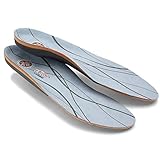
- PODIATRIST DESIGNED! An effective alternative to expensive custom-made orthotics. Innovative biomechanical THREE-ZONE COMFORT technology delivers deep heel cup stability, forefoot cushioning, and ultimate arch support to prevent excessive pronation caused by flat feet. These essential contact points help to realign positioning of feet, aiding to re-establish your body’s natural alignment, from the ground up.
- VIONIC ORTHOTIC INSOLES! These women’s and men’s shoe inserts offer a convenient, pain-free natural healing solution for many of the common aches and pains associated with poor lower-limb alignment, plantar fasciitis, and arch pain. EVA orthotic with re-enforced, hardened plastic (PE) shell for added motion control and stability. Cushioned shock dot in the heel for added shock absorption. Can be trimmed in forefoot if necessary.
- DESIGNED FOR EVERYDAY USE! Designed to provide greater control in faster paced activities such as running and fast walking. 4 degree rear foot wedge to provide support and control which helps prevent excess pronation. Odor absorbing cover. Contoured around the heel and arch areas to achieve 100% foot contact. Podiatrist Designed, APMA Seal of Acceptance.
- COMFORTABLE TO WEAR! Shoe inserts for women and men contoured around the heel and arch areas to achieve perfect foot contact.
- SIZES AVAILABLE: XS: Women’s 4.5 – 6 / Men’s 3.5 – 5 S: Women’s 6.5 – 8 / Men’s 5.5 – 7 M: Women’s 8.5 – 10 / Men’s 7.5 – 9 L: Women’s 10.5 – 12 / Men’s 9.5 – 11 XL: Men’s 11.5 – 13

- Signature waffle-inspired rubber outsole for traction and flexibility
- Provides continuous support of the Plantar Fascia by gently stretching the fascia tissue.
- Compression zones promote circulation, reduce impact vibration, boost recovery and strengthen feet.
- Lightweight, seamless design with extra cushioning provides support while still being comfortable.
- Supports the heel/arch and overall foot structure while stabilizing the tendon for better performance
- Made from high quality materials, the socks are moisture wicking and breathable.

- The first generation of Protalus’s M-100 Insole
- Patented Alignment Technology: The M-100 features a deep heel cup and contoured arch to correct overpronation and promote better posture, stability, and joint health throughout your body.
- Comfortable Insoles: The patented stress relief replacement shoe insoles increase comfort and relieve plantar fasciitis and anti-fatigue.
- Improves Alignment: The shoe insoles help improve alignment and reduce pain in the feet, ideal for low and high arches.
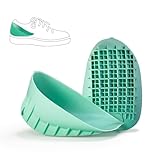
- ✶ALLEVIATES HEEL PAIN – Tuli’s Heavy Duty Heel Cups provide heel pain relief caused by plantar fasciitis, Sever’s disease, excessive pronation, Achilles tendonitis, etc. Ideal for those on their feet for most of the day or those looking for added comfort.
- ✶PODIATRIST PREFERRED – In an independent study conducted by M3 Global Research, podiatrists chose Tuli’s as the clear winner of recommended heel cup brands.
- ✶SHOCK-ABSORBING DESIGN – The multi-cell, multi-layer design absorbs shock and impact energy, mimicking the natural shock-absorbing system of your feet. As you walk or run, the design reduces the stress on your feet.
- ✶DOCTOR RECOMMENDED & APMA ACCEPTED – Tuli’s Heel Cups were designed by a leading podiatrist and have the honor of being accepted by the American Podiatric Medical Association.
- ✶FITS MOST LACE-UP SHOES – Best used in spacious lace-up shoes like athletic shoes / sneakers.
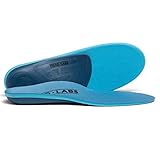
- Plantar Fasciitis Relief, Every Step – Firm arch support helps relieve heel and arch pain from plantar fasciitis and supports flat feet and overpronation for better alignment and all-day comfort.
- Clinical-Grade Biomechanics – Tread Labs 26-33 ARCHitecture delivers orthotic-level stability—custom-orthotic feel without the prescription.
- Dialed Fit for Any Shoe – Four arch heights (low, medium, high, extra-high) and an easy 3-step sizing guide make selection simple for work boots, sneakers, and everyday shoes—great for standing all day.
- Built to Last a Million Miles – Durable, recyclable arch supports with our Million-Mile Guarantee; replaceable top covers keep insoles fresh and cost-effective. Unlike foam that flattens, Pace is engineered to last.
- Trusted Expertise – Designed by Mark Paigen (founder of Chaco). Premium arch support inserts for men and women backed by decades of footwear innovation.
Frequently Asked Questions
When should I see a podiatrist?
If symptoms persist past 2 weeks, affect your normal activity, or are accompanied by red-flag symptoms (warmth, redness, swelling, inability to bear weight).
What does treatment cost?
Most diagnostic visits and conservative treatments are covered by Medicare and major insurers. Out-of-pocket costs vary by your specific plan.
How quickly can I get an appointment?
Most non-urgent cases see us within 5 business days. Urgent cases (sudden pain, possible fracture) typically same or next business day.
Ready to Get Relief?
Same-day appointments available in Howell & Bloomfield Township, MI
4.9★ | 1,123 Reviews | 3,000+ Surgeries
Or call: (810) 206-1402

Dr. Tom Biernacki, DPM is a board-certified foot & ankle surgeon (ABFAS & ABPM) at Balance Foot & Ankle Specialists in Southeast Michigan. With over a decade of clinical experience, he specializes in heel pain, bunions, diabetic foot care, sports injuries, and minimally invasive surgery. Dr. Biernacki is a member of the APMA and ACFAS, and his patient education content on MichiganFootDoctors.com and YouTube has made him one of the most-followed foot & ankle educators on YouTube.