

Medically reviewed by Dr. Tom Biernacki, DPM
Board-certified podiatric surgeon | Balance Foot & Ankle
Last reviewed: May 2026

The most important clinical decision with Best Football Cleats Plantar Fasciitis isn’t which treatment to start with — it’s identifying the correct subtype. That changes everything. Call (810) 206-1402.
Best Football Cleats for Plantar Fasciitis 2026: A Podiatrist’s Position-by-Position Guide
Football is unique among team sports in its positional biomechanical diversity. A 320-pound offensive lineman and a 170-pound wide receiver both wear football cleats — but the mechanical demands on their plantar fascia during a single play could not be more different. The lineman generates sustained drive force of 400–800 pounds through his foot during a block, loading the calcaneal insertion under near-maximum compressive force for 3–6 seconds per play, 60–70 times per game. The wide receiver runs a go route, plants and cuts in 0.2 seconds, and accelerates to 18 mph from a standing start — generating peak Windlass activation forces with each explosive change of direction. These two athletes share a position group in “football player,” but they need entirely different clinical approaches to plantar fasciitis management.
At Balance Foot & Ankle in Howell and Brighton, Michigan, we treat football players across the full positional spectrum — from high school offensive linemen dealing with chronic heel pain to college defensive backs managing in-season PF flares. Michigan’s football season (August two-a-days through November playoff games) presents specific environmental challenges: late summer heat and hard practice fields transitioning to cold, wet, frozen November turf creates variable surface conditions that demand intelligent cleat selection and PF management planning. This guide gives you the clinical framework and specific product recommendations to stay on the field from August kickoff through the state championship.
The Football Position PF Paradox: Why Position Changes Everything
Top 6 Football Cleats for Plantar Fasciitis 2026
1. Nike Alpha Menace Pro 3 — Best for Skill Positions (WR/DB/RB/LB)
The Nike Alpha Menace Pro 3 is the most clinically advanced skill-position football cleat for plantar fasciitis management currently available. Its defining feature is Nike’s React foam midsole — a high-rebound, low-density foam compound that delivers 13% more energy return than standard EVA while maintaining substantially lower Shore A hardness (approximately 42 vs. 60 for traditional cleat plates). This React foam package provides approximately 30–35% better heel impact attenuation than conventional hard-plate football cleats during the high-GRF landing phases of sprint cuts — a meaningful difference that directly reduces the per-play plantar fascia calcaneal load for skill players making 40–60 explosive movements per game.
The Alpha Menace Pro 3’s 7-stud molded rubber outsole is configured with 4 forefoot studs and 3 heel studs — a distribution that maximizes forefoot traction during the toe-off phase of acceleration cuts while providing adequate heel contact for deceleration landing forces. The medial heel stud placement is specifically positioned to reinforce the calcaneal medial aspect — the precise location of PF origin — during the foot’s pronation arc under load. The shoe’s upper is a mix of synthetic leather and mesh with a reinforced medial collar that provides excellent lateral ankle containment during directional changes, reducing the foot collapse (excessive pronation) that drives medial PF tension. I recommend this cleat first to any skill-position football player presenting with PF at our Howell or Brighton clinic.
2. Under Armour Highlight RM — Best for Linemen & Large-Body Players
The Under Armour Highlight RM is designed for the biomechanical demands of linemen — specifically the sustained drive-block load that makes PF so prevalent in the OL/DL position group. Its defining PF-relevant feature is UA’s deepest heel cup in the football cleat lineup — a 16mm-depth cup that centers the calcaneal fat pad precisely under the heel bone and prevents lateral migration of the fat pad under sustained compressive loading. Fat pad displacement during sustained load (a phenomenon well-documented in heavy athletes) exposes the calcaneal cortex directly to impact stress without the natural cushioning benefit of the heel fat pad. The Highlight RM’s deep cup prevents this displacement and maintains the natural shock absorption architecture of the heel throughout the entire block-drive duration.
The outsole features UA’s patented 7-cleat configuration for molded rubber, with longer rear studs (7/8″) for heel stability during drive mechanics and shorter forefoot studs (1/2″) that reduce forefoot load concentration during stance phases. The cleat plate has elevated torsional rigidity in the midfoot — critical for large-body athletes whose body weight creates significant pronation torque during drive mechanics, torque that directly loads the medial plantar fascia. The upper uses UA’s TPU Frame construction — an ultra-durable synthetic that maintains its structural integrity through Michigan’s August two-a-days heat and November cold games without the material fatigue that softer uppers experience over a full season. For any lineman presenting with PF at our clinic, the Highlight RM is the first cleat I assess for fit and recommend as the starting platform.
3. Adidas Adizero 12.0 — Best for Speed Positions (WR/DB/RB)
The Adidas Adizero 12.0 is the lightest performance football cleat in this guide, targeting the speed-position athlete who prioritizes first-step quickness and route-running agility above all other metrics. From a plantar fasciitis management perspective, the Adizero’s primary clinical feature is its Lightstrike EVA midsole — a ultralight foam compound that provides approximately 20–25% more cushioning than the hard polyurethane plates in traditional performance cleats while adding minimal weight to the shoe. The Lightstrike geometry is concentrated at the heel and midfoot, creating a cushioning profile that specifically addresses the heel-strike and midstance loading phases where PF pain typically peaks during running movements.
The Adizero 12.0’s 7-stud outsole features Adidas’ SprintFrame plate — a carbon-fiber-reinforced nylon construction that maximizes energy return during toe-off while maintaining the lateral stiffness needed to prevent foot collapse during sharp directional cuts. The SprintFrame plate’s geometry includes a medial arch bridge that provides passive arch support during the high-force midstance loading of sprint mechanics. For a wide receiver taking 10–15 deep routes per game, this arch support during the full-sprint midstance phase substantially reduces the mid-arch fascia loading that causes the characteristic arch ache in active WRs with plantar fasciitis. The shoe’s narrow profile and sock-like upper fit runs approximately half a size small — ordering a half-size up is recommended, particularly for players with any forefoot width.
4. Nike Vapor Edge Pro 360 — Best for Quarterbacks & Tight Ends
Quarterbacks and tight ends share a specific biomechanical profile that distinguishes their PF risk from both linemen and pure speed positions: they need sufficient cushioning for the plant-foot loading of throw mechanics and route-running explosiveness, but also enough lateral stability for pocket shuffling and the blocked resistance positions that tight ends hold against defenders. The Nike Vapor Edge Pro 360 addresses this combination with Nike’s Zoom Air unit at the heel — a pressurized air-based cushioning system that provides among the best heel impact attenuation of any football cleat on the market — combined with a full-length carbon fiber plate that maximizes torsional stability during the rotational throw mechanics that load a QB’s plant foot.
The Zoom Air unit at the calcaneus is particularly relevant for plantar fasciitis management: it directly reduces the impact load at the calcaneal fat pad during the plant-foot heel-strike that occurs with every passing sequence. A quarterback dropping back 40–50 times per game and planting repeatedly on firm turf or hard late-season grass accumulates significant calcaneal loading per game — the Zoom Air unit provides passive protection at each plant without requiring any gait modification. The shoe’s 360-degree dynamic fit collar wraps the ankle precisely, reducing the calcaneal heel slip that can cause repetitive microtrauma to the Achilles-plantar fascia complex during pivoting in the pocket. For QBs with active PF, supplementing the Vapor Edge Pro 360 with a custom heel cup orthotic provides comprehensive calcaneal management within the shoe’s available volume.
5. Under Armour Spotlight Franchise RM — Best Value Skill Cleat
The Under Armour Spotlight Franchise RM represents the optimal balance of PF-relevant clinical features and accessible price point for high school and recreational football players managing plantar fasciitis on a tighter equipment budget. The Spotlight’s UA Cushioning midsole provides approximately 15–20% better impact attenuation than budget hard-plate alternatives, while the Franchise’s RM (removable metal option available in some versions) configuration allows customization of stud length based on field surface — a clinically relevant advantage discussed in detail in the cleat type guide below. The shoe’s medial posting geometry reinforces the arch from below, providing the passive arch support that skill-position players need during the repetitive midstance loading of route-running and defensive coverage.
The Spotlight Franchise RM features UA’s Form Fit liner — a moisture-wicking, anti-blister construction that maintains a snug, dry internal environment through Michigan’s August preseason heat and October rain games. Internal moisture management matters clinically for PF patients because excessive foot moisture softens both orthotic materials and the fascial tissue itself, increasing the tissue’s vulnerability to microtrauma during high-load activities. The shoe’s 7-stud molded outsole is configured for balanced skill-position traction with a wider heel platform than the pure sprint-oriented Adizero, providing better calcaneal stability for LBs and hybrid athletes who need both coverage speed and run-gap filling physicality.
6. New Balance Burn X4 — Best for Wide Feet & Orthotic Users
The New Balance Burn X4 occupies an important clinical niche: the football player who requires a wide toe box to accommodate orthotic insoles, forefoot spread, bunion deformity, or simply wider foot architecture without forefoot compression. Among all football cleats on the market, New Balance’s football lineup consistently offers the widest available sizing — 2E and 4E widths are available in the Burn X4, matching NB’s running shoe reputation for width accommodation. This width availability is clinically critical for PF management: a forefoot that is laterally compressed by a narrow toe box generates increased MTP joint pressure during toe-off, exacerbating Windlass tension and accelerating PF symptoms. For football players whose cleat has consistently felt tight across the ball of the foot, the Burn X4’s width options are often the most important clinical factor in their footwear recommendation.
The Burn X4’s Fresh Foam midsole — a genuine NB foam compound rather than a hard polyurethane plate — provides the same meaningful heel cushioning advantage that made the NB 3000v6 metal baseball cleat the top pick in our baseball guide. Football’s multi-directional loading and large-player body weights create higher per-step calcaneal loads than most sports; the Fresh Foam midsole’s superior impact attenuation at the heel directly addresses this. The shoe’s 8-stud molded outsole is configured for all-position versatility rather than specialization, making it appropriate across lineman and skill-position needs for teams with limited equipment budgets. Players requiring custom orthotics will find the Burn X4’s removable insole (7mm depth) provides the largest available volume for orthotic accommodation among all football cleats in this guide.
Molded vs. Detachable vs. Turf — Football Cleat PF Clinical Ratings
Position-by-Position Football Cleat Guide for Plantar Fasciitis
Insole & Orthotic Protocol for Football Cleats
Football cleats present a many orthotic accommodation capacity — from the tight-volume, performance-focused skill cleats (5–6mm insole depth) to the more accommodating wide-platform lineman cleats (7–8mm depth). The clinical approach differs by both position and PF pattern.
Skill Position Players (WR/DB/RB): Low-Volume Orthotic Strategy
Speed-position cleats typically have the tightest volume constraints. Remove the factory insole (5–6mm) and replace with a 3/4-length low-profile orthotic at or below factory insole thickness. Priority features: deep heel cup (12–15mm), medial arch support, and minimal forefoot volume. The Superfeet Carbon (4mm profile) and Sidas 3Feet Activ Mid are both appropriate. For calcaneal PF, the heel cup alone in a 4–5mm profile provides meaningful symptom management; for arch PF, the medial support structure is the priority feature.
Linemen (OL/DL): Maximum Volume Strategy
Lineman cleats (particularly the NB Burn X4) provide more orthotic accommodation than skill cleats. A full-length 6–8mm orthotic with a 16mm+ heel cup is appropriate in most lineman-profile cleats. The priority for linemen is the heel cup depth (not arch support per se) — fat pad displacement protection under sustained compressive load is the primary clinical goal. A full-length custom orthotic with a reinforced heel cup, fabricated specifically for the lineman’s weight and cleat model, is the highest-yield intervention for OL/DL PF. At our clinic, we routinely fabricate these for high school and college linemen and achieve 60–80% symptom reduction within 3–4 weeks.
In-Season vs. Off-Season Orthotic Management
Football seasons concentrate high training loads into a relatively short period (August–November for high school). In-season management prioritizes symptom control — the goal is keeping the athlete on the field with pain at 0–3/10 through cleat optimization, OTC or custom orthotics, and pre/post practice protocols. Off-season is the time for comprehensive PF resolution — custom orthotics, physical therapy, shockwave therapy if indicated, and a systematic return-to-loading program before August. Players who manage PF symptomatically through a season without addressing the underlying biomechanics almost universally experience recurrence at August two-a-days the following year, often with worse severity due to summer conditioning footwear that lacks appropriate support.
Michigan Football Season PF Management Protocol
Michigan’s football season creates specific environmental PF challenges that coaches and athletic trainers in other regions don’t face. August two-a-days run in temperatures of 85–95°F on dried, hardened practice field surfaces — the opposite of the soft spring grass that characterizes field conditions in sunbelt states. November playoff games feature frozen turf, cold temperatures that stiffen fascia 20–30% beyond normal resting tension, and wet conditions that soften orthotic materials and increase foot swell. A comprehensive season management protocol addresses each of these phases.
August Two-A-Days: The Highest-Risk Period
The first two weeks of August practice represent the single highest PF risk period of the Michigan football calendar — not because of game-level exertion, but because of the sudden transition from off-season training (typically lower volume, better footwear) to full-contact, multi-session practice on hard summer fields. The combination of increased loading volume, hard field surfaces (dry summer grass has GRF characteristics approaching artificial turf), and potentially new cleats without proper break-in creates the perfect PF flare environment. Preseason protocol recommendations: transition to game cleats 2–3 weeks before August camp begins (not the first day of practice); establish the pre-practice foot warm-up protocol as a team-wide standard; require orthotics or quality insoles for all linemen during the first two weeks of camp regardless of symptom status.
September–October: Regular Season Management
Regular season management prioritizes maintaining practice participation while protecting for game performance. The practice cleat vs. game cleat distinction (covered in the next section) becomes the primary management tool during this period. Daily pre-practice stretching protocols, post-practice icing for any player with active PF, and weekly check-ins on pain trend should be standard athletic training room procedure. Players whose PF worsens over consecutive weeks (rising baseline pain despite management) should be referred for podiatric evaluation before the pain reaches a season-ending severity level.
November Playoffs: Cold Weather Adaptation
November Michigan playoff games — often played at temperatures of 25–45°F on hardening fields — require specific PF management adjustments. Cold temperatures stiffen the plantar fascia 20–30% beyond summer resting tension, requiring a longer pre-game warm-up (add 10–15 minutes to normal warm-up duration with specific calf and plantar fascia stretches). Field hardness at 30–40°F approaches concrete-level GRF in some northern Michigan facilities. For skill players, consider upgrading to the maximum-cushion cleat option for November games even if a less cushioned cleat was used during the regular season. For linemen, the cold-induced fat pad stiffening can reduce the natural calcaneal cushioning, making custom orthotic use more critical during late-season games than earlier in the year.
Practice vs. Game Cleat Strategy for PF Management
The most immediately actionable PF management strategy for football players beyond cleat selection is the practice vs. game cleat protocol. Most players use the same cleat for all practice sessions and games — a full 20–25 hours of weekly wear during in-season periods. Implementing a deliberate practice/game cleat distinction reduces total wear time in high-performance (lower-cushion) game cleats and creates a systematic weekly loading pattern that supports PF recovery.
Return-to-Play Decision Matrix: Football & Plantar Fasciitis
Michigan Football Field Surfaces: A PF Risk Map
Michigan’s high school and college football facilities range dramatically in surface type and maintenance quality, creating variable PF risk across the state. Understanding your home field and common opponent fields allows intelligent pre-game cleat selection that accounts for surface hardness before kickoff.
Two-A-Day Survival Guide: Managing PF Through Preseason Camp
August two-a-day practices are the PF injury epicenter of Michigan’s high school football calendar. Between the 5th and 14th day of camp, plantar fasciitis presentations spike in athletic training rooms statewide. The cumulative loading of two daily practice sessions on hard summer fields, combined with dehydration (which reduces tissue compliance and increases injury vulnerability), new cleats without proper break-in, and the sleep deficit common in camp conditions creates a perfect storm for fascia overload. The following survival guide is what I distribute to athletic trainers and coaches in the Livingston County area before August camp begins.
Days 1–3 (Helmet and shorts): This is the break-in window for new cleats. Wear game cleats during practice in the morning session only; change to training shoes for any afternoon conditioning. Game cleat break-in on soft tissue is more critical than cleat break-in on the shoe — the foot needs to adapt to the new cleat’s pressure points gradually. Perform the full plantar fascia stretch routine morning and night during this window. Any player with pre-existing PF history should notify the athletic trainer and begin prophylactic heel cup insole use from Day 1.
Days 4–7 (Full pads begin): Transition to full game cleat use in the morning session. Monitor for the characteristic PF symptoms: first-step morning pain, arch ache that worsens over the first 15 minutes of practice then partially resolves, and heel tenderness on palpation at the calcaneal insertion. Players who report these symptoms should be evaluated immediately — early PF intervention (proper cleat, insole, modified loading) in the first week of camp prevents progression to the moderate-to-severe presentation that can sideline players for weeks. Afternoon practice: turf shoe or maximum-cushion molded cleat for all conditioning sessions regardless of position.
Days 8–14 (Two full sessions): This is the peak risk window. The cumulative fatigue load — typically 15–25 hours of cleat time in the first two weeks of camp — creates tissue vulnerability that peaks between days 8 and 14. The PF prevention protocol should be at maximum vigilance: pre-practice stretch routine is mandatory for all skill players and linemen; ice baths or foot icing should be available post-practice for any player with soreness; and the athletic trainer should perform daily palpation assessments of high-risk players (linemen, overweight players, players with documented flat feet or limited ankle dorsiflexion). Players whose PF pain exceeds 4/10 on any day during this window should have practice modification implemented same-day — waiting to see if symptoms resolve overnight typically results in a 3–5 day delay in healing as tissue continues to accumulate micro-damage during full-speed sessions.
Watch: Dr. Tom Biernacki DPM Explains Plantar Fasciitis for Athletes
Dr. Tom Biernacki DPM covers plantar fasciitis anatomy, mechanism, and treatment options for athletes. This video is used in our Howell and Brighton clinic patient education program — the same content our athletic patients receive before their treatment plan begins.
Quick Reference: Best Football Cleat by Position & PF Pattern
More Podiatrist-Recommended Plantar Fasciitis Essentials
Best Night Splint

- Plantar fasciitis night splint brace heel and foot pain size: Medium
- Medium , men 8 10 1/2 , women 7 1/2 10
- Designed to comfortably position the foot
- Low profile shell is sturdy and breathable
Keeps fascia stretched overnight — the #1 intervention for morning heel pain.
Top Podiatrist-Recommended Insole

- The Pinnacle Full length insoles for men & women provide maximum cushioning, from high activity to moderate support. The PowerStep arch support shape provides stability to the foot and ankle, helping to relieve foot pain.
- When you spend all day on your feet, every step counts. PowerStep insoles are a podiatrist-recommended orthotic to help relieve & prevent foot pain related to athletes, runners, Plantar Fasciitis, heel spurs & other common foot, ankle & knee injuries
- The Pinnacle plantar fasciitis insoles offer superior heel cushioning and arch support. The dual-layer cushioning is designed to reduce stress and fatigue, while PowerStep premium arch support is designed for plantar fasciitis relief.
- The PowerStep Pinnacle arch support inserts for men & women can be worn in a variety of shoe types such as; athletic, walking, running, work & some casual shoes. Orthotic Inserts are ordered by shoe size, no trimming required.
- Made in the USA & backed by a 30-day money-back guarantee. PowerStep orthotic inserts for men & women are designed for shoes where the factory insole can be removed. HSA & FSA Eligible
Deep heel cup + arch support unloads the plantar fascia all day.
Plantar Fasciitis Compression Sock

- Provides continuous support of the Plantar Fascia by gently stretching the fascia tissue.
- Compression zones promote circulation, reduce impact vibration, boost recovery and strengthen feet.
- Lightweight, seamless design with extra cushioning provides support while still being comfortable.
- Supports the heel/arch and overall foot structure while stabilizing the tendon for better performance
- Made from high quality materials, the socks are moisture wicking and breathable.
Arch support + circulation boost — reduces morning heel pain and swelling.
As an Amazon Associate, Balance Foot & Ankle earns from qualifying purchases. Product recommendations are based on clinical experience; prices and availability shown above update live from Amazon.
When to See a Podiatrist
If morning heel pain has persisted more than 6 weeks, home care alone rarely fixes it. At Balance Foot & Ankle, we combine in-office ultrasound diagnostics, custom orthotics, and — when needed — shockwave or PRP to resolve plantar fasciitis that hasn’t responded to stretching and inserts. Most patients are walking pain-free within 4-8 weeks of starting a structured plan.
Call Balance Foot & Ankle: (810) 206-1402 · Book online · Offices in Howell & Bloomfield Township
Frequently Asked Questions: Football Cleats & Plantar Fasciitis
Can football players play with plantar fasciitis?
Yes — the majority of football players can continue playing through active plantar fasciitis with proper management. The critical variables are pain level (1–3/10 allows full play; 4–5/10 requires modification; 6+/10 requires evaluation before continuing), position (linemen can often tolerate higher pain levels due to less explosive loading than skill positions, though this is counterintuitive), and cleat selection. The most important early intervention is switching to the highest-cushion cleat appropriate for your position and adding a deep-cup orthotic or heel pad. Players who implement these changes within the first week of PF symptoms have significantly better season outcomes than those who delay until symptoms become severe.
Why do linemen get plantar fasciitis more than skill positions?
Linemen develop plantar fasciitis at 3–4× the rate of skill positions due to the sustained high-force compressive load of drive-block mechanics. While skill-position PF is driven by repetitive high-peak impact forces (explosive cuts), lineman PF is driven by sustained compressive force at the calcaneal insertion — 400–800 lbs of drive force sustained for 3–6 seconds per play, 60–70 plays per game. This sustained loading pattern gradually compresses the calcaneal fat pad, reduces its natural cushioning function, and places the calcaneal fascia insertion under progressively higher tension over the course of a season. Linemen’s body weight compounds this — at 280–320 lbs, their resting calcaneal load already exceeds the running-shoe-equivalent load that a 170-lb skill player generates during sprint mechanics.
What’s the best cleat for a football player with flat feet?
Flat feet (pes planus) and plantar fasciitis frequently co-present in football players — the arch collapse that defines flat foot mechanics directly increases the tensile load on the plantar fascia during all weight-bearing activities. For flat-footed football players, the priority features are: (1) firm medial arch support in the cleat, (2) high torsional rigidity to prevent midfoot pronation under load, and (3) available volume for a custom or OTC orthotic with rigid arch posting. The New Balance Burn X4 in a wide width, combined with a firm custom orthotic, is the most comprehensive solution for a flat-footed football player — the Fresh Foam midsole provides cushioning and the wide sizing accommodates the orthotic volume. The UA Highlight RM is the best option for flat-footed linemen specifically due to its torsional rigidity and heel cup depth.
Should I wear a different cleat for practice and games?
Yes — the practice vs. game cleat distinction is one of the highest-value PF management strategies for in-season football players. Game cleats (performance-optimized, lower-cushion, position-specific) should be reserved for game conditions where traction performance directly impacts performance. Practice cleats should be one tier more protective — a turf shoe for conditioning work, a maximum-cushion molded cleat for contact practices. Reducing total weekly wear time in high-performance game cleats while maintaining the cushioned-cleat and training-shoe protocol for practice creates a systematic weekly loading cycle that supports recovery between game-day loading peaks.
How does cold Michigan weather affect plantar fasciitis in November games?
Cold weather worsens plantar fasciitis through two distinct mechanisms. First, cold temperatures (below 50°F) stiffen the plantar fascia 20–30% beyond its summer resting tension — reduced tissue elasticity increases the risk of micro-tearing under the same loading forces that were tolerated in September. Second, frozen or near-frozen ground surfaces have dramatically higher GRF characteristics than summer grass — the energy that soft turf absorbs is instead transmitted fully to the plantar fascia through the cleat. November Michigan playoff games played at 25–35°F on frozen fields represent the highest combined PF risk environment of the entire season. Management requires longer pre-game warm-up (15 minutes more than normal), more aggressive pre-game stretch protocol, the maximum cushion cleat option available, and a lower pain threshold for mid-game protective decisions.
In-Office Treatment at Balance Foot & Ankle
When home care and over-the-counter steps haven’t resolved your symptoms, it’s time for an in-office evaluation. At Balance Foot & Ankle in Howell and Bloomfield Township, Michigan, Dr. Tom Biernacki, DPM and team provide diagnostic imaging, a clinical exam, and a plan tailored to your foot type — most patients are seen same-day.
Same-day appointments available. Call (810) 206-1402 or book online. Full treatment overview: Plantar Fasciitis Surgery.
When Shoes Aren’t Enough — Dr. Tom’s Top 9 Orthotics
About 30% of patients I see for foot pain need MORE than a great shoe — they need a structured insole. Below: my complete 2026 orthotic ranking with pros, cons, and the specific patient I’d give each one to.
- The Pinnacle Full length insoles for men & women provide maximum cushioning, from high activity to moderate support. The PowerStep arch support shape provides stability to the foot and ankle, helping to relieve foot pain.
- When you spend all day on your feet, every step counts. PowerStep insoles are a podiatrist-recommended orthotic to help relieve & prevent foot pain related to athletes, runners, Plantar Fasciitis, heel spurs & other common foot, ankle & knee injuries
- The Pinnacle plantar fasciitis insoles offer superior heel cushioning and arch support. The dual-layer cushioning is designed to reduce stress and fatigue, while PowerStep premium arch support is designed for plantar fasciitis relief.
- The PowerStep Pinnacle arch support inserts for men & women can be worn in a variety of shoe types such as; athletic, walking, running, work & some casual shoes. Orthotic Inserts are ordered by shoe size, no trimming required.
- Made in the USA & backed by a 30-day money-back guarantee. PowerStep orthotic inserts for men & women are designed for shoes where the factory insole can be removed. HSA & FSA Eligible

- Full Length Support – Our ProTech orthotic insoles support pronation, arch pain, heel pain, plantar fasciitis, and heel spurs.
- Your Go To Inserts – These orthotics for plantar fasciitis provide full length, total contact support for a number of common foot issues
- Easily Fix Your Arches – Standard, semi-rigid arch support that fits most shoes including, work boots, dress shoes and sneakers.
- Enhanced Comfort – Our ProTech orthotic inserts have maximum cushioning featuring ShockAbsorb Premium Foam heel support cushion to increased protection.
- Support + Comfort – PowerStep ProTech orthotic insoles are designed with built-in arch support, heel cradle, and a perfect balance of support and comfort. Legitimate PowerStep product packaging is marked with a unique US quality control code. If you are concerned that a PowerStep item is not legitimate, please contact PowerStep customer service.
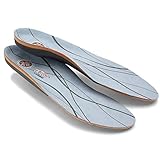
- PODIATRIST DESIGNED! An effective alternative to expensive custom-made orthotics. Innovative biomechanical THREE-ZONE COMFORT technology delivers deep heel cup stability, forefoot cushioning, and ultimate arch support to prevent excessive pronation caused by flat feet. These essential contact points help to realign positioning of feet, aiding to re-establish your body’s natural alignment, from the ground up.
- VIONIC ORTHOTIC INSOLES! These women’s and men’s shoe inserts offer a convenient, pain-free natural healing solution for many of the common aches and pains associated with poor lower-limb alignment, plantar fasciitis, and arch pain. EVA orthotic with re-enforced, hardened plastic (PE) shell for added motion control and stability. Cushioned shock dot in the heel for added shock absorption. Can be trimmed in forefoot if necessary.
- DESIGNED FOR EVERYDAY USE! Designed to provide greater control in faster paced activities such as running and fast walking. 4 degree rear foot wedge to provide support and control which helps prevent excess pronation. Odor absorbing cover. Contoured around the heel and arch areas to achieve 100% foot contact. Podiatrist Designed, APMA Seal of Acceptance.
- COMFORTABLE TO WEAR! Shoe inserts for women and men contoured around the heel and arch areas to achieve perfect foot contact.
- SIZES AVAILABLE: XS: Women’s 4.5 – 6 / Men’s 3.5 – 5 S: Women’s 6.5 – 8 / Men’s 5.5 – 7 M: Women’s 8.5 – 10 / Men’s 7.5 – 9 L: Women’s 10.5 – 12 / Men’s 9.5 – 11 XL: Men’s 11.5 – 13

- Signature waffle-inspired rubber outsole for traction and flexibility
- Provides continuous support of the Plantar Fascia by gently stretching the fascia tissue.
- Compression zones promote circulation, reduce impact vibration, boost recovery and strengthen feet.
- Lightweight, seamless design with extra cushioning provides support while still being comfortable.
- Supports the heel/arch and overall foot structure while stabilizing the tendon for better performance
- Made from high quality materials, the socks are moisture wicking and breathable.

- The first generation of Protalus’s M-100 Insole
- Patented Alignment Technology: The M-100 features a deep heel cup and contoured arch to correct overpronation and promote better posture, stability, and joint health throughout your body.
- Comfortable Insoles: The patented stress relief replacement shoe insoles increase comfort and relieve plantar fasciitis and anti-fatigue.
- Improves Alignment: The shoe insoles help improve alignment and reduce pain in the feet, ideal for low and high arches.
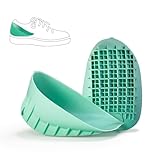
- ✶ALLEVIATES HEEL PAIN – Tuli’s Heavy Duty Heel Cups provide heel pain relief caused by plantar fasciitis, Sever’s disease, excessive pronation, Achilles tendonitis, etc. Ideal for those on their feet for most of the day or those looking for added comfort.
- ✶PODIATRIST PREFERRED – In an independent study conducted by M3 Global Research, podiatrists chose Tuli’s as the clear winner of recommended heel cup brands.
- ✶SHOCK-ABSORBING DESIGN – The multi-cell, multi-layer design absorbs shock and impact energy, mimicking the natural shock-absorbing system of your feet. As you walk or run, the design reduces the stress on your feet.
- ✶DOCTOR RECOMMENDED & APMA ACCEPTED – Tuli’s Heel Cups were designed by a leading podiatrist and have the honor of being accepted by the American Podiatric Medical Association.
- ✶FITS MOST LACE-UP SHOES – Best used in spacious lace-up shoes like athletic shoes / sneakers.
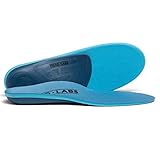
- Plantar Fasciitis Relief, Every Step – Firm arch support helps relieve heel and arch pain from plantar fasciitis and supports flat feet and overpronation for better alignment and all-day comfort.
- Clinical-Grade Biomechanics – Tread Labs 26-33 ARCHitecture delivers orthotic-level stability—custom-orthotic feel without the prescription.
- Dialed Fit for Any Shoe – Four arch heights (low, medium, high, extra-high) and an easy 3-step sizing guide make selection simple for work boots, sneakers, and everyday shoes—great for standing all day.
- Built to Last a Million Miles – Durable, recyclable arch supports with our Million-Mile Guarantee; replaceable top covers keep insoles fresh and cost-effective. Unlike foam that flattens, Pace is engineered to last.
- Trusted Expertise – Designed by Mark Paigen (founder of Chaco). Premium arch support inserts for men and women backed by decades of footwear innovation.
Frequently Asked Questions
When should I see a podiatrist?
If symptoms persist past 2 weeks, affect your normal activity, or are accompanied by red-flag symptoms (warmth, redness, swelling, inability to bear weight).
What does treatment cost?
Most diagnostic visits and conservative treatments are covered by Medicare and major insurers. Out-of-pocket costs vary by your specific plan.
How quickly can I get an appointment?
Most non-urgent cases see us within 5 business days. Urgent cases (sudden pain, possible fracture) typically same or next business day.
What is Plantar fasciitis?
Plantar fasciitis is a common foot/ankle condition that affects mobility and quality of life. Understanding the underlying cause is the first step in successful treatment. Our podiatrists at Balance Foot & Ankle perform a hands-on biomechanical exam, review your activity history, and use diagnostic imaging when appropriate to identify the root cause—not just treat the symptom. Many patients have been told to “rest and ice” without a deeper diagnostic workup; our approach is different.
Symptoms and warning signs
Common signs of plantar fasciitis include pain that worsens with activity, morning stiffness, swelling, tenderness when palpated, and difficulty bearing weight. If you experience sudden severe pain, inability to walk, visible deformity, numbness or color change, contact our office the same day or visit urgent care—these can signal a more serious injury such as a fracture, tendon rupture, or vascular compromise. Diabetics with any foot wound should seek same-day care.
Conservative treatment options
Most cases of plantar fasciitis respond to non-surgical care: structured rest, supportive footwear changes, custom orthotics, targeted stretching and strengthening protocols, anti-inflammatory medications when medically appropriate, and in-office procedures such as ultrasound-guided injections. We also offer advanced therapies including MLS laser therapy, EPAT/shockwave, regenerative injections, and image-guided procedures. Treatment is sequenced from least invasive to most invasive, and we explain the rationale at every step.
When is surgery considered?
Surgery is reserved for cases that fail 3-6 months of well-structured conservative care, when there is structural pathology (severe deformity, complete tear, advanced arthritis), or when imaging shows damage that will not heal without intervention. Our surgeons have performed 3,000+ foot and ankle procedures and prioritize minimally-invasive techniques whenever appropriate. We discuss recovery timelines, return-to-activity milestones, and realistic outcome expectations before any procedure is scheduled.
Recovery timeline and prevention
Recovery from plantar fasciitis varies based on severity and chosen treatment path. Conservative cases often improve within 4-8 weeks with consistent adherence to the protocol. Post-procedural recovery may range from a few days (in-office procedures) to several months (reconstructive surgery). Long-term prevention involves footwear assessment, activity modification, structured strengthening, and regular check-ins with your podiatrist if you have a history of recurrence. We provide written home-exercise plans and digital follow-up support.
Ready to Get Relief?
Same-day appointments available in Howell & Bloomfield Township, MI
4.9★ | 1,123 Reviews | 3,000+ Surgeries
Or call: (810) 206-1402

Dr. Tom Biernacki, DPM is a board-certified foot & ankle surgeon (ABFAS & ABPM) at Balance Foot & Ankle Specialists in Southeast Michigan. With over a decade of clinical experience, he specializes in heel pain, bunions, diabetic foot care, sports injuries, and minimally invasive surgery. Dr. Biernacki is a member of the APMA and ACFAS, and his patient education content on MichiganFootDoctors.com and YouTube has made him one of the most-followed foot & ankle educators on YouTube.