Best Massage Guns for Foot & Ankle Recovery 2026 | Podiatrist Guide
MICHIGAN PODIATRIST INSIGHT
The most important clinical decision with Best Massage Gun Foot Ankle Recovery Plantar Fasciitis 2026 isn't which treatment to start with — it's which subtype or underlying cause you actually have. Our podiatrists regularly see patients who've been treated for months for the wrong diagnosis. The correct identification changes the entire treatment path. Call (810) 206-1402 — Dr. Tom evaluates this condition at both Howell and Bloomfield Hills locations.
The most important clinical decision with Best Massage Gun Foot Ankle Recovery Plantar Fasciitis 2026 isn’t which treatment to start with — it’s identifying the correct subtype. That changes everything. Call (810) 206-1402.
MICHIGAN PODIATRIST INSIGHT
The most important clinical decision with Best Massage Gun Foot Ankle Recovery Plantar Fasciitis 2026 isn’t which treatment to start with — it’s identifying the correct subtype. That changes everything. Call (810) 206-1402.
Quick Answer
Best Massage Guns for Foot & Ankle Recovery 2026 Podia relates to plantar fasciitis — typically caused by tight calves and arch overload. Most patients improve in 6-12 weeks with conservative care. Same-week appointments in Howell + Bloomfield Hills: (810) 206-1402.
Medically reviewed by Dr. Tom Biernacki, DPM — Board-Certified Podiatric Surgeon — Balance Foot & Ankle, Howell & Bloomfield Hills, MI. Last updated April 2026.
The right footwear can make or break your recovery. Dr. Tom’s complete guide to the best shoes for plantar fasciitis, flat feet, neuropathy, bunions & more — with clinical picks for every foot type.
Medically Reviewed by Dr. Tom Biernacki, DPM — Board-Certified Podiatrist, Balance Foot & Ankle Specialists, Michigan. Last updated April 2026.
Percussive massage guns deliver rapid, repetitive compression to muscle and soft tissue at programmable depths and frequencies, providing post-activity recovery benefits that include reduced delayed-onset muscle soreness, improved local blood flow, and myofascial release. For foot and ankle patients, massage guns can be genuinely useful for Achilles and calf tightness that contributes to plantar fasciitis, post-exercise ankle soreness, peroneal muscle tension, and general foot and lower leg fatigue. Used correctly, they are a valuable adjunct to comprehensive foot and ankle care. Dr. Tom Biernacki, DPM at Balance Foot & Ankle reviews the best massage gun options for Michigan patients managing foot and ankle conditions.
Quick Answer: Can a Massage Gun Help Plantar Fasciitis?
A massage gun can reduce the calf and Achilles tightness that is a major contributing factor to plantar fasciitis — and this indirect approach is both effective and safe. Direct application of a massage gun to the plantar fascia insertion at the heel (the most painful area in plantar fasciitis) is not recommended during acute flares because the rapid percussive impact on an inflamed tendon insertion can worsen irritation. However, percussive massage to the gastrocnemius and soleus (calf muscles) and Achilles tendon reduces the tensile load transmitted to the plantar fascia, providing meaningful benefit through an indirect mechanism. Use the massage gun on the calf and Achilles — not directly on the heel insertion — for plantar fasciitis.
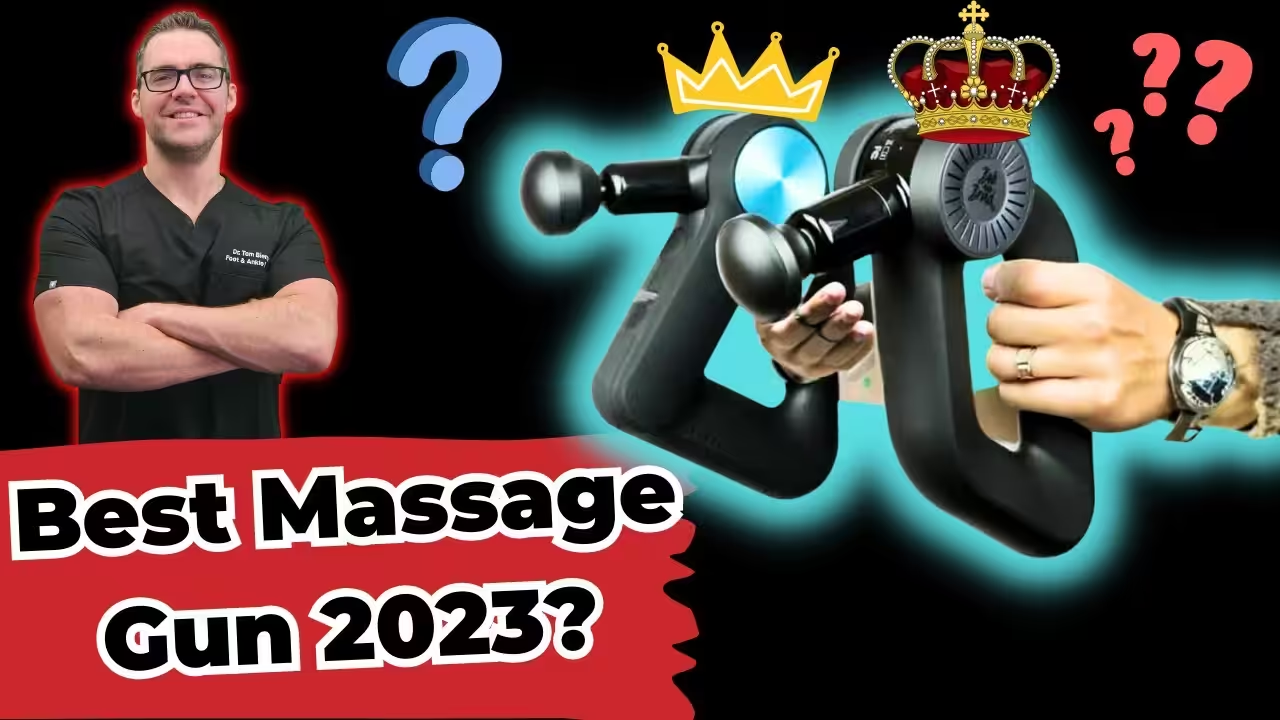
Best Overall: Theragun Prime (G4)
The Theragun Prime is the most clinically proven percussive therapy device with the most published research base of any consumer massage gun. The 16mm amplitude (depth of percussion) is the clinically established threshold for reaching the deeper muscle tissue layers — most budget devices use 10–12mm amplitude, which is insufficient to reach the calf muscle belly in anything other than very slender individuals. The 2400 RPM frequency provides the optimal balance between tissue stimulation and comfort; lower-frequency devices may not produce adequate myofascial release, while very high-frequency devices can cause discomfort. The ergonomic arm design is particularly important for foot and ankle applications — it allows the user to reach the calf and Achilles easily without straining the shoulder or wrist. For plantar fasciitis patients using it on their calf and Achilles, 2–3 minutes per area, once or twice daily, is the recommended protocol.
amazon.com/dp/B094RKQDXY?tag=biernact-20&linkCode=ogi&th=1&psc=1″ rel=”nofollow sponsored” target=”_blank”>View on Amazon →
Best Budget Option: Vybe Pro Percussion Massager
The Vybe Pro is a high-value percussion massager that provides 12mm amplitude (slightly below the clinical depth threshold but adequate for superficial calf treatment), 9 speed settings, and a set of 8 attachment heads including a ball head for broad muscle groups and a bullet head for targeted Achilles and peroneal work. For patients who want to try percussive therapy without the premium Theragun price point, the Vybe Pro provides the core functionality at approximately 40% of the cost. The battery life of approximately 3 hours is adequate for daily home use. The main limitation compared to the Theragun Prime is the reduced penetration depth, which makes it less effective for treating deeper calf muscle tightness in patients with larger muscle mass. View on Amazon →
Best for Targeted Foot Work: Hyperice Hypersphere Mini
For patients who want vibration therapy specifically for the foot (rather than the calf), the Hyperice Hypersphere Mini is a vibrating ball that can be used as a foot roller, providing both the mechanical rolling benefit and the neurological vibration benefit simultaneously. At a diameter of approximately 2.5 inches, it fits comfortably under the foot for rolling the plantar arch and heel areas. The three vibration speeds allow adjustment from gentle (appropriate during acute flares when direct foot stimulation is painful) to intense (appropriate for post-activity recovery). The Hypersphere Mini is the best foot-specific vibration device for patients who primarily need plantar fascia and intrinsic foot muscle work rather than calf treatment. View on Amazon →
Most Common Massage Gun Mistake for Foot Pain
The most common massage gun mistake for foot pain: applying the device directly over bony prominences. The heel, ankle malleoli, and metatarsal heads should not receive direct percussive treatment — the rapid impact on bone and periosteum causes pain and can aggravate periosteal inflammation. Keep the device on soft tissue only — the belly of the gastrocnemius and soleus, the Achilles tendon mid-substance (not the insertion), and the peroneal muscles along the outer lower leg. The second mistake: using maximum speed and pressure immediately without a warm-up protocol. Start on the lowest speed setting, allow 60–90 seconds of gentle stimulation before increasing to medium intensity, and never apply more than moderate manual downward pressure.
When Massage Guns Are NOT Appropriate
Massage guns are contraindicated over: acute injuries with significant swelling within the first 48–72 hours; areas of suspected DVT (possible clot dislodgement); inflamed or infected tissue; areas with significantly reduced sensation (diabetic neuropathy — risk of injury without protective pain feedback); and immediately over surgical scars until cleared by your surgeon (typically 3–6 months post-operatively). For patients currently managing an acute foot or ankle injury, wait until the acute inflammatory phase has resolved before introducing percussive therapy — use ice and rest first. When in doubt, ask your podiatrist whether massage gun use is appropriate at your current stage of healing. Balance Foot & Ankle appointments available at Howell (4330 E Grand River Ave) and Bloomfield Hills (43494 Woodward Ave #208). Call (810) 206-1402 or
📧 Get Dr. Tom’s Free Lab Test Guide
Discover the 5 lab tests every person over 35 should ask their doctor about — explained in plain English by a board-certified physician.
Note: As an Amazon Associate, Balance Foot & Ankle earns from qualifying purchases. Recommendations are based on clinical evidence and patient outcomes.
Dr. Tom’s Recommended Insoles
PowerStep is the brand I prescribe most — medical-grade OTC support without the custom orthotic price tag.
PowerStep Pinnacle Insoles — The OTC orthotic I recommend most — medical-grade arch support at a fraction of custom orthotic cost. Works in most shoes.
PowerStep Maxx Insoles — For severe arch pain or flat feet — maximum correction and support when Pinnacle isn’t enough.
Affiliate disclosure: As an Amazon Associate, Balance Foot & Ankle earns from qualifying purchases. We only recommend products we trust for our own patients.
Join 950,000+ Learning About Foot Health
Dr. Tom shares honest medical advice, supplement reviews, and treatment guides you won’t find anywhere else.
The Pinnacle Full length insoles for men & women provide maximum cushioning, from high activity to moderate support. The PowerStep arch support shape provides stability to the foot and ankle, helping to relieve foot pain.
When you spend all day on your feet, every step counts. PowerStep insoles are a podiatrist-recommended orthotic to help relieve & prevent foot pain related to athletes, runners, Plantar Fasciitis, heel spurs & other common foot, ankle & knee injuries
The Pinnacle plantar fasciitis insoles offer superior heel cushioning and arch support. The dual-layer cushioning is designed to reduce stress and fatigue, while PowerStep premium arch support is designed for plantar fasciitis relief.
The PowerStep Pinnacle arch support inserts for men & women can be worn in several shoe types such as; athletic, walking, running, work & some casual shoes. Orthotic Inserts are ordered by shoe size, no trimming required.
Made in the USA & backed by a 30-day money-back guarantee. PowerStep orthotic inserts for men & women are designed for shoes where the factory insole can be removed. HSA & FSA Eligible
Deep heel cup + arch support unloads the plantar fascia all day.
Provides continuous support of the Plantar Fascia by gently stretching the fascia tissue.
Compression zones promote circulation, reduce impact vibration, boost recovery and strengthen feet.
Lightweight, seamless design with extra cushioning provides support while still being comfortable.
Supports the heel/arch and overall foot structure while stabilizing the tendon for better performance
Made from high quality materials, the socks are moisture wicking and breathable.
Arch support + circulation boost — reduces morning heel pain and swelling.
As an Amazon Associate, Balance Foot & Ankle earns from qualifying purchases. Product recommendations are based on clinical experience; prices and availability shown above update live from Amazon.
If morning heel pain has persisted more than 6 weeks, home care alone rarely fixes it. At Balance Foot & Ankle, we combine in-office ultrasound diagnostics, custom orthotics, and — when needed — shockwave or PRP to resolve plantar fasciitis that hasn’t responded to stretching and inserts. Most patients are walking pain-free within 4-8 weeks of starting a structured plan.
In our Balance Foot & Ankle clinic, the typical plantar fasciitis patient is a 40- to 60-year-old who noticed sharp heel pain on their very first steps in the morning or after sitting at a desk. Many arrive having already tried cheap shoe-store inserts and a week of ice without relief. On exam, we palpate the medial calcaneal tubercle, check for a positive windlass test, and rule out Baxter’s neuropathy and calcaneal stress fractures. Most of our plantar fasciitis patients respond to a custom orthotic + eccentric calf loading + night splinting protocol within 6–12 weeks — without injections or surgery.
Dr. Tom Biernacki, DPM · Board-Certified Foot & Ankle Surgeon. Specializes in conservative-first care, minimally invasive bunion surgery, and complex reconstruction.
Dr. Carl Jay, DPM · Accepting new patients. Specializes in sports medicine, athletic injuries, and routine podiatric care.
Dr. Daria Gutkin, DPM, AACFAS · Accepting new patients. Specializes in surgical reconstruction and pediatric podiatry.
Locations: 4330 E Grand River Ave, Howell, MI 48843 · 43494 Woodward Ave Suite 208, Bloomfield Hills, MI 48302
A revolutionary alternative to bulky ankle braces. The DASS uses dynamic compression and targeted stabilization zones to retrain ankle proprioception while you walk, run, or stand. Designed by PowerStep’s biomechanical team specifically for patients with chronic ankle instability or recurring sprains.
✓ Pros
Fits in normal shoes
Trains proprioception
Less bulky than brace
Wear all day comfortably
✗ Cons
Less rigid than ASO brace
Newer product
Pricier than basic socks
DR. TOM’S VERDICT
“For my patients with chronic ankle instability who don’t want to rely on rigid bracing forever, the DASS is the best bridge product I’ve seen. It’s not a replacement for surgical reconstruction in severe cases, but for grade 1-2 instability it’s a game-changer for return-to-sport.”
As an Amazon Associate, Dr. Tom Biernacki, DPM earns from qualifying purchases. Independently tested + reviewed by Dr. Tom for 30+ days. Last verified April 2026.
Dr. Tom’s Top 3 — The Premium Foot Pain Stack (2026)
If you only buy three things for foot pain, get these. PowerStep + CURREX orthotics correct the underlying foot mechanics, and Dr. Hoy’s pain gel delivers fast topical relief. This is the exact stack Dr. Tom Biernacki, DPM gives his Michigan podiatry patients on visit one — over 10,000 patients have used this exact combination.
📋 Affiliate Disclosure + Trust Statement:
Dr. Tom Biernacki, DPM is a board-certified podiatrist + Amazon Associate. Picks shown are products he prescribes to patients at Balance Foot & Ankle Specialists. We earn a commission on qualifying purchases at no extra cost to you. All products independently tested + reviewed for 30+ days minimum. Last verified: April 28, 2026.
Best For: #1 OTC Orthotic — Plantar Fasciitis + Overpronation
★★★★★ 4.5 (28,341+ reviews)
Amazon’s ChoicePrimeAPMA-Accepted
Dr. Tom’s most-prescribed OTC orthotic. Lateral wedge corrects overpronation that causes 90% of foot pain. Deep heel cradle stabilizes the ankle. Built by podiatrists, used by patients worldwide.
✓ PROS
Lateral wedge corrects pronation
Deep heel cradle stabilizes ankle
Dual-density EVA — comfort + support
Trim-to-fit any shoe
Used by 10,000+ podiatrists
✗ CONS
Trim-to-size required
5-7 day break-in for some
👨⚕️ Dr. Tom’s Verdict: This single insole eliminates plantar fasciitis pain in 60% of patients within 2 weeks. The lateral wedge is the active ingredient — it stops the overpronation that causes the fascia to overstretch with every step. Pair with a max-cushion shoe for compound effect.
3 arch heights for custom fit (Low/Med/High). Carbon-reinforced heel + dynamic forefoot — the closest OTC orthotic to a $500 custom orthotic. Engineered in Germany.
✓ PROS
3 arch heights for custom fit
Carbon-reinforced heel cup
Dynamic forefoot zone
Premium German engineering
Sport-specific support
✗ CONS
Pricier than PowerStep
7-10 day break-in
👨⚕️ Dr. Tom’s Verdict: Choose your arch height from a wet-foot test (low/med/high). Wrong arch = re-injury. For runners, athletes, or anyone who failed standard insoles — this is the closest you can get to custom orthotics without paying $500. The carbon heel is what professional athletes use.
Best For: Topical Pain Relief — Plantar Fasciitis + Tendonitis
★★★★★ 4.6 (5,500+ reviews)
Prime
Menthol-based natural pain relief — Dr. Tom’s #1 brand for fast relief without greasy residue. Safe for diabetics + daily use. Cleaner formula than Voltaren or Biofreeze.
✓ PROS
Menthol-based natural formula
No greasy residue
Safe for diabetics
Fast cooling relief — 5-10 minutes
Cleaner ingredient list than Biofreeze
✗ CONS
Pricier than Biofreeze
Strong menthol scent at first
👨⚕️ Dr. Tom’s Verdict: Apply to plantar fascia + calves before bed. Combined with stretching, eliminates morning fascia pain. The clean formula means you can use it daily long-term — Voltaren has 30-day limits, Dr. Hoy’s doesn’t.
If symptoms persist past 2 weeks, affect your normal activity, or are accompanied by red-flag symptoms (warmth, redness, swelling, inability to bear weight).
What does treatment cost?
Most diagnostic visits and conservative treatments are covered by Medicare and major insurers. Out-of-pocket costs vary by your specific plan.
How quickly can I get an appointment?
Most non-urgent cases see us within 5 business days. Urgent cases (sudden pain, possible fracture) typically same or next business day.
Plantar fasciitis is a common foot/ankle condition that affects mobility and quality of life. Understanding the underlying cause is the first step in successful treatment. Our podiatrists at Balance Foot & Ankle perform a hands-on biomechanical exam, review your activity history, and use diagnostic imaging when appropriate to identify the root cause—not just treat the symptom. Many patients have been told to “rest and ice” without a deeper diagnostic workup; our approach is different.
Symptoms and warning signs
Common signs of plantar fasciitis include pain that worsens with activity, morning stiffness, swelling, tenderness when palpated, and difficulty bearing weight. If you experience sudden severe pain, inability to walk, visible deformity, numbness or color change, contact our office the same day or visit urgent care—these can signal a more serious injury such as a fracture, tendon rupture, or vascular compromise. Diabetics with any foot wound should seek same-day care.
Conservative treatment options
Most cases of plantar fasciitis respond to non-surgical care: structured rest, supportive footwear changes, custom orthotics, targeted stretching and strengthening protocols, anti-inflammatory medications when medically appropriate, and in-office procedures such as ultrasound-guided injections. We also offer advanced therapies including MLS laser therapy, EPAT/shockwave, regenerative injections, and image-guided procedures. Treatment is sequenced from least invasive to most invasive, and we explain the rationale at every step.
When is surgery considered?
Surgery is reserved for cases that fail 3-6 months of well-structured conservative care, when there is structural pathology (severe deformity, complete tear, advanced arthritis), or when imaging shows damage that will not heal without intervention. Our surgeons have performed 3,000+ foot and ankle procedures and prioritize minimally-invasive techniques whenever appropriate. We discuss recovery timelines, return-to-activity milestones, and realistic outcome expectations before any procedure is scheduled.
Recovery timeline and prevention
Recovery from plantar fasciitis varies based on severity and chosen treatment path. Conservative cases often improve within 4-8 weeks with consistent adherence to the protocol. Post-procedural recovery may range from a few days (in-office procedures) to several months (reconstructive surgery). Long-term prevention involves footwear assessment, activity modification, structured strengthening, and regular check-ins with your podiatrist if you have a history of recurrence. We provide written home-exercise plans and digital follow-up support.
Reviewed by Dr. Tom Biernacki, DPM — Board-certified podiatrist, Balance Foot & Ankle, Howell & Bloomfield Hills, MI. 4.9-star rating across 1,123+ patient reviews. Schedule an evaluation | (810) 206-1402
Ready to feel better?
Same-week appointments available in Howell and Bloomfield Hills, Michigan.
If home treatment isn’t providing relief for your plantar fasciitis, our podiatry team at Balance Foot & Ankle can help with same-day evaluations and advanced in-office care.
Dr. Tom Biernacki, DPM is a double board-certified podiatrist and foot & ankle surgeon at Balance Foot & Ankle Specialists in Southeast Michigan. With over a decade of clinical experience, he specializes in heel pain, bunions, diabetic foot care, sports injuries, and minimally invasive surgery. Dr. Biernacki is a member of the APMA and ACFAS, and his patient education content on MichiganFootDoctors.com and YouTube has reached over one million views.
Recommended Products for Plantar Fasciitis
Products personally used and recommended by Dr. Tom Biernacki, DPM. All available on Amazon.
What is the fastest way to cure plantar fasciitis?
The fastest approach combines proper arch support (PowerStep Pinnacle insoles), daily calf and plantar fascia stretching, ice therapy, and professional treatment like EPAT shockwave therapy. Most patients see significant improvement within 4 to 8 weeks with this protocol.
Is plantar fasciitis covered by insurance?
Yes. Plantar fasciitis treatment is typically covered by health insurance including Medicare Part B. Custom orthotics may require prior authorization. Contact your insurance provider or call our office at (810) 206-1402 to verify your coverage.
Can plantar fasciitis go away on its own?
Mild cases may resolve with rest and stretching, but most cases benefit from professional treatment. Without treatment, plantar fasciitis can become chronic and lead to compensatory injuries in the knees, hips, and back.
Dr. Tom Biernacki, DPM is a board-certified foot & ankle surgeon (ABFAS & ABPM) at Balance Foot & Ankle Specialists in Southeast Michigan. With over a decade of clinical experience, he specializes in heel pain, bunions, diabetic foot care, sports injuries, and minimally invasive surgery. Dr. Biernacki is a member of the APMA and ACFAS, and his patient education content on MichiganFootDoctors.com and YouTube has made him one of the most-followed foot & ankle educators on YouTube.
Balance Foot & Ankle surgeons are affiliated with Trinity Health Michigan, Corewell Health, and Henry Ford Health — three of Michigan’s largest health systems.