

Best Pickleball Shoes for Plantar Fasciitis 2026: Podiatrist’s Court-Specific Guide

Dr. Tom Biernacki, DPM — Board-Certified Podiatrist
15+ years in podiatric medicine at Balance Foot & Ankle Specialists, Howell & Brighton, Michigan. Pickleball-related foot and ankle injuries have surged in our clinic since 2022 — the sport’s explosive growth is bringing a new patient population with unique biomechanical demands. Plantar fasciitis is the most common pickleball foot complaint I treat. This guide applies podiatric biomechanics specifically to the court-sport environment.
Quick Answer: Best Pickleball Shoes for Plantar Fasciitis
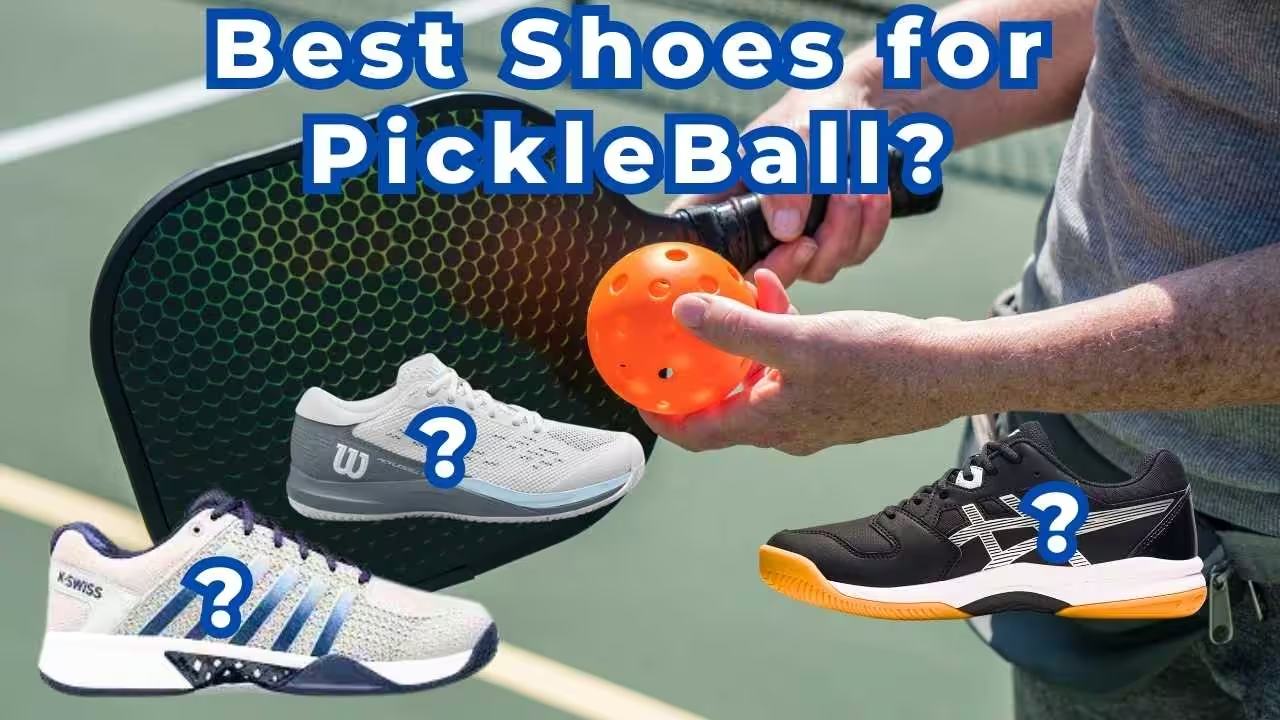
The ASICS Gel-Resolution 9 is my top clinical recommendation for pickleball players with plantar fasciitis — its Gel cushioning technology in the heel absorbs the hard-court impact specific to pickleball’s quick-stop mechanics, while the Dynawall lateral support system controls the ankle eversion that drives PF in court sport players. For players prioritizing cushioning over support, the New Balance 996 v5 delivers maximum court-shoe cushioning with a 10mm drop. The most important clinical distinction: pickleball players should never play in running shoes — running shoes lack the lateral reinforcement required for pickleball’s side-cut movements, allowing calcaneal eversion during every lateral step that stretches the plantar fascia 20–35% beyond what a court shoe with proper lateral support allows.
📋 Table of Contents
- Why Pickleball Creates Unique PF Risk
- ASICS Gel-Resolution 9 — Best Overall
- New Balance 996 v5 — Best Cushion Court Shoe
- Adidas Barricade 13 — Best Stability Court Shoe
- Wilson Rush Pro 4.0 — Best Value Court Shoe
- K-Swiss Hypercourt Express 2 — Best Lightweight
- Babolat Propulse Fury — Best for Aggressive Players
- Full Comparison Table
- Court Shoes vs. Running Shoes for Pickleball PF
- Player Profiles: Which Court Shoe for Your PF?
- FAQ
Why Pickleball Creates Unique Plantar Fasciitis Risk
🏓 The Pickleball Biomechanical PF Mechanism
Pickleball creates plantar fasciitis through three biomechanical mechanisms that distinguish it from other sports and from everyday walking or running:
1. Asymmetric lateral loading (dominant-side PF). Unlike running, which loads both feet symmetrically, pickleball involves repeated lateral weight shifts toward the non-dominant side during forehand strokes. Right-handed players load their left foot asymmetrically during forehand volleys, creating repetitive lateral-to-medial arch stress on the left plantar fascia. I see this pattern in our clinic regularly: right-handed pickleball players presenting with left-foot PF, and left-handers with right-foot PF. The connection is specific to the dominant forehand stroke mechanics and the return-to-center recovery step.
2. Hard court surface + quick-stop mechanics. Pickleball courts (concrete, asphalt, sport tile) are unforgiving surfaces. The quick-stop mechanics required to reach dink shots at the kitchen line create deceleration forces of 3–5× bodyweight on the leading foot’s heel — far exceeding the impact profile of recreational running on the same surfaces. Each stop loads the plantar fascia’s calcaneal insertion at impact force levels that, repeated 200–400 times per hour of play, create cumulative micro-trauma consistent with plantar fasciitis.
3. Age-related vulnerability of the pickleball demographic. The average pickleball player is 54 years old — precisely the demographic most vulnerable to plantar fasciitis development. Age-related heel fat pad atrophy reduces the foot’s natural shock absorption by 15–30% after age 50, meaning an older pickleball player absorbs significantly more plantar fascia stress per quick-stop than a younger player in identical shoes. Court shoe selection is proportionally more important for older players than for younger ones.
ASICS Gel-Resolution 9
Gel heel + Dynawall lateral. Best all-around PF court shoe.
NB 996 v5
FantomFit + Ndurance rubber. Maximum heel cushion for PF.
Adidas Barricade 13
Barricade Wrap technology. Maximum lateral support for overpronators.
Wilson Rush Pro 4.0
Propulsion Frame + Sensifeel. Clinical quality at accessible price.
K-Swiss Hypercourt Express 2
DuraSole + Aosta 7.0 rubber. Lightest clinical-grade court shoe.
Babolat Propulse Fury
Kompressor heel + Michelin outsole. For power players with PF.
1. ASICS Gel-Resolution 9 — Best Overall Pickleball Shoe for Plantar Fasciitis
ASICS Gel-Resolution 9 — Court-Specific Gel Cushion + Lateral PF Protection
Best for: All-court pickleball players with PF | Drop: ~10mm | Outsole: AHAR+ rubber (4mm heel zone) | Lateral Support: Dynawall midfoot | Weight: 12.1 oz (men’s)
The ASICS Gel-Resolution is the most clinically appropriate court shoe for pickleball players with plantar fasciitis, and it’s the shoe I specifically recommend when pickleball-related PF patients ask for court footwear guidance. The Gel-Resolution 9 uses ASICS’ 2-phase Gel system in the heel — the same technology I described in our ASICS running shoe guide as beneficial for PF — but engineered specifically for the hard-stop, hard-court mechanics of tennis and pickleball rather than the forward-motion running pattern. For pickleball, this distinction matters: the Gel system in court shoes is tuned for multi-directional impact absorption rather than the forward-heel-to-toe sequence of running.
The Dynawall system is the Gel-Resolution’s most clinically relevant feature for PF patients. It’s a medial arch support structure that activates specifically during lateral movements — the quick side cuts that are pickleball’s most prevalent motion pattern. When you push off laterally to reach a wide shot, the Dynawall engages to prevent the arch from collapsing inward, directly blocking the pronation that drives PF in court sport players. This is biomechanically equivalent to a medial post orthotic that activates under lateral loading — a prescription-only intervention replicated in a commercial court shoe.
The AHAR+ (Asian High Abrasion Rubber Plus) outsole compound is specifically engineered for hard court surfaces — it provides durable grip on concrete and sport tile without the premature outsole wear that occurs when outdoor-grade running shoe rubber contacts these surfaces repeatedly. The outsole pattern features pivot points under the ball of the foot for rotational movements and heel braking zones for the quick-stop deceleration that generates peak PF fascial loading.
✅ Clinical Pros
- Dynawall lateral support — controls PF-driving pronation during cuts
- 2-phase Gel system tuned for court impact patterns
- AHAR+ outsole — durable on hard court surfaces
- ~10mm drop — therapeutic PF heel elevation
- Heel braking zones reduce deceleration fascial loading
- Available in wide (2E) for wide-footed pickleball players
⚠️ Clinical Cons
- Heavy (12.1 oz) — may feel sluggish for younger, faster players
- Firm midsole — cushion-sensitive patients may prefer NB 996
- Ankle collar snug — may require wide lacing for edematous feet
- AHAR+ wears faster on abrasive outdoor concrete vs. sport tile
Dr. Tom’s Verdict: The ASICS Gel-Resolution 9 is the best single court shoe for pickleball players with plantar fasciitis. The Dynawall system’s lateral-motion arch support directly addresses the dominant mechanism of pickleball-related PF. For players over 55 with PF, this is my first recommendation without question.
No products found.
2. New Balance 996 v5 — Best Cushion Court Shoe for Plantar Fasciitis
New Balance 996 v5 — Maximum Cushion Court Platform for PF Players
Best for: Cushion-focused pickleball players with PF, players 55+ | Drop: ~10mm | Outsole: Ndurance rubber | Cushioning: FantomFit + REVlite midsole | Weight: 11.8 oz (men’s)
The New Balance 996 v5 is the most cushioned clinical-grade court shoe available — and for pickleball players over 55 with plantar fasciitis, it occupies a unique clinical position. The 996’s FantomFit upper construction provides a snug, precision fit that reduces internal foot movement (and consequent fascial micro-strain) during quick direction changes. The REVlite midsole provides substantially more cushioning than the typical thin, firm court shoe midsoles designed for maximum court feel and feedback — a tradeoff that benefits PF patients who need impact protection over proprioceptive precision.
New Balance specifically designs the 996 with a reinforced lateral heel counter — unusual in the court shoe category, where most brands prioritize upper lateral reinforcement over heel counter construction. For PF patients, heel counter rigidity is the primary structural requirement, and the 996’s heel counter matches the Gel-Resolution 9’s rigidity at a slightly lighter overall weight. The 10mm heel drop is maintained despite the higher cushion stack, preserving the fascial tension relief that distinguishes clinically appropriate court shoes from flat-soled alternatives.
Ndurance rubber outsole is New Balance’s premium court-specific compound — it wears 3× longer than standard rubber on hard courts and provides excellent braking traction for the quick stops that are pickleball’s highest-fascial-load moments. Wide-width options (2E men’s, D women’s) make the 996 v5 the best wide-footed option in the pickleball court shoe category — particularly relevant because pickleball’s older demographic has higher rates of wide-foot presentations than younger athletic populations.
✅ Clinical Pros
- Highest cushion in clinical court shoe category
- Reinforced heel counter — unusual and clinically valuable in court shoes
- 10mm drop — PF therapeutic range
- Ndurance rubber — 3× longer outsole life on hard courts
- FantomFit precision upper reduces internal foot movement
- 2E/D wide options — best wide-foot pickleball option
⚠️ Clinical Cons
- Softer midsole: less court feel than Barricade or K-Swiss
- Wide width limits colorway selection
- Heavier women’s model (10.8 oz) — more than most court shoes
- Less lateral dynamic support than Gel-Resolution Dynawall
Dr. Tom’s Verdict: The NB 996 v5 is the best pickleball court shoe for PF patients who prioritize cushioning over lateral dynamic support — ideal for older players with heel fat pad atrophy and for wide-footed players who need the 2E width option. For players whose PF is driven by lateral instability, the Gel-Resolution 9 is the better choice.
No products found.
3. Adidas Barricade 13 — Best Stability Court Shoe for Plantar Fasciitis
Adidas Barricade 13 — Maximum Lateral Stability for Overpronating PF Players
Best for: Overpronating pickleball players with PF | Drop: ~10mm | Outsole: Adiwear 6 reinforced | Stability: Barricade Wrap + TPU frame | Weight: 13.4 oz (men’s)
The Adidas Barricade 13 is the heaviest shoe in this guide — and the most structurally stable. The Barricade Wrap is Adidas’ signature court stability technology: a TPU (thermoplastic polyurethane) frame that wraps from the lateral heel through the midfoot, creating a mechanical cage that prevents calcaneal eversion during lateral movements. For pickleball players with confirmed overpronation and PF, the Barricade 13 provides a level of lateral stability that no other commercial court shoe matches.
The clinical rationale for recommending the Barricade 13 despite its weight is specific: for overpronating PF patients, the fascial loading from lateral movement in an unsupportive shoe far exceeds the muscular fatigue from wearing a slightly heavier stable shoe. The Barricade 13’s TPU frame effectively converts a potentially injurious lateral step into a controlled, supported movement — the shoe becomes a passive stability orthotic for the court. For patients who present with bilateral PF exacerbated specifically by pickleball lateral movement, the Barricade 13 often provides immediate symptom improvement without any other intervention.
Adiwear 6 rubber outsole is the most durable court compound available — Adidas certifies it for 1,000+ hours of hard court use. For pickleball players who play 4–5 times per week, this durability is economically meaningful. The outsole pattern features aggressive herringbone lugs specifically designed for the multidirectional stop-start patterns of court sports — providing exceptional braking traction that reduces the sliding deceleration that creates peak fascial loading at heel strike.
✅ Clinical Pros
- Barricade Wrap TPU frame — strongest lateral stability in court shoes
- Best for overpronation-driven PF in court sport context
- Adiwear 6 — most durable court outsole (1,000+ hours)
- Herringbone outsole: best braking traction = least deceleration load
- 10mm drop — PF therapeutic range maintained
- Cloudfoam+ midsole provides adequate cushioning
⚠️ Clinical Cons
- Heaviest in guide (13.4 oz) — noticeable on court
- Very stiff: 2-week break-in required
- Overkill for neutral or mild overpronation
- Limited colorways — mostly performance-focused aesthetics
Dr. Tom’s Verdict: The Barricade 13 is the right choice for pickleball players with confirmed overpronation and PF — particularly those who play multiple times per week on hard courts. The TPU wrap system directly addresses the dominant PF mechanism in overpronating court players. Respect the break-in period — the Barricade 13 is worth the 2 weeks of gradual wear.
No products found.
4. Wilson Rush Pro 4.0 — Best Value Court Shoe for Plantar Fasciitis
Wilson Rush Pro 4.0 — Clinical-Grade Court Performance at Accessible Price
Best for: Budget-conscious pickleball players with PF | Drop: ~10mm | Outsole: All-terrain rubber + R-DST+ | Stability: Propulsion Frame | Weight: 12.0 oz (men’s)
The Wilson Rush Pro 4.0 is the best-value clinical option in this guide — at $90–$110, it provides genuine court-shoe PF protection at 40–50% less than the ASICS Gel-Resolution or Adidas Barricade. The Rush Pro’s Propulsion Frame is Wilson’s medial support technology: a thermoplastic insert in the midsole arch area that resists pronation during lateral movements, providing meaningful arch support in a price category where competitors typically offer flat foam midsoles.
The R-DST+ (React Dynamic Support Technology) is Wilson’s midsole cushioning compound — a dual-density EVA foam that is firmer under the heel (for stability at heel contact) and softer under the forefoot (for comfort at toe-off). For PF patients, this dual-density approach is clinically appropriate: firm heel foam prevents excessive heel sinking that would require the plantar fascia to elongate beyond its elastic limit, while soft forefoot foam reduces the metatarsal loading at toe-off. The compound’s overall cushioning level is below the NB 996 or ASICS Resolution but above the minimal-cushion K-Swiss and Babolat alternatives.
The Rush Pro 4.0 features a Sensifeel 3.0 upper — a lightweight, breathable mesh construction with targeted reinforcement zones at the lateral midfoot and toe cap. For Michigan pickleball players in hot summer conditions (outdoor courts in July–August), the Sensifeel’s breathability is a clinical advantage over the stiffer synthetics in the Barricade or K-Swiss, reducing foot temperature that otherwise softens the heel fat pad and compromises cushioning effectiveness.
✅ Clinical Pros
- Propulsion Frame arch support — provides medial stability at budget price
- R-DST+ dual-density: firm heel + soft forefoot clinically appropriate for PF
- Best value in clinical court shoe category ($90–$110)
- Sensifeel upper: best breathability in guide
- 10mm drop — PF therapeutic range
- Lightweight (12.0 oz) — close to Barricade performance at less weight
⚠️ Clinical Cons
- Cushion below Gel-Resolution or NB 996 level
- Lateral support less reliable than Barricade TPU frame
- No wide-width options
- Outsole durability slightly below AHAR+ or Adiwear 6
Dr. Tom’s Verdict: The Wilson Rush Pro 4.0 is the best choice for budget-conscious PF patients who need a genuine court shoe but cannot justify $140–$170. The Propulsion Frame provides real arch support, and the R-DST+ dual-density foam is a legitimate clinical feature. For mild-to-moderate PF in recreational pickleball players, this shoe delivers 80% of the therapeutic value at 60% of the price.
- SUPERIOR FABRIC: 99% Polyester+1% Spandex, high quality stretchy fabric, soft and comfortable, Protect your sofa from daily wear and stains. Various colors are prepared, you can choose the color you like to cover.
- PERFECT FIT: Wing chair slipcover are one-size-fits-most. Best choice for both T cushion and box cushion styles. Fit well for most wing chair 80-92cm/31-36 inch long, 90-110cm/35-43 inch high and 69-80cm/27-31 inch wide.
- FULL PROTECT: These wing chair slipcovers are super soft and comfortable, natural environmental and ECO friendly. Protect your sofa from spills, stains and tearing. Great choice for homes with children and pets.
- STAY IN PLACE:Because the cushions are separated, Compared to one piece,they fit better.bonus foam sticks for keeping in place firmly,you don’t need to adjust after sitting.
- EASY CARE & WARRANTY: Machine washable, wash at temperature around 30 degrees Celsius, mild laundry detergents are advised, please do not bleach, do not iron We stand behind all of our high quality products.
5. K-Swiss Hypercourt Express 2 — Best Lightweight Court Shoe for PF
K-Swiss Hypercourt Express 2 — Lightest Clinical Court Shoe for Active PF Players
Best for: Active pickleball players with mild PF who prioritize agility | Drop: ~8mm | Outsole: Aosta 7.0 DuraSole rubber | Weight: 10.3 oz (men’s)
The K-Swiss Hypercourt Express 2 is the lightest clinical-grade court shoe in this guide at 10.3 oz — a meaningful 2 oz lighter than the Adidas Barricade. For pickleball players with mild plantar fasciitis who compete at higher levels and prioritize court speed and agility, the Hypercourt Express 2 provides adequate PF protection at the lowest weight in the category.
The 8mm heel drop is the primary clinical caveat — lower than my preferred 10–12mm for PF management. The 2mm difference is clinically meaningful primarily for patients with tight gastrocnemius/Achilles complexes who are sensitive to heel drop changes. For players with adequate calf flexibility (>15° ankle dorsiflexion in weight-bearing), the 8mm drop provides adequate fascial tension relief. For players with documented calf tightness (very common in pickleball’s older demographic), I recommend adding a 2–3mm heel lift orthotic inside the Hypercourt Express 2 to functionally restore the 10mm therapeutic drop.
The Aosta 7.0 DuraSole rubber is K-Swiss’ proprietary court compound — positioned between standard rubber and Adidas’ Adiwear in durability. The outsole features K-Swiss’ SmartStay herringbone pattern, which provides strong multidirectional traction with reduced rolling resistance for explosive lateral movements. For competitive-level pickleball players who need fast lateral recovery without compensating their plantar fascia, the combination of light weight and adequate traction makes the Hypercourt Express 2 the best performance-focused option in the PF court shoe category.
✅ Clinical Pros
- Lightest in guide (10.3 oz) — best agility for competitive players
- Aosta 7.0 DuraSole — durable court compound
- SmartStay herringbone — strong multidirectional traction
- Adequate for mild PF with good calf flexibility
- Breathable upper — good for outdoor summer play
- Lower price point than ASICS or Adidas options
⚠️ Clinical Cons
- 8mm drop — add heel lift for calf-tight PF patients
- Less medial support than Gel-Resolution or Barricade
- Not appropriate for severe or chronic PF
- No wide-width options
Dr. Tom’s Verdict: The K-Swiss Hypercourt Express 2 is for the competitive pickleball player with mild PF who won’t compromise on court agility. Add a 2–3mm heel lift orthotic to compensate for the 8mm drop. Not recommended for severe or moderate-to-severe PF — use the Gel-Resolution 9 instead.
No products found.
6. Babolat Propulse Fury All Court — Best for Aggressive Pickleball Players with PF
Babolat Propulse Fury All Court — Michelin Outsole + Kompressor Heel for Power Players
Best for: Power/aggressive pickleball players with mild-moderate PF | Drop: ~10mm | Outsole: Michelin (licensed technology) | Cushioning: Kompressor heel | Weight: 12.6 oz (men’s)
The Babolat Propulse Fury is unique in the court shoe category for its use of Michelin tire rubber technology in the outsole — the same company that makes high-performance automotive tires manufactures the Propulse Fury’s outsole compound under license to Babolat. Michelin rubber provides exceptional grip-to-weight performance, and for pickleball players with PF, the specific benefit is braking traction: the Michelin compound stops the foot more completely and more quickly than standard rubber, reducing the sliding deceleration that creates peak heel fascial loading.
The Kompressor heel technology is Babolat’s proprietary cushioning insert — a heel pod that uses a compressible thermoplastic structure to absorb impact forces more linearly than foam alone. Think of it as a miniature car shock absorber under the heel: it extends as the foot lifts and compresses as it lands, providing consistent cushioning energy even at high impact velocities. For pickleball players who make power smashes and drive volleys requiring explosive court movement, the Kompressor heel manages the higher impact velocities of aggressive play more effectively than standard EVA foam.
The 10mm heel drop is appropriate for PF management. The Propulse Fury’s medial support structure is less comprehensive than the Barricade 13’s TPU frame but more developed than the Rush Pro 4.0 — appropriate for mild-to-moderate overpronation in the pickleball context. For severe overpronation, the Barricade 13 remains the superior clinical choice.
✅ Clinical Pros
- Michelin outsole — exceptional braking traction for PF protection
- Kompressor heel — consistent cushioning at high impact velocities
- 10mm drop — PF therapeutic range
- Intermediate medial support — good for mild-moderate overpronation
- Well-suited for power players’ aggressive court movement
- Premium build quality — durable for high-frequency play
⚠️ Clinical Cons
- Heaviest in aggressive category (12.6 oz)
- Premium price ($130–$150)
- Less cushion than NB 996 — not for cushion-focused patients
- No wide-width options available
Dr. Tom’s Verdict: The Babolat Propulse Fury is the best choice for power pickleball players with PF who need superior braking traction and consistent heel cushioning during aggressive court movements. The Michelin outsole is a genuine differentiator for fast-paced play where braking traction directly reduces peak fascial loading at heel contact.
No products found.
Pickleball PF Shoes: Full Comparison Table
| Shoe | Drop | Lateral Support | Cushion | Weight | Best For | PF Rating |
|---|---|---|---|---|---|---|
| ASICS Gel-Resolution 9 ⭐ Top Pick | ~10mm | Dynawall (excellent) | 2-phase Gel | 12.1 oz | All-court, overpronators | ⭐⭐⭐⭐⭐ |
| NB 996 v5 | ~10mm | Heel counter (good) | REVlite (max) | 11.8 oz | Cushion-seekers, 55+, wide feet | ⭐⭐⭐⭐⭐ |
| Adidas Barricade 13 | ~10mm | Barricade Wrap TPU (max) | Cloudfoam+ | 13.4 oz | Severe overpronation | ⭐⭐⭐⭐⭐ |
| Wilson Rush Pro 4.0 | ~10mm | Propulsion Frame (moderate) | R-DST+ dual | 12.0 oz | Budget, recreational players | ⭐⭐⭐⭐ |
| K-Swiss Hypercourt 2 | ~8mm | Minimal | Standard EVA | 10.3 oz | Competitive, mild PF | ⭐⭐⭐½ (add heel lift) |
| Babolat Propulse Fury | ~10mm | Moderate | Kompressor heel | 12.6 oz | Power players, aggressive play | ⭐⭐⭐⭐ |
Court Shoes vs. Running Shoes for Pickleball with Plantar Fasciitis
The most common footwear error I see in pickleball players with plantar fasciitis is wearing running shoes on the court. The reasoning is understandable — patients know running shoes are recommended for PF, they own a pair, and they bring them to the pickleball court assuming good running shoe = good pickleball shoe. This reasoning is clinically incorrect and regularly worsens PF in court sport players.
The Biomechanical Problem with Running Shoes in Pickleball
Running shoe design assumption: Forward motion. Running shoe midsoles, heel counters, and outsoles are engineered for a heel-to-toe forward progression — the heel strikes, the foot rolls forward, and the toe pushes off. Every structural element of a running shoe (heel bevel, rocker geometry, forward-flared outsole) is designed for this motion pattern.
Pickleball motion reality: Lateral cuts, quick stops, and rotational pivots. The dominant motion pattern in pickleball is lateral — shuffling sideways, pushing off laterally to reach shots, stopping quickly, and rotating at the kitchen line. These movements create forces perpendicular to the forward-motion axis that running shoes are entirely unprepared to manage.
The clinical consequence: When a lateral force is applied to a running shoe (as occurs with every pickleball side step), the forward-flared midsole geometry and beveled heel act as a ramp that amplifies inward calcaneal rotation — essentially converting lateral court forces into maximum pronation events. Each lateral step in a running shoe on the pickleball court creates an arch collapse event 20–35% greater than the same step in a court shoe with lateral reinforcement. For a plantar fasciitis patient, these repeated high-pronation events maintain the micro-trauma cycle that prevents fascial healing.
Court Shoe Advantages for Pickleball PF: Four Clinical Properties
1. Lateral outsole wrap. Court shoes extend the outsole up the lateral wall of the shoe, creating a contact surface for lateral foot contact that running shoes lack. When you plant laterally in a court shoe, the outsole’s lateral edge contacts the court and provides traction — preventing the lateral foot slippage that creates uncontrolled pronation in running shoes.
2. Torsional rigidity. Court shoe midsoles are specifically designed to resist twisting — they are stiffer in the midfoot rotation axis than running shoes. This torsional stiffness prevents the midfoot collapse that drives PF during pickleball’s rotational movements (particularly the pivot step used in transition from baseline to kitchen).
3. Lower profile without reduced drop. Court shoes maintain 8–12mm heel drop while keeping a lower overall profile than running shoes of equivalent drop. This lower profile reduces the instability that occurs when a tall running shoe stack contacts the court during lateral movements — a tall shoe stack creates a longer lever arm for ankle eversion during court-specific movements.
4. Court-specific outsole patterns. Herringbone and directional lug patterns on court shoe outsoles are engineered for multidirectional traction. Running shoe outsoles (forward-directed lugs, heel braking zones) provide inferior traction during lateral and rotational movements, increasing the metabolic cost of court movement and forcing compensatory muscle activity that loads the plantar fascia.
Player Profiles: Which Court Shoe for Your Pickleball PF?
Profile 1: The Weekend Recreational Player (55+, new to pickleball, mild PF)
Presentation: Plays 2x/week at the local recreation center on indoor sport tile. Developed heel pain in the dominant-side foot after starting pickleball 6 months ago. Morning first-step pain 4/10, resolves with activity. Mild overpronation.
Recommendation: ASICS Gel-Resolution 9 + custom orthotics
Clinical rationale: The Gel-Resolution 9’s Dynawall directly addresses the lateral pronation mechanism driving this patient’s dominant-side PF. The orthotic adds heel cup support and medial arch contour that the court shoe’s built-in support alone may not fully provide for a patient with existing mild overpronation. Clinical protocol: reduce pickleball to 1x/week during acute phase. Add pre-play plantar fascia stretching protocol (2 minutes, towel stretch + standing calf stretch) before every session. Ice 15 minutes post-play. Re-evaluate at 6 weeks.
Profile 2: The Competitive Senior Player (60+, 4x/week, chronic bilateral PF)
Presentation: Tournament-level player. Bilateral PF, right worse than left. Has tried running shoes, custom orthotics, and a cortisone injection (temporary relief only). Heel fat pad atrophy on MRI. Needs to maintain competition schedule.
Recommendation: New Balance 996 v5 + custom orthotics with heel cup + compression socks during play
Clinical rationale: This patient’s primary unmet need is heel cushioning — the cortisone injection provided temporary anti-inflammatory relief but doesn’t address the fat pad atrophy that creates chronic percussion loading. The NB 996 v5’s REVlite maximum cushion provides the impact attenuation the deteriorated fat pad cannot. Custom orthotics with a deep heel cup center the remaining fat pad under the calcaneus, preventing lateral fat pad migration that reduces effective cushioning per step. Compression socks reduce the end-of-session edema that this high-frequency player accumulates. Note: bilateral chronic PF unresponsive to injection typically requires PRP or ESWT (shockwave) in addition to footwear — I counsel this patient on these options alongside shoe selection.
Profile 3: The Young Competitive Player (35, 5x/week, PF from sudden mileage increase)
Presentation: Former collegiate tennis player who picked up pickleball intensively 3 months ago. Developed unilateral PF in the non-dominant foot (left, consistent with right-handed forehand asymmetric loading). Pain 6/10 during play, 3/10 after rest. Neutral gait, high calf flexibility.
Recommendation: K-Swiss Hypercourt Express 2 + 2mm heel lift + temporary volume reduction
Clinical rationale: Rapid mileage increase is the dominant etiology — this patient’s tissues need load reduction first, footwear optimization second. Reduce pickleball frequency to 3x/week for 3 weeks. The Hypercourt Express 2 is appropriate for this player’s high calf flexibility (8mm drop is adequate with his dorsiflexion range), competitive pace requirements, and neutral gait (no lateral support system needed). The 2mm heel lift compensates for the 8mm drop to get to 10mm functional elevation. Primary treatment: eccentric calf raises + plantar fascia stretching protocol. Footwear is adjunctive, not primary treatment at this stage.
Profile 4: The Heavy Player (240 lbs, new to pickleball, severe PF)
Presentation: Started pickleball as part of a weight-loss and fitness program. 240 lbs. Severe bilateral PF, pain 7–8/10 during first 10 minutes of play. Has worn only running shoes on court previously. Moderate overpronation.
Recommendation: Adidas Barricade 13 + full-length custom orthotics with deep heel cup + cortisone injection evaluation
Clinical rationale: At 240 lbs, every lateral step on a hard pickleball court creates approximately 3.5× bodyweight loading at the PF calcaneal insertion. Running shoes are amplifying this to pathological levels through uncontrolled lateral pronation. The Barricade 13’s TPU wrap provides the maximum available commercial lateral stabilization for this patient’s weight and overpronation degree. Full-length custom orthotics with deep heel cup add the cushioning and arch support the Barricade alone cannot provide at this body weight. Cortisone injection consideration: for 7–8/10 pain, anti-inflammatory injection reduces the acute inflammatory component allowing the footwear and orthotic changes to take effect. Counsel patient: clinical outcomes improve proportionally with weight reduction — a 20-lb loss creates approximately 60-lb reduction in PF loading per step.
Pickleball PF Prevention: The Court-Specific Protocol
Beyond footwear, pickleball players with plantar fasciitis benefit from sport-specific modifications that reduce fascial loading during play without eliminating the activity that makes pickleball so valuable for this age demographic’s physical and social health.
Pre-Play Protocol (15 Minutes Before Court Time)
Step 1 — Plantar fascia night splint or stretch strap (5 minutes). If you use a night splint, wear it for 10 additional minutes after waking before playing any morning session. If no night splint, perform 3 sets of towel/strap plantar fascia stretches (30 seconds each, pulling toes toward shin) before court arrival.
Step 2 — Warm-up walk (5 minutes). Walk at moderate pace for 5 minutes before stepping on the pickleball court. Cold plantar fascia collagen has 20–30% lower strain-to-failure tolerance than warmed-up fascia. Five minutes of walking significantly reduces PF tear risk during the explosive first movements of pickleball warmup.
Step 3 — Standing calf stretch (2 minutes). Both legs, knee straight (gastrocnemius) and knee bent (soleus), 30 seconds each. Calf flexibility directly determines plantar fascia elongation during each step. Tighter calves = longer fascial strain per step. Consistent pre-play stretching reduces per-step fascial load by 8–15% over time.
Post-Play Protocol (20 Minutes After Last Point)
Immediate icing: Apply ice pack (or frozen water bottle rolled underfoot) to the plantar fascia for 15 minutes immediately after play. Post-activity icing reduces the acute inflammatory response triggered by the cumulative micro-trauma of court sport fascial loading. The 15-minute window immediately post-activity is the most effective icing timing — inflammation cascades that have already peaked (2–4 hours post-activity) are less responsive to topical cold.
Compression: Compression sock (15–20 mmHg) applied immediately after removing court shoes. Reduces post-play plantar fascia and Achilles edema that creates the stiffness and pain experienced at the beginning of the next session.
Arch massage: 2 minutes of rolling massage with a golf ball or Lacrosse ball under the arch. Promotes post-activity fascial fluid exchange and reduces collagen cross-linking that creates the stiffness experienced at next-day first steps.
Watch: Podiatrist Explains Plantar Fasciitis Treatment
More Podiatrist-Recommended Plantar Fasciitis Essentials
Best Night Splint

- Plantar fascitis night splint brace heel and foot pain size: Medium
- Medium , men 8 10 1/2 , women 7 1/2 10
- Designed to comfortably position the foot
- Low profile shell is sturdy and breathable
Keeps fascia stretched overnight — the #1 intervention for morning heel pain.
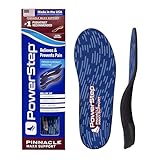
- Slightly Angled Heel Post: PowerStep Pinnacle Maxx insoles for men & women keep the feet from rolling inward, improve stability, and prevent problems caused by overpronation including flat feet and plantar fasciitis.
- Firm But Flexible Design: Our orthotics Pinnacle PowerStep insoles for overpronation are equipped with a deep heel insert cradle for increased comfort, stability, and motion control for standard arch support and immediate heel pain relief.
- Premium Dual Layer Cushioning: For enhanced comfort from heel to toe. As the thickest of our Pinnacle PowerStep orthotics, these need to be worn in shoes where the factory insole can be removed. HSA & FSA Eligible. Made in the USA
- The Perfect Balance of Comfort and Support: These PowerStep Pinnacle arch support inserts for men & women are unlike most other orthotics as they help to correct over-pronation which can cause ankle, knee, and hip pain in your daily routine
- No Trimming: Our arch support PowerStep insoles men & women can use can be worn in a variety of shoe styles & fit in any type with no trimming required! Unlike most insoles for flat feet and other heel pain relief products, these come ready to wear.
Top Podiatrist-Recommended Insole

- The Pinnacle Full length insoles for men & women provide maximum cushioning, from high activity to moderate support. The PowerStep arch support shape provides stability to the foot and ankle, helping to relieve foot pain.
- When you spend all day on your feet, every step counts. PowerStep insoles are a podiatrist-recommended orthotic to help relieve & prevent foot pain related to athletes, runners, Plantar Fasciitis, heel spurs & other common foot, ankle & knee injuries
- The Pinnacle plantar fasciitis insoles offer superior heel cushioning and arch support. The dual-layer cushioning is designed to reduce stress and fatigue, while PowerStep premium arch support is designed for plantar fasciitis relief.
- The PowerStep Pinnacle arch support inserts for men & women can be worn in a variety of shoe types such as; athletic, walking, running, work & some casual shoes. Orthotic Inserts are ordered by shoe size, no trimming required.
- Made in the USA & backed by a 30-day money-back guarantee. PowerStep orthotic inserts for men & women are designed for shoes where the factory insole can be removed. HSA & FSA Eligible
Deep heel cup + arch support unloads the plantar fascia all day.
Plantar Fasciitis Compression Sock

- Provides continuous support of the Plantar Fascia by gently stretching the fascia tissue.
- Compression zones promote circulation, reduce impact vibration, boost recovery and strengthen feet.
- Lightweight, seamless design with extra cushioning provides support while still being comfortable.
- Supports the heel/arch and overall foot structure while stabilizing the tendon for better performance
- Made from high quality materials, the socks are moisture wicking and breathable.
Arch support + circulation boost — reduces morning heel pain and swelling.
As an Amazon Associate, Balance Foot & Ankle earns from qualifying purchases. Product recommendations are based on clinical experience; prices and availability shown above update live from Amazon.

![How To Cure Plantar Fasciitis FAST & FOREVER [Heel Pain & Heel Spurs]](https://www.michiganfootdoctors.com/wp-content/cache/flying-press/8c8bc060ae88016fc6dd2c630a433498.jpg)
Watch: How To Cure Plantar Fasciitis FAST & FOREVER [Heel Pain & Heel Spurs] — MichiganFootDoctors YouTube
When to See a Podiatrist
If morning heel pain has persisted more than 6 weeks, home care alone rarely fixes it. At Balance Foot & Ankle, we combine in-office ultrasound diagnostics, custom orthotics, and — when needed — shockwave or PRP to resolve plantar fasciitis that hasn’t responded to stretching and inserts. Most patients are walking pain-free within 4-8 weeks of starting a structured plan.
Call Balance Foot & Ankle: (810) 206-1402 · Book online · Offices in Howell & Bloomfield Hills
Frequently Asked Questions: Pickleball Shoes and Plantar Fasciitis
Can you play pickleball with plantar fasciitis?
Yes — with appropriate footwear, orthotics, and modified protocol. Pickleball’s low-impact nature (shorter court, underhand serve, less running than tennis) makes it more manageable than most court sports for PF patients. The key modifications: use dedicated court shoes (not running shoes), perform pre- and post-play stretching protocols, reduce session frequency during acute phases (once per week initially), apply ice immediately post-play, and add orthotic support. Most PF patients can maintain recreational pickleball throughout their recovery with these modifications. For severe PF (pain 7+/10 during play), a 2–4 week complete rest from court sport may be clinically necessary before resuming with modified protocol.
Can I wear running shoes for pickleball with plantar fasciitis?
No — running shoes should not be worn for pickleball, particularly for PF patients. Running shoes are engineered for forward-motion biomechanics and lack the lateral reinforcement required for pickleball’s side-cut movements. In running shoes, each lateral step creates a calcaneal eversion event 20–35% greater than in a dedicated court shoe, directly stretching the plantar fascia at its calcaneal insertion. For PF patients, this running-shoe/pickleball combination maintains the micro-trauma cycle that prevents fascial healing. The Brooks Ghost, HOKA Bondi, and New Balance 1080 — all excellent PF running shoes — are specifically contraindicated for pickleball court use. Use ASICS Gel-Resolution 9, NB 996 v5, or Adidas Barricade 13 instead.
Why do so many pickleball players develop plantar fasciitis?
Three factors converge to make pickleball unusually PF-prone: (1) Demographic — pickleball’s player base averages 54 years old, the age group with highest PF incidence due to heel fat pad atrophy, reduced collagen turnover, and decreased fascial elasticity. (2) Surface — hard court surfaces (concrete, asphalt, sport tile) transmit full impact forces to the foot without soil absorption that reduces loading in walking or trail activities. (3) Movement pattern — pickleball’s asymmetric lateral loading (dominant-side forehand stroke creates repetitive non-dominant-side fascial stress) creates a specific overuse pattern that running and walking do not replicate. The combination of vulnerable patient population, hard surface, and asymmetric repetitive loading creates a near-perfect PF incubation environment.
What is the best pickleball shoe for seniors with plantar fasciitis?
For pickleball players over 55 with plantar fasciitis, I recommend the New Balance 996 v5 as the primary clinical option — its maximum court cushioning addresses the heel fat pad atrophy common in the 55+ demographic, and its wide-width options (2E men’s) accommodate the foot spread that increases with age. The ASICS Gel-Resolution 9 is the second-line recommendation — superior lateral support for overpronation but slightly less cushioning than the 996. Both maintain 10mm heel drop appropriate for PF management. Add custom orthotics with deep heel cup for severe fat pad atrophy cases. Avoid the K-Swiss Hypercourt Express 2 for seniors — the 8mm drop and lower cushioning level are inadequate for the age-related fascial vulnerability of most players in this demographic.
Should I use orthotics with my pickleball shoes for plantar fasciitis?
Yes — custom or high-quality over-the-counter orthotics significantly improve PF outcomes in pickleball players beyond what shoes alone provide. For pickleball-specific orthotics, I recommend: (1) Deep heel cup (20mm+ lateral wall) to center fat pad and resist calcaneal eversion during lateral steps. (2) Medial arch post (4–6mm) to control pronation at midstance. (3) Heel lift (3–6mm) to reduce fascial tension — particularly important in the 8mm-drop K-Swiss or lower-drop alternatives. (4) Court-shoe specific length — 3/4 length or court-specific full-length orthotics that don’t extend past the toe box’s reinforced zone. Custom orthotics fabricated specifically for court shoe use (thinner profile, slightly more rigid for lateral stability) are ideal for competitive pickleball players — these differ from running shoe orthotics and should be requested specifically when consulting a podiatrist.
Pickleball Keeping You on the Sidelines?
Don’t let plantar fasciitis end your pickleball season. At Balance Foot & Ankle Specialists, Dr. Tom Biernacki offers sport-specific PF treatment including court-sport gait analysis, pickleball-specific custom orthotics, shockwave therapy (ESWT), and PRP injections at our Howell and Brighton, Michigan clinics. Stay in the game.
Book a Sport Injury Appointment →In Our Clinic
In our Balance Foot & Ankle clinic, the typical plantar fasciitis patient is a 40- to 60-year-old who noticed sharp heel pain on their very first steps in the morning or after sitting at a desk. Many arrive having already tried cheap shoe-store inserts and a week of ice without relief. On exam, we palpate the medial calcaneal tubercle, check for a positive windlass test, and rule out Baxter’s neuropathy and calcaneal stress fractures. Most of our plantar fasciitis patients respond to a custom orthotic + eccentric calf loading + night splinting protocol within 6–12 weeks — without injections or surgery.
In-Office Treatment at Balance Foot & Ankle
When conservative care isn’t enough, Dr. Tom Biernacki and the team at Balance Foot & Ankle offer advanced, same-day options — including Plantar Fasciitis Surgery Bloomfield Hills at our Howell and Bloomfield Hills clinics.
Same-day appointments available. Call (810) 206-1402 or book online.
When Shoes Aren’t Enough — Dr. Tom’s Top 9 Orthotics
About 30% of patients I see for foot pain need MORE than a great shoe — they need a structured insole. Below: my complete 2026 orthotic ranking with pros, cons, and the specific patient I’d give each one to.
★ DR. TOM’S COMPLETE 2026 ORTHOTIC RANKING
9 Best Prefab Orthotics by Use Case
PowerStep, Currex, Spenco, Vionic, and Superfeet — every orthotic I’ve fitted to thousands of patients across both Michigan offices. Each card includes pros, cons, and the specific patient I’d give it to. Real Amazon ratings, review counts, and prices below.
Best All-Purpose Orthotic for Most Patients
Semi-rigid arch shell + dual-layer cushion + deep heel cup. The orthotic I’ve fitted to more patients than any other for 15 years. APMA-accepted. Trim-to-fit design works in athletic shoes, casual shoes, and most work boots.
- The Pinnacle Full length insoles for men & women provide maximum cushioning, from high activity to moderate support. The PowerStep arch support shape provides stability to the foot and ankle, helping to relieve foot pain.
- When you spend all day on your feet, every step counts. PowerStep insoles are a podiatrist-recommended orthotic to help relieve & prevent foot pain related to athletes, runners, Plantar Fasciitis, heel spurs & other common foot, ankle & knee injuries
- The Pinnacle plantar fasciitis insoles offer superior heel cushioning and arch support. The dual-layer cushioning is designed to reduce stress and fatigue, while PowerStep premium arch support is designed for plantar fasciitis relief.
- The PowerStep Pinnacle arch support inserts for men & women can be worn in a variety of shoe types such as; athletic, walking, running, work & some casual shoes. Orthotic Inserts are ordered by shoe size, no trimming required.
- Made in the USA & backed by a 30-day money-back guarantee. PowerStep orthotic inserts for men & women are designed for shoes where the factory insole can be removed. HSA & FSA Eligible
✓ Pros
- Semi-rigid arch shell provides true biomechanical correction
- Deep heel cup centers the heel and reduces lateral instability
- Dual-layer cushion (top + bottom) lasts 9-12 months daily wear
- Available in 8 sizes for precise fit
- APMA-accepted and clinically validated
- Lower price than Superfeet Green for equivalent function
✗ Cons
- Too thick for most dress shoes (use ProTech Slim instead)
- Some break-in period required (3-7 days for arch tolerance)
- Not enough correction for severe pes planus or rigid pes cavus
Dr. Tom’s Recommendation: If a patient has run-of-the-mill plantar fasciitis, mild flat feet, or arch fatigue, this is the first orthotic I try. Better value than Superfeet for 90% of patients, which is why I swapped it into our clinic kits three years ago. Sub-$50 typically.
Maximum Motion Control · Flat Feet & Severe Over-Pronation
PowerStep’s most aggressive stability orthotic. Adds a 2°-7° medial heel post on top of the standard PowerStep platform — designed specifically for flat-footed patients and severe pronators who need real corrective force.

- Full Length Support - Our ProTech orthotic insoles support pronation, arch pain, heel pain, plantar fasciitis, and heel spurs.
- Your Go To Inserts - These orthotics for plantar fasciitis provide full length, total contact support for a number of common foot issues
- Easily Fix Your Arches - Standard, semi-rigid arch support that fits most shoes including, work boots, dress shoes and sneakers.
- Enhanced Comfort - Our ProTech orthotic inserts have maximum cushioning featuring ShockAbsorb Premium Foam heel support cushion to increased protection.
- Support + Comfort - PowerStep ProTech orthotic insoles are designed with built-in arch support, heel cradle, and a perfect balance of support and comfort. Legitimate PowerStep product packaging is marked with a unique US quality control code. If you are concerned that a PowerStep item is not legitimate, please contact PowerStep customer service.
✓ Pros
- 2°-7° medial heel post adds aggressive pronation control
- Same trusted PowerStep arch shell, more correction
- Built specifically for flat-foot biomechanics
- Excellent for posterior tibial tendon dysfunction (PTTD)
- Removable top cover for cleaning
✗ Cons
- Too aggressive for neutral-arch patients
- Needs longer break-in (10-14 days) due to stronger correction
- Adds 2-3 mm of stack height — won’t fit slim dress shoes
Dr. Tom’s Recommendation: When a patient comes in with significant flat feet AND symptoms (heel pain, arch pain, knee pain), the Original PowerStep isn’t aggressive enough. The Maxx is what gets prescribed. About 25% of my flat-footed patients end up here.
Low-Profile · Fits Dress Shoes & Narrow Casuals
3 mm slim profile with podiatrist-designed tri-planar arch technology. Engineered specifically to fit inside dress shoes, oxfords, loafers, and women’s flats without crowding the toe box. Vionic was founded by an Australian podiatrist.
No products found.
✓ Pros
- 3 mm slim profile (vs 7-10 mm for standard orthotics)
- Tri-planar arch technology adds support without bulk
- Built-in deep heel cup despite slim design
- Fits dress shoes WITHOUT having to remove the factory insole
- Trim-to-fit · APMA-accepted
✗ Cons
- Less arch support than full-volume orthotics
- Top cover wears faster than thicker alternatives
- Not enough correction for severe foot deformities
Dr. Tom’s Recommendation: My default when a patient says ‘I need orthotics but I have to wear dress shoes for work.’ Slim enough to fit in oxfords and pumps without the heel sliding out. The single highest-impact change you can make for office workers with foot pain.
Built-In Metatarsal Pad · Morton’s Neuroma · Ball-of-Foot Pain
Standard Pinnacle orthotic with a built-in metatarsal pad positioned proximal to the metatarsal heads — the exact location that offloads neuromas and metatarsalgia. No need for separate met pads or pad placement guesswork.
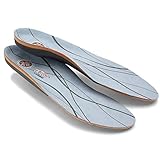
- PODIATRIST DESIGNED! An effective alternative to expensive custom-made orthotics. Innovative biomechanical THREE-ZONE COMFORT technology delivers deep heel cup stability, forefoot cushioning, and ultimate arch support to prevent excessive pronation caused by flat feet. These essential contact points help to realign positioning of feet, aiding to re-establish your body's natural alignment, from the ground up.
- VIONIC ORTHOTIC INSOLES! These women's and men's shoe inserts offer a convenient, pain-free natural healing solution for many of the common aches and pains associated with poor lower-limb alignment, plantar fasciitis, and arch pain. EVA orthotic with re-enforced, hardened plastic (PE) shell for added motion control and stability. Cushioned shock dot in the heel for added shock absorption. Can be trimmed in forefoot if necessary.
- DESIGNED FOR EVERYDAY USE! Designed to provide greater control in faster paced activities such as running and fast walking. 4 degree rear foot wedge to provide support and control which helps prevent excess pronation. Odor absorbing cover. Contoured around the heel and arch areas to achieve 100% foot contact. Podiatrist Designed, APMA Seal of Acceptance.
- COMFORTABLE TO WEAR! Shoe inserts for women and men contoured around the heel and arch areas to achieve perfect foot contact.
- SIZES AVAILABLE: XS: Women's 4.5 – 6 / Men's 3.5 – 5 S: Women's 6.5 – 8 / Men's 5.5 – 7 M: Women's 8.5 – 10 / Men's 7.5 – 9 L: Women's 10.5 – 12 / Men's 9.5 – 11 XL: Men's 11.5 – 13
✓ Pros
- Built-in met pad eliminates DIY pad placement errors
- Specifically designed for Morton’s neuroma + metatarsalgia
- Same trusted PowerStep arch + heel cup platform
- Top cover protects sensitive forefoot skin
- Faster relief than orthotics + add-on met pads
✗ Cons
- Met pad position is fixed (can’t fine-tune individual placement)
- Some patients with very small or very large feet need custom
- Slightly thicker than the standard Pinnacle
Dr. Tom’s Recommendation: If a patient has Morton’s neuroma, sesamoiditis, or generalized ball-of-foot pain (metatarsalgia), this saves a clinic visit and a prescription. The built-in pad placement is anatomically correct for 80% of feet. Way better than DIY met pads.
Adaptive Dynamic Arch · Athletic & Daily Wear
Currex’s flagship adaptive arch technology — the orthotic flexes with your gait instead of fighting it. Different stiffness zones along the length give you targeted support at the heel, midfoot, and forefoot. Available in three arch heights (low/medium/high).

- Signature waffle-inspired rubber outsole for traction and flexibility
✓ Pros
- Dynamic flex zones adapt to natural gait cycle
- Three arch heights ensure precise fit
- Lighter than rigid orthotics (no ‘heavy foot’ feel)
- Excellent for runners and athletic walkers
- European podiatric design (German engineering)
✗ Cons
- More expensive than PowerStep Original ($55-65 typically)
- Less aggressive correction than Pinnacle Maxx for severe cases
- Three arch heights means you must self-select correctly
Dr. Tom’s Recommendation: I started recommending Currex three years ago for runners who said PowerStep felt ‘too rigid.’ The dynamic flex zones respect natural gait. Best for active patients who walk 8K+ steps daily and don’t need maximum motion control.
Running-Specific · Heel Strike + Forefoot Strike Compatible
Currex’s purpose-built running orthotic. The midfoot flex zone is positioned for runner’s gait mechanics, with a flared heel cushion for heel strikers and a forefoot rocker for midfoot/forefoot strikers. Tested on 1000+ runners during product development.
- Provides continuous support of the Plantar Fascia by gently stretching the fascia tissue.
- Compression zones promote circulation, reduce impact vibration, boost recovery and strengthen feet.
- Lightweight, seamless design with extra cushioning provides support while still being comfortable.
- Supports the heel/arch and overall foot structure while stabilizing the tendon for better performance
- Made from high quality materials, the socks are moisture wicking and breathable.
✓ Pros
- Designed by German biomechanics lab specifically for runners
- Dynamic arch flexes with running gait (not static like PowerStep)
- Three arch heights (low/medium/high)
- Reduces overuse injury risk in mid-distance runners
- Lightweight (no impact on cadence)
✗ Cons
- Premium price ($60-75)
- Not aggressive enough for severe over-pronators (use Pinnacle Maxx)
- Runner-specific design = less ideal for daily walking shoes
Dr. Tom’s Recommendation: If a patient runs 20+ miles per week and has plantar fasciitis or shin splints, this is the orthotic I prescribe. The dynamic flex zones respect running biomechanics in a way that no rigid PowerStep can match. Pricier but worth it for serious runners.
Cavus Foot & High-Arch Patients
Polyurethane base with a deeper heel cup and higher arch profile than PowerStep — built for cavus (high-arched) feet that need maximum cushion and support. The 5-zone cushioning system addresses the unique pressure points of high-arch feet.

- The first generation of Protalus's M-100 Insole
- Patented Alignment Technology: The M-100 features a deep heel cup and contoured arch to correct overpronation and promote better posture, stability, and joint health throughout your body.
- Comfortable Insoles: The patented stress relief replacement shoe insoles increase comfort and relieve plantar fasciitis and anti-fatigue.
- Improves Alignment: The shoe insoles help improve alignment and reduce pain in the feet, ideal for low and high arches.
✓ Pros
- Deeper heel cup centers the heel for cavus foot stability
- Higher arch profile fills the void under high arches
- 5-zone cushioning addresses cavus foot pressure points
- Polyurethane base lasts 12+ months
- Available in Wide width
✗ Cons
- Too tall/aggressive for normal or low arches
- Won’t fit slim dress shoes
- Pricier than PowerStep Original
- Some patients find the arch height uncomfortable initially
Dr. Tom’s Recommendation: Cavus foot patients are often misdiagnosed and given low-arch orthotics — that makes everything worse. Spenco’s Total Support has the arch profile that high-arch feet actually need. About 15% of my patients have cavus feet; this is what they wear.
Cushion Layer · Standing All Day · Gel Pressure Relief
NOT a true biomechanical orthotic — this is a cushion insole. But for patients who want gel pressure relief instead of arch correction (or to add ON TOP of factory insoles in work boots), this is the best gel option on Amazon.
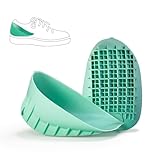
- ✶ALLEVIATES HEEL PAIN – Tuli’s Heavy Duty Heel Cups provide heel pain relief caused by plantar fasciitis, Sever’s disease, excessive pronation, Achilles tendonitis, etc. Ideal for those on their feet for most of the day or those looking for added comfort.
- ✶PODIATRIST PREFERRED – In an independent study conducted by M3 Global Research, podiatrists chose Tuli’s as the clear winner of recommended heel cup brands.
- ✶SHOCK-ABSORBING DESIGN – The multi-cell, multi-layer design absorbs shock and impact energy, mimicking the natural shock-absorbing system of your feet. As you walk or run, the design reduces the stress on your feet.
- ✶DOCTOR RECOMMENDED & APMA ACCEPTED – Tuli’s Heel Cups were designed by a leading podiatrist and have the honor of being accepted by the American Podiatric Medical Association.
- ✶FITS MOST LACE-UP SHOES – Best used in spacious lace-up shoes like athletic shoes / sneakers.
✓ Pros
- Genuine gel cushioning (not foam pretending to be gel)
- Targeted gel waves under heel and ball of foot
- Trim-to-fit · works in most shoe types
- Sub-$15 price (most affordable option in this list)
- Massaging texture is genuinely soothing
✗ Cons
- ZERO arch support — this is cushion only
- Won’t fix plantar fasciitis or flat-foot issues
- Compresses faster than PowerStep (4-6 months)
- Top cover wears through in high-mileage applications
Dr. Tom’s Recommendation: I recommend these to patients who tell me ‘I just want my feet to stop hurting at the end of my shift’ and who don’t have a biomechanical issue. Construction workers, factory workers, retail. Pure cushion does the job for them.
Tight-Fitting Shoes · Cycling Shoes · Hockey Skates
Superfeet’s slim version of their famous Green insole. The trademark stabilizer cap is preserved but the overall thickness is reduced — works in cycling shoes, hockey skates, ski boots, and other tight-fitting footwear that the standard Superfeet Green can’t fit into.
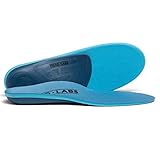
- Plantar Fasciitis Relief, Every Step – Firm arch support helps relieve heel and arch pain from plantar fasciitis and supports flat feet and overpronation for better alignment and all-day comfort.
- Clinical-Grade Biomechanics – Tread Labs 26-33 ARCHitecture delivers orthotic-level stability—custom-orthotic feel without the prescription.
- Dialed Fit for Any Shoe – Four arch heights (low, medium, high, extra-high) and an easy 3-step sizing guide make selection simple for work boots, sneakers, and everyday shoes—great for standing all day.
- Built to Last a Million Miles – Durable, recyclable arch supports with our Million-Mile Guarantee; replaceable top covers keep insoles fresh and cost-effective. Unlike foam that flattens, Pace is engineered to last.
- Trusted Expertise – Designed by Mark Paigen (founder of Chaco). Premium arch support inserts for men and women backed by decades of footwear innovation.
✓ Pros
- Stabilizer cap centers the heel (Superfeet’s signature feature)
- Slim profile fits tight athletic footwear
- Lasts 12+ months daily wear
- Excellent for cycling shoes specifically
- Built-in odor-control treatment
✗ Cons
- Premium price ($45-55)
- Less cushion than PowerStep equivalents
- Not as aggressive correction as Pinnacle Maxx for flat feet
- The signature ‘heel cup feel’ takes 1-2 weeks to adapt to
Dr. Tom’s Recommendation: If you’re a cyclist with foot numbness, hot spots, or knee pain — this is the orthotic. The stabilizer cap solves cycling-specific biomechanical issues that no other orthotic addresses. Worth the premium for athletes.
None of these solving your foot pain?
Some patients (about 30%) need custom-molded prescription orthotics. We make 3D-scanned custom orthotics in our Howell and Bloomfield Hills offices — specifically built for your foot mechanics.
Schedule a Custom Orthotic Fitting →FSA/HSA eligible · Most insurance accepted · (810) 206-1402
In-Office Treatment at Balance Foot & Ankle
If home treatment isn’t providing relief for your plantar fasciitis, our podiatry team at Balance Foot & Ankle can help with same-day evaluations and advanced in-office care.
Same-day appointments available. (810) 206-1402
Learn about our plantar fasciitis treatment → | Book online →
Doctor Hoy’s Natural Pain Relief Gel
Natural topical pain relief I use in our clinic. Arnica + camphor formula — apply directly to the area 3–4x daily. ($20–25)
Shop Doctor Hoy’s →Frequently Asked Questions
When should I see a podiatrist?
If symptoms persist past 2 weeks, affect your normal activity, or are accompanied by red-flag symptoms (warmth, redness, swelling, inability to bear weight).
What does treatment cost?
Most diagnostic visits and conservative treatments are covered by Medicare and major insurers. Out-of-pocket costs vary by your specific plan.
How quickly can I get an appointment?
Most non-urgent cases see us within 5 business days. Urgent cases (sudden pain, possible fracture) typically same or next business day.

Dr. Tom Biernacki, DPM is a board-certified foot & ankle surgeon (ABFAS & ABPM) at Balance Foot & Ankle Specialists in Southeast Michigan. With over a decade of clinical experience, he specializes in heel pain, bunions, diabetic foot care, sports injuries, and minimally invasive surgery. Dr. Biernacki is a member of the APMA and ACFAS, and his patient education content on MichiganFootDoctors.com and YouTube has made him one of the most-followed foot & ankle educators on YouTube.