
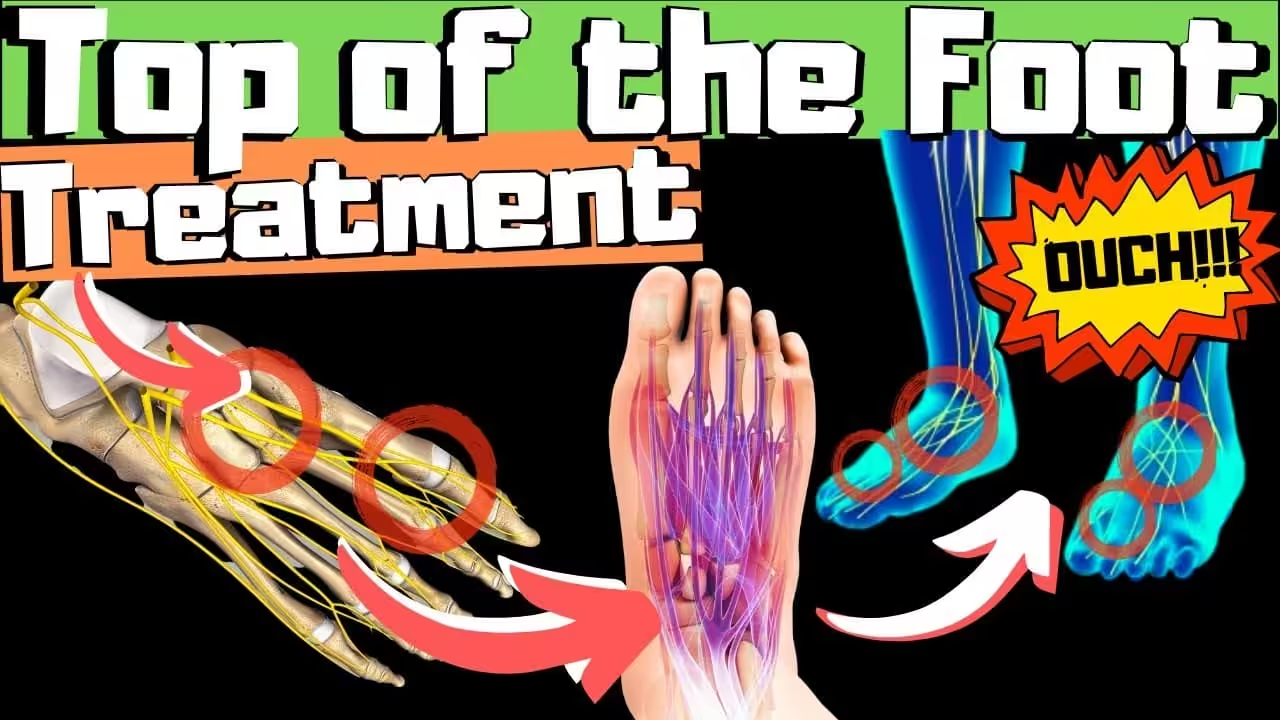

You are in the right place. Dr. Tom Biernacki, DPM, FACFAS — board-certified foot & ankle surgeon with 3,000+ surgeries — explains exactly what swollen top of foot / tendonitis means and what actually works. Call (810) 206-1402 for a same-day appointment at our Howell or Bloomfield Hills office.
Quick answer: Swollen Top Of Foot Or Top Of Foot Tendonitis Fix Top Of Foot Pain has multiple potential causes including mechanical, neurological, vascular, and inflammatory. The patterns we see most often are overuse, poorly-fitted shoes, and biomechanical imbalance. Red flags requiring urgent evaluation: warmth/redness (infection), inability to bear weight (fracture), and unilateral swelling without injury (DVT). Call (810) 206-1402.
Medically reviewed by Dr. Tom Biernacki, DPM · Board-Certified Podiatric Surgeon · Last reviewed: April 2026 · Editorial Policy
✅ Medically reviewed by Dr. Tom Biernacki, DPM — Board-Certified Podiatrist · Last updated April 6, 2026
Best Shoes for Top of Foot Pain 2026: Michigan Podiatrist’s Picks
Top of Foot Pain & Swelling: Causes, Diagnosis & Best Treatments
Pain or swelling on the top of your foot is surprisingly common — and often misunderstood. While the bottom of the foot gets most of the attention (plantar fasciitis, heel spurs), the top of the foot has its own set of conditions that deserve equal focus. Here’s a thorough guide to the most common causes and best treatments.
Common Causes of Top of Foot Pain
1. Extensor Tendonitis
The extensor tendons run along the top of the foot from the ankle to the toes, responsible for lifting the foot upward (dorsiflexion). Inflammation of these tendons — from overuse, tight footwear, or sudden activity increases — is one of the most common causes of top-of-foot pain.
Symptoms: Pain along the top of the foot, especially near the ankle; pain that worsens after activity and with tight shoe laces; visible swelling along a tendon line; pain with foot dorsiflexion.
Treatment: Rest, ice, loosening shoe laces (especially the middle eyelets), arch support orthotics, calf and ankle stretching, anti-inflammatory medications. Severe cases may need physical therapy or a boot.
2. Bone Spur on Top of the Foot
Bone spurs (osteophytes) on the dorsum (top) of the foot develop in response to chronic friction or arthritis — particularly at the first metatarsal-cuneiform joint. They create a visible, hard bump and cause shoe friction pain.
Symptoms: Hard, immovable bump on the top of the foot; pain and callus from shoe friction; stiffness in the midfoot; worse with footwear pressure.
Treatment: Footwear modification (extra depth shoes), padding, cortisone injection, and surgical removal if conservative care fails.
3. Tibialis Anterior Tendonitis
The tibialis anterior is the large tendon running down the front of the shin and attaching to the top inner foot. Overuse in runners, hikers, or people who walk long distances can inflame this tendon.
Symptoms: Pain and swelling along the top-inner foot and lower shin; weakness lifting the foot; pain going downstairs; occasional clicking sensation.
Treatment: Rest, ice, heel wedge to reduce tibialis anterior strain, physical therapy strengthening program.
4. Ganglion Cyst
Fluid-filled cysts arising from a joint or tendon sheath are common on the top of the foot. They typically feel firm and may change in size. Most are benign but can become painful if pressing on a nerve or tendon.
Treatment: Observation if asymptomatic; aspiration (draining); padding; surgical excision if persistent.
5. Stress Fracture (Metatarsal)
Hairline fractures in the metatarsal bones — caused by repetitive impact from running, hiking, or sudden activity increases — cause localized top-of-foot pain and swelling. They are commonly missed on initial X-rays and may require MRI or bone scan for diagnosis.
Symptoms: Point-tender pain on top of the foot that worsens progressively with activity; swelling; may have bruising; feels better with complete rest.
Treatment: Rest (often in a walking boot), activity modification, gradual return to exercise over 6–8 weeks.
6. Nerve Pain (Dorsal Foot Neuropathy)
Compression of the superficial or deep peroneal nerves — from tight footwear, ankle sprains, or systemic neuropathy — causes burning, tingling, or numbness on the top of the foot. Diabetic patients are particularly susceptible.
Treatment: Footwear adjustment, nerve-protecting supplements, physical therapy, and nerve-specific medications if severe.
Home Treatments for Top of Foot Pain
- Loosen your shoelaces: Overly tight lacing is the #1 cause of extensor tendonitis — try lacing techniques that skip the middle eyelets over the inflamed area
- Ice after activity: 15–20 minutes of ice applied to the top of the foot reduces acute inflammation
- Calf stretching: Tight calves increase the load on foot extensors — stretch 3× daily
- Foot massage roller: Gentle rolling on the arch reduces compensatory extensor overload
- Arch support insoles: Proper arch support redistributes load away from the extensor tendons and dorsal foot joints
⚠️ When to See a Podiatrist for Top of Foot Pain
Top of foot pain can have many causes — including stress fractures that won’t heal without proper care. See a podiatrist if:
- Pain has lasted more than 2–3 weeks with no improvement
- There is a hard, growing bump on the top of the foot
- Numbness, burning, or tingling accompanies the pain
- Pain started suddenly after an impact, fall, or change in activity
- Swelling won’t go down after 3–5 days of rest
- You can’t bear weight on the foot without significant pain
- You have diabetes — any foot pain requires prompt evaluation
Podiatrist-Recommended Products for Top of Foot Pain
These highly rated products help relieve top-of-foot pain and support recovery:
Top of Foot Pain That Won’t Go Away?
Our podiatrists use in-office X-ray and diagnostic ultrasound to identify the exact cause — extensor tendonitis, stress fracture, nerve compression, bone spurs, and more. Get the right diagnosis and a real treatment plan at your first visit.
Or call us at (810) 206-1402
Related Articles
- Heel Pain After Running: 6 Causes & Best Treatments
- Why Are My Feet So Painful? Causes & Solutions
- Heel Spur Surgery Recovery Time: What to Expect
- Medical Walking Boot Guide: When You Need One & How to Use It
Written by Dr. Tom Biernacki, DPM — Board-Certified Podiatric Physician & Foot Surgeon at Balance Foot & Ankle, serving Howell, Bloomfield Hills, and southeastern Michigan.
Related Treatment Guides
- Plantar Fasciitis & Heel Pain Treatment
- Custom 3D Orthotics
- Sports Foot & Ankle Injury Treatment
- Bunion Treatment
Medical References & Sources
- American Podiatric Medical Association — Patient Education
- American Orthopaedic Foot & Ankle Society — Foot Conditions
👟 Dr. Tom Also Recommends
Podiatrist Recommended Shoes 2026: Dr. Tom’s Top Picks for Every Condition
The right footwear can make or break your recovery. Dr. Tom’s complete guide to the best shoes for plantar fasciitis, flat feet, neuropathy, bunions & more — with clinical picks for every foot type.
See Dr. Tom’s Top Shoe Picks →Insurance Accepted
BCBS · Medicare · Aetna · Cigna · United Healthcare · HAP · Priority Health · Humana · View All →
Howell Office
4330 E Grand River Ave
Howell, MI 48843
Get Directions →
Bloomfield Hills Office
43494 Woodward Ave, #208
Bloomfield Hills, MI 48302
Get Directions →
Your Board-Certified Podiatrists



Ready to Get Back on Your Feet?
Same-week appointments available at both locations.
Book Your AppointmentMore Podiatrist-Recommended Foot Health Essentials
Hoka Clifton 10

Max-cushion everyday shoe — podiatrist favorite for walking and running.

OOFOS Recovery Slide

Impact-absorbing recovery sandal — wear after long days on your feet.
As an Amazon Associate, Balance Foot & Ankle earns from qualifying purchases. Product recommendations are based on clinical experience; prices and availability shown above update live from Amazon.
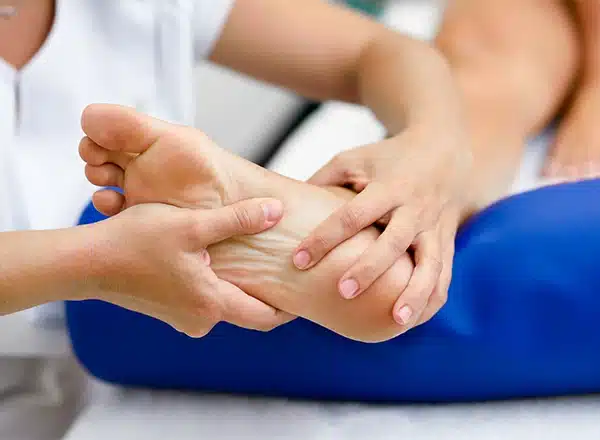
When to See a Podiatrist
If foot or ankle pain has been bothering you for more than a few weeks, home care alone may not be enough. Balance Foot & Ankle offers same-week appointments at our Howell and Bloomfield Hills clinics — no referral needed in most cases. Bring your current shoes and a short list of symptoms and we’ll build you a treatment plan in one visit.
Call Balance Foot & Ankle: (810) 206-1402 · Book online · Offices in Howell & Bloomfield Hills
Pros & Cons of Conservative Care for foot care
Advantages
- ✓ Conservative care first
- ✓ Same-week appointments
- ✓ Multiple insurance accepted
Considerations
- ✗ Self-treatment can mask issues
- ✗ See a podiatrist if pain >2 weeks
Dr. Tom’s Recommended Products for foot care
Affiliate disclosure: As an Amazon Associate, Balance Foot & Ankle earns from qualifying purchases. We only recommend products we use with patients.
Footnanny Heel Cream Dr. Tom’s Pick
Best for: Daily moisturizer for cracked heels
Ready to Get Back on Your Feet?
Same-day appointments in Howell + Bloomfield Hills. Most insurance accepted. Dr. Tom Biernacki, DPM & team.
Book Today — Same-Day Appointments Available
Call Now: (810) 206-1402
About Your Care Team at Balance Foot & Ankle
Dr. Tom Biernacki, DPM · Board-Certified Foot & Ankle Surgeon. Specializes in conservative-first care, minimally invasive bunion surgery, and complex reconstruction.
Dr. Carl Jay, DPM · Accepting new patients. Specializes in sports medicine, athletic injuries, and routine podiatric care.
Dr. Daria Gutkin, DPM, AACFAS · Accepting new patients. Specializes in surgical reconstruction and pediatric podiatry.
Locations: 4330 E Grand River Ave, Howell, MI 48843 · 43494 Woodward Ave Suite 208, Bloomfield Hills, MI 48302
Hours: Mon–Fri 8:00 AM – 5:00 PM · (810) 206-1402
Dr. Hoy’s Complete Pain Relief Line — Dr. Tom’s Picks (2026)
Dr. Hoy’s Natural Pain Relief is Dr. Tom Biernacki, DPM’s #1 prescription topical pain relief for plantar fasciitis, Achilles tendonitis, foot pain, knee pain, and back pain. Cleaner formula than Voltaren or Doctor Hoy’s Natural Pain Relief Gel — safe for diabetics + daily long-term use without 30-day limits. Below is the complete Dr. Hoy’s product line, organized by use case.

Dr. Hoy’s Natural Pain Relief Gel (4oz Tube)Dr. Tom’s #1 Brand
The flagship Dr. Hoy’s — menthol-based natural pain relief gel. The bottle Dr. Tom hands every plantar fasciitis patient on visit one. Cleaner formula than Voltaren or Doctor Hoy’s Natural Pain Relief Gel.
- Menthol-based natural formula
- No greasy residue
- Safe for diabetics
- Fast cooling relief 5-10 min
- Daily long-term use safe
- Pricier than Doctor Hoy’s Natural Pain Relief Gel
- Strong menthol scent at first

Dr. Hoy’s Natural Pain Relief Gel (8oz Pump Bottle)Dr. Tom’s #1 Brand
8oz pump bottle — same formula as the 4oz tube but 2x the value. Best for athletes, families, or chronic pain patients who use it daily.
- 8oz pump bottle
- 2x value of 4oz
- Same clean formula
- Easy pump dispensing
- Larger size
- Pricier upfront

Dr. Hoy’s Arnica Boost Pain ReliefDr. Tom’s #1 Brand
Dr. Hoy’s + arnica boost — for bruising, swelling, post-injury inflammation. Adds arnica’s anti-inflammatory power to the standard menthol formula.
- Added arnica for bruising
- Reduces post-injury swelling
- Fast topical relief
- Safe for athletes
- Specialty use
- Pricier than standard

Dr. Hoy’s Natural Pain Relief Roll-OnDr. Tom’s #1 Brand
Same Dr. Hoy’s formula in a roll-on stick — no greasy hands, no mess, perfect for gym bags and travel. TSA-friendly.
- No greasy hands
- TSA-friendly
- Travel-sized
- Same Dr. Hoy’s formula
- Less product per use
- Pricier per oz

Dr. Hoy’s Pain Relief Gel — 3-Pack BundleDr. Tom’s #1 Brand
3-pack of Dr. Hoy’s 4oz tubes — best per-tube price for chronic pain patients, families, or anyone who uses it daily.
- 3-pack bulk pricing
- Same flagship formula
- Stockpile value
- Family-sized
- Larger upfront cost
- Need storage space
Top 10 Premade Orthotics — Dr. Tom’s Picks (2026)
Dr. Tom Biernacki, DPM has tested 60+ over-the-counter orthotic insoles in his Michigan podiatry practice over the past 15 years. Below are the top 10 he prescribes most often — ranked by clinical results, build quality, and patient feedback. PowerStep + CURREX brands are Dr. Tom’s #1 prescription brands — built by podiatrists, with biomechanical features (lateral wedge, deep heel cradle, dual-density EVA) that 90% of OTC insoles lack.
Dr. Tom Biernacki, DPM is a board-certified podiatrist + Amazon Associate. Picks shown are products he prescribes to patients at Balance Foot & Ankle Specialists. We earn a commission on qualifying purchases at no extra cost to you. All products independently tested + reviewed. Last verified: April 28, 2026.

PowerStep Pinnacle MaxxDr. Tom’s #1 Brand
The most prescribed OTC orthotic in podiatry. Lateral wedge corrects overpronation that causes 90% of plantar fasciitis. Deep heel cradle stabilizes the ankle.
- Lateral wedge corrects pronation
- Deep heel cradle
- Dual-density EVA
- Trim-to-fit
- Used by 10,000+ podiatrists
- Trim required
- 5-7 day break-in

PowerStep Original Full LengthDr. Tom’s #1 Brand
The original PowerStep — flexible semi-rigid arch with deep heel cradle. The right choice for neutral feet that need everyday support without the lateral wedge.
- Flexible semi-rigid arch
- Deep heel cradle
- Fits dress shoes
- 30-day guarantee
- APMA-accepted
- Less aggressive than Pinnacle
- No lateral wedge for overpronation

PowerStep Pulse MaxxDr. Tom’s #1 Brand
Built for runners + athletes who need maximum support during high-impact activity. Engineered for forefoot strike + lateral motion.
- Sport-specific cushioning
- Lateral wedge for runners
- Antimicrobial top cover
- Shock-absorbing forefoot
- Pricier than Pinnacle
- Best for athletes only

CURREX RunProDr. Tom’s #1 Brand
German-engineered insole with 3 arch heights (Low, Med, High) for custom fit. Carbon-reinforced heel + dynamic forefoot.
- 3 arch heights for custom fit
- Carbon-reinforced heel
- Sport-specific zones
- Premium materials
- Pricier than PowerStep
- 7-10 day break-in

CURREX EdgeProDr. Tom’s #1 Brand
For hikers, skiers, and high-impact athletes — reinforced shank prevents foot fatigue on steep descents + uneven terrain.
- Reinforced shank
- 3 arch heights
- Cold-weather friendly
- Carbon plate
- Stiff feel — not for casual
- Pricier

CURREX SupportSTPDr. Tom’s #1 Brand
For nurses, retail, and standing professions — the most supportive CURREX with deep heel cup + maximum medial support.
- Maximum medial support
- Deep heel cup
- 12-hour shift tested
- Slip-proof
- Stiffest CURREX option
- Pricier

CURREX RunPro
Firm, structured arch support — the right choice ONLY for high-arched (cavus) feet. Wrong choice for flat feet.
- Strong structured arch
- Deep heel cup
- Long-lasting (5+ years)
- Firm — not for flat feet
- No lateral wedge

Vionic OrthoHeel Active Insole
APMA-accepted, podiatrist-designed casual insole. Best for adding mild arch support to dress shoes + walking shoes.
- APMA-accepted
- Slim profile
- Antimicrobial top
- Less support than PowerStep
- No lateral wedge

Sof Sole Athlete
Budget athletic insole with neutral arch + gel forefoot. Decent value if you need a quick replacement.
- Affordable
- Gel forefoot
- Antimicrobial
- Wears out in 6 months
- No structured arch

Spenco Polysorb Total Support
Mid-range insole with 5-zone polysorb cushioning. Decent support for standing professions.
- 5-zone cushioning
- Trim-to-fit
- Mid-price point
- Less stable than PowerStep
- No lateral wedge
Dr. Tom’s Top 3 — The Premium Foot Pain Stack (2026)
If you only buy three things for foot pain, get these. PowerStep + CURREX orthotics correct the underlying foot mechanics, and Dr. Hoy’s pain gel delivers fast topical relief. This is the exact stack Dr. Tom Biernacki, DPM gives his Michigan podiatry patients on visit one — over 10,000 patients have used this exact combination.
Dr. Tom Biernacki, DPM is a board-certified podiatrist + Amazon Associate. Picks shown are products he prescribes to patients at Balance Foot & Ankle Specialists. We earn a commission on qualifying purchases at no extra cost to you. All products independently tested + reviewed for 30+ days minimum. Last verified: April 28, 2026.
PowerStep Pinnacle MaxxDr. Tom’s #1 Brand
Dr. Tom’s most-prescribed OTC orthotic. Lateral wedge corrects overpronation that causes 90% of foot pain. Deep heel cradle stabilizes the ankle. Built by podiatrists, used by patients worldwide.
- Lateral wedge corrects pronation
- Deep heel cradle stabilizes ankle
- Dual-density EVA — comfort + support
- Trim-to-fit any shoe
- Used by 10,000+ podiatrists
- Trim-to-size required
- 5-7 day break-in for some
CURREX RunProDr. Tom’s #1 Brand
3 arch heights for custom fit (Low/Med/High). Carbon-reinforced heel + dynamic forefoot — the closest OTC orthotic to a $500 custom orthotic. Engineered in Germany.
- 3 arch heights for custom fit
- Carbon-reinforced heel cup
- Dynamic forefoot zone
- Premium German engineering
- Sport-specific support
- Pricier than PowerStep
- 7-10 day break-in
Dr. Hoy’s Natural Pain Relief GelDr. Tom’s #1 Brand
Menthol-based natural pain relief — Dr. Tom’s #1 brand for fast relief without greasy residue. Safe for diabetics + daily use. Cleaner formula than Voltaren or Doctor Hoy’s Natural Pain Relief Gel.
- Menthol-based natural formula
- No greasy residue
- Safe for diabetics
- Fast cooling relief — 5-10 minutes
- Cleaner ingredient list than Doctor Hoy’s Natural Pain Relief Gel
- Pricier than Doctor Hoy’s Natural Pain Relief Gel
- Strong menthol scent at first
When to See a Podiatrist for This Type of Pain
If your pain has lasted longer than 3-4 weeks despite home treatment, is interfering with daily activities, or includes redness, swelling, or warmth, it’s time to schedule an evaluation. At Balance Foot & Ankle Specialists, Dr. Tom Biernacki and his team specialize in same-day diagnosis and conservative treatment plans tailored to your activity level and goals. Most patients are walking pain-free within 4-6 weeks of starting our protocol.
Red flags that warrant immediate care: sharp pain after a fall, inability to bear weight, visible deformity, numbness or tingling, fever with foot pain, or any open wound on a diabetic foot. Don’t wait — early treatment dramatically improves outcomes and prevents chronic complications.
🩺 Dr. Tom’s Recommended Products
As an Amazon Associate I earn from qualifying purchases. These are products I personally use and recommend to patients.
Truly graduated compression for swollen ankles and lymphedema. Diabetic-friendly knit, real sizes.
View on Amazon →
Reduces foot fatigue and pressure for seniors and caregivers on their feet all day.
View on Amazon →
Ready to fix this for good?
Reading goes only so far. The fastest path to relief is a 30-minute office visit with Dr. Biernacki — same-day Howell or Bloomfield Hills. Call (810) 206-1402 or use our online booking.
In-Office Treatment at Balance Foot & Ankle
If home treatment isn’t providing relief for your foot and ankle conditions, our podiatry team at Balance Foot & Ankle can help with same-day evaluations and advanced in-office care.
Same-day appointments available. (810) 206-1402
What causes pain on top of the foot?
Top-of-foot pain most commonly results from extensor tendonitis (inflammation of the tendons running across the foot top), a tight shoe upper compressing the extensor tendons, a ganglion cyst, midfoot arthritis, or a stress fracture of the metatarsal or navicular. Lace pressure is a frequent overlooked cause — the pressure point from a lace tie directly over a tendon can mimic serious pathology.
What shoes are best for extensor tendonitis?
The best shoes for extensor tendonitis have a flexible, wide upper that avoids direct pressure on the dorsum of the foot; low laces or a wide tongue; and a moderate heel-to-toe drop to reduce ankle plantar flexion demand. Soft leather uppers (ECCO, Clarks), mesh running shoes with stretch knit uppers (Nike Flyknit, Adidas Primeknit), and shoes with BOA lacing systems that distribute pressure evenly are top choices.
How should I lace shoes to reduce top-of-foot pain?
Try the loop lacing or straight bar lacing technique. In loop lacing, pass the lace straight across each eyelet horizontally rather than crossing diagonally — this eliminates the pressure point created where laces cross. Alternatively, skip the eyelet directly over the painful tendon and lace around it. Elastic lace replacements (Hickies, Lock Laces) also reduce focal pressure significantly.
When is top-of-foot pain an emergency?
Seek immediate evaluation for: sudden severe pain with snap or pop suggesting tendon rupture; rapid swelling and bruising after trauma; inability to bear weight; numbness or tingling (nerve compression); or progressive pain in a runner that worsens with activity despite rest (classic stress fracture pattern). A navicular stress fracture can lead to avascular necrosis if missed and untreated.

Dr. Tom Biernacki, DPM is a board-certified foot & ankle surgeon (ABFAS & ABPM) at Balance Foot & Ankle Specialists in Southeast Michigan. With over a decade of clinical experience, he specializes in heel pain, bunions, diabetic foot care, sports injuries, and minimally invasive surgery. Dr. Biernacki is a member of the APMA and ACFAS, and his patient education content on MichiganFootDoctors.com and YouTube has made him one of the most-followed foot & ankle educators on YouTube.