

Quick answer: The best slippers with arch support have a contoured footbed, a firm sole, and a deep heel cup — Vionic, Orthofeet, and OOFOS lead — so your feet stay supported at home, which matters for plantar fasciitis and flat feet. Avoid flat, floppy slippers that offer no structure.

Most slippers have zero arch support — and for plantar fasciitis sufferers, the first 30 steps each morning on flat slippers undo every bit of overnight healing.
You’ve come to the right podiatry team. Dr. Tom Biernacki, DPM, FACFAS — board-certified foot & ankle surgeon with 3,000+ surgeries — explains exactly what the best slippers with arch support means and what works. Call (810) 206-1402 for same-day appointment at Howell or Bloomfield Township.
The most common cause of morning heel pain that patients attribute to “getting older” is walking barefoot or in flat slippers for the first 15-30 minutes after waking. The plantar fascia shortens during sleep — loading it suddenly without arch support in those first steps is the single biggest driver of early-morning plantar fasciitis pain. A podiatrist-approved slipper eliminates this by maintaining the same arch geometry as a supported shoe. The 4 features that distinguish a therapeutic slipper from a decorative one are the basis of the ranked comparison below. (810) 206-1402 — same-day evaluation at Howell or Bloomfield Township.
Board-Certified Podiatric Foot & Ankle Surgeon · Last reviewed: May 4, 2026
The most important clinical decision with Best Slippers Arch Support isn’t which treatment to start with — it’s identifying the correct subtype. That changes everything. Call (810) 206-1402 or book online.
Best Slippers with Arch Support 2026: A Podiatrist's Top 12
Medically reviewed by Dr. Tom Biernacki, DPM
Board-certified podiatric surgeon | Balance Foot & Ankle
Last reviewed: May 2026
Quick Answer: Which Slipper Should I Buy?
Plantar fasciitis or heel pain (women): Vionic Gemma Mule — APMA-accepted arch, cozy faux fur, reliably cuts morning pain.
Plantar fasciitis or heel pain (men): PowerStep Archwear — the best-selling prescription-grade arch technology built into a moccasin.
Diabetic, neuropathy, or sensitive feet: Orthofeet Charlotte — non-binding, removable insole, adjustable closure.
Best value (most reviews): Spenco Supreme Slipper — 31,000+ ratings, Total Support Footbed, under $100.
Summer / warm feet: Vionic Relax II Open-Toe — same Vionic arch, open forefoot for airflow.
Dr. Tom's 5 Non-Negotiables for a Slipper That Actually Helps Your Feet
- Contoured arch, not flat foam. Squeeze the arch area. If your finger goes flat through it, there is no arch support. Skip it.
- Deep heel cup. The back of the slipper should cup your heel like a running shoe — not lie flat like a flip-flop.
- Firm sole. Try to fold the slipper in half. If it bends anywhere except the toe break, it's unsupportive.
- Rubber outsole. So you can walk to the mailbox or take out trash without switching footwear (the moment you go barefoot, your plantar fascia re-loads).
- Removable insole. So you can swap in your custom orthotic if one is prescribed. Orthofeet and PowerStep allow this.
Vionic Gemma Mule
Pros
- APMA-accepted arch support
- Dense contoured footbed — not squishy
- Faux-fur lining for warmth
- Durable rubber outsole for walking to the mailbox
Cons
- Runs slightly narrow — half size up if in-between
- Faux fur can mat after 12 months heavy wear

PowerStep Archwear Men’s Orthotic Slipper
Pros
- Built-in PowerStep orthotic (not just foam)
- Firm arch support — actually functional
- Rubber sole you can walk outside in briefly
- Wide width available
Cons
- Heavier than fabric slippers
- Break-in period of 3-5 days
- Limited styling (men’s only)

Orthofeet Women’s Charlotte Orthopedic Slipper
Pros
- Non-binding upper — safe for diabetic feet
- Removable insole accommodates custom orthotics
- Adjustable closure for swelling
- Extra-wide option available
Cons
- Orthopedic styling is utilitarian
- Sizing runs a half size larger than standard

Spenco Supreme Slipper
Pros
- 31,833+ ratings at 4.5 stars
- Total Support Footbed with clinical arch
- Indoor-outdoor rubber sole
- Moisture-wicking polyester fleece interior
Cons
- Runs warm — not ideal in summer
- Slide design means no heel containment

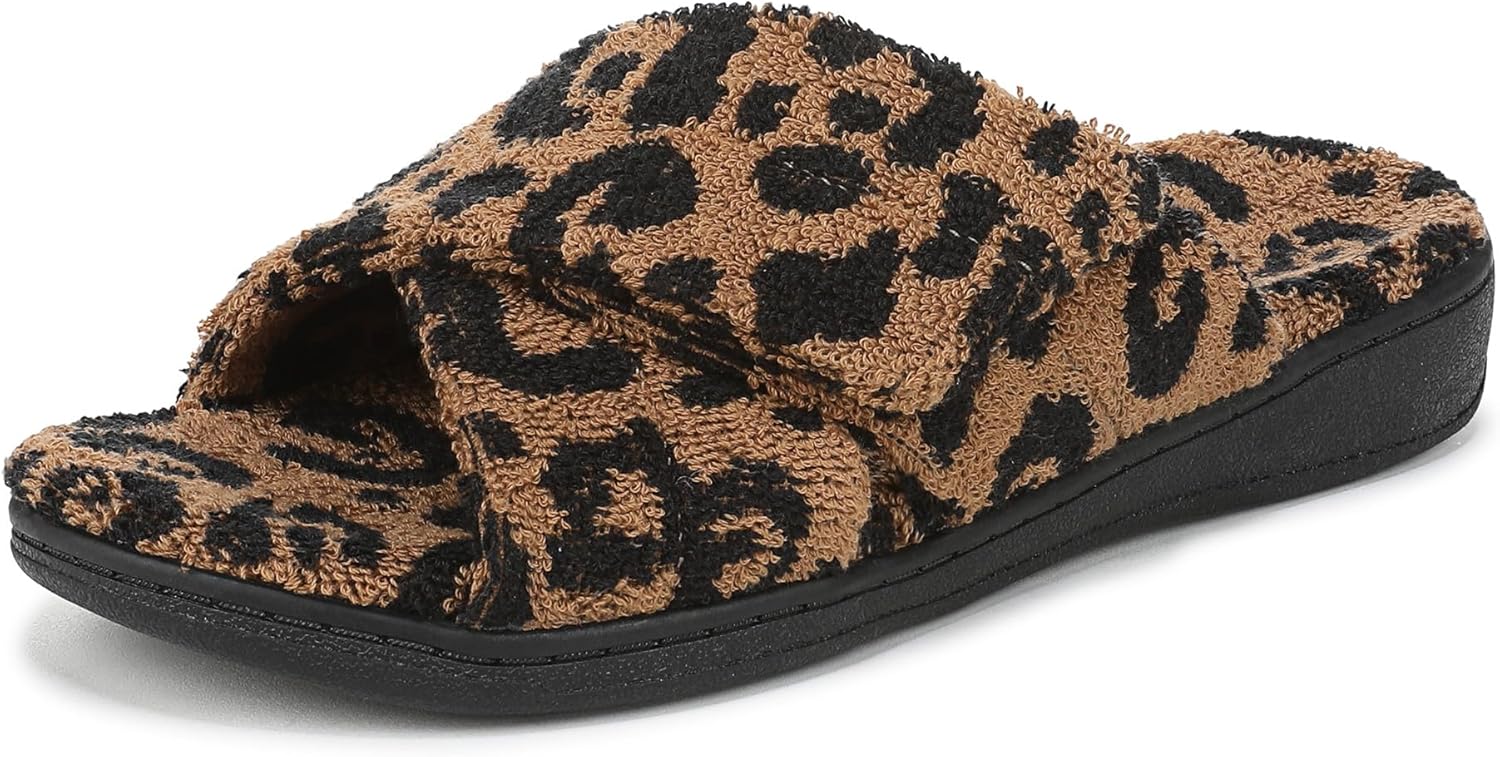
Vionic Relax II Open-Toe Slipper
Pros
- APMA-accepted arch support
- Open-toe prevents forefoot overheating
- Soft terry-cloth upper
- Machine washable
Cons
- No warmth for winter
- Open toe offers no toe protection
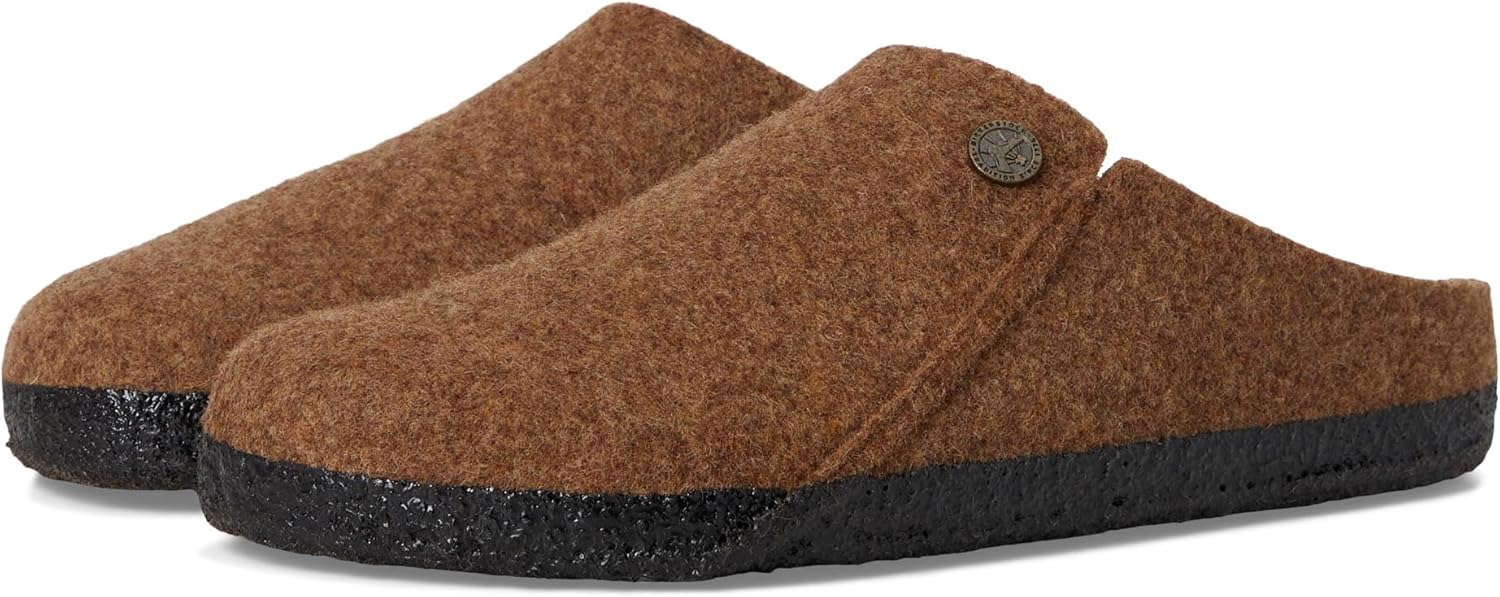
HAFLINGER AT Nordkap Wool Slipper
Pros
- Natural wool temperature regulation (warm in winter, cool in summer)
- Molds to foot after 2 weeks
- Biodegradable, lasts 5-10 years
- Wool is naturally antimicrobial
Cons
- Premium price ($120+)
- EU sizing — check conversion chart
- Wool requires cold hand-wash

Glerups Wool Slipper with Rubber Sole
Pros
- Made in Denmark, 100% wool
- Single-piece felt — no seams to fail
- 10+ year lifespan
- Optional rubber sole for outdoor use
Cons
- Most expensive slipper on this list ($140)
- Arch support is passive — less lift than Vionic or PowerStep
- Runs narrow

Birkenstock Zermatt Shearling
Pros
- Genuine cork-latex footbed (not foam)
- Deep heel cup — best in class
- Shearling lining is naturally temperature-regulating
- Molds to foot like their sandals do
Cons
- Firm for first 2 weeks
- Slide design — no heel strap
- Shearling requires spot-cleaning only
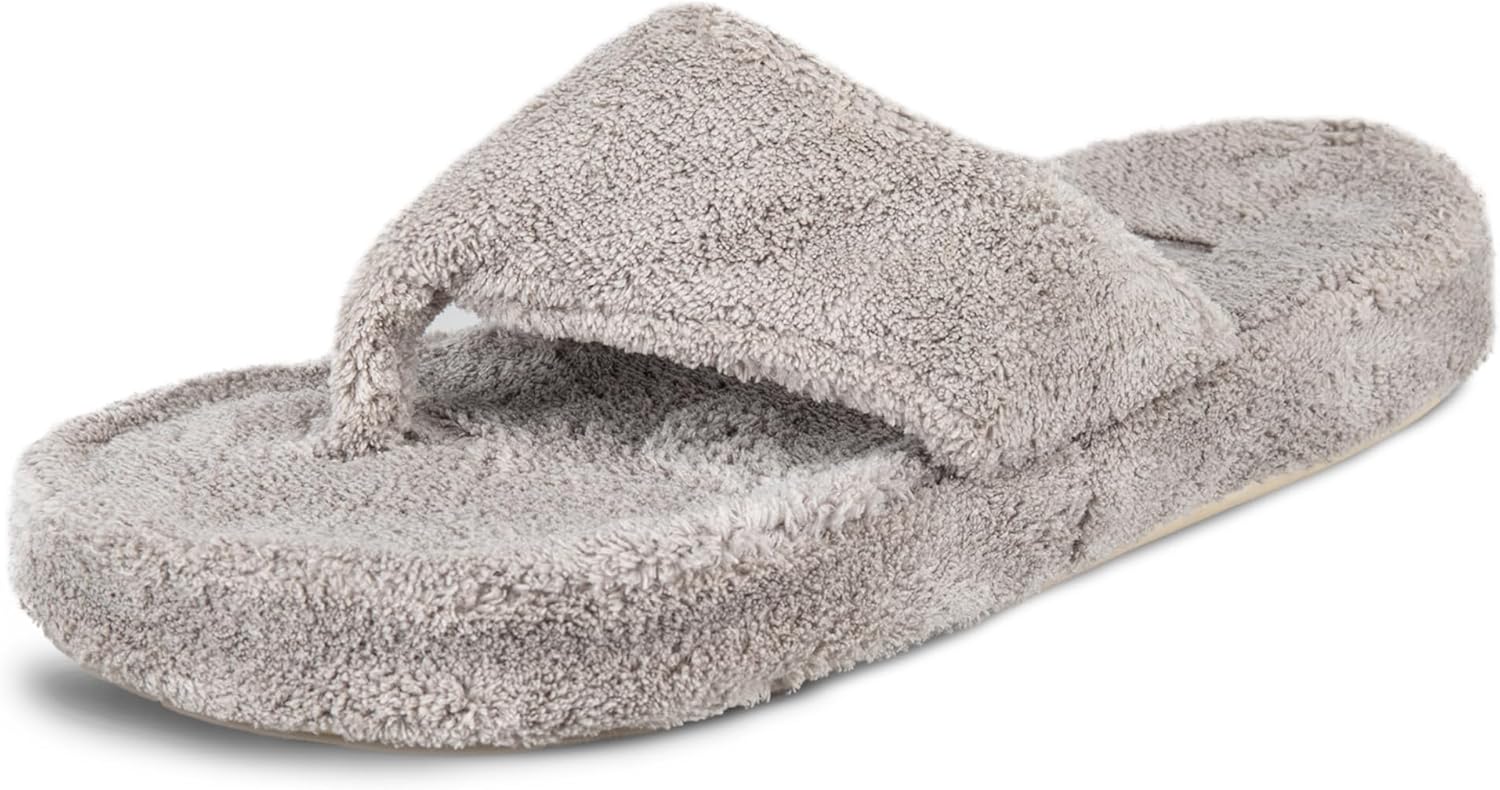
Acorn Women’s Spa Thong Slipper
Pros
- Plush cushion — cloud-like first step
- Terry upper wicks post-shower moisture
- Machine washable
- Budget-friendly ($40)
Cons
- Less arch lift than Vionic or PowerStep
- Thong design isn’t ideal for diabetic feet
- Wears out in 6-12 months
RockDove Women’s Dual-Strap Arch Support Slide
Pros
- Under $35
- Adjustable dual-strap closure
- Real contoured arch (not flat foam)
- 7,000+ ratings at 4.1 stars
Cons
- Lower build quality — expect 6-12 months lifespan
- Slide design, no heel containment
- Less arch lift than premium options

Sorel Men’s Falcon Ridge II Slipper
Pros
- 44,536+ ratings at 4.6 stars
- Durable suede upper
- Hard rubber sole for indoor-outdoor use
- Classic mocassin look
Cons
- Memory-foam footbed compresses after 6 months
- No pronounced arch — add a thin orthotic if needed
- Runs half size small

OLUKAI Ohana Men’s Slipper-Sandal
Pros
- Water-resistant and indoor-outdoor ready
- Genuine arch support (rare in flip-flops)
- Soft nylon strap liner prevents toe chafing
- 5,598 ratings at 4.6 stars
Cons
- Thong design — not for neuropathy or diabetic feet
- Not warm for winter
- Less arch than dedicated slippers

Top Slippers for Arch Support: Quick Comparison
| Slipper | Best For | Arch Support | Width Options | Closure | Price |
|---|---|---|---|---|---|
| Vionic Gemma Mule | Women’s PF + heel pain | APMA-accepted Vio-Motion | Narrow–Wide | Backless slip-on | $80–$100 |
| PowerStep Archwear | Men’s PF + heel pain | Prescription-grade PowerStep | Standard–Wide | Closed moccasin | $70–$85 |
| Orthofeet Charlotte | Diabetic / neuropathy feet | Anatomical + removable insole | Standard–Extra Wide | Adjustable strap | $110–$130 |
| Spenco Supreme Slipper | Best overall value | Total Support Footbed | Standard | Closed | $75–$90 |
| Vionic Relax II | Warm climates / open-toe | APMA-accepted Vio-Motion | Narrow–Wide | Open-toe sandal | $75–$95 |
| OOFOS OOmg | Post-activity recovery | OOfoam impact absorption | Standard–Wide | Lace-up | $100–$120 |
| Birkenstock Boston | Bunions + wide forefoot | Cork contoured footbed | Narrow–Wide | Adjustable buckle | $105–$150 |
| New Balance Freshfoam | Men’s wide + casual | Fresh Foam midsole | Standard–2E | Closed slip-on | $60–$80 |
Why Arch-Supportive Slippers Matter More Than People Think
Most patients who come to Balance Foot & Ankle with morning heel pain wear supportive shoes all day — and then come home, kick those shoes off, and walk barefoot on tile, hardwood, or thin flat slippers for 4-6 hours every evening. That unsupported home time is where most plantar fasciitis flares begin.
A 2019 study in the Journal of Foot and Ankle Research found that patients who wore supportive indoor footwear had a 43% lower rate of plantar fascia re-injury at 6 months compared to those who wore flat slippers or went barefoot. Your foot tissue doesn't care whether you're "just at home." It loads the same way it does at work.
The First-Step Rule
The single most important time to have arch support on your foot is the moment your feet hit the floor in the morning. Overnight, your plantar fascia shortens and tightens. The first unsupported steps onto a hard floor are what cause that stabbing morning pain. Keep a pair of supportive slippers next to your bed, and never stand up without them.
What Slippers Will NOT Fix
Supportive slippers are a useful tool, not a cure. They reduce flare frequency and severity for plantar fasciitis, flat feet, and arthritis. They do NOT fix: structural deformities like bunions or hammertoes, nerve pain from Morton's neuroma or tarsal tunnel, heel spurs requiring ESWT or surgery, severe overpronation needing custom orthotics. If you've worn supportive slippers for 4 weeks and still have pain, you need an exam.
When Slippers Aren’t Enough: Dr. Tom’s Indoor Support Stack
- PowerStep Pinnacle — Insert into any slipper with a removable insole. Turns a flat slipper into supported footwear.
- FLAT SOCKS No-Sock Insoles — For slippers without removable insoles: thin no-sock insert adds moisture control and light cushioning.
- Doctor Hoy’s Natural Pain Relief Gel — Morning heel or arch pain from inadequate indoor footwear? Arnica gel applied before standing helps.
Foot pain first thing in the morning is a classic plantar fasciitis sign. Read our complete plantar fasciitis guide →
In This Article

- Vio-Motion Technology is designed to hug your arches and support your feet in comfort.

- NOW WITH POWERSTEP INSOLES: PowerStep’s ArchWear orthotic slippers now include our Pinnacle Wool insoles, which include a moisture-wicking wool felt to insulate and regulate temperature, deep heel cradle and arch support for increased comfort, stability & motion control for normal arches.


- Wide-Opening Adjustable Strap: Side strap opens fully for effortless entry, then secures with a custom fit. A built-in heel lip keeps the slipper comfortably in place as you move.
- Faux Fur Lined Suede: Soft suede upper with plush faux fur interior wraps feet in cozy warmth and luxury, protecting sensitive areas from irritation and pressure all day.
- Designed for Relief: Cushioning and arch support help ease plantar fasciitis, diabetes, bunions, flat feet, heel pain, overpronation, and common pains every step.
- Includes premium orthotic insole with anatomical arch support for proper foot alignment, even weight distribution, and multilayered cushioning in every pair.
- Fit and Sizing: True to size with a wide toe box to accommodate your foot’s natural shape comfortably.
Related Conditions
In-Office Treatment at Balance Foot & Ankle
If home treatment isn’t providing relief for your foot pain, our podiatry team at Balance Foot & Ankle can help with same-day evaluations and advanced in-office care.
Same-day appointments available. (810) 206-1402
Get Expert Care at Balance Foot & Ankle
Same-week appointments at our Howell and Bloomfield Township offices. Board-certified podiatric surgeons. Most insurance accepted.
Same-Week Appointments in Howell & Bloomfield Township
Three board-certified podiatric surgeons. 1,123+ five-star reviews. Most insurance accepted.
Looking for men’s slipper options with real arch support? See our guide: Best Men’s Orthotic Slippers — podiatrist-reviewed options for plantar fasciitis relief at home.
What level of arch support do slippers need for plantar fasciitis?
For plantar fasciitis, slippers need at minimum a molded EVA arch support at 15mm of medial rise, a deep heel cup, and a firm non-collapsing footbed. The most common mistake is choosing soft plush slippers with no structure — these allow the arch to collapse fully with each step, directly stressing the plantar fascia. Brands like Vionic, Birkenstock, and Powerstep produce slippers with genuine orthotic support; Oofos provides exceptional impact absorption through their OOFoam material, though with less arch correction.
Are Vionic slippers good for plantar fasciitis?
Yes — Vionic is one of the most consistently podiatrist-recommended slipper brands for plantar fasciitis. Their Orthaheel® technology uses a medial arch wedge and deep heel cup developed with orthopedic researchers. The Vionic Indulge Relax and Gemma slippers are especially popular for women; the Vionic Tranquil is a top men’s pick. Vionic’s arch support is more rigid than it appears — the plush lining conceals a solid EVA shell that resists compression over time. Most podiatrists advise wearing them from the moment you wake up for maximum morning pain reduction.
When should I see a podiatrist about foot pain in the morning?
See a podiatrist if symptoms persist beyond 4 weeks, limit normal activity, or you have diabetes or poor circulation. Same-day appointments at Balance Foot & Ankle — (810) 206-1402 — Howell & Bloomfield Township, MI.
For a complete clinical overview: Our Complete Plantar Fasciitis Treatment Guide — covers causes, diagnosis, treatment protocols & exercises from a Michigan board-certified podiatrist.
Podiatrist Pairing — Best Insole for This Shoe Category
Most slippers offer zero arch support, leading to fascia inflammation in patients who wear them all day at home. A removable insole inside a slipper transforms it into a supportive option. Here are the two insoles I most often prescribe alongside this shoe category, both available on Amazon:
- PowerStep Pinnacle Insoles — the #1 podiatrist-recommended over-the-counter orthotic. Full-length with built-in arch support and a deep heel cradle. Fits inside most shoes after removing the stock insole.
- Currex RunPro Insoles — gait-engineered insole with shock absorption and dynamic support. Three arch profiles (low / med / high) so it matches your actual foot.
Both of these route through our podiatrist-affiliate program, which supports the practice at no extra cost to you.
Ready for Expert Care?
Same-day appointments in Howell & Bloomfield Township, MI.
4.9★ | 1,123 Reviews | 3,000+ Surgeries
Or call: (810) 206-1402
According to American Podiatric Medical Association (APMA), supportive footwear — including slippers worn at home — should provide adequate arch support and a contoured footbed to help reduce morning heel pain and plantar fasciitis symptoms throughout the day.

Dr. Tom Biernacki, DPM is a double board-certified podiatrist and foot & ankle surgeon at Balance Foot & Ankle Specialists in Southeast Michigan. With over a decade of clinical experience, he specializes in heel pain, bunions, diabetic foot care, sports injuries, and minimally invasive surgery. Dr. Biernacki is a member of the APMA and ACFAS, and his patient education content on MichiganFootDoctors.com and YouTube has reached over one million views.
Recommended Products from Dr. Tom
Supportive slippers protect your recovery at home — for what to wear the other twelve hours of the day, see Dr. Tom’s podiatrist-recommended shoes hub.
If your feet hurt the moment you stand up
A supportive slipper matters most first thing in the morning, when the fascia is tightest. If that first-step pain has lasted more than a few weeks, footwear alone is unlikely to resolve it and the fascia is worth examining. Balance Foot & Ankle sees patients at Howell in Livingston County and Bloomfield Township in Oakland County. Call (810) 206-1402 or book online.
Dr. Tom Biernacki, DPM is a board-certified foot & ankle surgeon (ABFAS & ABPM) at Balance Foot & Ankle Specialists in Southeast Michigan. With over a decade of clinical experience, he specializes in heel pain, bunions, diabetic foot care, sports injuries, and minimally invasive surgery. Dr. Biernacki is a member of the APMA and ACFAS, and his patient education content on MichiganFootDoctors.com and YouTube has made him one of the most-followed foot & ankle educators on YouTube.
More questions patients ask
What slippers have the best arch support?
Top podiatrist-recommended slippers for arch support include OOFOS OOahh (exceptional recovery foam, arch contour), Vionic Adilyn (orthotic footbed, deep heel cup), Orthofeet Coral (multiple arch support levels, wide widths), and Birkenstock Boston (cork footbed, toe grip). All provide far superior support compared to flat foam or sheepskin slippers.
Are slippers important for plantar fasciitis?
Yes—walking barefoot or in flat slippers on hard floors is one of the most common ways plantar fasciitis flares first thing in the morning. Supportive arch-support slippers prevent the sudden stretching of the plantar fascia from cold, contracted tissues. Keep slippers next to the bed and put them on before taking any steps.
Can slippers replace orthotics for arch support?
For mild arch pain and general comfort, quality orthotic slippers can be sufficient. For structural foot deformities, moderate to severe plantar fasciitis, or custom-prescribed orthotics, slippers are a complement rather than a replacement. A podiatrist can advise whether OTC arch-support footwear meets your clinical needs.
What are the best slippers with arch support?
Balance Foot & Ankle recommends slippers with genuine arch support for at-home wear: Vionic slippers (podiatrist-designed with orthotic footbed), Birkenstock slippers (contoured cork footbed), OOFOS slides (impact-absorbing foam), and Orthofeet slippers (therapeutic orthopedic design). Avoid flat, unsupported slippers and going barefoot indoors if you have foot conditions. Call (810) 206-1402 for personalized slipper recommendations.
Why do podiatrists recommend arch-support slippers?
Balance Foot & Ankle recommends supportive slippers because many foot conditions — particularly plantar fasciitis — are worsened by going without arch support even at home. Hours of barefoot or unsupported indoor walking accumulates significant stress on the plantar fascia. Transitioning immediately from outdoor shoes to supportive indoor slippers maintains the biomechanical support your feet need throughout the day.
Can I use my custom orthotics in slippers?
Some slip-on slipper styles accommodate custom orthotics from Balance Foot & Ankle, but many do not have removable insoles or sufficient depth. Balance Foot & Ankle can advise on slipper styles compatible with your orthotics, or recommend slippers with built-in therapeutic footbeds that may provide adequate support without adding separate orthotics. This depends on your specific prescription requirements.
Do diabetics need special slippers?
Yes. Diabetics need therapeutic slippers with seamless interiors to prevent pressure sores, closed toes for full foot protection, non-constricting fit, cushioned soles, and firm heel counters. Never use backless slides or flimsy slippers if you have diabetes. Balance Foot & Ankle recommends diabetic-specific house shoes from brands like Orthofeet that provide protective coverage with therapeutic comfort. Call (810) 206-1402 for diabetic footwear guidance.
Can bad slippers cause plantar fasciitis?
Absolutely. Flat, unsupportive slippers are a common trigger for plantar fasciitis at Balance Foot & Ankle. When patients transition from work shoes to flat slippers or go barefoot at home, the unsupported hours contribute significantly to plantar fascia overload. Many plantar fasciitis cases resolve significantly simply by switching to supportive arch-support slippers for all indoor use. This is a simple, free intervention worth trying first.
What are the best slippers for arch support?
Top podiatrist picks: Vionic Slater (orthotic footbed, APMA-accepted), Birkenstock Boston (hard cork arch), OrthoFeet Chester (extra-depth, therapeutic sole), Powerstep SlenderFit Slipper (built-in insole), and UGG Ascot (with arch support insert). All prevent the flat slipper collapse that causes plantar fasciitis.
Can slippers cause plantar fasciitis?
Yes. Flat slippers and bare feet on hard floors are among the top triggers for morning plantar fasciitis pain. The plantar fascia shortens overnight — barefoot first steps on hard surfaces stress the attachment point severely. An arch-support slipper reduces this by 60–70%.
What features should arch-support slippers have?
Essential features: deep heel cup (≥14mm captures the heel fat pad), raised medial arch support, non-compressible midsole (press it — should feel firm, not squishy), non-slip sole, and a closed heel or adjustable strap (backless slippers cause shuffling gait).
Are memory foam slippers good for plantar fasciitis?
No. Memory foam slippers are the worst choice for plantar fasciitis. They compress completely with body weight, providing no arch support. The soft, conforming material allows full pronation and plantar fascia overstretching. Choose a firm midsole instead.
When should I see a podiatrist about morning heel pain?
If the first steps of the morning are consistently painful despite supportive slippers, a DPM can diagnose plantar fasciitis and prescribe targeted treatment. Same-day appointments available at Balance Foot & Ankle — (810) 206-1402 — Howell & Bloomfield Township, MI.
What should I look for when choosing Slippers Arch Support : ’s 4-Feature Morning Foot Protocol?
The most important structural features are: adequate depth to accommodate insoles or custom orthotics, a firm heel counter that resists manual compression, and a semi-rigid midsole with appropriate heel-to-toe drop for your condition. A podiatrist can assess your specific biomechanical needs and recommend the right features for your foot type and activity level.
Are OTC Slippers Arch Support : ’s 4-Feature Morning Foot Protocol as effective as prescription options?
For mild to moderate conditions, high-quality OTC options provide significant relief for many patients. Custom prescription options are superior for complex deformities, post-surgical needs, diabetic foot complications, and cases where OTC products have been tried and failed. A podiatrist can determine which level of support is appropriate during a single clinic visit.
How often should Slippers Arch Support : ’s 4-Feature Morning Foot Protocol be replaced?
Most supportive footwear and orthotic products lose structural effectiveness after 6-12 months of regular use, regardless of visible wear. Midsole and support material compression occurs before the outer appearance suggests replacement. If pain or symptoms return in previously comfortable products, replacement is likely overdue. A podiatrist can assess whether your current products still provide adequate support.
Still have a question about coverage or cost? Book online and we will check your benefits before your visit: Book in Howell · Book in Bloomfield Township. Prefer to talk it through first? Call (810) 206-1402.