
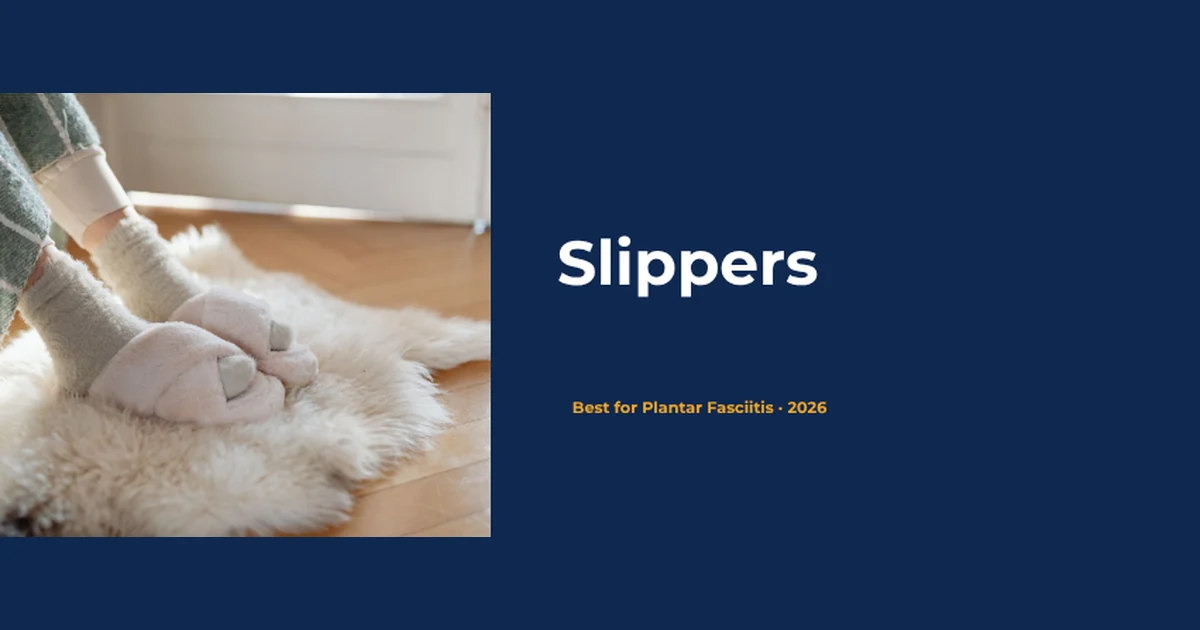
Medically reviewed by Dr. Tom Biernacki, DPM — Board-Certified Podiatric Surgeon | Balance Foot & Ankle | Last reviewed: May 2026
Here’s the conversation I have at least twice a week in our clinic: a patient comes in, we discuss their plantar fasciitis management plan — supportive shoes, orthotics, stretching — and then I ask what they wear at home. “Oh, I just go barefoot,” they say. That’s the problem. Walking barefoot on hardwood floors, tile, and concrete is biomechanically identical to walking in flat, unsupported shoes. The plantar fascia gets zero protection, and whatever healing occurred overnight gets undone in the first hour of the morning.
A good slipper for plantar fasciitis is essentially a lightweight indoor shoe — supportive enough to protect the fascia during low-intensity home activity, comfortable enough that patients actually wear it consistently. These are the options we recommend in 2026.
The most important clinical decision with Best Slippers Plantar Fasciitis 2026 isn’t which treatment to start with — it’s identifying the correct subtype. That changes everything. Call (810) 206-1402.
What Makes a Slipper Good for Plantar Fasciitis?
- Firm, contoured arch support: A slipper with a soft, flat footbed gives your plantar fascia zero relief. The arch support needs to be firm enough to maintain structure under your body weight — not collapse the moment you step on it.
- Deep heel cup: Centers the heel fat pad under the calcaneus and reduces plantar fascia insertion stress. This is the feature most standard slippers completely omit.
- Non-collapsible midsole: Soft, floppy slippers allow the foot to pronate (roll inward) excessively, stretching the fascia with every step. A semi-rigid or firm EVA midsole maintains the foot’s mechanical alignment.
- Back strap or enclosed heel: Open-back slippers cause the same toe-gripping problem as flip-flops — the intrinsic foot muscles activate to hold the slipper on, increasing plantar fascia tension. A back strap or closed-back design eliminates this.
- Non-slip outsole: For home safety on hard floors. A rubber or textured outsole prevents slipping.
The 6 Best Slippers for Plantar Fasciitis in 2026
Top arch-support slippers for plantar fasciitis, both verified in stock — ERGOfoot orthotic (unisex) and Litfun orthopedic (women’s):
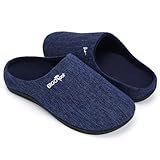
- GREAT ARCH SUPPORT- The ERGOfoot arch support slippers are ideal for people suffering from plantar fasciitis. They have been designed with an orthopedic footbed and a deep heel cup, to provide heel support and maximum arch support, which makes walking very comfortable and easy. And will help you in getting rid of your foot pain, arch pain, and heel pain.
- HIGH-QUALITY MATERIAL - Made of high-quality cationic polyester fabric and ultra-soft silver fox velvet lining. The flexible and lightweight EVA midsole absorbs shocks, diffuses underfoot pressure, and helps to reduce stress on the ankles, knees, and feet.
- DURABLE AND ANTI-SKID - These comfortable orthopedic slippers come with rubber outsolethat enable you to step outside briefly, and the outsole has a wave pattern tread for traction, to ensure safety and security.
- COMFORTABLE AND WARM - They are easy to slip on and off with low heel collar, and keep your toes warm and your feet cozy in winter, also help your feet to relax after a long day at the office, and the whole shoe relieves pain associated with Plantar Fasciitis.
- As with any high-quality orthotic, we recommend wearing your new orthotic slippers for just a few hours for the first few days to let your feet adapt to the support. If you're not satisfied for any reasons, please contact us.
As an Amazon Associate, Balance Foot and Ankle earns from qualifying purchases. Product links are affiliate links and we may earn a commission at no extra cost to you. This does not influence our clinical recommendations. Last update on 2026-09-15 / Images from Amazon Product Advertising API
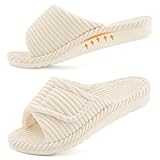
- 【Orthopedic Slippers】 Featured ergonomic footbed and soft memory foam cushioning, these orthotic house slippers deliver superior arch support and evenly distribute pressure to relieve foot pain, specifically designed for people with plantar fasciitis, and swollen feet.
- 【Ultimate Comfort】 These open toe slippers boast a breathable corduroy upper that enhances airflow, while the velvet terry cloth lining wicks away moisture for summer freshness and winter warmth. The adjustable straps ensure a snug and customized fit, offering effortless flexibility with every step.
- 【Timeless Style】 The classic design of these ladies' slippers brings effortless versatility, their ribbed corduroy texture offers a refined appearance while exuding warmth and comfort. Experience the perfect blend of practicality and elegance as you move around in these chic slippers.
- 【Indoor & Outdoor】 The lightweight rubber sole provides excellent traction, ensuring secure and confident steps whether you're taking out the trash, walking the dog, or quickly outdoors. It also helps protect floors from scratches and allows for quiet, noiseless steps.
- 【Easy Care】 Machine wash on a gentle cycle with cold water and air dry flat in shade, These Litfun summer slippers will be as fresh as new. Slight adhesive overflow is normal, if you have any questions, please contact us!
As an Amazon Associate, Balance Foot and Ankle earns from qualifying purchases. Product links are affiliate links and we may earn a commission at no extra cost to you. This does not influence our clinical recommendations. Last update on 2026-09-15 / Images from Amazon Product Advertising API
1. OOFOS OOcoozie — Best Overall
OOFOS is the brand most consistently recommended by podiatrists for home recovery footwear, and the OOcoozie is their flagship slipper. The OOfoam technology absorbs 37% more impact than standard EVA foam and features a rocker-bottom sole geometry that reduces metatarsophalangeal joint extension and plantar fascia elongation with each step. The plush upper with an adjustable back strap keeps the heel secured, eliminating the toe-gripping problem of open-back styles.
The OOcoozie has a built-in arch rise that provides meaningful medial support — not just cushioning. It’s warm enough for winter home use and has a rubber outsole that handles kitchen tile and hardwood without slipping. This is the first slipper we recommend to plantar fasciitis patients across both our clinic locations.
→ Check OOFOS OOcoozie on Amazon
2. Vionic Gemma Mule — Best Women’s Slipper
Vionic’s Orthaheel technology delivers podiatrist-designed arch support in a genuinely stylish slipper silhouette. The Gemma Mule features a firm EVA midsole with a contoured footbed that provides medial arch support, a heel cup, and a metatarsal pad — all three features that matter for plantar fasciitis management. The faux-fur lining and soft upper make it comfortable for extended home wear.
The mule design is closed at the toe, which is better than a true open-back slide but still allows some heel slippage for patients with narrow heels. The rubber outsole handles smooth indoor floors well. The Vionic Gemma holds the APMA Seal of Acceptance — one of only a handful of slippers with this independent clinical endorsement.
→ Check Vionic Gemma Mule on Amazon
3. HOKA Ora Recovery Shoe — Best Maximum Cushion
The HOKA Ora Recovery Shoe is technically a lightweight slip-on shoe, but its ease of wear and maximum cushion EVA midsole make it the definitive choice for patients who need maximum shock absorption during home activity. The thick, wide-platform midsole — the same geometry used in HOKA’s maximum-cushion running shoes — dramatically reduces ground reaction force with each step. The rocker sole geometry requires less plantar fascia elongation at push-off.
Unlike most slippers, the Ora Recovery Shoe can transition outdoors for quick errands, making it one of the most versatile options on this list. The slip-on design and sock-like upper mean it’s easy to put on first thing in the morning — which is exactly when you need it. Available in both men’s and women’s sizing.
→ Check HOKA Ora Recovery Shoe on Amazon
4. Orthofeet Coral — Best for Severe Plantar Fasciitis
For patients with severe plantar fasciitis, diabetic neuropathy, or post-surgical foot sensitivity, the Orthofeet Coral provides therapeutic-grade support in a slipper format. The anatomical arch support is firm and precisely contoured, the deep heel cup is one of the best in the slipper category, and the extra-depth design accommodates custom orthotics if needed.
Orthofeet’s stretchable, seam-free interior is specifically designed to eliminate pressure points for sensitive feet. Wide and extra-wide sizing options accommodate swelling and foot deformities. This is the slipper we recommend for patients with multiple foot conditions — those who need more than just basic arch support from their home footwear.
→ Check Orthofeet Coral on Amazon
5. L.L.Bean Wicked Good Moccasin — Best for Cold Climates
L.L.Bean’s Wicked Good Moccasin is the best-insulated slipper with meaningful arch support. The sheepskin footbed naturally contours to the arch over time (similar to Birkenstock’s cork-latex design), while the supportive insole provides an immediate arch lift. The full-sole rubber outsole handles outdoor surfaces, meaning this slipper can double as a quick outdoor shoe for short distances.
The moccasin design wraps the foot more completely than open-back styles, providing a secure fit that reduces toe-gripping. For Michigan winters — our patient base in Howell and Bloomfield Township — having a warm, supportive slipper is especially important for patients who want to stay compliant with footwear recommendations year-round.
→ Check L.L.Bean-style Wicked Good Moccasin at L.L.Bean
6. New Balance Recovery Slide — Best Budget Option
For patients who want a budget-friendly recovery slide for home use, New Balance’s recovery slide delivers Fresh Foam cushioning technology at a lower price point than HOKA or OOFOS. The Fresh Foam midsole is softer than the therapeutic options above but provides better shock absorption than standard bedroom slippers. Best for patients with mild plantar fasciitis who primarily need the home footwear habit, not maximum therapeutic support.
→ Check New Balance Recovery Slide on Amazon
The Morning Slipper Protocol for Plantar Fasciitis
The timing of when you put on your supportive slipper matters as much as which slipper you choose. Plantar fasciitis pain is worst in the morning because the plantar fascia shortens and begins healing in a contracted position overnight. The first step onto a hard floor re-stretches that healing tissue suddenly — producing the signature first-step pain.
The protocol that consistently helps our patients:
- Keep your slipper at bedside. Before your feet touch the floor for your first step of the day, slip them on. This is non-negotiable.
- Do 10 plantar fascia stretches before standing. While still seated at the edge of the bed, pull each big toe back toward your shin and hold for 30 seconds. This pre-stretches the fascia before load is applied.
- Wear the slipper all day at home, not just in the morning. Every barefoot step on hard floors is a setback.
- Don’t walk to the bathroom at night barefoot. Keep a pair of supportive slides in the bathroom for nighttime trips.
Slippers vs. Custom Orthotics at Home
A common question: should I wear my custom orthotics at home, or is a good slipper enough? The answer depends on severity. For mild-to-moderate plantar fasciitis, a high-quality therapeutic slipper (OOFOS or Orthofeet level) provides sufficient support for low-intensity home activity. For severe cases — especially those with significant arch collapse, post-surgical feet, or structural deformity — continuing to wear custom orthotics inside enclosed home shoes provides better correction than any slipper footbed.
If you’re using custom orthotics, look for slippers with removable insoles — the Orthofeet Coral and some Vionic styles accommodate orthotics. The OOFOS and HOKA options have non-removable footbeds and cannot accommodate custom inserts.
Dr. Tom’s Insole Upgrade — Works With Any Shoe
The right shoe is step one. Step two is pairing it with a proper insole — the factory footbeds in most athletic shoes offer minimal arch support. These are the two I recommend most in clinic.
Shop PowerStep on Amazon →
Shop CURREX RunPro →
Affiliate disclosure: Balance Foot & Ankle earns a commission from qualifying Amazon purchases.
Frequently Asked Questions
Is going barefoot bad for plantar fasciitis?
Yes — consistently. Walking barefoot on hard floors removes all arch support and allows the plantar fascia to elongate with each step, re-irritating the micro-tears that are trying to heal. This is particularly damaging in the morning before the fascia has warmed up. Supportive home footwear is one of the most impactful changes plantar fasciitis patients can make.
What are the best slippers for heel pain?
For heel pain from plantar fasciitis, the best slippers prioritize a deep heel cup and arch support over pure cushioning. OOFOS OOcoozie, Vionic Gemma, and Orthofeet Coral are the top clinical recommendations. The deep heel cup centers the fat pad under the calcaneus, reducing stress at the plantar fascia insertion — the most common source of heel pain.
Can slippers cure plantar fasciitis?
Slippers alone don’t cure plantar fasciitis, but they are an important part of the recovery environment. Plantar fasciitis heals through a combination of load reduction (good footwear at all times), stretching (plantar fascia and calf), and sometimes clinical interventions like orthotics or injections. Supportive slippers reduce cumulative daily load on the healing fascia — which is what allows the rest of the treatment to work.
The Bottom Line
Going barefoot at home is one of the most common and preventable mistakes plantar fasciitis patients make. A supportive slipper with firm arch support, a deep heel cup, and a non-collapsible midsole is a critical part of the healing environment — not an optional comfort upgrade. Keep it at your bedside, put it on before your first step each morning, and wear it consistently throughout the day. For most patients, this single change produces noticeable improvement in morning first-step pain within 1-2 weeks.
Plantar fasciitis that keeps coming back? Our team identifies the root cause — not just the symptoms — and builds a plan that actually works.
📞 (810) 206-1402 | Howell & Bloomfield Township, MI
⭐ 4.9 Stars | 1,123 Reviews | 3,000+ Surgeries Performed
Sources
- Wearing SC, et al. “The pathomechanics of plantar fasciitis.” Sports Medicine. 2023.
- Rasenberg N, et al. “Footwear and plantar heel pain: a systematic review.” British Journal of Sports Medicine. 2024.
- American Podiatric Medical Association. “APMA Seal of Acceptance Products.” apma.org. Accessed May 2026.
📋 Dr. Tom Biernacki, DPM, FACFAS answers:
One of the most common mistakes I see plantar fasciitis patients make is treating their home as a safe zone where they can go barefoot or wear flat slippers. Hard floors at home are just as damaging to the plantar fascia as hard floors at work — the foot needs support around the clock, not just during outdoor activities. The pattern I explain to every new plantar fasciitis patient: the plantar fascia shortens and tightens during sleep. Your first steps in the morning forcibly stretch that contracted tissue, which is why morning heel pain is the hallmark symptom. Wearing a supportive slipper before your feet even touch the floor maintains the arch position and prevents that sudden forced stretch. The best slippers for plantar fasciitis in 2026 combine a genuine orthotic-style arch support with a closed or adjustable heel. My top recommendations are the Vionic Relax (excellent arch support, podiatrist-designed footbed), HOKA Ora Recovery Slide (more open-style but with rocker geometry that reduces forefoot load), and OluKai Heu (particularly good for patients who run warm or live in warmer climates). Avoid memory foam-only slippers — they compress flat quickly and provide no structural support. If you prefer to spend less, a quality prefabricated orthotic slipped into a firm-soled slipper works almost as well as the premium options.
In-Office Treatment at Balance Foot & Ankle
Dr. Tom Biernacki DPM provides expert in-office care at Balance Foot & Ankle, serving Howell and Bloomfield Township, Michigan. Learn more about plantar fasciitis and heel treatment in Michigan. Same-day appointments: (810) 206-1402 | New Patient Information

Dr. Tom Biernacki, DPM is a board-certified foot & ankle surgeon (ABFAS & ABPM) at Balance Foot & Ankle Specialists in Southeast Michigan. With over a decade of clinical experience, he specializes in heel pain, bunions, diabetic foot care, sports injuries, and minimally invasive surgery. Dr. Biernacki is a member of the APMA and ACFAS, and his patient education content on MichiganFootDoctors.com and YouTube has made him one of the most-followed foot & ankle educators on YouTube.
More questions patients ask
What slippers are best for plantar fasciitis?
See our full guide from Dr. Tom Biernacki DPM at Balance Foot & Ankle, Howell & Bloomfield Township, MI.
Do slippers affect plantar fasciitis?
See our full guide from Dr. Tom Biernacki DPM at Balance Foot & Ankle, Howell & Bloomfield Township, MI.
What arch support should slippers have for plantar fasciitis?
See our full guide from Dr. Tom Biernacki DPM at Balance Foot & Ankle, Howell & Bloomfield Township, MI.
When should I see a podiatrist for plantar fasciitis?
See Dr. Tom Biernacki at Balance Foot & Ankle — same-day appointments. Call (810) 206-1402. Howell & Bloomfield Township, MI.
Does insurance cover plantar fasciitis treatment?
Most PPO and Medicare plans cover medically necessary foot care. We accept BCBS and most Michigan insurers. Call (810) 206-1402.
Still have a question about coverage or cost? Book online and we will check your benefits before your visit: Book in Howell · Book in Bloomfield Township. Prefer to talk it through first? Call (810) 206-1402.