
Medically reviewed by Dr. Tom Biernacki, DPM · Board-Certified Podiatric Surgeon · Last reviewed: April 2026 · Editorial Policy
The most important clinical decision with Flexor Hallucis Longus Tendinopathy Dancers Tendinitis Posterior Ankle isn’t which treatment to start with — it’s identifying the correct subtype. That changes everything. Call (810) 206-1402.
Quick Answer
Flexor Hallucis Longus Tendinopathy: Dancer’s Tendinit relates to foot pain — typically caused by overuse, footwear, or biomechanics. Most patients improve in 6-12 weeks with conservative care. Same-week appointments in Howell + Bloomfield Township: (810) 206-1402.

Quick Answer
Most foot and ankle problems respond to conservative care — proper footwear, supportive inserts, activity modification, and targeted stretching — within 4-8 weeks. Persistent pain beyond that window, or any symptom that prevents walking, warrants a podiatric evaluation to rule out fracture, tendon tear, or systemic cause.
Medically reviewed by Dr. Tom Biernacki, DPM — Board-Certified Podiatric Surgeon — Balance Foot & Ankle, Howell & Bloomfield Township, MI. Last updated April 2026.
Watch: Dr. Tom Biernacki, DPM

Medically Reviewed by Dr. Tom Biernacki, DPM — Board-Certified Podiatrist, Balance Foot & Ankle Specialists, Michigan. Last updated April 2026.
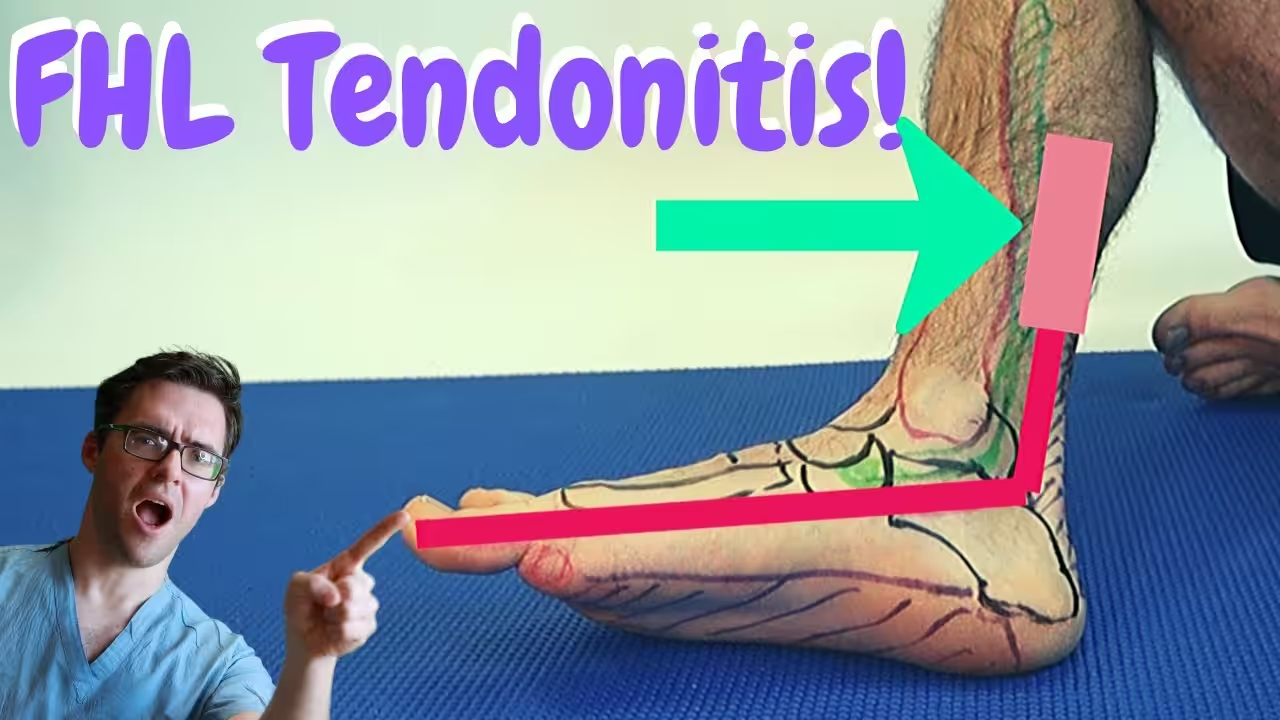
Flexor hallucis longus (FHL) tendinopathy is the most common cause of posterior ankle and medial hindfoot pain in dancers — particularly ballet dancers working in demi-pointe and full-pointe positions — though it increasingly affects recreational runners, gymnasts, and any athlete requiring repetitive forceful great toe plantarflexion. The FHL tendon is uniquely vulnerable at the fibro-osseous tunnel beneath the sustentaculum tali, where it is subject to significant compressive and tensile forces during toe-off and plantarflexion loading.
Anatomy and Mechanism of Injury
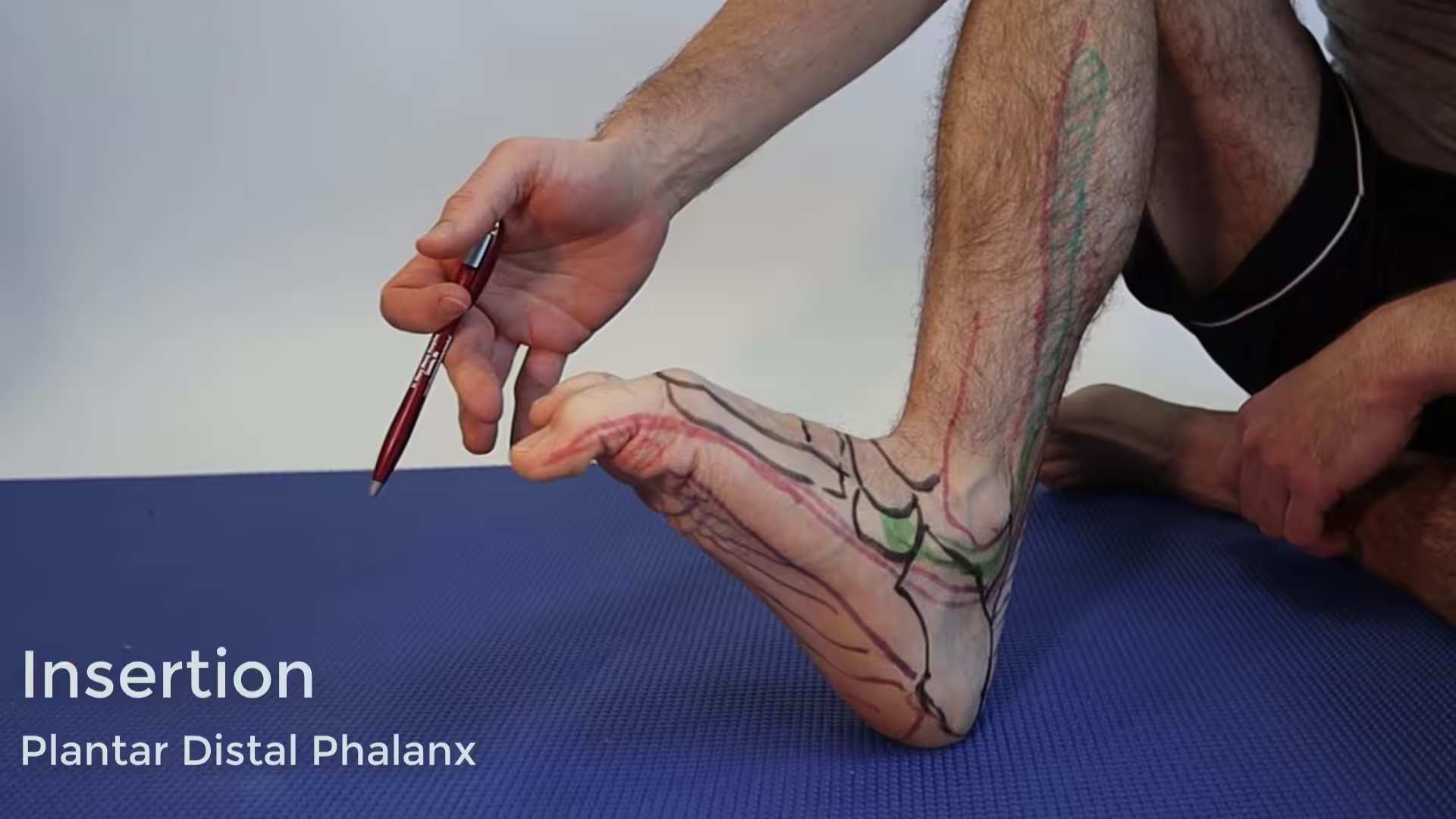
The FHL arises from the posterior fibula and courses through a tight fibro-osseous tunnel between the medial and lateral tubercles of the posterior talus — the same region implicated in posterior ankle impingement. It then passes beneath the sustentaculum tali in a second constrictive tunnel before inserting on the distal phalanx of the hallux. During ballet pointe work, the FHL undergoes near-maximal excursion through both tunnels simultaneously — creating high friction and compressive load that drives chronic tendinosis and, in severe cases, longitudinal splitting or partial tears. Triggering of the hallux (“trigger toe”) occurs when intratendinous nodule formation prevents smooth gliding through the retrotalar pulley.
Clinical Presentation
Posterior ankle and medial heel pain exacerbated by great toe plantarflexion is the hallmark presentation. Resisted great toe plantarflexion in ankle plantarflexion reproduces pain at the posterior medial ankle. Passive dorsiflexion of the hallux (Strayer test) at various ankle positions localizes the restricted tunnel segment. A palpable nodule at the medial ankle producing “clicking” or triggering with hallux motion is pathognomonic for intratendinous nodule formation. Tenosynovitis produces soft-tissue swelling along the tendon course from the posterior ankle to the plantar midfoot.
Nonoperative Management
Activity modification is the first intervention — reducing or eliminating repetitive forced plantarflexion activities for 6–8 weeks. Custom orthotics with a first metatarsal cutout reduce FHL load during push-off in walking. Physical therapy focuses on intrinsic foot muscle strengthening, FHL eccentric strengthening through restricted range, and gastrocnemius/soleus flexibility to reduce compensatory FHL demands. Ultrasound-guided corticosteroid injection into the FHL tendon sheath (avoiding intratendinous injection) reduces tenosynovitis and provides a therapeutic window for rehabilitation. PRP injection is preferred when significant intratendinous pathology is present on ultrasound.
Surgical Options
When conservative management fails after 3–6 months, endoscopic FHL tendon release through the fibro-osseous tunnel at the posterior talus provides reliable symptom relief with minimal morbidity. Two posteromedial portals allow complete retrotalar pulley release under direct visualization. Any intratendinous nodule preventing smooth excursion is débrided. Concurrent posterior ankle impingement (os trigonum excision) is addressed through the same portals. Open FHL tenolysis through a medial posteromalleolar approach is reserved for failed endoscopic release or significant intratendinous pathology requiring open débridement.
Posterior Ankle Pain Evaluation — Balance Foot & Ankle
Dr. Biernacki diagnoses FHL tendinopathy with on-site diagnostic ultrasound. Serving Bloomfield Township, Howell, and all of Michigan.
📧 Get Dr. Tom’s Free Lab Test Guide
Discover the 5 lab tests every person over 35 should ask their doctor about — explained in plain English by a board-certified physician.
📞 (810) 206-1402 | Book Online →
📍 Located in Michigan?
Our board-certified podiatrists treat this condition at two convenient locations. Same-day appointments often available.
More Podiatrist-Recommended Sports Essentials
Hoka Clifton 10


![Achilles Tendonitis & Back of Heel Pain [BEST Home Treatments 2024!]](https://www.michiganfootdoctors.com/wp-content/cache/flying-press/d645ea3f3d27024136b88a074b2b7894.jpg)
Watch: Achilles Tendonitis & Back of Heel Pain [BEST Home Treatments 2024!] — MichiganFootDoctors YouTube
Max-cushion everyday shoe — podiatrist favorite for walking and running.

OOFOS Recovery Slide

Impact-absorbing recovery sandal — wear after long days on your feet.
As an Amazon Associate, Balance Foot & Ankle earns from qualifying purchases. Product recommendations are based on clinical experience; prices and availability shown above update live from Amazon.
When to See a Podiatrist
Athletic injuries heal faster with sport-specific rehab protocols — not generic rest and ice. Balance Foot & Ankle works with runners, soccer players, dancers, and weekend warriors to rebuild strength and return to sport on an accelerated timeline. Don’t let a foot injury keep you sidelined longer than necessary.
Call Balance Foot & Ankle: (810) 206-1402 · Book online · Offices in Howell & Bloomfield Township
Frequently Asked Questions
How do I know if I sprained or broke my ankle?
Both cause pain, swelling, and difficulty walking. Key differences: fractures often cause more immediate severe pain, tenderness directly over bone (not just ligament), and inability to bear any weight. X-rays and the Ottawa Ankle Rules help determine if imaging is needed.
How long does an ankle sprain take to heal?
Grade I (mild): 1–2 weeks. Grade II (moderate): 3–6 weeks. Grade III (complete tear): 2–3 months. Chronic instability from improperly treated sprains can persist and may require surgery.
What is the best treatment for a sprained ankle?
RICE protocol (Rest, Ice, Compression, Elevation) for the first 48–72 hours, followed by protected weight-bearing as tolerated. Physical therapy rehabilitation is critical for high-grade sprains to restore strength and proprioception and prevent chronic instability.
Need Treatment at Balance Foot & Ankle?
Dr. Tom Biernacki, Dr. Carl Jay, and Dr. Daria Gutkin see patients at our Howell and Bloomfield Township offices.
Book Online or call (810) 206-1402

Insurance Accepted
BCBS · Medicare · Aetna · Cigna · United Healthcare · HAP · Priority Health · Humana · View All →
Howell Office
4330 E Grand River Ave
Howell, MI 48843
Get Directions →
Bloomfield Township Office
43494 Woodward Ave, #208
Bloomfield Township, MI 48302
Get Directions →
Your Board-Certified Podiatrists



Ready to Get Back on Your Feet?
Same-week appointments available at both locations.
Book Your AppointmentMost Common Mistake We See
The most common mistake we see is: Waiting too long before seeking care. Fix: any foot pain lasting more than 4 weeks, or any sudden severe symptom, deserves a professional evaluation rather than more rest.
Warning Signs That Need Same-Day Care
Seek immediate evaluation at Balance Foot & Ankle if you experience any of the following:
- Unable to bear weight
- Severe swelling with skin colour change
- Fever with foot pain (possible infection)
- Diabetes plus any new foot symptom
Call (810) 206-1402 — same-day and next-day appointments at our Howell and Bloomfield Township offices.
Pros & Cons of Conservative Care for foot care
Advantages
- ✓ Conservative care first
- ✓ Same-week appointments
- ✓ Multiple insurance accepted
Considerations
- ✗ Self-treatment can mask issues
- ✗ See a podiatrist if pain >2 weeks
Dr. Tom’s Recommended Products for foot care
Affiliate disclosure: As an Amazon Associate, Balance Foot & Ankle earns from qualifying purchases. We only recommend products we use with patients.
Footnanny Heel Cream Dr. Tom’s Pick
Best for: Daily moisturizer for cracked heels
Ready to Get Back on Your Feet?
Same-day appointments in Howell + Bloomfield Township. Most insurance accepted. Dr. Tom Biernacki, DPM & team.
Book Today — Same-Day Appointments Available
Call Now: (810) 206-1402
About Your Care Team at Balance Foot & Ankle
Dr. Tom Biernacki, DPM · Board-Certified Foot & Ankle Surgeon. Specializes in conservative-first care, minimally invasive bunion surgery, and complex reconstruction.
Dr. Carl Jay, DPM · Accepting new patients. Specializes in sports medicine, athletic injuries, and routine podiatric care.
Dr. Daria Gutkin, DPM, AACFAS · Accepting new patients. Specializes in surgical reconstruction and pediatric podiatry.
Locations: 4330 E Grand River Ave, Howell, MI 48843 · 43494 Woodward Ave Suite 208, Bloomfield Township, MI 48302
Hours: Mon–Fri 8:00 AM – 5:00 PM · (810) 206-1402
Frequently Asked Questions
When should I see a podiatrist?
If symptoms persist past 2 weeks, affect your normal activity, or are accompanied by red-flag symptoms (warmth, redness, swelling, inability to bear weight).
What does treatment cost?
Most diagnostic visits and conservative treatments are covered by Medicare and major insurers. Out-of-pocket costs vary by your specific plan.
How quickly can I get an appointment?
Most non-urgent cases see us within 5 business days. Urgent cases (sudden pain, possible fracture) typically same or next business day.
Ready for Expert Care?
Same-day appointments in Howell & Bloomfield Township, MI.
4.9★ | 1,123 Reviews | 3,000+ Surgeries
Or call: (810) 206-1402

Dr. Tom Biernacki, DPM is a board-certified foot & ankle surgeon (ABFAS & ABPM) at Balance Foot & Ankle Specialists in Southeast Michigan. With over a decade of clinical experience, he specializes in heel pain, bunions, diabetic foot care, sports injuries, and minimally invasive surgery. Dr. Biernacki is a member of the APMA and ACFAS, and his patient education content on MichiganFootDoctors.com and YouTube has made him one of the most-followed foot & ankle educators on YouTube.