

Quick answer: Treatment for chronic lateral ankle instability treatment follows a stepwise approach: 1) conservative care first (rest, ice, supportive footwear, OTC anti-inflammatories), 2) physical therapy and targeted exercises, 3) in-office treatments (injections, custom orthotics) if conservative fails at 4-6 weeks, 4) surgery for refractory cases. Most patients resolve at step 1 or 2. Call (810) 206-1402.
Medically reviewed by Dr. Tom Biernacki, DPM · Board-Certified Podiatric Surgeon · Last reviewed: April 2026 · Editorial Policy
Medically reviewed by Dr. Tom Biernacki, DPM — Board-Certified Podiatric Surgeon — Balance Foot & Ankle, Howell & Bloomfield Township, MI. Last updated April 2026.
▶ Watch
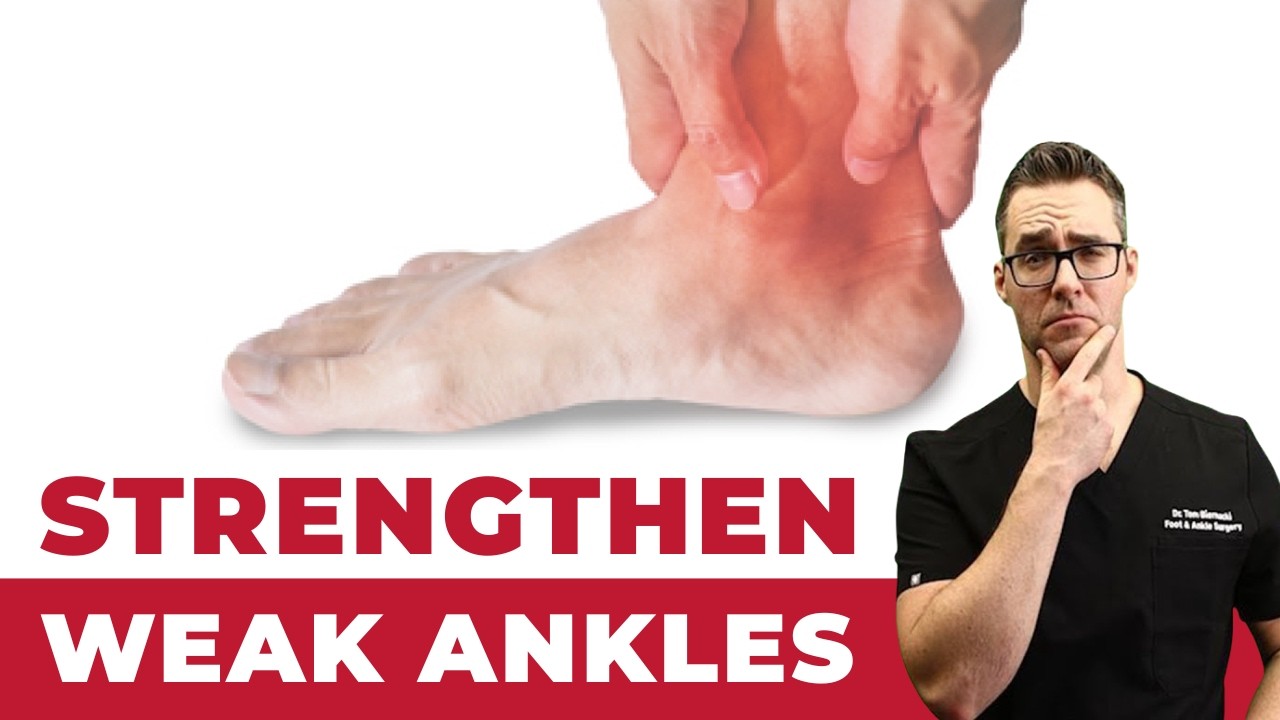
Medically Reviewed by Dr. Tom Biernacki, DPM — Board-Certified Podiatrist, Balance Foot & Ankle Specialists, Michigan. Last updated April 2026.
Chronic lateral ankle instability (CLAI) affects approximately 20–40% of patients following acute lateral ankle sprains that fail to heal with standard conservative management. The condition is characterized by repetitive giving-way episodes, persistent pain and swelling, and functional limitation — driven by incompetence of the anterior talofibular ligament (ATFL) and calcaneofibular ligament (CFL) combined with proprioceptive deficits that perpetuate the injury cycle.
Anatomy and Pathomechanics
The lateral ankle ligament complex includes the ATFL (primary restraint to anterior talar translation and internal rotation), CFL (restraint to inversion in both plantar flexion and dorsiflexion), and posterior talofibular ligament (PTFL, rarely injured in isolation). Grade III sprains with complete ATFL and CFL rupture account for the majority of CLAI cases. Concurrent injuries — osteochondral lesions of the talus (present in up to 30% of CLAI), peroneal tendon pathology, ankle impingement, and sinus tarsi syndrome — must be identified and addressed.
Conservative Management
A structured 12-week rehabilitation protocol should be completed before surgical consideration. Phase 1 (weeks 1–4) addresses acute inflammation, pain-free range of motion, and isometric strengthening. Phase 2 (weeks 4–8) focuses on progressive peroneal and ankle strengthening, proprioceptive training on unstable surfaces, and sport-specific movement patterns. Phase 3 (weeks 8–12) emphasizes dynamic balance training, agility drills, and return-to-sport criteria assessment. Bracing with a lace-up or rigid brace reduces recurrent sprain risk during return to activity. Failure of structured rehabilitation after 3–6 months defines surgical candidacy.
Surgical Options: Anatomic Repair vs Reconstruction
The modified Broström-Gould procedure (anatomic repair with inferior extensor retinaculum augmentation) remains the gold standard for primary CLAI surgery in patients with adequate ligament tissue, normal body habitus, and no significant generalized ligamentous laxity. It provides anatomic restoration of ligament orientation, preserves subtalar motion, and yields excellent outcomes (85–95% return to sport) with low complication rates. Anatomic reconstruction using autograft (gracilis, peroneus brevis) or allograft is indicated for revision cases, severe ligamentous laxity, failed primary repair, or poor residual tissue quality. Non-anatomic tenodesis procedures (e.g., Watson-Jones, Evans) are largely abandoned due to subtalar motion restriction and high recurrence rates.
Managing Concurrent Pathology
Osteochondral lesions of the talus identified on MRI or CT require concomitant management — microfracture for lesions under 1.5 cm², OATS or allograft transplantation for larger lesions. Peroneal tendon tears are repaired or débrided at the time of Broström reconstruction. Synovial impingement and sinus tarsi syndrome are addressed with arthroscopic débridement prior to or concurrent with open reconstruction. Failure to address concurrent pathology is a leading cause of persistent pain after technically successful lateral ankle reconstruction.
Postoperative Rehabilitation and Return to Sport
Standard Broström-Gould rehabilitation involves 2 weeks non-weight-bearing in a splint, followed by progressive weight-bearing in a CAM boot to 6 weeks, then proprioceptive and strengthening training from 6–12 weeks. Return to full sport participation typically occurs at 4–6 months. Outcome predictors include pre-surgical rehabilitation quality, concurrent pathology management, and compliance with postoperative physical therapy.
Ankle Instability Treatment at Balance Foot & Ankle
Dr. Biernacki at Balance Foot & Ankle evaluates chronic ankle instability with on-site weight-bearing X-ray and diagnostic ultrasound assessment of ligament integrity at the first visit. A comprehensive conservative protocol is implemented before surgical options are considered. Call (810) 206-1402 for a appointment if giving-way episodes or persistent ankle pain are limiting your activity.
Unstable Ankle? Get Expert Evaluation.
Serving Southeast Michigan from Bloomfield Township and Howell.
📞 (810) 206-1402 | Book Online →
📍 Located in Michigan?
Our board-certified podiatrists treat this condition at two convenient locations. Book online 24/7 at either office.
Insurance Accepted
BCBS · Medicare · Aetna · Cigna · United Healthcare · HAP · Priority Health · Humana · View All →
Howell Office
4330 E Grand River Ave
Howell, MI 48843
Get Directions →
Bloomfield Township Office
43494 Woodward Ave, #208
Bloomfield Township, MI 48302
Get Directions →
More Podiatrist-Recommended Ankle Sprain Essentials
Ankle Brace Stabilizer
Compression + lateral support during walking — prevents re-injury during recovery.
Kinesiology Tape
Proprioceptive support for athletic return-to-play without restricting motion.
Arch Support Insole
Stable midfoot platform reduces the inversion forces that re-sprain ankles.
As an Amazon Associate, Balance Foot & Ankle earns from qualifying purchases. Product recommendations are based on clinical experience; prices and availability shown above update live from Amazon.

When to See a Podiatrist
A sprain that hasn’t fully recovered after 6 weeks often has residual ligament laxity or occult fracture that keeps the ankle unstable. Balance Foot & Ankle X-rays and stress-tests every lingering sprain — if the ligament is torn, we offer bracing, PRP, and (for chronic instability) minimally-invasive repair. Don’t keep re-rolling the same ankle; let us stabilize it properly.
Call Balance Foot & Ankle: (810) 206-1402 · Book online · Offices in Howell & Bloomfield Township
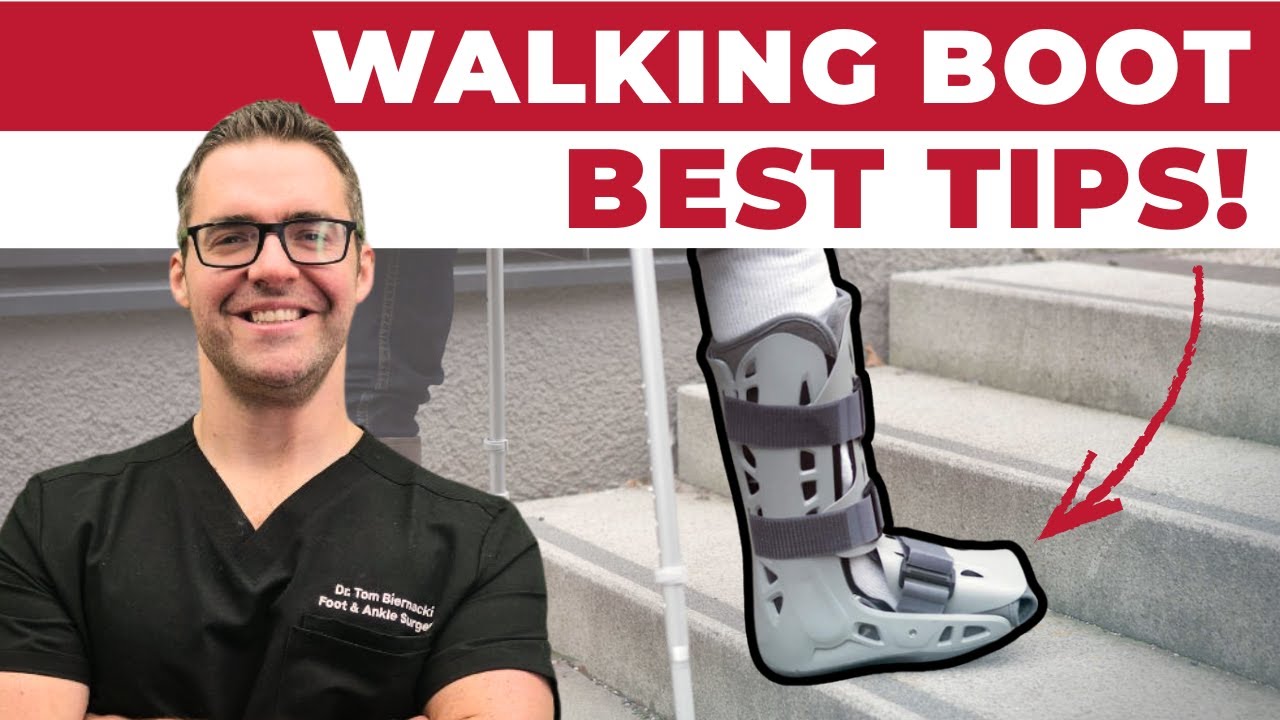
Watch: Dr. Tom explains

Podiatrist-recommended products
As an Amazon Associate, Dr. Tom earns from qualifying purchases.
Improves lateral ankle control for instability.
View on Amazon →Reduces inversion stress during recovery.
Check price →Supportive compression for unstable ankles.
View on Amazon →Topical recovery after rehab sessions.
Check price →Related resources
Ready to solve this? Book today.
Book online 24/7 · Howell & Bloomfield Township · 4.9★ (1,200+ reviews)
☎ (810) 206-1402Book Online →Pros & Cons of Conservative Care for foot care
Advantages
- ✓ Conservative care first
- ✓ Book online 24/7
- ✓ Multiple insurance accepted
Considerations
- ✗ Self-treatment can mask issues
- ✗ See a podiatrist if pain >2 weeks
Dr. Tom’s Recommended Products for foot care
Affiliate disclosure: As an Amazon Associate, Balance Foot & Ankle earns from qualifying purchases. We only recommend products we use with patients.
Footnanny Heel Cream Dr. Tom’s Pick
Best for: Daily moisturizer for cracked heels
Ready to Get Back on Your Feet?
Appointments in Howell + Bloomfield Township. Most insurance accepted. Dr. Tom Biernacki, DPM & team.
Call Now: (810) 206-1402
In-Office Treatment at Balance Foot & Ankle
If home treatment isn’t providing relief for your ankle sprains, our podiatry team at Balance Foot & Ankle can help with expert evaluations and advanced in-office care.
Book online 24/7. (810) 206-1402
Get Expert Care at Balance Foot & Ankle
Appointments at our Howell and Bloomfield Township offices. Board-certified podiatric surgeons. Most insurance accepted.
Ready for Expert Care?
Appointments in Howell & Bloomfield Township, MI.
4.9★ | 1,200+ Reviews | 3,000+ Surgeries
Or call: (810) 206-1402

Dr. Tom Biernacki, DPM is a board-certified foot & ankle surgeon (ABFAS & ABPM) at Balance Foot & Ankle Specialists in Southeast Michigan. With over a decade of clinical experience, he specializes in heel pain, bunions, diabetic foot care, sports injuries, and minimally invasive surgery. Dr. Biernacki is a member of the APMA and ACFAS, and his patient education content on MichiganFootDoctors.com and YouTube has made him one of the most-followed foot & ankle educators on YouTube.