
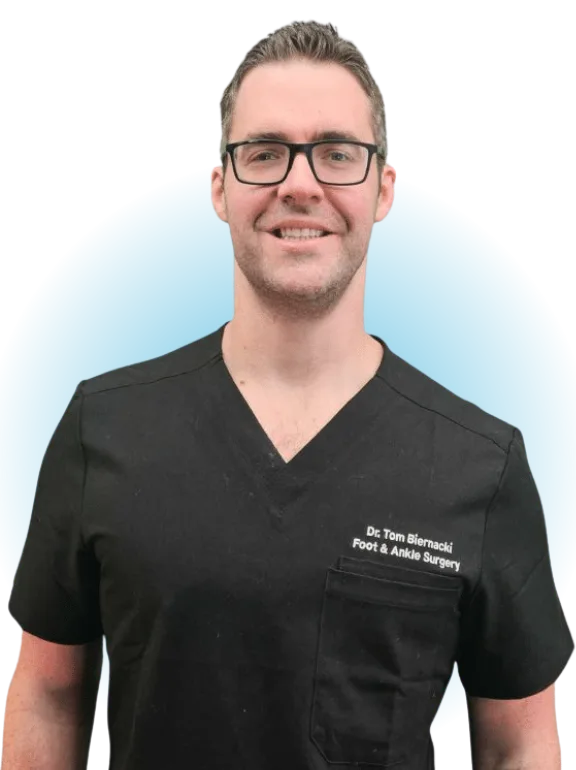
Medically Reviewed | Dr. Tom Biernacki, DPM | Board-Certified Podiatric Surgeon | Balance Foot & Ankle, Michigan

What Happens to Clubfoot in Adulthood?
Congenital clubfoot (talipes equinovarus) is one of the most common birth defects, affecting approximately 1 in 1,000 live births. The Ponseti method of serial casting followed by bracing has transformed the prognosis — most children treated with this protocol achieve plantigrade, functional feet that allow participation in normal childhood activities including sports. However, the treated clubfoot foot is not a normal foot, and adults who were born with clubfoot face a unique set of structural and functional challenges as they age.
Even after successful Ponseti treatment, the affected foot tends to be smaller and shorter than the contralateral foot, with a smaller calf muscle, reduced ankle dorsiflexion, and subtle residual internal rotation. The bones and soft tissues of a treated clubfoot are structurally different from a normal foot — the talus is somewhat deformed, the navicular may be laterally displaced, and the ankle mortise often has a subtle abnormality. These structural differences mean that the treated clubfoot transmits loads differently and may be predisposed to earlier onset osteoarthritis than the unaffected foot.
Adults with bilateral clubfoot face additional challenges because the symmetric structural differences can make comparison difficult, and the patient may not recognize that their foot function is abnormal because they have never experienced anything different. Fatigue, aching with prolonged walking, difficulty finding comfortable footwear, and recurrent ankle sprains are common complaints that bring clubfoot adults to the podiatrist decades after their initial successful treatment.
Common Adult Clubfoot Complications and Symptoms
Subtalar and ankle joint arthritis develop earlier in treated clubfoot than in the general population due to altered joint mechanics throughout life. The subtalar joint — which controls inversion and eversion of the hindfoot — is particularly vulnerable because the residual deformity changes how weight is distributed across its articular surface. Patients in their 30s and 40s may present with significant subtalar arthritis that would be unusual at that age in someone without clubfoot history.
Recurrent ankle sprains are common in adults with treated clubfoot because the residual hindfoot varus (heel tilting inward) concentrates the superimposed body weight on the outer edge of the foot, making lateral ligament injuries more likely with every step. The peroneal tendons — which should prevent inversion — are often thinner and less powerful in the clubfoot limb, reducing the dynamic protection against ankle sprains. Some adults with treated clubfoot have functional peroneal weakness from muscle imbalance dating back to the original deformity.
Skin and pressure problems occur because the foot may supinate (tilt outward) during walking, placing excessive pressure on the outer sole and the base of the fifth metatarsal. Calluses, corns, and recurrent ulceration at pressure points are common. In diabetic patients with a history of clubfoot, this pressure distribution creates a very high risk of foot wounds that require specialized podiatric attention.
Treatment Options for Adult Clubfoot Management
Custom orthotics are the foundation of adult clubfoot management. A properly designed orthotic can correct the hindfoot varus position, reduce lateral forefoot overload, and redistribute plantar pressures toward a more normal distribution. For adults with residual equinus (limited dorsiflexion), a heel lift incorporated into the orthotic reduces the compensatory pronation or torsion that the rest of the body uses to accommodate the ankle stiffness. Footwear selection is critical — shoes with a wide toe box, firm heel counter, and accommodating depth allow the orthotic to function properly.
Physical therapy addressing calf flexibility, peroneal strengthening, and balance training can significantly improve function in adult clubfoot patients. Many adults have unconsciously developed compensatory movement patterns over decades — slight limping, hip hiking, or trunk lean — that cause secondary problems in the knee, hip, and low back. A physical therapist experienced with lower extremity biomechanics can identify and correct these compensations.
Surgical options for adult clubfoot include subtalar or ankle fusion for severe arthritis, Achilles tendon lengthening for persistent equinus, and calcaneal osteotomy to correct significant hindfoot varus. The decision to pursue surgery depends on symptom severity, degree of deformity, and the patient’s activity goals. Dr. Tom Biernacki performs comprehensive adult clubfoot evaluations including weight-bearing X-rays and gait analysis and can guide you through all appropriate options for your specific presentation.
Dr. Tom's Product Recommendations
PowerStep Pinnacle Maxx Arch Support Insoles
⭐ Highly Rated
High-support arch insoles that help correct residual hindfoot varus and redistribute plantar pressure in adults with treated congenital clubfoot.
PowerStep
4.6
Disclosure: We earn a commission at no extra cost to you.
DASS Medical Grade Compression Socks
⭐ Highly Rated
Graduated compression socks reduce lower leg fatigue and swelling common in adults with clubfoot history who have altered calf muscle development.
DASS
4.5
Disclosure: We earn a commission at no extra cost to you.
✅ Pros / Benefits
- Custom orthotics effectively manage most adult clubfoot symptoms
- Physical therapy addresses compensatory movement patterns developed over decades
- Modern fusion surgery for arthritis has excellent long-term outcomes
- Most adults with treated clubfoot maintain good quality of life with proper management
❌ Cons / Risks
- Treated clubfoot never becomes a fully normal foot structurally
- Earlier onset arthritis compared to non-affected population
- Footwear selection is permanently more challenging
- May require periodic orthotics adjustments as the foot changes with age
Dr. Tom Biernacki’s Recommendation
Adults with treated clubfoot often have never had a comprehensive podiatric evaluation as an adult. Their childhood foot care ended when bracing stopped, but the foot continues to change. I always recommend a thorough adult evaluation with weight-bearing X-rays, gait analysis, and discussion of what the foot will look like over the next decades. Catching subtalar arthritis early and managing it proactively makes a huge difference in long-term function.
— Dr. Tom Biernacki, DPM | Board-Certified Podiatric Surgeon | Balance Foot & Ankle
Frequently Asked Questions
Does treated clubfoot cause arthritis later in life?
Yes, research shows that adults with treated clubfoot have a higher rate of subtalar and ankle arthritis than the general population, often developing it earlier. Regular monitoring and appropriate footwear can help slow progression.
Can adults with clubfoot participate in sports?
Many adults with successfully treated clubfoot are active in recreational and even competitive sports. Proper orthotics, strengthening, and footwear selection are key. High-impact sports may need to be modified as arthritis develops.
Does the clubfoot foot look different in adults?
Typically yes — the affected foot is often smaller, the calf may be thinner, and there may be subtle residual deformity visible on inspection. Most adults accommodate well cosmetically and functionally with appropriate support.
Michigan Foot Pain? See Dr. Biernacki In Person
4.9★ rated | 1,200+ Reviews | 3,000+ Surgeries
Book online 24/7 · Howell & Bloomfield Township
📞 (810) 206-1402 Book Online →In-Office Treatment at Balance Foot & Ankle
If home treatment isn’t providing relief for your congenital clubfoot adults, our podiatry team at Balance Foot & Ankle can help with expert evaluations and advanced in-office care.
Book online 24/7. (810) 206-1402

Dr. Tom Biernacki, DPM is a board-certified foot & ankle surgeon (ABFAS & ABPM) at Balance Foot & Ankle Specialists in Southeast Michigan. With over a decade of clinical experience, he specializes in heel pain, bunions, diabetic foot care, sports injuries, and minimally invasive surgery. Dr. Biernacki is a member of the APMA and ACFAS, and his patient education content on MichiganFootDoctors.com and YouTube has made him one of the most-followed foot & ankle educators on YouTube.