


Dorsal (top of the foot) pain is most often from extensor tendonitis, dorsal exostosis, or a stress fracture — and the location and timing of pain narrow it down within seconds of palpation.
Foot or ankle pain that isn’t getting better? A podiatrist can diagnose it in one visit — pick a real appointment time online, 24/7: Howell or Bloomfield Township. Takes about a minute, 24/7.
You’ve come to the right podiatry team. Dr. Tom Biernacki, DPM, FACFAS — board-certified foot & ankle surgeon with 3,000+ surgeries — explains exactly what dorsal (top of foot) pain means and what works. Call (810) 206-1402 for same-day appointment at Howell or Bloomfield Township.
Quick answer: Dorsal Foot Pain has multiple potential causes including mechanical, neurological, vascular, and inflammatory. The patterns we see most often are overuse, poorly-fitted shoes, and biomechanical imbalance. Red flags requiring urgent evaluation: warmth/redness (infection), inability to bear weight (fracture), and unilateral swelling without injury (DVT). Call (810) 206-1402.
![Flexor Hallucis Longus PAIN [FHL Tendonitis BEST Treatment!]](https://www.michiganfootdoctors.com/wp-content/cache/flying-press/f76e796729e23971056c8809b96b8803.jpg)
Table of Contents
WHAT IS DORSAL FOOT PAIN, & WHAT ARE THE CAUSES AND SYMPTOMS
HOME TREATMENT OPTIONS FOR DORSAL FOOT
BENEFITS OF DORSAL FOOT PAIN TREATMENT
SYMPTOMS OF DORSAL FOOT PAIN AND WHEN TO SEE A PODIATRIST
WHAT CAUSES DORSAL FOOT PAIN & TREATMENT VIDEO
DORSAL FOOT PAIN AND TREATMENT PHOTOS
DORSAL FOOT PAIN TREATMENT & RECOVERY
FREQUENTLY ASKED QUESTIONS ABOUT DORSAL FOOT PAIN
WHY CHOOSE BALANCE FOOT & ANKLE SPECIALIST
Dorsal Foot Pain Treatment in Howell & Bloomfield Township
Pain on the top of your foot can make walking and standing uncomfortable. Our Michigan foot specialists provide accurate diagnosis and personalized treatment to relieve dorsal foot pain and restore mobility.
Schedule Your Appointment

- Board-Certified Podiatrists
- Diabetic Foot Doctor Near You
- Serving Howell & Bloomfield Township
Watch: Causes and Treatment of Dorsal Foot Pain Explained
https://youtu.be/MptFiAYrdqcUnderstanding the Pain on the Top of Your Foot
What Is Dorsal Foot Pain & Why You Shouldn’t Ignore It
Dorsal foot pain refers to discomfort or aching on the top of your foot, and it can be caused by several factors—from tight shoes and repetitive motion to stress fractures and nerve conditions. Left untreated, this type of pain can interfere with daily movement and worsen over time. Whether you’re active or just walking to work, understanding the root cause is key to recovery. At Balance Foot & Ankle, we help diagnose and treat dorsal foot pain with personalized care and precision.
What Is Dorsal Foot Pain?
Dorsal foot pain refers to discomfort or pain on the top side of the foot, also known as the dorsum. This part of the foot includes tendons, ligaments, blood vessels, and bones that play a vital role in foot mobility and strength. When this area is strained, inflamed, or injured, it can lead to pain that affects your ability to walk or wear shoes comfortably.
Common Causes of Dorsal Foot Pain
Several conditions or habits can lead to pain on the top of the foot, including:
Extensor tendonitis – inflammation of the tendons that lift the toes, often due to overuse or tight shoes
Wearing tight or ill-fitting shoes – pressure from the top can compress soft tissues and nerves
Stress fractures – tiny cracks in the bones, often from repetitive impact or overtraining
Arthritis – inflammation in foot joints can cause pain and stiffness, including on the top of the foot
Nerve entrapment or compression – such as pinched dorsal nerves
Ganglion cysts or bone spurs – abnormal growths or fluid buildup that irritate surrounding tissues
Overuse or repetitive strain – common in runners or those who stand for long periods
Symptoms of Dorsal Foot Pain
If you’re experiencing dorsal foot pain, you may notice:
Aching or sharp pain on the top of the foot
Swelling or tenderness around the midfoot or near the toes
Pain that worsens with activity, tight footwear, or toe movement
Stiffness or burning sensation in the foot
Visible bump or pressure spot in more advanced cases
Difficulty wearing shoes or walking comfortably
What Causes Pain on Top of the Foot?
Dorsal foot pain can stem from common issues such as tendonitis, lacing pressure, or stress fractures. Athletes and individuals who are frequently on their feet are especially vulnerable. Conditions like extensor tendonitis, nerve impingement, or even arthritis may also cause symptoms. Diagnosing the cause typically involves a physical exam, imaging, and lifestyle assessment to create a tailored treatment plan that targets the pain at its source.
Dorsal Foot Pain Causes, Symptoms & Best Treatment
Dorsal Foot Pain: There are 3 major causes of dorsal foot pain – dorsal compression syndrome, neuritis and a dorsal exostosis.Dorsal Foot Pain: There are 3 major causes of dorsal foot pain – dorsal compression syndrome, neuritis and a dorsal exostosis.
Take the First Step Toward Foot Pain Relief
Don’t let dorsal foot pain slow you down. At Balance Foot & Ankle, our expert podiatrists can help relieve your discomfort and get you back on your feet faster. Whether it’s a minor strain or a more serious condition, we offer advanced diagnostics and customized treatment plans for long-term relief.
Call now or book an appointment online—your peace of mind starts here.
Book Your Podiatrist Visit NowTop-Rated Foot Care Products Recommended by Podiatrists
Trusted Solutions To Soothe, Protect, and Support Your Feet

Finding the best products for managing peripheral neuropathy and diabetic foot pain can make a world of difference in your daily comfort and mobility.

For managing foot pain from conditions like plantar fasciitis, flat feet, or diabetic neuropathy, the best orthotics can offer crucial support and relief.

Choosing the best shoes for foot conditions like neuropathy, plantar fasciitis, or flat feet is essential for pain relief and long-term foot health.
Benefits of Dorsal Foot Pain Treatment
Treating dorsal foot pain early provides more than just relief—it helps protect your long-term foot health and overall mobility. Here are the key benefits of seeking proper treatment:
Pain Relief
Targeted treatment reduces inflammation and relieves aching, burning, or sharp pain on the top of the foot.
Restored Mobility
Effective care helps you walk, stand, and move comfortably again—without limping or avoiding pressure on the foot.
Prevention of Further Injury
Early diagnosis helps avoid complications like stress fractures, chronic tendonitis, or nerve damage.
Prevention of Further Injury
Early diagnosis helps avoid complications like stress fractures, chronic tendonitis, or nerve damage.
Customized Solutions
A podiatrist can identify the exact cause and recommend personalized options like orthotics, shoe changes, or therapy.
Improved Shoe Comfort
Treatment can reduce discomfort from tight or irritating footwear by relieving swelling and pressure.
Improved Shoe Comfort
Treatment can reduce discomfort from tight or irritating footwear by relieving swelling and pressure.
Better Quality of Life
When your feet are pain-free, you can return to work, exercise, or daily activities without restriction.
What Causes Dorsal Foot Pain Video?
https://youtu.be/MptFiAYrdqcDorsal Foot Pain Overview:
- There are many different causes for dorsal foot pain. The most common are bone and soft tissue problems.
- The most common bone problems are spurs that happened to the top of the foot, and the most common soft tissue issues are irritation of the nerves and tendons.
- It is also possible to develop a cyst on top of the foot.
- The below guide goes over the most common causes of top pain and dorsal foot pain and their best treatments.
- The goal is to avoid dorsal foot pain and top-of-the-foot pain surgery!
Symptoms of Dorsal Foot Pain:
These are the most common symptoms of dorsal foot pain:
- Numbness.
- Burning.
- Tingling.
- The deep aching throbbing gets worse during the day.
- Worse with compression in a tight shoe.

Causes Of Dorsal Foot Pain:
These are the most common causes of dorsal foot pain. This is also known as the top of the foot pain.
1. Dorsal Compression Syndrome:
- Dorsal compression syndrome occurs when there is too much stress on the ball of your foot.
- This is like sitting on a bench.
- It compresses at the top.
- This compression appears as dorsal bone pain & inflammation.
- It stretches at the bottom.
- This stretching and tension appear as plantar fasciitis.
- Dorsal compression syndrome is usually due to a hypermobile foot.
- This could be due to flat feet or tight plantar fascia & calf muscles.

2. Top Of Foot Numbness Or Tingling:
- The top of the foot’s tingling is usually due to nerve irritation.
- This presents as numbness, burning, tingling, and sharp pain.
- This is not a deep aching or throbbing type of pain.
- Nerve pain can take many days or weeks to heal.
- The longer the nerve stays compressed or irritated, the longer it will take!
- So make sure nothing is irritating or impinging the dorsal foot.
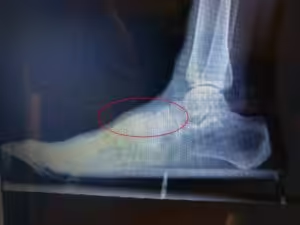
3. Top Of The Foot Bone Spur:
- A bone spur on top of the foot forms due to abnormal friction and stress on the bone.
- This is like forming a callus on your fingers.
- If there is overuse, your bone will reinforce itself and make it stronger.
- This is a result of dorsal compression syndrome.
- The midfoot bones jam dorsally.
- After years this leads to bone spur formation.
- This is called a metatarsal exostosis.
4. Extensor Tendonitis:
- The extensor tendons are responsible for bending your toes up.
- They also help lift your toes off the ground during push-off.
- These can become sore after a large amount of running.
- Treatment involves rest, ice, compression & elevation.

5. Metatarsal Stress Fracture:
- If you are a runner or started heavy walking.
- This does not happen instantly!
- It can take days or weeks to start hurting and causing pain gradually.
- Eventually, this will get too excruciating to continue walking or running.
- This can take 10-21 days to show up on X-ray.
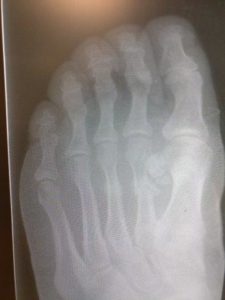
This is a fracture of the 2nd metatarsal after bone callus has formed. This is over 3 weeks after the original fracture site.
6. Sprained Top Of The Foot:
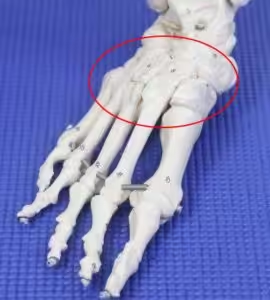
- A sprain in the top of the foot or the arch is called a Lisfranc sprain.
- In most cases, it is usually only a sprain that lasts a couple of days to a couple of weeks.
- But in some cases, it may be essential to seek imaging & further treatment.
7. Fluid Cyst:
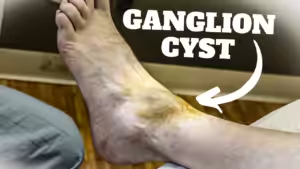
- Ganglionic cysts are soft masses across the top of the foot which are not immediately dangerous!
- These are simply pockets of fluid that pouch out from the joints of your foot bones like a balloon.
- Treatment consists of draining and removing the pocket of fluid.
- But they should still check out by a podiatrist because there is a chance that they may be something a little more dangerous.
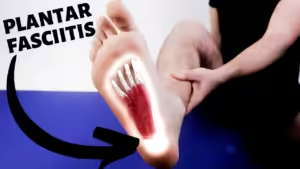
8. Plantar Fasciitis – Entire Arch Pain.
- This is by far the most common pain in the arch of your foot.
- 15% of all people around the world have it.
- If it feels painful in the morning & painful after walks, this is the first thing you should consider.
- Plantar fasciitis is usually related to flat foot & is due to the stretching of the tissues in the middle of your foot!
Dorsal Foot Pain Surgery:
Sometimes a bone spur does develop on top of the foot. Your podiatrist can work with you to work that up through x-ray imaging and or MRI.
- Dorsal foot pain surgery may be needed if it is determined that your bone spur is responsible for the pain.
- This is if conservative nonsurgical therapy was not effective, this might mean that surgery is an option.
- The goal of surgery is to clean out the Spurs developing around the joint. This is a fairly straightforward and effective surgery.
- The good news is while the recovery is reasonably quick and effective: the key is to permit a new spur from developing.
- This means that you still need to increase your flexibility, get good orthotics, get good shoes and get better overall shape.
- You can’t just go back to barefoot walking and expect to be pain-free for the rest of your life!
- For this reason, we strongly recommend nonsurgical therapy to start with.
Dorsal Foot Pain Treatment & Recovery
Recovery from dorsal foot pain—pain on the top of the foot—depends on the underlying cause, but with the right care, most patients see significant improvement within a few days to a few weeks. Treatment often begins with rest, ice, anti-inflammatory medications, and supportive footwear to reduce strain and allow healing. In more persistent cases, your podiatrist may recommend custom orthotics, physical therapy, or laser treatments to address tendon inflammation or nerve involvement. As healing progresses, patients are encouraged to gradually return to activity while maintaining proper foot support and stretching exercises. At Balance Foot & Ankle Specialist, we monitor your recovery closely to ensure a full return to comfort and mobility—so you can walk with confidence again.
Dorsal Foot Pain – Effective Home Treatments
Dorsal foot pain—pain on the top of the foot—can result from overuse, tight shoes, tendon inflammation, or minor injuries. If you’re experiencing discomfort on the top of your foot, try these simple at-home remedies to relieve pain and reduce swelling.
Start by resting your foot and avoiding activities that aggravate the pain. Apply ice packs for 15–20 minutes, 2–3 times a day, to reduce inflammation. Wearing roomy, supportive shoes and avoiding tight laces can also relieve pressure on the dorsal tendons. Over-the-counter anti-inflammatory medications like ibuprofen may help with pain and swelling. Gentle foot stretches and massage can improve circulation and release tension. If symptoms persist for more than a few days or worsen with activity, consult a podiatrist for further evaluation.
Relieving Dorsal Foot Pain: Treatments That Actually Work
Dorsal foot pain—pain on the top of your foot—can stem from a range of causes, from something as simple as tight shoes to more serious issues like extensor tendonitis, nerve impingement, or stress fractures. No matter the cause, persistent pain can interfere with your daily life, exercise, or even just walking comfortably. That’s why early recognition and appropriate treatment are essential for long-term relief.
If the pain is due to inflammation, such as extensor tendonitis, conservative treatments like rest, ice therapy, anti-inflammatory medication, and physical therapy can be effective. Custom orthotics or shoe inserts are often recommended to correct gait imbalances and reduce stress on the top of the foot. In some cases, we may recommend immobilization using a walking boot or brace to help the tissues heal properly.
The first step in treating dorsal foot pain is identifying the underlying cause. At Balance Foot & Ankle, our podiatrists begin with a thorough examination, often supported by imaging such as X-rays or MRI scans to rule out fractures or arthritis. For less serious cases, simple solutions like switching to better-fitting shoes or changing your lacing technique can relieve pressure and reduce pain significantly.
For more persistent or severe cases, especially those involving nerve compression or arthritis, advanced options like corticosteroid injections or minimally invasive surgery may be considered. Regardless of severity, our team at Balance Foot & Ankle is committed to creating a plan tailored to your foot type that addresses the root of the problem—not just the symptoms—so you can get back on your feet pain-free and with confidence.

Why Choose Balance Foot & Ankle Specialist for Dorsal Foot Pain
At Balance Foot & Ankle Specialist, we understand that pain on the top of your foot can disrupt every step of your day. That’s why our experienced team—led by Dr. Tom Biernacki—offers personalized, evidence-based care to accurately diagnose and treat dorsal foot pain at its root. Whether your discomfort is caused by tendon strain, nerve compression, or stress injury, we use advanced diagnostics, custom treatment plans, and modern therapies to get you back on your feet—pain-free. With a reputation for compassionate care and clinical excellence, we’re the trusted choice for long-term foot health in Howell and Bloomfield Township, Michigan.
Why Choose Balance Foot & Ankle Specialist for Dorsal Foot Pain
At Balance Foot & Ankle Specialist, we understand that pain on the top of your foot can disrupt every step of your day. That’s why our experienced team—led by Dr. Tom Biernacki—offers personalized, evidence-based care to accurately diagnose and treat dorsal foot pain at its root. Whether your discomfort is caused by tendon strain, nerve compression, or stress injury, we use advanced diagnostics, custom treatment plans, and modern therapies to get you back on your feet—pain-free. With a reputation for compassionate care and clinical excellence, we’re the trusted choice for long-term foot health in Howell and Bloomfield Township, Michigan.
Schedule Your Appointment Now
Why Michigan Patients Choose Our Team
- Experienced podiatric specialists
- Conservative treatments whenever possible
- Advanced diagnostic technology
- Custom orthotics and surgical options
- Multiple convenient Michigan locations
Our board-certified podiatrists specialize in foot and ankle care.
Our Foot and Ankle Specialists

Dr. Tom Biernacki, DPM
Is a trusted Michigan podiatrist known for his patient-focused approach and expertise in both conservative and surgical treatments.
Book Now
Dr. Carl Jay,
DPM
Provides comprehensive podiatric care with an emphasis on non-surgical treatment whenever possible.
Book Now
Dr. Daria Gutkin, DPM
Offers advanced treatment options for a many foot and ankle conditions.
Book NowMore Podiatrist-Recommended Foot Health Essentials
Hoka Clifton 10

Max-cushion everyday shoe — podiatrist favorite for walking and running.

OOFOS Recovery Slide

Impact-absorbing recovery sandal — wear after long days on your feet.
As an Amazon Associate, Balance Foot & Ankle earns from qualifying purchases. Product recommendations are based on clinical experience; prices and availability shown above update live from Amazon.
When to See a Podiatrist
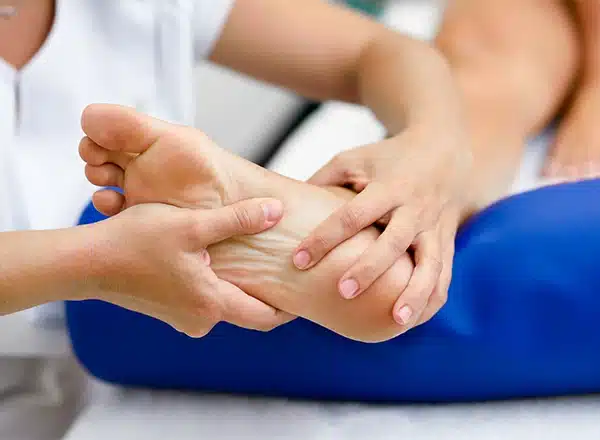
If foot or ankle pain has been bothering you for more than a few weeks, home care alone may not be enough. Balance Foot & Ankle offers same-week appointments at our Howell and Bloomfield Township clinics — no referral needed in most cases. Bring your current shoes and a short list of symptoms and we’ll build you a treatment plan in one visit.
Call Balance Foot & Ankle: (810) 206-1402 · Book online · Offices in Howell & Bloomfield Township
FAQs About Dorsal Foot Pain
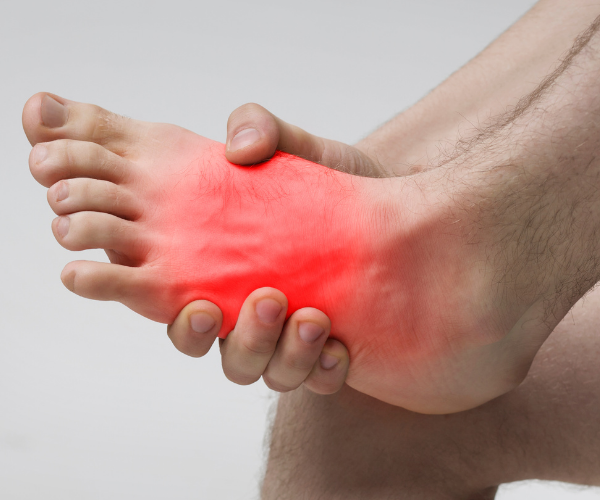
Dorsal foot pain refers to pain located on the top of the foot, often caused by overuse, tight footwear, or injury.
What causes pain on the top of the foot?Common causes include extensor tendonitis, nerve compression, stress fractures, arthritis, or poorly fitting shoes.
How is dorsal foot pain diagnosed?A podiatrist may perform a physical exam, review your activity history, and recommend X-rays or MRIs to confirm the diagnosis.
Can shoes cause dorsal foot pain?Yes. Tight or improperly laced shoes can put pressure on tendons or bones, leading to discomfort.
Is dorsal foot pain related to tendonitis?Yes. Extensor tendonitis is a common cause, where the tendons on the top of the foot become inflamed due to overuse.
Can dorsal foot pain go away on its own?Mild cases may resolve with rest and proper footwear, but persistent pain should be evaluated by a podiatrist.
What treatments are available for dorsal foot pain?Treatments range from rest, orthotics, and anti-inflammatories to physical therapy or, in some cases, surgery.
When should I see a podiatrist for top-of-foot pain?If the pain persists for more than a few days or worsens with activity, it’s time to consult a specialist.
Can I still exercise with dorsal foot pain?It’s best to avoid high-impact activities until diagnosed. Low-impact exercises may be allowed based on severity.
Where can I get expert care for dorsal foot pain?Visit Balance Foot & Ankle for personalized care, diagnostics, and advanced treatment options for dorsal foot pain.
Don’t Let Dorsal Foot Pain Get Worse
Pain on the top of your foot can worsen over time and lead to more serious problems if left untreated. Early diagnosis helps prevent complications and speeds up your recovery.
At Balance Foot & Ankle Specialist, our experienced Michigan podiatrists provide accurate evaluations and plan tailored to your foot types designed to relieve pain and restore mobility.
Schedule your appointment today and take the first step toward comfortable, pain-free walking.
Book a Foot Exam Today Call Us TodayRelated Treatment Guides
- Plantar Fasciitis & Heel Pain Treatment
- Custom 3D Orthotics
- Sports Foot & Ankle Injury Treatment
- Bunion Treatment
Medical References & Sources
- American Podiatric Medical Association — Patient Education
- American Orthopaedic Foot & Ankle Society — Foot Conditions
📍 Located in Michigan?
Our board-certified podiatrists treat this condition at two convenient locations. Same-day appointments often available.
Experiencing Pain on Top of Your Foot?
Dorsal foot pain can signal tendonitis, stress fractures, or nerve compression. Our podiatrists provide accurate diagnosis and effective treatment to resolve your pain.
Products for Top-of-Foot Pain
These products help reduce dorsal foot pain from tendonitis and nerve compression:
- PowerStep Pinnacle Orthotics — Reduces extensor overload by improving foot mechanics: View on Amazon
- Doctor Hoy’s Natural Pain Relief Gel — Apply to the top of the foot for tendonitis pain: View on Amazon
- Low-lace or hook-and-loop shoes — Eliminates lace pressure on the dorsum:
📞 Or call us directly: (810) 206-1402
Clinical References
- Chiodo CP, Herbst SA. Extensor tendonitis of the foot. Foot Ankle Int. 2004;25(10):718-723.
- Manganaro D, Dollinger B. Stress fractures of the foot and ankle. StatPearls. 2023.
- Donley BG, et al. Nerve entrapments of the foot and ankle. J Am Acad Orthop Surg. 2015;23(2):58-66.

Frequently Asked Questions
When should I see a doctor?
See a podiatrist if pain persists past 2 weeks, prevents normal activity, or is accompanied by red-flag symptoms (warmth, swelling, numbness, inability to bear weight).
Can I treat this at home?
Mild cases respond to RICE protocol (rest, ice, compression, elevation), supportive shoes, and OTC anti-inflammatories. Persistent symptoms need professional evaluation.
How long does it take to heal?
Most soft tissue injuries resolve in 2-6 weeks with appropriate care. Bone injuries take 6-12 weeks. Chronic conditions need longer-term management.
What is Foot pain?
Foot pain is a common foot/ankle condition that affects mobility and quality of life. Understanding the underlying cause is the first step in successful treatment. Our podiatrists at Balance Foot & Ankle perform a hands-on biomechanical exam, review your activity history, and use diagnostic imaging when appropriate to identify the root cause—not just treat the symptom. Many patients have been told to “rest and ice” without a deeper diagnostic workup; our approach is different.
Symptoms and warning signs
Common signs of foot pain include pain that worsens with activity, morning stiffness, swelling, tenderness when palpated, and difficulty bearing weight. If you experience sudden severe pain, inability to walk, visible deformity, numbness or color change, contact our office the same day or visit urgent care—these can signal a more serious injury such as a fracture, tendon rupture, or vascular compromise. Diabetics with any foot wound should seek same-day care.
Conservative treatment options
Most cases of foot pain respond to non-surgical care: structured rest, supportive footwear changes, custom orthotics, targeted stretching and strengthening protocols, anti-inflammatory medications when medically appropriate, and in-office procedures such as ultrasound-guided injections. We also offer advanced therapies including laser therapy, EPAT/shockwave, regenerative injections, and image-guided procedures. Treatment is sequenced from least invasive to most invasive, and we explain the rationale at every step.
When is surgery considered?
Surgery is reserved for cases that fail 3-6 months of well-structured conservative care, when there is structural pathology (severe deformity, complete tear, advanced arthritis), or when imaging shows damage that will not heal without intervention. Our surgeons have performed 3,000+ foot and ankle procedures and prioritize minimally-invasive techniques whenever appropriate. We discuss recovery timelines, return-to-activity milestones, and realistic outcome expectations before any procedure is scheduled.
Recovery timeline and prevention
Recovery from foot pain varies based on severity and chosen treatment path. Conservative cases often improve within 4-8 weeks with consistent adherence to the protocol. Post-procedural recovery may range from a few days (in-office procedures) to several months (reconstructive surgery). Long-term prevention involves footwear assessment, activity modification, structured strengthening, and regular check-ins with your podiatrist if you have a history of recurrence. We provide written home-exercise plans and digital follow-up support.
Dr. Tom’s Dorsal Foot Pain Management Protocol
- PowerStep Pinnacle — Extensor tendinitis from arch collapse: PowerStep corrects the mechanical cause of dorsal overload.
- Doctor Hoy’s Natural Pain Relief Gel — Dorsal foot pain and tendon inflammation: arnica + camphor topical applied to the top of the foot 3-4x daily.
- FLAT SOCKS No-Sock Insoles — Reduce sock friction over sensitive dorsal tendons: FLAT SOCKS inserts create a smooth sock-free surface inside the shoe.
Dorsal foot pain with swelling or bruising? Same-day X-ray in our offices → Stress fracture and Lisfranc injury require prompt diagnosis. (810) 206-1402
Ready to feel better?
Same-week appointments available in Howell and Bloomfield Township, Michigan.
Book Your VisitReady to fix this for good?
Reading goes so far. The fastest path is a 30-minute office visit. Same-day Howell or Bloomfield Township. Call (810) 206-1402.
In-Office Treatment at Balance Foot & Ankle
If home treatment isn’t providing relief for your dorsal foot pain, our podiatry team at Balance Foot & Ankle can help with same-day evaluations and advanced in-office care.
Get Expert Care at Balance Foot & Ankle
Same-week appointments at our Howell and Bloomfield Township offices. Board-certified podiatric surgeons. Most insurance accepted.

Dr. Tom Biernacki, DPM is a board-certified foot & ankle surgeon (ABFAS & ABPM) at Balance Foot & Ankle Specialists in Southeast Michigan. With over a decade of clinical experience, he specializes in heel pain, bunions, diabetic foot care, sports injuries, and minimally invasive surgery. Dr. Biernacki is a member of the APMA and ACFAS, and his patient education content on MichiganFootDoctors.com and YouTube has made him one of the most-followed foot & ankle educators on YouTube.