
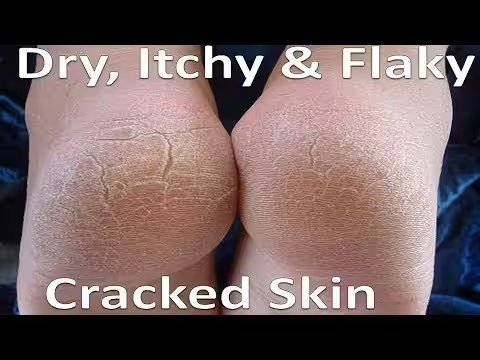

Dry, cracked heels combine dry skin, callus buildup, and pressure. The right combination of urea cream, callus debridement, and protective heel cups clears it within weeks.
You’ve come to the right podiatry team. Dr. Tom Biernacki, DPM, FACFAS — board-certified foot & ankle surgeon with 3,000+ surgeries — explains exactly what dry cracked heels means and what works. Call (810) 206-1402 for same-week appointment at Howell or Bloomfield Township.
Quick answer: Treatment for dry cracked heels treatment causes follows a stepwise approach: 1) conservative care first (rest, ice, supportive footwear, OTC anti-inflammatories), 2) physical therapy and targeted exercises, 3) in-office treatments (injections, custom orthotics) if conservative fails at 4-6 weeks, 4) surgery for refractory cases. Most patients resolve at step 1 or 2. Call (810) 206-1402.
Medically reviewed by Dr. Tom Biernacki, DPM · Board-Certified Podiatric Surgeon · Last reviewed: April 2026 · Editorial Policy
Quick Answer
Dry Cracked Heels: Causes, Treatment, and When to See a Doct relates to plantar fasciitis — typically caused by tight calves and arch overload. Most patients improve in 6-12 weeks with conservative care. Same-week appointments in Howell + Bloomfield Township: (810) 206-1402.
Medically reviewed by Dr. Tom Biernacki, DPM — Board-Certified Podiatric Surgeon — Balance Foot & Ankle, Howell & Bloomfield Township, MI. Last updated April 2026.
▶ Watch
Medically Reviewed by Dr. Tom Biernacki, DPM — Board-Certified Podiatrist, Balance Foot & Ankle Specialists, Michigan. Last updated April 2026.
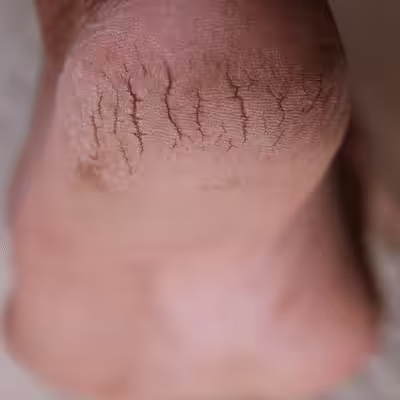
Cracked heels — also called heel fissures — range from a minor cosmetic nuisance to a painful, infection-prone medical problem. Understanding what causes them determines the most effective treatment and helps prevent recurrence.
What Causes Cracked Heels
Heel fissures develop when the thick skin of the heel dries out and loses elasticity, then cracks under the repetitive pressure of walking. Contributing factors include:
- Dry skin (xerosis) — the most common cause; the heel has few oil glands and dries more readily than other skin areas; worsened by cold weather, low humidity, and long hot showers
- Prolonged standing — occupations requiring extended standing increase heel loading and pressure
- Obesity — increased heel pressure accelerates cracking
- Open-backed shoes and sandals — allow the fat pad under the heel to splay outward without containment, increasing fissure formation
- Thyroid disease and diabetes — both reduce skin hydration and circulation; diabetics with neuropathy may not notice painful fissures until they become infected wounds
- Psoriasis and eczema — inflammatory skin conditions that cause hyperkeratosis and accelerate fissure formation
- Aging — skin loses elasticity and oil production declines with age
Home Treatment for Mild-Moderate Cracked Heels
Exfoliation and Moisturization Protocol
The most effective home approach combines mechanical exfoliation with intensive moisturization:
- Soak feet in warm water for 10–15 minutes to soften the callused heel skin
- Use a pumice stone, foot file, or electronic callus remover to gently reduce the thickened tissue — do NOT use razor blades or “cheese graters” which can cause injury
- Apply a thick urea-based cream immediately after patting dry — urea (10–25% concentration) is the most clinically effective ingredient for heel xerosis; options include Flexitol Heel Balm, AmLactin, Eucerin Urea Repair
- Cover with socks after moisturizing to enhance product absorption (especially overnight)
- Repeat daily or every other day until heels improve; maintain 3× per week thereafter
Professional Treatment for Moderate-Severe Fissures
When home care is insufficient — particularly for deep, painful, or bleeding fissures — professional podiatric care provides:
- Sharp debridement — professional reduction of hyperkeratotic heel tissue with a blade or medical-grade callus remover; faster and more precise than home pumice
- Cyanoacrylate tissue adhesive — medical-grade “liquid bandage” applied to deep fissures to hold them closed, allow healing, and prevent bacterial entry
- Prescription-strength urea (40%) — prescription urea preparations dissolve hyperkeratotic tissue more aggressively than OTC products
- Custom orthotics — for patients with biomechanical contributors (flat feet, overpronation) that concentrate pressure on the heel
When to See a Podiatrist Immediately
Seek prompt evaluation when: fissures are bleeding, show signs of infection (redness, warmth, swelling, pus), or you have diabetes or peripheral vascular disease (even minor heel wounds are serious in these populations and require professional management rather than home care).
Painful Cracked Heels? Professional Debridement Helps.
Dr. Biernacki at Balance Foot & Ankle provides in-office heel debridement and wound care for painful or infected heel fissures. Same-week appointments in Howell and Bloomfield Township.
or call (810) 206-1402
📍 Located in Michigan?
Our board-certified podiatrists treat this condition at two convenient locations. Most new patients are seen the same week.
Insurance Accepted
BCBS · Medicare · Aetna · Cigna · United Healthcare · HAP · Priority Health · Humana · View All →
Howell Office
4330 E Grand River Ave
Howell, MI 48843
Get Directions →
Bloomfield Township Office
43494 Woodward Ave, #208
Bloomfield Township, MI 48302
Get Directions →
Your Board-Certified Podiatrists



Ready to Get Back on Your Feet?
Same-week appointments available at both locations.
Book Your AppointmentMore Podiatrist-Recommended Foot Health Essentials
Hoka Clifton 10

Watch: Heel Pad Syndrome Fat Pad Atrophy – Bottom Foot Pain FIX — MichiganFootDoctors YouTube
Max-cushion everyday shoe — podiatrist favorite for walking and running.

OOFOS Recovery Slide

Impact-absorbing recovery sandal — wear after long days on your feet.
As an Amazon Associate, Balance Foot & Ankle earns from qualifying purchases. Product recommendations are based on clinical experience; prices and availability shown above update live from Amazon.
When to See a Podiatrist
If foot or ankle pain has been bothering you for more than a few weeks, home care alone may not be enough. Balance Foot & Ankle offers same-week appointments at our Howell and Bloomfield Township clinics — no referral needed in most cases. Bring your current shoes and a short list of symptoms and we’ll build you a treatment plan in one visit.
Call Balance Foot & Ankle: (810) 206-1402 · Book online · Offices in Howell & Bloomfield Township
Pros & Cons of Conservative Care for foot care
Advantages
- ✓ Conservative care first
- ✓ Same-week appointments
- ✓ Multiple insurance accepted
Considerations
- ✗ Self-treatment can mask issues
- ✗ See a podiatrist if pain >2 weeks
Dr. Tom’s Recommended Products for foot care
Affiliate disclosure: As an Amazon Associate, Balance Foot & Ankle earns from qualifying purchases. We only recommend products we use with patients.
Footnanny Heel Cream Dr. Tom’s Pick
Best for: Daily moisturizer for cracked heels
Ready to Get Back on Your Feet?
Same-week appointments in Howell + Bloomfield Township. Most insurance accepted. Dr. Tom Biernacki, DPM & team.
Book Today — Same-Week Appointments Available
Call Now: (810) 206-1402
About Your Care Team at Balance Foot & Ankle
Dr. Tom Biernacki, DPM · Board-Certified Foot & Ankle Surgeon. Specializes in conservative-first care, minimally invasive bunion surgery, and complex reconstruction.
Dr. Carl Jay, DPM · Accepting new patients. Specializes in sports medicine, athletic injuries, and routine podiatric care.
Dr. Daria Gutkin, DPM, AACFAS · Accepting new patients. Specializes in surgical reconstruction and pediatric podiatry.
Locations: 4330 E Grand River Ave, Howell, MI 48843 · 43494 Woodward Ave Suite 208, Bloomfield Township, MI 48302
Hours: Mon–Fri 8:00 AM – 5:00 PM · (810) 206-1402
Frequently Asked Questions
How long does treatment take to work?
Most patients see improvement in 4-8 weeks with consistent conservative care. Persistent symptoms after 8 weeks need imaging and escalation.
When is surgery needed?
Surgery is reserved for cases that fail 3-6 months of conservative care, structural deformities, or fractures requiring stabilization.
Is this covered by insurance?
Most diagnostic visits and conservative treatments are covered by Medicare and major insurers. Custom orthotics often require diabetic or post-surgical justification.
In-Office Treatment at Balance Foot & Ankle
If home treatment isn’t providing relief for your foot skin conditions, our podiatry team at Balance Foot & Ankle can help with same-week evaluations and advanced in-office care.
Same-week appointments available. (810) 206-1402
Doctor Hoy’s Natural Pain Relief Gel
Natural topical pain relief I use in our clinic. Arnica + camphor formula — apply directly to the area 3–4x daily. ($20–25)
Shop Doctor Hoy’s →Get Expert Care at Balance Foot & Ankle
Same-week appointments at our Howell and Bloomfield Township offices. Board-certified podiatric surgeons. Most insurance accepted.
Ready for Expert Care?
Same-week appointments in Howell & Bloomfield Township, MI.
4.9★ | 1,123 Reviews | 3,000+ Surgeries
Or call: (810) 206-1402

Dr. Tom Biernacki, DPM is a board-certified foot & ankle surgeon (ABFAS & ABPM) at Balance Foot & Ankle Specialists in Southeast Michigan. With over a decade of clinical experience, he specializes in heel pain, bunions, diabetic foot care, sports injuries, and minimally invasive surgery. Dr. Biernacki is a member of the APMA and ACFAS, and his patient education content on MichiganFootDoctors.com and YouTube has made him one of the most-followed foot & ankle educators on YouTube.