

You are in the right place. Dr. Tom Biernacki, DPM, FACFAS — board-certified foot & ankle surgeon with 3,000+ surgeries — explains exactly what extensor tendon repair foot means and what works. Call (810) 206-1402 for same-week appointment at Howell or Bloomfield Township.
Quick answer: Extensor Tendon Repair Foot is a common foot/ankle topic that affects many patients. The 2026 evidence-based approach combines proper diagnosis, conservative-first treatment, and escalation only when needed. We treat this regularly at our Howell and Bloomfield Township practices. Call (810) 206-1402.
Medically Reviewed by Dr. Tom Biernacki, DPM — Board-Certified Podiatrist, Balance Foot & Ankle Specialists, Michigan. Last updated April 2026.
▶ Watch
Understanding Extensor Tendons of the Foot
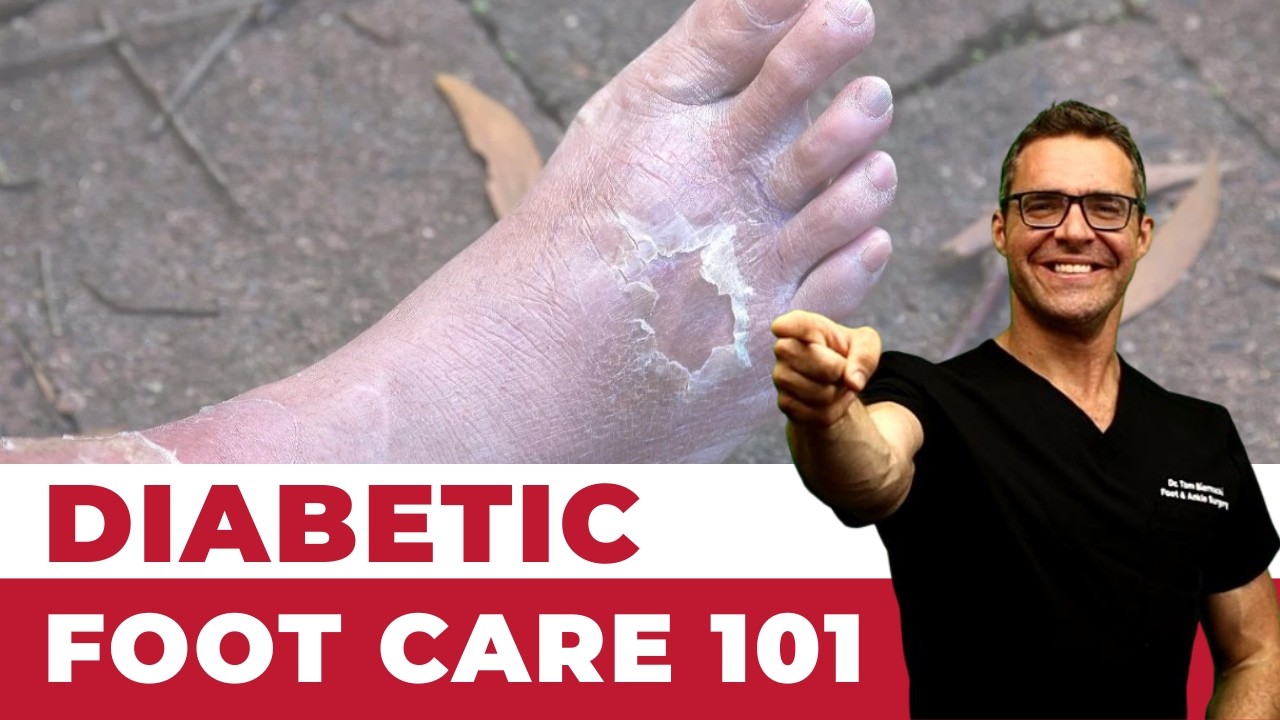
The extensor tendons of the foot run across the dorsum (top) of the foot and are responsible for lifting (dorsiflexing) the toes and contributing to ankle dorsiflexion. The primary extensors include the extensor hallucis longus (EHL), which extends the great toe, and the extensor digitorum longus (EDL), which extends the lesser toes. The extensor digitorum brevis and extensor hallucis brevis muscles originate within the foot and provide additional extension at the toe joints.
Because these tendons run just beneath the thin skin of the foot’s dorsum, they are vulnerable to injury from lacerations (cuts), crush injuries, and closed ruptures. Injury disrupts the ability to lift the affected toe(s), interferes with gait, and requires surgical repair for optimal recovery in most cases.
Causes of Extensor Tendon Injuries
Lacerations are the most common cause of extensor tendon injuries in the foot. Any cutting injury to the dorsum of the foot — from glass, knives, power tools, lawn mowers, or other sharp objects — can transect extensor tendons. The dorsal anatomy is quite compact, meaning that even superficial-appearing lacerations may involve tendon injury. Any wound over the dorsal foot accompanied by inability to fully extend the toes warrants evaluation for tendon involvement.
Crush injuries from heavy objects falling on the foot can rupture extensor tendons through a closed mechanism, without laceration.
Closed spontaneous rupture is less common in the foot than in the hand, but can occur in the setting of chronic inflammatory arthritis (rheumatoid arthritis) where synovitis erodes the tendon, or after repeated corticosteroid injections into or around the tendon.
Diagnosis
The diagnosis of extensor tendon injury is clinical. Inability to actively extend the affected toe(s) against resistance, combined with the appropriate injury history and examination findings, establishes the diagnosis. For lacerations, the wound is carefully explored under local anesthesia to assess tendon integrity directly. Imaging is rarely necessary for diagnosis but MRI or ultrasound can characterize closed injuries or define the extent of injury prior to surgical planning.
A critical point: partial tendon lacerations may retain some active extension despite significant tendon damage. Partial injuries that are not recognized and repaired can extend to complete rupture with continued activity. Any dorsal foot laceration with reduced (not just absent) extension strength should be explored.
Surgical Repair: Technique and Timing
Extensor tendon repair is best performed within 1-2 weeks of injury (primary repair) when the tendon ends can be directly approximated without significant scarring or retraction. For delayed diagnosis or significant contamination, staged repair following wound management may be required.
The procedure is performed under local or regional anesthesia as an outpatient. The tendon ends are identified and prepared, then sutured together using modified Kessler or other core suture techniques with an epitendinous peripheral suture. The repair must achieve sufficient strength to withstand early protected motion during rehabilitation while healing proceeds.
For injuries near the toe joints (insertional or peri-insertional), bone anchor re-attachment may be required if the tendon has avulsed from its bony insertion.
Recovery After Extensor Tendon Repair
Extensor tendon repairs in the foot heal remarkably well compared to hand extensor repairs, partly because the forces transmitted through foot extensors during walking are lower than through hand extensors during gripping. The general recovery timeline includes:
- 0-2 weeks: Protected splinting in neutral dorsiflexion; wound care; non-weight-bearing or heel-weight-bearing with a surgical shoe
- 2-4 weeks: Gentle protected range of motion exercises; progressive weight-bearing begins
- 4-8 weeks: Progressive toe extension strengthening; transition to regular footwear when swelling permits
- 2-3 months: Full return to activity for most patients
Complications of extensor tendon repair include re-rupture (particularly with premature return to activity), adhesion formation causing limited motion, and wound complications. Adhesions — scar tissue that tethers the healing tendon to surrounding structures — are the most common long-term complication and may require tenolysis (surgical release) if they significantly limit function.
Treatment for Lacerations: Don’t Wait to Be Evaluated
Any laceration to the dorsum of the foot should be evaluated promptly in a podiatry or emergency setting. Even “small” wounds may involve tendon damage, and delayed recognition leads to delayed repair with worse outcomes. If you’ve cut the top of your foot and notice difficulty lifting your toes, seek evaluation the same day.
Balance Foot & Ankle in Howell and Bloomfield Township, Michigan provides urgent evaluation for foot lacerations and extensor tendon injuries. Call (810) 206-1402 for prompt scheduling or book online.
Foot or Ankle Pain? We Can Help.
Balance Foot & Ankle — Howell & Bloomfield Township, MI
📅 Book Online
📞 (810) 206-1402
Insurance Accepted
BCBS · Medicare · Aetna · Cigna · United Healthcare · HAP · Priority Health · Humana · View All →
Howell Office
4330 E Grand River Ave
Howell, MI 48843
Get Directions →
Bloomfield Township Office
43494 Woodward Ave, Suite 208
Bloomfield Township, MI 48302
Get Directions →
Your Board-Certified Podiatrists



Ready to Get Back on Your Feet?
Same-week appointments available at both locations.
Book Your AppointmentMore Podiatrist-Recommended Foot Health Essentials
Hoka Clifton 10


![Achilles Tendonitis & Back of Heel Pain [BEST Home Treatments 2024!]](https://www.michiganfootdoctors.com/wp-content/cache/flying-press/d645ea3f3d27024136b88a074b2b7894.jpg)
Watch: Achilles Tendonitis & Back of Heel Pain [BEST Home Treatments 2024!] — MichiganFootDoctors YouTube
Max-cushion everyday shoe — podiatrist favorite for walking and running.

OOFOS Recovery Slide

Impact-absorbing recovery sandal — wear after long days on your feet.
As an Amazon Associate, Balance Foot & Ankle earns from qualifying purchases. Product recommendations are based on clinical experience; prices and availability shown above update live from Amazon.
When to See a Podiatrist
If foot or ankle pain has been bothering you for more than a few weeks, home care alone may not be enough. Balance Foot & Ankle offers same-week appointments at our Howell and Bloomfield Township clinics — no referral needed in most cases. Bring your current shoes and a short list of symptoms and we’ll build you a treatment plan in one visit.
Call Balance Foot & Ankle: (810) 206-1402 · Book online · Offices in Howell & Bloomfield Township
In-Office Treatment at Balance Foot & Ankle
When conservative care isn’t enough, Dr. Tom Biernacki and the team at Balance Foot & Ankle offer advanced, same-day options — including Tendon Repair Surgery Michigan at our Howell and Bloomfield Township clinics.
Same-week appointments available. Call (810) 206-1402 or book online.
In-Office Treatment at Balance Foot & Ankle
If home treatment isn’t providing relief for your extensor tendon repair foot, our podiatry team at Balance Foot & Ankle can help with same-week evaluations and advanced in-office care.
Same-week appointments available. (810) 206-1402
Doctor Hoy’s Natural Pain Relief Gel
Natural topical pain relief I use in our clinic. Arnica + camphor formula — apply directly to the area 3–4x daily. ($20–25)
Shop Doctor Hoy’s →Ready to fix this for good?
Reading goes so far. The fastest path is a 30-minute office visit. Same-day Howell or Bloomfield Township. Call (810) 206-1402.

Dr. Tom Biernacki, DPM is a board-certified foot & ankle surgeon (ABFAS & ABPM) at Balance Foot & Ankle Specialists in Southeast Michigan. With over a decade of clinical experience, he specializes in heel pain, bunions, diabetic foot care, sports injuries, and minimally invasive surgery. Dr. Biernacki is a member of the APMA and ACFAS, and his patient education content on MichiganFootDoctors.com and YouTube has made him one of the most-followed foot & ankle educators on YouTube.