
Medically reviewed by Dr. Tom Biernacki, DPM — Board-certified foot & ankle surgeon, 3,000+ surgeries performed. Updated April 2026 with current clinical evidence. This article reflects real practice experience from Balance Foot & Ankle Specialists in Howell and Bloomfield Township, Michigan.
Quick Answer
Sever’s disease is a growth-plate irritation at the back of a child’s heel, most common in active kids ages 8-14. It resolves with activity modification, heel cups, calf stretching, and ice. It does not cause long-term damage but can recur until the growth plate closes.
Medically reviewed by Dr. Tom Biernacki, DPM
Board-certified podiatric surgeon | Balance Foot & Ankle
Last reviewed: April 2, 2026
⚕️ Medical Review
Reviewed by Dr. Tom Biernacki, DPM — Board-certified podiatrist at Balance Foot & Ankle Specialists, Novi, Michigan. Over 10 years of experience performing first MTP joint fusion and forefoot reconstructive procedures. Last updated April 2026.
⚡ Quick Answer: First MTP joint fusion (arthrodesis) is the gold standard surgical treatment for severe hallux rigidus — end-stage arthritis of the big toe joint. By permanently fusing the joint in an optimal position, it eliminates pain while preserving a natural push-off gait. Patient satisfaction rates exceed 90%, and most patients return to full activity including walking, hiking, and many sports within 3-4 months.
Affiliate disclosure: This article contains affiliate links to products Dr. Biernacki recommends for post-surgical recovery. Purchases made through these links support our practice at no additional cost to you.
Table of Contents


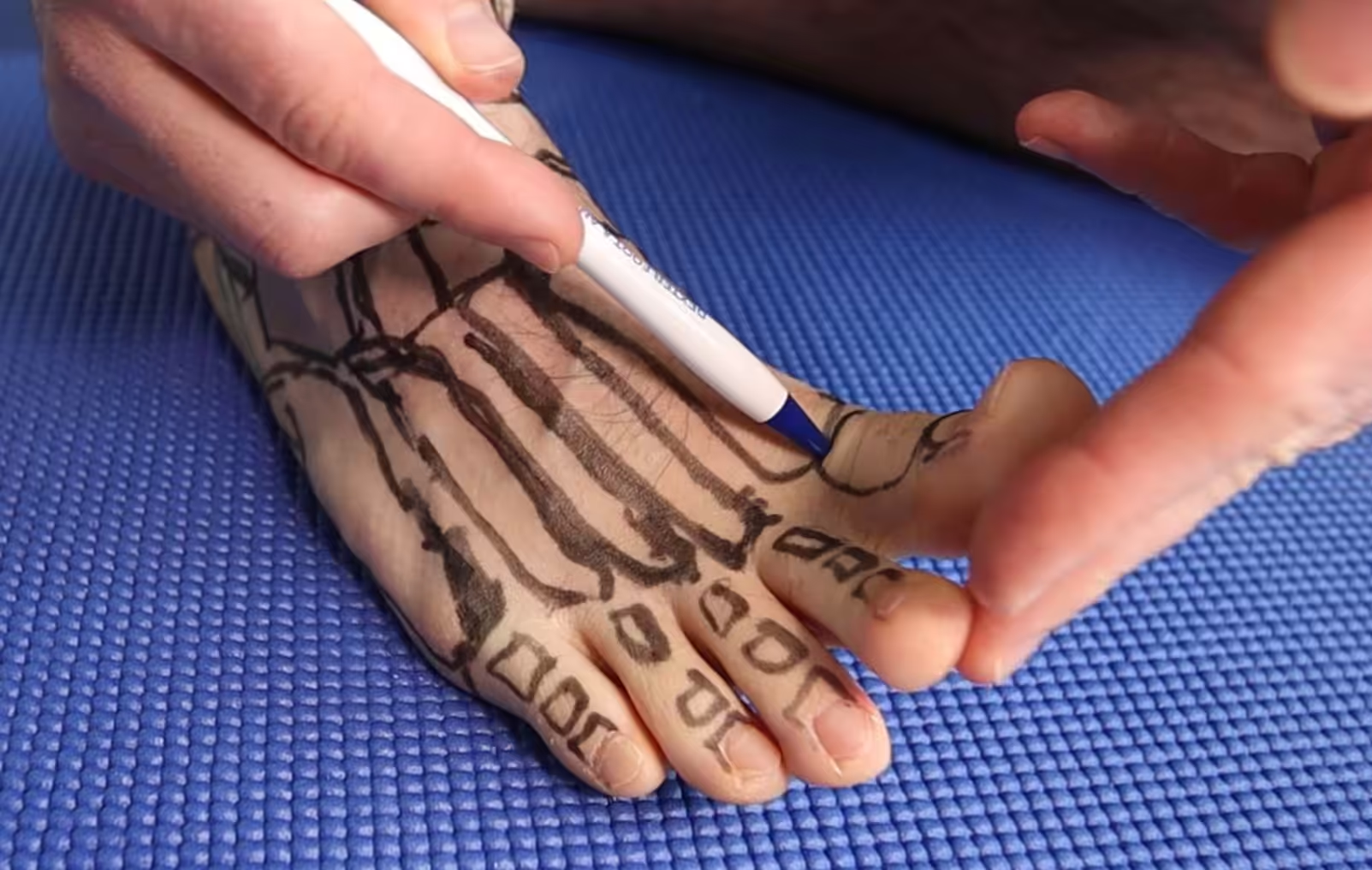
![Stiff Big Toe Joint Pain(Hallux Rigidus) TREATMENT [Exercises, Taping]](https://www.michiganfootdoctors.com/wp-content/cache/flying-press/c5176884df3f62ec55c9a49e0ec09089.jpg)
Watch: Stiff Big Toe Joint Pain(Hallux Rigidus) TREATMENT [Exercises, Taping] — MichiganFootDoctors YouTube
What Is First MTP Joint Fusion?
First metatarsophalangeal (MTP) joint fusion — also called first MTP arthrodesis — is a surgical procedure that permanently joins the first metatarsal bone to the proximal phalanx of the big toe. The damaged cartilage surfaces are removed, the bones are positioned at an optimal angle, and hardware (plates and screws) holds them together while they heal into a single solid unit.
The concept sounds dramatic — permanently eliminating motion at a joint — but the clinical reality is different from what most patients expect. By the time fusion is recommended, the arthritic joint has already lost most of its functional motion. The remaining motion is painful and restricted. Fusion doesn’t take away useful motion; it replaces a painful, barely-moving joint with a painless, stable one that allows efficient push-off during walking.
First MTP fusion has been performed for over 100 years and remains the gold standard for end-stage hallux rigidus because no other procedure provides comparable long-term pain relief, durability, and patient satisfaction. While joint replacement (implant arthroplasty) exists, it has not matched fusion’s track record for reliability and longevity.
Understanding Hallux Rigidus
Hallux rigidus is arthritis of the first MTP joint — the joint at the base of the big toe. It’s the most common arthritic condition of the foot, affecting approximately 2.5% of adults over age 50. The condition progresses through predictable stages as cartilage wears away and bone spurs develop.
Grade 1-2 (mild to moderate): Stiffness and aching during activity, particularly when pushing off during walking. Dorsal bone spur formation creates a visible bump on top of the joint. Motion is reduced but still functional — typically 30-60 degrees of dorsiflexion remains. Conservative treatment and possibly cheilectomy (spur removal) are appropriate at this stage.
Grade 3-4 (severe to end-stage): Constant pain with any joint motion. Joint space is severely narrowed or absent on X-ray. Large osteophytes restrict motion to less than 10-15 degrees. Walking becomes antalgic — you unconsciously modify your gait to avoid bending the painful joint, which creates compensatory problems in the ankle, knee, hip, and lower back. This is the stage where fusion becomes the most reliable solution.
When Surgery Becomes the Right Choice
Fusion is not the first treatment we recommend — it’s where we arrive after conservative measures have been genuinely exhausted or when the disease has progressed beyond what conservative treatment can meaningfully address.
Fusion is appropriate when: Pain significantly limits daily activities despite conservative treatment (insoles, rocker-bottom shoes, injections, activity modification). X-rays show severe joint space narrowing or complete cartilage loss. The joint has less than 10-15 degrees of functional motion remaining. Previous procedures (cheilectomy, cartilage restoration) have failed. The compensatory gait patterns are creating secondary problems elsewhere in the kinetic chain.
The decision is ultimately about quality of life. If your big toe joint prevents you from walking comfortably, exercising, enjoying activities, or wearing reasonable footwear — and conservative measures haven’t restored these abilities — fusion offers a predictable path back to a pain-free, functional life.
Fusion vs. Joint Implant (Arthroplasty)
Patients frequently ask about joint replacement as an alternative to fusion — the concept of preserving motion is intuitively appealing. A balanced comparison helps set realistic expectations.
Joint implants have been attempted for decades using various materials — silicone, metal, polyethylene, and ceramic. While modern designs have improved, implant arthroplasty still has higher complication rates (loosening, wear, subsidence, bone loss) and lower long-term satisfaction than fusion. Implant revision or conversion to fusion may be needed within 10-15 years, and revision surgery is always more complex than the primary procedure.
Fusion provides a permanent, one-time solution with no moving parts to wear out, loosen, or fail. Fusion rates exceed 95% with modern fixation. Patient satisfaction consistently exceeds 90%. There is no need for revision barring complications. The trade-off — permanent loss of MTP joint motion — is functionally insignificant for most patients because the arthritic joint had minimal useful motion remaining.
Fusion vs. Cheilectomy
Cheilectomy — surgical removal of the dorsal bone spur and debridement of the joint — is a joint-preserving procedure appropriate for Grade 1-2 hallux rigidus where significant cartilage remains and functional motion exists. It preserves MTP motion and has a faster recovery than fusion.
However, cheilectomy has limitations: It doesn’t address the underlying cartilage loss, so progression continues. Approximately 25-30% of cheilectomy patients eventually require conversion to fusion as the arthritis progresses. For Grade 3-4 disease, cheilectomy provides unreliable results because removing bone spurs from a joint with no cartilage doesn’t eliminate the bone-on-bone pain that drives symptoms.
The decision framework: If you have Grade 1-2 hallux rigidus with meaningful remaining motion and cartilage, cheilectomy is a reasonable first surgical option. If you have Grade 3-4 disease with near-complete motion loss and cartilage destruction, proceeding directly to fusion avoids the interim recovery and cost of a cheilectomy that will likely need revision.
The Importance of Optimal Fusion Position
The position at which the joint is fused determines the patient’s long-term functional outcome — it’s the single most important technical decision in the entire procedure. A well-positioned fusion allows comfortable walking, wearing reasonable footwear, and returning to most activities. A poorly positioned fusion creates new problems.
The ideal position includes: 10-15 degrees of dorsiflexion (upward tilt) relative to the first metatarsal, which simulates the position the toe reaches during normal push-off. 10-15 degrees of valgus (slight outward tilt) matching the natural alignment of the big toe. Neutral rotation. This position allows the toe to clear the ground during walking and accommodates the toe-off phase of gait while fitting comfortably in shoes with low to moderate heels.
Intraoperative verification involves simulating weight-bearing with the trial position, checking that the toe doesn’t contact the ground during the swing phase (indicating excessive plantarflexion) and doesn’t lift excessively (indicating too much dorsiflexion). Many surgeons use a flat surface pressed against the metatarsal heads to verify that the toe achieves appropriate ground clearance and purchase.
Surgical Technique
First MTP fusion is typically performed as an outpatient procedure taking 45-75 minutes. Understanding the surgical steps helps patients appreciate why specific post-operative instructions matter.
The procedure involves: A dorsal or dorsomedial incision over the first MTP joint. Careful soft tissue dissection preserving the neurovascular structures. Removal of all remaining articular cartilage and osteophytes (bone spurs) to expose healthy bleeding bone on both the metatarsal head and the proximal phalanx base. The bone surfaces are prepared using flat cuts (preferred for precise positioning) or cup-and-cone reamers (which provide rotational freedom during positioning). The toe is positioned at the predetermined optimal angle and provisionally held with guide wires. Final position is verified clinically and sometimes fluoroscopically. Permanent fixation is applied. Closure with absorbable sutures and application of a sterile dressing.
Fixation Methods
Modern fixation options provide reliable compression and stability that supports the high fusion rates (95%+) achievable today.
Dorsal locking plate with compression screw is the most commonly used construct. The low-profile titanium plate sits on top of the joint, distributing forces across multiple screws. A separate compression screw, typically placed from the medial or plantar aspect, provides interfragmentary compression that promotes bone healing. This combination provides the strongest fixation and the highest fusion rates in published literature.
Crossed compression screws provide adequate fixation with less hardware and a lower profile, potentially reducing dorsal prominence complaints. However, screw-only fixation provides less rigid stability than plate constructs, and fusion rates may be slightly lower in some studies. This approach works best in patients with good bone quality and straightforward fusion anatomy.
Hardware removal is rarely necessary — modern low-profile plates cause dorsal irritation in only about 10-15% of patients, and most of these resolve with shoe modification. When removal is needed, it’s a simple outpatient procedure performed after the fusion is solidly healed.
Anesthesia and Day of Surgery
Most first MTP fusions are performed under regional anesthesia (ankle block or popliteal nerve block) with sedation, avoiding the risks associated with general anesthesia. The nerve block provides 12-24 hours of post-operative pain relief, making the first day surprisingly comfortable.
Day of surgery expectations: Arrive 1-2 hours before scheduled surgery time. The anesthesia team places the nerve block, which takes effect within 15-30 minutes. Surgery takes 45-75 minutes. You recover in the post-anesthesia care unit for 1-2 hours. You go home the same day in a post-operative shoe or CAM boot, with the foot wrapped in a bulky sterile dressing. Weight on the heel is typically permitted immediately in the boot (heel weight-bearing).
Recovery: First Two Weeks
Days 1-3: Elevation is critical — keep the foot above heart level for 45-50 minutes of every waking hour. The nerve block wears off at 12-24 hours; transition to prescribed pain medication before the block fully resolves. Ice behind the knee (not on the surgical site). Heel weight-bearing in the boot or post-op shoe for essential trips to the bathroom and kitchen only. Keep the dressing clean and dry.
Days 4-14: Pain management transitions from prescription medications to over-the-counter options for most patients by days 7-10. Swelling peaks around days 3-5 and gradually improves with elevation. First post-operative visit at 10-14 days for suture removal, wound inspection, and first X-ray. Begin gentle ankle range-of-motion exercises (the fusion site itself remains immobilized). Driving an automatic vehicle is not safe while on narcotic pain medication.

Recovery: Weeks 3-6
Protected weight-bearing continues in the CAM boot. Most patients are walking reasonably well in the boot by week 3-4, though the gait remains stiff due to the rigid sole. Swelling management continues with elevation after periods of walking. Many patients return to desk work by weeks 3-4 if they can keep the foot elevated intermittently. Driving an automatic vehicle (with the non-operative foot) is typically permitted once off pain medication.
X-rays at 4-6 weeks assess fusion progression. Early healing signs include blurring of the joint line and absence of hardware loosening. Activities of daily living become progressively easier as pain decreases and confidence in the boot increases.
Recovery: Weeks 6-12
The transition from boot to regular shoes is the milestone most patients anticipate. This typically occurs at weeks 6-8 when X-rays confirm adequate fusion progression.
The shoe transition is gradual: Begin with a supportive athletic shoe with a quality insole for 1-2 hours, increasing daily. A rocker-bottom shoe feature (whether inherent in the shoe or added via a rigid insole) helps simulate the toe-off motion that the fused joint can no longer provide. Most patients are in regular shoes full-time by weeks 8-10, with some residual stiffness and end-of-day swelling that progressively resolves.
Physical therapy or structured home exercises focus on gait retraining (walking with a normal heel-to-toe pattern rather than the compensatory patterns developed during years of painful walking), calf flexibility, and intrinsic foot muscle strengthening. The interphalangeal joint of the big toe often develops compensatory increased motion after fusion, which helps with push-off.
Full Recovery and Return to Activity
3 months: Walking comfortably in supportive shoes. Mild residual swelling. Most patients have returned to work and daily activities. Beginning low-impact exercise — stationary cycling, pool walking, elliptical.
4-6 months: Progressing to walking for exercise, light hiking, and most recreational activities. Footwear options expanding. The foot reaches approximately 80% of its final result. Most patients describe this as the point where they “forget about the surgery” during daily activities.
6-12 months: Full recovery. Return to vigorous activities including running (with appropriate footwear), hiking, and most sports. Final swelling resolution. Full footwear selection, including dress shoes with modest heels. Patient satisfaction peaks as the cumulative benefit of pain-free function becomes fully apparent.
Potential Complications
Nonunion (failure of the bones to fuse) occurs in approximately 5-8% of cases. Risk factors include smoking, diabetes, osteoporosis, and non-compliance with weight-bearing restrictions. Symptomatic nonunion may require revision surgery with bone grafting.
Malposition — fusion in a suboptimal position — can cause shoe fitting difficulty (too much dorsiflexion), ground contact issues (too much plantarflexion), or cosmetic concerns. Careful intraoperative positioning verification minimizes this risk.
Hardware irritation from the dorsal plate occurs in 10-15% of patients and is the most common reason for plate removal. The low-profile plates used today have significantly reduced this compared to earlier designs.
Interphalangeal joint arthritis can develop years after fusion as this adjacent joint compensates for the fused MTP joint by developing increased motion. When symptomatic, it’s managed with stiff-soled shoes, toe-spacer pads, and rarely, additional surgery.
Footwear After MTP Fusion
Footwear selection after fusion requires some adaptation, but most patients find their options actually expand compared to the limited choices that severe hallux rigidus imposed.
Ideal shoe features: Rocker-bottom sole or rigid forefoot (assists push-off without requiring MTP motion). Adequate toe box depth (the fused toe sits slightly higher than flexible toes). Low to moderate heel height — most patients tolerate heels up to 1.5-2 inches without difficulty. Supportive arch and quality insole. Many popular walking shoes, athletic shoes, and casual shoes work well without modification.
Shoes to avoid or modify: Very flexible shoes (ballet flats, minimalist shoes) that require MTP dorsiflexion. Very high heels (over 2.5 inches) that place excessive pressure on the fused joint. Pointed toe boxes that don’t accommodate the slightly elevated position of the fused toe.
Exercise and Sports After Fusion
Most patients return to an active lifestyle after first MTP fusion. The fused joint handles impact and loading well — it’s a rigid, stable lever that transfers force efficiently, unlike the painful, unstable arthritic joint it replaced.
Activities most patients return to: Walking and hiking (with supportive footwear and insoles). Cycling (the pedal stroke doesn’t require MTP motion). Swimming. Golf. Strength training. Many patients return to jogging and running, though a rocker-bottom shoe feature helps optimize gait efficiency.
Activities that may require modification: Yoga poses requiring deep toe extension (kneeling, certain transitions). Climbing (reduced ability to edge on small footholds). Sports requiring rapid direction changes that load the big toe (tennis, basketball) — these are possible but may benefit from a stiffer shoe.
Long-Term Outcomes
First MTP fusion provides among the most durable and satisfying outcomes in foot and ankle surgery. Long-term studies consistently report patient satisfaction rates of 90-95%, significant pain reduction in virtually all patients, and outcomes that remain stable for decades because the fusion is a permanent, biological solution with no components to wear out.
Recommended Products for First MTP Joint Fusion Recovery
Doctor Hoy’s Natural Pain Relief Gel
Post-surgical pain management is essential during MTP fusion recovery. Doctor Hoy’s Natural Pain Relief Gel provides topical menthol-based relief that can be applied around (not on) the incision once it’s healed. Doctor Hoy’s gel is particularly useful during the weeks 6-12 phase when you’re increasing activity and the surgical area gets achy. Many of my fusion patients use Doctor Hoy’s pain relief gel after physical therapy sessions or long days on their feet during the transition back to full weight-bearing.
Doctor Hoy’s Arnica Boost Recovery Cream
Swelling after first MTP joint fusion can persist for months. Doctor Hoy’s Arnica Boost Recovery Cream combines arnica montana with menthol to address both inflammation and discomfort. I recommend Doctor Hoy’s arnica cream starting once the surgical incision is fully closed, typically around weeks 3-4. The arnica helps manage the residual swelling that can make shoes uncomfortable and the menthol provides cooling relief during rehabilitation exercises.
DASS Original Dynamic Ankle Stabilizing System
The DASS Original Dynamic Ankle Stabilizing System provides graduated compression that helps control post-surgical swelling from ankle to midfoot. After first MTP fusion, swelling management is one of the biggest challenges. DASS compression sleeves improve venous return and reduce the fluid accumulation that causes morning stiffness and shoe tightness. I recommend DASS sleeves throughout the recovery process, starting once the surgical dressing is removed. DASS is especially helpful during the transition to weight-bearing when gravity increases swelling in the surgical area.
Complete First MTP Fusion Recovery Kit
The Most Common First MTP Fusion Recovery Mistake
🔑 Key Takeaway: I treated a 58-year-old Livonia woman who had first MTP joint fusion at another facility and returned to regular shoes and walking without orthotics at week 8 because she “felt fine.” By week 12, she had developed painful second metatarsal stress overload and early hammertoe formation because the adjacent joints were absorbing forces without proper support. After fitting her with PowerStep Pinnacle Maxx insoles and DASS compression sleeves, her compensatory symptoms resolved over six weeks. The fused joint doesn’t move, so every other joint in your foot works harder permanently — proper orthotic support after MTP fusion isn’t optional, it’s essential for the rest of your foot’s health.
Warning Signs After First MTP Joint Fusion
⚠️ Contact your surgeon immediately if you experience any of these warning signs after first MTP joint fusion:
1. Increasing pain after initial improvement — may indicate hardware failure, nonunion, or infection developing at the fusion site
2. Redness, warmth, or drainage from the incision — signs of potential surgical site infection requiring immediate antibiotic treatment
3. Sudden ability to bend the big toe joint — could indicate hardware breakage or nonunion where the fusion failed to consolidate
4. New pain in the second or third toes — transfer metatarsalgia from altered biomechanics requiring orthotic adjustment
5. Numbness or tingling that worsens — possible nerve compression from swelling or hardware placement
6. Inability to bear weight at expected milestones — may indicate delayed union requiring imaging and possible revision
7. Fever above 101°F in the first two weeks — systemic sign of infection that needs urgent evaluation
8. Painful hardware prominence — plate or screw irritation that may eventually require removal after full consolidation
Signs you may need first MTP joint fusion:
- Big toe joint pain that limits walking despite conservative treatment
- Bone-on-bone arthritis visible on X-ray
- Inability to bend the big toe without significant pain
- Failed prior big toe joint surgery
- Bone spurs causing shoe irritation and constant discomfort
In-Office Treatment at Balance Foot & Ankle
If home care isn’t resolving your child’s heel pain, a visit with a board-certified podiatrist is the fastest path to accurate diagnosis and a personalized plan. At Balance Foot & Ankle Specialists, Dr. Tom Biernacki, Dr. Carl Jay, and Dr. Daria Gutkin offer same-day and next-day appointments at both our Howell and Bloomfield Township offices. We perform on-site diagnostic ultrasound, digital X-ray, conservative care, advanced regenerative treatments, and minimally invasive surgery when indicated.
Call (810) 206-1402 or request an appointment online. Most insurance plans accepted, including Medicare, Blue Cross Blue Shield, Aetna, Cigna, and United Healthcare.
The Bottom Line on First MTP Joint Fusion
First MTP joint fusion is the gold standard surgical treatment for severe hallux rigidus. While the idea of fusing a joint sounds limiting, our patients consistently report that eliminating the arthritic pain far outweighs the loss of motion—especially since most had little functional motion remaining before surgery. At Balance Foot & Ankle, we’ve performed hundreds of these procedures with excellent long-term outcomes. If conservative treatments are no longer providing relief, fusion offers a permanent, reliable solution.
More Podiatrist-Recommended Arthritis Essentials
Stiff-Soled Insole
Carbon-composite plate reduces painful joint flex — especially big-toe arthritis.

Rocker-Bottom Walking Shoe
Reduces the painful midfoot and big-toe joint motion of every step.
As an Amazon Associate, Balance Foot & Ankle earns from qualifying purchases. Product recommendations are based on clinical experience; prices and availability shown above update live from Amazon.
When to See a Podiatrist
Foot and ankle arthritis progresses silently — cartilage doesn’t regrow, but joint fusion, cheilectomy, and biologic injections can restore function at every stage. Balance Foot & Ankle offers the full arthritis spectrum: bracing, injections, and reconstructive surgery. Start with a consult so we can image the joint and give you a realistic 5-year outlook.
Call Balance Foot & Ankle: (810) 206-1402 · Book online · Offices in Howell & Bloomfield Township
Frequently Asked Questions About First MTP Joint Fusion
How long does it take to walk normally after first MTP joint fusion?
Most patients walk in a surgical boot by weeks 2-4 and transition to supportive shoes with PowerStep Pinnacle insoles around weeks 6-8. A normal walking pattern typically returns by weeks 10-14, though the gait adapts slightly since the big toe joint no longer bends. Full recovery with confident walking takes about 3-4 months for most patients. Using DASS compression sleeves during this transition helps manage swelling that can delay progress.
Can I run or exercise after first MTP joint fusion?
Yes, most patients return to exercise including running after MTP fusion, typically by 4-6 months post-surgery. The fused joint eliminates the painful bone-on-bone grinding, allowing pain-free push-off. You’ll adapt your running mechanics slightly, and proper insoles like PowerStep Pinnacle Maxx help distribute forces optimally. High-impact activities are generally well-tolerated because the fusion creates a stable, painless lever for propulsion.
What shoes can I wear after first MTP joint fusion?
After full healing, you can wear most shoe styles with some modifications. Shoes with a slightly rigid or rocker-bottom sole work best because they mimic the motion the big toe no longer provides. Avoid completely flat, flexible shoes and very high heels (over 2 inches). Athletic shoes, walking shoes, and most casual shoes work well with PowerStep insoles. Many patients are surprised by how many shoe options remain comfortable after fusion compared to the limited choices they had when the joint was painfully arthritic.
Is first MTP joint fusion better than joint replacement?
For most patients with severe hallux rigidus, fusion is considered the gold standard over joint replacement. Fusion has a 95-98% long-term success rate versus 70-85% for implants, and fusions don’t wear out or need revision. Joint replacement preserves some motion but carries higher risks of loosening, subsidence, and revision surgery. Younger, active patients especially benefit from the permanent stability of fusion. I discuss both options with every patient, but fusion remains my recommended approach for end-stage hallux rigidus because of its predictable, lasting results.
How do I manage swelling after first MTP joint fusion?
Swelling management is crucial for comfortable recovery. Elevate your foot above heart level as much as possible during the first 2-4 weeks. Use DASS compression sleeves once surgical dressings are removed. Apply Doctor Hoy’s Arnica Boost cream to help reduce inflammation after the incision is fully closed. Ice therapy (20 minutes on, 40 minutes off) helps during the first few weeks. Most surgical swelling resolves by 3-4 months, though mild swelling with prolonged standing can persist up to 6 months.
Sources
- Raikin SM, Ahmad J, Pour AE, Abidi NA. Comparison of arthrodesis and metallic hemiarthroplasty of the hallux metatarsophalangeal joint. J Bone Joint Surg Am. 2007;89(9):1979-1985.
- Coughlin MJ, Shurnas PS. Hallux rigidus: grading and long-term results of operative treatment. J Bone Joint Surg Am. 2003;85(11):2072-2088.
- Goucher NR, Coughlin MJ. Hallux metatarsophalangeal joint arthrodesis using dome-shaped reamers and dorsal plate fixation: a prospective study. Foot Ankle Int. 2006;27(11):869-876.
- Deland JT, Williams BR. Surgical management of hallux rigidus. J Am Acad Orthop Surg. 2012;20(6):347-358.
- McNeil DS, Baumhauer JF, Glazebrook MA. Evidence-based analysis of the efficacy for first metatarsophalangeal joint arthrodesis. Foot Ankle Surg. 2013;19(3):166-172.
Watch: Understanding First MTP Joint Fusion Recovery

Schedule Your First MTP Joint Fusion Consultation
Ready to Eliminate Big Toe Joint Pain Permanently?
Dr. Biernacki at Balance Foot & Ankle Specialists has extensive experience performing first MTP joint fusion for severe hallux rigidus. Get a thorough evaluation and honest recommendation about whether fusion is right for you.
Book Your Surgical Consultation →
📍 Serving Southeast Michigan from our Novi office — most insurance plans accepted
Related Foot & Ankle Guides
- Best Foot Care Products
- Foot Pain Conditions
- Podiatrist Recommended Shoes
- Sports Foot Care
- Complete Foot Care Product Guide
Dr. Tom’s Recommended Products: See our clinically tested product recommendations for this condition. View Dr. Tom’s recommended products →
Insurance Accepted
BCBS · Medicare · Aetna · Cigna · United Healthcare · HAP · Priority Health · Humana · View All →
Howell Office
4330 E Grand River Ave
Howell, MI 48843
Get Directions →
Bloomfield Township Office
43494 Woodward Ave, Suite 208
Bloomfield Township, MI 48302
Get Directions →
Your Board-Certified Podiatrists



Ready to Get Back on Your Feet?
Same-week appointments available at both locations.
Book Your AppointmentWatch: First MTP Fusion for Hallux Rigidus
Dr. Tom on 1st MTP fusion — when hallux rigidus needs fusion vs cheilectomy, surgical technique, recovery, footwear after fusion, outcomes.
Post-MTP Fusion Kit
Long recovery. Dr. Tom’s kit:
As an Amazon Associate, Balance Foot & Ankle earns from qualifying purchases. This supports our free patient education content.
Weeks 1-6 protection.
Rigid rocker-sole shoe support.
Post-op inflammation.
Topical incision-adjacent relief.
Related: Hallux Rigidus · Bunion Care · Book MTP Consultation
Differential Diagnosis: What Else Could It Be?
Several conditions share symptoms with Sever’s Disease and are commonly misdiagnosed in the first office visit. Considering these alternatives is part of every Balance Foot & Ankle exam:
- Calcaneal stress fracture. Squeeze test reproduces pain in any direction; Sever’s pinpoints the apophysis.
- Achilles tendonitis (juvenile). Pain at insertion above the apophysis.
- Plantar fasciitis (rare in kids). Pain at the medial-plantar heel attachment, not the back.
If your symptoms don’t fit the textbook pattern, ask your podiatrist which differentials they ruled out — that conversation often shortcuts months of trial-and-error treatment.
In Our Clinic
Sever’s disease shows up in our clinic as heel pain in an 8- to 14-year-old athlete during their growth spurt, usually a soccer or basketball player who pushed through pain for weeks before a parent brought them in. On exam, the medial-lateral heel squeeze test reproduces the pain exactly. X-rays are usually normal — the diagnosis is clinical. Treatment is a 4- to 8-week relative-rest phase with heel cups, calf stretching, and a sports-activity taper. Sever’s is self-limiting — it resolves permanently when the calcaneal apophysis fuses around age 14–16. We reassure parents: it is not arthritis, it does not cause lasting damage.
Most Common Mistake We See
The most common mistake we see is: Letting the child “play through it” because Sever’s is not serious. Fix: reduce high-impact activity for 2-4 weeks, add gel heel cups, and begin daily calf stretching.
Warning Signs That Need Same-Day Care
Seek immediate evaluation at Balance Foot & Ankle if you experience any of the following:
- Limp persisting more than 3 weeks with treatment
- Pain at rest or waking the child at night
- Swelling or warmth at the back of the heel
- Pain extending up the Achilles tendon
Call (810) 206-1402 — same-day and next-day appointments at our Howell and Bloomfield Township offices.
Frequently Asked Questions
When should I see a podiatrist?
If symptoms persist past 2 weeks, affect your normal activity, or are accompanied by red-flag symptoms (warmth, redness, swelling, inability to bear weight).
What does treatment cost?
Most diagnostic visits and conservative treatments are covered by Medicare and major insurers. Out-of-pocket costs vary by your specific plan.
How quickly can I get an appointment?
Most non-urgent cases see us within 5 business days. Urgent cases (sudden pain, possible fracture) typically same or next business day.

Dr. Tom Biernacki, DPM is a board-certified foot & ankle surgeon (ABFAS & ABPM) at Balance Foot & Ankle Specialists in Southeast Michigan. With over a decade of clinical experience, he specializes in heel pain, bunions, diabetic foot care, sports injuries, and minimally invasive surgery. Dr. Biernacki is a member of the APMA and ACFAS, and his patient education content on MichiganFootDoctors.com and YouTube has made him one of the most-followed foot & ankle educators on YouTube.
More questions patients ask
What is a bunion?
A bunion (hallux valgus) is a progressive bony deformity where the big toe joint shifts outward, creating a visible bump. It results from an unstable metatarsal bone, not simply tight shoes. Bunions affect approximately 23% of adults and can cause significant pain, difficulty wearing shoes, and secondary problems like hammertoes. Dr. Biernacki specializes in both conservative management and advanced surgical correction including Lapiplasty 3D bunion correction.
Can bunions be corrected without surgery?
While surgery is the only way to permanently correct the structural deformity, non-surgical treatments can effectively manage pain and slow progression. Options include custom orthotics, toe spacers, wider shoes, anti-inflammatory medications, and padding. Dr. Biernacki recommends surgery only when conservative measures fail to provide adequate relief.
What is Lapiplasty bunion surgery?
Lapiplasty is an advanced 3D bunion correction procedure that addresses the root cause of bunions by correcting the unstable metatarsal bone in all three dimensions. Unlike traditional bunionectomy, Lapiplasty patients can bear weight within days and has a recurrence rate under 3% compared to 12-15% for traditional procedures. Dr. Biernacki is a fellowship-trained Lapiplasty surgeon serving SE Michigan.
Still have a question about coverage or cost? Book online and we will check your benefits before your visit: Book in Howell · Book in Bloomfield Township. Prefer to talk it through first? Call (810) 206-1402.