
Quick answer: Flexor Hallucis Longus Tendinopathy Michigan is a common foot/ankle topic that affects many patients. Effective treatment starts with a targeted diagnosis, conservative-first treatment, and escalation only when needed. We treat this regularly at our Howell and Bloomfield Township practices. Book online, or call (810) 206-1402.
Medically reviewed by Dr. Tom Biernacki, DPM · Board-Certified Podiatric Surgeon · Last reviewed: April 2026 · Editorial Policy
The most important clinical decision with Flexor Hallucis Longus Tendinopathy Michigan isn’t which treatment to start with — it’s identifying the correct subtype. That changes everything. Call (810) 206-1402.
Quick Answer
Flexor Hallucis Longus Tendinopathy: Diagnosis & Treatm relates to foot pain — typically caused by overuse, footwear, or biomechanics. Most patients improve in 6-12 weeks with conservative care. Same-week appointments in Howell + Bloomfield Township: (810) 206-1402.

Medically reviewed by Dr. Tom Biernacki, DPM — Board-Certified Podiatric Surgeon — Balance Foot & Ankle, Howell & Bloomfield Township, MI. Last updated April 2026.
▶ Watch
Medically Reviewed by Dr. Tom Biernacki, DPM — Board-Certified Podiatrist, Balance Foot & Ankle Specialists, Michigan. Last updated April 2026.
Flexor hallucis longus (FHL) tendinopathy is degeneration or inflammation of the tendon that flexes the big toe, causing pain along the inner ankle, under the first metatarsal, or at the big toe itself — particularly with push-off and toe flexion activities. It is sometimes called “dancer’s tendinitis” because it commonly affects ballet dancers but also occurs in runners, hikers, and anyone with repetitive toe flexion demands. Dr. Tom Biernacki, DPM at Balance Foot & Ankle in Howell and Bloomfield Township, Michigan evaluates and treats FHL tendinopathy.
Anatomy: The Flexor Hallucis Longus Tendon
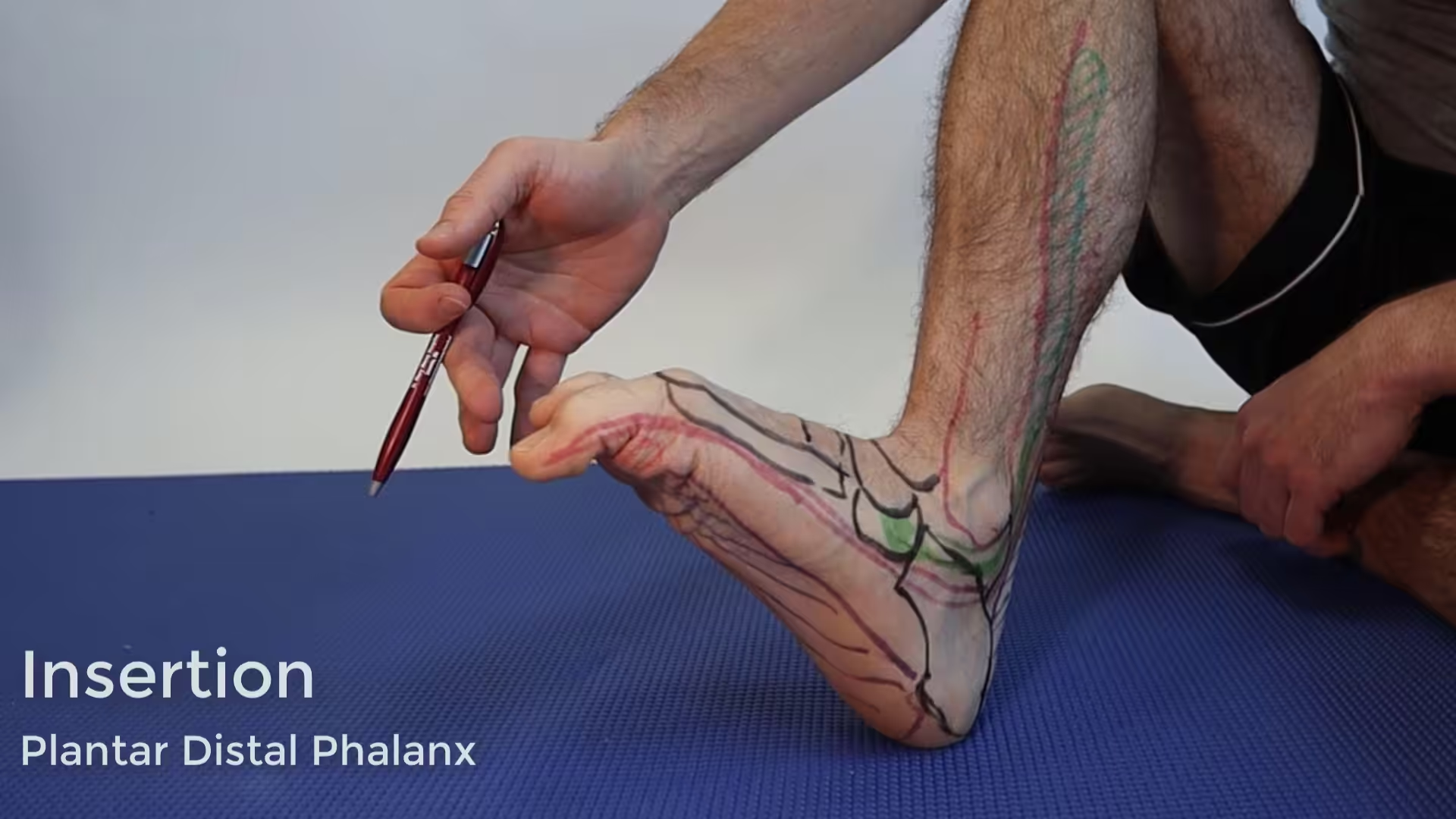
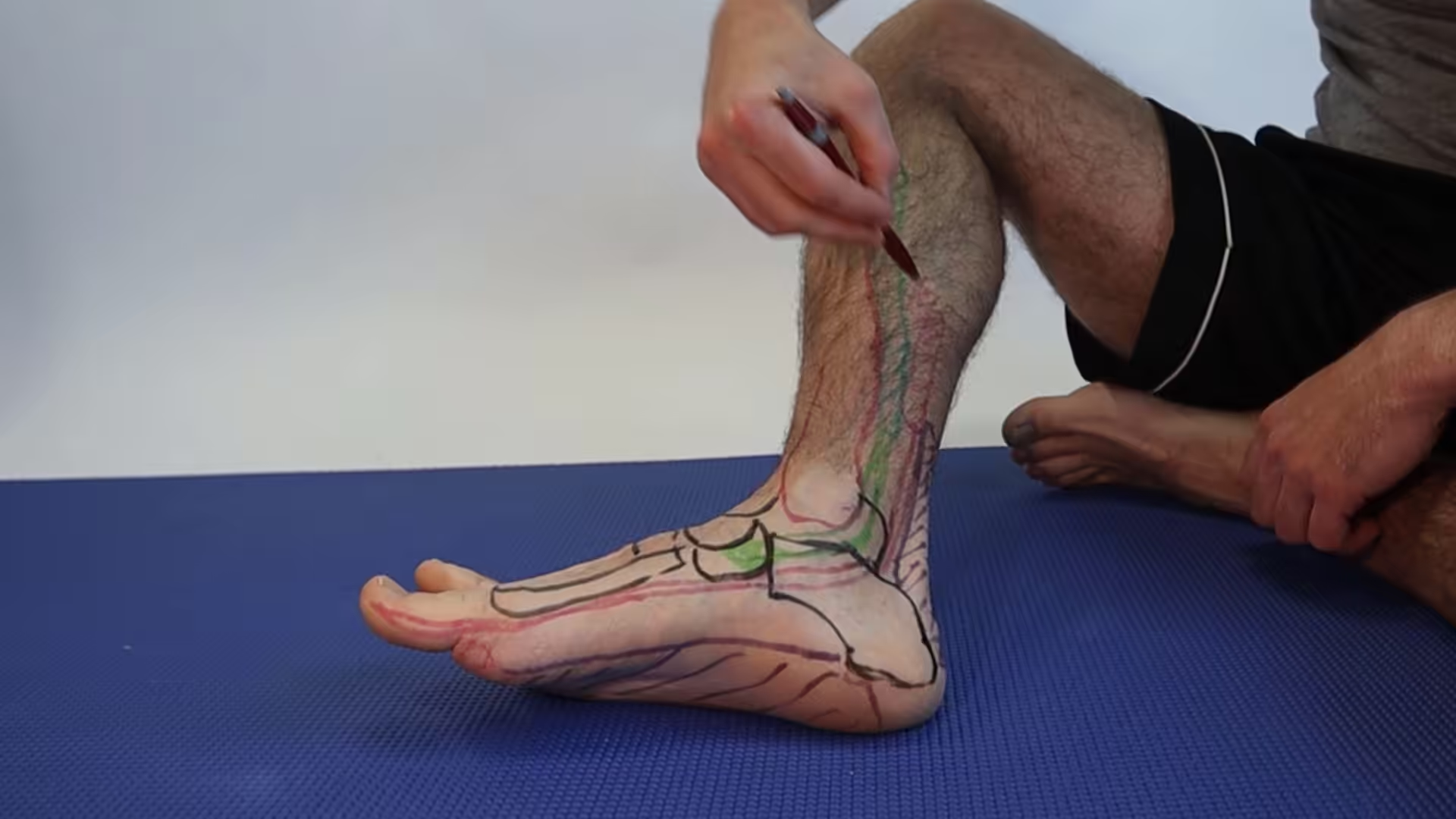
The flexor hallucis longus (FHL) muscle originates in the lower leg and its tendon passes behind the medial ankle through a fibro-osseous tunnel beneath the sustentaculum tali (a bony shelf of the calcaneus), then courses under the first metatarsal to insert at the base of the distal phalanx of the great toe. It is the primary big toe flexor and a secondary ankle plantarflexor. The FHL tendon passes through a narrow tunnel behind the medial malleolus — a zone of vulnerability where it can develop tenosynovitis (inflammation of the tendon sheath), trigger toe (a catching or triggering sensation), or longitudinal tears similar to those seen in the peroneal tendons on the lateral side.
Symptoms and Presentation
FHL tendinopathy presents with: pain and swelling along the medial ankle posterior to the medial malleolus (the inner bump), pain under the first metatarsal shaft during push-off, pain at the base of the big toe with forced dorsiflexion, and in trigger toe cases, a locking or snapping sensation when the big toe flexes or extends. The condition worsens with toe push-off intensive activities — running (particularly uphill), ballet, dance on pointe, and hiking. Passive big toe dorsiflexion with ankle dorsiflexion (the “FHL stretch test”) often reproduces the medial ankle or midfoot pain by tensioning the tendon.
Diagnosis
Diagnosis is clinical with imaging confirmation. Palpation along the FHL course behind the medial ankle, under the midfoot, and at the first metatarsal reproduces characteristic pain. Musculoskeletal ultrasound is the most accessible tool — dynamic assessment can visualize the tendon sheath fluid, tendon thickening, and triggering during passive toe motion. MRI provides superior evaluation of tendon integrity, longitudinal tears, and stenosing tenosynovitis at the fibro-osseous tunnel. The FHL tunnel at the posterior talus (“master knot of Henry” area) is a common site of stenosing tenosynovitis requiring surgical release in refractory cases.
Conservative Treatment
Activity modification to reduce toe push-off loading is the first step — modifying training surfaces (flat rather than uphill), reducing running mileage, and eliminating dance or pointe work during acute flares. Custom orthotics with a Morton’s extension (rigid extension under the first metatarsal and great toe to reduce FHL excursion during push-off) reduce tendon loading during gait. Corticosteroid injection into the FHL tendon sheath reduces tenosynovitis — injection directly into the tendon substance is avoided due to rupture risk. Physical therapy addressing gastrocnemius flexibility and FHL eccentric strengthening at pain-free range supports long-term recovery.
Surgical Treatment
Surgical FHL release is indicated for trigger toe that has not responded to conservative management, stenosing tenosynovitis at the posterior talar tunnel causing persistent pain and catching, and longitudinal FHL tears that have not healed with conservative care. Endoscopic FHL release is performed through a small posterior ankle portal — recovery is faster than open release. Dancers with FHL trigger toe typically return to ballet in 3–4 months after endoscopic release with satisfactory outcomes in over 90% of appropriately selected patients.
Most Common Diagnostic Mistake
The most common mistake is confusing FHL tendinopathy with posterior tibial tendinopathy (PTTD) because both cause medial ankle pain. PTTD involves the posterior tibial tendon, which passes anterior to the medial malleolus and inserts at the navicular; FHL passes posterior to the medial malleolus and inserts at the big toe. Palpating pain posterior to the medial malleolus that reproduces with passive big toe dorsiflexion (tensioning the FHL specifically) distinguishes FHL tendinopathy from PTTD, which is reproduced by resisted foot eversion and pain at the navicular insertion.
When to See Dr. Biernacki
📧 Get Dr. Tom’s Free Lab Test Guide
Discover the 5 lab tests every person over 35 should ask their doctor about — explained in plain English by a board-certified physician.
See a podiatrist if you have medial ankle or midfoot pain with running or dance that has persisted more than 4–6 weeks, if you experience a triggering or catching sensation in the big toe, or if you are a dancer with posterior ankle pain on pointe. Dr. Biernacki provides in-office ultrasound evaluation, FHL tendon sheath injection, custom orthotics with Morton’s extension, and surgical consultation coordination for refractory cases. Book online or call (810) 206-1402 — Howell and Bloomfield Township, Michigan.
Join 950,000+ Learning About Foot Health
Dr. Tom shares honest medical advice, supplement reviews, and treatment guides you won’t find anywhere else.
Subscribe on YouTube →📍 Located in Michigan?
Our board-certified podiatrists treat this condition at two convenient locations. Same-day appointments often available.

Insurance Accepted
BCBS · Medicare · Aetna · Cigna · United Healthcare · HAP · Priority Health · Humana · View All →
Howell Office
4330 E Grand River Ave
Howell, MI 48843
Get Directions →
Bloomfield Township Office
43494 Woodward Ave, #208
Bloomfield Township, MI 48302
Get Directions →
Your Board-Certified Podiatrists



Ready to Get Back on Your Feet?
Same-week appointments available at both locations.
Book Your AppointmentMore Podiatrist-Recommended Foot Health Essentials
Hoka Clifton 10


Max-cushion everyday shoe — podiatrist favorite for walking and running.

OOFOS Recovery Slide

Impact-absorbing recovery sandal — wear after long days on your feet.
As an Amazon Associate, Balance Foot & Ankle earns from qualifying purchases. Product recommendations are based on clinical experience; prices and availability shown above update live from Amazon.
When to See a Podiatrist
If foot or ankle pain has been bothering you for more than a few weeks, home care alone may not be enough. Balance Foot & Ankle offers same-week appointments at our Howell and Bloomfield Township clinics — no referral needed in most cases. Bring your current shoes and a short list of symptoms and we’ll build you a treatment plan in one visit.
Call Balance Foot & Ankle: (810) 206-1402 · Book online · Offices in Howell & Bloomfield Township
Pros & Cons of Conservative Care for foot care
Advantages
- ✓ Conservative care first
- ✓ Same-week appointments
- ✓ Multiple insurance accepted
Considerations
- ✗ Self-treatment can mask issues
- ✗ See a podiatrist if pain >2 weeks
Dr. Tom’s Recommended Products for foot care
Affiliate disclosure: As an Amazon Associate, Balance Foot & Ankle earns from qualifying purchases. We only recommend products we use with patients.
Footnanny Heel Cream Dr. Tom’s Pick
Best for: Daily moisturizer for cracked heels
Ready to Get Back on Your Feet?
Same-day appointments in Howell + Bloomfield Township. Most insurance accepted. Dr. Tom Biernacki, DPM & team.
Book Today — Same-Day Appointments Available
Call Now: (810) 206-1402
About Your Care Team at Balance Foot & Ankle
Dr. Tom Biernacki, DPM · Board-Certified Foot & Ankle Surgeon. Specializes in conservative-first care, minimally invasive bunion surgery, and complex reconstruction.
Dr. Carl Jay, DPM · Accepting new patients. Specializes in sports medicine, athletic injuries, and routine podiatric care.
Dr. Daria Gutkin, DPM, AACFAS · Accepting new patients. Specializes in surgical reconstruction and pediatric podiatry.
Locations: 4330 E Grand River Ave, Howell, MI 48843 · 43494 Woodward Ave Suite 208, Bloomfield Township, MI 48302
Hours: Mon–Fri 8:00 AM – 5:00 PM · (810) 206-1402
When to See a Podiatrist for This Type of Pain
If your pain has lasted longer than 3-4 weeks despite home treatment, is interfering with daily activities, or includes redness, swelling, or warmth, it’s time to schedule an evaluation. At Balance Foot & Ankle Specialists, Dr. Tom Biernacki and his team specialize in same-day diagnosis and conservative treatment plans tailored to your activity level and goals. Most patients are walking pain-free within 4-6 weeks of starting our protocol.
Red flags that warrant immediate care: sharp pain after a fall, inability to bear weight, visible deformity, numbness or tingling, fever with foot pain, or any open wound on a diabetic foot. Don’t wait — early treatment dramatically improves outcomes and prevents chronic complications.
In-Office Treatment at Balance Foot & Ankle
If home treatment isn’t providing relief for your Achilles tendon conditions, our podiatry team at Balance Foot & Ankle can help with same-day evaluations and advanced in-office care.
Same-day appointments available. (810) 206-1402
Learn about our Achilles tendonitis treatment → | Book online →
Doctor Hoy’s Natural Pain Relief Gel
Natural topical pain relief I use in our clinic. Arnica + camphor formula — apply directly to the area 3–4x daily. ($20–25)
Shop Doctor Hoy’s →Ready for Expert Care?
Same-day appointments in Howell & Bloomfield Township, MI.
4.9★ | 1,123 Reviews | 3,000+ Surgeries
Or call: (810) 206-1402

Dr. Tom Biernacki, DPM is a board-certified foot & ankle surgeon (ABFAS & ABPM) at Balance Foot & Ankle Specialists in Southeast Michigan. With over a decade of clinical experience, he specializes in heel pain, bunions, diabetic foot care, sports injuries, and minimally invasive surgery. Dr. Biernacki is a member of the APMA and ACFAS, and his patient education content on MichiganFootDoctors.com and YouTube has made him one of the most-followed foot & ankle educators on YouTube.