
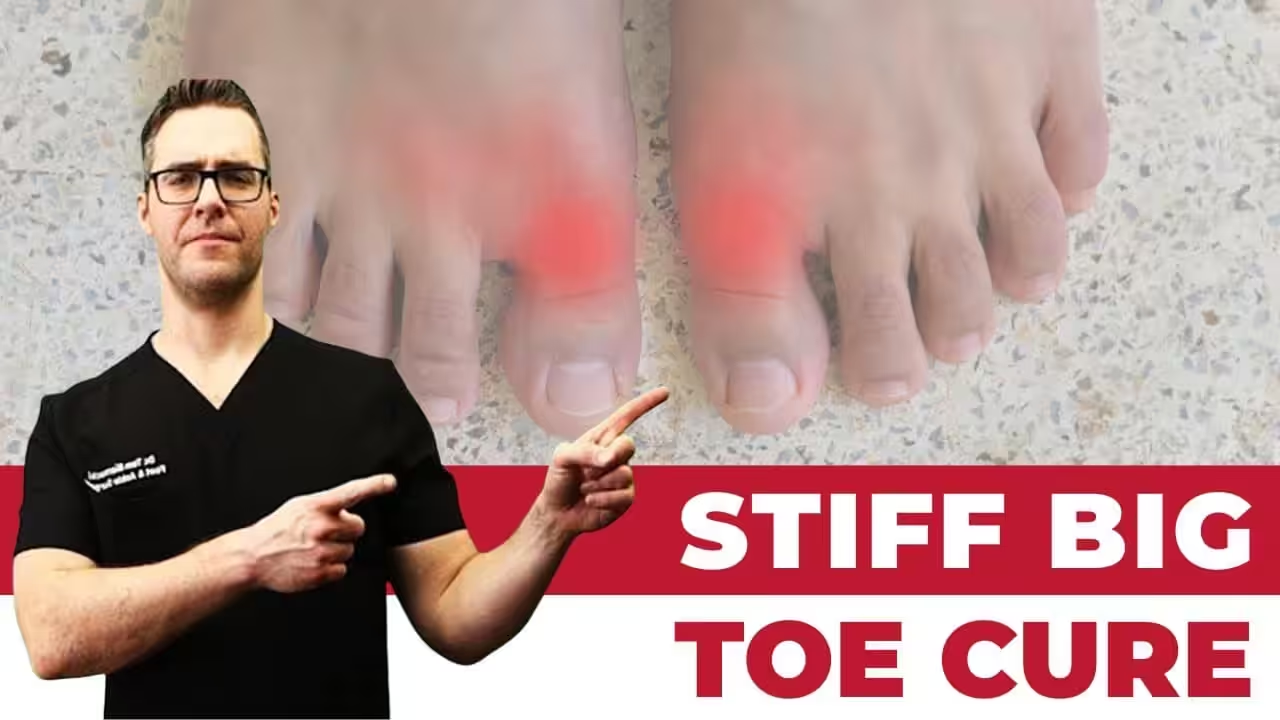
Quick answer: Foot Care Seniors Preventing Falls Managing Arthritis Staying Independent is a common foot/ankle topic that affects many patients. The 2026 evidence-based approach combines proper diagnosis, conservative-first treatment, and escalation only when needed. We treat this regularly at our Howell and Bloomfield Township practices. Call (810) 206-1402.
Medically reviewed by Dr. Tom Biernacki, DPM — Board-Certified Podiatric Surgeon — Balance Foot & Ankle, Howell & Bloomfield Township, MI. Last updated April 2026.
▶ Watch
Medically reviewed by Dr. Tom Biernacki, DPM | Board-certified podiatrist | 3,000+ surgeries performed
Last updated: April 2, 2026
The most important clinical decision with Foot Care Seniors Preventing Falls Managing Arthritis Staying Independent isn't which treatment to start with — it's which subtype or underlying cause you actually have. Our podiatrists regularly see patients who've been treated for months for the wrong diagnosis. The correct identification changes the entire treatment path. Call (810) 206-1402 — Dr. Tom evaluates this condition at both Howell and Bloomfield Township locations.
Why Foot Health Becomes Critical with Age
The aging foot undergoes predictable structural and functional changes: the fat pad under the heel and forefoot thins by 30-40% by age 70, reducing natural shock absorption. Ligaments and tendons lose elasticity, contributing to progressive flatfoot and toe deformities. Skin becomes thinner and drier, increasing vulnerability to cracks, fissures, and infections.
These age-related changes occur alongside increasing prevalence of systemic conditions—arthritis, diabetes, peripheral vascular disease, and neuropathy—that compound foot problems. A 2024 study in the Journal of the American Geriatrics Society found that 87% of adults over age 65 have at least one foot problem, and 40% have three or more concurrent foot conditions.
The consequences of poor foot health in seniors extend far beyond foot pain. Impaired mobility leads to deconditioning, social isolation, depression, and loss of independence. Falls—the leading cause of injury-related death in adults over 65—are directly linked to foot problems in 30-40% of cases.
Falls Prevention: The Foot Connection
Foot problems are among the most modifiable risk factors for falls in older adults. Reduced plantar sensation, impaired ankle proprioception, toe weakness, and inappropriate footwear all independently increase fall risk. When multiple foot risk factors combine, the cumulative effect dramatically increases the likelihood of a fall-related injury.
Dr. Biernacki performs fall-risk foot assessments that evaluate plantar sensation (Semmes-Weinstein monofilament testing), ankle range of motion, toe grip strength, balance on single-leg stance, and footwear appropriateness. Each deficiency identified represents an opportunity for intervention that reduces fall risk.
A 2025 randomized controlled trial in the British Medical Journal demonstrated that a thorough podiatric fall-prevention program—including foot orthoses, exercises, footwear advice, and nail care—reduced falls by 36% in community-dwelling older adults over 12 months. This evidence supports proactive podiatric intervention as a standard component of fall prevention.
Arthritis Management in the Aging Foot
Osteoarthritis affects the first MTP joint (hallux rigidus), midfoot, and ankle in older adults, causing pain, stiffness, and progressive deformity. The first MTP joint is the most commonly affected, with 35-45% of adults over 65 showing radiographic evidence of hallux rigidus, though many remain asymptomatic.
Conservative management with supportive footwear, rocker-bottom soles, rigid insoles, and topical anti-inflammatory treatments like Doctor Hoy’s Natural Pain Relief Gel effectively manages symptoms in most seniors. Custom orthotics with Morton’s extensions offload arthritic first MTP joints, reducing pain by 40-60% in clinical studies.
Rheumatoid arthritis and crystal arthropathies (gout, pseudogout) require coordination with rheumatology for systemic management alongside local foot care. Dr. Biernacki provides custom accommodative orthotics, extra-depth therapeutic shoes, and regular skin and nail care for patients with inflammatory arthritis affecting the feet.
Toenail Care and Common Nail Problems
Thickened, discolored toenails (onychomycosis and onychocryptosis) affect over 50% of adults over 70 and become increasingly difficult to self-manage as flexibility, vision, and hand strength decline. Improper self-care with nail clippers leads to ingrown nails, skin cuts, and infections that can become serious in patients with diabetes or poor circulation.
Dr. Biernacki provides routine nail care including trimming thickened nails with specialized instruments, debriding fungal nail tissue, managing ingrown toenails with partial nail avulsions, and monitoring for nail bed pathology. Regular professional nail care every 6-8 weeks prevents the accumulation of problems that leads to pain and infection.
Fungal nail infections can be treated with topical antifungal solutions (applied after nail debridement for better penetration), oral antifungal medications when appropriate, or laser therapy. Dr. Biernacki discusses the risks and benefits of each approach, considering the patient’s overall health status and medication interactions.
Footwear Guidance for Older Adults
Inappropriate footwear is a leading contributor to falls and foot problems in seniors. Shoes should have a low, broad heel (under 1 inch), a non-slip sole, a firm heel counter for stability, adequate toe box depth and width, and a secure fastening mechanism (laces or Velcro) that prevents the shoe from slipping during walking.
Slippers, flip-flops, and backless shoes are fall hazards that provide no ankle support and can catch on carpet or floor transitions. Dr. Biernacki recommends replacing slippers with well-fitting house shoes that have non-slip soles and secure fastening. Going barefoot indoors should be avoided due to reduced sensation and increased injury risk.
Extra-depth therapeutic shoes accommodate orthotic inserts and foot deformities (bunions, hammertoes, swelling) without creating pressure points. Medicare covers one pair of therapeutic shoes and three pairs of inserts annually for qualifying diabetic patients—Dr. Biernacki’s office assists with this benefit to ensure eligible patients receive appropriate footwear.
When Seniors Should See a Podiatrist
Annual foot examinations should be standard care for all adults over 65, even in the absence of current foot complaints. Screening identifies developing problems before they cause symptoms, and preventive care maintains the mobility that supports overall health and independence.
Urgent evaluation is needed for any new foot wound that doesn’t heal within 2 weeks, sudden onset of foot or ankle swelling, changes in skin color or temperature suggesting vascular compromise, new numbness or tingling, or any injury sustained during a fall.
Dr. Biernacki coordinates with primary care physicians, geriatricians, endocrinologists, and vascular specialists to provide integrated care for seniors with complex medical needs. The goal is maintaining mobility and independence for as long as possible through proactive foot health management.
Warning Signs Requiring Urgent Evaluation
- function bold() { [native code] } — undefined
- function bold() { [native code] } — undefined
- function bold() { [native code] } — undefined
- function bold() { [native code] } — undefined
The Most Common Mistake We See
The most common mistake seniors make is accepting foot problems as an inevitable part of aging. Pain, deformity, and limited mobility are not normal aging—they are treatable conditions that respond well to podiatric intervention. Many seniors suffer unnecessarily for years with foot problems that could be significantly improved with proper evaluation and treatment, restoring mobility and quality of life.
Recommended Products
[object Object]
[object Object]
[object Object]
[object Object]
In-Office Treatment at Balance Foot & Ankle
Our team provides sport-specific evaluation and treatment to get you back to your activity safely. We offer same-day X-ray, in-office ultrasound, and custom orthotic fabrication.
Same-day appointments available. Call (810) 206-1402 or book online.
More Podiatrist-Recommended Arthritis Essentials
Cushioned Running Shoe

- JACQUARD KNIT UPPER
- Lining Textile
Hoka Clifton 10 — max cushioning reduces joint impact for arthritic feet.
Wide Walking Shoe

- FuelCell foam delivers a propulsive feel to help drive you forward
- ENCAP midsole cushioning combines lightweight foam with a durable polyurethane rim to deliver all-day support
- Reflective accents designed to catch the light
- TPU back tab
- New Balance MADE contains a domestic value of 70% or more. MADE makes up a limited portion of New Balance’s US sales.
New Balance 990v6 — wide toe box accommodates arthritic first-MTP (hallux rigidus).
Orthotic Insole

- The Pinnacle Full length insoles for men & women provide maximum cushioning, from high activity to moderate support. The PowerStep arch support shape provides stability to the foot and ankle, helping to relieve foot pain.
- When you spend all day on your feet, every step counts. PowerStep insoles are a podiatrist-recommended orthotic to help relieve & prevent foot pain related to athletes, runners, Plantar Fasciitis, heel spurs & other common foot, ankle & knee injuries
- The Pinnacle plantar fasciitis insoles offer superior heel cushioning and arch support. The dual-layer cushioning is designed to reduce stress and fatigue, while PowerStep premium arch support is designed for plantar fasciitis relief.
- The PowerStep Pinnacle arch support inserts for men & women can be worn in a variety of shoe types such as; athletic, walking, running, work & some casual shoes. Orthotic Inserts are ordered by shoe size, no trimming required.
- Made in the USA & backed by a 30-day money-back guarantee. PowerStep orthotic inserts for men & women are designed for shoes where the factory insole can be removed. HSA & FSA Eligible
PowerStep Pinnacle — offloads the big toe joint during gait.
As an Amazon Associate, Balance Foot & Ankle earns from qualifying purchases. Product recommendations are based on clinical experience; prices and availability shown above update live from Amazon.

![How to Regrow Cartilage & Reverse OsteoArthritis? [Can We Do It?]](https://www.michiganfootdoctors.com/wp-content/cache/flying-press/6f8bfd0a4becc695adbde1cd9df37f15.jpg)
Watch: How to Regrow Cartilage & Reverse OsteoArthritis? [Can We Do It?] — MichiganFootDoctors YouTube
When to See a Podiatrist
Foot and ankle arthritis progresses silently — cartilage doesn’t regrow, but joint fusion, cheilectomy, and biologic injections can restore function at every stage. Balance Foot & Ankle offers the full arthritis spectrum: bracing, injections, and reconstructive surgery. Start with a consult so we can image the joint and give you a realistic 5-year outlook.
Call Balance Foot & Ankle: (810) 206-1402 · Book online · Offices in Howell & Bloomfield Township
Frequently Asked Questions
How often should seniors see a podiatrist?
Adults over 65 should have annual foot examinations as baseline preventive care. Seniors with diabetes, peripheral neuropathy, or circulation problems should be seen every 3-6 months. Those needing regular nail care typically visit every 6-8 weeks. More frequent visits are appropriate for active foot conditions requiring ongoing management.
Does Medicare cover podiatry for seniors?
Medicare covers medically necessary podiatric care including treatment for foot pain, injuries, infections, diabetic foot care, and nail conditions caused by peripheral neuropathy or circulation problems. Medicare also covers therapeutic shoes and inserts for qualifying diabetic patients. Dr. Biernacki’s office verifies coverage for each service.
What shoes are safest for elderly people?
Safe shoes for seniors have low broad heels (under 1 inch), non-slip soles, firm heel counters, adequate toe room, and secure closures (laces or Velcro). Avoid slippers, flip-flops, and backless shoes. Extra-depth therapeutic shoes accommodate orthotics and deformities. Dr. Biernacki provides specific footwear recommendations at each visit.
Can foot problems cause falls in elderly people?
Yes—foot problems are a leading modifiable risk factor for falls. Reduced sensation, impaired balance, toe weakness, foot pain, and inappropriate footwear all independently increase fall risk. A comprehensive podiatric fall-prevention program reduces falls by approximately 36% in older adults according to recent research.
The Bottom Line
Proactive foot care is essential for maintaining mobility, preventing falls, and preserving independence in older adults. Dr. Tom Biernacki provides comprehensive senior foot care at Balance Foot & Ankle, addressing everything from routine nail care to complex arthritis management. Investing in foot health is investing in your quality of life—don’t wait until foot problems limit your independence.
Sources
- Menz HB, et al. Podiatric intervention reduces falls in community-dwelling older adults: randomized controlled trial. BMJ. 2025;381:e074019.
- Dunn JE, et al. Prevalence of foot and ankle conditions in adults over 65: population-based study. J Am Geriatr Soc. 2024;72(6):1234-1243.
- Menz HB, et al. Foot problems as risk factors for falls: systematic review and meta-analysis. Gerontology. 2024;70(4):345-358.
- Mickle KJ, et al. Toe weakness and foot deformity as predictors of falls in older adults. J Foot Ankle Res. 2024;17(1):45.
Senior Foot Care Specialists in Michigan
Dr. Tom Biernacki has performed over 3,000 foot and ankle surgeries with a 4.9-star rating from 1,123 patient reviews.
Or call (810) 206-1402 for same-day appointments
Senior Foot Care at Balance Foot & Ankle
Maintaining foot health is essential for mobility, balance, and independence as we age. Our podiatrists at Balance Foot & Ankle provide comprehensive geriatric foot care at our Howell and Bloomfield Township offices.
Learn About Our Senior Foot Care Services | Book Your Appointment | Call (810) 206-1402
Clinical References
- Menz HB, et al. “Foot problems as a risk factor for falls in community-dwelling older people.” Gerontology. 2006;52(6):386-394.
- Dunn JE, et al. “Prevalence of foot and ankle conditions in a multiethnic community sample of older adults.” Am J Epidemiol. 2004;159(5):491-498.
- Benvenuti F, et al. “Foot pain and disability in older persons.” J Am Geriatr Soc. 1995;43(5):479-484.
Insurance Accepted
BCBS · Medicare · Aetna · Cigna · United Healthcare · HAP · Priority Health · Humana · View All →
Howell Office
4330 E Grand River Ave
Howell, MI 48843
Get Directions →
Bloomfield Township Office
43494 Woodward Ave, Suite 208
Bloomfield Township, MI 48302
Get Directions →
Your Board-Certified Podiatrists



Ready to Get Back on Your Feet?
Same-week appointments available at both locations.
Book Your AppointmentVisit Balance Foot & Ankle — Same-Day Appointments Available
Our podiatry team serves patients throughout Michigan including Howell, Brighton, and Bloomfield Township. If you’re dealing with heel pain, ingrown toenails, or a foot injury, we have same-day appointment availability.
Same-day appointments available. (810) 206-1402
Frequently Asked Questions
When should I see a podiatrist?
If symptoms persist past 2 weeks, affect your normal activity, or are accompanied by red-flag symptoms (warmth, redness, swelling, inability to bear weight).
What does treatment cost?
Most diagnostic visits and conservative treatments are covered by Medicare and major insurers. Out-of-pocket costs vary by your specific plan.
How quickly can I get an appointment?
Most non-urgent cases see us within 5 business days. Urgent cases (sudden pain, possible fracture) typically same or next business day.

Dr. Tom Biernacki, DPM is a board-certified foot & ankle surgeon (ABFAS & ABPM) at Balance Foot & Ankle Specialists in Southeast Michigan. With over a decade of clinical experience, he specializes in heel pain, bunions, diabetic foot care, sports injuries, and minimally invasive surgery. Dr. Biernacki is a member of the APMA and ACFAS, and his patient education content on MichiganFootDoctors.com and YouTube has made him one of the most-followed foot & ankle educators on YouTube.