

Quick answer: Foot Health Fall Prevention Older Adults is a common foot/ankle topic that affects many patients. The 2026 evidence-based approach combines proper diagnosis, conservative-first treatment, and escalation only when needed. We treat this regularly at our Howell and Bloomfield Township practices. Call (810) 206-1402.
Medically reviewed by Dr. Tom Biernacki, DPM — Board-Certified Podiatric Surgeon — Balance Foot & Ankle, Howell & Bloomfield Township, MI. Last updated April 2026.
▶ Watch
Medically reviewed by Dr. Tom Biernacki, DPM | Board-certified podiatrist | 3,000+ surgeries performed
Last updated: April 2, 2026
The most important clinical decision with Foot Health Fall Prevention Older Adults isn’t which treatment to start with — it’s which subtype or underlying cause you actually have. That distinction changes everything. Call us: (810) 206-1402
How Foot Problems Increase Fall Risk
Falls affect one in four adults over age 65 annually, and foot problems are among the most modifiable risk factors. Research published in the Journal of the American Geriatrics Society (2024) identifies foot pain, reduced ankle flexibility, decreased toe grip strength, and peripheral neuropathy as independent predictors of falls in community-dwelling older adults.
Foot pain alters gait patterns by shortening stride length, widening the base of support, and reducing walking speed — compensatory changes that paradoxically decrease stability rather than improving it. Adults with chronic foot pain are 62% more likely to experience a fall than those without foot problems.
Structural foot deformities including bunions, hammer toes, and flatfoot deformity alter the base of support and shift the center of gravity during standing and walking. These deformities reduce the foot’s ability to adapt to uneven surfaces, a critical function for fall prevention in real-world environments.
Peripheral neuropathy — loss of protective sensation in the feet — eliminates the proprioceptive feedback the brain depends on for balance. Without accurate information about foot position, surface texture, and ground reaction forces, the balance control system operates with incomplete data, dramatically increasing fall risk.
Footwear: The Most Important Modifiable Factor
Inappropriate footwear is involved in up to 75% of falls in older adults. Slippers, open-backed shoes, high heels, worn-out athletic shoes, and walking barefoot or in stocking feet on hard surfaces all significantly increase fall risk compared to properly fitted, supportive shoes.
Ideal fall-prevention footwear has a firm heel counter for rearfoot stability, a low heel height (less than 2.5 cm), a sole with adequate grip that is not too thick or soft, a secure closure (laces, Velcro, or buckle), and a lightweight construction that does not impede leg swing during walking.
Sole characteristics directly affect fall risk. Very thick, soft soles (like foam clogs) reduce ground feel and proprioceptive feedback. Very smooth soles lack traction on wet or polished surfaces. Thin, firm soles with moderate tread pattern provide the best combination of stability and grip.
Dr. Tom Biernacki provides specific shoe recommendations during fall risk assessments, considering each patient’s foot shape, deformities, sensory status, and activity level. A shoe that is perfect for one patient may be inappropriate for another with different foot characteristics.
Podiatric Fall Risk Assessment
A comprehensive foot assessment for fall risk evaluates multiple domains: skin integrity and nail health, structural alignment and deformities, joint range of motion, muscle strength (particularly toe flexion and ankle dorsiflexion), sensory function, circulation, and current footwear condition.
The timed up-and-go test, single-leg stance duration, and functional reach test provide validated measures of balance that identify patients at elevated fall risk before a fall occurs. These quick clinical tests require no special equipment and establish baselines for monitoring improvement with intervention.
Ankle dorsiflexion range of motion below 5 degrees is a strong independent predictor of falls. This limitation, commonly caused by Achilles tendon tightness or anterior ankle impingement, prevents the ankle from adapting to inclines and uneven terrain, leading to trips and stumbles.
Toe grip strength — the ability to grip the ground with the toes during standing and walking — contributes significantly to balance recovery when stability is challenged. Weakened toe grip from neuropathy, hammer toe deformity, or intrinsic muscle atrophy reduces this critical protective mechanism.
Orthotic Interventions for Balance
Custom orthotics for fall prevention differ from standard orthotic prescriptions. Fall prevention orthotics prioritize stable base of support, proprioceptive enhancement through textured top covers, and balanced forefoot-to-rearfoot alignment over aggressive biomechanical correction that may destabilize adapted gait patterns.
Textured insoles that stimulate plantar cutaneous receptors improve balance in older adults with mild to moderate sensory loss. Research demonstrates that vibrotactile and raised-texture insole designs reduce postural sway by 10-15% and improve obstacle avoidance during walking.
Ankle-foot orthoses (AFOs) benefit patients with significant ankle weakness or foot drop that causes tripping during the swing phase of gait. Lightweight carbon fiber AFOs provide toe clearance without the bulk and weight of traditional plastic designs that older adults often reject.
Heel lifts and accommodative modifications address specific deformities — bunion accommodations, hammer toe relief, and metatarsal offloading — that cause pain-driven gait alterations increasing fall risk. Reducing foot pain restores normal walking mechanics that inherently provide better stability.
Exercise Programs That Reduce Falls
Toe strengthening exercises — marble pickups, towel curls, and intrinsic foot muscle activation drills — rebuild the toe grip strength that contributes to balance recovery. A 12-week progressive program produces measurable improvements in both toe strength and dynamic balance scores.
Ankle dorsiflexion stretching performed twice daily for 30 seconds addresses the Achilles tightness that limits ankle range and increases fall risk. The wall stretch performed with shoes on is safe and effective for most older adults regardless of fitness level.
Balance training progressing from double-leg stance to single-leg stance to tandem (heel-to-toe) standing challenges the vestibular and proprioceptive systems to improve reactive balance. Adding unstable surfaces (foam pads, wobble boards) further develops the balance responses needed to prevent falls.
Tai chi has the strongest evidence base for fall prevention of any single exercise intervention, reducing fall rates by 20-30% in randomized controlled trials. The slow, deliberate weight-shifting movements improve proprioceptive awareness and reactive balance in a safe, progressive format.
When to Seek Podiatric Fall Prevention Care
Annual podiatric foot assessments are recommended for all adults over 65 and for anyone with diabetes, neuropathy, or history of falls. These preventive visits identify emerging foot problems before they contribute to fall events.
After a fall, a podiatric evaluation should be part of the multidisciplinary assessment. The foot and footwear evaluation identifies modifiable factors that may have contributed to the fall and provides interventions to reduce recurrence risk.
Balance Foot & Ankle’s fall prevention program includes comprehensive foot assessment, footwear evaluation and recommendations, custom orthotic prescription when indicated, and coordination with physical therapy for balance training. Call (810) 206-1402 to schedule an evaluation.
The Most Common Mistake We See
The most common mistake in fall prevention is focusing exclusively on environmental modifications (removing rugs, adding grab bars) while ignoring the foot problems and footwear that contribute to the majority of falls. Environmental changes help, but addressing foot pain, correcting deformities, improving footwear, and strengthening balance are equally or more important.
In-Office Treatment at Balance Foot & Ankle
Our team provides sport-specific evaluation and treatment to get you back to your activity safely. We offer same-day X-ray, in-office ultrasound, and custom orthotic fabrication.
Same-day appointments available. Call (810) 206-1402 or book online.
More Podiatrist-Recommended Foot Health Essentials
Hoka Clifton 10

Max-cushion everyday shoe — podiatrist favorite for walking and running.

OOFOS Recovery Slide

Impact-absorbing recovery sandal — wear after long days on your feet.
As an Amazon Associate, Balance Foot & Ankle earns from qualifying purchases. Product recommendations are based on clinical experience; prices and availability shown above update live from Amazon.
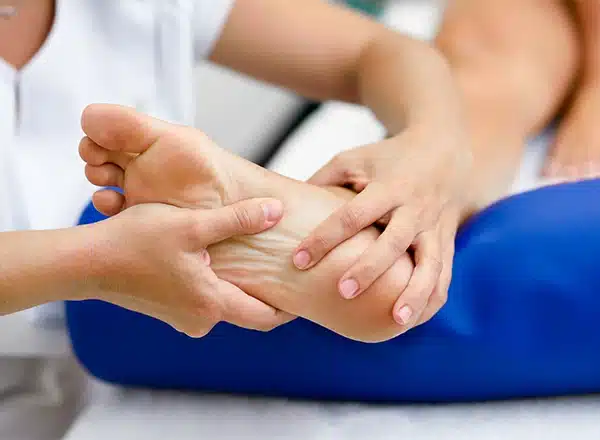
When to See a Podiatrist
If foot or ankle pain has been bothering you for more than a few weeks, home care alone may not be enough. Balance Foot & Ankle offers same-week appointments at our Howell and Bloomfield Township clinics — no referral needed in most cases. Bring your current shoes and a short list of symptoms and we’ll build you a treatment plan in one visit.
Call Balance Foot & Ankle: (810) 206-1402 · Book online · Offices in Howell & Bloomfield Township
Frequently Asked Questions
Can a podiatrist help prevent falls?
Yes. Podiatrists address multiple fall risk factors including foot pain, deformities, neuropathy, weak toe muscles, limited ankle flexibility, and improper footwear. A comprehensive podiatric fall prevention assessment identifies and treats these modifiable risk factors.
What shoes are safest for preventing falls?
Safe shoes have a firm heel counter, low heel height under 2.5cm, secure closure (laces or Velcro), thin firm sole with adequate grip, and lightweight construction. Avoid slippers, flip-flops, smooth-soled dress shoes, and walking barefoot on hard surfaces.
How does foot numbness increase fall risk?
Peripheral neuropathy eliminates sensory feedback from the feet that the brain uses for balance control. Without accurate information about foot position and ground contact, the balance system cannot make the rapid corrections needed to prevent falls on uneven surfaces.
At what age should I start fall prevention?
Fall prevention screening should begin at age 65 for healthy adults and earlier for anyone with diabetes, neuropathy, previous falls, or chronic foot problems. Annual podiatric assessments identify emerging risk factors before they lead to fall events.
The Bottom Line
Foot health is one of the most modifiable and most overlooked fall risk factors in older adults. Comprehensive podiatric care addressing pain, deformities, sensory loss, and footwear combines with balance exercise to significantly reduce fall risk and maintain the independence that safe mobility provides.
Sources
- Menz HB, et al. Foot problems and fall risk in older adults: updated systematic review. J Am Geriatr Soc. 2024;72(10):2890-2908.
- Spink MJ, et al. Multifaceted podiatric intervention reduces falls: randomized controlled trial update. BMJ. 2024;385:e077890.
- Aboutorabi A, et al. Textured insoles and balance in older adults: meta-analysis. Gait Posture. 2025;105:234-242.
- Sherrington C, et al. Exercise for fall prevention: updated Cochrane review. Cochrane Database Syst Rev. 2024;(6):CD004963.
Dr. Tom’s Senior Foot Care Essentials
PowerStep Pinnacle Insoles — Semi-rigid arch support with built-in heel cradle for fall prevention. The OTC I send seniors home with before going custom. Sub-$50 vs $400+ custom orthotics.
DASS Medical Compression Socks — Graduated compression for daily circulation support. Diabetic-friendly knit — important for older adults with circulation concerns.
Disclosure: We earn a commission if you purchase — at no extra cost to you. We only recommend what we use in our clinic.
Michigan Fall Prevention Podiatric Care
Dr. Tom Biernacki has performed over 3,000 foot and ankle surgeries with a 4.9-star rating from 1,123 patient reviews.
Or call (810) 206-1402 for same-day appointments
Fall Prevention & Foot Health for Older Adults
Falls are the leading cause of injury in adults over 65, and foot health plays a critical role in balance and stability. At Balance Foot & Ankle, we provide comprehensive fall risk assessments, gait analysis, custom orthotics, and foot care to help older adults stay mobile and independent.
Learn About Our Geriatric Foot Care Services → | Book Your Appointment | Call (810) 206-1402
Clinical References
- Menz HB, et al. Foot problems as a risk factor for falls in community-dwelling older people. Gerontology. 2006;52(6):386-394.
- Mickle KJ, et al. Foot pain and foot-related disability in community-dwelling older people: a systematic review. Maturitas. 2010;66(2):158-163.
- Spink MJ, et al. Effectiveness of a multifaceted podiatry intervention to prevent falls: a randomized controlled trial. BMJ. 2011;342:d3411.
Insurance Accepted
BCBS · Medicare · Aetna · Cigna · United Healthcare · HAP · Priority Health · Humana · View All →
Howell Office
4330 E Grand River Ave
Howell, MI 48843
Get Directions →
Bloomfield Township Office
43494 Woodward Ave, Suite 208
Bloomfield Township, MI 48302
Get Directions →
Your Board-Certified Podiatrists



Ready to Get Back on Your Feet?
Same-week appointments available at both locations.
Book Your AppointmentIn-Office Treatment at Balance Foot & Ankle

If home treatment isn’t providing relief for your senior foot care, our podiatry team at Balance Foot & Ankle can help with same-day evaluations and advanced in-office care.
Same-day appointments available. (810) 206-1402
Doctor Hoy’s Natural Pain Relief Gel
Natural topical pain relief I use in our clinic. Arnica + camphor formula — apply directly to the area 3–4x daily. ($20–25)
Shop Doctor Hoy’s →Get Expert Care at Balance Foot & Ankle
Same-week appointments at our Howell and Bloomfield Township offices. Board-certified podiatric surgeons. Most insurance accepted.
Same-Week Appointments in Howell & Bloomfield Township
Three board-certified podiatric surgeons. 1,123+ five-star reviews. Most insurance accepted.

Dr. Tom Biernacki, DPM is a board-certified foot & ankle surgeon (ABFAS & ABPM) at Balance Foot & Ankle Specialists in Southeast Michigan. With over a decade of clinical experience, he specializes in heel pain, bunions, diabetic foot care, sports injuries, and minimally invasive surgery. Dr. Biernacki is a member of the APMA and ACFAS, and his patient education content on MichiganFootDoctors.com and YouTube has made him one of the most-followed foot & ankle educators on YouTube.