
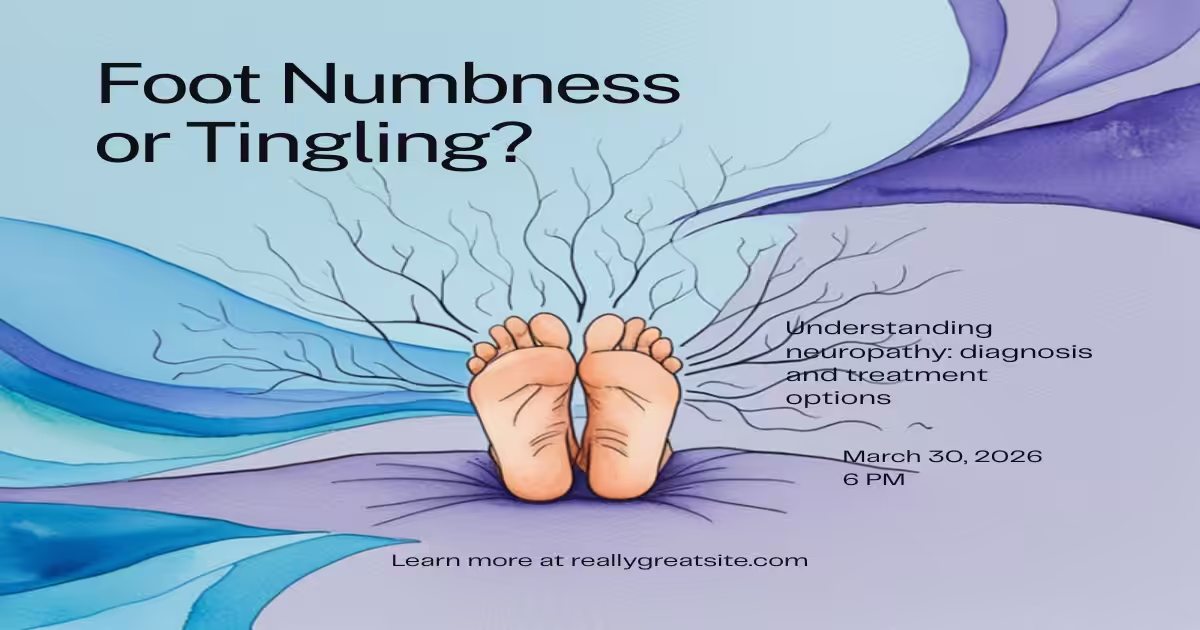
Quick answer: Foot Numbness Causes affects roughly 1 in 4 adults in our practice. Effective treatment starts with a targeted diagnosis, conservative-first treatment, and escalation only when needed. We treat this regularly at our Howell and Bloomfield Township practices. Call (810) 206-1402.
Dr. Tom’s Top Foot Health Supplements
Affiliate disclosure: Amazon Associate. Always discuss supplements with your physician before starting.
Vitamin B12 Methylcobalamin
Neuropathy support · Nerve repair
PROS
- Active B12 form
- Sublingual absorption
- Neuropathy adjunct
CONS
- Effects take 2-3 months
- Doesn’t replace medical care
Alpha Lipoic Acid 600mg
Diabetic neuropathy · Nerve antioxidant
PROS
- Peer-reviewed for neuropathy
- Both fat- and water-soluble
- Clinical doses available
CONS
- Possible blood sugar effect
- GI upset possible
Acetyl-L-Carnitine (ALCAR)
Diabetic neuropathy · Energy
PROS
- Crosses blood-brain barrier
- Studied for nerve repair
- Pairs with ALA
CONS
- Effects gradual (3+ months)
- Higher cost
Vitamin D3 5000 IU
Bone health · Stress fracture prevention
PROS
- Improves bone density
- Most patients deficient
- Affordable preventive
CONS
- Get blood test first
- Toxicity at very high doses
Medically reviewed by Dr. Tom Biernacki, DPM · Board-Certified Podiatric Surgeon · Last reviewed: April 2026 · Editorial Policy
Related Conditions
Quick Answer
Foot Numbness: Common Causes, What Each Feels Like, and When relates to foot neuropathy — typically caused by nerve compression or systemic. Most patients improve in varies by cause with conservative care. Same-week appointments in Howell + Bloomfield Township: (810) 206-1402.
✅ Medically reviewed by Dr. Tom Biernacki, DPM — Board-certified podiatrist specializing in foot & ankle surgery. View credentials.
Understanding Foot Numbness
Foot numbness—reduced or absent sensation in part or all of the foot—results from disruption of nerve signal transmission from the foot to the brain. The disruption can occur anywhere along the neural pathway: at the nerve endings in the foot, along the peripheral nerves in the leg, at nerve roots in the spine, or centrally in the brain or spinal cord. Identifying the location, distribution, and associated symptoms of numbness helps determine the cause. Some causes are entirely benign and temporary; others indicate systemic disease or structural compression requiring evaluation and treatment.
Common Causes by Pattern
Positional Numbness (Temporary)
The most common cause of foot numbness is temporary nerve compression from prolonged pressure on a nerve—crossing the legs compresses the peroneal nerve, sitting on a hard surface compresses the sciatic nerve, wearing tight footwear compresses the digital nerves. This produces the familiar “foot falling asleep” sensation—tingling, numbness, and an electric feeling that resolves within minutes of changing position. No treatment is needed for positional numbness; it is a normal physiological response to nerve compression.
Diabetic Peripheral Neuropathy
The most clinically important cause of foot numbness in adults is diabetic peripheral neuropathy—nerve damage from chronically elevated blood glucose affecting 50% of people with diabetes after 10 years. Diabetic neuropathy typically begins in the toes and ball of the foot, gradually progressing up the foot and leg in a stocking distribution. Sensation loss may be accompanied by tingling, burning, or shooting pain—or may be entirely painless (loss of protective sensation without painful symptoms). Any diabetic patient with foot numbness should be evaluated for loss of protective sensation using the 5.07 Semmes-Weinstein monofilament test, which determines amputation risk.
Tarsal Tunnel Syndrome
Tarsal tunnel syndrome is entrapment of the posterior tibial nerve as it passes through the tarsal tunnel (a fibrous canal on the inner ankle behind the medial malleolus). It causes numbness, tingling, and burning pain along the inner ankle and the bottom of the foot—typically in the distribution of the medial and lateral plantar nerves (the entire plantar surface and toes). Symptoms are often worse after prolonged standing or walking and may radiate into the arch. Tapping over the tarsal tunnel (Tinel’s sign) may reproduce or worsen the numbness. Electrodiagnostic testing confirms the diagnosis; treatment ranges from orthotics and anti-inflammatory medications to surgical tarsal tunnel release.
Morton’s Neuroma
Morton’s neuroma causes numbness and burning in a specific web space distribution—typically between the 3rd and 4th toes, or less commonly between the 2nd and 3rd. The numbness affects the adjacent sides of the two toes in the involved web space and may be accompanied by a sharp, electric sensation radiating into the toes that worsens with tight shoes and narrow toe boxes. Wide-toe-box footwear and metatarsal pads provide relief in most cases; corticosteroid injection or surgery is needed when conservative care fails.
Lumbar Nerve Root Compression (Sciatica)
Herniated disc or spinal stenosis at L4-L5 or L5-S1 compresses the nerve roots supplying the foot, causing numbness in specific dermatomal distributions. L4 nerve root compression affects the inner shin and medial foot. L5 root affects the top of the foot and great toe. S1 root affects the outer border of the foot and small toes. The numbness is typically accompanied by lower back pain or buttock pain radiating down the leg (sciatica). Neurological examination and lumbar MRI confirm the diagnosis; treatment ranges from physical therapy and epidural injections to surgical decompression.
Peripheral Arterial Disease
Severe peripheral arterial disease (PAD) reduces blood flow to the nerves of the foot, causing ischemic neuropathy—numbness, coldness, and pain in the foot. Unlike positional numbness, arterial numbness does not resolve with position change. Associated symptoms include leg cramping with walking (claudication), pale or blue-tinged feet, absent pedal pulses, and non-healing wounds. PAD-related foot numbness is a limb-threatening condition requiring urgent vascular evaluation and revascularization.
When Foot Numbness Requires Urgent Evaluation
Seek urgent evaluation for foot numbness associated with: sudden onset without positional cause (possible stroke or spinal emergency), loss of bladder or bowel control with foot numbness (cauda equina syndrome—surgical emergency), numbness in a diabetic patient who notices a wound they did not feel, cold, pale, or blue foot with absent pulses (arterial emergency), or numbness after foot or ankle injury (possible nerve or vascular injury). See a physician within 1–2 weeks for: new foot numbness lasting more than a few hours without positional cause, numbness in both feet symmetrically without a diabetes diagnosis, or progressive worsening of existing numbness.
Frequently Asked Questions
What causes numbness in the ball of the foot?
Numbness specifically in the ball of the foot (forefoot) is most commonly caused by Morton’s neuroma (affecting a specific web space), metatarsal nerve compression from tight footwear or high heels, or diabetic peripheral neuropathy (which often begins in the forefoot). Interdigital neuritis from repetitive microtrauma can also cause forefoot numbness without a discrete neuroma. If the numbness is confined to the bottom of the entire foot, tarsal tunnel syndrome compressing the plantar nerves is a common cause. Evaluation by a podiatrist with clinical examination and appropriate imaging (ultrasound or MRI for Morton’s neuroma, nerve conduction testing for tarsal tunnel) identifies the cause.
Can foot numbness be caused by tight shoes?
Yes—tight shoes are a very common cause of foot numbness. A narrow toe box compresses the digital nerves between the metatarsal heads, producing numbness in the toes during wear. Shoes that are too tight in the midfoot compress the cutaneous nerves on the top of the foot. High-heeled shoes concentrate body weight on the forefoot, compressing plantar digital nerves. This type of numbness resolves promptly when footwear is changed to a wider, more accommodating shoe. If numbness persists after shoe removal or occurs in bare feet, an underlying nerve condition rather than simple footwear compression is more likely.
Can a podiatrist diagnose the cause of foot numbness?
Yes—podiatrists are trained to evaluate and diagnose the causes of foot numbness through clinical examination (monofilament testing, vibration threshold, pinprick, Tinel’s sign testing), vascular assessment (pedal pulse palpation, ankle-brachial index), and ordering appropriate studies (nerve conduction velocity, MRI, ultrasound, X-ray). Podiatrists can diagnose and manage most common causes of foot numbness: diabetic neuropathy, tarsal tunnel syndrome, Morton’s neuroma, and peripheral arterial disease. For causes related to the spine (lumbar disc herniation, spinal stenosis) or central nervous system, podiatrists coordinate referral to neurology or orthopedic spine specialists.
Medical References & Sources
- PubMed Research — Peripheral Neuropathy Evaluation
- American Podiatric Medical Association — Tarsal Tunnel Syndrome
- PubMed Research — Tarsal Tunnel Syndrome
Dr. Tom Biernacki, DPM is a board-certified podiatric surgeon at Balance Foot & Ankle in Howell and Bloomfield Township, Michigan. He evaluates foot numbness with comprehensive neurological and vascular testing, diagnosing conditions ranging from Morton’s neuroma and tarsal tunnel syndrome to diabetic neuropathy and peripheral arterial disease.
Dr. Tom’s Recommended Products for Diabetic Foot Care
📍 Located in Michigan?
Our board-certified podiatrists treat this condition at two convenient locations. Most new patients are seen the same week.
These are products I personally use and recommend to my patients at Balance Foot & Ankle.
- Dr. Comfort Men’s Paradise Diabetic Shoe — Medicare-covered diabetic shoe with seamless interior — eliminates pressure points that cause diabetic ulcers
- Foundation Wellness DASS Diabetic Socks (Levanta) — non-binding, seamless toe, moisture-wicking diabetic socks protecting neuropathic feet
- Derma Sciences Bordered Gauze Dressings — Non-adherent wound dressing ideal for diabetic foot wound management between podiatry visits
Affiliate disclosure: As an Amazon Associate, Balance Foot & Ankle earns from qualifying purchases. We only recommend products we trust for our own patients.
Join 950,000+ Learning About Foot Health
Dr. Tom shares honest medical advice, supplement reviews, and treatment guides you won’t find anywhere else.
Subscribe on YouTube →Insurance Accepted
BCBS · Medicare · Aetna · Cigna · United Healthcare · HAP · Priority Health · Humana · View All →
Howell Office
4330 E Grand River Ave
Howell, MI 48843
Get Directions →
Bloomfield Township Office
43494 Woodward Ave, #208
Bloomfield Township, MI 48302
Get Directions →
Your Board-Certified Podiatrists



Ready to Get Back on Your Feet?
Same-week appointments available at both locations.
Book Your AppointmentPros & Cons of Conservative Care for foot care
Advantages
- ✓ Conservative care first
- ✓ Same-week appointments
- ✓ Multiple insurance accepted
Considerations
- ✗ Self-treatment can mask issues
- ✗ See a podiatrist if pain >2 weeks
Dr. Tom’s Recommended Products for foot care
Affiliate disclosure: As an Amazon Associate, Balance Foot & Ankle earns from qualifying purchases. We only recommend products we use with patients.
Footnanny Heel Cream Dr. Tom’s Pick
Best for: Daily moisturizer for cracked heels
Ready to Get Back on Your Feet?
Same-week appointments in Howell + Bloomfield Township. Most insurance accepted. Dr. Tom Biernacki, DPM & team.
Book Today — Same-Week Appointments Available
Call Now: (810) 206-1402
About Your Care Team at Balance Foot & Ankle
Dr. Tom Biernacki, DPM · Board-Certified Foot & Ankle Surgeon. Specializes in conservative-first care, minimally invasive bunion surgery, and complex reconstruction.
Dr. Carl Jay, DPM · Accepting new patients. Specializes in sports medicine, athletic injuries, and routine podiatric care.
Dr. Daria Gutkin, DPM, AACFAS · Accepting new patients. Specializes in surgical reconstruction and pediatric podiatry.
Locations: 4330 E Grand River Ave, Howell, MI 48843 · 43494 Woodward Ave Suite 208, Bloomfield Township, MI 48302
Hours: Mon–Fri 8:00 AM – 5:00 PM · (810) 206-1402
Visit Balance Foot & Ankle — Same-Week Appointments Available
Our podiatry team serves patients throughout Michigan including Howell, Brighton, and Bloomfield Township. If you’re dealing with heel pain, ingrown toenails, or a foot injury, we have same-week appointment availability.
Same-week appointments available. (810) 206-1402
Ready for Expert Care?
Same-week appointments in Howell & Bloomfield Township, MI.
4.9★ | 1,123 Reviews | 3,000+ Surgeries
Or call: (810) 206-1402
