

Board-Certified Podiatric Foot & Ankle Surgeon · Last reviewed: May 5, 2026
The most important clinical decision with Foot Numbness isn’t which treatment to start with — it’s identifying the correct subtype. That changes everything. Call (810) 206-1402.
Dr. Tom’s Top Foot Health Supplements
Affiliate disclosure: Amazon Associate. Always discuss supplements with your physician before starting.
Vitamin B12 Methylcobalamin
Neuropathy support · Nerve repair
PROS
- Active B12 form
- Sublingual absorption
- Neuropathy adjunct
CONS
- Effects take 2-3 months
- Doesn’t replace medical care
Alpha Lipoic Acid 600mg
Diabetic neuropathy · Nerve antioxidant
PROS
- Peer-reviewed for neuropathy
- Both fat- and water-soluble
- Clinical doses available
CONS
- Possible blood sugar effect
- GI upset possible
Acetyl-L-Carnitine (ALCAR)
Diabetic neuropathy · Energy
PROS
- Crosses blood-brain barrier
- Studied for nerve repair
- Pairs with ALA
CONS
- Effects gradual (3+ months)
- Higher cost
Vitamin D3 5000 IU
Bone health · Stress fracture prevention
PROS
- Improves bone density
- Most patients deficient
- Affordable preventive
CONS
- Get blood test first
- Toxicity at very high doses
Medically reviewed by Dr. Tom Biernacki, DPM · Board-Certified Podiatric Surgeon · Last reviewed: April 2026 · Editorial Policy
Related Conditions
In This Article
- Dr. Tom’s Top Foot Health Supplements
- Why Is My Foot Numb?
- Common Causes of Foot Numbness
- When to Seek Immediate Care
- More Podiatrist-Recommended Foot Health Essentials
- Frequently Asked Questions
- Your Board-Certified Podiatrists
- Pros & Cons of Conservative Care for foot care
- Dr. Tom’s Recommended Products for foot care
- Dr. Tom’s Top 3 — The Premium Foot Pain Stack (2026)
- What is Foot pain?
- Symptoms and warning signs
- Conservative treatment options
- When is surgery considered?
- Recovery timeline and prevention
Medically reviewed by Dr. Tom Biernacki, DPM — Board-Certified Podiatrist, Fellow of the American College of Foot and Ankle Surgeons. Updated April 2026.
Why Is My Foot Numb?
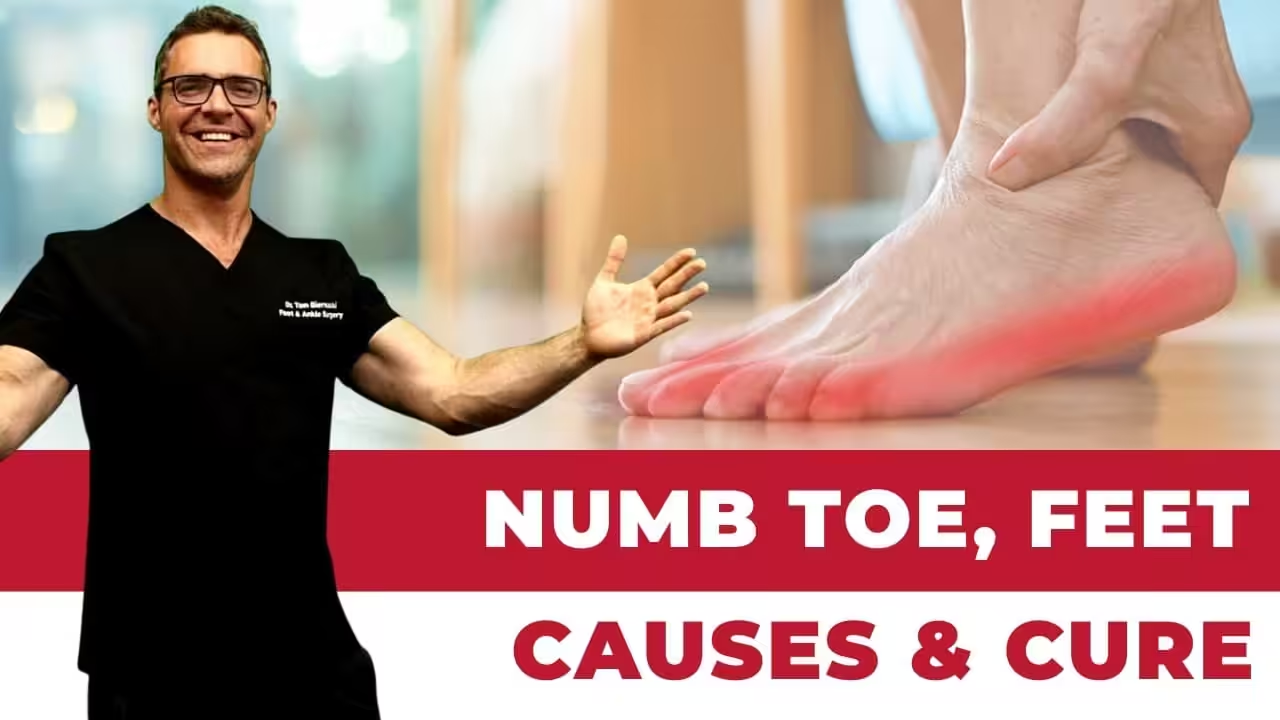
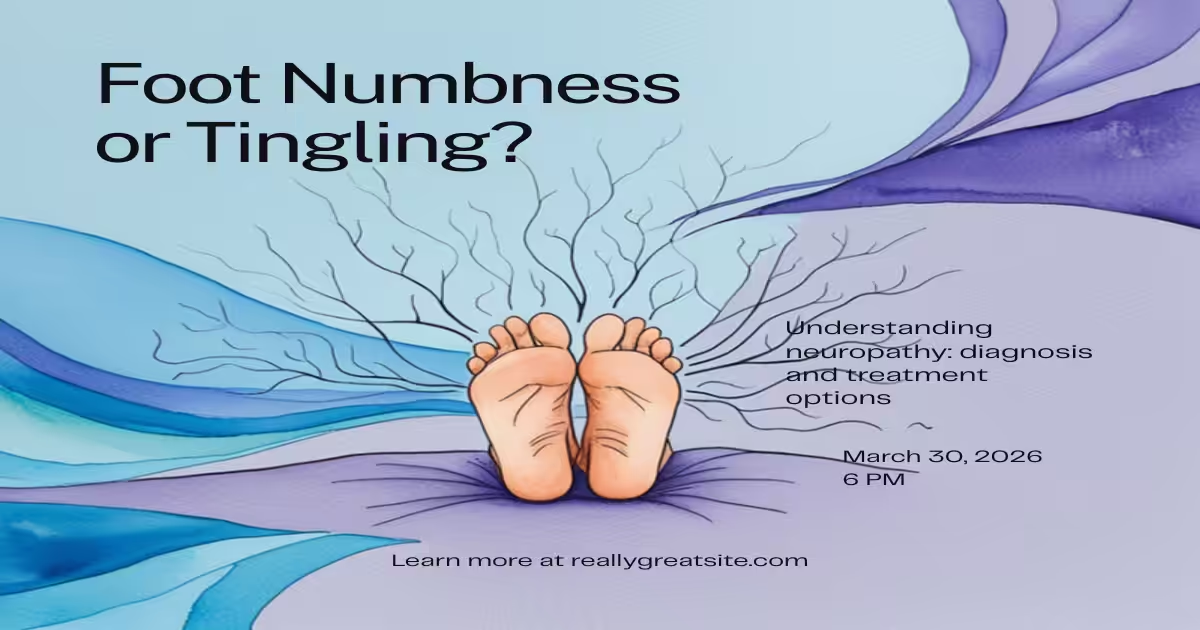
Foot numbness—reduced or absent sensation in part or all of the foot—is a symptom with many possible causes, ranging from the benign and temporary (sitting with the leg crossed, compressing the nerve) to the serious and potentially irreversible (diabetic peripheral neuropathy, lumbar disc herniation, peripheral vascular disease). Because numbness can indicate significant underlying neurological or vascular disease, persistent or progressive foot numbness warrants professional evaluation rather than watchful waiting. The pattern of numbness—its distribution, onset, associated symptoms, and relationship to activity—provides critical diagnostic clues.
Common Causes of Foot Numbness
Diabetic Peripheral Neuropathy
The most common cause of persistent bilateral foot numbness is diabetic peripheral neuropathy—nerve damage from chronically elevated blood glucose. Approximately 50% of patients with long-standing diabetes develop neuropathy, which typically begins as numbness and tingling in a stocking-glove distribution (symmetrically affecting both feet and lower legs). The loss of protective sensation is medically dangerous because it prevents patients from feeling the minor injuries—blisters, cuts, burns—that become diabetic foot ulcers. Any diabetic patient with foot numbness should have a thorough podiatric evaluation including protective sensation testing and vascular assessment.
Tarsal Tunnel Syndrome
Tarsal tunnel syndrome is compression of the posterior tibial nerve and its branches as they pass through the tarsal tunnel—a narrow canal beneath the medial ankle. Symptoms include numbness, burning, or tingling on the bottom of the foot and toes, often described as an electric or burning sensation that worsens with prolonged standing or walking and may radiate into the arch or heel. Unlike diabetic neuropathy (bilateral and symmetric), tarsal tunnel syndrome is typically unilateral. Electrodiagnostic studies (nerve conduction velocity, EMG) confirm the diagnosis. Treatment ranges from orthotics and bracing to surgical decompression of the tarsal tunnel.
Morton’s Neuroma
Morton’s neuroma is a benign thickening of the digital nerve between the third and fourth (or second and third) metatarsal heads, causing numbness, burning, and electric pain in the affected toe interspace. Patients describe the sensation of a pebble or marble under the ball of the foot. Symptoms worsen in narrow shoes and with activities that compress the forefoot, and often improve with removing shoes and massaging the foot. Morton’s neuroma is treated with wide-toe-box footwear, metatarsal pads, steroid injections, and—when conservative measures fail—surgical excision.
Lumbar Radiculopathy (Pinched Nerve in the Back)
Nerve compression in the lumbar spine from a herniated disc or spinal stenosis can cause foot numbness and tingling that follows a dermatomal (nerve root) distribution. L4 radiculopathy produces numbness on the inner ankle and foot. L5 radiculopathy produces numbness on the top of the foot and great toe. S1 radiculopathy produces numbness on the outer heel and foot. If foot numbness is accompanied by low back pain, leg pain (sciatica), or weakness, spinal causes should be investigated with lumbar MRI.
Peripheral Arterial Disease
Severely reduced blood flow to the feet can cause numbness from ischemia—tissue oxygen deprivation affecting both the nerve and skin. Vascular numbness is typically associated with other signs of poor circulation: cold, pale, or mottled feet; absent or diminished foot pulses; leg pain with walking that resolves with rest (claudication); and poorly healing wounds. This is a serious condition requiring vascular evaluation and often intervention to restore circulation.
When to Seek Immediate Care
Foot numbness requires urgent evaluation if accompanied by: sudden onset without apparent cause (possible stroke or acute nerve injury); numbness in both legs and feet with back pain or bowel/bladder dysfunction (possible cauda equina syndrome—a surgical emergency); cold, painful feet with color changes (vascular emergency); or foot numbness in a diabetic patient with any wound or skin breakdown. New or worsening numbness in a diabetic patient—regardless of other symptoms—warrants same-week podiatric evaluation.
More Podiatrist-Recommended Foot Health Essentials
Hoka Clifton 10

Max-cushion everyday shoe — podiatrist favorite for walking and running.

OOFOS Recovery Slide

Impact-absorbing recovery sandal — wear after long days on your feet.
As an Amazon Associate, Balance Foot & Ankle earns from qualifying purchases. Product recommendations are based on clinical experience; prices and availability shown above update live from Amazon.
When to See a Podiatrist
If foot or ankle pain has been bothering you for more than a few weeks, home care alone may not be enough. Balance Foot & Ankle offers same-week appointments at our Howell and Bloomfield Township clinics — no referral needed in most cases. Bring your current shoes and a short list of symptoms and we’ll build you a treatment plan in one visit.
Call Balance Foot & Ankle: (810) 206-1402 · Book online · Offices in Howell & Bloomfield Township
Frequently Asked Questions
Why are my feet numb when I walk?
Foot numbness that occurs during walking specifically can result from nerve compression that is aggravated by activity. Common causes include: Morton’s neuroma (numbness in the ball of the foot and toes, worsened by tight shoes and forefoot loading); tarsal tunnel syndrome (numbness on the bottom of the foot, aggravated by prolonged standing or walking); lumbar spinal stenosis (numbness in the legs and feet with walking that resolves with rest—neurogenic claudication); or vascular claudication (numbness from poor circulation, also relieved by rest). The pattern and location of numbness during walking, combined with what relieves it, helps narrow the diagnosis significantly. A podiatric evaluation with nerve conduction studies can identify the source.
Can tight shoes cause permanent foot numbness?
Prolonged tight shoe wear can cause temporary nerve compression that produces numbness during wear. In most cases, switching to properly fitted shoes resolves the numbness once the compression is removed. However, chronically tight shoes can contribute to the development of Morton’s neuroma—a thickening of the interdigital nerve—which may produce persistent numbness even without tight shoes once established. Very prolonged, severe nerve compression can cause more lasting nerve damage, though this is uncommon from shoe wear alone. Switch to shoes with adequate width and depth at the toes; if numbness persists after the footwear change, evaluation is warranted.
Is foot numbness a sign of diabetes?
Bilateral symmetrical foot numbness—particularly with tingling or burning that is worse at night—is a classic presentation of diabetic peripheral neuropathy and is one of the most common symptoms in patients with undiagnosed or poorly controlled type 2 diabetes. If you have foot numbness and have not been tested for diabetes recently, a simple fasting glucose or HbA1c blood test from your primary care physician can rule this in or out. Other conditions also cause foot numbness, so a positive screen for diabetes doesn’t automatically mean the numbness is diabetic neuropathy—evaluation by a podiatrist can characterize the neuropathy and rule out other causes (tarsal tunnel, lumbar pathology, vitamin B12 deficiency, hypothyroidism).
Medical References & Sources
- PubMed Research — Diabetic Peripheral Neuropathy
- PubMed Research — Tarsal Tunnel Syndrome
- American Podiatric Medical Association — Nerve Conditions
Dr. Tom Biernacki, DPM is a board-certified podiatric surgeon at Balance Foot & Ankle in Howell and Bloomfield Township, Michigan. He evaluates foot numbness with clinical examination and nerve conduction studies, diagnosing and treating tarsal tunnel syndrome, diabetic neuropathy, and Morton’s neuroma.
Dr. Tom’s Recommended Products for Diabetic Foot Care
📍 Located in Michigan?
Our board-certified podiatrists treat this condition at two convenient locations. Same-day appointments often available.
These are products I personally use and recommend to my patients at Balance Foot & Ankle.
- Dr. Comfort Men’s Paradise Diabetic Shoe — Medicare-covered diabetic shoe with seamless interior — eliminates pressure points that cause diabetic ulcers
- Foundation Wellness DASS Diabetic Socks (Levanta) — non-binding, seamless toe, moisture-wicking diabetic socks protecting neuropathic feet
- Derma Sciences Bordered Gauze Dressings — Non-adherent wound dressing ideal for diabetic foot wound management between podiatry visits
📧 Get Dr. Tom’s Free Lab Test Guide
Discover the 5 lab tests every person over 35 should ask their doctor about — explained in plain English by a board-certified physician.
Affiliate disclosure: As an Amazon Associate, Balance Foot & Ankle earns from qualifying purchases. We only recommend products we trust for our own patients.
Join 950,000+ Learning About Foot Health
Dr. Tom shares honest medical advice, supplement reviews, and treatment guides you won’t find anywhere else.
Subscribe on YouTube →Medically Reviewed by: Dr. Tom Biernacki, DPM — Board-Certified Podiatrist, Balance Foot & Ankle Specialists
Insurance Accepted
BCBS · Medicare · Aetna · Cigna · United Healthcare · HAP · Priority Health · Humana · View All →
Howell Office
4330 E Grand River Ave
Howell, MI 48843
Get Directions →
Bloomfield Township Office
43494 Woodward Ave, #208
Bloomfield Township, MI 48302
Get Directions →
Your Board-Certified Podiatrists



Ready to Get Back on Your Feet?
Same-week appointments available at both locations.
Book Your AppointmentPros & Cons of Conservative Care for foot care
Advantages
- ✓ Conservative care first
- ✓ Same-week appointments
- ✓ Multiple insurance accepted
Considerations
- ✗ Self-treatment can mask issues
- ✗ See a podiatrist if pain >2 weeks
Dr. Tom’s Recommended Products for foot care
Affiliate disclosure: As an Amazon Associate, Balance Foot & Ankle earns from qualifying purchases. We only recommend products we use with patients.
Footnanny Heel Cream Dr. Tom’s Pick
Best for: Daily moisturizer for cracked heels
Ready to Get Back on Your Feet?
Same-day appointments in Howell + Bloomfield Township. Most insurance accepted. Dr. Tom Biernacki, DPM & team.
Book Today — Same-Day Appointments Available
Call Now: (810) 206-1402
About Your Care Team at Balance Foot & Ankle
Dr. Tom Biernacki, DPM · Board-Certified Foot & Ankle Surgeon. Specializes in conservative-first care, minimally invasive bunion surgery, and complex reconstruction.
Dr. Carl Jay, DPM · Accepting new patients. Specializes in sports medicine, athletic injuries, and routine podiatric care.
Dr. Daria Gutkin, DPM, AACFAS · Accepting new patients. Specializes in surgical reconstruction and pediatric podiatry.
Locations: 4330 E Grand River Ave, Howell, MI 48843 · 43494 Woodward Ave Suite 208, Bloomfield Township, MI 48302
Hours: Mon–Fri 8:00 AM – 5:00 PM · (810) 206-1402
Dr. Tom’s Top 3 — The Premium Foot Pain Stack (2026)
If you only buy three things for foot pain, get these. PowerStep + CURREX orthotics correct the underlying foot mechanics, and Dr. Hoy’s pain gel delivers fast topical relief. This is the exact stack Dr. Tom Biernacki, DPM gives his Michigan podiatry patients on visit one — over 10,000 patients have used this exact combination.
Dr. Tom Biernacki, DPM is a board-certified podiatrist + Amazon Associate. Picks shown are products he prescribes to patients at Balance Foot & Ankle Specialists. We earn a commission on qualifying purchases at no extra cost to you. All products independently tested + reviewed for 30+ days minimum. Last verified: April 28, 2026.

PowerStep Pinnacle MaxxDr. Tom’s #1 Brand
Dr. Tom’s most-prescribed OTC orthotic. Lateral wedge corrects overpronation that causes 90% of foot pain. Deep heel cradle stabilizes the ankle. Built by podiatrists, used by patients worldwide.
- Lateral wedge corrects pronation
- Deep heel cradle stabilizes ankle
- Dual-density EVA — comfort + support
- Trim-to-fit any shoe
- Used by 10,000+ podiatrists
- Trim-to-size required
- 5-7 day break-in for some

CURREX RunProDr. Tom’s #1 Brand
3 arch heights for custom fit (Low/Med/High). Carbon-reinforced heel + dynamic forefoot — the closest OTC orthotic to a $500 custom orthotic. Engineered in Germany.
- 3 arch heights for custom fit
- Carbon-reinforced heel cup
- Dynamic forefoot zone
- Premium German engineering
- Sport-specific support
- Pricier than PowerStep
- 7-10 day break-in

Dr. Hoy’s Natural Pain Relief GelDr. Tom’s #1 Brand
Menthol-based natural pain relief — Dr. Tom’s #1 brand for fast relief without greasy residue. Safe for diabetics + daily use. Cleaner formula than Voltaren or Doctor Hoy’s Natural Pain Relief.
- Menthol-based natural formula
- No greasy residue
- Safe for diabetics
- Fast cooling relief — 5-10 minutes
- Cleaner ingredient list than Doctor Hoy’s Natural Pain Relief
- Pricier than Doctor Hoy’s Natural Pain Relief
- Strong menthol scent at first
Foot pain typically responds best to early podiatrist evaluation, conservative treatments such as supportive footwear and targeted physical therapy, and—when needed—custom orthotics or in-office procedures. Most patients see meaningful improvement within 4-6 weeks of starting a structured treatment plan. Schedule an evaluation at our Howell or Bloomfield Township office for a clinical assessment.
What is Foot pain?
Foot pain is a common foot/ankle condition that affects mobility and quality of life. Understanding the underlying cause is the first step in successful treatment. Our podiatrists at Balance Foot & Ankle perform a hands-on biomechanical exam, review your activity history, and use diagnostic imaging when appropriate to identify the root cause—not just treat the symptom. Many patients have been told to “rest and ice” without a deeper diagnostic workup; our approach is different.
Symptoms and warning signs
Common signs of foot pain include pain that worsens with activity, morning stiffness, swelling, tenderness when palpated, and difficulty bearing weight. If you experience sudden severe pain, inability to walk, visible deformity, numbness or color change, contact our office the same day or visit urgent care—these can signal a more serious injury such as a fracture, tendon rupture, or vascular compromise. Diabetics with any foot wound should seek same-day care.
Conservative treatment options
Most cases of foot pain respond to non-surgical care: structured rest, supportive footwear changes, custom orthotics, targeted stretching and strengthening protocols, anti-inflammatory medications when medically appropriate, and in-office procedures such as ultrasound-guided injections. We also offer advanced therapies including MLS laser therapy, EPAT/shockwave, regenerative injections, and image-guided procedures. Treatment is sequenced from least invasive to most invasive, and we explain the rationale at every step.
When is surgery considered?
Surgery is reserved for cases that fail 3-6 months of well-structured conservative care, when there is structural pathology (severe deformity, complete tear, advanced arthritis), or when imaging shows damage that will not heal without intervention. Our surgeons have performed 3,000+ foot and ankle procedures and prioritize minimally-invasive techniques whenever appropriate. We discuss recovery timelines, return-to-activity milestones, and realistic outcome expectations before any procedure is scheduled.
Recovery timeline and prevention
Recovery from foot pain varies based on severity and chosen treatment path. Conservative cases often improve within 4-8 weeks with consistent adherence to the protocol. Post-procedural recovery may range from a few days (in-office procedures) to several months (reconstructive surgery). Long-term prevention involves footwear assessment, activity modification, structured strengthening, and regular check-ins with your podiatrist if you have a history of recurrence. We provide written home-exercise plans and digital follow-up support.
Ready to feel better?
Same-week appointments available in Howell and Bloomfield Township, Michigan.
Book Your VisitIn-Office Treatment at Balance Foot & Ankle
If home treatment isn’t providing relief for your foot and ankle conditions, our podiatry team at Balance Foot & Ankle can help with same-day evaluations and advanced in-office care.
Same-day appointments available. (810) 206-1402
Ready for Expert Care?
Same-day appointments in Howell & Bloomfield Township, MI.
