

Quick answer: Gait Analysis Podiatry What It Is Why It Matters is a common foot/ankle topic that affects many patients. Effective treatment starts with a targeted diagnosis, conservative-first treatment, and escalation only when needed. We treat this regularly at our Howell and Bloomfield Township practices. Book online or call (810) 206-1402.
Medically reviewed by Dr. Tom Biernacki, DPM · Board-Certified Podiatric Surgeon · Last reviewed: April 2026 · Editorial Policy
The most important clinical decision with Gait Analysis Podiatry What It Is Why It Matters isn’t which treatment to start with — it’s identifying the correct subtype. That changes everything. Call (810) 206-1402.
Quick Answer
Gait Analysis in Podiatry: What It Is and Why It Matters for relates to foot pain — typically caused by overuse, footwear, or biomechanics. Most patients improve in 6-12 weeks with conservative care. Same-week appointments in Howell + Bloomfield Township: (810) 206-1402.

Medically reviewed by Dr. Tom Biernacki, DPM — Board-Certified Podiatric Surgeon — Balance Foot & Ankle, Howell & Bloomfield Township, MI. Last updated April 2026.
▶ Watch

Medically Reviewed by Dr. Tom Biernacki, DPM — Board-Certified Podiatrist, Balance Foot & Ankle Specialists, Michigan. Last updated April 2026.
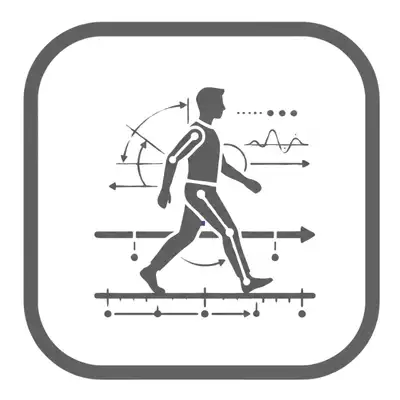
Gait analysis — the systematic assessment of how a person walks — is one of the most informative and underused tools in podiatric evaluation. The way you walk tells a trained examiner an enormous amount about the biomechanical forces acting on your feet, why certain structures are repeatedly loaded beyond their tolerance, and what interventions are most likely to provide lasting relief.
What Gait Analysis Actually Involves
A clinical gait assessment in a podiatric setting involves observation of the patient walking at natural speed across the examination room — repeatedly, barefoot and in shoes — with systematic evaluation of multiple biomechanical parameters:
- Foot strike pattern: Heel-strike, midfoot, or forefoot landing — determines the predominant loading site and shock absorption mechanism
- Pronation/supination: Timing and degree of hindfoot eversion (pronation) during midstance — excessive pronation is associated with plantar fasciitis, PTTD, bunion, and shin splints
- Toe-off mechanics: Whether the hallux (first MTP joint) provides the primary push-off or whether the patient’s pattern suggests hallux rigidus compensation or plantar fasciitis avoidance
- Limb alignment: Hip-knee-ankle alignment, limb length symmetry, and pelvic tilt — identifies proximal contributors to foot loading patterns
- Step length, cadence, and width: Reflects overall gait efficiency and neurological integration
- Footwear wear patterns: Inspection of shoe wear — medial heel wear indicates overpronation; lateral forefoot wear indicates supination; great toe box wear confirms hallux rigidus push-off avoidance
How Gait Analysis Changes Treatment
Gait findings directly guide orthotic prescription, footwear recommendations, and physical therapy targets. Examples:
- A patient with plantar fasciitis whose gait assessment reveals significant gastrocnemius equinus (ankle dorsiflexion limitation) receives a customized stretching program targeting gastrocnemius inflexibility — and their orthotic prescription includes a heel lift to accommodate the equinus while stretching progresses
- A runner with recurrent second metatarsal stress fractures demonstrates excessive forefoot pronation and inadequate hallux dorsiflexion — their orthotic is designed with a first ray accommodation to restore normal first ray function and reduce second metatarsal loading
- A patient with lateral ankle instability demonstrates functional ankle weakness and altered proprioception on the involved side — their treatment plan incorporates specific peroneal strengthening and proprioception exercises in addition to bracing
Advanced Gait Assessment Technology
Beyond clinical observation, technology-based gait assessment tools include pedobarography (pressure mapping of the plantar foot during walking), high-speed video gait analysis, force plate analysis, and wearable sensor gait assessment. These tools quantify plantar pressure distribution, identify asymmetries, and provide objective documentation of treatment response — increasingly accessible in specialized podiatric practices.
Who Benefits Most from Gait Analysis
Gait analysis is most valuable for patients with recurrent or treatment-resistant conditions, runners and athletes with overuse injuries, patients being fitted for custom orthotics, and children with gait abnormalities (intoeing, flatfoot, limping). It is a component of every hands-on exam plus imaging when needed at Balance Foot & Ankle — the way you walk is fundamental to understanding why you’re in pain.
Persistent Foot Pain Despite Treatment? Gait May Be the Key.
Dr. Biernacki at Balance Foot & Ankle performs comprehensive gait evaluation as part of every consultation — identifying the biomechanical patterns driving your specific foot condition. Same-week appointments at Bloomfield Township and Howell.
📞 (810) 206-1402 | Request an Appointment →
📧 Get Dr. Tom’s Free Lab Test Guide
Discover the 5 lab tests every person over 35 should ask their doctor about — explained in plain English by a board-certified physician.
📍 Located in Michigan?
Our board-certified podiatrists treat this condition at two convenient locations. Same-day appointments often available.

Insurance Accepted
BCBS · Medicare · Aetna · Cigna · United Healthcare · HAP · Priority Health · Humana · View All →
Howell Office
4330 E Grand River Ave
Howell, MI 48843
Get Directions →
Bloomfield Township Office
43494 Woodward Ave, #208
Bloomfield Township, MI 48302
Get Directions →
Your Board-Certified Podiatrists



Ready to Get Back on Your Feet?
Same-week appointments available at both locations.
Book Your AppointmentMore Podiatrist-Recommended Foot Health Essentials
Hoka Clifton 10


Max-cushion everyday shoe — podiatrist favorite for walking and running.

OOFOS Recovery Slide

Impact-absorbing recovery sandal — wear after long days on your feet.
As an Amazon Associate, Balance Foot & Ankle earns from qualifying purchases. Product recommendations are based on clinical experience; prices and availability shown above update live from Amazon.
When to See a Podiatrist
If foot or ankle pain has been bothering you for more than a few weeks, home care alone may not be enough. Balance Foot & Ankle offers same-week appointments at our Howell and Bloomfield Township clinics — no referral needed in most cases. Bring your current shoes and a short list of symptoms and we’ll build you a treatment plan in one visit.
Call Balance Foot & Ankle: (810) 206-1402 · Book online · Offices in Howell & Bloomfield Township
In-Office Treatment at Balance Foot & Ankle
When conservative care isn’t enough, Dr. Tom Biernacki and the team at Balance Foot & Ankle offer advanced, same-day options — including Gait Analysis Michigan at our Howell and Bloomfield Township clinics.
Same-day appointments available. Book online or call (810) 206-1402 or book online.
Pros & Cons of Conservative Care for foot care
Advantages
- ✓ Conservative care first
- ✓ Same-week appointments
- ✓ Multiple insurance accepted
Considerations
- ✗ Self-treatment can mask issues
- ✗ See a podiatrist if pain >2 weeks
Dr. Tom’s Recommended Products for foot care
Affiliate disclosure: As an Amazon Associate, Balance Foot & Ankle earns from qualifying purchases. We only recommend products we use with patients.
Footnanny Heel Cream Dr. Tom’s Pick
Best for: Daily moisturizer for cracked heels
Ready to Get Back on Your Feet?
Same-day appointments in Howell + Bloomfield Township. Most insurance accepted. Dr. Tom Biernacki, DPM & team.
Book Today — Same-Day Appointments Available
Call Now: (810) 206-1402
About Your Care Team at Balance Foot & Ankle
Dr. Tom Biernacki, DPM · Board-Certified Foot & Ankle Surgeon. Specializes in conservative-first care, minimally invasive bunion surgery, and complex reconstruction.
Dr. Carl Jay, DPM · Accepting new patients. Specializes in sports medicine, athletic injuries, and routine podiatric care.
Dr. Daria Gutkin, DPM, AACFAS · Accepting new patients. Specializes in surgical reconstruction and pediatric podiatry.
Locations: 4330 E Grand River Ave, Howell, MI 48843 · 43494 Woodward Ave Suite 208, Bloomfield Township, MI 48302
Hours: Mon–Fri 8:00 AM – 5:00 PM · (810) 206-1402
Visit Balance Foot & Ankle — Same-Day Appointments Available
Our podiatry team serves patients throughout Michigan including Howell, Brighton, and Bloomfield Township. If you’re dealing with heel pain, ingrown toenails, or a foot injury, we have same-day appointment availability.
Same-day appointments available. (810) 206-1402
Doctor Hoy’s Natural Pain Relief Gel
Natural topical pain relief I use in our clinic. Arnica + camphor formula — apply directly to the area 3–4x daily. ($20–25)
Shop Doctor Hoy’s →Ready for Expert Care?
Same-day appointments in Howell & Bloomfield Township, MI.
4.9★ | 1,123 Reviews | 3,000+ Surgeries
Or call: (810) 206-1402

Dr. Tom Biernacki, DPM is a board-certified foot & ankle surgeon (ABFAS & ABPM) at Balance Foot & Ankle Specialists in Southeast Michigan. With over a decade of clinical experience, he specializes in heel pain, bunions, diabetic foot care, sports injuries, and minimally invasive surgery. Dr. Biernacki is a member of the APMA and ACFAS, and his patient education content on MichiganFootDoctors.com and YouTube has made him one of the most-followed foot & ankle educators on YouTube.