
The most important clinical decision with High Arched Foot Lateral Ankle Instability Biomechanical Link isn't which treatment to start with — it's which subtype or underlying cause you actually have. Our podiatrists regularly see patients who've been treated for months for the wrong diagnosis. The correct identification changes the entire treatment path. Call (810) 206-1402 — Dr. Tom evaluates this condition at both Howell and Bloomfield Township locations.

Medically reviewed by Dr. Tom Biernacki, DPM · Board-Certified Podiatric Surgeon · Last reviewed: April 2026 · Editorial Policy
Quick Answer
Medically reviewed by Dr. Tom Biernacki, DPM
Board-certified podiatric surgeon | Balance Foot & Ankle
Last reviewed: May 2026
High-Arched Foot and Lateral Ankle Instability: The Biomecha relates to arch concerns — typically caused by foot structure or fatigue. Most patients improve in 6-12 weeks with intervention with conservative care. Appointments in Howell + Bloomfield Township: (810) 206-1402.
Medically reviewed by Dr. Tom Biernacki, DPM — Board-certified foot & ankle surgeon, 3,000+ surgeries performed. Updated April 2026 with current clinical evidence. This article reflects real practice experience from Balance Foot & Ankle Specialists in Howell and Bloomfield Township, Michigan.
Quick Answer
Most foot and ankle problems respond to conservative care — proper footwear, supportive inserts, activity modification, and targeted stretching — within 4-8 weeks. Persistent pain beyond that window, or any symptom that prevents walking, warrants a podiatric evaluation to rule out fracture, tendon tear, or systemic cause.
Watch: Dr. Tom Biernacki, DPM
Medically reviewed by Dr. Tom Biernacki, DPM — Board-Certified Podiatric Surgeon — Balance Foot & Ankle, Howell & Bloomfield Township, MI. Last updated April 2026.
Medically Reviewed by Dr. Tom Biernacki, DPM — Board-Certified Podiatrist, Balance Foot & Ankle Specialists, Michigan. Last updated April 2026.
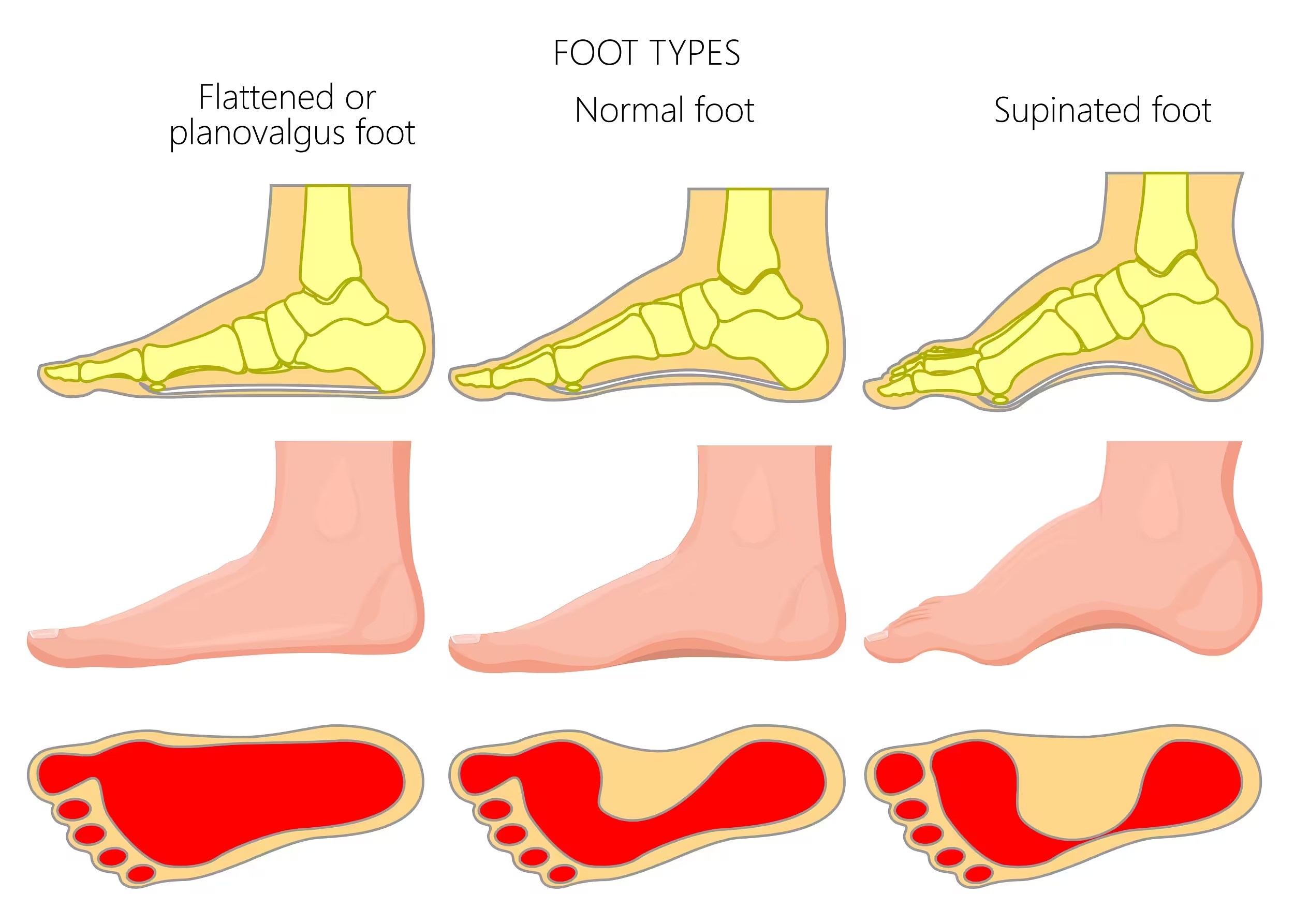
The relationship between pes cavus (high-arched foot) and chronic lateral ankle instability (CLAI) is well-established biomechanically and clinically: patients with varus hindfoot alignment have significantly higher rates of lateral ankle sprains and chronic instability than those with neutral or valgus alignment. Understanding this relationship is essential because surgical stabilization of the ankle alone, without correction of the underlying cavovarus deformity, produces inferior results and high recurrence rates.
Why Varus Alignment Predisposes to Lateral Ankle Instability
In a neutrally aligned foot, weight bears through the center of the heel, distributing load evenly between the medial and lateral calcaneus. In a varus hindfoot, the calcaneus tilts so that weight bears through the lateral calcaneal edge — a pre-positioned “cocked” inversion posture. From this starting position, the threshold force required to produce an inversion sprain is significantly reduced. A slight perturbation that would not produce injury in a neutral foot results in a full lateral ankle sprain in the cavovarus foot. Furthermore, the peroneal muscles — the primary dynamic lateral stabilizers — must work constantly against the varus alignment moment just to maintain neutral position, predisposing to peroneal fatigue, tenosynovitis, and reduced reactive capacity when an inversion stress occurs.
The Plantar Fascia’s Role
A tight plantar fascia, characteristic of cavus foot, contributes to forefoot pronation and rearfoot varus through the windlass mechanism. As the fascia contracts, it pulls the calcaneus into varus and plantarflexes the first ray — producing the characteristic inverted hindfoot combined with plantar-flexed first metatarsal of the classic cavovarus foot. This is why plantar fascia release is a component of comprehensive cavovarus foot reconstruction.
Evaluation and Treatment Implications
Every patient presenting with recurrent lateral ankle sprains should have hindfoot alignment assessed — a varus hindfoot tilt on standing heel alignment radiograph confirms cavovarus contribution. When significant varus alignment is present, isolated Broström ligament reconstruction without deformity correction has a high failure and recurrence rate. The appropriate surgical plan combines calcaneal osteotomy (lateral closing wedge Dwyer procedure to correct varus) with ligament reconstruction and peroneal tendon management as needed. Dr. Biernacki at Balance Foot & Ankle provides comprehensive cavovarus and ankle instability evaluation with weight-bearing radiographic alignment assessment. Call (810) 206-1402 for evaluation at our Bloomfield Township or Howell office.
📍 Located in Michigan?
Our board-certified podiatrists treat this condition at two convenient locations. Book online 24/7 at either office.
When to See a Podiatrist
Many foot conditions can be managed conservatively at home, but some require professional evaluation. See a podiatrist promptly if you experience:
- Pain that persists for more than 2 weeks despite rest
- Swelling, redness, or warmth that isn’t improving
- Numbness, tingling, or burning in the feet
- A wound or sore that is not healing within 2 weeks
- Any foot concern if you have diabetes or poor circulation
- Nail changes that suggest fungal infection or other problems
At Balance Foot & Ankle, our three board-certified podiatrists — Dr. Tom Biernacki, Dr. Carl Jay, and Dr. Daria Gutkin — provide comprehensive foot and ankle care at our Howell and Bloomfield Township offices. Most insurance plans are accepted.
Related Conditions & Resources
Ready to Get Relief? We’re Here to Help.
Board-certified podiatrists Dr. Tom Biernacki, Dr. Carl Jay, and Dr. Daria Gutkin see patients daily at our Howell and Bloomfield Township, MI offices.
📅 Book Online
📞 (810) 206-1402
In-Office Treatment at Balance Foot & Ankle
If home care isn’t resolving your your foot or ankle concern, a visit with a board-certified podiatrist is the fastest path to accurate diagnosis and a personalized plan. At Balance Foot & Ankle Specialists, Dr. Tom Biernacki, Dr. Carl Jay, and Dr. Daria Gutkin offer appointments at both our Howell and Bloomfield Township offices. We perform on-site diagnostic ultrasound, digital X-ray, conservative care, advanced regenerative treatments, and minimally invasive surgery when indicated.
Call (810) 206-1402 or request an appointment online. Most insurance plans accepted, including Medicare, Blue Cross Blue Shield, Aetna, Cigna, and United Healthcare.
Most Common Mistake We See
The most common mistake we see is: Waiting too long before seeking care. Fix: any foot pain lasting more than 4 weeks, or any sudden severe symptom, deserves a professional evaluation rather than more rest.
Warning Signs That Need Same-Day Care
Seek immediate evaluation at Balance Foot & Ankle if you experience any of the following:
- Unable to bear weight
- Severe swelling with skin color change
- Fever with foot pain (possible infection)
- Diabetes plus any new foot symptom
Call (810) 206-1402 — appointments at our Howell and Bloomfield Township offices.
More Podiatrist-Recommended Ankle Sprain Essentials
Ankle Brace Stabilizer
Compression + lateral support during walking — prevents re-injury during recovery.
Kinesiology Tape
Proprioceptive support for athletic return-to-play without restricting motion.
Arch Support Insole
Stable midfoot platform reduces the inversion forces that re-sprain ankles.
As an Amazon Associate, Balance Foot & Ankle earns from qualifying purchases. Product recommendations are based on clinical experience; prices and availability shown above update live from Amazon.
When to See a Podiatrist
A sprain that hasn’t fully recovered after 6 weeks often has residual ligament laxity or occult fracture that keeps the ankle unstable. Balance Foot & Ankle X-rays and stress-tests every lingering sprain — if the ligament is torn, we offer bracing, PRP, and (for chronic instability) minimally-invasive repair. Don’t keep re-rolling the same ankle; let us stabilize it properly.
Call Balance Foot & Ankle: (810) 206-1402 · Book online · Offices in Howell & Bloomfield Township
Watch: Dr. Tom explains
Podiatrist-recommended products
As an Amazon Associate, Dr. Tom earns from qualifying purchases.
Lateral column offloading.
Chronic instability support.
Instability rehab.
Activity support.
Related resources
Ready to solve this? Book today.
Book online 24/7 · Howell & Bloomfield Township · 4.9★ (1,200+ reviews)
Pros & Cons of Conservative Care for foot care
Advantages
- ✓ Conservative care first
- ✓ Book online 24/7
- ✓ Multiple insurance accepted
Considerations
- ✗ Self-treatment can mask issues
- ✗ See a podiatrist if pain >2 weeks
Dr. Tom’s Recommended Products for foot care
Affiliate disclosure: As an Amazon Associate, Balance Foot & Ankle earns from qualifying purchases. We only recommend products we use with patients.
Footnanny Heel Cream Dr. Tom’s Pick
Best for: Daily moisturizer for cracked heels
Ready to Get Back on Your Feet?
Appointments in Howell + Bloomfield Township. Most insurance accepted. Dr. Tom Biernacki, DPM & team.
Call Now: (810) 206-1402

Dr. Tom Biernacki, DPM is a board-certified foot & ankle surgeon (ABFAS & ABPM) at Balance Foot & Ankle Specialists in Southeast Michigan. With over a decade of clinical experience, he specializes in heel pain, bunions, diabetic foot care, sports injuries, and minimally invasive surgery. Dr. Biernacki is a member of the APMA and ACFAS, and his patient education content on MichiganFootDoctors.com and YouTube has made him one of the most-followed foot & ankle educators on YouTube.